


Weekly cadence for running Local SEO plus YouTube with a single healthcare marketing team in India: Monday to Friday task allocation, workflow cross-overs, and the team skills you actually need
A ground-level operational playbook for running Google Business Profile Local SEO (Angryturtle) and YouTube channel operations (YODA) inside a single healthcare marketing team — Monday-to-Friday task allocation, the specific points where the two workflows cross (Q&A becoming video, reviews becoming social proof clips), and the team size and skills that make the combined cadence sustainable.
No pitch. Written root-cause diagnosis. AI-powered, healthcare only.
Direct answer
A ground-level operational playbook for running Google Business Profile Local SEO (Angryturtle) and YouTube channel operations (YODA) inside a single healthcare marketing team — Monday-to-Friday task allocation, the specific points where the two workflows cross (Q&A becoming vide...
TL;DR

The combined Local SEO plus YouTube stack fails most often not because either surface is poorly served but because two separate teams end up running the two surfaces in parallel without ever crossing streams. The Local SEO coordinator publishes Google Posts on Tuesdays; the YouTube producer edits videos on Wednesdays; neither knows what the other is working on; the Q&A entries never become video topics; the review corpus never informs the content plan; and the compound effect the combined stack is supposed to produce never materialises. Solving this is not a technology problem. It is a workflow problem. This is a ground-level operational playbook for running both surfaces inside a single healthcare marketing team, with the specific Monday-to-Friday task allocation, the cross-over points where the two workflows must meet, and the team size and skills that make the combined cadence sustainable.
Why a single team, not two teams
The instinct in most healthcare marketing setups is to hire specialists for each surface — a Local SEO executive who owns Google Business Profile work, and a video producer who owns the YouTube channel. On paper this looks like the right division of labour. In practice it produces the "no integration" failure mode. Each specialist optimises their own surface, neither has visibility into the other, and the cross-surface hand-offs — YODA Audience Voice output feeding Angryturtle Q&A queue, Angryturtle review themes feeding YODA video briefs, the same physician appearing across both surfaces with consistent language — either happen accidentally or do not happen at all.
A single team that owns both surfaces produces a different outcome. The team has one weekly meeting where the two surfaces are planned together. The content calendar is shared. The question bank is shared. The compliance perimeter is shared. Every video published on YouTube is queued as a Google Post link within the same week. Every review theme surfaced in Angryturtle is queued as a video topic for the next content cycle. The team is smaller than two specialist teams but produces materially better cross-surface outcomes.
The minimum viable single team is two people. One marketing coordinator who owns Angryturtle operations and YODA's Diagnostics, Optimisation, and Reputation modules. One content producer who owns YODA's content production and Angryturtle's photo, Post, and Q&A publication. Above 6 to 8 physicians or 3+ locations, the team expands to three or four but the ownership structure stays unified.
Monday: plan the week across both surfaces
Monday is the planning day. Both surfaces get their weekly review together in a single 90-minute session that involves both team members.
Morning: dashboard review. Pull the Angryturtle sie" style="color:inherit;text-decoration:underline;text-decoration-color:rgba(42,126,200,.5);text-underline-offset:2px">Rank OS score for the week and the delta from last week. Pull the YODA Decision Engine top-5 output for the week. Pull the composite view — which surface moved the most in the last 7 days, and which dimension is the lowest across both platforms combined. This takes 20 to 30 minutes.

Late morning: focus dimension selection. Pick one focus dimension for the week across the combined stack. Options usually include Review Health push (both surfaces), Freshness push (Angryturtle Posts and photos plus YODA video publishing cadence), Content depth push (new YODA videos feeding new Angryturtle Q&A entries), or Compliance clean-up (review reply audit on Angryturtle plus video description compliance sweep on YODA). One focus dimension per week keeps the team from spreading thin.
Early afternoon: content calendar sync. YODA's Content Planner has proposed 1 to 2 videos for the week. Each proposed video gets checked against the Angryturtle Ask Maps question bank — if the question the video is answering also appears in the Q&A bank, note it as an integration point. Every proposed video gets a scheduled Post placeholder in the Google Business Profile Post queue for the week after the video publishes.

Late afternoon: task assignment. Marketing coordinator takes ownership of Angryturtle weekly ops, review moderation, Q&A publication, and Optimisation writebacks in YODA. Content producer takes ownership of video pre-production, shoot scheduling, thumbnail production, and Google Business Profile photo upload cadence.
Tuesday: produce and publish on both surfaces
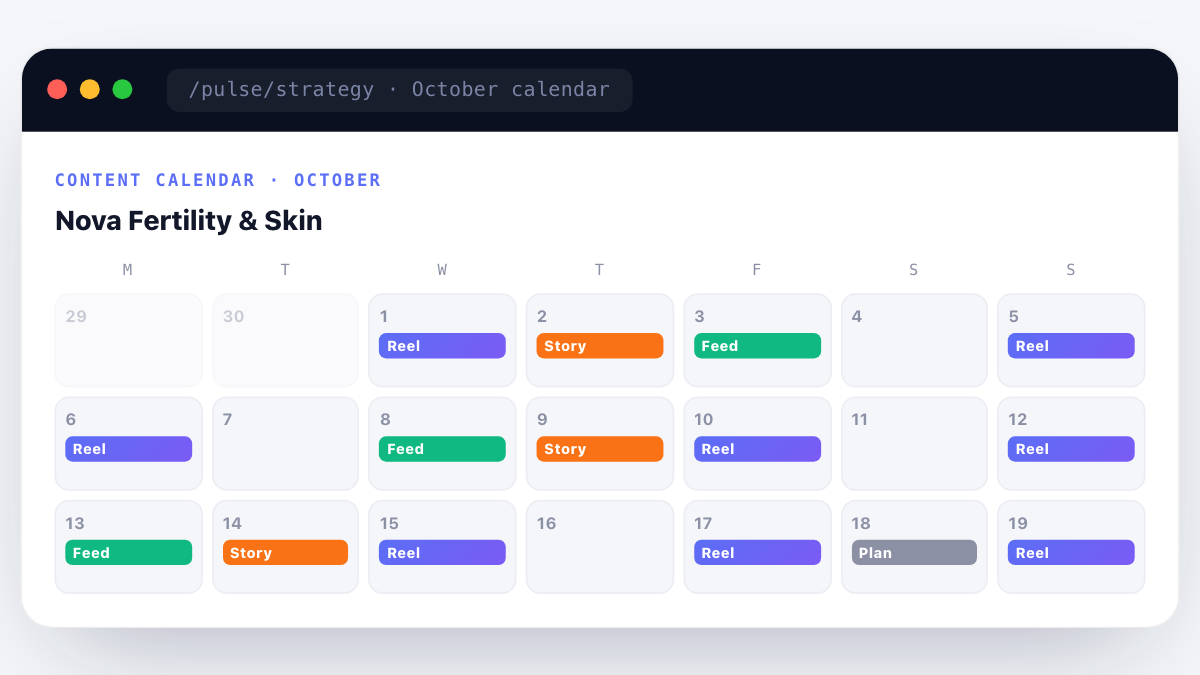
Tuesday is the primary production day. Both team members work in parallel on their respective surfaces with two integration checkpoints during the day.
Marketing coordinator morning. Publish the week's first two Google Posts. Review the review queue for any pending replies. Draft replies inside Angryturtle's AI-assisted reply engine, verify against the NMC and ASCI language perimeter, and publish. Cover any Q&A that surfaced from the previous week's Audience Voice output.
Content producer morning. Video shoot for the week's first video. Typically 45 to 90 minutes of physician time producing a single video that will be edited into a 6 to 10 minute Explainer or Myth-vs-Fact format piece. If the batch shoot model is being used, this session may capture 3 to 4 videos worth of raw footage that will be edited over subsequent days.
Late morning integration checkpoint. The two team members sync for 15 minutes. Any patient questions that came up during the shoot become candidate Q&A entries for Angryturtle. Any photos captured during the shoot become candidate profile photos.
Afternoon. Content producer edits the morning's video footage. Marketing coordinator processes the week's photo batch into Angryturtle for staged upload. YODA's SEO Lab drafts optimised titles, descriptions, tags, and chapters for videos scheduled to publish later in the week.

Wednesday: optimisation and writebacks
Wednesday is the optimisation day — the day where existing content on both surfaces gets improved rather than new content getting added.
YODA Optimisation writebacks. Any queued title, description, tag, or chapter updates get applied to the live channel via YODA's writeback engine. Thumbnail A/B tests get launched or reviewed. If the week's Rank OS focus is on YouTube's AIO Readiness dimension, chapter timestamps get added to previously-published videos that lack them.
Angryturtle optimisation writebacks. Category audit if the Rank OS Relevance dimension is dragging. Services list additions if new services have been introduced clinically. Description tune-ups if seasonal shifts (Diwali hours, monsoon-specific content) apply. Attribute additions if new attributes are relevant.
Mid-week performance check. Pull the mid-week Angryturtle Rank OS delta and the YODA weekly view velocity to see whether the week's work is moving the metrics. Adjust Friday's planned publication timing if needed.
Integration checkpoint. The two team members sync on any comments from YouTube (surfaced by YODA's Reputation module) that map to Q&A entries on Angryturtle. Add the corresponding Q&A entries to the Q&A publication queue.
Thursday: cross-surface integration day
Thursday is the day dedicated explicitly to the cross-surface hand-offs. This is the day the combined stack is most different from two teams running in isolation.
Video-to-website integration. The week's new video gets embedded on the corresponding clinic service page on the website. The service page's meta description is checked to make sure it references the video content. Internal links from the service page point to the video's YouTube URL.
Video-to-Google Business Profile integration. The video's URL is added to a scheduled Google Post that goes live the day after the video publishes on YouTube. The video's topic is added as a proactive owner Q&A on the Google Business Profile.
Review-to-video-topic integration. The week's review corpus is scanned for themes — cost transparency questions, wait time concerns, procedure-specific questions. Any theme that appears three or more times in the review corpus becomes a candidate video topic for the next content cycle. Themes get added to YODA's Content Planner backlog.
YouTube comment-to-Q&A integration. YouTube comments that ask questions on the channel get triaged. Questions that repeat across multiple videos become candidate Q&A entries for the Google Business Profile.
Physician entity integration. Any new physician joining the practice or any credential update for an existing physician gets updated simultaneously on the Google Business Profile (photo, credentials in description if applicable), the website (physician bio page), and the YouTube channel (about section, upcoming video credit line).
Friday: publish, close-out, and the reputation loop
Friday is the publication day for the week's primary video and the reputation close-out day for both surfaces.
Morning: video publication. The week's primary video publishes on YouTube. YODA writeback pushes the final metadata (title, description, tags, chapters). Thumbnail A/B variants get scheduled. The corresponding Google Post that references the video is queued for Saturday or Sunday publication.
Late morning: Angryturtle weekly close-out. Final Google Posts of the week publish. Final photo batch uploads. Any pending Q&A responses go live. Review request nudges get sent to the week's completed patient visits (via WhatsApp with the compliant template).
Afternoon: reputation loop. Marketing coordinator clears the review reply queue on Angryturtle. Content producer clears the YouTube comment queue on YODA. Both members note themes from the week's activity for Monday's planning meeting.
Late afternoon: weekly wrap. 30-minute retrospective. What moved this week. What did not. What surprised the team. What went into the compliance escalation queue for review. What the coming week's focus should be given what this week produced.
The cross-over points that make the cadence actually compound
The five specific cross-over points where the two workflows must meet, without which the combined stack degrades to two parallel streams that never compound.
The shared question bank. One master list of the questions patients ask, sourced from Google reviews, YouTube comments, WhatsApp intake conversations, and in-clinic conversations. This bank feeds both video topics (YODA) and Q&A entries (Angryturtle). No question that appears in the bank should be un-served on both surfaces.
The shared content calendar. One calendar showing the week's videos, Posts, photos, review campaigns, and compliance checks. Both team members view the same calendar. Every video has an associated Post scheduled. Every Post has an associated content topic that ideally links to a video.
The shared compliance perimeter. One document listing the specific claims the practice can and cannot make, the specific language patterns to avoid, and the specific consent workflows for identifiable patient content. This document governs both video scripts and Google Business Profile content simultaneously.
The shared physician entity. Every physician's credentials, video appearances, review mentions, and photo appearances are tracked in one place. When a physician's credentials update, both surfaces update in the same week.
The shared reputation loop. YouTube comments and Google reviews feed the same weekly reputation review. Sentiment themes from either surface inform planning on both surfaces.
The team size and skills you actually need
For a single-location practice with 1 to 3 physicians, the two-person team works. Marketing coordinator needs Angryturtle operator proficiency, YODA Diagnostics and Optimisation proficiency, review reply drafting skill within the NMC and ASCI perimeter, comment moderation skill, and enough writing skill to draft Q&A entries and Post copy. Content producer needs video shoot direction skill, editing proficiency (either in-house or via an editor), thumbnail design skill, script writing skill, and comfort with the physicians as on-camera talent.
For a multi-location chain with 3 to 8 locations, the team expands to three people. Marketing coordinator retains Angryturtle ownership across all locations with per-location operating rhythms. Content producer retains YouTube ownership for the central channel with locality-tagged content. A third role — operations coordinator — owns the physical inputs (photo shoot scheduling across locations, review campaign coordination across locations, compliance documentation across locations).
For a large hospital or multi-specialty group with 8+ locations, the team expands to four or five with sub-specialists on video production (for the higher production values a hospital brand typically requires) and multi-location Local SEO operations. The ownership structure remains unified — one head who accountable for the combined stack outcome, not a Local SEO head and a YouTube head who never talk to each other.
Skill requirements to hire against for the two-person team: 2 to 5 years healthcare marketing experience, working knowledge of NMC / ASCI / DPDP / ART Act / PC-PNDT compliance, comfort with both surface types (not just one), writing skill in both formal profile language and conversational video script language, and — this is the underrated skill — willingness to operate the weekly cadence discipline rather than working in bursts.
The tool ICG uses to run this at scale: Angryturtle
ICG runs local SEO and GBP intelligence for 150+ Indian healthcare brands using Angryturtle — our own AI-native GBP intelligence and management OS. The platform scores every profile 0-100 via a proprietary Rank OS model with five weighted dimensions (Relevance, Review Health, Freshness, Entity Authority, AIO Readiness), publishes edits, Posts, media, and review replies directly to Google, and includes Ask Maps AIO Readiness scoring for Google AI Overviews and ChatGPT visibility.
Available in two shapes: self-serve at ₹999/- per month for solo owners with 1-2 profiles, and ICG's managed service from ₹25,000/- per month where our healthcare specialists execute inside the same platform. Both are anchored in the Healthcare Local SEO Agency India pillar page which has full scope, methodology and pricing.
Book a demo on WhatsApp → or start a free trial at angryturtle.ai →
The platform ICG uses to run this at scale: YODA
ICG runs healthcare YouTube marketing for clinics, hospitals, and specialty groups using YODA — our AI-native healthcare YouTube marketing platform. YODA sits on top of a channel's data and does four things no dashboard does: it separates organic from paid views at every step (so a promoted video can never masquerade as organic growth), it gives decisions not dashboards (every video gets a state + next action), it writes back to YouTube directly (improved titles, tags, descriptions, chapters applied straight to the platform), and it tracks the three rank races — YouTube search, Google web, and Google AI Overview citations.
YODA runs the full 6-step workflow — Overview, Diagnostics, Strategy, Optimisation, Reputation (ORM), and Competitor Intel — with 40+ analysis modules organised under those steps. ICG's managed YouTube service uses YODA end-to-end. See the Healthcare YouTube Marketing pillar guide for the full scope, or the Healthcare YouTube Marketing Agency service page for engagement details.
Book a YODA demo on WhatsApp → or request a free healthcare YouTube channel audit →
Related reading
- Combined stack pillar — Local SEO plus YouTube for Indian healthcare
- Why Google Maps and YouTube compound for clinics in India
- Combined stack vs single-service ROI comparison
- Combined stack for a dermatology clinic — playbook
- Combined stack for an IVF clinic — playbook
FAQ
How many hours per week does the combined cadence realistically take? For a two-person team running a single-location practice, the combined cadence runs roughly 22 to 28 hours per week. Marketing coordinator time — 12 to 15 hours. Content producer time — 10 to 13 hours. This does not include the physician's time on camera, which is a separate 60 to 120 minutes per week.
What if the physicians will not commit to 60 to 120 minutes per week on camera? The cadence adjusts. Batch shooting once a month with 3 to 6 videos captured in a single 3-hour session works well for physicians who cannot commit to weekly recording. The rest of the workflow proceeds normally — YODA and Angryturtle operations continue weekly; only the physician's on-camera involvement is batched.
Can one person run both surfaces without a second team member? For a very small practice — a solo physician with a very stable weekly rhythm — one person can run both if their weekly hours run to 25 to 35 across the two surfaces. But the single-person model is fragile. Illness, holiday, or life events pause both surfaces simultaneously. A two-person team has redundancy the single-person model does not.
Does the marketing coordinator need to be a former SEO specialist? No. The Angryturtle platform is designed so that a coordinator with 6 to 12 months of platform onboarding can execute weekly ops effectively. YODA Diagnostics and Optimisation similarly have onboarding-friendly interfaces. What the coordinator does need is the compliance perimeter fluency and the discipline to hold the weekly rhythm.
What tools does the team need beyond Angryturtle and YODA? A shared content calendar (any calendar tool works). A shared question bank and compliance document (Google Docs, Notion, or similar). A video editing tool (many teams use CapCut, DaVinci Resolve, or Adobe Premiere for the editor). A design tool for thumbnails (Canva or Photoshop). The two platforms handle the primary workflow; the surrounding tools are commodity.
How do we onboard a new team member into this cadence? Two to three weeks of shadowing. Week 1 — observe the full weekly cycle without executing. Week 2 — execute selected tasks under supervision. Week 3 — own selected tasks end to end with review. Full autonomy typically by month 2 to 3 depending on the new member's prior experience.
What breaks the cadence most often in real practice? Physician availability collapses (illness, seasonal patient surge, personal events) are the most common disruption. The cadence is designed to be resilient — batch-shot video reserves, pre-scheduled Angryturtle Posts, and pre-drafted review replies all provide a 2 to 4 week runway of continuity even when physician time disappears temporarily.
Do we need to change the cadence during festivals or public holiday weeks? Slightly. Publication timing shifts to avoid low-attention days (Diwali week itself, major public holidays), but the cadence disciplines continue. Festival-themed content — greetings, seasonal health content — is planned into the calendar 3 to 4 weeks in advance rather than being handled ad hoc.
How does the cadence handle a sudden reputation event — a negative review going viral, or a critical YouTube comment? The reputation loop moves from Friday close-out to same-day response. Angryturtle's alert system flags high-severity review events; YODA's comment moderation flags high-severity comment events. The team pauses non-urgent work to draft a compliant response, verify against the compliance perimeter, and publish within hours rather than days.
What is the biggest hidden cost of the combined cadence? Physician time on camera. Marketing platform costs are predictable and modest. Team salaries are budgeted. The one cost that clinics consistently underestimate is the calendar time physicians need to devote to on-camera work, which competes with clinical time. Explicit contractual expectation-setting with physicians at the start of the engagement is the most reliable way to protect this.
Book a free SEO diagnostic.
Hanuman Sihag's team runs a live crawl, checks technical health, cannibalisation, schema coverage and content gaps. 60 minutes, prioritised fix list.
The three platforms
behind every ICG engagement.
Beacon
CAPI middleware that fixes Event Match Quality, translates CRM statuses to Meta-standard events, dedups across channels.
Agency OS
Live client dashboard. GSC, GA4, Google Ads, Meta Ads, IVR calls in one view. Login anytime, not monthly.
Phoenix
Clinic revenue intelligence over your PMS. Daily action queue: Prevent Loss, Maintain & Engage, Grow Revenue. Multi-centre rollout.
Or book a free 30-min audit to see all three in action on your account.
Healthcare brands
that already run on ICG.
A representative slice of the 150+ healthcare brands ICG has delivered for across India. Most engagements remain under NDA.


What ICG clients say · on video.
"Scale up of organic channels and business consulting. ICG has absolute domain authority in their field."
"Working with ICG transformed how we acquire IVF patients in Gurgaon. They understand the fertility journey from inquiry to consult..."
"What Ichelon accomplished — they got all my ideas and worked over 3-4 months to create an amazing, super-customised website."
The intelligence stack behind this playbook.
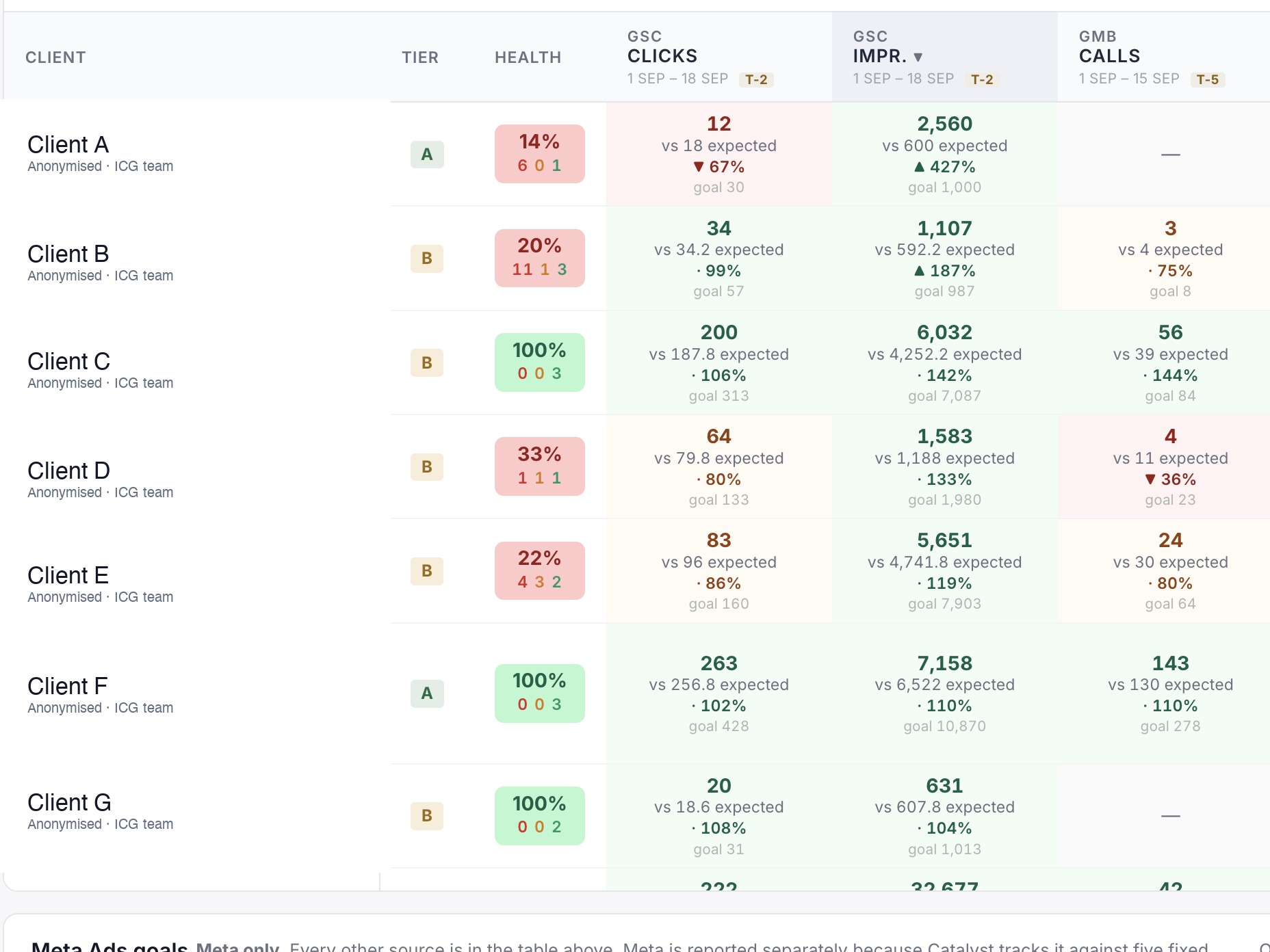
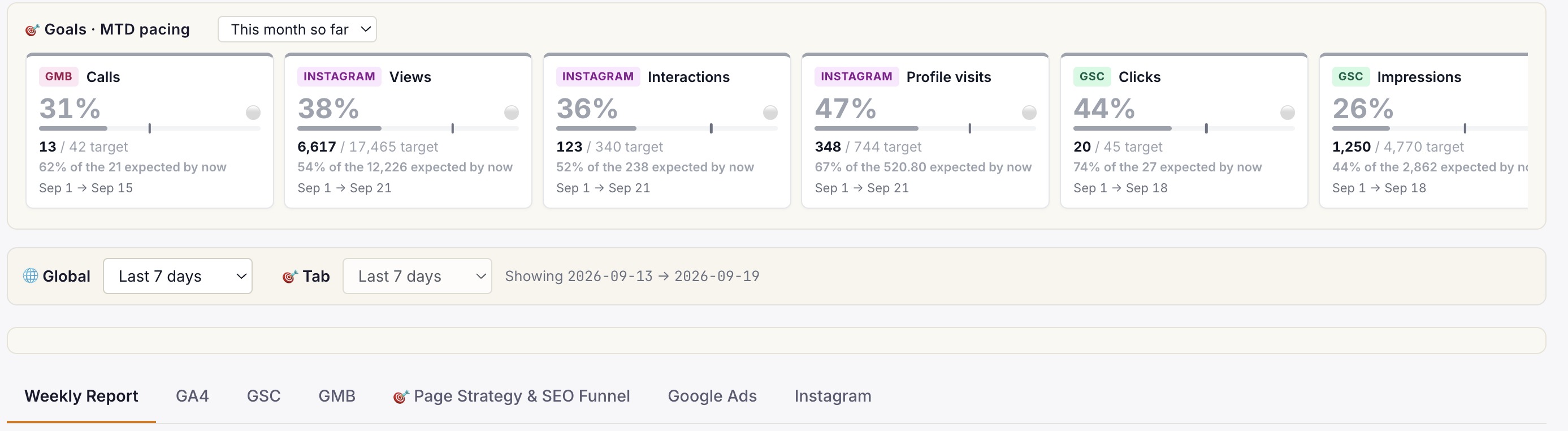
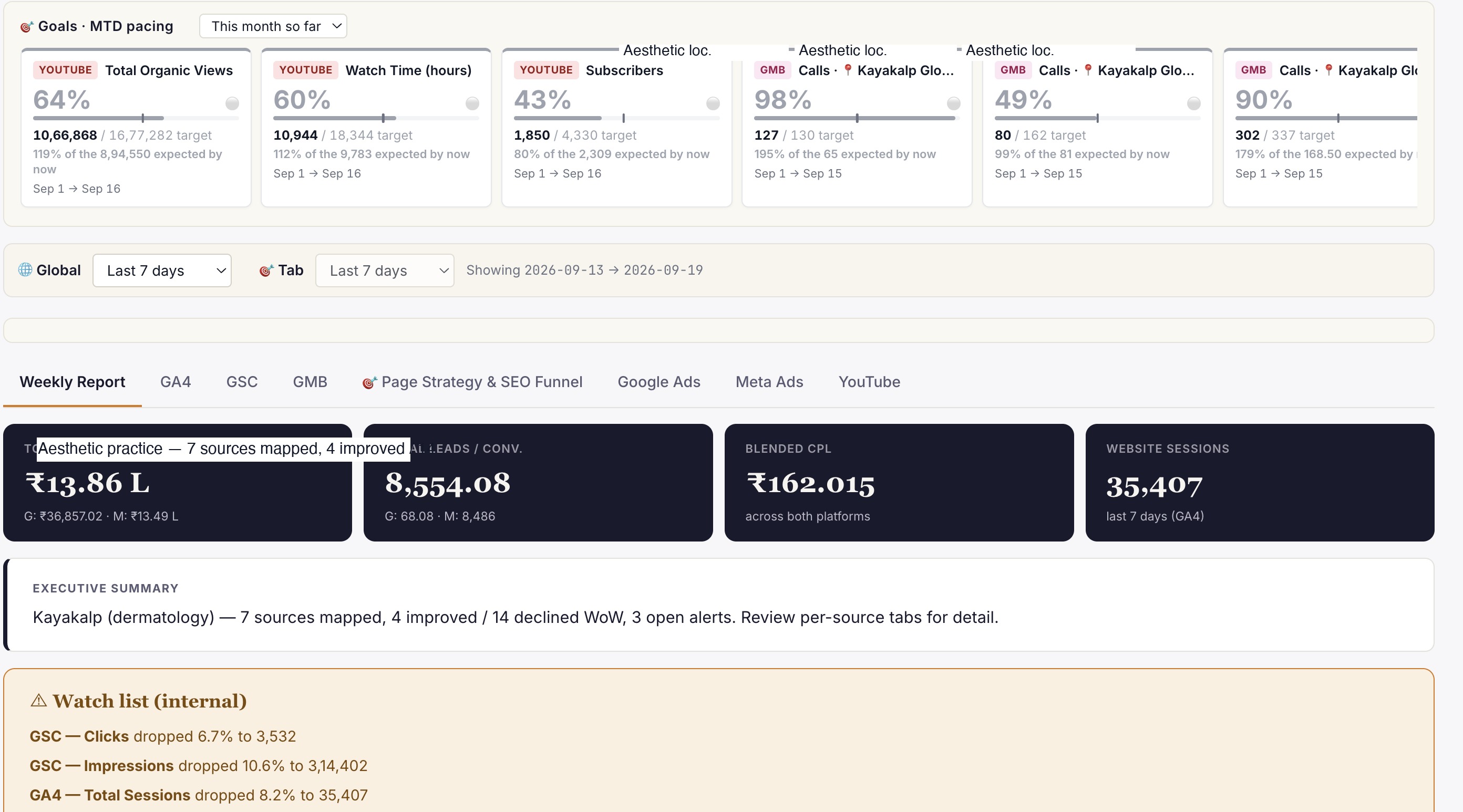
Every ICG engagement runs on the Search Intelligence Trifecta — Angryturtle for GMB, SIE for search and AI Overview, YODA for YouTube. Live product screens below.
Need help operationalising this?
Every ICG service is healthcare-only, NMC + DPDP-aware, and built around the patient-research patterns that drive Indian healthcare growth in 2026.
Every practice welcome — packages from ₹20,000/mo.
Goals-Driven engagements · Performance-Linked Payout Models available
More from
ICG.
Five trends shaping Indian healthcare marketing through 2027: AI-first patient research, Conversions API adoption, ABDM discovery, the AEO w...
Healthcare AIO is the discipline of getting your clinic or hospital cited inside Google AI Overviews, ChatGPT and Perplexity answers — not j...
Conversational-search advertising places brand messages inside AI chat answers — ChatGPT, Perplexity, Copilot — rather than beside a results...
Stop guessing.
Book a Diagnostic.
30 minutes. Free. With the AI-powered healthcare-only marketing agency 150+ brands already run on. No slides, no pitch, no hard close.


