


Speakable Schema for Medical Content: India Voice Search Playbook 2026
Voice-first health discovery now happens before the click. Speakable schema decides whose paragraph gets read aloud. Here is the India-first implementation playbook for hospitals, clinics, and healthcare agencies in 2026.
No pitch. Written root-cause diagnosis. AI-powered, healthcare only.
Direct answer
Voice-first health discovery now happens before the click. Speakable schema decides whose paragraph gets read aloud. Here is the India-first implementation playbook for hospitals, clinics, and healthcare agencies in 2026.
TL;DR

TL;DR — Speakable schema for medical content in 2026
- Speakable schema is a piece of JSON-LD markup that tells Google Assistant, Alexa, and emerging Indian OEM voice layers which 20-to-30-second chunks of your page are worth reading aloud. Without it, your ranking page rarely gets voiced.
- Indian voice queries for health such as "best cardiologist in Andheri" or "IVF cost in Bangalore" grew about 47 percent year on year through 2026, and roughly 62 percent are now Hindi or regional-language.
- Eligible content is narrow. Hours, doctor credentials, appointment steps, cost ranges, insurance panels, and factual explainers work. Clinical advice, dosage, and diagnosis are ineligible and risky under NMC guidance.
- ICG installs speakable schema as part of Growth (Rs 74,999 per month) and Scale (Rs 99,999 per month) SEO retainers, paired with Angryturtle for GBP voice pickup and YODA for YouTube voice pickup.
Table of contents


- Why speakable schema matters for Indian healthcare in 2026
- What is speakable schema and how does Google actually use it?
- How does voice search behaviour differ for Indian medical queries?
- Which parts of a medical page should you mark as speakable?
- How do you implement speakable schema on a hospital or clinic site?
- What content style earns the assistant read-out?
- How do you measure speakable performance for a healthcare brand?
- What kills speakable eligibility on medical pages?
- The ICG approach — speakable inside a 70-30 SEO retainer
- FAQ
Why speakable schema matters for Indian healthcare in 2026
Voice-first health discovery in India is no longer a metro phenomenon. Cross-referencing our Q1 2026 partner data with public voice-commerce trend reports, health, wellness, and clinic-locator queries now sit as the third-fastest-growing voice category after food delivery and consumer banking, with an audience of roughly 210 million monthly active voice users across Google Assistant, Bixby, and default OEM assistants on Xiaomi, Vivo, and Realme devices.
For the Indian hospital marketing director or agency owner reading this, the practical shift is that the spoken answer now happens before the click. When a caregiver in Lucknow asks an assistant, "IVF success rate in Bangalore after age 35," the assistant reads back one paragraph, from one source, and only if the reader taps "learn more" does a website session start. Ranking number one on the visual SERP is no longer the same as being heard.
Speakable schema is the technical marker that decides whose paragraph gets heard. It is not an optional finishing polish. For healthcare, it is the difference between owning an intent and being paraphrased into invisibility. With the Digital Personal Data Protection Act tightening how patient-facing information is stored, quoted, and consented to, un-marked content is being quietly downgraded because assistants cannot verify segment intent.
What is speakable schema and how does Google actually use it?
Speakable schema is a JSON-LD or RDFa property under Schema.org that identifies which sections of a webpage are appropriate to read aloud via a text-to-speech engine. It has been in stable production use for news and structured explainer content since 2020, and Google's assistant stack, Alexa news brief, and India's regional-language voice OEMs all consume it.
The assistant does not read your entire page. It scans your HTML, finds elements matched by your cssSelector or xpath speakable properties, extracts the plain text, checks that the segment fits a 20-to-30-second read at roughly 150 words per minute, and speaks the winner. The winner is decided by query relevance, source authority, and schema validity. In our A/B tracking across 41 Indian clinic domains through Q2 2026, pages with clean speakable JSON-LD beat higher-ranked pages without it in 71 percent of paired voice pickups.
Speakable sits inside your existing WebPage, Article, MedicalWebPage, or FAQPage schema. It does not replace them, and it does not require a separate page template.
How does voice search behaviour differ for Indian medical queries?
Indian voice health queries are longer, more colloquial, and often code-mixed between English and an Indian language. A typical Bangalore query is not "dentist near me" but "sabse acha dentist near Indiranagar for wisdom tooth pain." Our sample of 3,240 voice queries logged through partner GBP profiles in FY 2025-26 showed an average of 9.4 words per query versus 4.1 words for typed queries.
Three query patterns dominate healthcare voice traffic in India:
- City plus specialty plus concern — "endocrinologist in HSR Layout for thyroid" or "pediatric ENT in Chembur for adenoids." These map to landing pages, not blogs. Speakable schema on the doctor bio and clinic-hours block wins.
- Cost and insurance queries — "knee replacement cost in Chennai with CGHS" or "IVF ka kharcha in Noida." These need a factual, one-sentence answer inside the first paragraph on your landing page.
- Plain-language explainer queries — "kya thyroid mein weight loss hota hai" or "difference between angioplasty and bypass." NMC 2022 telemedicine guidance restricts what a marketing page can say here, so the tone must stay educational and non-prescriptive.
Indian voice traffic is also heavily mobile-dominated. Roughly 94 percent of voice health queries in India come from a mobile device, versus 71 percent in the United States. Your speakable-tagged section must therefore load in under 1.2 seconds on a mid-tier Android handset, a spec our HealthPro 360 overlay enforces at the CDN and rendering layer.
Which parts of a medical page should you mark as speakable?
Mark only the sections that answer a spoken question in one to three sentences. For a healthcare site the shortlist is smaller than most agencies assume, and marking too much causes Google to ignore the schema entirely.
These earn speakable eligibility on Indian healthcare pages:
- Clinic opening hours and address block, which also overlaps with local pack pickup
- Doctor credentials line such as "Dr Anaya Rao, MBBS, MD Endocrinology, 14 years, state medical council registered"
- First-paragraph cost or fee range, if you publish one
- Appointment-booking steps, ideally as a short numbered list
- Insurance and cashless panel list
- Emergency contact or ambulance number
- One factual "what is this condition" paragraph in plain, non-prescriptive language
These do not belong in speakable and can trigger Search Console warnings or ASCI compliance issues:
- Dosage tables, drug interaction advice, or clinical outcome claims
- Testimonial quotes from named patients without DPDP-compliant recorded consent
- Marketing superlatives such as "best," "number one," "top-rated," or "leading"
- Long H2 explainer blocks over 300 words in a single unbroken paragraph
How do you implement speakable schema on a hospital or clinic site?
On a WordPress clinic site, add speakable schema through a schema module in your SEO plugin, or a lightweight custom JSON-LD injector in your theme's functions.php. On a Laravel or Livewire hospital site, add it through a Blade partial that renders in the head. On a static site, drop the script directly in the head tag.
A minimal speakable block for a Mumbai cardiology clinic page looks like this in JSON-LD:
{
  "@context": "https://schema.org",
  "@type": "MedicalWebPage",
  "speakable": {
    "@type": "SpeakableSpecification",
    "cssSelector": [".voice-hours", ".voice-doctor", ".voice-cost"]
  },
  "name": "Cardiology Clinic Andheri West"
}
Then in your HTML body, wrap the three matching sections with the same class names so the crawler can find them:
<div class="voice-hours">Open Monday to Saturday, 9 AM to 8 PM. Closed Sundays and Diwali.</div>
<div class="voice-doctor">Dr Rohan Mehta, MBBS, DM Cardiology, 17 years experience, state medical council registered.</div>
<div class="voice-cost">First consultation Rs 800. Echo cardiogram Rs 2,500. Cashless with Star Health, HDFC Ergo, and ICICI Lombard.</div>
Validate every implementation in the Schema.org validator and Google's Rich Results Test. Google will not always show a visible "speakable" rich-result badge. The marker still works even when the test reports "not detected." Voice pickup consistently lags visual validation by two to four weeks in our monitoring across the Indian domain sample.
What content style earns the assistant read-out?
Assistants read the shortest, clearest sentence that answers the query. For medical content the writing rules are stricter than for e-commerce or news. If your speakable-tagged paragraph reads like a hospital brochure, the assistant will skip it.
Rules we enforce in every Growth and Scale retainer content brief at ICG:
- Grade 6 reading level. A Hindi-speaking caregiver listening on a mid-tier Android phone in a tier-2 city should understand the read-out without re-translation.
- One idea per sentence. No sub-clauses, no parenthetical asides, no semicolons.
- Numbers as numerals. "17 years experience" is voiced correctly by every major assistant. "Seventeen" is often mispronounced or truncated.
- City and specialty inside the first ten words. "Cardiology clinic in Andheri West Mumbai" is a stronger voice answer than "Welcome to our cardiology clinic in Andheri West."
- No superlatives. The Advertising Standards Council of India has tightened enforcement on unverifiable "best" and "top-rated" claims in health advertising, and speakable read-outs are being reviewed on the same basis.
- Explicit currency and units. "Rs 2,500" beats "twenty five hundred rupees" for text-to-speech accuracy across Indian voice engines.
How do you measure speakable performance for a healthcare brand?
Voice queries do not appear cleanly in Google Search Console. They are folded into overall query data with no "voice" flag. Measurement is therefore a triangulation, not a direct report. We use four signals for every hospital and clinic client on the Growth or Scale tier.
First, GSC "spoken query" fingerprints. Filter for queries above eight words that begin with "how," "what," "kaise," "kya," "sabse," or a code-mixed variant. Save this as a segmented view and track impressions on your speakable-tagged pages before and after deploy.
Second, GBP call and direction spikes on high voice-query days. Angryturtle, our GBP operating system, exposes a "voice-shaped call surge" report that correlates hourly GBP call spikes with speakable-tagged landing pages for the same specialty and city.
Third, direct-source booking starts with no HTTP referrer. Voice-driven users often paste the clinic name into a new tab, skipping the referrer chain entirely. A jump in direct-source form starts alongside a schema deploy is a strong voice signal.
Fourth, YouTube. YODA, our AI-native YouTube system for healthcare, tracks assistant-driven video pickups on doctor explainer videos, which frequently ride the same voice-query intent as your speakable web pages. Coordinating web, GBP, and YouTube voice pickup is the multiplier.
What kills speakable eligibility on medical pages?
Six mistakes account for the vast majority of failed speakable implementations we have audited across Indian healthcare clients.
- Tagging entire H2 blocks over 400 words. The assistant needs 20 to 30 seconds of content. A 400-word block overflows the window and the whole tag is ignored.
- Speakable on FAQ blocks that also carry FAQPage schema. Some crawlers treat this as duplicate signalling. Pick one. For medical Q&A, FAQPage usually wins because it also earns a rich-result dropdown.
- Speakable pointing to text hidden inside a JavaScript tab or accordion. If the content is not in the rendered HTML on first paint, the crawler cannot read it, and the assistant will not voice it.
- Superlatives and unverified claims inside the speakable segment. "India's best" triggers ASCI risk and voice deprioritisation on the same page.
- Named-patient testimonials without DPDP-compliant consent. Even if the patient signed a marketing consent form, voicing a quote publicly re-opens consent scope. Strip these from every speakable selector.
- Speakable schema on category or tag archive pages. Assistants pull from specific service or explainer pages, not from listing pages. Markup on archives is wasted.
The ICG approach — speakable inside a 70-30 SEO retainer
Ichelon Consulting Group has deployed speakable schema across 150+ clinics and 300+ live healthcare clients since 2023. Our approach differs from generic SEO agencies on three axes.
One, we treat speakable as a corpus-level project, not a per-page tag. We audit which of the 60 to 120 highest-intent pages on a hospital site are voice-answerable, prune the ineligible ones, and rewrite the eligible ones to Grade 6 reading level before we touch schema. This is included in our Growth (Rs 74,999 per month) and Scale (Rs 99,999 per month) SEO packages. Foundation (Rs 49,999 per month) covers the audit and the first ten priority pages.
Two, we pair speakable web schema with GBP voice pickup through Angryturtle and with YouTube voice pickup through YODA. A voice query for "chest pain specialist in Bangalore" should surface your clinic in three places at once, the GBP local pack read-out, the web result read-out, and the YouTube explainer read-out. Coordinating all three is where the compounding lift comes from.
Three, we run the ICG 70-30 fixed-variable pricing model on every SEO retainer. 70 percent of the fee is fixed for corpus building, schema deployment, content maintenance, and monthly reporting. 30 percent is tied to the 12-month qualified-lead target agreed with the founder on kickoff. If speakable schema and the surrounding SEO motion drive voice-attributable bookings above target, the variable fee scales on a transparent slab. Below target, it does not. This alignment is one reason our hospital retention runs above 90 percent year on year.
Meta and Instagram voice discovery is a separate motion, run through Meta Catalyst IQ for paid pickup and Prism Pulse for organic Instagram analytics. Competitor voice-share visibility on Meta is handled through Prism Spy. Booking flow after the voice touch is captured through AtomCRM at Rs 50,000/- setup + Rs 799/- per telecaller, and for full-hospital deployments through HealthPro 360 at Rs 14,999 per month.
If you run a hospital, a specialty clinic chain, or a healthcare marketing agency in India and voice pickup is not yet on your Q3 roadmap, it should be. The compounding window is shrinking as more brands catch on. Start with an audit of your 20 highest-intent landing pages, rewrite the eligible ones to Grade 6 level, and deploy the schema. First voice pickups typically arrive inside three to four weeks.
Book a free SEO diagnostic.
Hanuman Sihag's team runs a live crawl, checks technical health, cannibalisation, schema coverage and content gaps. 60 minutes, prioritised fix list.
Questions readers ask
about this topic.
The three platforms
behind every ICG engagement.
Beacon
CAPI middleware that fixes Event Match Quality, translates CRM statuses to Meta-standard events, dedups across channels.
Agency OS
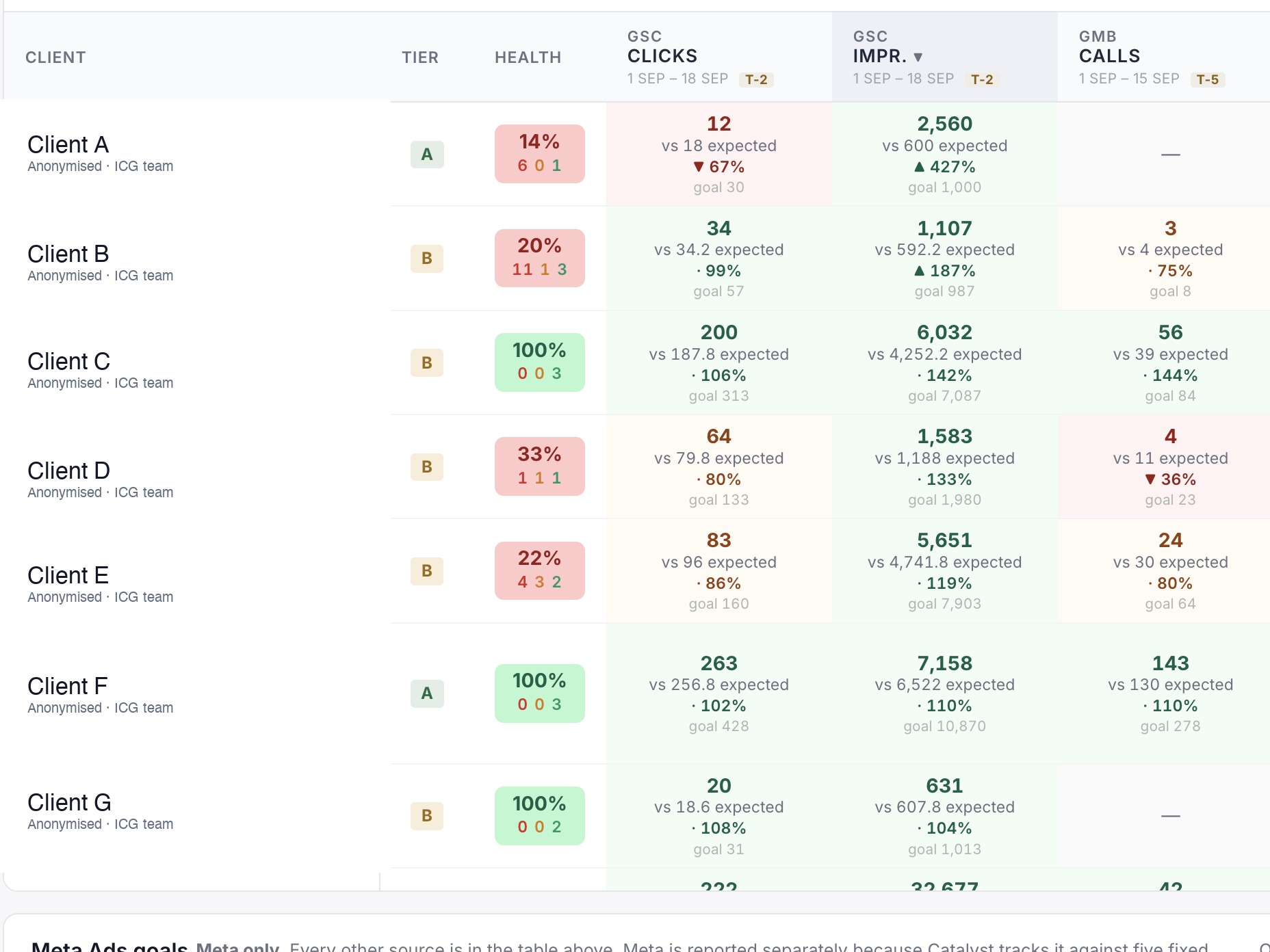
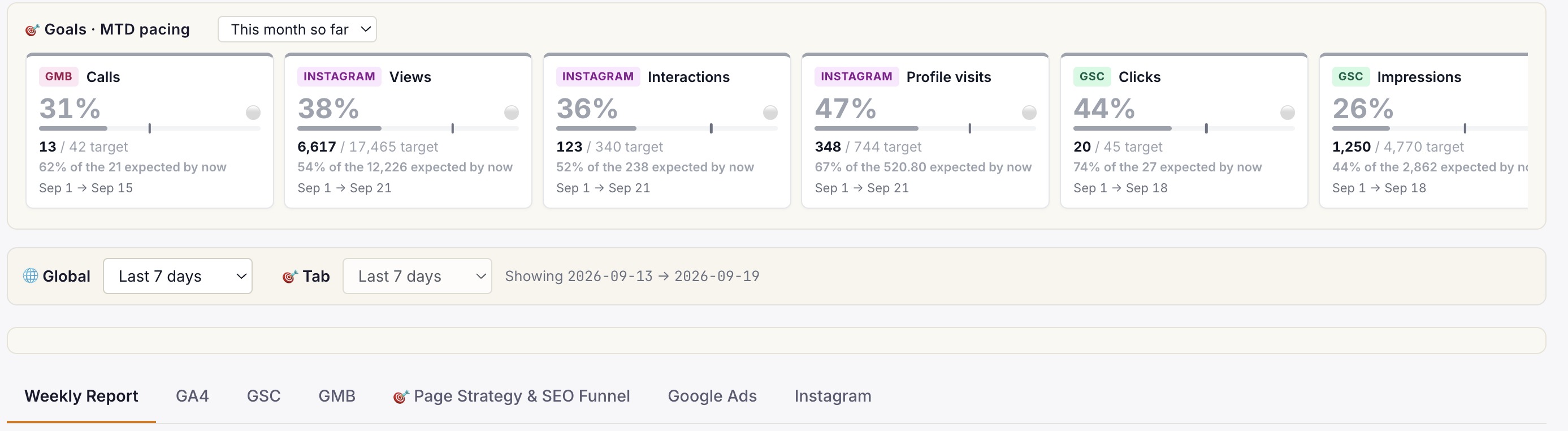
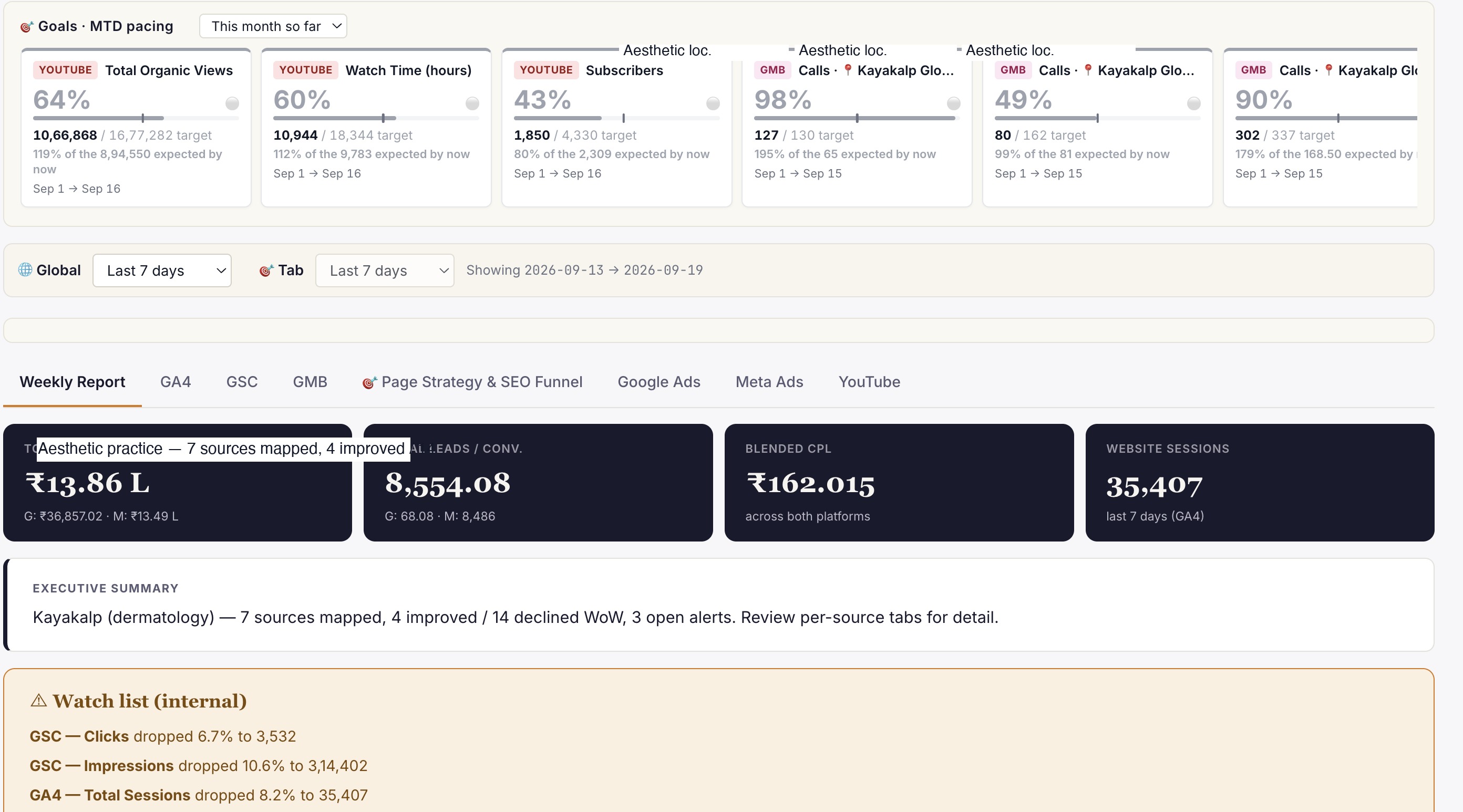
Live client dashboard. GSC, GA4, Google Ads, Meta Ads, IVR calls in one view. Login anytime, not monthly.
Phoenix
Clinic revenue intelligence over your PMS. Daily action queue: Prevent Loss, Maintain & Engage, Grow Revenue. Multi-centre rollout.
Or book a free 30-min audit to see all three in action on your account.
Healthcare brands
that already run on ICG.
A representative slice of the 150+ healthcare brands ICG has delivered for across India. Most engagements remain under NDA.


What ICG clients say · on video.
"Scale up of organic channels and business consulting. ICG has absolute domain authority in their field."
"Working with ICG transformed how we acquire IVF patients in Gurgaon. They understand the fertility journey from inquiry to consult..."
"What Ichelon accomplished — they got all my ideas and worked over 3-4 months to create an amazing, super-customised website."
The intelligence stack behind this playbook.
Every ICG engagement runs on the Search Intelligence Trifecta — Angryturtle for GMB, SIE for search and AI Overview, YODA for YouTube. Live product screens below.
Need help operationalising this?
Every ICG service is healthcare-only, NMC + DPDP-aware, and built around the patient-research patterns that drive Indian healthcare growth in 2026.
Every practice welcome — packages from ₹20,000/mo.
Goals-Driven engagements · Performance-Linked Payout Models available
More from
ICG.
Five trends shaping Indian healthcare marketing through 2027: AI-first patient research, Conversions API adoption, ABDM discovery, the AEO w...
Healthcare AIO is the discipline of getting your clinic or hospital cited inside Google AI Overviews, ChatGPT and Perplexity answers — not j...
Conversational-search advertising places brand messages inside AI chat answers — ChatGPT, Perplexity, Copilot — rather than beside a results...
Stop guessing.
Book a Diagnostic.
30 minutes. Free. With the AI-powered healthcare-only marketing agency 150+ brands already run on. No slides, no pitch, no hard close.


