


NMC Registration for Nurses 2026: Verification & Hiring Checklist
NMC and State Nursing Council rules for 2026: verify a nurse's licence, handle NNMC transition, foreign-trained candidates, and DPDP-safe hiring.
No pitch. Written root-cause diagnosis. AI-powered, healthcare only.
Direct answer
NMC and State Nursing Council rules for 2026: verify a nurse's licence, handle NNMC transition, foreign-trained candidates, and DPDP-safe hiring.
TL;DR
Nursing hiring in Indian hospitals in 2026 is meaningfully more complex than it was three years ago. The National Nursing and Midwifery Commission (NNMC) transition, DPDP Act 2023 candidate data requirements, and state nursing council interaction dynamics have all created new HR responsibilities. This article breaks down what NMC/NNMC registration actually means for a nursing candidate in 2026, how hospital HR should verify registration, and where the common pitfalls happen.
NMC, NNMC, and State Nursing Councils — what applies to nursing hiring
Note: The Indian Nursing Council (INC) has historically been the national body for nursing regulation, with State Nursing Councils registering individual nurses. The National Nursing and Midwifery Commission (NNMC) framework, notified in 2023, is progressively replacing INC. In 2026, both frameworks are operational in transition. For hospital HR, this means:
- Existing nurse registrations under State Nursing Councils remain valid
- New nurse registrations are progressively moving to NNMC-aligned processes
- Verification workflows differ between older and newer registrations
Whether the term "NMC registration" (Nursing) is used in ICG's hiring context or "State Nursing Council registration" is used, the practical requirement is the same: the nurse must hold current registration in the state where they will practise.
What NMC/State Council registration means for a nursing candidate
Registration confirms that:
- The nurse has completed a recognised nursing programme (GNM, B.Sc Nursing, Post-Basic B.Sc, or M.Sc Nursing) at a Council-recognised institution
- The nurse has passed the required examinations
- The nurse's academic credentials have been verified by the issuing State Council
- The nurse is currently in good standing (no active suspensions or restrictions)
Registration does NOT confirm specialty depth (ICU, OT, NICU), specific skill training (ventilator management, ACLS, BLS), or English proficiency. Those must be verified separately.
How to verify registration before hiring
The reliable verification process:
- Collect the nurse's registration certificate — usually a physical card or PDF with registration number, name, category, and issuing State Council
- Note the issuing State Council and cross-reference on that Council's online verification portal (most Councils publish these)
- Cross-check the registration number against the nurse's PAN card or Aadhaar for name match
- Note the registration validity — several Councils require renewal every 5 years; expired registrations disqualify practice
- For senior positions or specialty positions, request academic transcripts to verify institution and programme
- Where practical, request a signed self-declaration from the candidate confirming no active disciplinary proceedings
The single most common HR mistake: accepting a nurse's photocopy of registration certificate without portal verification. Fraudulent registration certificates circulate in the Indian recruitment market and cause meaningful reputation risk for hospitals that hire based on unverified documents.
Common issues with foreign-trained nurses (Philippines, Nepal, GCC returnees)
India-bound foreign-trained nurses require additional verification steps:
- Foreign nursing qualifications must be recognised by an Indian State Nursing Council through the Foreign Qualification Recognition process
- Philippines-trained nurses typically go through a state-specific recognition process — different States apply different rigour
- Nepal-trained nurses generally have expedited recognition due to the bilateral training frameworks
- GCC returnees (nurses returning from the Gulf) must ensure their Indian State registration is current — several nurses let this lapse during Gulf assignments
For any foreign-trained nurse hiring, verify the specific State recognition status before extending an offer.
NMC + DPDP Act 2023: what employer data collection is compliant
Under the DPDP Act 2023, hospitals collecting nursing candidate data must comply with several requirements:
- Explicit consent for collection and processing — a signed application form is the standard mechanism, but the form must specify what data is collected and for what purpose
- Purpose limitation — data collected for hiring cannot be reused for marketing or other purposes without additional consent
- Retention periods — candidate data should not be retained indefinitely if the candidate is not hired. ICG's standard practice: 24 months retention with deletion upon request
- Third-party sharing (background verification, TPA, insurance) — requires specific consent, not blanket consent
- Candidate rights — access, correction, deletion requests must be honoured within reasonable time (typically 30 days)
Hospital HR departments that operate manual paper-based candidate files often struggle with DPDP compliance because retention periods, deletion procedures, and access request handling are not documented. Digitising candidate data intake — ideally through a managed recruitment partner — resolves the majority of these compliance gaps.
What ICG Workforce verifies before shortlisting
Every nursing candidate on the ICG Workforce database has:
- Registration certificate verified against issuing State Nursing Council portal
- Highest qualification transcript reviewed
- Sub-specialty background (ICU, OT, NICU, ER, ward) confirmed through structured phone interview
- English proficiency assessed for patient-facing roles
- Notice period, current compensation, and career-stage aspirations captured
- DPDP consent captured with timestamp and IP address
Employers receive candidate summaries (not raw profiles) with verification status pre-confirmed. This eliminates the most common failure mode in nursing recruitment: extending an offer to a candidate whose registration cannot be verified in time for the joining date.
Post a nursing requirement to ICG Workforce
ICG Workforce's nursing recruitment service delivers shortlists in 5-10 working days with all registration verification and specialty screening pre-completed. Every permanent placement carries a 60-day replacement guarantee.
Related reading
- Nursing Recruitment Agency India — ICG Workforce
- Nursing Careers via ICG Workforce
- Hospital Recruitment India
- DPDP Act 2023 for Healthcare Employers
State Nursing Council verification: 2026 turnaround benchmarks and common hospital mistakes
Most hospital HR teams underestimate how much verification timelines vary between State Nursing Councils, and that variance is the single biggest reason a nursing shortlist collapses in the last 48 hours before joining. The table below captures the benchmarks the ICG Workforce desk has recorded across State Council verifications initiated in the first half of 2026.
| State Council | Online verification available | Median TAT (2026) | Common blocker |
| Kerala Nurses & Midwives Council | Yes | 3-5 working days | Name mismatch with Aadhaar |
| Tamil Nadu Nurses & Midwives Council | Partial | 7-10 working days | Renewal lapse post-2021 |
| Karnataka State Nursing Council | Yes | 4-7 working days | Diploma vs GNM record |
| Delhi Nursing Council | Manual | 10-15 working days | Physical file pendency |
| Maharashtra Nursing Council | Yes | 5-8 working days | Foreign transcript translation |
Five verification mistakes we still see in 2026
- Accepting the registration number without a portal check. A screenshot is not verification — pull it live on the State Council portal on the day of offer release.
- Missing the renewal cycle. Most councils require renewal every five years. A lapsed licence is not a valid licence even if the original registration was genuine.
- Treating GNM and B.Sc Nursing registrations as interchangeable. Critical care and ICU roles usually need the higher category; the council entry will say so explicitly.
- Skipping foreign-credential equivalence for GCC and Philippines returnees. A registration abroad does not auto-convert; the candidate needs a valid Indian State Council entry before you can extend an offer.
- Storing verification screenshots in unstructured drives. Under DPDP Act 2023, that is a data-fiduciary exposure. Keep evidence in a purpose-tagged HRIS field, not a shared folder.
If you want this checklist run for every nursing shortlist you receive, that is exactly what the ICG Workforce desk does before a candidate reaches your interview panel. For the broader hiring architecture — accreditation, credentialing, and NABH-aligned HR files — see our NABH HR file checklist and the Client Elevation Programme for hospital groups scaling multiple units.
What does NMC-verified nurse hiring actually cost in 2026, and where does ABDM readiness fit in?
All-in cost per NMC-verified staff nurse in an Indian hospital sits between ₹18,000 and ₹42,000 per closed seat in 2026. That covers sourcing, state-council verification turnaround, offer-drop cushion and the first payroll cycle. Critical-care hires (ICU, dialysis, OT) run at the top of that band. The variance is driven less by base salary and more by two things most HR leads underestimate: how clean your state-council verification pipeline is on Day 0, and whether your Hospital Information System is set up to onboard the nurse into the ABDM stack on Day 1.
City and specialty benchmarks for verified nurse hiring (2026)
| City band | General ward CPQH* | Critical care (ICU/OT/Dialysis) CPQH |
|---|---|---|
| Delhi NCR, Mumbai, Bengaluru | ₹22,000 to ₹28,000 | ₹34,000 to ₹42,000 |
| Chennai, Hyderabad, Pune, Kolkata | ₹18,000 to ₹24,000 | ₹28,000 to ₹36,000 |
| Tier-2 (Jaipur, Lucknow, Kochi, Chandigarh) | ₹14,000 to ₹20,000 | ₹22,000 to ₹30,000 |
*CPQH = cost per qualified hire, sourcing plus verification plus offer management. Excludes ongoing agency retainer.
ABDM and ABHA readiness: what changes when your nurse becomes an HIS user
The moment a new hire logs into your HIS, they become a data-fiduciary touchpoint under the DPDP Act 2023. If the hospital is ABDM-connected, they also carry a Health Professional Registry (HPR) identity. Before Day 1, three things need to be done: capture or initiate the nurse's HPR ID, map their NMC and State Council numbers into the HR file, and scope EMR access in the HIS to the wards they are actually rostered for. Hospitals that skip this step end up flagged at NABH entry-level audits and again during payer empanelment refreshes.
Quarterly renewal audits: keeping the register clean
On a 300-bed hospital's payroll, roughly 6 to 9 percent of nursing staff show a lapsed or renewal-pending State Council registration at any given moment. A quarterly desk audit against the State Nursing Council's public verifier catches this before it turns into an empanelment or NABH re-accreditation issue. ICG Workforce runs this on a 70/30 commercial model: a fixed monthly retainer funds the sourcing and verification engine, and 30 percent ties to closed seats plus clean audit outcomes.
Frequently asked questions
How often should hospitals re-verify nurse registrations after onboarding?
Verify once at hire, then run a quarterly cross-check against the State Nursing Council live register. Full re-verification is mandatory at each renewal cycle (typically five years, state-dependent). NABH surveyors routinely ask to see the last two renewal-cycle audit logs.
Does an ABDM Health Professional Registry (HPR) ID replace State Council verification?
No. HPR is an identity layer built on top of council data. It does not substitute for a live State Nursing Council check. A clean 2026 compliance file needs both the HPR ID and a dated State Council verification screenshot on record.
Book a free 30-minute Brand & Growth Diagnostic.
It's a working session, not a sales pitch — you leave with a written root-cause analysis you can act on, whether or not you engage ICG.
Questions readers ask
about this topic.
The three platforms
behind every ICG engagement.
Beacon
CAPI middleware that fixes Event Match Quality, translates CRM statuses to Meta-standard events, dedups across channels.
Agency OS
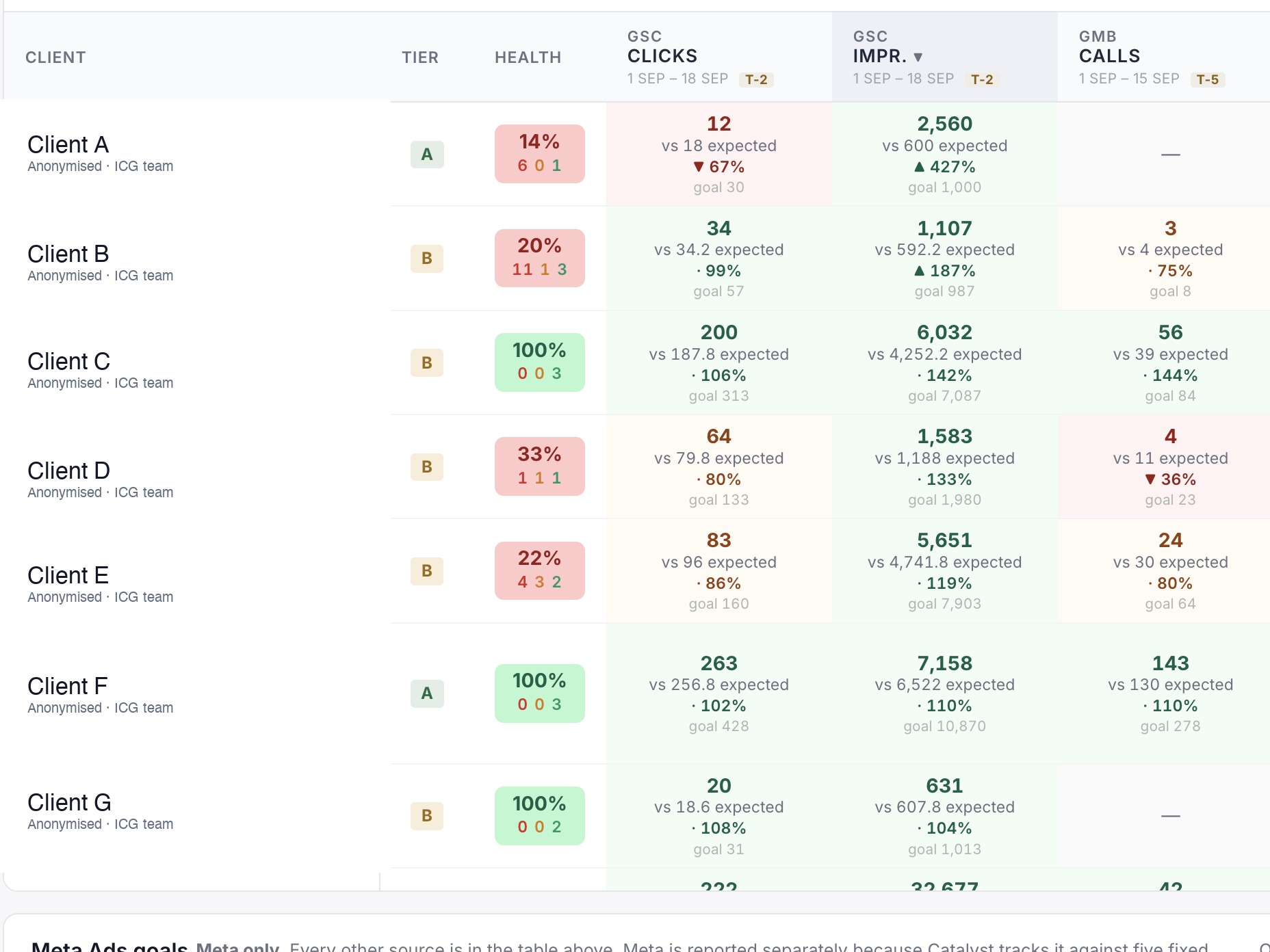
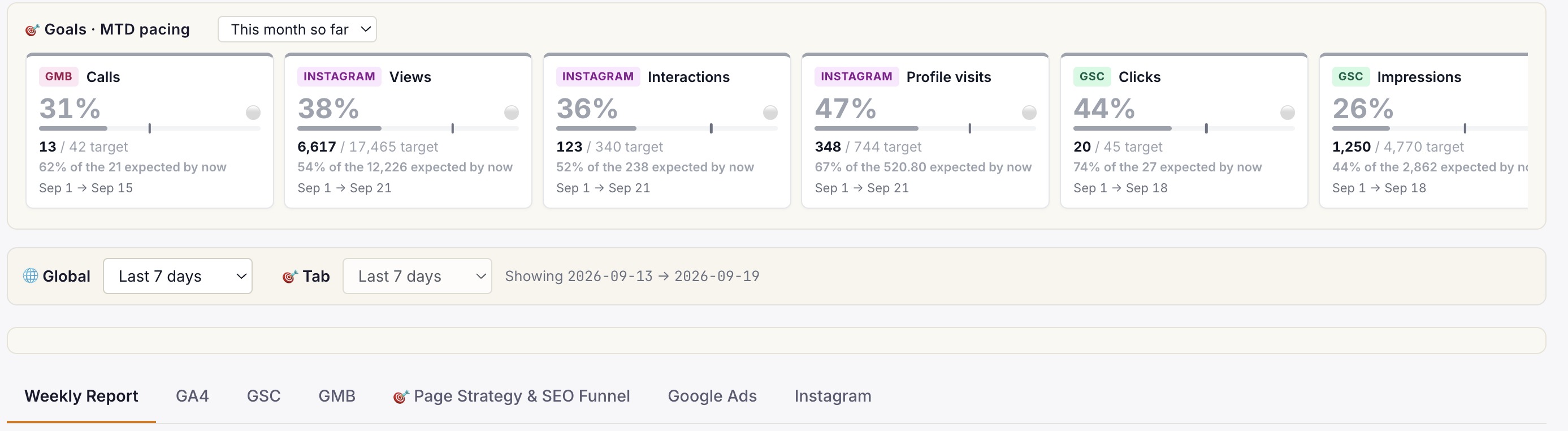
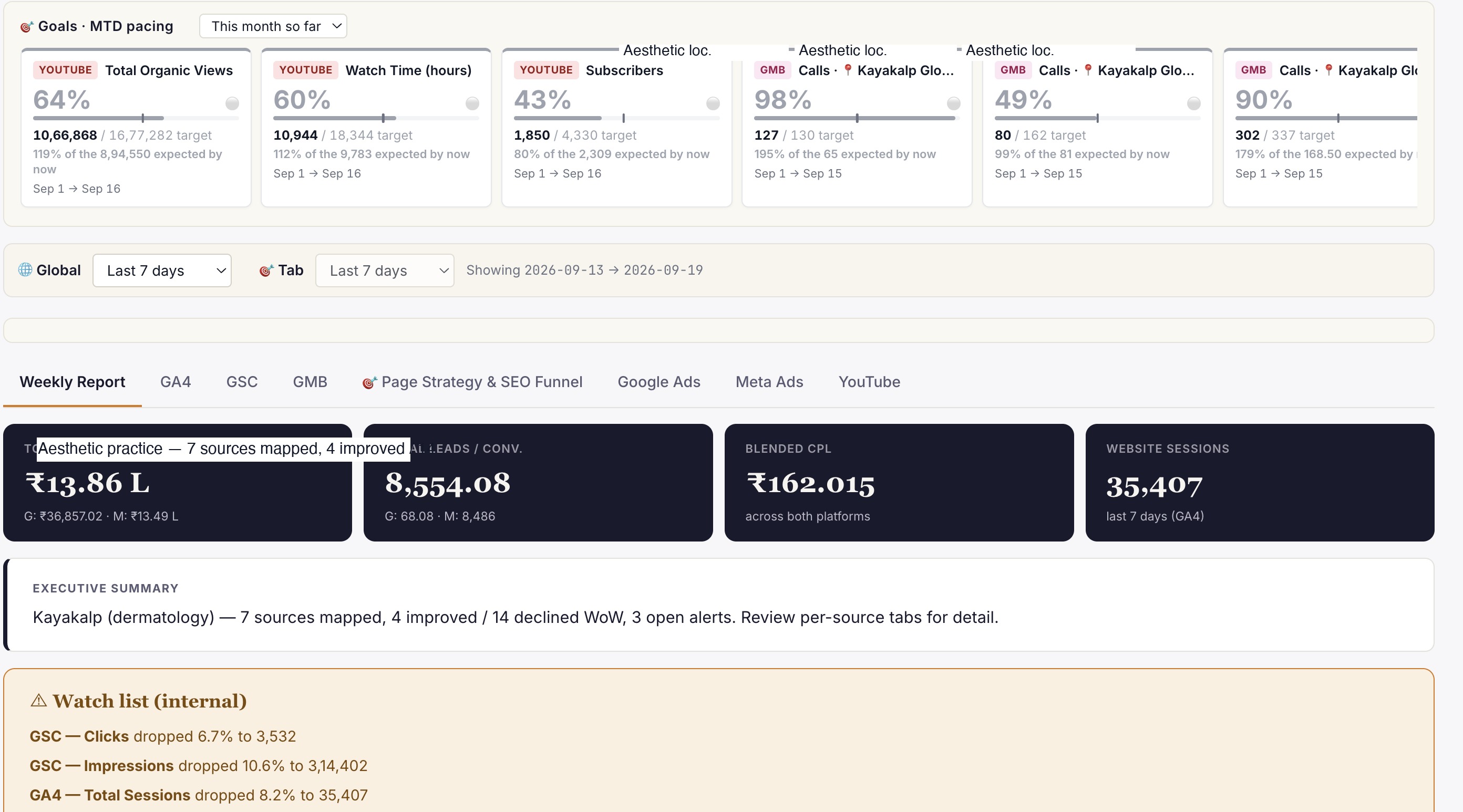
Live client dashboard. GSC, GA4, Google Ads, Meta Ads, IVR calls in one view. Login anytime, not monthly.
Phoenix
Clinic revenue intelligence over your PMS. Daily action queue: Prevent Loss, Maintain & Engage, Grow Revenue. Multi-centre rollout.
Or book a free 30-min audit to see all three in action on your account.
Healthcare brands
that already run on ICG.
A representative slice of the 150+ healthcare brands ICG has delivered for across India. Most engagements remain under NDA.


What ICG clients say · on video.
"Mental health marketing requires a different sensitivity. ICG built compliance-aware campaigns that respect both patients and our..."
"Bariatric surgery patients need a long consideration cycle. ICG built a content + paid system that respects that timeline."
"Working with ICG felt like working with an in-house growth team that happens to specialise in healthcare."
Need help operationalising this?
Every ICG service is healthcare-only, NMC + DPDP-aware, and built around the patient-research patterns that drive Indian healthcare growth in 2026.
Every practice welcome — packages from ₹20,000/mo.
Goals-Driven engagements · Performance-Linked Payout Models available
More from
ICG.
Hindi and regional-language SEO means publishing proper pages in the languages your patients search in, on their own URLs and linked with hr...
A new pharma brand in India should start digital work before launch, built around who it may legally address. This six-month plan covers pro...
Hospitals and clinics in India can still advertise after the NMC's 6 October 2026 guidelines, but only with factual, verifiable information....
Stop guessing.
Book a Diagnostic.
30 minutes. Free. With the AI-powered healthcare-only marketing agency 150+ brands already run on. No slides, no pitch, no hard close.


