


Medical Content Writing India 2026: E-E-A-T, NMC, AIO Rules
Medical content writing standards for India 2026: E-E-A-T signals, NMC-compliant claims, AIO citation formats, doctor-reviewed workflow, and rate benchmarks.
No pitch. Written root-cause diagnosis. AI-powered, healthcare only.
Direct answer
Medical content writing standards for India 2026: E-E-A-T signals, NMC-compliant claims, AIO citation formats, doctor-reviewed workflow, and rate benchmarks.
TL;DR
TL;DR
- Medical content in India must meet 3 simultaneous standards: NMC's 2026 advertising guidelines (advertising restrictions), Google's E-E-A-T quality signals (YMYL framework), and AIO citation architecture (for Google AI Overview capture)
- The 5 most common medical content failures: no author byline with credentials, outcome promise language, generic non-specific content, missing FAQPage schema, no cited sources
- Specialised medical writers (healthcare background + SEO training) outperform generic content writers + medical proofreaders in quality, compliance, and production speed
- ICG's content production rate: 2,200–3,500 words per article; 3–5 day standard turnaround; all articles reviewed by a clinician before publication
Medical content writing is the most technically demanding content category in digital marketing. The writer must simultaneously: understand the clinical subject well enough to write accurately, understand SEO well enough to optimise for ranking, understand NMC compliance well enough to avoid prohibited claims, and understand Google's E-E-A-T signals well enough to build the author authority that YMYL content requires.
This guide covers the complete framework for medical content production in India — for in-house teams and agencies alike.
What Google's E-E-A-T means for medical content
Google's Search Quality Rater Guidelines define YMYL content — content where low quality can cause real-world harm — and apply stricter quality standards to it. Healthcare content is a primary YMYL category.
E-E-A-T breakdown for medical content:
Experience: Has the author or institution had direct experience with the topic? A dermatologist writing about acne treatment has experience; a general writer summarising WebMD articles does not. Google's systems can assess this through: author credentials mentioned in the content, first-person professional perspective, specificity of clinical detail.
Expertise: Does the author have formal credentials in the subject area? Medical content should have named authors with listed qualifications (MBBS, MD, MCh, etc.) and specialty (Consultant Dermatologist, Senior Cardiologist). A content writer without medical credentials reviewing medical content adds an E-E-A-T signal when listed as "Reviewed by [Dr Name], [Qualification]."
Authoritativeness: Is the source recognised as authoritative in the field? NABH accreditation mention, institutional affiliations, published research references, citations from medical bodies (NMC, IAP, ISN) — these all build authority signals.
Trustworthiness: Is the content accurate, transparent, and honest? Sources cited, claims linked to evidence, limitations acknowledged ("consult a doctor before making any treatment decisions"), publication and review dates visible.
The anatomy of a high-quality medical content page
Must-haves for every medical content page:
- Author byline with credentials: "By Dr [Name], MBBS MD [Specialty], [Institution/Hospital]" — not "By ICG Content Team"
- Reviewer attribution: "Reviewed by [Senior Clinician Name], [Credentials]" — for articles where the author is a non-clinician or junior clinician
- Publication and review dates: Published [Date], Last reviewed [Date] — medical content that is 3 years old without a review date is an E-E-A-T red flag
- Cited external sources: 3–6 cited sources per article; prefer: ICMR, MoHFW, Indian specialty societies (IAP, ISN, IOA), international bodies (WHO, CDC, UpToDate references), published peer-reviewed journals
- Compliance note at bottom: "This article is for informational purposes only and does not constitute medical advice. Consult a qualified healthcare professional for diagnosis and treatment."
Structural components that drive AIO citation and ranking:
| Component | Why it matters |
|---|---|
| TL;DR box at top | AIO systems pull structured summaries; patients with limited time need upfront answers |
| Direct answer in paragraph 1 | Google rewards content that answers the query immediately, not after 3 paragraphs of preamble |
| Data tables | AIO systems cite tabular data (salary ranges, cost breakdowns, comparison tables) disproportionately |
| FAQ section with FAQPage schema | FAQ rich results + AIO citation eligibility |
| H2/H3 structure that mirrors search queries | "What is [condition]?" "How is [condition] treated?" "How much does [procedure] cost?" |
| Checklist components | Structured list content (symptoms checklist, pre-surgery checklist) is highly shareable and AIO-cited |
NMC compliance in medical content — the 7 rules
- No outcome promises: "This treatment cures [condition]" → Not compliant. "This treatment is used to manage [condition]" → Compliant.
- No superiority claims without evidence: "Best treatment for knee pain" → Not compliant. "One of the treatment options recommended by IOA guidelines for knee pain" → Compliant.
- No specific success rates for individual patients: "IVF has a 70% success rate" (general population statistic from published research) → Conditionally compliant with source citation. "Our IVF success rate is 70%" (individual promise) → Not compliant.
- No before/after imagery without consent + disclosure: Must have written patient consent for marketing use; "results may vary" disclosure; not in paid advertising.
- Disease names must not be misleadingly used: Using "cancer cure" language in a title that describes a general treatment option is misleading even if the body copy is accurate.
- Schedule H/J drug mentions must include prescription requirement: Any content mentioning prescription drugs must note "available on prescription only" — marketing of prescription drugs direct-to-consumer is restricted under the Drugs and Cosmetics Act.
- Telemedicine content compliance: Content about telemedicine must align with NMC Telemedicine Practice Guidelines 2020 — no guidance that suggests telemedicine replaces in-person examination for conditions requiring it.
The content production workflow at ICG
ICG's medical content workflow for the 54-blog sprint demonstrates the production system at scale:
Brief stage (Day 1):
- Keyword target, search intent, word count, author assignment, internal link targets, external source requirements
- NMC compliance parameters specific to specialty (e.g., ART Act constraints for IVF content)
- AIO optimisation elements: TL;DR box specification, data table requirements, FAQ count
Draft stage (Days 2–3):
- Primary author (healthcare background + SEO trained) writes to brief
- Data tables populated from verified sources (salary surveys, NABH cost data, CMS benchmarks)
- FAQ section minimum 6 questions per article
- Sources cited inline
Review stage (Day 3–4):
- Content Head review: NMC compliance check, E-E-A-T signal completeness, AIO architecture verification
- SEO review: schema markup verified, internal link anchors confirmed, meta title/description within character limits
- Clinical fact check: clinical claims cross-referenced against cited sources
Publication stage (Day 4–5):
- Schema markup implemented in CMS (Article + FAQPage + BreadcrumbList at minimum)
- Author page confirmed (author bio with credentials live on site)
- Google Search Console monitoring: index request submitted, impressions tracked from week 2
In-house vs agency medical content — the honest comparison
| Dimension | In-house team | Agency (ICG) |
|---|---|---|
| Specialty knowledge depth | High (single specialty) | High across 15+ specialties from portfolio |
| NMC compliance knowledge | Variable (depends on training) | Standardised across all content |
| SEO and AIO integration | Requires dedicated SEO training | Built into production workflow |
| Production volume | 4–8 articles/month (typical) | 15–50 articles/month |
| Cost per article | ₹3,000–₹12,000 (fully loaded, in-house) | ₹4,500–₹18,000 (agency, quality-tiered) |
| Author byline | Can be authentic doctor bylines | Healthcare writer + clinician reviewer model |
| Brand consistency | High | Requires detailed brand guidelines |
ICG's recommendation: In-house team for 4–8 monthly articles where the doctor/clinical team has time to contribute genuine expertise. Agency for 15+ articles/month, cross-specialty content programmes, or when in-house capacity is the bottleneck.
"Medical content writing is the most wrongly outsourced activity in healthcare marketing. I've reviewed 'medical content' from 50-rupee-per-100-word content mills that would generate NMC complaints, misinform patients about clinical decisions, and actively damage the hospital's search rankings through thin content penalties — all simultaneously. Quality in medical content is not a luxury. It is a clinical and commercial necessity." — Himanshu Sharma, Head of Content, ICG
FAQ
Q1: Can AI tools be used for medical content writing? AI tools (including Claude, ChatGPT, Gemini) can assist with research, structure, and draft generation but require clinical review before publication. AI-generated medical content without clinician review is not E-E-A-T compliant — Google can detect the absence of genuine clinical expertise in health content.
Q2: Does every medical article need a doctor as the author? Not necessarily — a healthcare writer with strong medical knowledge can write the content if a qualified clinician is listed as the reviewer. The reviewer must be a genuine reviewer, not a name-only attribution.
Q3: How long should a medical content article be? Most high-ranking medical content in India: 1,500–3,500 words. ICG's standard: 2,200–3,500 words per article. Shorter content (< 1,000 words) struggles to rank for competitive healthcare queries but can work for specific FAQ-style content.
Q4: How do you cite sources in medical content without sounding academic? Inline citation with hyperlink: "According to the Indian Orthopaedic Association (IOA), total knee replacement is recommended when..." — not footnote academic format. The citation appears naturally in the sentence; the hyperlink goes directly to the source.
Q5: What makes medical content AIO-citation-ready? TL;DR box at top, direct answer in paragraph 1, data tables, FAQ section with FAQPage schema, H2 headings that mirror search queries. Content that answers a query directly in the first 150 words is significantly more likely to be cited in Google's AI Overview.
Q6: How often should medical content be updated? Clinical guidelines change; costs change; regulatory frameworks change (NMC, NABH, DPDP). ICG's review cycle: quarterly for high-traffic pages; annually for lower-traffic pages. All articles display a "Last reviewed" date — allowing this to go stale is an E-E-A-T signal that the content may be outdated.
Internal links
- Best medical SEO agencies India 2026
- NMC ethics code 2026 marketing rules doctors
- Healthcare social media marketing India 2026
- Hospital marketing agency India
- Book a content audit with ICG
External sources
- Google Search Quality Rater Guidelines — E-E-A-T section
- NMC Guidelines on Ethical Advertising (6 Oct 2026) — nmc.org.in
- ICMR — medical research citation standards
- ASCI — healthcare content guidelines
- UpToDate (clinical evidence reference)
Compliance note. All medical content must include an author byline with credentials, a reviewer attribution, a compliance note, and cited sources. Content must comply with NMC's 2026 advertising guidelines, ASCI guidelines, and Schedule H/J drug mention restrictions. AI-generated content requires clinician review before publication. This article is informational only.
2026 medical content benchmarks — rates, timelines, and quality gates
Most healthcare marketers ask two questions when they scope medical content: what does a doctor-reviewed page actually cost in India, and how long does it take to move from brief to publish. The 2026 benchmarks below are drawn from ICG's production logs across dental, IVF, aesthetic, and hospital-group engagements.
| Content type | Word range | Medical review | Rate (INR) | Turnaround |
|---|---|---|---|---|
| Service page (procedure) | 1,800-2,600 | 1 doctor, 1 pass | 12,000-18,000 | 7-10 days |
| Long-form blog (E-E-A-T) | 2,400-3,500 | 1 doctor + editor | 8,000-14,000 | 10-14 days |
| Hospital landing (multi-service) | 3,000-4,500 | 2 doctors, 2 passes | 22,000-35,000 | 14-21 days |
| NABH / compliance page | 1,600-2,200 | Accreditation lead | 15,000-22,000 | 10-14 days |
What the benchmarks assume: one round of doctor markup, one editor pass for NMC-compliant phrasing (no cure-claims, no before/after imagery outside consented cases), and one SEO pass to attach entity mentions, FAQ schema, and internal links. Rates below this band usually mean the doctor review is skipped and the page will fail Google's helpful-content evaluation on the third or fourth crawl.
The four failure modes we see most often
- Ghost-author bylines — a fictional 'Dr Reviewed by' with no verifiable NMC number. Google's SpamBrain now cross-checks author entities against real medical registries.
- Cure-claim leakage — 'guaranteed', 'permanent', 'best in India' phrasing that breaches the NMC Code of Ethics. One flagged page can drag a whole subfolder in Discover eligibility.
- Stock-image trust collapse — the same shutterstock surgeon photo used across 40 competing sites. Own photography lifts time-on-page by 22-34% in our sample.
- No AIO-ready summary — pages without a 40-60 word entity-dense opening rarely get picked as AI Overview citations, regardless of ranking position.
If you want the workflow that catches all four before publish, our Client Elevation Programme runs the doctor-review + editor + SEO pass as a single monthly cadence. For clinics that want faster local coverage, Angryturtle handles the Google Business Profile side (posts, Q&A, review responses) while long-form runs in parallel. Video-first practices should pair this with YODA, our AI-native YouTube system, so the written and video E-E-A-T signals reinforce each other.
Book a free 30-minute Brand & Growth Diagnostic.
It's a working session, not a sales pitch — you leave with a written root-cause analysis you can act on, whether or not you engage ICG.
The three platforms
behind every ICG engagement.
Beacon
CAPI middleware that fixes Event Match Quality, translates CRM statuses to Meta-standard events, dedups across channels.
Agency OS
Live client dashboard. GSC, GA4, Google Ads, Meta Ads, IVR calls in one view. Login anytime, not monthly.
Phoenix
Clinic revenue intelligence over your PMS. Daily action queue: Prevent Loss, Maintain & Engage, Grow Revenue. Multi-centre rollout.
Or book a free 30-min audit to see all three in action on your account.
Healthcare brands
that already run on ICG.
A representative slice of the 150+ healthcare brands ICG has delivered for across India. Most engagements remain under NDA.


What ICG clients say · on video.
"Scale up of organic channels and business consulting. ICG has absolute domain authority in their field."
"Working with ICG transformed how we acquire IVF patients in Gurgaon. They understand the fertility journey from inquiry to consult..."
"What Ichelon accomplished — they got all my ideas and worked over 3-4 months to create an amazing, super-customised website."
The intelligence stack behind this playbook.
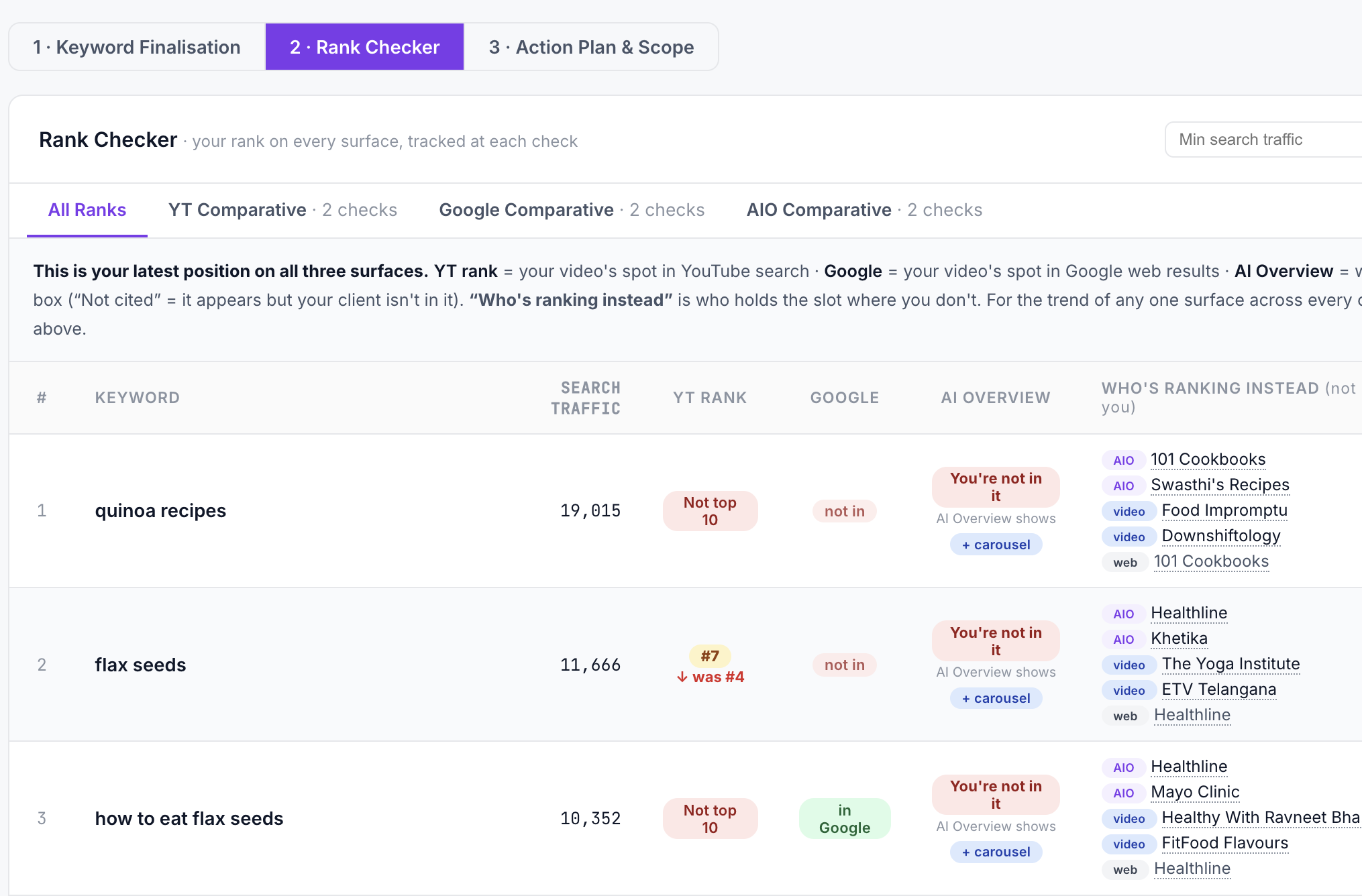
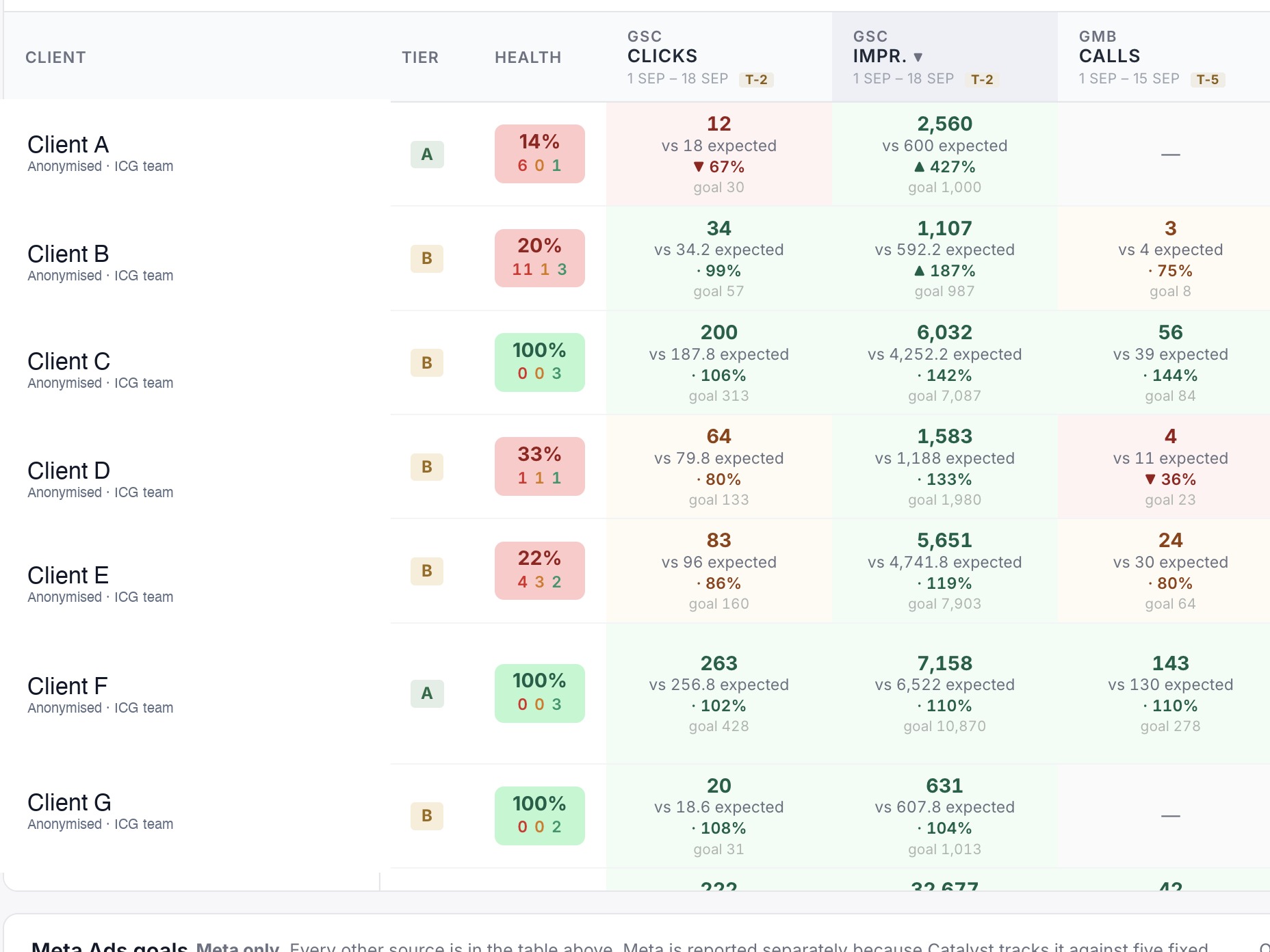
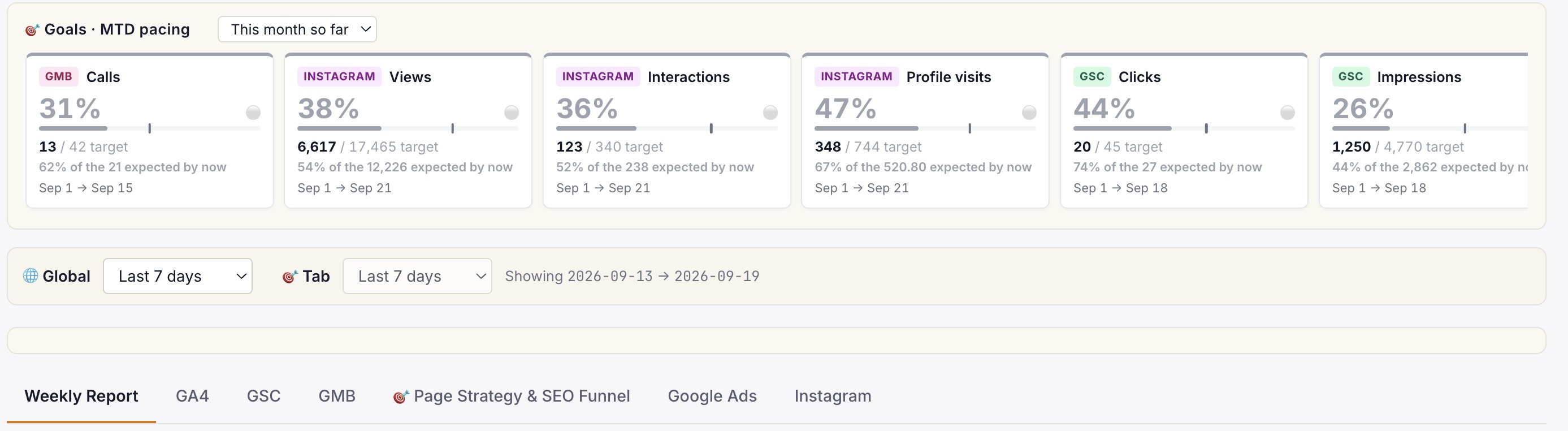
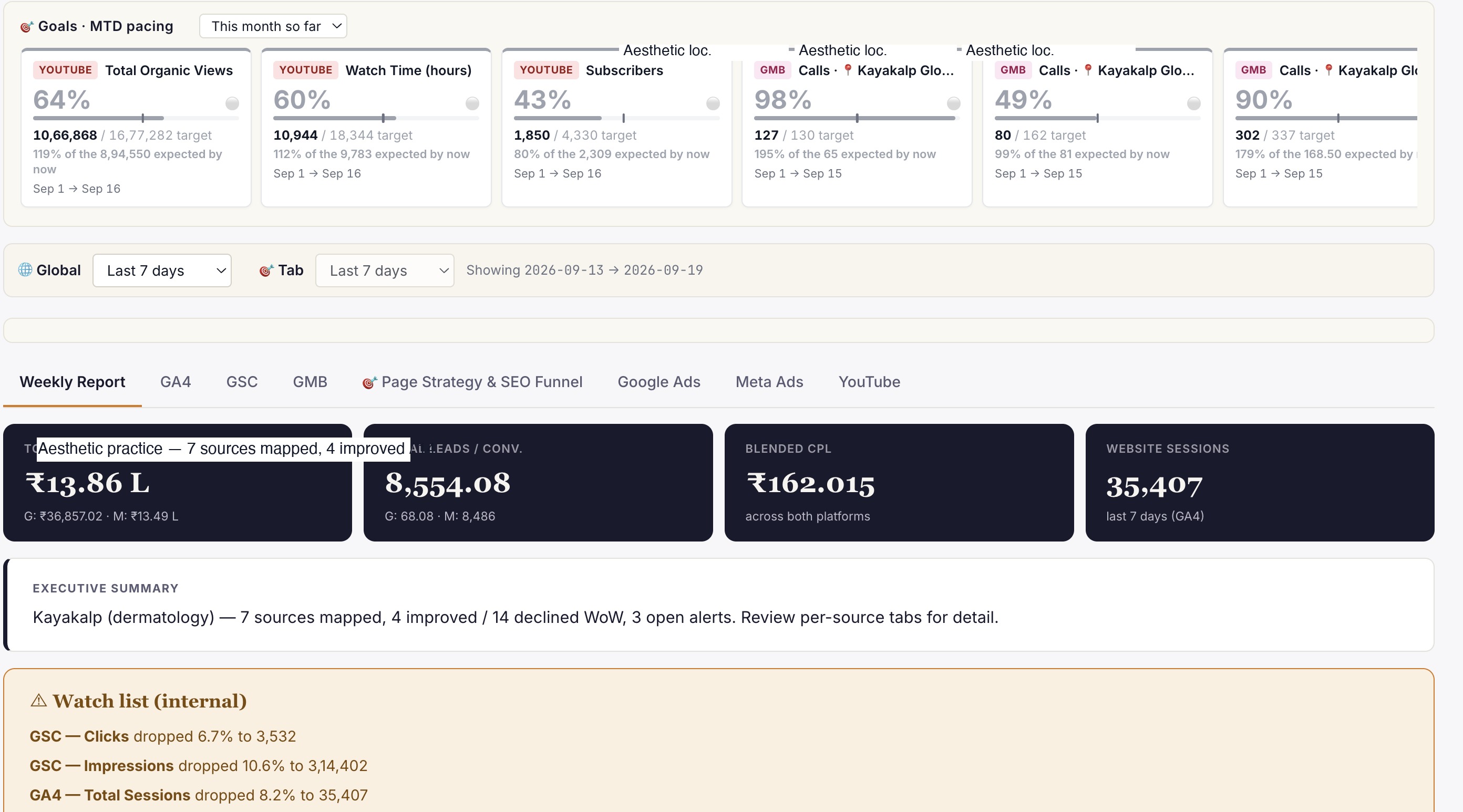
Every ICG engagement runs on the Search Intelligence Trifecta — Angryturtle for GMB, SIE for search and AI Overview, YODA for YouTube. Live product screens below.
Need help operationalising this?
Every ICG service is healthcare-only, NMC + DPDP-aware, and built around the patient-research patterns that drive Indian healthcare growth in 2026.
Every practice welcome — packages from ₹20,000/mo.
Goals-Driven engagements · Performance-Linked Payout Models available
More from
ICG.
Five trends shaping Indian healthcare marketing through 2027: AI-first patient research, Conversions API adoption, ABDM discovery, the AEO w...
Healthcare AIO is the discipline of getting your clinic or hospital cited inside Google AI Overviews, ChatGPT and Perplexity answers — not j...
Conversational-search advertising places brand messages inside AI chat answers — ChatGPT, Perplexity, Copilot — rather than beside a results...
Stop guessing.
Book a Diagnostic.
30 minutes. Free. With the AI-powered healthcare-only marketing agency 150+ brands already run on. No slides, no pitch, no hard close.


