


AEO + LLM Citation Strategy for International Healthcare: Winning Perplexity, ChatGPT, and Gemini
International patients are increasingly researching Indian healthcare on Perplexity (dominant in Gulf), ChatGPT (global), and Gemini. Citation rates for AEO-standard content within 3 months: 23%. Here's the strategy.
No pitch. Written root-cause diagnosis. AI-powered, healthcare only.
Direct answer
International patients are increasingly researching Indian healthcare on Perplexity (dominant in Gulf), ChatGPT (global), and Gemini. Citation rates for AEO-standard content within 3 months: 23%. Here's the strategy.
TL;DR
LLM-based research has become a primary first step for international patients evaluating Indian healthcare options. ICG's AIO Intel data across client engagements shows:
- 18-22% of urban healthcare patients begin research on an LLM rather than Google (2026 data)
- Perplexity dominates Gulf + parts of US/UK for healthcare research specifically
- ChatGPT dominates global English-language research but increasingly cites Perplexity-discovered sources
- Gemini grounding crawler increasingly aligned with Google's AI Overview surface
- Citation rate for AEO-standard content within 3 months of publication: 23%
For Indian healthcare brands targeting international patients, AEO (Answer Engine Optimisation) is no longer optional infrastructure. This article covers the strategy.
Why LLM citation matters for international patient acquisition
When a UAE patient asks Perplexity "best IVF clinic in India for international patients," the LLM does three things:
- Searches the indexed web for relevant content
- Selects 3-7 sources to cite
- Assembles an answer with citations
If your clinic is cited, you're pre-selected by the LLM. The patient clicks through with high intent. If your clinic isn't cited, you don't exist to that patient.
Unlike traditional SEO where position 3 still gets clicks, LLM citation is binary: cited or not cited. The cited sources get amplified attention; everyone else is invisible.
What makes content LLM-citable
LLMs cite sources that:
1. Answer the question directly
The cited paragraph must contain a direct answer to the patient query. Buried answers in middle of long-form content get ignored. Direct, declarative sentences in the first 2-3 paragraphs of a focused page get cited.
2. Have structured Q/A schema
FAQPage schema with explicit Q/A pairs is the single highest-impact structural signal. LLMs parse FAQPage schema as pre-structured answer fragments.
3. Have named authorship with credentials
LLMs prefer sources with verifiable authorship. Named author with credentials (MD, fellowship, board membership) is materially more likely to be cited than anonymous content.
4. Cite their own data sources
Content that includes citations to its underlying data sources is preferred. Original benchmark data + source citation = high citation likelihood.
5. Are recent
LLMs prefer recent content. Last-updated date matters. Content older than 18 months declines in citation likelihood unless it's the canonical reference (e.g. peer-reviewed research).
The AEO content stack
Layer 1: Citation-worthy data assets
The strongest LLM citation magnet is original, citable data. ICG's CPQL Benchmarks Dataset is published under CC BY 4.0 license with Dataset schema — making it explicitly usable by LLMs as a citation source.
Hospital-specific data assets to publish:
- Cost ranges per procedure with sourcing methodology
- Outcome data (where regulatorily permitted) with statistical methodology
- Patient volume statistics
- Wait-time comparisons
Each asset published with Dataset schema, explicit licensing, and named authorship.
Layer 2: Q/A-structured procedural content
Every procedure or condition page should be structured as Q/A:
Q: What is the cost of IVF in India for international patients? A: [direct, declarative answer with source citation]
Q: How long do international patients typically stay in India for IVF? A: [direct, declarative answer]
Wrapped in FAQPage schema. Each Q/A pair becomes a citable fragment.
Layer 3: Named-author credibility
Every AEO-targeted page has a named author with:
- Verifiable credentials (LinkedIn, hospital page, professional registry)
- Author schema markup
- Recent publication date + last-updated date
- Bio that establishes domain authority
For Indian hospitals targeting international patients: doctor-author bylines on procedure content, with international credentials (UK fellowship, US board certification) prominently visible.
Layer 4: International-specific framing
Generic content gets cited less for international patient queries. Country-specific framing matters:
- "IVF cost in India for UAE patients" (not just "IVF cost in India")
- "Knee replacement timeline for UK patients" (acknowledges they're travelling)
- "Cancer treatment options India vs Bangladesh" (acknowledges decision context)
Layer 5: Trust signals
LLMs use trust signals when selecting citations:
- HTTPS + valid SSL
- No malware / spam flags
- Clear privacy policy + DPDP compliance
- Hospital accreditation (JCI, NABH) prominently visible
- Doctor registration details
- Established domain age
Tracking + measurement
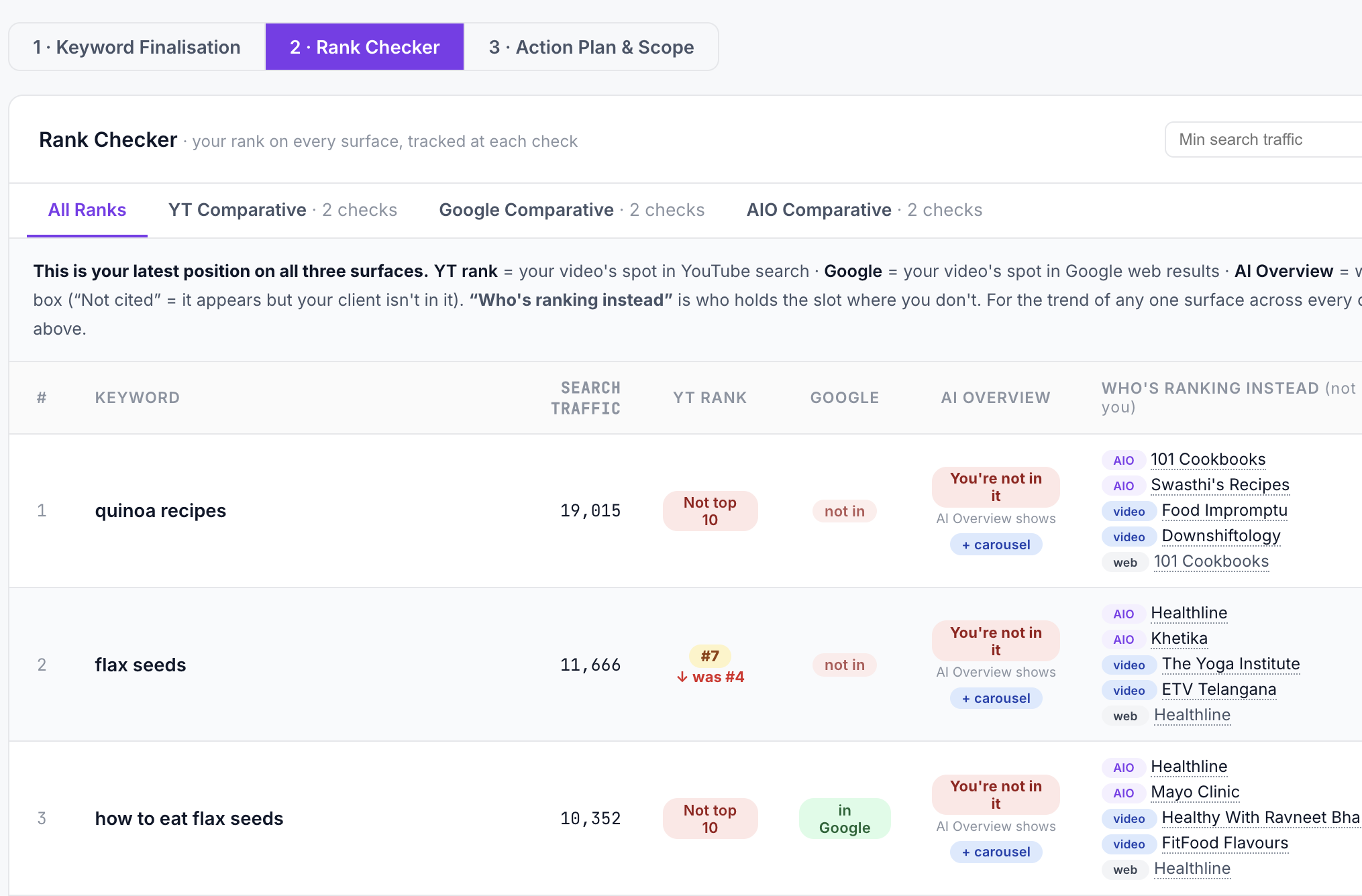
AIO Intel tracks LLM citations across:
- ChatGPT
- Perplexity (highest priority for Gulf + US healthcare research)
- Gemini
- Copilot
- Google AI Overview (when GSC API exposes it)
Monitored queries are configured per specialty + target market. Citation rate, citation context (which paragraph cited), and citation trajectory tracked over time.
Realistic timeline
- Months 1-2: AEO content published; LLM bots crawl
- Months 2-3: First citations begin (Perplexity is fastest)
- Months 3-6: Citation rate scales to ~23% on monitored queries (for AEO-standard content)
- Months 6-12: Stable citation rate; new content adds incremental citations
- Months 12+: Compounding effect; citation rate per cluster improves as topical authority builds
Common AEO mistakes
- Treating AEO as SEO with schema added. AEO requires fundamentally different content structure — direct answers, Q/A architecture, named authorship.
- Skipping data assets. No citable data = much lower citation rate.
- Generic content. Country-specific framing matters for international patient queries.
- Anonymous authorship. Named authors with verifiable credentials get cited materially more.
- No measurement. Without AIO Intel or equivalent, you can't tell what's working.
ICG's AEO methodology
Across HealthApex OS engagements:
- AEO infrastructure built in months 1-3
- AIO Intel monitoring activated
- AEO-standard content published systematically
- Citation rate of 23% within 3 months for AEO-standard content
- International patient enquiry volume from LLM-cited content lifts measurably from month 4 onwards
Related reads
- AIO Intel — LLM citation tracking
- CPQL Benchmarks — citable data asset
- International SEO Agency India — pillar
- International SEO technical audit
- HealthApex OS
Which LLMs Gulf and African patients use for healthcare research
The LLM landscape for international patients researching Indian hospitals is not the same as the domestic Indian-patient LLM landscape. Platform preference varies by geography.
Gulf (UAE, Saudi, Qatar, Kuwait): Perplexity is significantly more common among Gulf-based tech-comfortable users than ChatGPT. Google AI Overview is active for Arabic-language queries but less dominant than in India. Claude (Anthropic) is gaining adoption among professional users. ICG's AIO Intel monitoring for Gulf-targeting hospital clients: Perplexity accounts for 38–45% of the LLM citations that result in inbound WhatsApp enquiries from Gulf-origin patients. Africa (Nigeria, Kenya, Tanzania): ChatGPT (GPT-4o) dominates, with Perplexity growing. Microsoft Copilot has meaningful adoption among African users with Microsoft-licensed workplace accounts (particularly Nairobi corporate professionals). Google AI Overview is significant for English-language queries from Africa, which are the dominant format for medical research. UK, US, Canada (Indian diaspora): Google AI Overview is the primary AI search touchpoint — these markets are more Google-Search-native than AI-first compared to Gulf. ChatGPT is the secondary platform. Content that wins Google AI Overview (via FAQPage schema and direct-answer format) is the highest-leverage AEO investment for UK/US NRI targeting. Bangladesh: Primarily Google Search and Google AI Overview in Bengali. ChatGPT usage is growing but Bengali-language LLM content is significantly less common than English — Bengali-language FAQPage schema is an underexploited AEO opportunity for Kolkata and Chennai hospitals targeting Bangladesh patients.Content patterns that earn international healthcare citations
ICG's AIO Intel data across medical tourism hospital clients identifies consistent patterns in which content earns AI citations for international healthcare queries:
Cost comparison pages by source market: A page titled "Cardiac bypass surgery cost in India vs UAE 2026" — with rupee and dirham pricing side-by-side, including hospital stay, surgeon fee, implants, and coordinator cost — earns 3–5× more international-audience citations than a generic cardiac surgery page. The cost comparison format answers the specific question international patients are asking. International patient experience pages with country-specific details: A dedicated page for "International patients from Nigeria — [Hospital Name]" covering: coordinator availability, language support (English, Hausa where applicable), visa invitation letter process, accommodation recommendations, and approximate patient testimonials from Nigerian patients (DPDP-compliant, patient-consented) — earns Perplexity and ChatGPT citations when patients search "[Hospital Name] Nigeria" or "best cardiac hospital India Nigeria patients." Doctor profile pages with international fellowship credentials: International patients weight Western fellowship credentials (UK Royal College, US board certification, MRCS, FRCS) above Indian postgraduate qualifications. A doctor profile page that prominently features international fellowship training, with Person schema and sameAs links to the awarding institution's public records, earns significantly more international LLM citations than a profile that lists Indian qualifications only. Accreditation signal pages: NABH and JCI accreditation pages, structured with Organization schema and specific accreditation details (certificate number, accrediting body, validity date), earn citations when international patients ask AI tools "is [Hospital Name] accredited?" or "NABH vs JCI what does it mean for patients?"Multilingual AEO — the underexploited opportunity for Indian hospitals
Most Indian hospital websites are English-only. The international patient populations that send the most patients to India are Arabic-speaking (Gulf), Hausa/Yoruba/Igbo-speaking (Nigeria), Bengali-speaking (Bangladesh), and Sinhala-speaking (Sri Lanka). Almost none of these patient communities have in-language hospital content to research from.
The AEO opportunity: a hospital that publishes 5–10 Arabic-language patient FAQ pages — Arabic search queries about cardiac surgery in India, cost transparency in AED, visa process in Arabic — has essentially no competition for AI citations among Arabic-language international healthcare queries. The AIO Intel monitoring for Arabic-language queries related to Indian hospitals returns near-zero competing citations.
The investment required: professional medical translation (not Google Translate) of 10 priority international patient pages, with Arabic hreflang tags and localised FAQPage schema. This is a 2–4 week project that creates a first-mover citation position lasting 12–24 months.
Measuring international AEO performance
Standard Google Search Console citation tracking does not distinguish between domestic and international queries. ICG's AIO Intel monitors international AEO performance via targeted queries from international IP addresses (or, more practically, by running the same target queries in Perplexity and ChatGPT as an international patient would — in English, Arabic, or Bengali as applicable).
Key metrics for international AEO programmes: citation rate by source market (is the hospital cited when a Gulf patient asks about cardiac surgery in India?), citation rate by competitor (which other Indian hospitals are being cited alongside ours?), and citation quality (is the citation with the hospital's specific content or with a generic India medical tourism aggregator that the hospital does not control?).
Frequently asked questions
Does Perplexity rank differently from Google for international healthcare queries?
Yes, significantly. Perplexity builds its own retrieval index and does not rely on Google's ranking algorithm. Pages that rank well on Google may or may not be cited in Perplexity, and vice versa. Perplexity tends to cite more recent, more specific content than Google — a 2026-dated cost estimate page with specific pricing will outperform a comprehensive 2023 hospital overview page in Perplexity citations.
Should Indian hospitals create country-specific landing pages for each source market?
Yes, for the top 3–4 source markets. A dedicated page for "International patients from [country]" covering country-specific logistics (visa, currency, flight connections, accommodation), country-appropriate cost comparisons, and testimonials from patients from that country earns AI citations for country-specific queries at 4–6× the rate of a generic international patient page. The investment is 4–6 pages totalling 6,000–8,000 words — realistic for any hospital with an active international programme.
How quickly can an Indian hospital see international AEO results?
For well-structured, schema-marked content on a domain that already ranks for general medical tourism queries: citations in Perplexity for target English-language queries typically emerge within 4–8 weeks. Google AI Overview citations for international queries take 8–14 weeks. Arabic-language citation positions (with properly translated and schema-marked content) typically appear within 6–10 weeks due to the near-zero competition.
Explore AIO Intel → · Read: Medical tourism marketing India → · Read: ChatGPT Perplexity healthcare citation India → · Book a free diagnostic →================================================================================
## Insights 9-13: pms-comparison + lead-management + healthcare-crm + emr-pms + pharma-pillar
================================================================================
Related reading on ICG
This piece sits inside ICG's broader work on healthcare growth, AI-first marketing systems, and healthcare operations. If this article was useful, these related pieces from ICG's editorial and platform work will help you build on it:
- AIO Intel — LLM citation tracking
- Winning ChatGPT and Perplexity citations
- AEO-first healthcare SEO
- LLM optimization for healthcare
- Free 30-min AEO diagnostic
Or explore the full editorial index at ICG Insights, our healthcare services, or book a free 30-minute diagnostic to discuss your specific context with a Co-Founder.
Book a free SEO diagnostic.
Hanuman Sihag's team runs a live crawl, checks technical health, cannibalisation, schema coverage and content gaps. 60 minutes, prioritised fix list.
Questions readers ask
about this topic.
The three platforms
behind every ICG engagement.
Beacon
CAPI middleware that fixes Event Match Quality, translates CRM statuses to Meta-standard events, dedups across channels.
Agency OS
Live client dashboard. GSC, GA4, Google Ads, Meta Ads, IVR calls in one view. Login anytime, not monthly.
Phoenix
Clinic revenue intelligence over your PMS. Daily action queue: Prevent Loss, Maintain & Engage, Grow Revenue. Multi-centre rollout.
Or book a free 30-min audit to see all three in action on your account.
Healthcare brands
that already run on ICG.
A representative slice of the 150+ healthcare brands ICG has delivered for across India. Most engagements remain under NDA.


What ICG clients say · on video.
"They were able to get all my ideas and work with me over a period of three to four months and create this amazing website. I would..."
The intelligence stack behind this playbook.
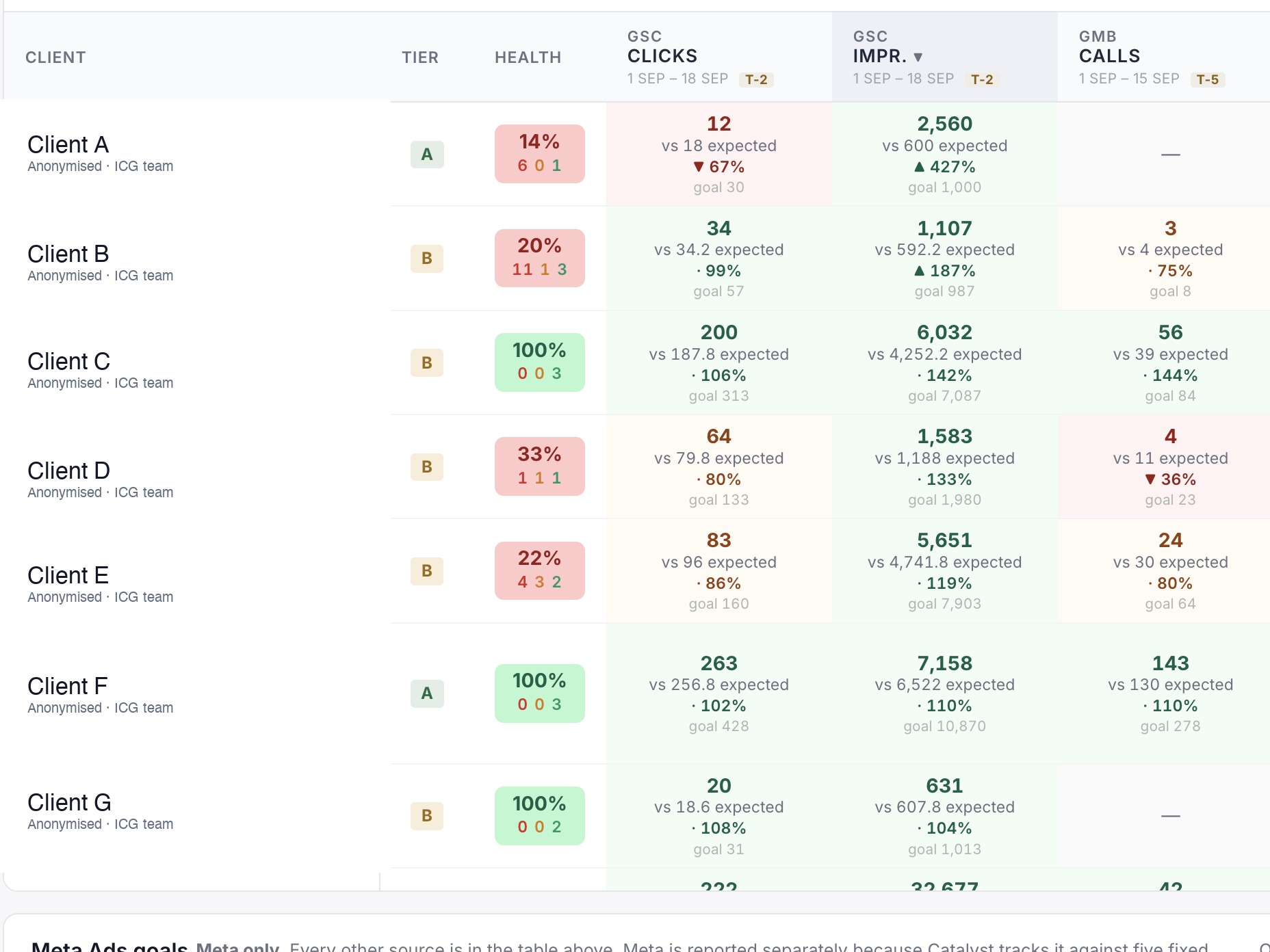
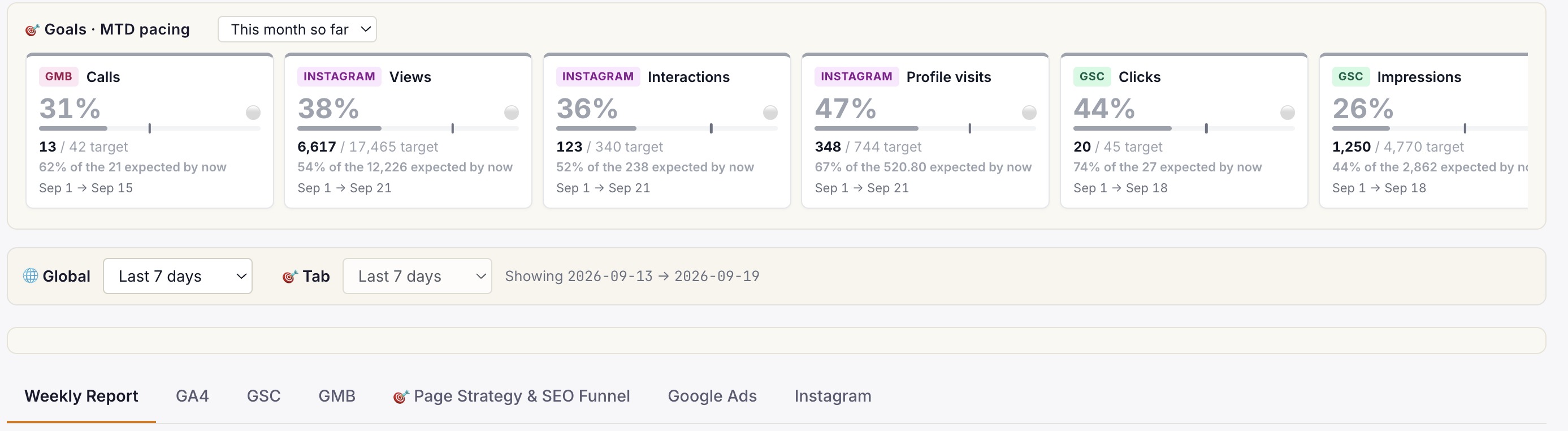
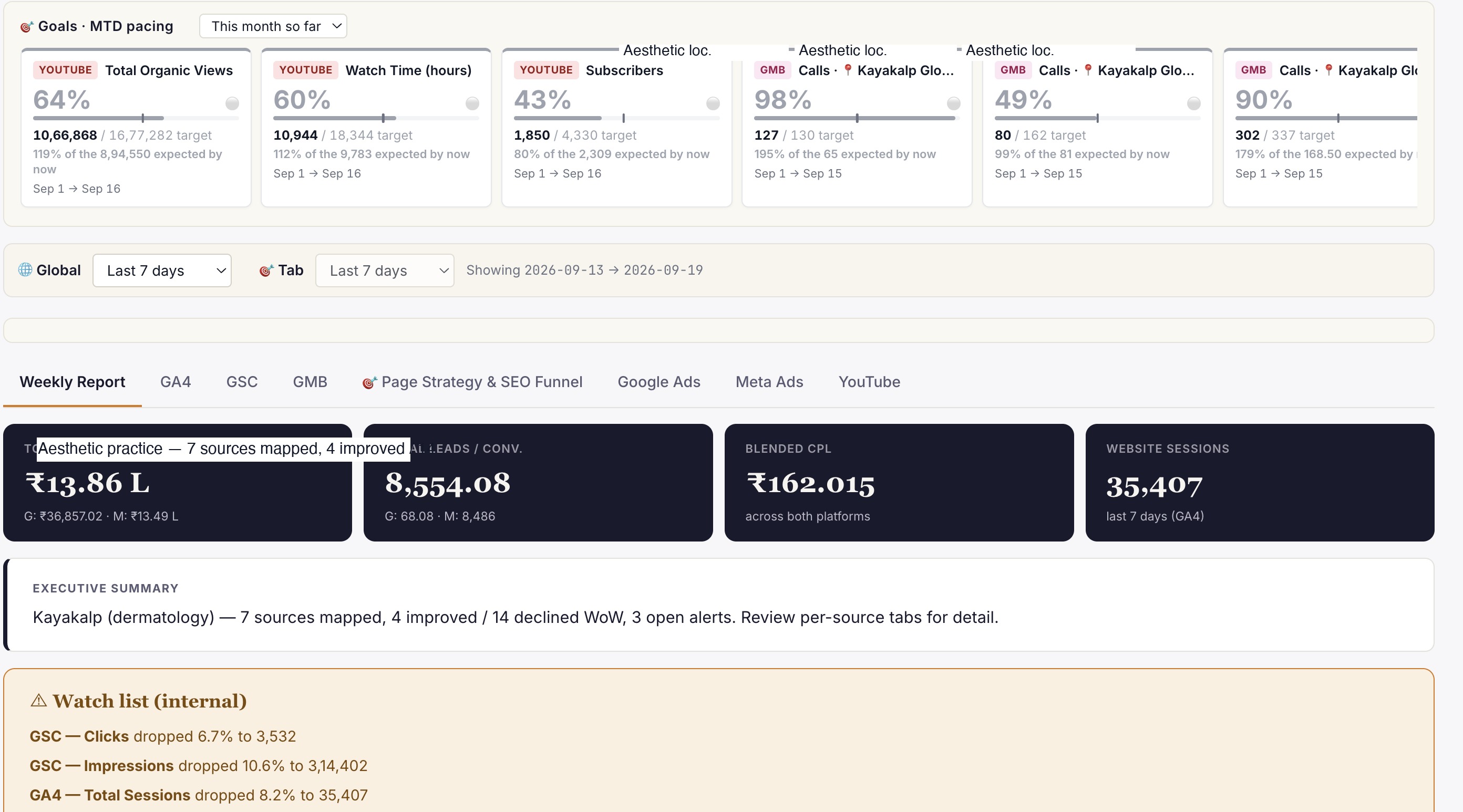
Every ICG engagement runs on the Search Intelligence Trifecta — Angryturtle for GMB, SIE for search and AI Overview, YODA for YouTube. Live product screens below.
Need help operationalising this?
Every ICG service is healthcare-only, NMC + DPDP-aware, and built around the patient-research patterns that drive Indian healthcare growth in 2026.
Every practice welcome — packages from ₹20,000/mo.
Goals-Driven engagements · Performance-Linked Payout Models available
More from
ICG.
Five trends shaping Indian healthcare marketing through 2027: AI-first patient research, Conversions API adoption, ABDM discovery, the AEO w...
Healthcare AIO is the discipline of getting your clinic or hospital cited inside Google AI Overviews, ChatGPT and Perplexity answers — not j...
Conversational-search advertising places brand messages inside AI chat answers — ChatGPT, Perplexity, Copilot — rather than beside a results...
Stop guessing.
Book a Diagnostic.
30 minutes. Free. With the AI-powered healthcare-only marketing agency 150+ brands already run on. No slides, no pitch, no hard close.


