


Your Healthcare Google Ads CPL Is Too High. But That Is Not the Problem.
In seven years and 150+ healthcare client engagements, we have found that high CPL in healthcare Google Ads traces to three root causes — and only three.
No pitch. Written root-cause diagnosis. AI-powered, healthcare only.
Direct answer
In seven years and 150+ healthcare client engagements, we have found that high CPL in healthcare Google Ads traces to three root causes — and only three.
TL;DR
2026-06 update — the diagnostic discipline, formalised
When this article was first written, the seven-lever CPQL diagnostic was an informal mental model. It has since been formalised as the Brand & Growth Diagnostic ICG runs in week 1 of every engagement.
The diagnostic resolves the question "why is our CPQL high?" into a structured assessment of seven measurable levers: brand strength (branded-search query volume), channel mix (allocation vs patient-journey origin), creative quality (NMC compliance and emotional resonance), landing-page intent match (page depth vs ad intent), attribution accuracy (Device-ID single-source-of-truth vs platform double-counting), lead-management speed (time-to-first-contact), and patient-journey fit (offer cadence vs decision cycle length).
A typical Indian healthcare brand running paid acquisition without this diagnostic has 2–4 levers leaking value simultaneously. The lever-specific intervention (rather than generic "optimize ads better") delivers 30–60% CPQL improvement in the first quarter. Most agencies skip the diagnostic and immediately propose more spend — which is why most agency engagements deliver incremental rather than step-change CPQL improvement.
When a healthcare clinic owner calls us with high CPL, the call almost always starts the same way. They describe their CPL. They ask why it is high. They have usually already tried two things: changing the creative and increasing the bid. Sometimes they have also tried changing the agency.
None of these fixed the problem. The actual problem is almost never the creative or the bid. In seven years and 150+ healthcare client engagements, we have found that high CPL in healthcare Google Ads traces to three root causes — and only three.
Is your CPL a symptom — or the actual problem? Most agencies treat the symptom. We find the root cause.
Root Cause One: Poor Channel Selection
The most common. A clinic is running Google Ads because they were told Google Ads works for healthcare. This is true. But Google Ads is not one channel — it is a family of formats (Search, Shopping, Demand Gen, Performance Max, YouTube, Discovery), each of which converts differently for different healthcare services.
The clinic running a Performance Max campaign for IVF consultations alongside a broad-match Search campaign for "infertility treatment" is competing against itself and funding irrelevant placements simultaneously. Performance Max will serve ads on YouTube, Gmail, and the Display Network — channels that do not convert for high-consideration procedures like IVF.
How to diagnose this: Pull your impression-weighted placement report. For IVF, hair transplant, plastic surgery, and dermatology procedures, 80%+ of qualified leads typically come from Search. If less than 60% of your budget is in Search, you have a channel selection problem.
The SLC Matrix fix: ICG maps every healthcare service against every available channel using three months of historical data to identify the highest-efficiency service × channel combinations before a rupee of budget is allocated. For most specialties, this means 70-80% of budget in Search (phrase match + exact match), 10-15% in YouTube (procedure explainer video retargeting), and only 5-10% for Meta/Display.
Root Cause Two: Inefficient Digital Operations
This is the DCG Matrix territory. The campaign architecture is correct but the execution has four common failure modes that silently inflate CPL.
Failure Mode A — Cross Firing
Your ad groups are competing against each other in the same auction. We recently audited a Delhi hair transplant centre's Google Ads account where two campaigns were triggering for the same 12 search terms simultaneously. Both campaigns bid on those terms, driving up the auction price against themselves. CPL was elevated 35% by this alone.
Fix: N-Gram Analysis reveals which term combinations are triggering across multiple ad groups. Keyword exclusions are added to one campaign to prevent auction overlap.
Failure Mode B — Quality Score Below 6.0
QS governs how much you pay per click. At QS 4, you pay 2× the benchmark CPC for the same position. At QS 8, you pay 0.7× benchmark. Most healthcare accounts run QS 4-5 because ad groups contain too many loosely related keywords. The fix is restructuring: fewer keywords per ad group, each tightly themed around one treatment.
Failure Mode C — Broad Match for High-Value Procedures
For procedures above ₹80,000 in value (plastic surgery, hair transplant, IVF), phrase match and exact match are almost always more efficient than broad. Broad match in 2026 means your "hair transplant" keyword can trigger for "hair care tips" — which does not convert.
Failure Mode D — Missing First-Party Data
Google's Smart Bidding optimises better when it knows which users converted into actual patients, not just form submissions. Most healthcare clinics feed only form completion events — not downstream CRM status of "Appointment Visited" or "Converted to Patient." ICG's Device ID Tool and Beacon platform close this loop.
Root Cause Three: Poor Operational Effectiveness
This is the one hardest to hear — because it is not a digital marketing problem, it is a sales process problem. But it accounts for 30-40% of high-CPL cases.
The lead is qualified. The ad targeting is correct. The landing page converts. But the telecaller says the wrong thing in the first 30 seconds and the lead goes cold.
ICG's MIS Tool maps this precisely. We track leads from generation through Qualified → Interested → Appointment Schedule → Appointment Confirmation → Appointment Visit → Conversion. When we see a high drop between "Appointment Schedule" and "Appointment Visit," the problem is not the marketing — it is the confirmation call protocol.
The ACE Matrix (Acknowledge → Connect → Explain) is ICG's training framework for healthcare telecallers. For one dermatology clinic, ACE training increased the appointment booking rate from 22% to 36% in the first month — without touching a single campaign.
The Diagnostic Before the Prescription
ICG does not run campaigns before completing a written diagnosis. Every engagement begins with a 2-4 week performance diagnostic mapping current campaigns against all three root cause categories. The output is a written document — not a slide deck — that names the specific root cause, quantifies its impact on current CPL, and sequences the fixes.
If you have been told your CPL is a creative problem, get a second opinion. Creative is almost always the last lever to pull, not the first.
Want to see how this applies to your clinic? Book a free 30-min audit or WhatsApp the founders.
Book a free Google Ads account audit.
Raman Soni's team pulls your account, reviews campaign structure, keyword intent tiering, landing pages, and CPQL attribution. 45 minutes, actionable.
Questions readers ask
about this topic.
The three platforms
behind every ICG engagement.
Beacon
CAPI middleware that fixes Event Match Quality, translates CRM statuses to Meta-standard events, dedups across channels.
Agency OS
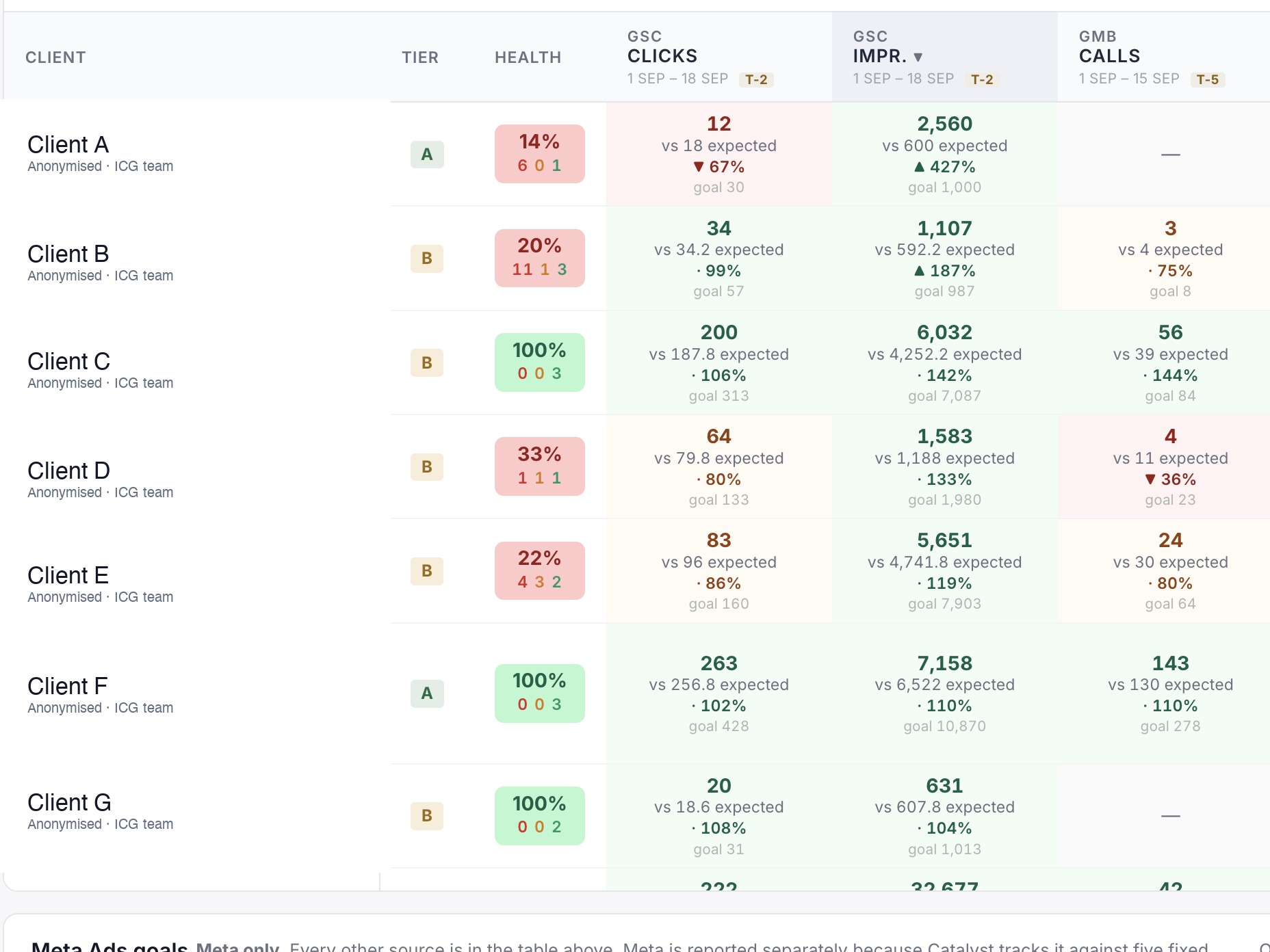
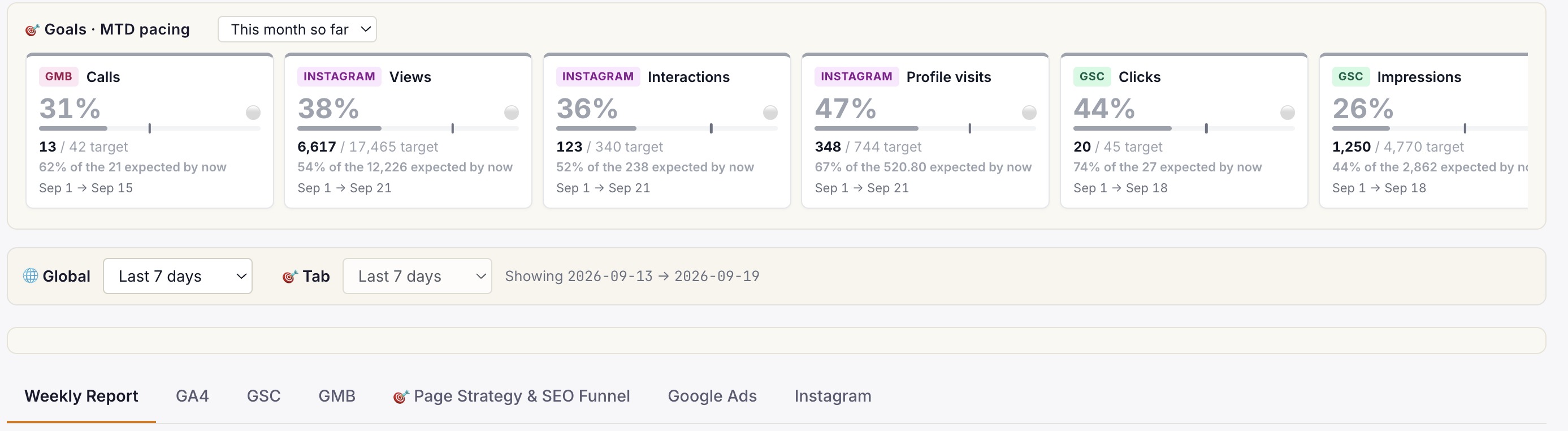
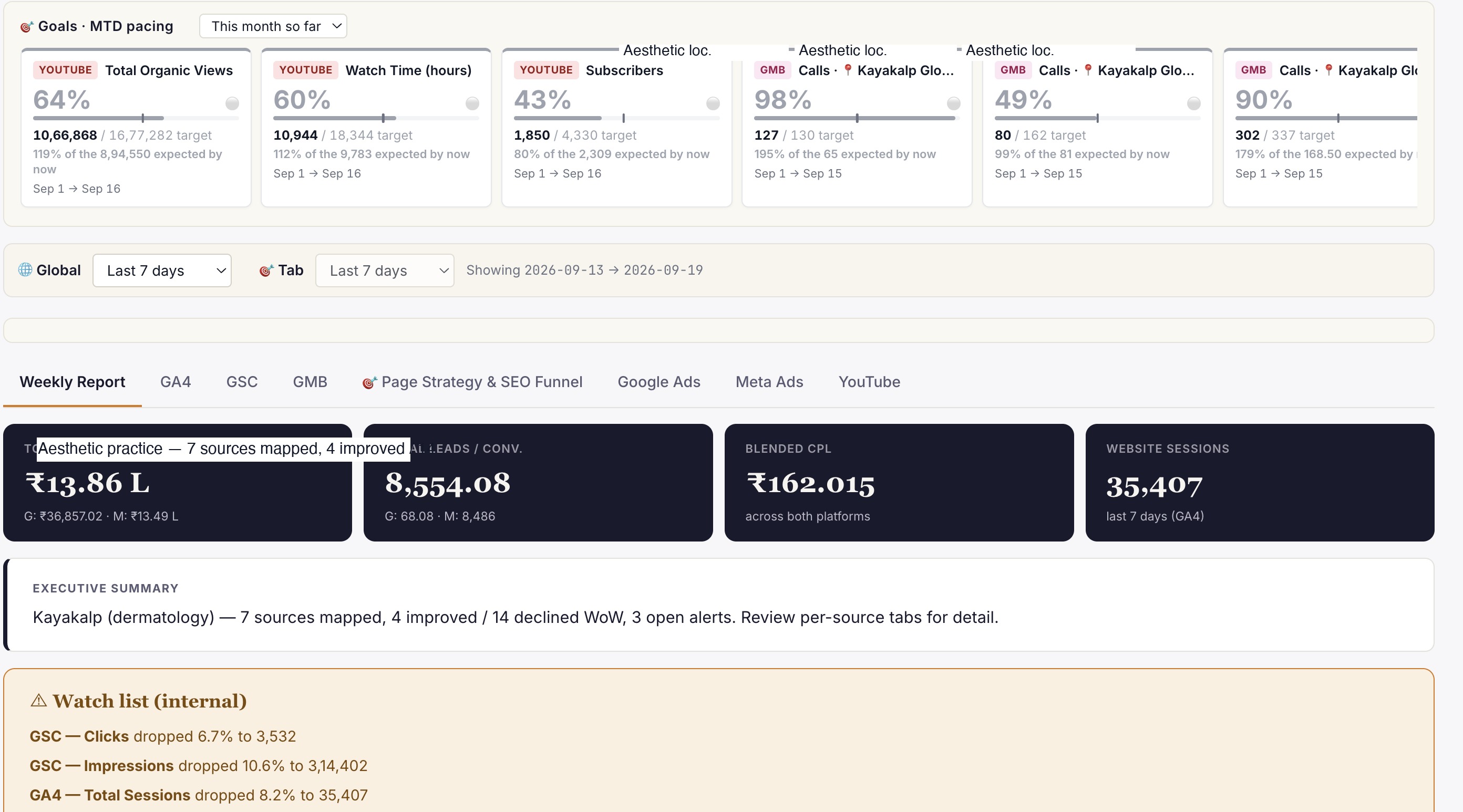
Live client dashboard. GSC, GA4, Google Ads, Meta Ads, IVR calls in one view. Login anytime, not monthly.
Phoenix
Clinic revenue intelligence over your PMS. Daily action queue: Prevent Loss, Maintain & Engage, Grow Revenue. Multi-centre rollout.
Or book a free 30-min audit to see all three in action on your account.
Healthcare brands
that already run on ICG.
A representative slice of the 150+ healthcare brands ICG has delivered for across India. Most engagements remain under NDA.


What ICG clients say · on video.
"Scale up of organic channels and business consulting. ICG has absolute domain authority in their field."
"Working with ICG transformed how we acquire IVF patients in Gurgaon. They understand the fertility journey from inquiry to consult..."
"What Ichelon accomplished — they got all my ideas and worked over 3-4 months to create an amazing, super-customised website."
Need help operationalising this?
Every ICG service is healthcare-only, NMC + DPDP-aware, and built around the patient-research patterns that drive Indian healthcare growth in 2026.
Every practice welcome — packages from ₹20,000/mo.
Goals-Driven engagements · Performance-Linked Payout Models available
More from
ICG.
Five trends shaping Indian healthcare marketing through 2027: AI-first patient research, Conversions API adoption, ABDM discovery, the AEO w...
Healthcare AIO is the discipline of getting your clinic or hospital cited inside Google AI Overviews, ChatGPT and Perplexity answers — not j...
Conversational-search advertising places brand messages inside AI chat answers — ChatGPT, Perplexity, Copilot — rather than beside a results...
Stop guessing.
Book a Diagnostic.
30 minutes. Free. With the AI-powered healthcare-only marketing agency 150+ brands already run on. No slides, no pitch, no hard close.


