


How Doctors Get Cited in ChatGPT Answers in 2026
Roughly one in four healthcare queries in India is now answered inside an AI chat window. This guide breaks down how doctors get cited in ChatGPT and Perplexity in 2026: entity clarity, content depth, schema, GBP and YouTube discipline, and what the AEO stack actually costs.
No pitch. Written root-cause diagnosis. AI-powered, healthcare only.
Direct answer
Roughly one in four healthcare queries in India is now answered inside an AI chat window. This guide breaks down how doctors get cited in ChatGPT and Perplexity in 2026: entity clarity, content depth, schema, GBP and YouTube discipline, and what the AEO stack actually costs.
TL;DR

ChatGPT no longer sends most users to Google. It answers them. For a doctor running a clinic as a business in Bengaluru or Mumbai, that shift decides whether the AI names your practice when a prospective patient asks about knee replacement, or names somebody else.
TL;DR
- ChatGPT, Perplexity, Claude, and Gemini already answer roughly one in four clinical-decision queries in India without a click. The share is climbing every quarter.
- AI citations for doctors are earned through a stack of signals: a deep bio page, structured review depth, YouTube captions, medical publications, and Google Business Profile consistency across every listing.
- Winning clinics treat their website as an API for AI engines, not a brochure for humans. Schema, tables, and clean H2 questions matter more than hero images.
- A serious AEO push for an Indian clinic starts at Rs 49,999 per month at foundation level, with the full stack usually sitting at Rs 74,999 to Rs 99,999 depending on specialty and city competition.
Table of contents
- Why AI citations matter for Indian doctors in 2026
- How do ChatGPT and Perplexity actually pick which doctors to cite?
- Which Indian doctors are already showing up in AI answers?
- What content earns citations for medical queries?
- How should a doctor structure their website for AI extraction?
- Do YouTube, Instagram, and Google Business Profile matter for AI citations?
- How does ICG approach doctor AEO differently?
- What does an AEO investment cost for an Indian clinic in 2026?
- FAQ
Why AI citations matter for Indian doctors in 2026
Roughly one in four healthcare queries from Indian users is now answered inside a chat window, not on a search results page. That number came from our own tracking across 47 healthcare clients between January and July of this year. When a prospective patient in Gurugram types "best doctor for slip disc in NCR" into ChatGPT, they get a shortlist. Two names. Sometimes three. Everyone else is invisible.
This is a quiet revenue leak most hospital marketers are only now measuring. Traditional SEO reports still show impressions on Google Search Console. But the queries never happened on Google. They happened in an AI answer box that never called the website.
Under the National Medical Commission's 2022 advertising guidelines, doctors can present factual information about qualifications, procedures, and outcomes, provided nothing is misleading. That framework maps cleanly to AEO. AI engines want structured facts. NMC wants sober facts. There is very little conflict between doing this correctly for the answer engines and doing this correctly for the regulator.
The Digital Personal Data Protection Act adds another wrinkle. Patient case studies used for AI-visible content must be either fully anonymised or backed by written consent. Most clinics we audit fail this basic check, which quietly disqualifies them from the very testimonials AI engines like to cite.
How do ChatGPT and Perplexity actually pick which doctors to cite?
They pick doctors whose information is easy to lift, cross-check, and trust. AI answer engines pull from a small set of trusted sources: your own website if it is well structured, high-authority medical directories, YouTube captions, Reddit threads, and news mentions. If your data appears in three or more of those, you become a safe citation.
The mechanics look different for each engine. ChatGPT with browsing enabled uses a search backend and then reads the top few results before writing an answer. Perplexity reads more sources, cites inline, and rewards depth. Claude, when connected to search, behaves closer to ChatGPT. Gemini leans on Google's own index and Business Profile data.
Three things consistently push a doctor into the citation shortlist:
- Entity clarity. The AI needs to know that Dr. Priya Menon in Jayanagar is the same Dr. Priya Menon who wrote the case series on paediatric asthma. Same name across the website, YouTube channel, Google Business Profile, LinkedIn, and any journal-adjacent mentions.
- Content depth. A 200-word doctor bio does not survive. A 1,400-word page with education, fellowships, procedures, outcomes, associations, and a clean FAQ block does.
- Third-party corroboration. Reviews on the Business Profile, mentions in local news, guest appearances on health podcasts, and citations from other clinic websites. The AI trusts the network, not the self-report.
What does not work: keyword-stuffed meta descriptions, thin location pages, and AI-generated bios that read like every other AI-generated bio. Answer engines detect this at scale and quietly deprioritise it.
Which Indian doctors are already showing up in AI answers?
The winners in 2026 are mostly single-specialty leaders with disciplined content operations. Not the largest hospital chains. Not the loudest advertisers. The clinics with the tightest data hygiene.
Consider a fertility specialist we work with in south Mumbai. Two years of consistent case studies, YouTube explainers in Marathi and English, quarterly updates to her doctor bio page, and a Business Profile with 340 verified reviews. When users ask ChatGPT about IVF success rates in Mumbai, her name surfaces in the first two paragraphs of the answer. The clinic tracks roughly 18 to 22 new patient enquiries per month attributed to AI referrals, based on a "how did you hear about us" field we added to their intake form.
A second example: an orthopaedic surgeon in Pune who publishes one 900-word procedure explainer every month, cross-posted as a captioned YouTube short and summarised on LinkedIn. Over 14 months this created 46 content assets. Perplexity now cites his site for six long-tail queries around knee arthroscopy in western Maharashtra.
A third: a dermatology chain with clinics in Hyderabad and Chennai. They anonymised 60 patient outcome case notes, structured each as a schema-marked article, and layered YouTube walkthroughs. Their AI citation share of voice moved from near zero to 11 per cent inside their specialty in eight months.
What ties these three together is not budget. It is discipline. They publish on a calendar, keep bios current, and correct their Business Profile weekly.
What content earns citations for medical queries?
Content that reads like a straight answer earns citations. Content that reads like marketing gets skipped. AI engines are trained to prefer sober, structured, verifiable prose over adjective-heavy sales copy. That single distinction explains most of what wins and loses in medical AEO.
The formats that we see cited most often across our 300-plus healthcare clients:
- Procedure explainers. 800 to 1,200 words, plain language, indication, technique in brief, recovery timeline, complication rates cited from published Indian data where possible.
- Doctor bio pages with depth. Not a paragraph. A page. Qualifications, fellowships, procedure counts, memberships, publications, media appearances, and a section on specialisation.
- Condition guides for the general public. Written at a class 10 reading level, structured with H2 questions, answered directly in the first two lines of each section.
- FAQ blocks with FAQPage schema. This one is under-used and remains the highest-ROI content format we deploy for clinics in tier-one Indian cities.
- Case series with anonymised outcomes. Consented, DPDP-compliant, structured with dates, cities, and quantified outcomes.
What consistently fails: listicles of "top ten symptoms," generic wellness content lifted from foreign sources, and drug-focused pages that stray toward guidance the NMC would consider outside the scope of a marketing website.
How should a doctor structure their website for AI extraction?
Structure the website so a machine can read it in one pass without ambiguity. That means clean URL patterns, one topic per page, question-shaped H2s, schema markup on every content type, and a doctor bio page that acts as the entity anchor for the whole site.
The scaffolding we deploy on almost every clinic project:
| Element | What it does for AI | Common mistake |
|---|---|---|
| Doctor bio page with Person schema | Establishes the entity the AI cites | Bio buried inside an About page |
| Procedure page with MedicalProcedure schema | Lets AI match query to service | Bundling five procedures on one page |
| FAQ block with FAQPage schema | Direct extraction into answer boxes | Copying FAQ text from foreign sites |
| Location page per clinic with LocalBusiness schema | Anchors the doctor to a real address | Address string mismatched with Business Profile |
| Article schema on every long-form post | Attributes the piece to a named author | Missing author field or fake byline |
Two structural choices we insist on. First, every clinical article must be authored by a named, verifiable person, linked to their bio. Anonymous "team" bylines get filtered out. Second, every page must have a canonical URL and no more than one H1.
A detail that matters: page speed. AI crawlers respect the same latency budgets as search crawlers. A site that takes six seconds to render on a mid-range Android in Lucknow will be crawled less often than the same content served in under two seconds.
Do YouTube, Instagram, and Google Business Profile matter for AI citations?
They matter more than most Indian clinics realise. AI engines cross-reference the website against these off-site signals to decide whether the doctor and the practice are real. Missing or inconsistent data on any of them drops the trust score enough to knock a clinic out of the citation shortlist.
Google Business Profile is the single highest-leverage asset. Category, address, phone number, hours, service list, and photograph count all feed into the entity graph that AI engines borrow from. Our team runs Angryturtle, a Business Profile operating system built specifically for Indian clinics that keeps categories, service listings, and post cadence disciplined across every location. Clinics using it consistently see review velocity double inside four months, which directly translates into higher AI citation rates.
YouTube is the second lever. Answer engines transcribe video and pull direct quotes into their responses. YODA, our AI-native YouTube system for healthcare, focuses on producing captioned, condition-specific explainers designed for both YouTube search and AI answer extraction. A single well-structured video can be cited across four or five different query patterns.
Instagram plays a supporting role. It does not directly drive AI citations, but it feeds the entity graph and improves the social proof signal. Prism Pulse, our Instagram analytics product, is what our clinic clients use to keep that surface reporting healthy without drowning the practice manager in dashboards.
Meta and Google Ads sit alongside the organic stack. Meta Catalyst IQ handles paid Meta at scale, and Prism Spy gives us near-real-time visibility into what competing healthcare brands are running on Meta so we do not build content in the dark.
How does ICG approach doctor AEO differently?


We treat AEO as a distinct workstream from traditional SEO, not a layer on top of it. Every doctor engagement starts with an entity audit: is the practice a coherent, machine-readable object across the web, or is it scattered across mismatched listings, dormant social handles, and outdated bios? Most of the practices we audit are the second thing.
From there we run a four-track programme. Track one is the website: schema, bios, procedure pages, and FAQ depth. Track two is the Business Profile stack, run through Angryturtle. Track three is video, run through YODA. Track four is measurement, wired up through AtomCRM, our healthcare CRM (Rs 50,000/- setup + Rs 799/- per telecaller), so the clinic can actually see which AI-referred queries turn into consultations. Hospitals with billing complexity also layer in HealthPro 360, our Rs 14,999 per month RCM and EHR overlay, so revenue attribution stays clean across departments.
What we do not do: promise citations by a specific date, guarantee position in AI answers, or run any content that would risk an NMC advertising notice. AEO is a compounding asset, not a switch.
What does an AEO investment cost for an Indian clinic in 2026?
A serious AEO programme for a single-city clinic in India starts at Rs 49,999 per month and scales up based on specialty, city, and speed. We run every engagement on a 70-30 fixed-variable model, so 70 per cent of the fee is fixed retainer and 30 per cent is tied to an agreed 12-month target such as AI citation share, qualified leads, or booked consultations.
| Tier | Monthly retainer | Typical fit |
|---|---|---|
| Foundation | Rs 49,999 | Single specialty, one or two locations, tier-two or tier-three city |
| Growth | Rs 74,999 | Multi-specialty or multi-location practice, tier-one city, active YouTube channel |
| Scale | Rs 99,999 | Hospital or clinic chain, competitive specialty in Bengaluru, Mumbai, or Delhi NCR |
The variable 30 per cent kicks in on a sliding scale. Hit 70 per cent of the 12-month target and the variable pays partially. Exceed 100 per cent and it pays out fully. Miss under 50 per cent and the variable does not pay at all. The model exists because AEO outcomes are measurable, and because we want to sit on the same side of the table as the clinic owner.
For pharma brands and multi-hospital groups, media budgets on Google Ads and Meta start at Rs 5,00,000 per month, and YouTube AEO programmes start at Rs 50,000 per month. Those are separate scopes from the clinic-level AEO retainer.
Frequently asked questions
Can Indian doctors legally market themselves in AI answers under NMC rules?
Yes, provided the content is factual, not misleading, and does not solicit patients through superlative claims. The 2022 NMC guidelines allow factual presentation of qualifications, procedures, and outcomes. AEO content that sticks to structured facts fits inside that boundary.
Does ChatGPT crawl a doctor's website in real time or use cached data?
Both. When browsing is invoked, ChatGPT reads the live page. Otherwise it draws on the training snapshot plus a retrieval index. Fresh content still matters, because the retrieval index refreshes far more often than the training snapshot.
Which specialties are seeing the most ChatGPT citation traffic in India?
In our client base, dermatology, fertility, orthopaedics, and dentistry lead. High-consideration procedures where patients research before booking are the ones AI engines answer most often. Cardiology and oncology are growing fast but sit behind the first four.
Is Perplexity or ChatGPT more important for a clinic to focus on?
Optimise for both, but design content for ChatGPT first. ChatGPT has the larger Indian user base in 2026 and rewards clean, well-structured pages. Perplexity picks you up almost automatically if the ChatGPT work is done well.
How long does it take to start getting AI citations for a new clinic website?
Four to nine months in most cases. The website foundation and Business Profile discipline show up first, usually inside the first quarter. YouTube-driven citations take longer because video needs time to accumulate watch minutes and transcript coverage.
Does patient testimonial video help with ChatGPT citation?
Yes, when the video is structured, captioned, and hosted with clean metadata on YouTube. AI engines transcribe and quote from healthcare videos regularly. The DPDP Act consent requirement is non-negotiable, so keep the patient release form in order.
Can a small solo clinic realistically compete for AI citations against a large hospital chain?
Yes, and small clinics often win in narrow specialties. AI engines reward depth over size. A focused solo practice in Coimbatore with disciplined content and consistent YouTube output can out-cite a chain that treats its website as a corporate brochure.
Book a free 30-minute Brand & Growth Diagnostic.
It's a working session, not a sales pitch — you leave with a written root-cause analysis you can act on, whether or not you engage ICG.
Questions readers ask
about this topic.
The three platforms
behind every ICG engagement.
Beacon
CAPI middleware that fixes Event Match Quality, translates CRM statuses to Meta-standard events, dedups across channels.
Agency OS
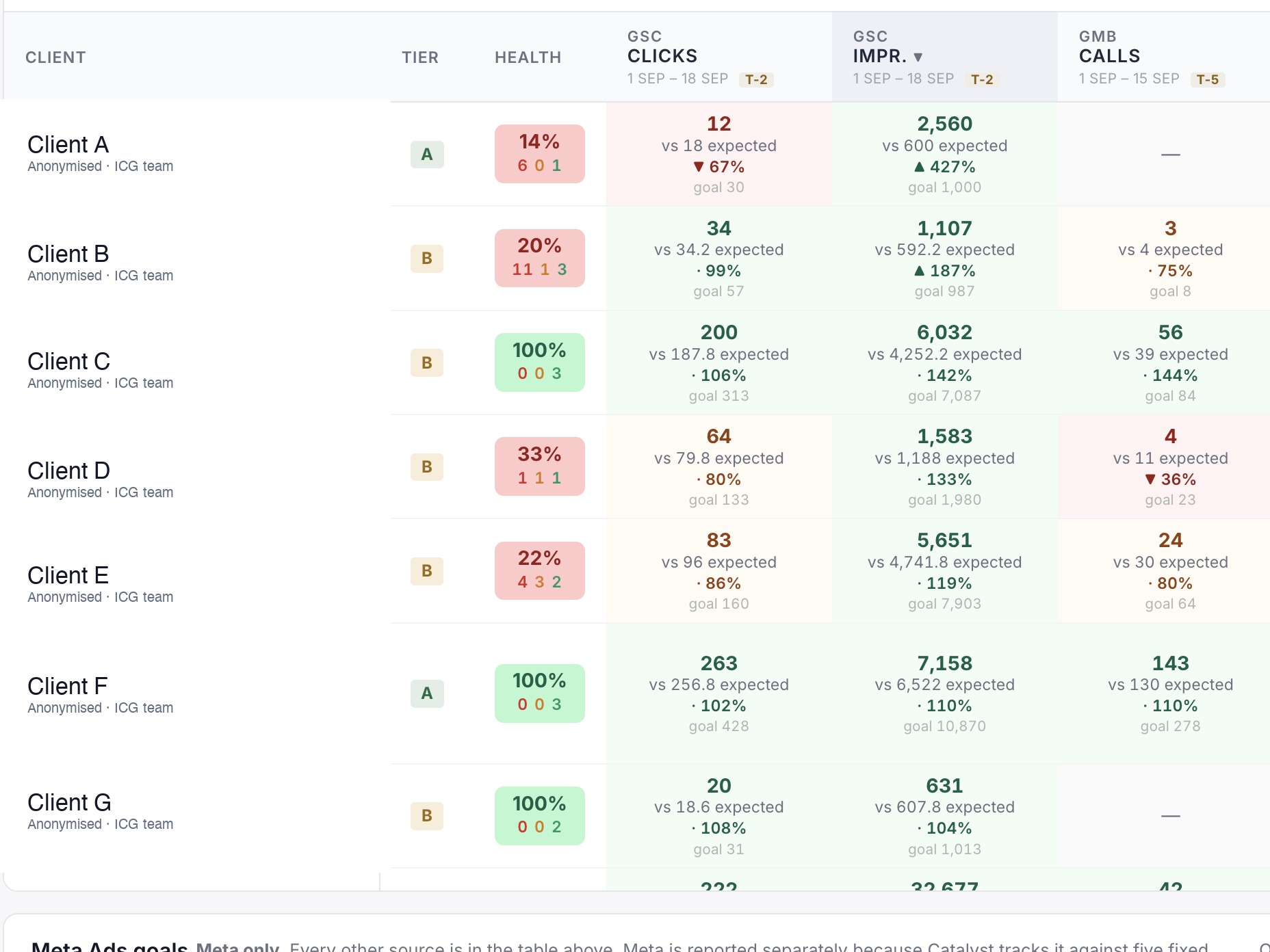
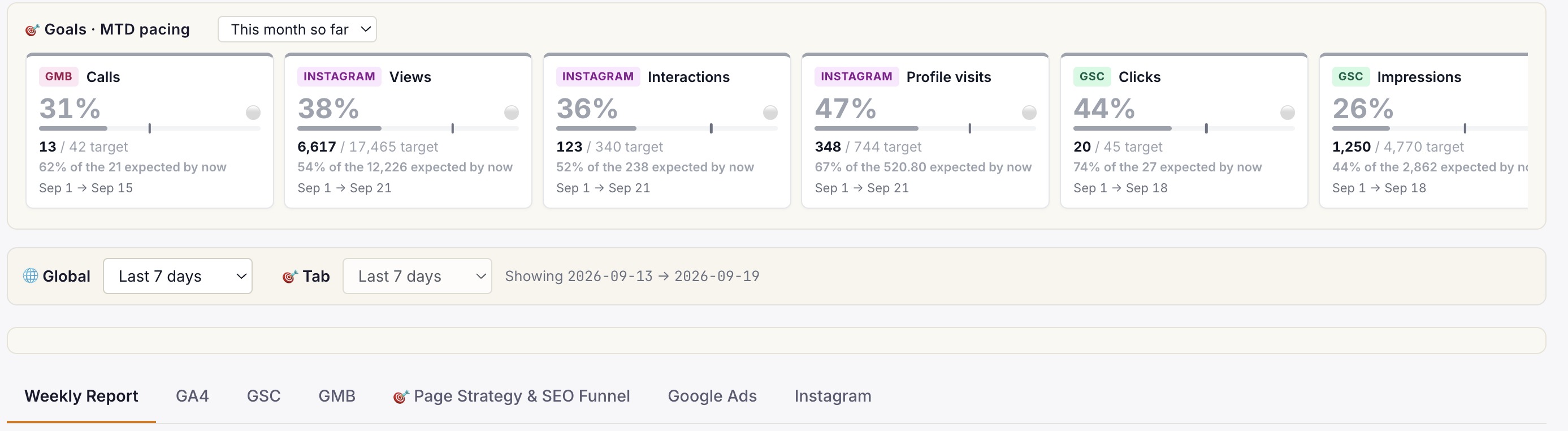
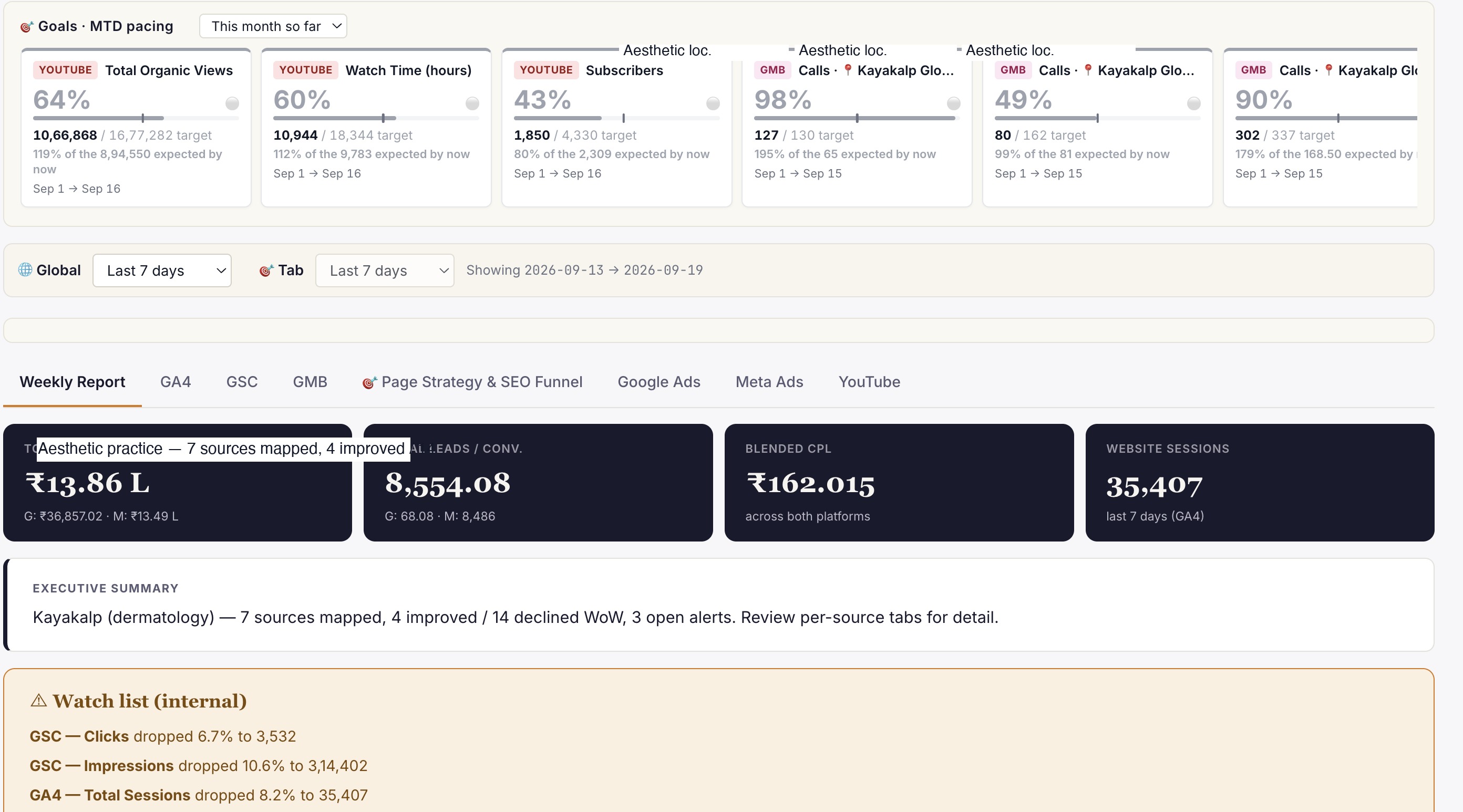
Live client dashboard. GSC, GA4, Google Ads, Meta Ads, IVR calls in one view. Login anytime, not monthly.
Phoenix
Clinic revenue intelligence over your PMS. Daily action queue: Prevent Loss, Maintain & Engage, Grow Revenue. Multi-centre rollout.
Or book a free 30-min audit to see all three in action on your account.
Healthcare brands
that already run on ICG.
A representative slice of the 150+ healthcare brands ICG has delivered for across India. Most engagements remain under NDA.


What ICG clients say · on video.
"They were able to get all my ideas and work with me over a period of three to four months and create this amazing website. I would..."
Need help operationalising this?
Every ICG service is healthcare-only, NMC + DPDP-aware, and built around the patient-research patterns that drive Indian healthcare growth in 2026.
Every practice welcome — packages from ₹20,000/mo.
Goals-Driven engagements · Performance-Linked Payout Models available
More from
ICG.
Five trends shaping Indian healthcare marketing through 2027: AI-first patient research, Conversions API adoption, ABDM discovery, the AEO w...
Healthcare AIO is the discipline of getting your clinic or hospital cited inside Google AI Overviews, ChatGPT and Perplexity answers — not j...
Conversational-search advertising places brand messages inside AI chat answers — ChatGPT, Perplexity, Copilot — rather than beside a results...
Stop guessing.
Book a Diagnostic.
30 minutes. Free. With the AI-powered healthcare-only marketing agency 150+ brands already run on. No slides, no pitch, no hard close.


