Healthcare SEO in 2026 is not the same discipline as it was in 2022. The technical foundations remain — crawlability, page speed, structured data, content quality — but the competitive frontier has shifted to a space most healthcare SEO agencies are not operating in: Answer Engine Optimisation (AEO), LLM citation strategy, and doctor personal-brand SEO. Practices still paying for 2022-era SEO are getting 2022-era results against competitors who have moved on.
This page covers what healthcare SEO services in India actually encompass in 2026, what to avoid paying for, and what ICG's SEO engagement delivers month by month.
The 6 healthcare SEO services that move the needle in 2026
1. Technical SEO and Core Web Vitals
Technical SEO is the foundation. Without it, content investment is wasted — Google cannot crawl and index what it cannot access efficiently. For healthcare websites, technical SEO includes: Core Web Vitals (LCP under 2.5s, CLS under 0.1, INP under 200ms), JavaScript rendering audit (content hidden behind client-side scripts is invisible to Google), sitemap and robots.txt hygiene, redirect chain elimination, canonical tag accuracy, and crawl budget management for large sites with 100+ pages.
ICG conducts a full technical audit before any content or AEO work begins. Technical blockers cost more to ignore than to fix — a page that ranks position 6 with technical issues typically reaches position 2–4 when issues are resolved, with no additional content investment.
2. On-page SEO and content architecture
On-page SEO in healthcare covers: keyword mapping (healthcare search intent is more specific than most industries — "IVF success rates India" has completely different intent from "IVF clinic near me"), meta title and description optimisation, header structure (H1 through H3, not H4 or lower), internal linking architecture, and schema markup.
Content architecture — the relationship between pillar pages, cluster pages, and procedure-specific pages — is the structural layer that determines topical authority. A cardiology hospital that has a comprehensive pillar page on cardiac care, 12 supporting articles on specific procedures and conditions, and 6 doctor profile pages all linked coherently has significantly higher topical authority than a hospital with 40 disconnected blog posts.
3. AEO — Answer Engine Optimisation for AI search
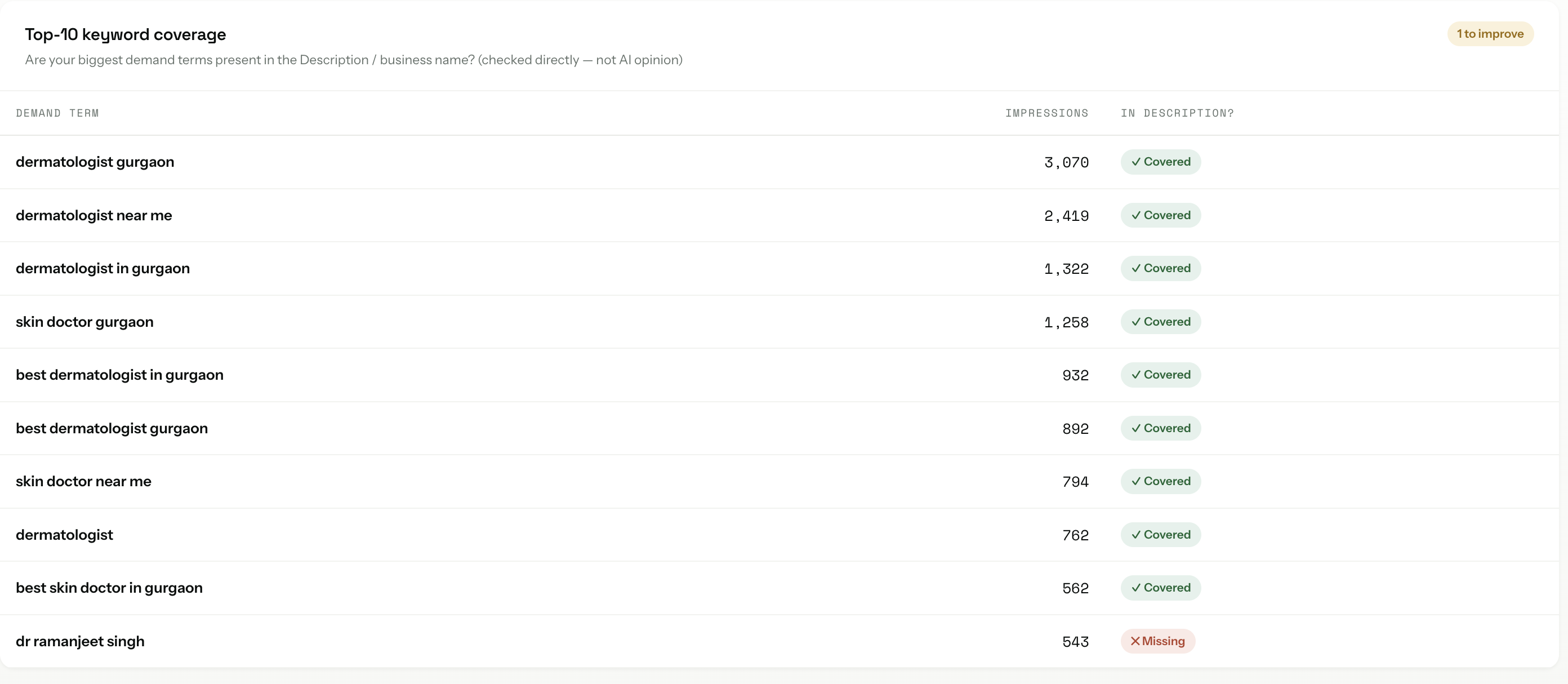
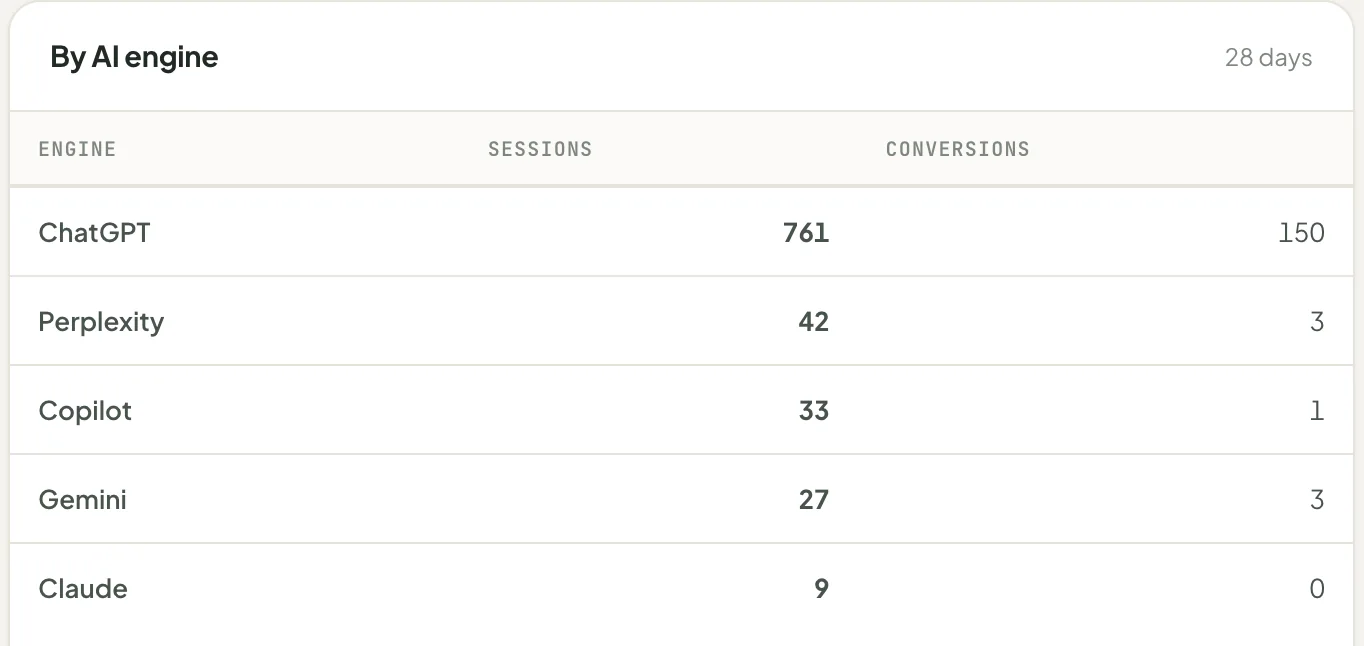
AEO is the fastest-growing discipline in healthcare SEO. In ICG's Q2 2026 survey of 340 urban Indian healthcare consumers, 18–22% said they first researched their most recent healthcare decision on ChatGPT, Perplexity, or Google AI Overview — not Google Search. For Gurgaon's tech-corporate demographic, that number was 28–32%.
Healthcare brands that are cited in AI answers for their specialty and city have a first-mover advantage that compounds over time. Brands invisible in AI answers are losing the first stage of the patient discovery process. AEO requires: FAQPage schema on all priority pages, direct-answer content format (the content answers the question in the first paragraph, not in paragraph 5), cost transparency pages (the highest-citation-rate content type across all LLM platforms for healthcare queries), and named-author attribution with Person schema.
ICG's AIO Intel tool monitors LLM citation rates weekly across ChatGPT, Perplexity, Google AI Overview, Gemini, and Copilot for all active healthcare clients. Explore AIO Intel →
4. Doctor personal-brand SEO
Patients in 2026 search for the doctor, not just the hospital. A cardiologist's name, their YouTube channel, their LinkedIn profile, and their quoted presence in medical articles are all ranking signals. Doctor personal-brand SEO covers: doctor profile page optimisation (with Person schema and sameAs references to LinkedIn, university alumni pages, and conference speaker profiles), YouTube channel strategy for the doctor's clinical expertise, and EEAT signal-building (Experience, Expertise, Authoritativeness, Trustworthiness — the framework Google uses to evaluate medical content quality).
5. Local SEO
Local SEO drives the highest-conversion organic traffic for most clinic types — patients within 5–15 km who are ready to book. Local SEO for healthcare includes Google Business Profile optimisation (complete profile, weekly posts, Q&A section, photo updates, review management), NAP (Name/Address/Phone) consistency across 30–50 medical directories (doctor-listing and booking platforms, local business directories, health-platform directories, etc.), and local keyword targeting (city + specialty + procedure combinations).
ICG data across 150+ healthcare clients: clinics that move from a 3.8 to a 4.3 average Google Maps rating typically see a 15–22% improvement in organic appointment conversion from Maps, with no additional ad spend.
6. Medical content with a reviewer workflow
Healthcare content sits under Google's YMYL (Your Money or Your Life) designation — content that can affect a reader's health or financial decisions. Google's quality-rating guidelines for YMYL content require: named expert authorship, verifiable credentials, reviewer attribution (a second credentialled reviewer listed on the page), and citation of primary sources (clinical studies, regulatory guidelines, government data).
ICG's content production workflow includes a medical reviewer step — every health claim is verified against a named, credentialled reviewer before publication. This is the EEAT signal that separates healthcare content that ranks from healthcare content that doesn't.
What not to buy under the "healthcare SEO" label
Healthcare SEO services vary significantly in quality. These four practices consume budget without producing ranking outcomes.
Link-building schemes: Bulk link acquisition from low-relevance directories, guest posts on generic websites, or link farms. Google's Helpful Content and Spam systems have made these practices actively harmful — they do not improve rankings and can trigger manual actions.
AI-generated content at scale: Hundreds of AI-generated articles published without medical review, named authorship, or schema markup. Google's August 2024 and subsequent updates have been particularly harsh on AI-content sites in YMYL categories. Healthcare content published without medical reviewer attribution ranks poorly and creates NMC Section 6 compliance risk.
Directory submissions alone: Listing the clinic in 200 directories generates no organic ranking. NAP consistency across relevant directories is a supporting local SEO signal — not a primary ranking driver.
Keyword stuffing and thin pages: Service pages that repeat the primary keyword 40 times across 300 words. Thin content is the primary cause of "Discovered — currently not indexed" status in Google Search Console. The remedy is depth, not keyword density.
What ICG's healthcare SEO engagement delivers month by month
Month 1: Full technical audit, keyword and intent mapping, competitor analysis, AEO visibility baseline, content gap analysis.
Month 2–3: Technical fixes deployed, on-page optimisation of top 20 priority pages, FAQPage schema implementation, 4–6 new content pieces with medical reviewer workflow, AIO Intel monitoring activated.
Month 3–6: AEO citation improvements typically visible from month 3 (60–90 days). Organic ranking improvements for target keywords typically visible from month 4–6 for low-competition terms, month 6–12 for competitive terms.
Month 6–12: Content cluster build-out, doctor profile page optimisation, local SEO programme, monthly CPQL and AEO citation reporting via Agency OS dashboard.
Every ICG SEO engagement includes access to the Agency OS live dashboard — GSC, GA4, and citation data in one view, available 24/7. Explore Agency OS →
Frequently asked questions
How much does healthcare SEO cost in India in 2026?
ICG's healthcare SEO retainers range from ₹25,000–₹50,000 per month for solo clinic and single-specialty practices, ₹75,000–₹2,00,000 per month for multi-location chains, and ₹2,00,000–₹5,00,000 per month for hospital groups and multi-specialty networks. Fees are scoped after a free 30-minute Brand and Growth Diagnostic — never packaged before understanding your specific competitive context.
How long before healthcare SEO shows results?
Technical fixes and on-page optimisation produce Core Web Vitals improvements within 2–4 weeks. AEO citation improvements for LLM platforms are typically visible within 60–90 days of FAQPage schema and direct-answer content deployment. Organic search ranking improvements for competitive healthcare keywords typically take 6–12 months of consistent work. No credible healthcare SEO agency guarantees specific ranking positions or timelines.
Should I focus SEO on the clinic or on the doctor personally?
Both — but in the right sequence. Clinic-level SEO (the facility's Google Business Profile, service pages, and procedure content) drives local appointment volume. Doctor personal-brand SEO (the doctor's name in search, YouTube presence, LinkedIn authority) drives referral trust and long-cycle patient decisions. For solo practitioners, doctor personal-brand SEO often produces faster results than clinic-level SEO because the search competition for a named specialist is typically lower than for generic specialty keywords.
Does SEO help with international patient acquisition?
Yes — but international SEO is a distinct discipline from India-market SEO. International patients for Indian hospitals search in English, use different AI tools (Perplexity is more common than Google in Gulf markets), and have different trust signals (testimonials from diaspora communities, hospital international patient coordinator pages, accreditation signals like NABH or JCI). ICG's international SEO programme is specific to the Gulf, Africa, and Bangladesh source markets. Read: AEO and LLM citation for international healthcare →
What is the difference between healthcare SEO services and healthcare SEO agency?
The services page (/healthcare-seo-services-india) describes the specific service components — the what. The agency page (/healthcare-seo-agency-india) describes ICG's engagement model, team, and track record — the who. Functionally: same engagement, different framing for different search intents.
Can I track whether SEO is generating consultations, not just traffic?
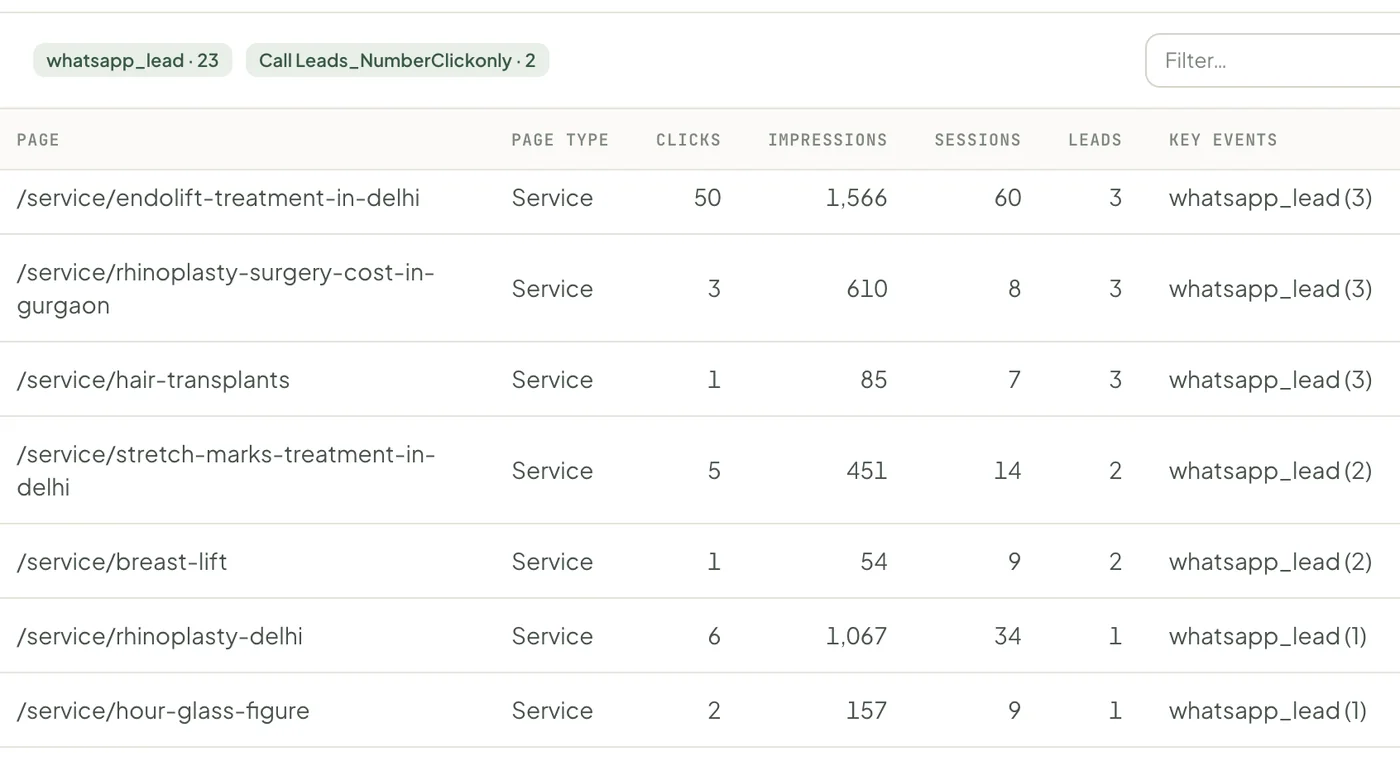
Yes — and this is the right measurement question. Traffic without consultation attribution is a vanity metric. ICG's engagements measure CPQL (Cost Per Qualified Lead) not CPL, using Beacon's attribution layer to connect organic search visits to counsellor conversations to attended consultations. Every ICG SEO engagement report includes consultation attribution alongside ranking and traffic data. Explore Beacon →
Book a free 30-minute diagnostic → ·
See healthcare SEO pricing → ·
Read: Healthcare SEO pillar guide 2026 →





 Hanuman Sihag
 Raman Soni
 Sabhyaa Gupta
 Akanksha Tyagi
 Abhishek Kumar
 Himanshu Ranjan