


YouTube marketing for cardiologists in Bangalore (2026): young-onset cardiac channel playbook for the IT workforce — wearable ECG interpretation, preventive cardiology, English-heavy content with Kannada layer, and Karnataka Medical Council compliance
How cardiologists and cardiac hospitals in Bangalore should run YouTube — young-onset heart disease in the 33-42 IT-worker band, Apple Watch and Fitbit ECG interpretation content, preventive cardiology targeting corporate check-up programs, English-heavy default with Kannada content for outer-city patients, structured second-opinion frameworks for data-driven researchers, LTV per Bangalore cardiac patient (₹60K/- to ₹15L/-), 3-8 week consideration cycle, Karnataka Medical Council plus NMC 2026 plus ASCI 2022 plus DPDP 2023 compliance perimeter with wearable-data interpretation responsibility, retainer bands, and the YODA 6-step workflow adapted for a Bangalore cardiology channel.
No pitch. Written root-cause diagnosis. AI-powered, healthcare only.
Direct answer
How cardiologists and cardiac hospitals in Bangalore should run YouTube — young-onset heart disease in the 33-42 IT-worker band, Apple Watch and Fitbit ECG interpretation content, preventive cardiology targeting corporate check-up programs, English-heavy default with Kannada cont...
TL;DR
Bangalore's cardiac patient population looks unlike any other Indian metro's. A large fraction of consult volume comes from the IT workforce in the 33-42 age band — high-stress, sedentary, wearing an Apple Watch or Fitbit that just flagged an abnormal ECG reading, and researching on YouTube in English before booking anything. Corporate cardiac check-up programs bundled into tech company benefits push another queue through the door annually. The city's outer belts and adjacent Karnataka districts contribute a Kannada-primary patient cohort that a monolingual English channel structurally under-serves. Cardiac consideration cycles run longer here than in Mumbai or Delhi (3-8 weeks) because Bangalore patients are data-driven researchers who compare three or four cardiologists before consenting to anything. YouTube-first search behaviour is more pronounced in Bangalore than in the other two metros — the wearable ECG anomaly triggers a YouTube session before it triggers a Google search. This guide is ICG's playbook for how a Bangalore cardiac practice should run YouTube — the wearable-data interpretation content responsibility, the young-onset cardiac framing, the English-primary-plus-Kannada layer, the compliance perimeter under Karnataka Medical Council plus NMC 2026 plus ASCI plus DPDP, and how the YODA 6-step workflow adapts for a Bangalore cardiac channel.
Why Bangalore is a distinctive market for cardiology YouTube
Bangalore's cardiac YouTube market carries four characteristics no other Indian metro replicates in combination.
First, the IT-worker young-onset cardiac pattern. High occupational stress, extended sedentary hours, disrupted sleep from cross-timezone work, and dietary patterns skewed toward convenience food combine into cardiac events at ages the national baseline does not predict. The 33-42 age band shows a materially higher incidence of first-cardiac-event presentations in Bangalore than in most other Indian cities. Channel content that acknowledges the pattern explicitly — "cardiac risk in your thirties as a software engineer," "chest tightness while working late nights" — earns retention that generic preventive content does not.
Second, wearable ECG integration. A meaningful and growing share of Bangalore cardiac consult bookings now trace to an Apple Watch or Fitbit ECG anomaly notification — atrial fibrillation flags, high heart rate alerts, low heart rate during sleep. The patient screenshot-shares the reading to a family WhatsApp group, opens YouTube, and searches "Apple Watch afib what does it mean" or "Fitbit high heart rate cardiologist." A Bangalore cardiac channel that produces disciplined wearable-data interpretation content — what a reading means, what it does not mean, when it warrants immediate evaluation, when it warrants elective evaluation — captures a booking queue no other channel structure in India competes for at scale.
Third, corporate cardiac check-up programs. Bangalore's tech companies bundle preventive cardiac screening into employee benefit packages. Content targeting the HR benefits manager (channel structure, package inclusions, occupational cardiac screening) and content targeting the individual employee (what to expect, how to interpret results) both matter, and the two audiences arrive with materially different intent depths.
Fourth, the data-driven consideration cycle. Bangalore patients compare three or four cardiologists across a 3-8 week window before consenting to a procedure. Longer research cycles reward deeper content — the channel with the more detailed procedural walk-through, more structured second-opinion framework, and more transparent cost context wins in Bangalore in a way that a shorter-cycle metro would not reward as sharply.
The 3-races math for cardiology in Bangalore
Race 1 — YouTube search. Bangalore cardiac queries skew toward wearable interpretation, young-onset framing, and data-heavy procedural comparison — "Apple Watch ECG afib meaning," "high heart rate at 35 what does it mean," "coronary calcium score interpretation," "angioplasty vs bypass decision framework." English query volume dominates. Title patterns that win are data-oriented, cardiologist-credentialed, and specific to the wearable-generated or young-onset trigger the patient came in with. Generic top-of-funnel titles ("what causes heart attacks") lose to the tighter procedural or interpretive titles Bangalore searchers are typing.
Race 2 — Google web search. Bangalore cardiac web search carries above-average intent depth — comparison keywords ("best cardiac hospital Bangalore comparison" — noting the ASCI-safe reframing to specific-question content the channel should own), procedural cost queries ("angioplasty cost Bangalore transparent breakdown"), and wearable-driven queries ("Apple Watch afib next step India"). Video carousels appear on all three. The channel with treatment-landing-page video embeds across a Whitefield tertiary hospital cluster, a Koramangala private cardiac cluster, and a Hebbal North Bangalore cluster picks up multi-cluster impressions.
Race 3 — Google AI Overview citations. Bangalore carries a high AI Overview citation rate on data-interpretive cardiac queries — "what does elevated troponin mean," "coronary calcium score interpretation," "Apple Watch ECG accuracy for atrial fibrillation." Overviews prefer credentialed cardiologist sources on data-interpretive medical queries, and a Bangalore channel that produces structured, factually dense, chapter-marked videos on wearable-data and biomarker interpretation earns Overview citations that compound faster than any other content archetype. YODA tracks Overview citation share against a 6-10 channel Bangalore cardiac peer set weekly.
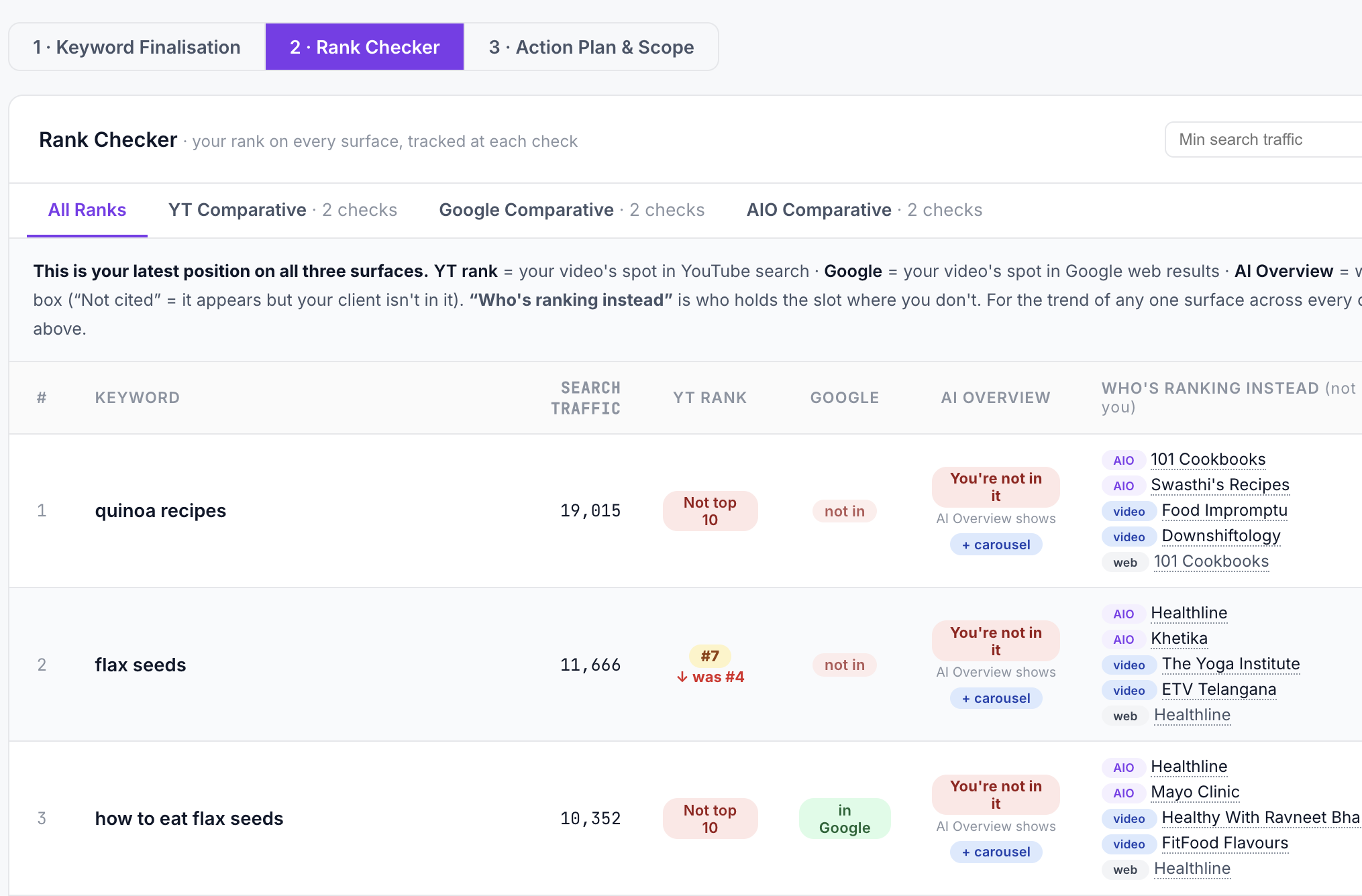
YouTube-first search behaviour matters here more than in Mumbai or Delhi — the wearable ECG anomaly opens a YouTube session before it opens a Google search. Channel discoverability inside YouTube's own search matters disproportionately. Suggested-video pathways and playlist structure both earn incremental view volume that a Delhi channel would not see at the same magnitude.
Compliance perimeter for cardiology content in Bangalore
Bangalore cardiac content sits inside four overlapping frameworks — Karnataka Medical Council registration and conduct, NMC Ethics Code 2026, ASCI Guidelines 2022, and DPDP Act 2023 — plus a Bangalore-specific ethical duty around wearable-data interpretation responsibility and young-onset framing responsibility.
Karnataka Medical Council registration must be current and visibly cited in cardiologist bio panels. Cardiologists practising across the state hold KMC registration as applicable; the channel bio must reflect the correct state registration for the location shown on-camera.
NMC Ethics Code 2026 restricts superlative claims ("best cardiologist Bangalore," "highest angioplasty success rate Whitefield") and comparative claims across Bangalore peers regardless of internal audit data. Substantiated clinic-specific procedural figures are permitted only with full procedural context.
ASCI Guidelines 2022 reinforces superlative restrictions and requires additional care on the corporate check-up marketing that resonates in Bangalore — package promotions to tech-company HR teams cannot promise clinical outcomes, cannot present a specific cardiac test as diagnostic outside its actual sensitivity range, and cannot use fear-based framing directed at asymptomatic professionals.
DPDP Act 2023 covers cath-lab and OR imagery with signed patient consent. Notably, DPDP also covers wearable-derived health data that a patient shares with the clinic — the moment a patient shares an Apple Watch ECG PDF or a Fitbit heart-rate log, that data becomes personal data under DPDP with associated consent, retention, and withdrawal obligations. Channel content that discusses wearable data should never use identifiable patient data without explicit DPDP consent covering the specific channel and retention period.
The Bangalore-specific ethical duty is wearable-data interpretation responsibility. A wearable ECG anomaly can plausibly be either benign or a genuine cardiac emergency. Content interpreting wearable readings must never dissuade a patient from seeking evaluation when the reading warrants it, must never present a wearable notification as clinically diagnostic on its own, and must always include the ER-triggering symptom disclosure for the underlying clinical presentation (afib with syncope, high heart rate with chest pain). The parallel duty is young-onset framing responsibility — content on young-onset heart disease in the 33-42 band must avoid fear-based framing while still communicating the genuine clinical seriousness that motivates timely evaluation.
Content archetypes that convert cardiology patients in Bangalore
The Bangalore cardiac content mix leans harder on wearable interpretation, young-onset framing, and preventive-corporate content than any other Indian cardiac channel would.
Wearable-data interpretation. What an Apple Watch afib notification means, what a Fitbit high-heart-rate alert actually indicates, how to interpret a coronary calcium score, when a wearable reading warrants immediate evaluation and when elective. Every video closes with the ER-triggering underlying symptom disclosure. Should be 15-20 percent of the channel — the highest-converting archetype in Bangalore cardiac YouTube by consult booking rate.
Young-onset cardiac education. Cardiac risk in your thirties as a software engineer, chest tightness while working late nights, how sleep disruption compounds cardiac risk, why cholesterol matters more in your thirties than most people think. Should be 15-20 percent of the channel. Framing avoids fear-based pressure while communicating clinical seriousness.
Preventive cardiology for corporate check-up programs. Two audiences — the HR benefits manager evaluating cardiac screening for the tech company's employee benefit package, and the individual employee about to walk into their annual screening. Content structure serves both: channel-level programs, screening package inclusions, occupational cardiac risk framing (for HR); what to expect, how to interpret results, when to escalate to a cardiologist (for individual employees). Should be 15-20 percent of the channel.
Procedure explainers with data depth. Angioplasty, CABG, valve replacement, pacemaker, EP ablation — walk-throughs with more procedural data density than a national channel would carry, because Bangalore patients read deeper before consenting. Should be 15-20 percent of the channel.
Structured second-opinion frameworks. Bangalore patients seeking second opinions on stent, bypass, or valve recommendations use structured frameworks — comparison matrices, decision-tree walk-throughs, question checklists. Content that mirrors that data-driven approach converts strongly. Should be 10-15 percent of the channel.
Symptom explainers. Chest pain differentials, breathlessness on exertion, palpitations — with the ER-triggering symptom disclosure. Should be 15-20 percent of the channel.
Kannada content for outer-city patients. Symptom and procedure content in Kannada for patients travelling in from outer Karnataka. Should be 5-10 percent of the channel — smaller share than the English default because urban Bangalore patient default is English, but structurally necessary for the outer-city queue.
Testimonials. Strictly 5-10 percent, DPDP-compliant, personal-experience framing.
Real budget expectations for cardiology YouTube in Bangalore
Bangalore cardiac YouTube retainers realistically sit in two bands.
Chain tier — ₹75,000/- to ₹1.5L/- per month. A single-location Bangalore cardiac practice or small cardiac clinic. Includes YODA platform access, monthly content plan for 6-8 videos, script review with NMC and KMC compliance, English-primary content production with occasional Kannada segments, SEO writebacks, thumbnail A/B tests, comment moderation inside compliance, monthly strategy review. Bangalore production costs align to national baseline; Whitefield and Koramangala shoot logistics carry no material premium.
Hospital tier — ₹1.5L/- to ₹3.75L/- per month. A multi-specialty Bangalore hospital with a prominent cardiac department, a standalone Bangalore cardiac centre of excellence, or a Bangalore cardiac chain across 3+ locations. Adds systematic Kannada content production, structured HR-benefits-manager content targeting tech company benefits teams, multi-cardiologist channel structure, deeper competitor intelligence across a 6-10 Bangalore cardiac peer set spanning Whitefield, Koramangala, HSR, Hebbal, and Jayanagar, and integrated paid-media planning through YODA's Ad-Spend Picks module.
LTV maths sustain both bands. A Bangalore cardiac patient acquired through YouTube produces ₹60,000/- to ₹15L/- across the care cycle. The lower ceiling versus Mumbai and Delhi reflects the younger patient profile — a 35-year-old software engineer presenting with an early cardiac risk finding carries a longer maintenance care cycle (chronic-condition management, medication management, quarterly to biannual review) at lower per-episode revenue but higher lifetime episode volume. Preventive cohort at ₹60K/- to ₹2.5L/- across five to seven years, coronary angiography plus interventional pathway at ₹1.5L/- to ₹5L/-, CABG at ₹2.5L/- to ₹6L/-, structural heart (TAVI, pacemaker, EP ablation) at ₹3L/- to ₹15L/-. Younger patients also drive family-referral effects (bringing a parent in for evaluation) that layer additional LTV.
Below ₹75,000/- per month, a solo Bangalore cardiologist is better served with Angryturtle self-serve at ₹999/- for local GBP plus an in-house YouTube library, adding ICG's managed service once the practice reaches Chain-tier scale.
YODA 6-step workflow for a Bangalore cardiology channel
Step 1 — Overview. Connect the Bangalore cardiac channel, calibrate against Bangalore cardiac benchmark bands (Bangalore cardiac channels typically run 6-10 minute view duration on wearable-interpretation and procedural content and 5-7 percent CTR on data-oriented queries — view duration runs materially higher than national baseline because Bangalore audiences read deeper), and subtract paid promotion history from all baseline reads.
Step 2 — Diagnostics. Cluster videos by Bangalore-specific verticals — Wearable Interpretation, Young-Onset Cardiac Education, Preventive/Corporate Check-Up, Procedure Explainers with Data Depth, Second-Opinion Frameworks, Symptom Education, Kannada Content — and by audience mode (individual patient, HR benefits manager, family). Retention and CTR read separately per cluster. Wearable-interpretation cluster typically shows the highest consult-conversion rate; YODA surfaces this signal so the practice weights future content share accordingly.
Step 3 — Strategy. Build a 90-day content plan weighted toward the wearable-interpretation and young-onset clusters because these are the highest-converting archetypes and the most under-served in the Bangalore peer set. Corporate check-up cluster weighted higher in the fiscal-year-end window (January-March) when tech company benefits teams review annual programs.
Step 4 — Optimisation. Rewrite titles for wearable-brand match (Apple Watch, Fitbit, Garmin, Samsung), cardiologist credential signal, and AI Overview citation readiness on data-interpretive queries. Insert structured chapters — Bangalore audiences use chapters to skip to the specific interpretation they want. Update descriptions with substantiated context that satisfies KMC plus NMC plus ASCI review. Queue thumbnail A/B tests.
Step 5 — Reputation (ORM). Cluster comment threads by wearable-data question versus symptom question versus procedural question. Reply inside NMC and DPDP constraints — never clinical advice on shared wearable data in a public reply (that would require DPDP consent and would still fail NMC on individualised clinical guidance without consultation), always route to a WhatsApp consult booking.
Step 6 — Competitor Intel. Track 6-10 Bangalore peer cardiac channels across Whitefield, Koramangala, HSR, Hebbal, and Jayanagar plus 2-3 non-Bangalore cardiac channels producing wearable-interpretation content that competes for Bangalore's search share. Content-gap and format-opportunity analysis weekly.
The platform ICG uses to run this at scale: YODA
ICG runs healthcare YouTube marketing for clinics, hospitals, and specialty groups using YODA — our AI-native healthcare YouTube marketing platform. YODA sits on top of a channel's data and does four things no dashboard does: it separates organic from paid views at every step (so a promoted video can never masquerade as organic growth), it gives decisions not dashboards (every video gets a state + next action), it writes back to YouTube directly (improved titles, tags, descriptions, chapters applied straight to the platform), and it tracks the three rank races — YouTube search, Google web, and Google AI Overview citations.
YODA runs the full 6-step workflow — Overview, Diagnostics, Strategy, Optimisation, Reputation (ORM), and Competitor Intel — with 40+ analysis modules organised under those steps. ICG's managed YouTube service uses YODA end-to-end. See the Healthcare YouTube Marketing pillar guide for the full scope, or the Healthcare YouTube Marketing Agency service page for engagement details.
Book a YODA demo on WhatsApp → or request a free healthcare YouTube channel audit →
Related reading
- YouTube marketing for cardiologists in India — parent playbook
- Local SEO for doctors and clinics in Bangalore 2026
- YODA 6-step workflow explained for healthcare marketing agencies
- Hospital video marketing in India 2026
- Healthcare YouTube marketing agency service page
FAQ
How should our Bangalore cardiac YouTube channel handle wearable ECG interpretation content responsibly? Interpret what a wearable reading typically means and typically does not mean, always include the ER-triggering underlying symptom disclosure (afib with syncope, high heart rate with chest pain, sustained low heart rate with weakness), and never present a wearable notification as clinically diagnostic on its own. Every video routes viewers to a WhatsApp consult booking for individualised assessment. Under DPDP Act 2023, wearable data a patient shares with the clinic is personal data — never use identifiable patient wearable data on the channel without explicit DPDP consent covering the specific use.
Is young-onset cardiac content ethically safe when it targets asymptomatic professionals? Yes when framed without fear-based pressure. The clinical seriousness of young-onset cardiac disease in the 33-42 band is real and worth communicating, but content cannot pressure asymptomatic viewers into unnecessary testing. ASCI flags fear-based framing that pushes asymptomatic viewers to specific tests without clinical indication. YODA's compliance filter surfaces videos that cross the line before publication.
How should content targeting corporate check-up programs split between HR benefits managers and individual employees? Two audiences with different intent depths. HR content covers program structure, screening package inclusions, occupational cardiac risk framing, expected utilisation. Individual employee content covers what to expect during the screening, how to interpret results at a general level, when to escalate to a cardiologist. Cluster analysis inside YODA reads the two audiences separately so the practice sees which cohort is producing more downstream consult bookings.
Why is Bangalore's cardiac consideration cycle longer than Mumbai or Delhi? Bangalore patients are data-driven researchers who compare three or four cardiologists across a 3-8 week window before consenting to a procedure. The longer cycle rewards deeper content — the channel with more detailed procedural walk-throughs and more structured second-opinion frameworks wins in a way a shorter-cycle metro would not reward as sharply. Channel strategy and CTA flow have to serve the extended research window.
How much Kannada content does a Bangalore cardiac channel actually need? 5-10 percent of the channel. Urban Bangalore patient default is English, but outer-city and adjacent Karnataka district patients arrive in Kannada-primary mode and a structural share of the channel needs to serve them. Shoot Kannada segments with cardiologists who speak the language natively — machine-translated Kannada from English scripts reads as impersonal and loses retention.
Can we mention specific Whitefield or Koramangala cardiac hospitals by name in our videos? Mention your own hospital or clinic freely. Naming a competitor Bangalore cardiac hospital creates ASCI and NMC exposure around comparative claims — refer to the wider cluster generically ("Whitefield tertiary cardiac cluster," "Koramangala private cardiac cluster," "Hebbal North Bangalore cardiac cluster") instead.
What is the realistic LTV per Bangalore cardiac patient acquired through YouTube? ₹60,000/- to ₹15L/- across the care cycle. Lower ceiling than Mumbai or Delhi because the Bangalore cardiac patient profile skews younger — a 35-year-old with an early cardiac risk finding carries a longer chronic-condition management arc at lower per-episode revenue but higher lifetime episode volume. Preventive cohort at ₹60K-2.5L across five to seven years, interventional pathway at ₹1.5-5L, CABG at ₹2.5-6L, structural heart at ₹3-15L. Family-referral effects (younger patients bringing a parent in) layer additional LTV.
Does Apple Watch ECG interpretation content risk pulling us into a comparative claim on device accuracy? Only if the framing compares one wearable brand's accuracy against another. Content that explains what an Apple Watch afib notification means clinically, what a Fitbit high-heart-rate alert typically indicates, and when either warrants evaluation is educational and NMC-safe. Content that ranks device accuracy ("Apple Watch is more accurate than Fitbit") strays into comparative claims territory that neither ASCI nor NMC will permit without published head-to-head clinical data.
Book a free 30-minute Brand & Growth Diagnostic.
It's a working session, not a sales pitch — you leave with a written root-cause analysis you can act on, whether or not you engage ICG.
The three platforms
behind every ICG engagement.
Beacon
CAPI middleware that fixes Event Match Quality, translates CRM statuses to Meta-standard events, dedups across channels.
Agency OS
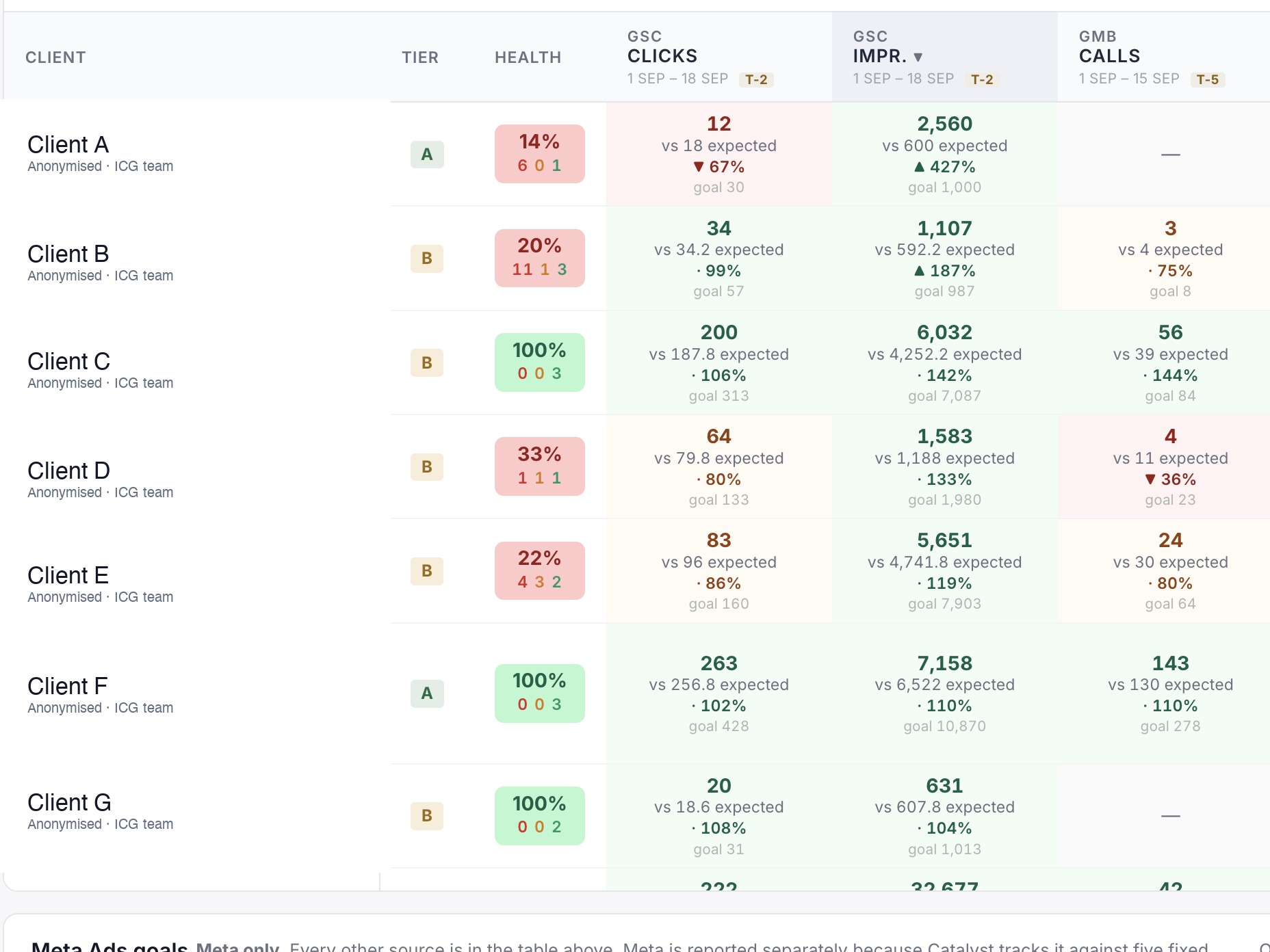
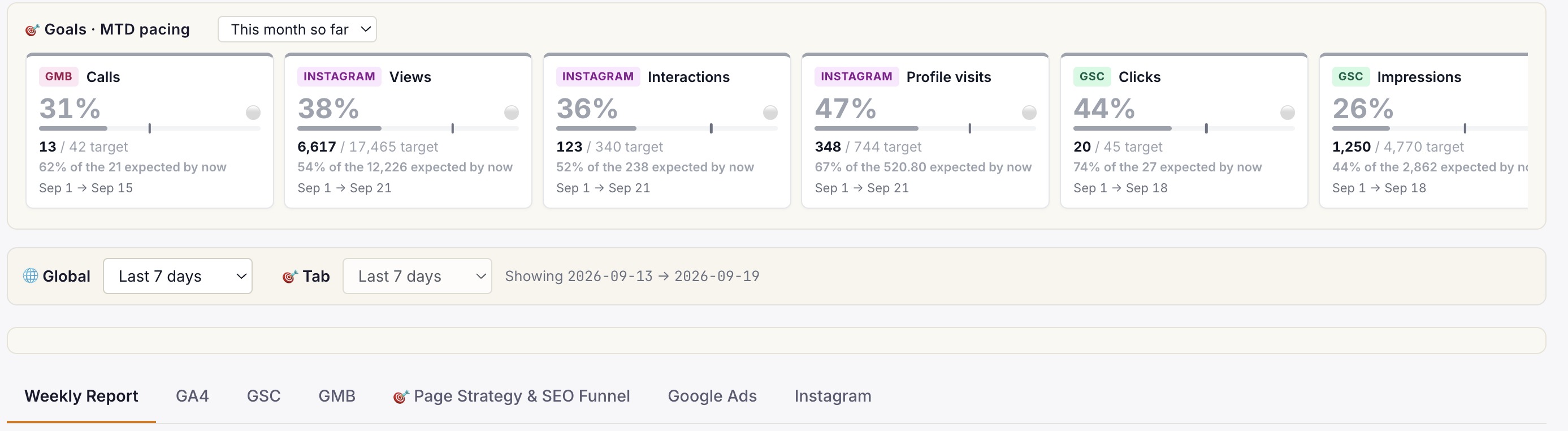
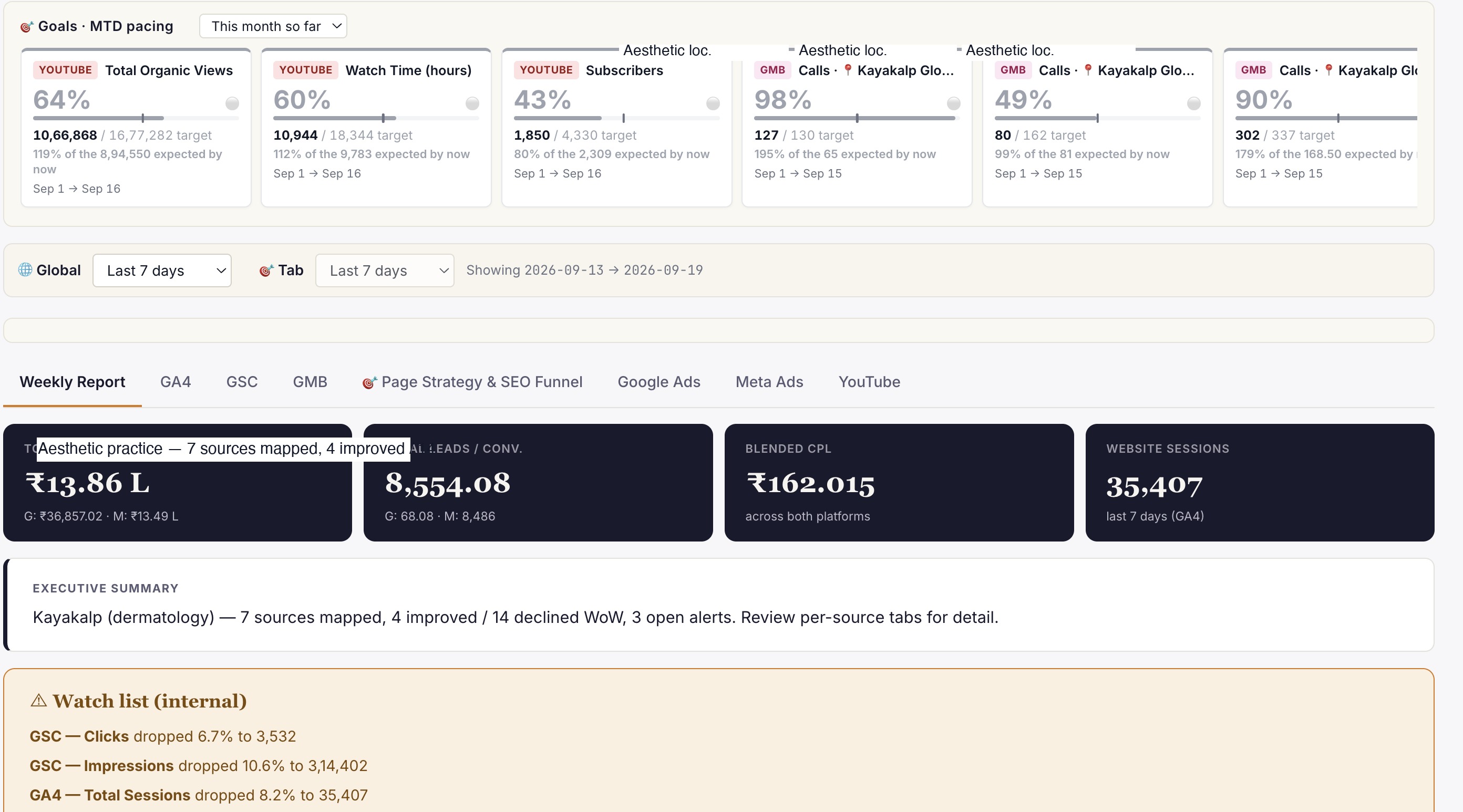
Live client dashboard. GSC, GA4, Google Ads, Meta Ads, IVR calls in one view. Login anytime, not monthly.
Phoenix
Clinic revenue intelligence over your PMS. Daily action queue: Prevent Loss, Maintain & Engage, Grow Revenue. Multi-centre rollout.
Or book a free 30-min audit to see all three in action on your account.
Healthcare brands
that already run on ICG.
A representative slice of the 150+ healthcare brands ICG has delivered for across India. Most engagements remain under NDA.


What ICG clients say · on video.
"Scale up of organic channels and business consulting. ICG has absolute domain authority in their field."
"Working with ICG transformed how we acquire IVF patients in Gurgaon. They understand the fertility journey from inquiry to consult..."
"What Ichelon accomplished — they got all my ideas and worked over 3-4 months to create an amazing, super-customised website."
Need help operationalising this?
Every ICG service is healthcare-only, NMC + DPDP-aware, and built around the patient-research patterns that drive Indian healthcare growth in 2026.
Every practice welcome — packages from ₹20,000/mo.
Goals-Driven engagements · Performance-Linked Payout Models available
More from
ICG.
Five trends shaping Indian healthcare marketing through 2027: AI-first patient research, Conversions API adoption, ABDM discovery, the AEO w...
Healthcare AIO is the discipline of getting your clinic or hospital cited inside Google AI Overviews, ChatGPT and Perplexity answers — not j...
Conversational-search advertising places brand messages inside AI chat answers — ChatGPT, Perplexity, Copilot — rather than beside a results...
Stop guessing.
Book a Diagnostic.
30 minutes. Free. With the AI-powered healthcare-only marketing agency 150+ brands already run on. No slides, no pitch, no hard close.


