


From Chapter 6 (2002) to the NMC's 2026 Guidelines: What Changed for Doctor Marketing
Chapter 6 of the 2002 Regulations already barred doctors from soliciting patients. The NMC's 6 October 2026 guidelines apply that rule to social media, reviews, AI and agencies. A side-by-side comparison with permitted and prohibited content.
No pitch. Written root-cause diagnosis. AI-powered, healthcare only.
Direct answer
Chapter 6 of the 2002 Regulations already barred doctors from soliciting patients. The NMC's 6 October 2026 guidelines apply that rule to social media, reviews, AI and agencies. A side-by-side comparison with permitted and prohibited content.
TL;DR
Author: Rohit Gupta · Co-Founder, ICG · IIT BHU Pharmaceutical Engineering + IIM Rohtak · first published July 2026, updated October 2026
This guide was first written around Chapter 6 of the 2002 Regulations; it now reflects the October 2026 guidelines. An earlier version described a "2026 revision" of an "NMC Section 6" with five changes. No such revision exists. What exists is Chapter 6 of the Indian Medical Council (Professional Conduct, Etiquette and Ethics) Regulations, 2002 (unethical acts, including advertising), and, since 6 October 2026, the NMC's Guidelines on Ethical Advertising and Public Communication by Hospitals/Medical Institutions and Registered Medical Practitioners, which are read with the 2002 Regulations (paras 2.1(f) and 4.2).
This page compares the two for doctor marketing. For the complete clause-by-clause guide, with separate checklists for doctors and hospitals, see the pillar: NMC advertising guidelines 2026: what doctors and hospitals can and can't do.
Updated 8 October 2026 to the National Medical Commission's Guidelines on Ethical Advertising and Public Communication by Hospitals/Medical Institutions and Registered Medical Practitioners (public notice No. R-13014/01/2024-Ethics, dated 6 October 2026, in force immediately). Paragraph numbers in this article refer to those guidelines. General information, not legal advice.
What Chapter 6 of the 2002 Regulations says
Chapter 6 lists unethical acts. For marketing, three provisions matter most:
- 6.1 Advertising. Soliciting patients directly or indirectly, by a physician, a group of physicians or an institution, is unethical (6.1.1). A physician may not use their name in advertising that draws attention to their skill, qualifications, achievements or affiliations, and may not boast of cases, operations or cures. Formal announcements are allowed: starting practice, change of type of practice, change of address, temporary absence, resumption, succession and a public declaration of charges.
- 6.1.2 Letterhead and signboard. No self-photograph on letterheads or signboards.
- 6.4 Rebates and commission. No rebate or commission for referring patients.
Chapter 7 (misconduct) adds the limits on lay-press articles (7.11), institutional advertising (7.12), signboards (7.13) and patient photographs without permission (7.17). Those rules still apply. The October 2026 guidelines cite 6.1.1 and 6.1.2 directly for letterheads and signboards (para 9.2).
What the October 2026 guidelines changed for doctor marketing
The guidelines keep the 2002 principle that doctors do not solicit patients, and apply it to the channels doctors actually use now. The table sets the two side by side.
| Topic | Chapter 6 of the 2002 Regulations | October 2026 guidelines |
|---|---|---|
| What counts as advertising | Soliciting patients directly or indirectly; written with print and signboards in mind | Any communication that directly or indirectly solicits or promotes, including social media, sponsored, targeted, influencer-led, search-engine, platform-based, audio-visual and AI-generated promotion (3.2). WhatsApp, Telegram, Facebook and podcasts are named media (3.5). Information in the normal course without promotional intent is exempt (3.2, Expl. I) |
| Educational content | Public-health articles and talks in own name allowed if they do not advertise the doctor (7.11) | Lectures or talks on public health through TV, radio and electronic media in own name and designation, without promoting the employer (8.2(iii)); awareness content that does not promote the practice, solicit patients or get monetised through promotional marketing (5.1) |
| Disclosure | Registration number on prescriptions, certificates and receipts (1.4.1) | Electronic posts must show name, qualifications, registration status and SMR/NMR number (3.2, Expl. III); clinical establishments must do the same for doctors they name (Expl. IV) |
| Testimonials and reviews | Boasting of cases and cures barred | No fake, paid or misleading reviews, ratings or testimonials; an RMP may not request or share testimonials or reviews for promotion on social media (3.2, Expl. V); no manipulation of reviews, ratings or rankings (8.1(xii)) |
| Before-and-after and patient images | No identifiable patient photographs without permission (7.17) | No promotional cases, before-and-after photographs or success stories, except scientific or educational use with anonymised consent (8.1(v)); consent does not make a prohibited depiction lawful (6.2); identifying features blurred or cropped (6.4) |
| Third parties | No touts or agents (7.19) | No engaging a third party to market medical services (8.1(ii)); no using a third party to do indirectly what is prohibited (8.1(xi)); responsibility stays with the RMP (4.4) |
| Payment for patients | No rebates or referral commissions (6.4) | No commission, referral or lead-generation fee tied to procuring patients (8.1(vii)); agency, platform or influencer payment not linked to individual patients (8.1(viii)) |
| Claims | No boasting of skill or cures | No "best doctor", "No.1", "100% success" or "painless" claims (8.1(iii)); no "leading", "most trusted" or "top" unless objectively verifiable with a disclosed methodology (8.1(ix)) |
| Inducements | Not addressed in these terms | No discounts, offers, coupons, cashback or free procedures as inducements; factual price disclosure only (8.1(x)) |
| Product endorsement | No endorsing drugs, devices or commercial products (6.1.1) | No product endorsements (8.1(iv)) |
| AI | Not addressed | AI-generated promotional campaigns prohibited; permitted AI content carries a source mark (7.2) |
| Hospitals | Institutional adverts limited to name, type of patients, facilities and fees (7.12) | Factual, verifiable information: departments, facilities, equipment, services, emergency services, accreditation, charges (8.3); doctor directory treated as patient information (9.1) |
| Action | Enquiry; removal from the register altogether or for a specified period (Chapter 8) | Graded action that "may be contemplated" by the SMC, from warning to removal for 1 to 3 years (10.1) |
Corrections to the earlier version of this page: the guidelines do not create a consent route that makes patient testimonials usable in promotion, and they do not allow before-and-after images once faces are blurred. Both are barred in promotional content (Expl. V, 6.2, 8.1(v)).
What is permitted now

| Content type | Status | Basis |
|---|---|---|
| Hospital or clinic page with departments, services, facilities, accreditation and charges | Permitted | 8.3 |
| Hospital website doctor directory: names, recognised qualifications, specialties, registration details, availability | Permitted | 9.1 |
| Doctor's educational YouTube talk in own name and designation, not promoting the employer | Permitted | 8.2(iii), 5.1. See YouTube for doctors |
| Educational Instagram post with name, qualifications and registration number shown | Permitted | 3.2 Expl. I and III. See doctors on social media |
| Formal announcement of starting practice, change of address, absence or resumption | Permitted | 8.2(ii), 9.3 |
| Research in reputed journals, and sharing it in accessible language without promotion | Permitted | 8.2(i), 3.2 Expl. I |
| Health-education pamphlets in the clinic, with no cure guarantee or superiority claim | Permitted | 8.2(iv) |
| Genuine reviews left as they are; a clinic asking all patients for feedback without incentives or gating | Permitted | 3.2 Expl. V, 8.1(xii). See Google reviews |
What is prohibited now
| Content type | Status | Basis |
|---|---|---|
| "100% success", "guaranteed cure", "painless" or any outcome guarantee | Prohibited | 8.1(iii), 8.1(vi) |
| Before-and-after photographs or success stories in promotion, even with consent | Prohibited | 8.1(v), 6.2 |
| Patient testimonials, or an RMP sharing reviews for promotion on social media | Prohibited | 3.2 Expl. V, 8.1(xi). See testimonials |
| "Best", "No.1", "leading", "top" or "most trusted" without a disclosed, verifiable methodology | Prohibited | 8.1(iii), 8.1(ix) |
| Product, drug or supplement endorsements | Prohibited | 8.1(iv) |
| Discounts, free consultations, cashback or limited-period offers as inducements | Prohibited | 8.1(x) |
| An RMP engaging an agency or influencer to market their practice | Prohibited | 8.1(ii), 4.4 |
| Paying for reviews, followers or engagement, or creating fake reviews | Prohibited | 3.2 Expl. V, 8.1(xii) |
| AI-generated promotional campaigns, or AI-made patients and testimonials | Prohibited | 7.2. See AI content |
| Fear-based messaging that creates demand for unnecessary procedures | Prohibited | 8.1(i) |
The 12-point pre-publication checklist
ICG's content team applies this before publishing any hospital or clinic content, or any doctor's educational content:
- Primary intent: does it inform or educate, or does it promote or solicit (3.2)?
- If a doctor is the author, is it in their own name and designation, without promoting the employer (8.2(iii))?
- Are name, qualifications, registration status and register number shown wherever a doctor is named (Expl. III, IV)?
- Outcome and claim scan: "guaranteed", "100%", "cure", "painless", "best", "No.1", "leading", "top" (8.1(iii), 8.1(ix)).
- Any testimonial, review screenshot, before-and-after or success story (Expl. V, 8.1(v))?
- Any offer, discount, cashback or free procedure (8.1(x))?
- Any identifiable patient information, or patient data handled outside the DPDP Act (7.4, 7.6)? See the DPDP Act 2023 checklist.
- Any AI-generated content? No promotional AI; permitted AI content carries a source mark (7.2).
- Any claim to cure a condition listed under the Drugs and Magic Remedies Act, 1954?
- Any product endorsement or undisclosed commercial relationship (8.1(iv), 8.1(xi))?
- Specialty checks: ART (Regulation) Act, 2021 for IVF content; Dental Council of India code for dental content (see dental advertising).
- Is the clinician review date and reviewer shown on the published piece?
What happens when the rules are broken
Under para 10.1, the State Medical Council may contemplate graded action: warning and mandatory ethics training for a first violation, censure and a monetary penalty for a second, suspension of 3 to 6 months for a third, 6 to 12 months for serious violations, and removal from the register for 1 to 3 years for repeated violations. Hospitals are dealt with under the Clinical Establishments Act or the State Act. The violations that most often come up are mapped clause by clause in common NMC advertising violations and the graded action. For a short summary of the 2026 changes, see NMC 2026 guidelines for doctors: what changed.
Compliance note: this article reflects ICG's operational reading of the guidelines. It is not legal advice. Consult a healthcare lawyer for specific guidance.
Instagram reporting for clinics and doctors: Prism Pulse.
How ICG works within these guidelines
ICG is a healthcare marketing agency. Our clients are hospitals, clinics and medical institutions, which may publish factual, objective and verifiable information about themselves (paras 8.3 and 9.1). For individual doctors, ICG supports only genuinely educational content in the doctor's own name and designation (para 8.2(iii)). For doctors and their practices, we run patient-education-driven campaigns: awareness content that helps patients understand their condition and their options, published in the doctor's own name and designation (para 8.2(iii)) and kept free of the self-promotion that para 8.1(ii) bars.
The work is education-first and runs across six channels:
- Awareness content on YouTube. Doctor-led educational videos on public health and disease awareness, in the doctor's own name and designation, without promoting the employer organisation (para 8.2(iii)). See YODA and YouTube marketing for healthcare.
- Research articles and blogs that help patients understand their options: information shared in the normal course, not promotion (para 3.2, Explanation I). See healthcare content marketing, ICG research reports and healthcare SEO.
- Expert answers on Reddit and Quora from named, disclosed accounts. No anonymous or fake posts, no undisclosed commercial relationships and no manufactured engagement (paras 8.1(xi) and 8.1(xii)). See Reddit and Quora programmes.
- Awareness campaigns on Meta, run from the hospital's or clinic's own page, with no discounts, offers, free procedures or other inducements (paras 8.1(x) and 8.3). See Meta advertising for hospitals and clinics.
- NMC-compliant Google Ads landing pages: factual departments, services and facilities, with no "best", "No.1", "100% success", "painless" or "guaranteed" claims (paras 8.1(iii) and 8.1(ix)). See Google Ads for hospitals and clinics.
- "Learn More" instead of "Book Now" on patient-facing pages, so that a page informs rather than solicits (paras 8.1(ii) and 8.3(ii)).
All six rest on three kinds of content: scientific (evidence-based, checked by a qualified clinician), persona-based (written for the questions a specific patient group asks) and consumer-based (built from how people search, compare and decide). AI-assisted drafts go through human medical review, and AI-generated content that is published carries an AI source mark (para 7.2). We do not publish patient testimonials, before-and-after images or superiority claims, and we never buy, incentivise or gate reviews.
Free NMC compliance check. We review a hospital's or clinic's website, Google Business Profile and social channels against the October 2026 guidelines and send back a written list of fixes.
See what the check covers · Request the check · Book a 30-minute call
General information, not legal advice. Source: NMC public notice No. R-13014/01/2024-Ethics, 6 October 2026.
Book a free 30-minute Brand & Growth Diagnostic.
It's a working session, not a sales pitch — you leave with a written root-cause analysis you can act on, whether or not you engage ICG.
Questions readers ask
about this topic.
The three platforms
behind every ICG engagement.
Beacon
CAPI middleware that fixes Event Match Quality, translates CRM statuses to Meta-standard events, dedups across channels.
Agency OS
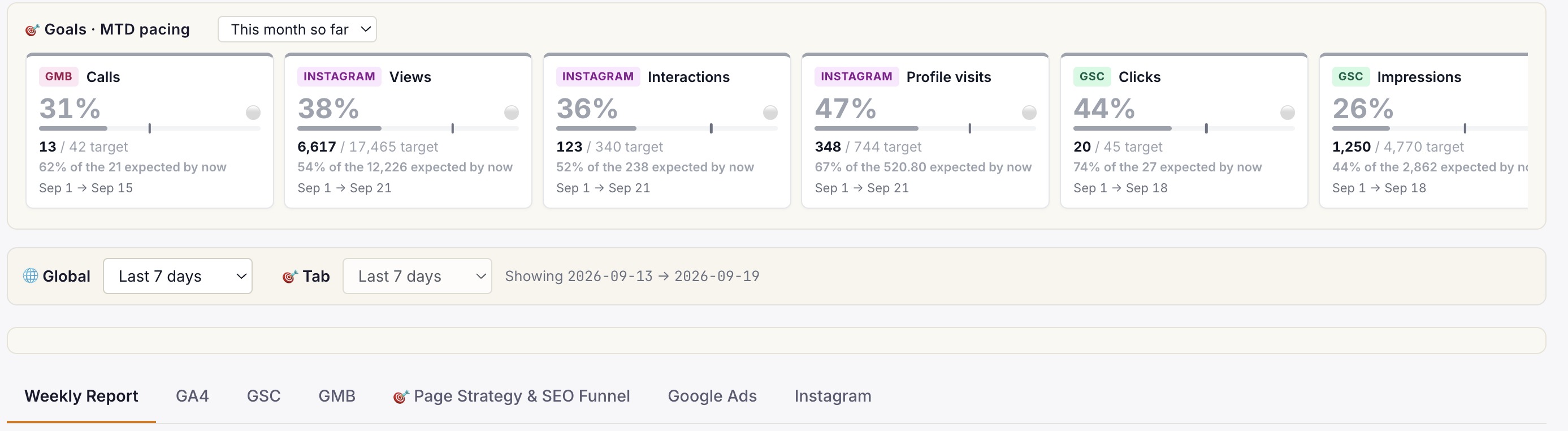
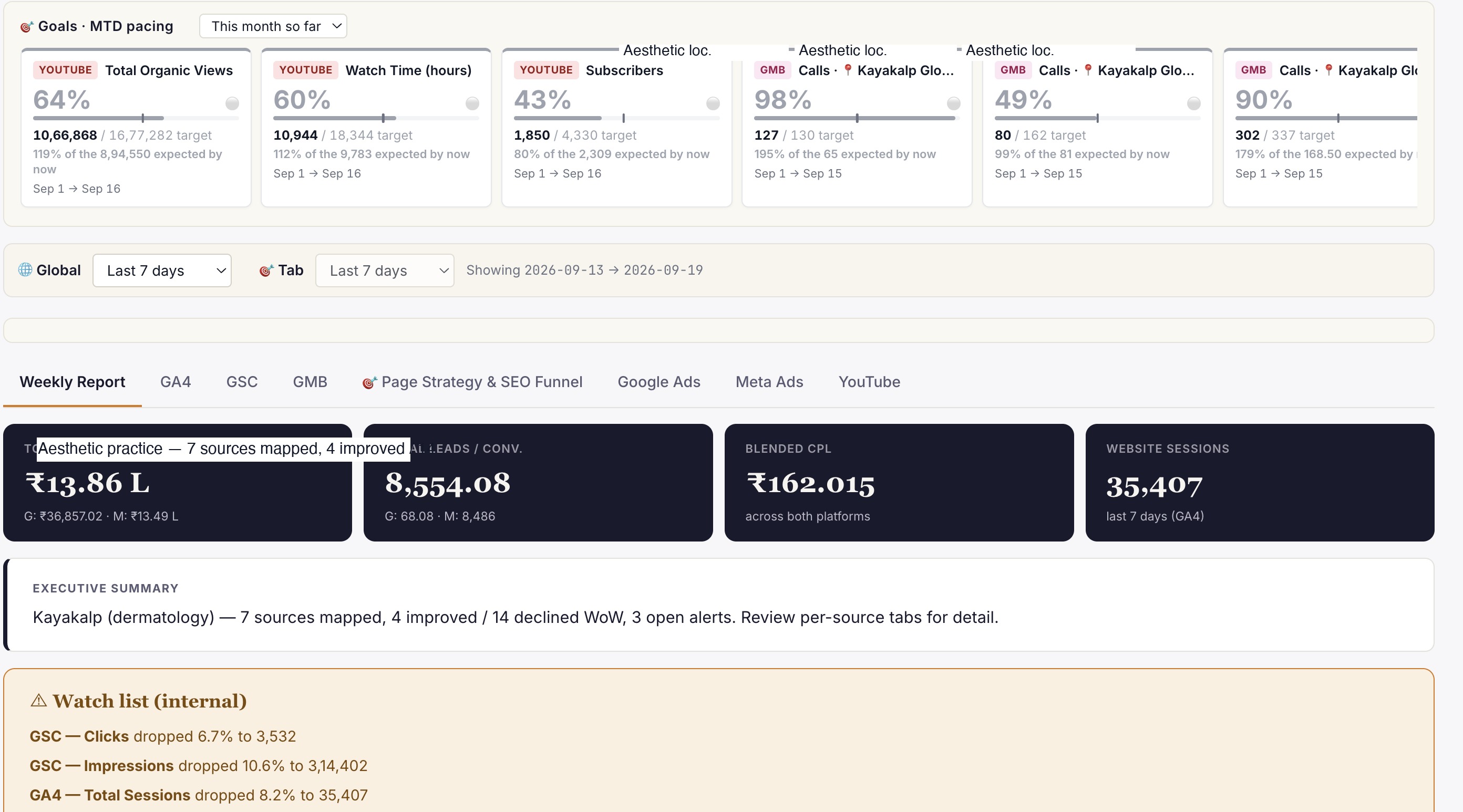
Live client dashboard. GSC, GA4, Google Ads, Meta Ads, IVR calls in one view. Login anytime, not monthly.
Phoenix
Clinic revenue intelligence over your PMS. Daily action queue: Prevent Loss, Maintain & Engage, Grow Revenue. Multi-centre rollout.
Or book a free 30-min audit to see all three in action on your account.
Healthcare brands
that already run on ICG.
A representative slice of the 150+ healthcare brands ICG has delivered for across India. Most engagements remain under NDA.


What ICG clients say · on video.
"Scale up of organic channels and business consulting. ICG has absolute domain authority in their field."
"Working with ICG transformed how we acquire IVF patients in Gurgaon. They understand the fertility journey from inquiry to consult..."
"What Ichelon accomplished — they got all my ideas and worked over 3-4 months to create an amazing, super-customised website."
Need help operationalising this?
Every ICG service is healthcare-only, NMC + DPDP-aware, and built around the patient-research patterns that drive Indian healthcare growth in 2026.
Every practice welcome — packages from ₹20,000/mo.
Goals-Driven engagements · Performance-Linked Payout Models available
More from
ICG.
Five trends shaping Indian healthcare marketing through 2027: AI-first patient research, Conversions API adoption, ABDM discovery, the AEO w...
Healthcare AIO is the discipline of getting your clinic or hospital cited inside Google AI Overviews, ChatGPT and Perplexity answers — not j...
Conversational-search advertising places brand messages inside AI chat answers — ChatGPT, Perplexity, Copilot — rather than beside a results...
Stop guessing.
Book a Diagnostic.
30 minutes. Free. With the AI-powered healthcare-only marketing agency 150+ brands already run on. No slides, no pitch, no hard close.


