


Video AEO for Healthcare Brands India: How AI Cites Video Content in 2026
AI answer engines now cite YouTube transcripts directly. For Indian hospitals, clinics, and healthcare platform brands, video AEO is a distinct workstream from YouTube SEO. Here is what actually gets cited in 2026 and how to structure your video pipeline for it.
No pitch. Written root-cause diagnosis. AI-powered, healthcare only.
Direct answer
AI answer engines now cite YouTube transcripts directly. For Indian hospitals, clinics, and healthcare platform brands, video AEO is a distinct workstream from YouTube SEO. Here is what actually gets cited in 2026 and how to structure your video pipeline for it.
TL;DR

TL;DR
- Video AEO is the discipline of structuring healthcare video content so ChatGPT, Perplexity, Google's AI Overviews, and Gemini cite your clip when someone asks a health-buying question in India.
- Indian healthcare buyers - hospital procurement heads, clinic owners, pharma brand managers, doctors running practices as businesses - increasingly start their research on AI answer engines that quote directly from YouTube transcripts, not just from Google's ten blue links.
- Getting cited requires question-format titles, direct spoken answers in the first 20 seconds, clean timestamped transcripts, VideoObject and FAQPage schema, and topical authority signals aligned with NMC and DPDP Act norms.
- Indian clinics winning here publish short 60-180 second answer videos, not brand films. CPQL from an AI-cited video is often 40-60 percent lower than paid discovery in the same specialty and metro.
Table of contents
- What is video AEO and why should Indian healthcare brands care in 2026?
- Why this matters for Indian healthcare marketers right now
- How do AI answer engines decide which video to cite?
- Which healthcare video formats actually get cited?
- How is video AEO different from YouTube SEO for Indian clinics?
- What does an AEO-ready healthcare video look like end to end?
- Which Indian healthcare specialties are winning video AEO in 2026?
- The ICG methodology for video AEO
- How much should Indian hospitals and clinics budget for video AEO?
- FAQ
What is video AEO and why should Indian healthcare brands care in 2026?
Video AEO, or Answer Engine Optimization, is the discipline of producing and structuring video content so that AI answer engines like ChatGPT, Perplexity, Google's AI Overviews, Gemini, and Claude can quote it directly when a user asks a healthcare buying or evaluation question. For a hospital in Chennai, a fertility chain in Hyderabad, or a dental group in Pune, video AEO is now a distinct workstream from traditional YouTube SEO, and the two do not overlap fully.
The shift is faster than most Indian marketing teams have costed into their FY26-27 plans. Somewhere between 40 and 45 percent of high-intent healthcare research queries that used to start on Google in the metros now start on an answer engine. When a procurement head at a corporate hospital in Gurugram searches "which hospital RCM platform works with ABDM," the answer they see first is a synthesised paragraph with three to five sources cited. If your clinic, hospital, or platform brand is not in those citations, you do not exist in the buyer's shortlist.
Video has become the highest-leverage source these engines pull from. Transcripts are dense, timestamps let AI cite a specific 20-second window, and video is still under-indexed relative to blog content, which means the ceiling is far higher for Indian healthcare brands willing to structure their video output correctly.
Why this matters for Indian healthcare marketers right now
India has over 500 million active YouTube users and the highest per-capita health-query volume on AI chat interfaces of any country outside the US. That combination is not accidental. Indian buyers - whether a chief medical officer evaluating an EHR overlay or a middle-class family choosing a fertility clinic - use video as their trust layer and AI chat as their filter layer. When those two systems join hands, whichever brand's video is being quoted wins the shortlist.
There is also a regulatory dimension. NMC advertising norms restrict a lot of what a doctor can say in a paid ad. Educational video content, structured around a genuine patient or buyer question, sits inside the safe zone if produced correctly. The DPDP Act of 2023 further tightens what patient data or imagery can be used, which pushes the smart brands towards doctor-led educational video - exactly the format that AI engines cite. The regulation and the AEO opportunity point in the same direction, which is rare in Indian healthcare marketing.
How do AI answer engines decide which video to cite?
Answer engines look for three signals in parallel: a clear question-format title, a timestamped transcript where the direct answer appears in the first 15 to 30 seconds or in a labelled chapter, and topical authority signals around the channel and the entity behind it. If any one of these three is missing or weak, the citation goes to a competing clinic or hospital.
The engines are not literally watching your video. They are reading a stack of signals:
- The video title and description exactly as they appear on YouTube.
- The auto-generated or manually uploaded transcript, chapter by chapter.
- The VideoObject schema markup on the page where the video is embedded.
- The About page of the channel, author bylines, and any Person or Organization schema that ties the video to a real credentialed source - which for Indian healthcare must include NMC-registered practitioner details wherever clinical claims are made.
- External corroboration - if the same claim appears on your website's structured content, in Google Knowledge Graph, and in credible healthcare directories, the model treats the source as high-confidence.
Practically, this means an ENT hospital in Delhi that publishes a 90-second video titled "How is septoplasty priced in Delhi NCR hospitals?" with a clean transcript and the direct answer in the first 20 seconds will be cited far more often than a 15-minute brand documentary about the same procedure, no matter how beautifully shot the documentary is.
Which healthcare video formats actually get cited by AI?
The five formats that get cited most often by AI answer engines in the Indian healthcare context are expert Q&A shorts, procedure explainer clips under three minutes, category comparison walkthroughs, price-and-process explainers, and pre-visit preparation guides. Long testimonial films and brand anthem films almost never get cited by an answer engine.
Here is the pattern break. Indian hospitals have historically over-invested in emotional brand films - the founder's origin story, the CSR reel, the accreditation announcement, the anniversary video. These have their place for trust building and organic social distribution, but AI engines do not cite them because they do not answer a specific query. The videos that get cited are structurally almost the opposite: fast, informational, with a credentialed person on screen speaking a clear answer to a clear question.
| Format | Typical length | Citation frequency | Best fit |
|---|---|---|---|
| Expert Q&A short | 45-120 seconds | High | Specialists building personal brand |
| Procedure explainer | 90-180 seconds | High | Surgical, fertility, cosmetic specialties |
| Category comparison | 2-4 minutes | Medium-high | Platform brands, RCM, EHR, CRM decisions |
| Price and process | 2-3 minutes | Medium | Diagnostics, dental, ophthalmology |
| Pre-visit preparation | 60-120 seconds | Medium | Multi-specialty and corporate hospitals |
| Brand documentary | 5+ minutes | Very low | PR and social, not AEO |
How is video AEO different from YouTube SEO for Indian clinics?
YouTube SEO optimises for the YouTube algorithm itself - views, watch time, click-through rate, session retention. Video AEO optimises for AI answer engines quoting your transcript in a synthesised answer that may never route the user back to the original video at all. The two systems reward different behaviours and require different content investments.
A YouTube-SEO-optimised piece for an Indian dental chain might be a 12-minute "Full smile makeover journey" film - great retention curve, great watch time on YouTube, but a poor AEO asset. An AEO-optimised piece from the same brand would be a series of 15 to 25 short answer videos: "What does a smile makeover cost in Bangalore?", "How long does a smile makeover take?", "Is a smile makeover covered by health insurance in India?" - each of which the AI can quote directly in its synthesised answer paragraph.
Indian healthcare brands need both workflows, not a choice between them. The YouTube-SEO layer builds channel authority and a subscriber base for retention marketing. The AEO layer captures the buyer at the moment they ask an answer engine. YODA, ICG's YouTube-first AI-native product, was built to operate both layers together for Indian healthcare clients rather than treating them as isolated campaigns.
What does an AEO-ready healthcare video actually look like end to end?

An AEO-ready healthcare video has seven observable elements: a question-format title, a spoken direct answer within the first 20 seconds, chapter markers every 30 to 45 seconds, a manually corrected transcript in Indian English (and Hindi where the audience is Hindi-speaking), VideoObject and FAQPage schema on the embed page, a credentialed on-screen speaker, and a clear entity tie-back to the hospital's organisation schema.
Take a plausible example. A gynaecology practice in Ahmedabad publishes a video titled "How much does IVF cost in Ahmedabad in 2026?". The consultant appears on camera and says, in the first sentence: "In 2026, a single IVF cycle in Ahmedabad typically costs between Rs 1.4 lakh and Rs 2.6 lakh, depending on the protocol and whether ICSI or donor gametes are needed." Chapters are labelled: 0:00 Direct cost answer, 0:35 What is included, 1:15 What is extra, 2:00 Insurance and financing, 2:45 How to compare clinics.
The embed page on the clinic's website carries the full transcript in text form, VideoObject schema with contentUrl and duration, FAQPage schema for the top three questions covered in the clip, and a MedicalOrganization block referencing the clinic's NMC-verified doctors. The consultant's byline links to a Person schema page with credentials. That is the minimum viable entity graph an AI engine needs to feel confident citing the source in its answer.
Which Indian healthcare specialties are winning video AEO in 2026?
The specialties currently winning video AEO in India are IVF and fertility, dental and orthodontics, hair transplant and aesthetics, cosmetic and cataract ophthalmology, and diagnostics chains running preventive health packages. These categories share three traits: high-consideration purchase decisions, price transparency demand, and a large volume of buyer questions that resolve cleanly in 60 to 180 seconds.
Fertility is the most competitive video AEO category in India right now. In Delhi NCR, Hyderabad, and Bangalore, we regularly see 8 to 12 clinics chasing the same 20-question set. Dental is close behind, with Pune, Mumbai, and Bangalore seeing intense AEO competition around clear aligners, dental implants, and full mouth rehabilitation. Hair transplant is a curious case - the specialty is dominated by three or four large chains, and any regional clinic willing to structure 30 to 40 answer videos correctly can enter the AI citation set within 60 to 90 days.
Corporate hospitals and multi-specialty chains, by contrast, are systematically losing this race. They tend to publish brand and event content, not answer content, and their AEO share often sits below 5 percent even in cities where they dominate offline. This is the single biggest content gap we see in Indian healthcare marketing in 2026.
The ICG methodology for video AEO
Ichelon Consulting Group builds video AEO programmes as a feature stack, not as isolated video drops. Every video moves through five layers: question mining from Google Search Console data, answer-engine query logs, and Google's People Also Ask surface in the client's specialty and city; scripting with a mandatory 15 to 20 second direct answer at the top; on-camera capture with credentialed staff; transcript cleaning in Indian English and, where relevant, Hindi and regional languages; and schema layering across VideoObject, FAQPage, MedicalOrganization, and Person markup on the embed page.
The programme is orchestrated through YODA for the YouTube-first content pipeline, Angryturtle for surfacing video on the client's Google Business Profile at the local level, Meta Catalyst IQ for paid amplification of the best-performing AEO clips, Prism Spy for competitor video-ad intelligence, and Prism Pulse for Instagram Reels visibility. For platform and enterprise buyers, AtomCRM at Rs 50,000/- setup + Rs 799/- per telecaller and HealthPro 360 at Rs 14,999 per month route inbound video-led enquiries into the clinical and commercial workflow without lead leakage.
How much should Indian hospitals and clinics budget for video AEO?


Budgets for video AEO in Indian healthcare typically start at Rs 49,999 per month at the Foundation tier for a single specialty in a single city, move to Rs 74,999 per month at the Growth tier for multi-city or two-specialty coverage, and reach Rs 99,999 per month at the Scale tier for enterprise multi-specialty hospitals or platform brands with national ambition.
ICG structures these engagements on a 70-30 fixed-variable model. Seventy percent of the monthly fee is fixed and covers the operating cost of production, transcript work, schema layering, and monthly reporting. Thirty percent is tied to 12-month performance targets - measured on citation share in the client's core query set, direct AEO-led enquiries, and cost per qualified lead in the target specialty. The variable component is released on a sliding-scale slab tied to the agreed target, so the client pays the full engagement only if the programme delivers. The same 70-30 principle extends to YouTube SEO and AIO retainers above Rs 50,000 per month and to paid media budgets above Rs 5 lakh per month.
The honest expectation for an Indian healthcare brand starting fresh: 60 to 90 days to enter the AI citation set for long-tail specialty queries, four to six months to enter citation sets for high-value category queries, and nine to twelve months to defend a top-3 citation share in a competitive metro category like IVF in Bangalore, dental in Mumbai, or aesthetics in Delhi.
Book a free SEO diagnostic.
Hanuman Sihag's team runs a live crawl, checks technical health, cannibalisation, schema coverage and content gaps. 60 minutes, prioritised fix list.
Questions readers ask
about this topic.
The three platforms
behind every ICG engagement.
Beacon
CAPI middleware that fixes Event Match Quality, translates CRM statuses to Meta-standard events, dedups across channels.
Agency OS
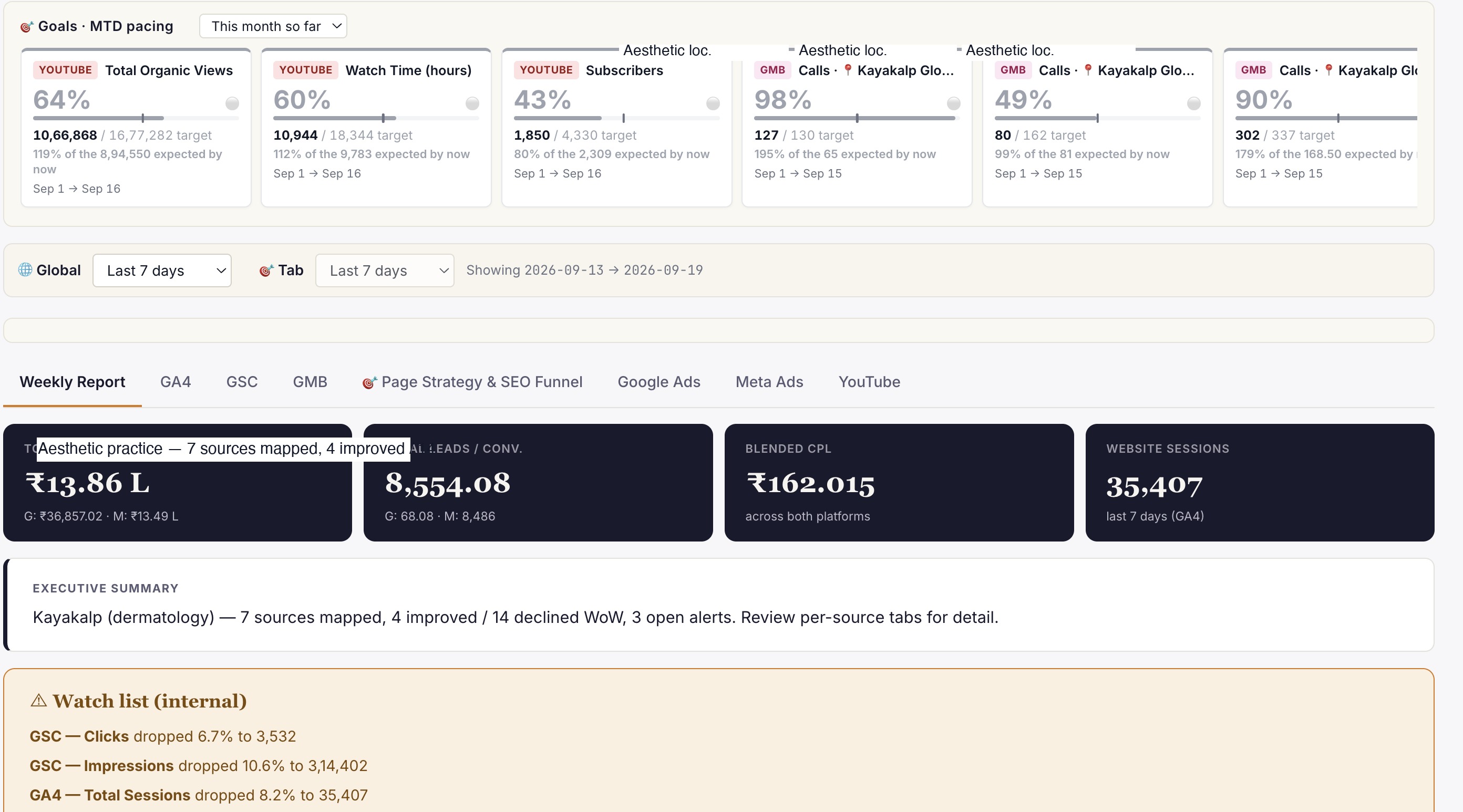
Live client dashboard. GSC, GA4, Google Ads, Meta Ads, IVR calls in one view. Login anytime, not monthly.
Phoenix
Clinic revenue intelligence over your PMS. Daily action queue: Prevent Loss, Maintain & Engage, Grow Revenue. Multi-centre rollout.
Or book a free 30-min audit to see all three in action on your account.
Healthcare brands
that already run on ICG.
A representative slice of the 150+ healthcare brands ICG has delivered for across India. Most engagements remain under NDA.


What ICG clients say · on video.
"Scale up of organic channels and business consulting. ICG has absolute domain authority in their field."
"Working with ICG transformed how we acquire IVF patients in Gurgaon. They understand the fertility journey from inquiry to consult..."
"What Ichelon accomplished — they got all my ideas and worked over 3-4 months to create an amazing, super-customised website."
The intelligence stack behind this playbook.
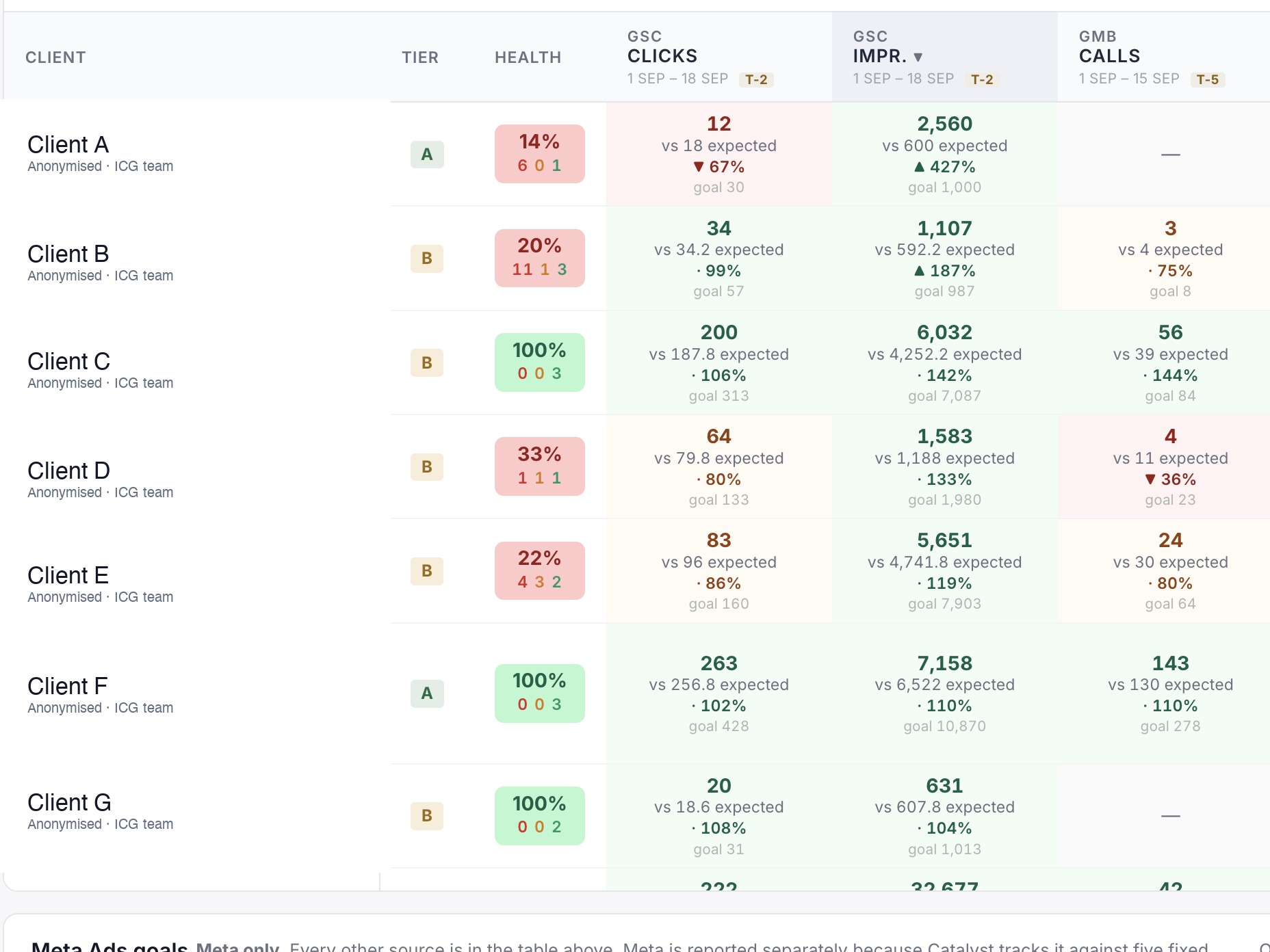
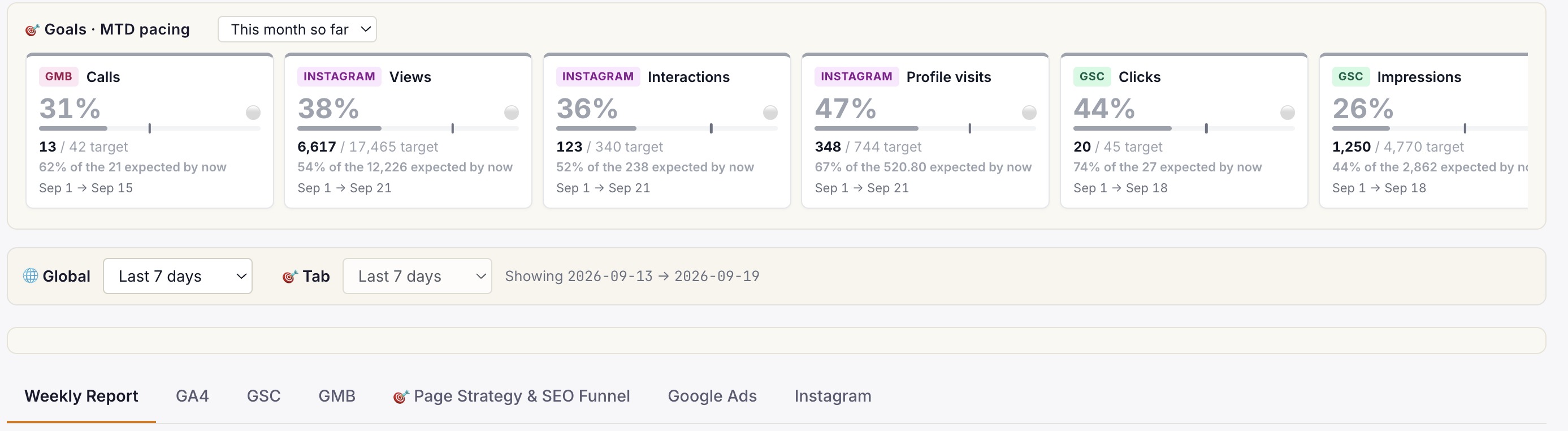
Every ICG engagement runs on the Search Intelligence Trifecta — Angryturtle for GMB, SIE for search and AI Overview, YODA for YouTube. Live product screens below.
Need help operationalising this?
Every ICG service is healthcare-only, NMC + DPDP-aware, and built around the patient-research patterns that drive Indian healthcare growth in 2026.
Every practice welcome — packages from ₹20,000/mo.
Goals-Driven engagements · Performance-Linked Payout Models available
More from
ICG.
Five trends shaping Indian healthcare marketing through 2027: AI-first patient research, Conversions API adoption, ABDM discovery, the AEO w...
Healthcare AIO is the discipline of getting your clinic or hospital cited inside Google AI Overviews, ChatGPT and Perplexity answers — not j...
Conversational-search advertising places brand messages inside AI chat answers — ChatGPT, Perplexity, Copilot — rather than beside a results...
Stop guessing.
Book a Diagnostic.
30 minutes. Free. With the AI-powered healthcare-only marketing agency 150+ brands already run on. No slides, no pitch, no hard close.


