


Neighbourhood and pin-code pages for clinics: when they help local SEO and when they hurt
Neighbourhood pages help a clinic's local SEO only when each one covers a real catchment with area-specific facts patients use. Near-identical pin-code templates are doorway pages in Google's eyes and can weaken the whole site. Build a few pages from enquiry data, not dozens from a map.
No pitch. Written root-cause diagnosis. AI-powered, healthcare only.
Direct answer
Neighbourhood pages help a clinic's local SEO only when each one covers a real catchment with area-specific facts patients use. Near-identical pin-code templates are doorway pages in Google's eyes and can weaken the whole site. Build a few pages from enquiry data, not dozens from...
TL;DR
Neighbourhood and pin-code pages help a clinic's local SEO only when each page describes a real catchment the clinic serves, with information a patient from that area would actually use. They hurt when they are near-identical templates that swap one locality name for another. Google's spam policies class those as doorway pages, and a cluster of them can weaken trust in the whole website.
Below: how local search works for doctors and dentists, when locality pages help or hurt, how many to build and what to put on them.
What is local SEO for doctors?
Local SEO for doctors is the work of making a clinic or hospital show up when people nearby search for a specialty, a treatment or a doctor. It covers the Google Business Profile, the website's location and service pages, consistent name-address-phone details, reviews, local links and the signals AI answers use to recommend nearby providers.
It differs from general SEO in one important way. Google ranks local results on three factors it names in its own Business Profile help pages: relevance, distance and prominence. A website page can improve relevance and prominence. It cannot change distance. That single fact decides most of what follows.
- Relevance is how well your profile and pages match the search. Categories, services, page content and reviews feed it.
- Distance is how far your clinic is from the searcher or from the place named in the search.
- Prominence is how well known the clinic is: reviews, links, mentions, and the overall strength of the website.
For a clinic, the Google Business Profile usually does more for map rankings than any single web page. Locality pages earn their place in organic results and AI answers, and they support the profile by making the clinic's relevance to an area clear.
What is local SEO for dentists, and how is it different?
Local SEO for dentists follows the same rules as for doctors, but the catchment is usually tighter. Most dental patients choose a clinic close to home or work, and they search with treatment names such as root canal, aligners or implants. So dental local SEO leans heavily on the profile, treatment pages and reviews from genuinely local patients.
Specialists such as IVF, oncology or cardiac surgery draw patients from across a city or a state. Their locality pages make sense at city or district level, not at the pin-code level. A general dentist or a paediatric clinic is the opposite case. Here a handful of strong neighbourhood pages can match real search behaviour.
| Practice type | Typical catchment | Sensible page level |
|---|---|---|
| General dentist, GP, paediatric clinic | Nearby neighbourhoods | A few neighbourhood pages for areas you truly serve |
| Dermatology, physiotherapy, diagnostics with home collection | Part of a city | Zone or cluster pages (for example, one page for a group of adjoining sectors) |
| IVF, oncology, multi-specialty hospital | Whole city, region or state | City and district pages, plus travel and stay information |
| Multi-location chain | One catchment per branch | One strong page per branch, linked to that branch's profile |
When do neighbourhood pages help a clinic?
Neighbourhood pages help when three things are true: patients from that area already search for your service, your clinic is reachable from there, and you have area-specific facts to publish. If all three hold, a page can win organic rankings for locality searches and give AI answers a clear statement that you serve that area.
Signs a page is worth building:
- Your Business Profile performance report shows searches that include the locality name.
- Call and form records show a steady share of enquiries from that area.
- Google Ads search terms include the locality, which means people type it.
- The area is a recognised residential or office cluster, not a pin code nobody says out loud.
- You can write things only true for that area: the route, the landmark, parking, the nearest metro, which doctor sees patients on which days.
Pin codes deserve special caution. Indian patients rarely search by pin code. They search by locality, sector, colony or landmark. A page titled with a six-digit pin code usually targets a phrase almost nobody types, which is a strong hint the page exists for search engines rather than people.
When do pin-code and locality pages hurt?
They hurt when a clinic publishes dozens of pages that differ only in the place name. Google's spam policies describe this as doorway abuse: many similar pages built to rank for location variations that funnel users to one place. Such pages may be ignored, demoted, or drag down how Google assesses the site's overall quality.
Common patterns that cause trouble:
- One template, fifty localities, the same paragraphs with the name swapped.
- Pages for areas the clinic cannot realistically serve, sometimes in other cities.
- Locality names stuffed into titles, headings and footers.
- Fake addresses or virtual offices used to create more Business Profiles. This breaks Google's Business Profile guidelines and can get listings suspended.
- Pages with no internal links pointing to them, discoverable only through the sitemap.
| Signal | Helpful locality page | Doorway-style page |
|---|---|---|
| Content | Area-specific directions, timings, doctors, services relevant to that area | Same text as every other locality page |
| Demand | Locality appears in real searches and enquiries | Chosen from a list of pin codes |
| Reach | Clinic is reachable and already sees patients from there | Area is far away or in another city |
| Linking | Linked from the location hub and relevant service pages | Orphaned, or only in the footer |
| Outcome | Calls and bookings tracked per page | Impressions without enquiries |
If you already have a large set of thin locality pages, the fix is usually consolidation. Keep the few that bring enquiries, merge the rest into a stronger zone or city page, and redirect the removed URLs to the page that replaces them.
How do you decide which neighbourhoods deserve a page?
Start from evidence of demand, not a map. Rank candidate areas by enquiries you already receive, by locality searches in your profile and ads data, and by how easily patients can reach you. Build pages only for the top few. Add more when the first ones bring enquiries, not before.
- Pull the data. Profile search terms, Google Ads search terms, call and form records, and your appointment system's area field. Use aggregated counts only. Patient-level data is personal data under the Digital Personal Data Protection Act, 2023, so keep it inside your clinic systems.
- Score each area. Demand, distance or travel time, and how many genuinely different facts you can publish.
- Group small areas. Adjoining sectors or colonies with the same route can share one page.
- Write the first pages. Start small, publish, and link each page from your location hub and the matching service pages.
- Measure for one or two quarters. Track calls, WhatsApp chats and bookings per page before you expand.
What should a clinic neighbourhood page contain?
A good neighbourhood page answers the practical questions a patient from that area has: how to reach you, when the right doctor is available, which services they can get, and what to expect on a first visit. Factual, verifiable details also fit the NMC's 6 October 2026 advertising guidelines, under which hospitals and clinics may publish factual, verifiable information.
- A clear heading such as "Dental clinic near [locality]" only if the clinic is genuinely near it.
- Travel directions from that area, nearest landmark and metro or bus stop, and parking.
- Which doctors consult there, on which days, with qualifications and registration numbers where they are named.
- The services most relevant to that area's patients, each linked to its full treatment page.
- Timings, phone, WhatsApp and a booking link, matching the Business Profile exactly.
- Answers to local questions: home sample collection coverage, wheelchair access, languages spoken at the front desk.
- An embedded map of the actual clinic address.
What to leave out: patient testimonials, before/after photos, "best clinic in [area]" claims and discounts used as inducements. These are not permitted in promotion under the NMC guidelines and the 2002 Regulations. If you are unsure what your pages may say, an NMC compliance audit checks each page against the current rules. This reflects the rules as of October 2026; confirm specifics with your own counsel.
Dental clinic SEO near me: how do "near me" searches work?
"Near me" searches are answered mainly from Google Business Profiles ranked by distance, relevance and prominence. A page cannot make a clinic appear "near" someone it is far from. What it can do is make the clinic clearly relevant for the treatment searched and strengthen the signals that help a nearby clinic outrank its neighbours.
Practical steps for a dental clinic that wants to show up for "dentist near me" or "dental clinic near me":
- Choose the right primary category and add every treatment you offer as a service on the profile.
- Keep name, address and phone identical on the profile, the website and every listing.
- Ask every patient for an honest review after treatment, without incentives. Google's policies prohibit incentivised reviews.
- Build one in-depth page per treatment and link the profile to the most relevant page.
- Write a small number of neighbourhood pages for the areas you truly serve, as described above.
- Answer patient questions on the website in plain language, so AI Overviews and chat assistants can quote you.
Our healthcare local SEO service combines these profile, page and citation tasks into one monthly plan, with enquiries tracked back to the page or profile that produced them. For a deeper look at the dental side, read our 12-month dental SEO content plan.
How should multi-location clinics and Tier-2 city practices handle locality pages?
Multi-location clinics need one strong page per branch before they think about neighbourhoods. Each branch page should match its own Business Profile, list that branch's doctors and timings, and link to shared treatment pages. Tier-2 city practices usually need city and district pages, because patients travel in from surrounding towns.
In Tier-2 and Tier-3 cities, the realistic catchment often includes nearby towns and villages. Patients there search in Hindi or a regional language as well as English, and they often search the city name rather than a locality. A single well-built city page, with travel information from surrounding towns and a regional-language version, often does more than many small locality pages. Our guide to regional-language SEO for healthcare covers how to plan those versions.
| Situation | Start with | Add later, if data supports it |
|---|---|---|
| Single clinic, metro city | Home, treatment pages, one location page | A few neighbourhood pages for proven catchments |
| Chain across one metro | One page per branch | Zone pages where branches overlap |
| Single clinic, Tier-2 city | City page with travel information from nearby towns | District or town pages, regional-language versions |
| Hospital drawing a whole region | City and service-line pages | Pages for referral districts with travel and stay details |
Whichever pattern you choose, keep the internal linking tidy. A location hub should link to every branch or area page, and each area page should link back to the hub and to the relevant treatment pages. Pages that sit only in a sitemap rarely perform.
If you want a second opinion on whether your current locality pages are helping or hurting, book a call with our team and we will review them against your enquiry data.
Book a free SEO diagnostic.
Hanuman Sihag's team runs a live crawl, checks technical health, cannibalisation, schema coverage and content gaps. 60 minutes, prioritised fix list.
Questions readers ask
about this topic.
The three platforms
behind every ICG engagement.
Beacon
CAPI middleware that fixes Event Match Quality, translates CRM statuses to Meta-standard events, dedups across channels.
Agency OS
Live client dashboard. GSC, GA4, Google Ads, Meta Ads, IVR calls in one view. Login anytime, not monthly.
Phoenix
Clinic revenue intelligence over your PMS. Daily action queue: Prevent Loss, Maintain & Engage, Grow Revenue. Multi-centre rollout.
Or book a free 30-min audit to see all three in action on your account.
Healthcare brands
that already run on ICG.
A representative slice of the 150+ healthcare brands ICG has delivered for across India. Most engagements remain under NDA.


What ICG clients say · on video.
"Scale up of organic channels and business consulting. ICG has absolute domain authority in their field."
"Working with ICG transformed how we acquire IVF patients in Gurgaon. They understand the fertility journey from inquiry to consult..."
"What Ichelon accomplished — they got all my ideas and worked over 3-4 months to create an amazing, super-customised website."
The intelligence stack behind this playbook.
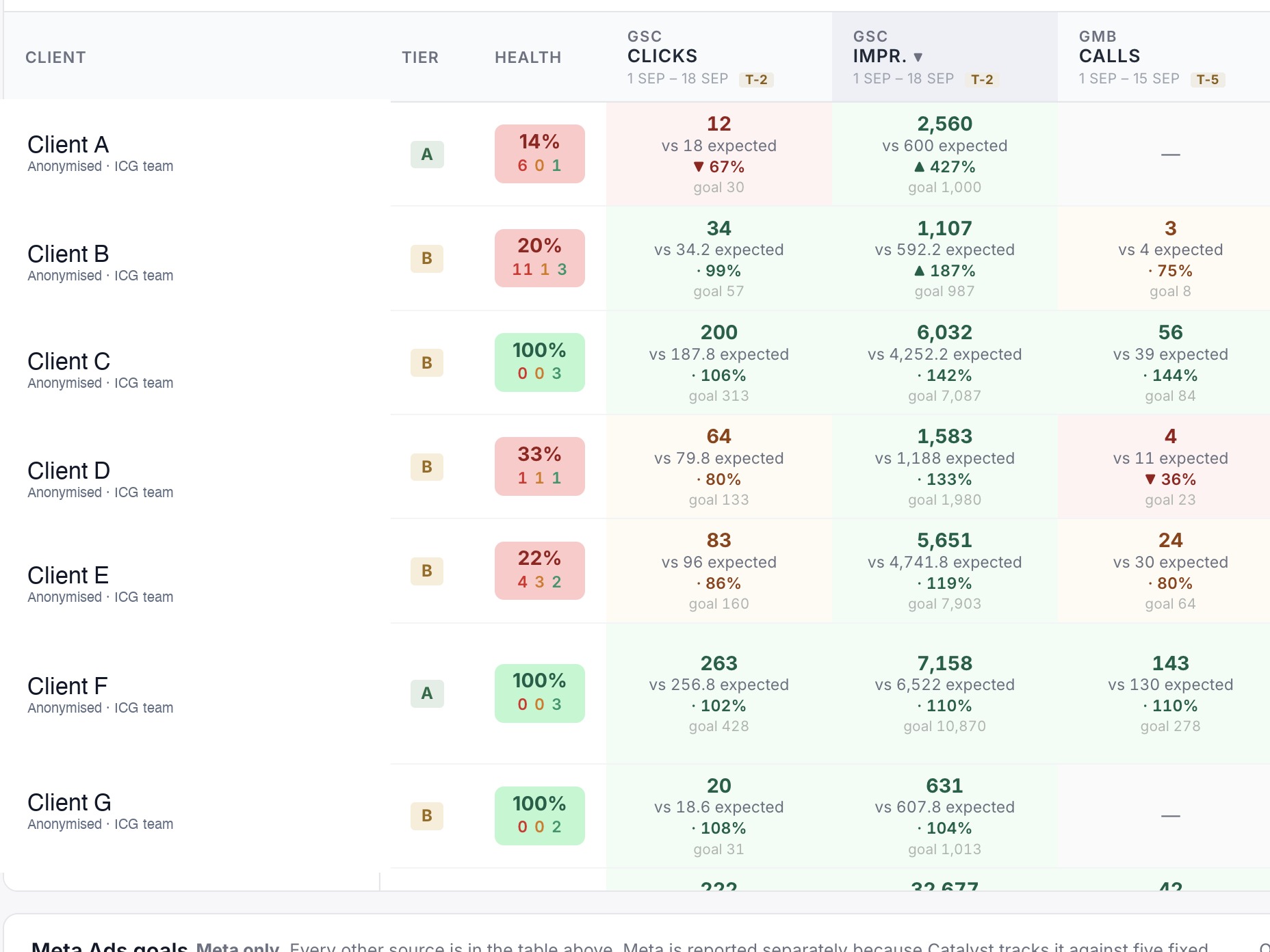
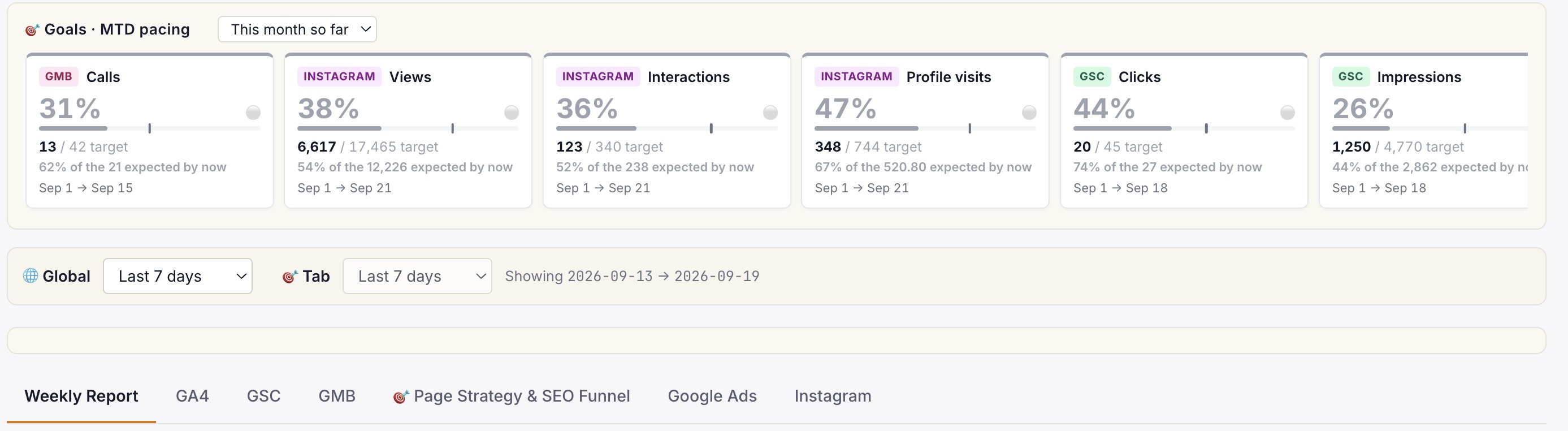
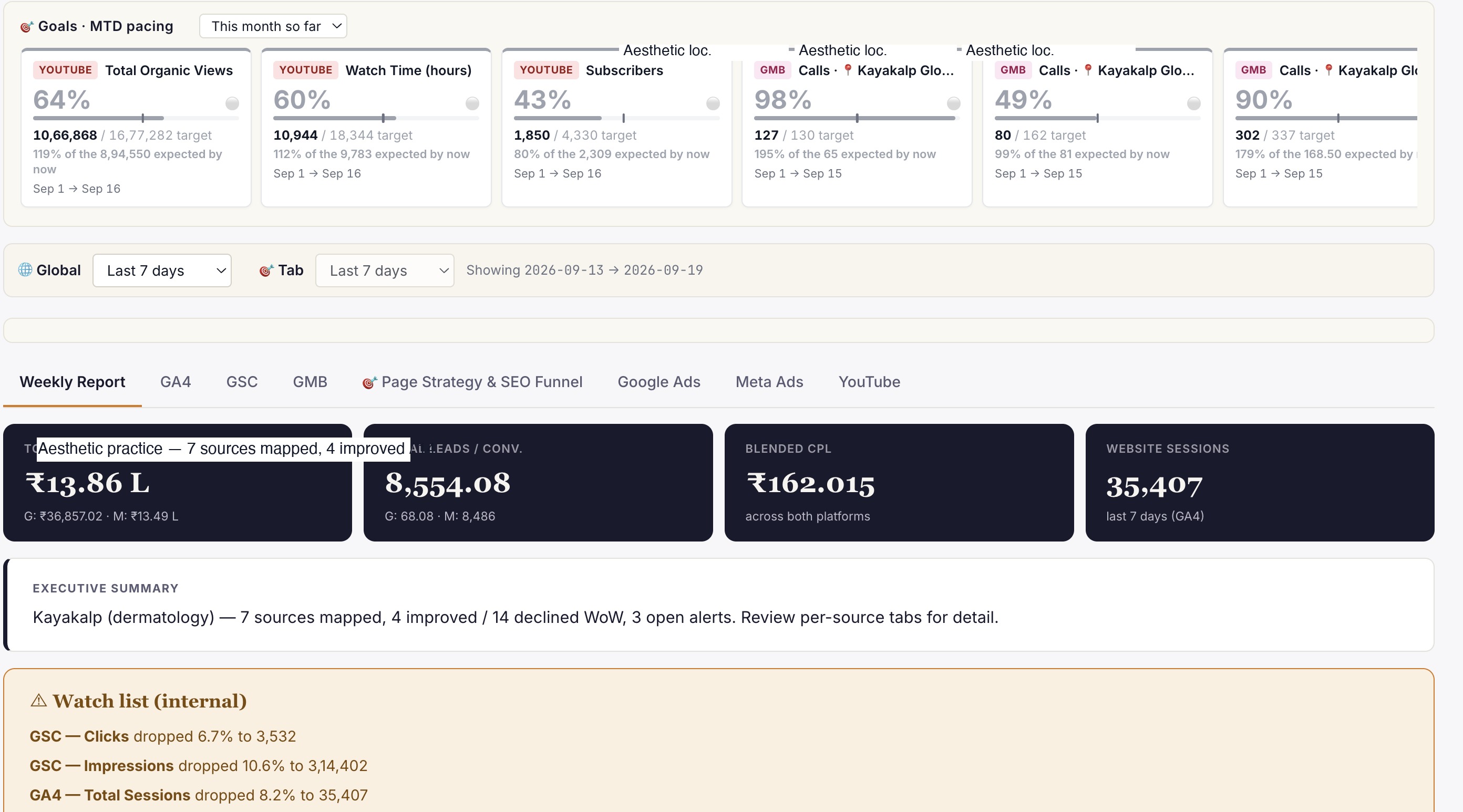
Every ICG engagement runs on the Search Intelligence Trifecta — Angryturtle for GMB, SIE for search and AI Overview, YODA for YouTube. Live product screens below.
Need help operationalising this?
Every ICG service is healthcare-only, NMC + DPDP-aware, and built around the patient-research patterns that drive Indian healthcare growth in 2026.
Every practice welcome — packages from ₹20,000/mo.
Goals-Driven engagements · Performance-Linked Payout Models available
More from
ICG.
Hindi and regional-language SEO means publishing proper pages in the languages your patients search in, on their own URLs and linked with hr...
A new pharma brand in India should start digital work before launch, built around who it may legally address. This six-month plan covers pro...
Hospitals and clinics in India can still advertise after the NMC's 6 October 2026 guidelines, but only with factual, verifiable information....
Stop guessing.
Book a Diagnostic.
30 minutes. Free. With the AI-powered healthcare-only marketing agency 150+ brands already run on. No slides, no pitch, no hard close.


