


Healthcare Website Development India 2026: Stack, SEO, DPDP
Healthcare website development in India for 2026 — tech stack picks, SEO architecture, schema, DPDP compliance, appointment flows and cost benchmarks. Chat with ICG.
No pitch. Written root-cause diagnosis. AI-powered, healthcare only.
Direct answer
Healthcare website development in India for 2026 — tech stack picks, SEO architecture, schema, DPDP compliance, appointment flows and cost benchmarks. Chat with ICG.
TL;DR
TL;DR
- A healthcare website in 2026 is not a brochure — it is a patient acquisition system that must rank in search, capture intent, and convert to appointments
- The 7 non-negotiables: mobile-first design, Core Web Vitals (LCP <2.5s), schema markup (MedicalWebPage + FAQPage + Physician), appointment booking, DPDP-compliant consent management, NMC-safe content, and HTTPS with SSL
- Tech stack choice matters: WordPress (Elementor/Kadence) for clinics; custom Laravel or Next.js for hospital chains and platforms
- Average cost: clinic website ₹35,000–₹2.5L; hospital website ₹2.5L–₹15L; enterprise hospital platform ₹15L–₹80L
- The most expensive website mistake: building before defining the content architecture and SEO structure
A healthcare website is the single most important digital asset a doctor, clinic, or hospital owns — and the most frequently underbuilt. A ₹15L/month Google Ads budget directed at a slow, poorly architected website with no appointment booking and weak content is consistently outperformed by a ₹3L/month budget directed at a fast, well-structured website with content that captures and converts patient intent.
This guide covers the complete healthcare website brief — from tech stack to SEO architecture to DPDP compliance to conversion optimisation.
What makes a healthcare website different
E-E-A-T requirements are higher: Google's quality guidelines treat health content as YMYL (Your Money or Your Life) — content where low quality can cause real-world harm. Healthcare websites must demonstrate Experience, Expertise, Authoritativeness, and Trustworthiness through:
- Named author bylines with credentials on all content pages
- Reviewer attribution (a senior clinician reviewing/approving content)
- Cited external sources on clinical claims
- Clear publication and review dates
- Institutional affiliations, accreditations (NABH), and regulatory identifiers (NMC registration numbers)
Conversion architecture is medically appropriate: Unlike e-commerce (add to cart, buy now), healthcare conversion is consent-based and relationship-building. The conversion goal is an appointment request or a phone call — not an immediate transaction. This requires:
- Multiple conversion entry points (appointment form + WhatsApp button + phone number + chat)
- Trust signals before the conversion (doctor credentials, accreditations, Google review widget)
- Zero friction in the appointment path (mobile-friendly form, minimal fields)
DPDP compliance is mandatory: Every healthcare website that collects patient data — appointment forms, contact forms, email sign-ups — is processing personal data under the DPDP Act 2023. This requires a privacy policy, cookie consent mechanism, and purpose-specific consent collection.
Tech stack decision — which platform for which healthcare context
| Use case | Recommended stack | Why |
|---|---|---|
| Solo doctor / single clinic | WordPress (Kadence or Astra theme + Elementor) | Fast setup, manageable by non-technical staff, extensive healthcare plugin ecosystem |
| Small hospital (50–100 beds) | WordPress with custom development for schema + appointment integration | WordPress backbone with custom PHP for healthcare-specific functionality |
| Multi-specialty hospital chain | Custom Laravel (backend) + Next.js or React (frontend) | Performance, multi-location architecture, HIS/CRM integration capability |
| National hospital network | Enterprise CMS (Contentful or custom) + Laravel API + React frontend | Headless architecture for performance + multi-language + HIS integration |
| IVF / specialty chain with patient portal | Laravel + Vue.js or React | Patient portal (appointment history, report access) requires custom development |
| Telemedicine platform | React Native (mobile) + Node.js or Laravel backend | Video consultation requires dedicated real-time infrastructure |
ICG's default stack for hospital clients: Laravel backend + Livewire for server-rendered interactive components + MariaDB. Deployed on Cloudways VPS. This is the stack ICG uses across its own platforms (Agency OS, Beacon, AtomCRM) and recommends for healthcare clients needing performance and control without enterprise-scale infrastructure costs.
SEO architecture — the foundation before design
The single most expensive mistake in healthcare website development: designing the visual interface before defining the SEO structure. Retrofitting SEO architecture onto a designed website costs 2–3× more than building SEO-first.
Healthcare website SEO architecture — the 5-layer model:
Layer 1: Homepage — brand positioning, primary keyword cluster (hospital/clinic name + city + specialty), schema (Hospital/MedicalOrganization + LocalBusiness)
Layer 2: Department/specialty pages — one page per department; target keyword: [specialty] + [city]; schema: MedicalOrganization for department, linked from homepage; these are the highest-traffic pages for multi-specialty hospitals
Layer 3: Condition pages — 2–5 per department; target keyword: [condition] + "treatment" + [city]; these capture research-stage patient queries; schema: MedicalWebPage + FAQPage
Layer 4: Procedure pages — 2–4 per department; target keyword: [procedure] + [city] or [procedure] + "cost India"; these capture decision-stage queries; schema: MedicalProcedure + FAQPage
Layer 5: Doctor profile pages — one per physician; target keyword: "Dr [name]" + specialty; schema: Physician + Person with NMC registration number, credentials, affiliations
Blog/Insights section sits adjacent to this architecture and feeds topical authority across all 5 layers.
URL structure:
- Departments:
/departments/[specialty]/or/[specialty]/ - Conditions:
/conditions/[condition-name]/ - Procedures:
/procedures/[procedure-name]/ - Doctors:
/doctors/[doctor-name]/ - Blog:
/insights/[slug]/
Schema markup — the technical SEO requirement most healthcare sites miss
Schema.org structured data is mandatory for competitive healthcare SEO in 2026. Without schema, a healthcare website cannot be cited in Google's AI Overview (AIO) boxes and cannot achieve rich results (FAQ dropdowns, star ratings in search results).
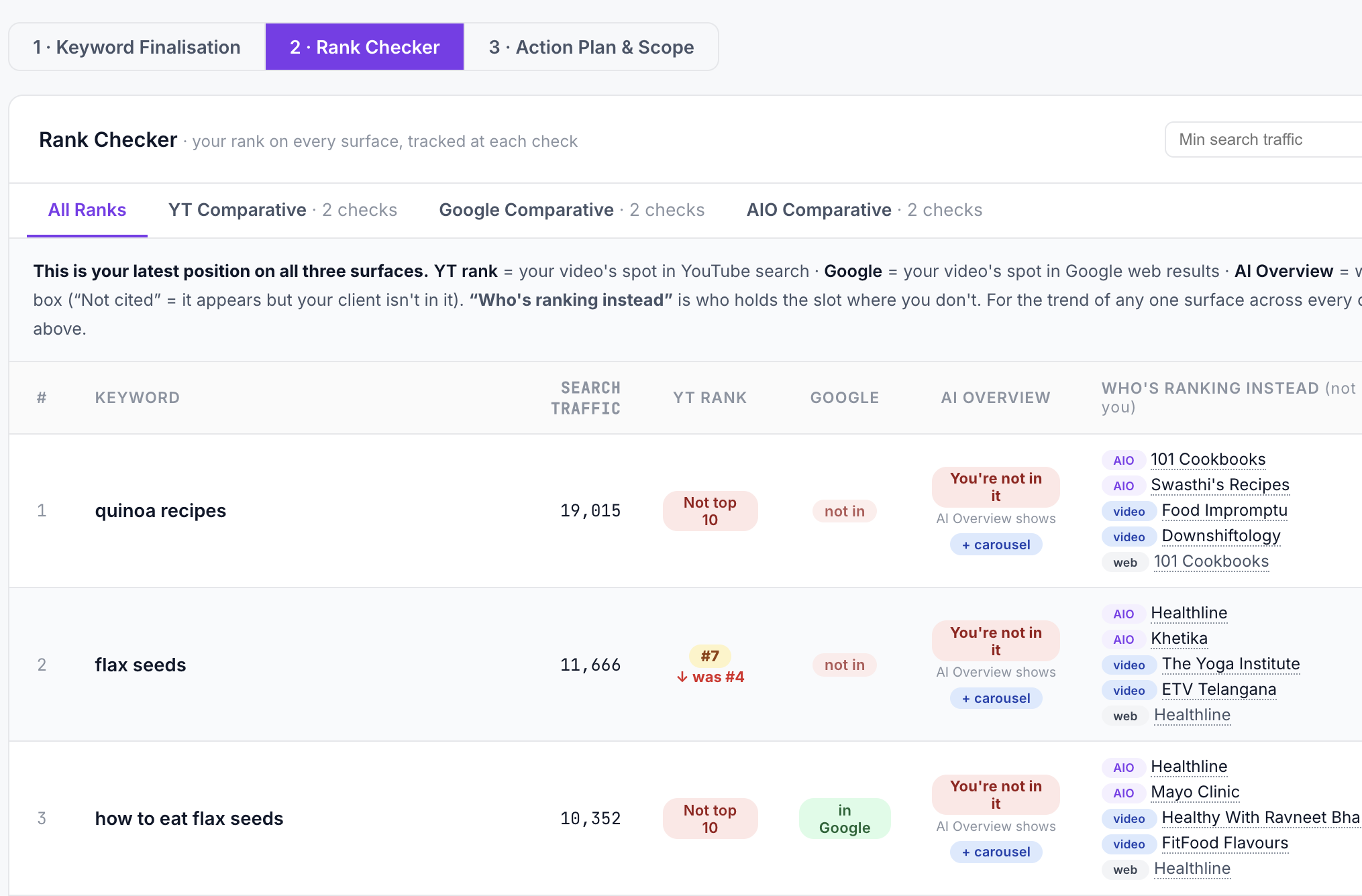
Required schema for a 100-bed hospital website:
| Schema type | Where to implement | What it signals |
|---|---|---|
| Hospital | Homepage, About page | Entity type = medical facility |
| MedicalOrganization | Department pages | Specialty organisation type |
| Physician | Doctor profile pages | Licensed medical professional |
| MedicalWebPage | All clinical content pages | Health content signal to Google |
| MedicalCondition | Condition pages | Structured condition information |
| MedicalProcedure | Procedure pages | Structured procedure information |
| FAQPage | Any page with Q&A section | FAQ rich result + AIO citation eligibility |
| BreadcrumbList | All pages | Navigation structure |
| LocalBusiness | Homepage + Contact | Local SEO entity |
| Article | All blog/insight pages | Content type + author + datePublished |
| Person | Doctor profile pages | Author entity for E-E-A-T |
Common schema mistakes:
- FAQPage schema added but FAQs not visible on the actual page (Google requires schema to match visible content)
- Physician schema missing NMC registration number (reduces E-E-A-T signal)
- MedicalWebPage added to non-clinical pages (doesn't improve rankings, wastes schema budget)
Core Web Vitals — the speed requirements

Google's Core Web Vitals are ranking signals. Healthcare websites — which are typically image-heavy and often built on bloated themes — frequently fail CWV benchmarks.
Target benchmarks:
- LCP (Largest Contentful Paint): < 2.5 seconds (most healthcare sites fail this because of unoptimised hero images — the doctor photograph or hospital exterior shot)
- INP (Interaction to Next Paint): < 200ms (replaced FID in 2024; measures responsiveness to user interaction)
- CLS (Cumulative Layout Shift): < 0.1 (layout stability — forms and elements should not move as the page loads)
The healthcare CWV problem: The primary CWV failure in healthcare websites is LCP on mobile, caused by:
- Unoptimised hero images (uploaded as 4MB JPEGs rather than compressed WebP)
- Render-blocking third-party scripts (chat widgets, Google Tag Manager misconfiguration, doctor-directory booking widgets)
- Fonts loaded synchronously (Google Fonts without
font-display: swap) - No lazy loading on below-fold images
ICG's technical website audits for healthcare clients show 62% of sites fail mobile LCP. The fix is consistently straightforward: image compression to WebP, explicit image dimensions (eliminates CLS), deferred third-party scripts, and font optimisation.
Appointment booking — the conversion infrastructure
The appointment booking system is the conversion infrastructure of a healthcare website. Every weakness in the booking flow is a patient lost.
Booking options by clinic complexity:
| Scale | Recommended booking solution |
|---|---|
| Solo doctor, solo clinic | Simple Google Form (embedded) or WhatsApp click-to-chat button + callback form |
| 2–5 doctor practice | Doctor-directory booking widget embedded + hospital-native form as backup |
| Hospital (50+ beds) | Custom appointment booking module (integrated with HIS; department + doctor selection; time slot visibility) |
| Hospital chain | Multi-location booking platform (centralised + location routing) |
Booking form best practices:
- Maximum 4 fields: Name, Phone, Department/Specialty, Preferred Date/Time. Every additional field reduces conversion rate by 8–15%.
- Mobile-optimised (tap-friendly date picker, not a text input for date)
- WhatsApp as a parallel channel: a "Book via WhatsApp" button converts 30–45% better than form-only on mobile in Indian healthcare (ICG internal data, 2026)
- Confirmation: immediate SMS/WhatsApp acknowledgement after booking request
DPDP Act compliance in website development
Every healthcare website must implement:
Cookie consent mechanism: If your website uses Google Analytics, Meta Pixel, or any other tracking script, you are placing cookies. The DPDP Act 2023 requires consent before placing non-essential cookies. A cookie consent banner (not just a "we use cookies" notification — an accept/decline choice) is mandatory.
Privacy policy: A DPDP-compliant healthcare privacy policy must specify: what data is collected (appointment form data, cookie data), for what purpose, how long it is retained, and patient rights (access, correction, erasure, complaint).
Appointment form consent: The appointment form must include a separate checkbox for marketing communications (email newsletters, health tips, WhatsApp messages) — separate from the appointment request consent. Pre-ticked boxes are not valid consent under DPDP.
Contact forms: All contact form submissions are personal data. Ensure form data is stored in a secure, access-controlled environment — not in a shared email inbox that 5 staff members can read.
Healthcare website content requirements
A live website needs minimum content to be indexed usefully by Google. The mistake: launching with placeholder pages ("coming soon" or "page under construction").
Minimum content for a clinic website launch:
- Homepage: 400+ words (positioning, services, doctor bio summary, CTA)
- About Us / Doctor Profile: 600+ words per doctor (credentials, experience, approach, publications)
- Service/Department pages: 300–500 words each, at minimum 5 services
- Contact page: address, phone, embedded Google Map, hours
- Blog: at least 3 published posts (pre-launch indexing benefit)
Minimum content for a hospital website launch:
- Homepage: 600+ words
- Each department page: 400+ words
- 2–3 condition pages per department
- Doctor profiles: 400+ words each
- About/Accreditation page: 500+ words (NABH status, infrastructure, history)
- Patient services page: insurance, CGHS, room categories
- Blog: 5+ published posts before launch
Healthcare website cost benchmarks India 2026
| Website type | Cost range | Timeline |
|---|---|---|
| Basic clinic website (6–10 pages, WordPress) | ₹35,000–₹1.2L | 3–5 weeks |
| Mid-range clinic website (12–20 pages, custom WordPress + schema) | ₹1.2L–₹3.5L | 5–8 weeks |
| Hospital website (50–80 pages, custom WordPress or Laravel) | ₹3.5L–₹10L | 8–14 weeks |
| Enterprise hospital website (100+ pages, custom Laravel + React) | ₹10L–₹35L | 14–24 weeks |
| Hospital platform with patient portal (custom full-stack) | ₹25L–₹80L | 20–36 weeks |
"The brief I receive most often from hospital administrators is: 'Make our website look better.' The brief I should be receiving is: 'Our website generates 45 appointment requests per month. Help us get to 200.' Website development in healthcare is not a design problem — it is a patient acquisition engineering problem. Design is how we solve it, but revenue is how we measure it." — Deep Bhandari, Co-Founder — Product & AI Strategy, ICG
Case snapshot
A 180-bed hospital in Jaipur had a WordPress website built in 2021 — 22 pages, no schema, no mobile optimisation, 8.2s LCP on mobile, no appointment booking (contact form only). ICG's rebuild: Laravel backend, 94 pages (department + condition + procedure + doctor profile architecture), full schema stack, WebP image optimisation (LCP reduced to 1.9s mobile), WhatsApp booking integration, DPDP-compliant cookie consent + privacy policy. Month 1 post-launch: organic impressions +180% (GSC). Month 3: appointment form submissions up 340%. Month 6: organic now primary patient acquisition channel vs PPC-only before (ICG internal data, 2026).
FAQ
Q1: What is the minimum cost to build a healthcare website in India? ₹35,000–₹1.2L for a basic 6–10 page clinic website on WordPress. A hospital website with proper schema architecture and 50+ pages: ₹3.5L–₹10L. Budget-first decisions in healthcare website development consistently result in expensive rebuilds within 18–24 months.
Q2: What tech stack should a hospital website use? For most hospitals up to 200 beds: custom WordPress with schema implementation. For hospital chains or platforms requiring HIS integration, patient portals, or multi-location management: custom Laravel backend. ICG uses Laravel + Livewire + MariaDB for its own healthcare platforms.
Q3: What schema is most important for a healthcare website? FAQPage (enables AIO citation and FAQ rich results), Physician (E-E-A-T signal for doctor profiles), MedicalWebPage (health content signal), and LocalBusiness (local SEO). These four are the highest-impact schema types for patient acquisition.
Q4: How do I make my healthcare website DPDP compliant? Cookie consent mechanism (accept/decline, not just notification), DPDP-compliant privacy policy, separate marketing consent checkbox on all forms, secure form data storage, and purpose limitation in data use. See our DPDP Act healthcare compliance guide.
Q5: What is the Core Web Vitals target for a healthcare website? LCP < 2.5 seconds (mobile), INP < 200ms, CLS < 0.1. The most common failure in healthcare: LCP on mobile due to unoptimised hero images. Fix: WebP conversion + explicit image dimensions + lazy loading.
Q6: Does a healthcare website need a blog? Yes — for SEO. Blog content (condition explainers, procedure guides, health tips) builds topical authority that improves ranking across all pages, not just the blog. And blog content is the primary vehicle for AIO citation capture.
Internal links
- Best clinic management system India
- Healthcare mobile app development India 2026
- DPDP Act 2023 healthcare compliance
- ABDM integration hospitals 2026
- Clinic setup and launch consulting India 2026
- Book a website audit
External sources
- Google Search Central — Core Web Vitals, E-E-A-T guidelines
- Schema.org — MedicalWebPage, Physician, Hospital, FAQPage specifications
- DPDP Act 2023 — meity.gov.in (consent requirements)
- WCAG 2.1 — web accessibility standards
- Google PageSpeed Insights — CWV measurement tool
Compliance note. All healthcare website content must comply with NMC's 2026 advertising guidelines. DPDP Act 2023 compliance requirements apply from website launch — not post-launch. Cookie consent must be implemented before any tracking scripts load. This article is informational only and does not constitute legal or technical advice.
Seven healthcare website mistakes we still see in 2026 (and the fix for each)
After auditing 400+ hospital and clinic sites this year, the same avoidable errors keep showing up — most of them cost 30-60% of the traffic and leads the site could be earning. Fix these before you spend on ads.
- Doctor pages with no schema. Every named clinician needs Physician or Person schema with sameAs to their MCI/NMC registration and LinkedIn. Missing this is the single biggest reason doctor-name queries lose to third-party directories.
- One booking form for every service. A fertility enquiry, an orthopaedic second opinion and a diagnostic scan are three different conversations. Split the form, prefill service context from the URL, and route to different WhatsApp queues.
- Location pages that are just address + map. Each branch or city needs 600-1,200 words of local context, doctor roster, insurance list, transport directions and NABH status — otherwise Google collapses them into duplicates. See our Google Business Profile OS for the local-SEO layer that sits on top.
- Blog category with no editorial system. Publishing four posts a quarter with no cluster plan burns budget. Build topical clusters first, then commission — the same discipline we apply through the Client Elevation Programme.
- Video buried on YouTube, never on the site. Doctor explainers and patient testimonials should be embedded on the exact service page they support, with VideoObject schema. Our YODA pipeline handles both surfaces.
- No Instagram or Meta Ads instrumentation. Healthcare buyers cross-check Instagram before enquiring — plug in Prism Pulse for organic and Meta Catalyst IQ for paid so the website is not the only signal.
- Consent language pasted from a US template. DPDP Act 2023 requires India-specific consent, purpose limitation and a grievance officer — not a GDPR checkbox. Get this reviewed by counsel before the site goes live.
None of these are technical exotica — they are governance choices. Fix them in the first 90 days after launch and the site starts compounding instead of leaking.
Book a free 30-minute Brand & Growth Diagnostic.
It's a working session, not a sales pitch — you leave with a written root-cause analysis you can act on, whether or not you engage ICG.
The three platforms
behind every ICG engagement.
Beacon
CAPI middleware that fixes Event Match Quality, translates CRM statuses to Meta-standard events, dedups across channels.
Agency OS
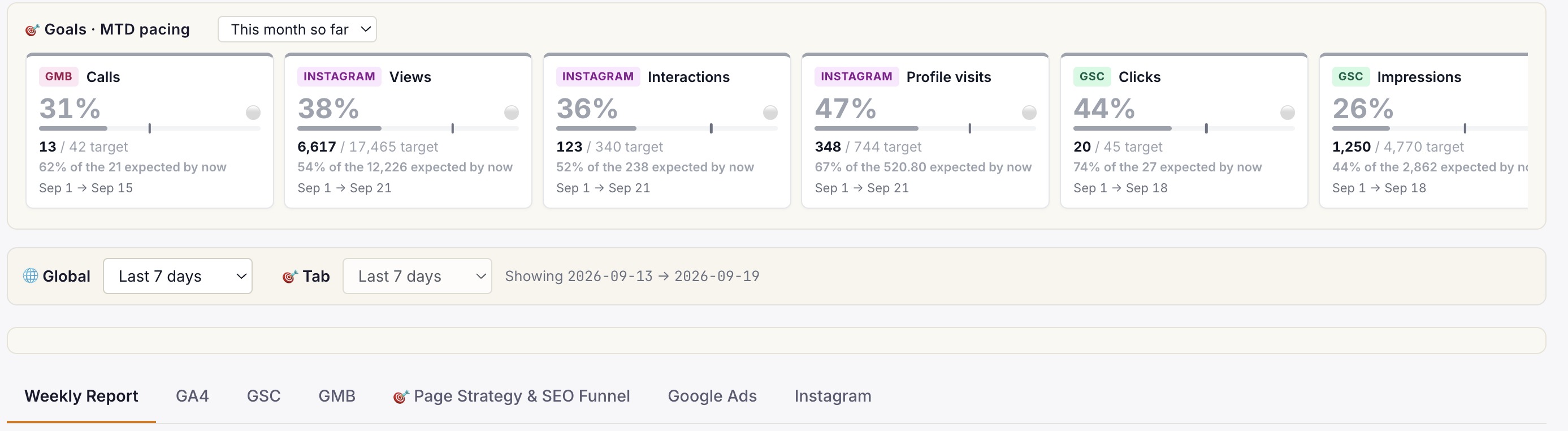
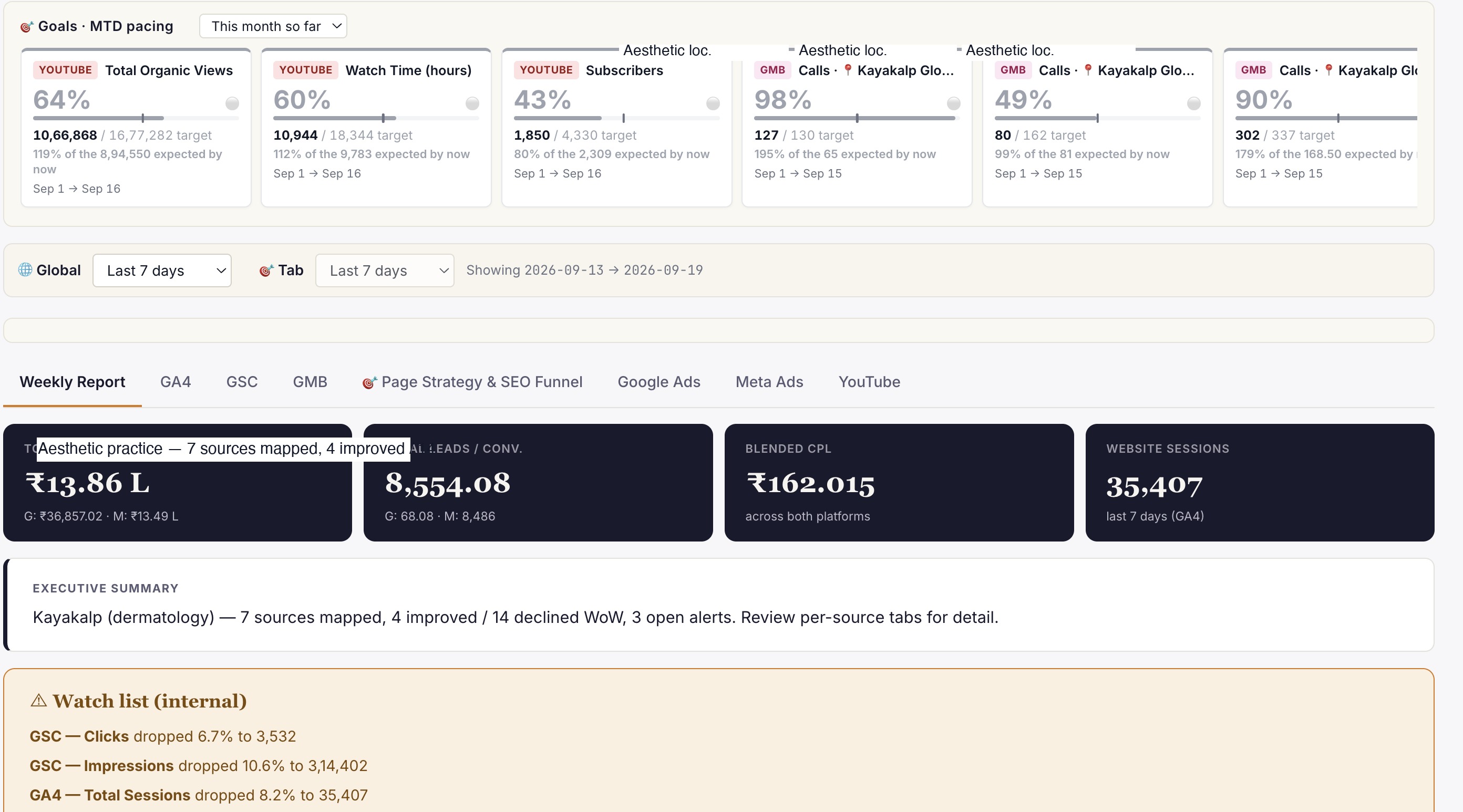
Live client dashboard. GSC, GA4, Google Ads, Meta Ads, IVR calls in one view. Login anytime, not monthly.
Phoenix
Clinic revenue intelligence over your PMS. Daily action queue: Prevent Loss, Maintain & Engage, Grow Revenue. Multi-centre rollout.
Or book a free 30-min audit to see all three in action on your account.
Healthcare brands
that already run on ICG.
A representative slice of the 150+ healthcare brands ICG has delivered for across India. Most engagements remain under NDA.


What ICG clients say · on video.
"Scale up of organic channels and business consulting. ICG has absolute domain authority in their field."
"Working with ICG transformed how we acquire IVF patients in Gurgaon. They understand the fertility journey from inquiry to consult..."
"What Ichelon accomplished — they got all my ideas and worked over 3-4 months to create an amazing, super-customised website."
The intelligence stack behind this playbook.
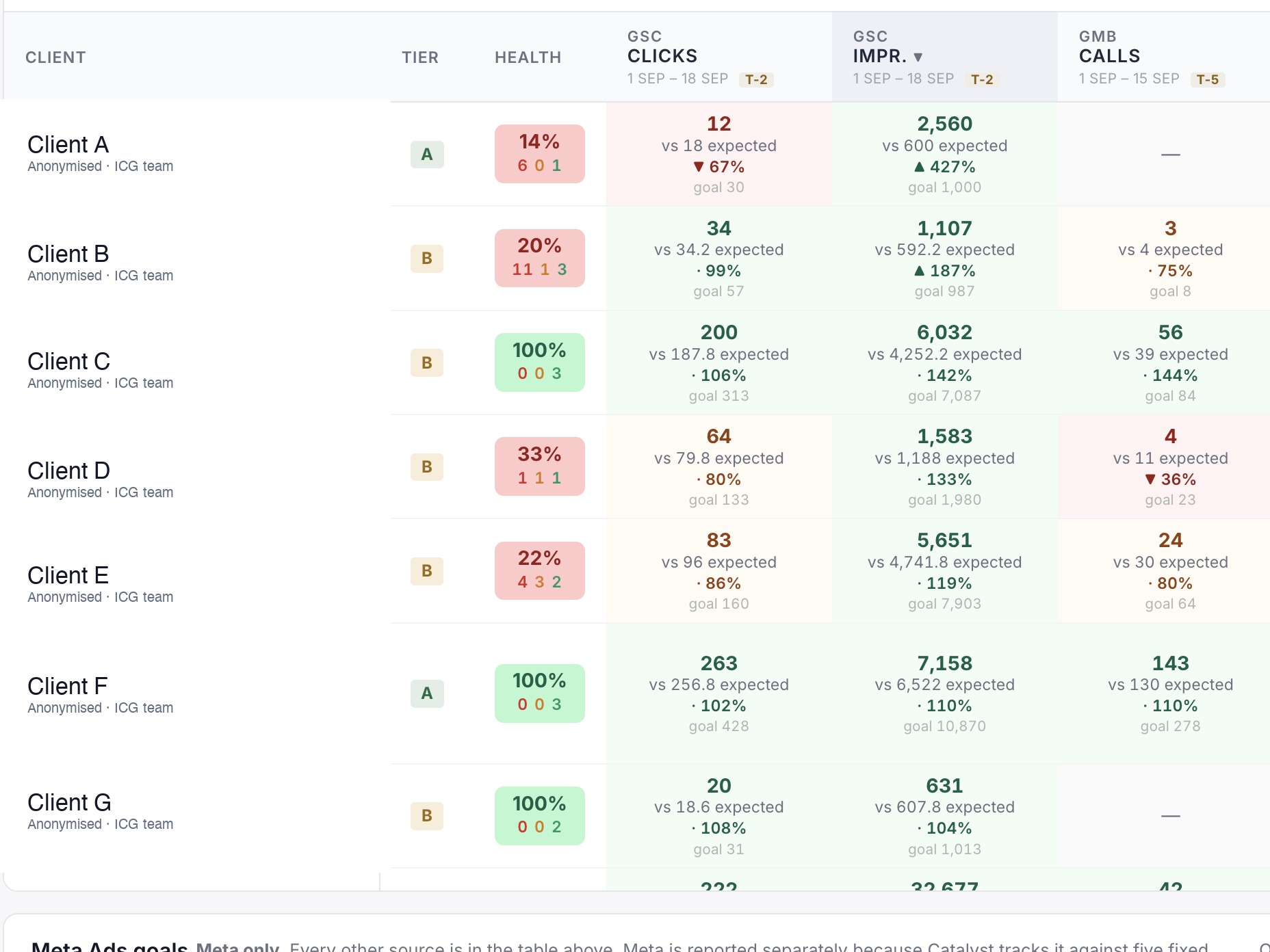
Every ICG engagement runs on the Search Intelligence Trifecta — Angryturtle for GMB, SIE for search and AI Overview, YODA for YouTube. Live product screens below.
Need help operationalising this?
Every ICG service is healthcare-only, NMC + DPDP-aware, and built around the patient-research patterns that drive Indian healthcare growth in 2026.
Every practice welcome — packages from ₹20,000/mo.
Goals-Driven engagements · Performance-Linked Payout Models available
More from
ICG.
Five trends shaping Indian healthcare marketing through 2027: AI-first patient research, Conversions API adoption, ABDM discovery, the AEO w...
Healthcare AIO is the discipline of getting your clinic or hospital cited inside Google AI Overviews, ChatGPT and Perplexity answers — not j...
Conversational-search advertising places brand messages inside AI chat answers — ChatGPT, Perplexity, Copilot — rather than beside a results...
Stop guessing.
Book a Diagnostic.
30 minutes. Free. With the AI-powered healthcare-only marketing agency 150+ brands already run on. No slides, no pitch, no hard close.


