


ABDM Integration for Hospitals 2026 — HFR, HPR, ABHA and Consent Manager Guide
India's healthcare system is in the middle of its most consequential digital transformation since the introduction of electronic medical records. The Ayushman Bharat Digital Mission (ABDM) — launched
No pitch. Written root-cause diagnosis. AI-powered, healthcare only.
Direct answer
India's healthcare system is in the middle of its most consequential digital transformation since the introduction of electronic medical records. The Ayushman Bharat Digital Mission (ABDM) — launched
TL;DR
TL;DR
- ABDM (Ayushman Bharat Digital Mission) is India's national healthcare digital infrastructure — the backbone connecting patients, providers, and payers
- 4 core components: HFR (Health Facility Registry), HPR (Healthcare Professional Registry), ABHA (Ayushman Bharat Health Account — the patient's digital health ID), Consent Manager
- Hospitals must become HIP (Health Information Provider) — non-compliance is increasingly affecting insurance empanelment and government scheme eligibility
- Integration path: HFR registration → HPR for all clinical staff → HIP module in your HIS → sandbox testing → go live
- Timeline: 8–16 weeks with a cooperative HIS vendor; up to 24 weeks if HIS customisation is needed
India's healthcare system is in the middle of its most consequential digital transformation since the introduction of electronic medical records. The Ayushman Bharat Digital Mission (ABDM) — launched in 2021 and accelerating through 2024–2026 under the National Health Authority (NHA) — is building the digital rails that will eventually link every patient, every doctor, every hospital, and every payer in a unified, consent-driven data ecosystem.
For hospital administrators and healthcare CIOs in 2026, ABDM integration is no longer optional infrastructure — it is becoming a commercial necessity.
What ABDM is and why 2026 is the inflection year
ABDM (abdm.gov.in) is operated by the National Health Authority (NHA) under the Ministry of Health & Family Welfare. Its stated goal: "One Nation, One Health ID" — every Indian citizen having a lifelong digital health record accessible across providers.
Why 2026 marks a tipping point:
- Volume: Over 650 million ABHA accounts created as of mid-2026 (Source: NHA dashboard, abdm.gov.in)
- Policy pressure: AB PM-JAY (Ayushman Bharat Pradhan Mantri Jan Arogya Yojana) increasingly requires HIP integration for empanelled hospitals in wave-2 states
- NABH 6th edition: References ABDM/ABHA in access and patient identification quality indicators
- Insurance: Multiple insurers and TPAs are beginning to mandate ABHA-linked claim submission for cashless processing
- DPDP Act intersection: Consent Manager framework aligns with DPDP Act 2023 consent obligations — hospitals with ABDM integration have a head start on DPDP compliance
The risk of delay: Hospitals that remain outside the ABDM ecosystem are increasingly disadvantaged in insurance empanelment scoring, government scheme access, and patient expectations (urban patients are increasingly familiar with ABHA ID).
The 4 core ABDM components
HFR — Health Facility Registry
HFR is the national registry of all healthcare facilities in India. Every hospital, clinic, diagnostic lab, pharmacy, and blood bank must register.
What HFR registration gives you:
- A unique HFR ID (also called Facility ID) for your hospital
- Presence in the national health facility map (used by insurers, government, and patients)
- Prerequisite for ABDM ecosystem participation
HFR registration process:
- Visit hfr.abdm.gov.in
- Register with facility details: name, type, address, ownership, licences, services
- Upload supporting documents (clinical establishment registration, etc.)
- Submit for verification (typically 5–15 working days)
- Receive HFR ID upon approval
Effort: 2–4 hours for data compilation; 1–2 weeks for verification
HPR — Healthcare Professional Registry
HPR is the national registry of all licensed healthcare professionals — doctors, nurses, paramedics, dentists, pharmacists.
Who must register:
- All clinical staff employed by the hospital who interact with patients or generate health records
- Registration uses NMC, nursing council, or other professional council ID as anchor
How HPR connects to hospital: After individual HPR registration, each professional's ID is linked to the hospital's HFR ID, creating a verifiable provider-facility association. This is what enables an ABHA-linked patient record to correctly attribute care to the treating doctor and facility.
Effort: 15–30 minutes per staff member; HR-led mass registration in 2–3 days for a 100-staff hospital
ABHA — Ayushman Bharat Health Account
ABHA is the patient's digital health ID — a 14-digit number linked to Aadhaar or other ID, which anchors their lifetime health record.
Hospital's role in ABHA:
- Capture patient's ABHA ID at registration (existing patients can create ABHA on-site using Aadhaar OTP)
- Link all clinical records (discharge summaries, lab reports, prescriptions) generated during the patient's visit to their ABHA
- This creates the patient's longitudinal health record, accessible across providers with consent
What this requires technically: Your registration software or HIS must have an ABHA verification API integrated — patients present their ABHA ID (or app QR code), the hospital's system verifies with ABDM, and the session is linked.
Consent Manager
The Consent Manager is the mechanism by which patients control access to their health data. Under ABDM, no Health Information User (HIU — insurer, referring doctor, another hospital) can access a patient's health records without a time-bound, purpose-specific consent artefact granted by the patient.
How consent works in practice:
- Patient visits Hospital A; records generated and linked to ABHA
- Patient is referred to Hospital B
- Hospital B (as HIU) requests access to patient's records at Hospital A (HIP)
- Patient receives notification on their ABHA app
- Patient grants consent (time-limited, purpose-specific)
- Hospital B receives the records in FHIR format
This consent framework aligns directly with DPDP Act 2023 purpose limitation and consent requirements — see our DPDP Act healthcare compliance guide for the intersection.
Becoming a HIP — Health Information Provider
HIP (Health Information Provider) is the technical designation for a hospital that can generate and share ABDM-compliant health records. Becoming a HIP is the core technical requirement for ABDM integration.
What HIP integration requires:
| Requirement | Description |
|---|---|
| HFR registration | Completed (prerequisite) |
| ABDM-compliant HIS | Your Hospital Information System must have an ABDM-certified HIP module |
| FHIR R4 compliance | Health records must be generated in HL7 FHIR R4 format |
| ABHA verification API | Patient ABHA IDs verified at registration via NHA API |
| Consent Manager API | Consent artefacts generated and validated via Consent Manager |
| Sandbox testing | All integrations tested in ABDM Sandbox (SBX) before production go-live |
Choosing an HIS vendor with ABDM readiness
Your HIS (Hospital Information System) vendor is the central dependency in ABDM integration. Not all HIS vendors have ABDM-compliant modules — and HIS vendor quality varies enormously in India.
| HIS category | ABDM readiness status (2026) |
|---|---|
| Established national HIS vendors (enterprise tiers) | ABDM-certified modules available; HIP integration supported |
| Mid-tier vendors (cloud clinic/hospital software, clinic EMR enterprise tiers) | ABDM integration in progress or partial; verify current status |
| Small/local HIS vendors | Most do not have ABDM certification; customisation required |
| In-house built HIS | Requires FHIR R4 module development — significant engineering effort (3–6 months) |
Questions to ask your HIS vendor before committing:
- Is your HIP module ABDM-certified?
- What is your SBX (sandbox) test coverage?
- What is the SLA for ABDM-related API issues?
- Does your consent manager implementation handle PHR app notifications?
- What version of FHIR R4 are you on?
If your current HIS vendor is not ABDM-ready, you have three options: switch to an ABDM-certified vendor, engage a middleware solution (API bridge between your HIS and ABDM), or build a custom ABDM module.
ABDM Sandbox (SBX) testing
Before going live on production ABDM, all HIP integrations must be tested in the ABDM Sandbox environment. The Sandbox mirrors the production ABDM API but uses test data.
Sandbox testing phases:
- Developer registration: Your HIS vendor (or in-house tech team) registers on the ABDM developer portal (sandbox.abdm.gov.in)
- API integration tests: HFR mock registration, ABHA ID verification, consent artefact generation, FHIR record push
- End-to-end flow test: Patient registration → ABHA linking → record generation → consent → record retrieval
- Certification submission: Once all test cases pass, submit sandbox test logs to NHA for certification
- Production go-live: NHA provides production credentials upon sandbox certification
Timeline: Sandbox testing typically takes 3–6 weeks for a vendor with existing FHIR R4 experience; 8–14 weeks for vendors building the module for the first time.
Go-live checklist
Checklist: ABDM go-live readiness
- HFR registration approved and HFR ID received
- All clinical staff registered on HPR and linked to HFR
- HIS ABDM module installed and SBX-tested
- ABHA verification workflow integrated into registration desk
- Consent Manager API integrated and tested
- Staff trained on ABHA capture at registration (receptionist training)
- Patient communication materials updated ("We accept ABHA Health ID")
- FHIR R4 record generation tested for all record types (discharge summary, lab, prescription)
- Sandbox certification completed and production credentials received
- Go-live monitoring dashboard set up (daily HIP record count, consent artefact success rate)
ABDM and NABH 6th edition intersection
NABH's 6th edition standards reference ABDM in the Access, Assessment and Continuity of Care (AAC) chapter under patient identification and registration quality indicators. Surveyors increasingly assess:
- Whether the hospital has completed HFR registration
- Whether ABHA ID capture is part of the registration workflow
- Whether discharge summaries are generated in FHIR-compliant format
Hospitals in active NABH preparation should coordinate ABDM integration into their NABH preparation timeline — ideally completing HFR and HPR registration in months 1–2, and HIP integration in months 4–8, so that ABHA workflows are operationalised before the NABH survey.
"ABDM is not a separate IT project from NABH preparation — it's the same journey. NABH 6th edition is asking hospitals whether they're part of India's digital health ecosystem. The answer increasingly needs to be yes." — Adrito Basu, NABH Consulting Lead, ICG
Common ABDM integration pitfalls
From ICG's technology consulting work across healthcare clients:
- HIS vendor overpromising: Vendor claims "ABDM ready" but only HFR registration is done; HIP module not built
- HPR registration gap: Doctors complete HPR but nurses and paramedics not registered — creates incomplete provider-facility mapping
- ABHA capture at registration not operationalised: HIS module installed but front desk not trained; ABHA IDs not being captured at patient registration
- FHIR record quality issues: Discharge summaries pushed to ABDM but missing mandatory FHIR fields; records rejected silently
- Consent Manager not tested end-to-end: Consent generation works in sandbox but production API has timeout issues not caught in testing
Case snapshot
A 200-bed multi-specialty hospital in Hyderabad began ABDM integration in January 2026. HFR registered (week 1), HPR for 45 clinical staff completed (week 3). HIS vendor had partial ABDM module — ABHA verification API integrated but FHIR R4 record push not built. Custom FHIR module built by vendor in 8 weeks. Sandbox testing (weeks 10–14): 3 FHIR field failures corrected. Production go-live: week 16. By month 4 post go-live: 1,200 ABHA IDs captured, 340 discharge summaries pushed to ABDM. NABH 6th edition assessment in month 18: AAC chapter assessors noted ABDM integration as a compliance positive (ICG healthcare technology engagement, 2026).
FAQ
Q1: Is ABDM registration mandatory for hospitals? HFR registration is effectively mandatory for hospitals seeking AB PM-JAY empanelment and is increasingly required by NABH 6th edition and insurance TPAs. HIP (full HIS integration) is not yet universally mandated but is becoming a commercial prerequisite.
Q2: What is the difference between HFR and HPR? HFR is the facility registry — registers the hospital. HPR is the professional registry — registers individual doctors, nurses, and paramedics. Both are needed for complete ABDM participation.
Q3: How much does ABDM integration cost? HFR and HPR registration: free. HIS ABDM module: typically ₹1.5L–₹8L from ABDM-certified HIS vendors, or ₹12L–₹45L for custom FHIR module development. Sandbox testing and go-live support: ₹2L–₹8L if using an implementation partner.
Q4: Which HIS vendors are ABDM-certified in India? The NHA maintains a list of ABDM-integrated HIS vendors at abdm.gov.in. As of 2026, the list includes several established national HIS vendors and a growing number of mid-tier vendors. Verify current certification status directly — the list is updated quarterly.
Q5: How long does ABDM HIP integration take? 8–16 weeks with an ABDM-certified HIS vendor. Up to 24 weeks if custom FHIR module development is required. HFR + HPR alone (without HIP): 2–3 weeks.
Q6: What is the ABDM Sandbox? The ABDM Sandbox (SBX) at sandbox.abdm.gov.in is a testing environment that mirrors the production ABDM API with test data. All HIP integrations must be sandbox-tested and certified by NHA before production go-live.
Q7: Does ABDM integration help with DPDP Act 2023 compliance? Yes — ABDM's Consent Manager framework implements purpose-limited, patient-controlled data sharing that directly addresses DPDP Act 2023 consent obligations. Hospitals with ABDM integration are significantly ahead on DPDP compliance for health data.
Q8: Do I need a separate ABDM consultant or can my HIS vendor handle it? ABDM-certified HIS vendors handle the technical integration. For strategy (which vendor to choose, NABH alignment, DPDP intersection), a healthcare technology consulting partner like ICG adds value. For small hospitals, the HIS vendor alone is typically sufficient.
Internal links
- NABH 6th edition standards 2026
- DPDP Act 2023 healthcare compliance checklist
- Best clinic management system India
- Best healthcare CRM India
- Hospital marketing agency India
- Book a strategy call with ICG
External sources
- ABDM official — abdm.gov.in
- NHA (National Health Authority) — nha.gov.in
- ABDM Sandbox — sandbox.abdm.gov.in
- MeitY DPDP Act 2023 — meity.gov.in
- HL7 FHIR R4 — hl7.org/fhir
- IHISPA (Indian Health Informatics Standards Association)
Compliance note. ABDM requirements, vendor certification status, and NHA guidelines change frequently. Verify current requirements at abdm.gov.in before beginning integration. This article reflects the ABDM ecosystem as of mid-2026 and is for informational purposes. ABHA expansion figures cited from NHA public dashboard data.
Book a free 30-minute Brand & Growth Diagnostic.
It's a working session, not a sales pitch — you leave with a written root-cause analysis you can act on, whether or not you engage ICG.
The three platforms
behind every ICG engagement.
Beacon
CAPI middleware that fixes Event Match Quality, translates CRM statuses to Meta-standard events, dedups across channels.
Agency OS
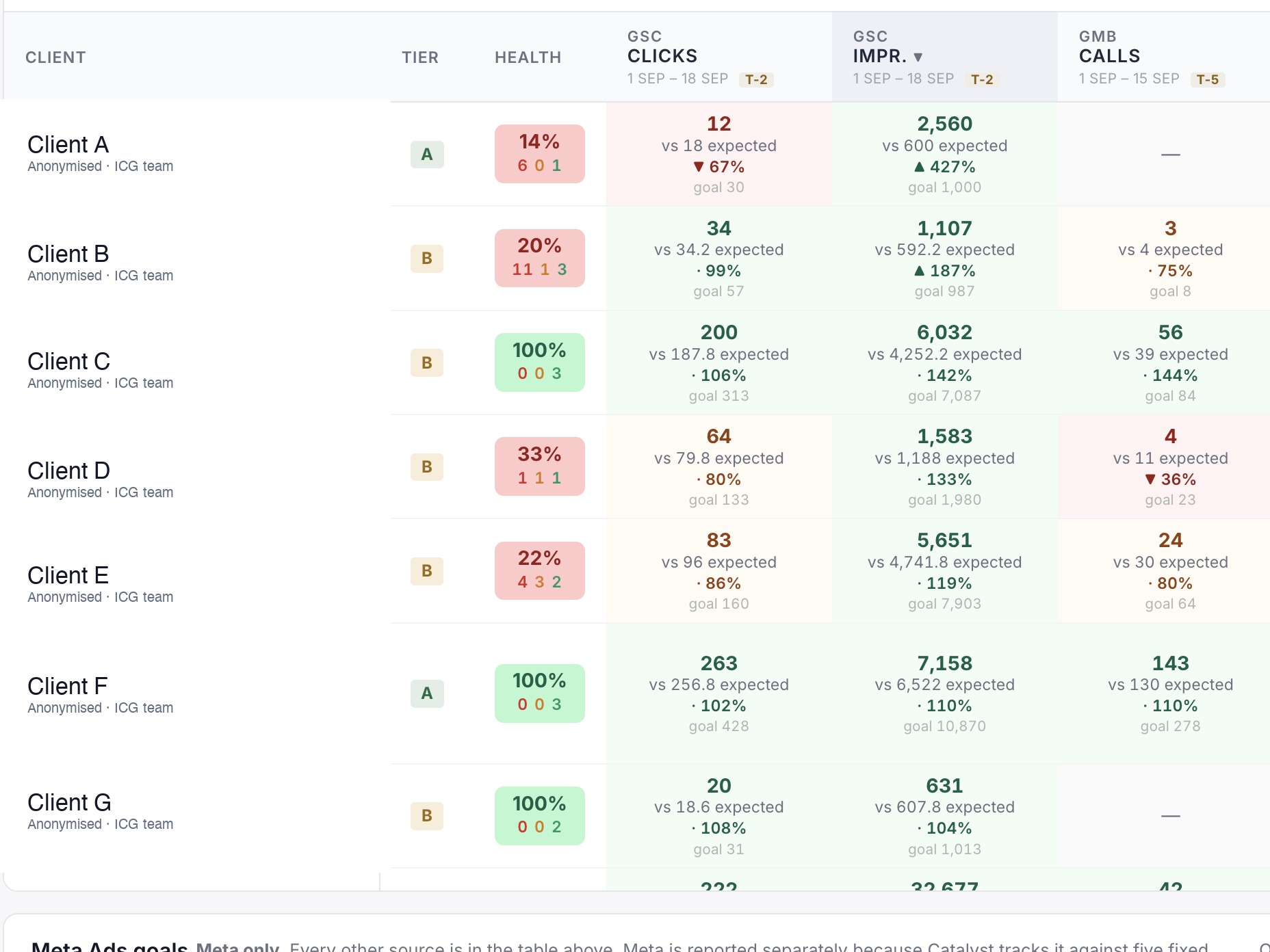
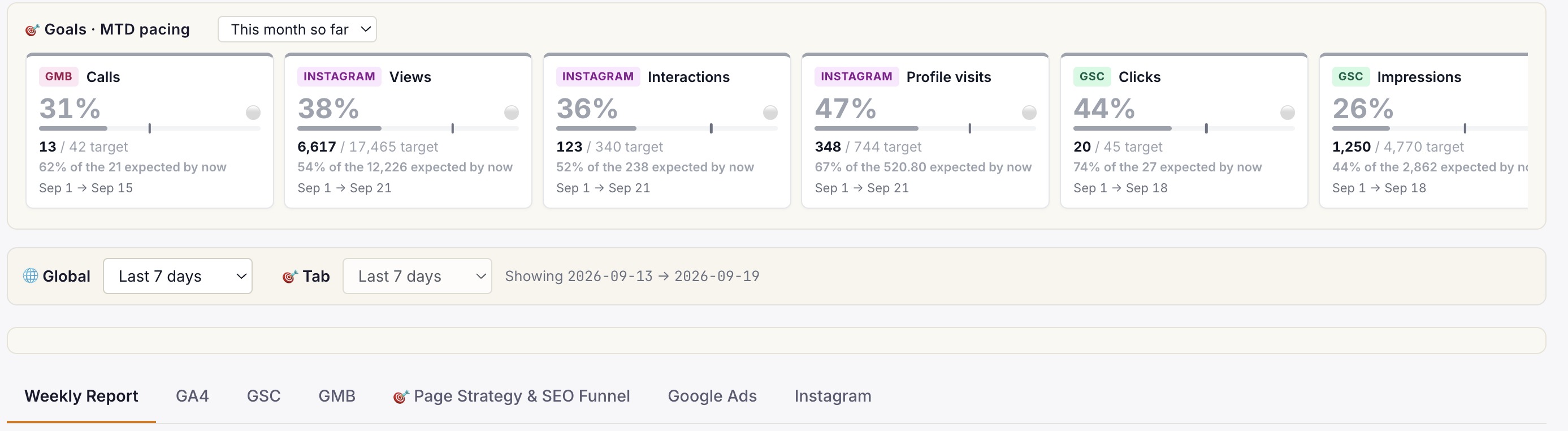
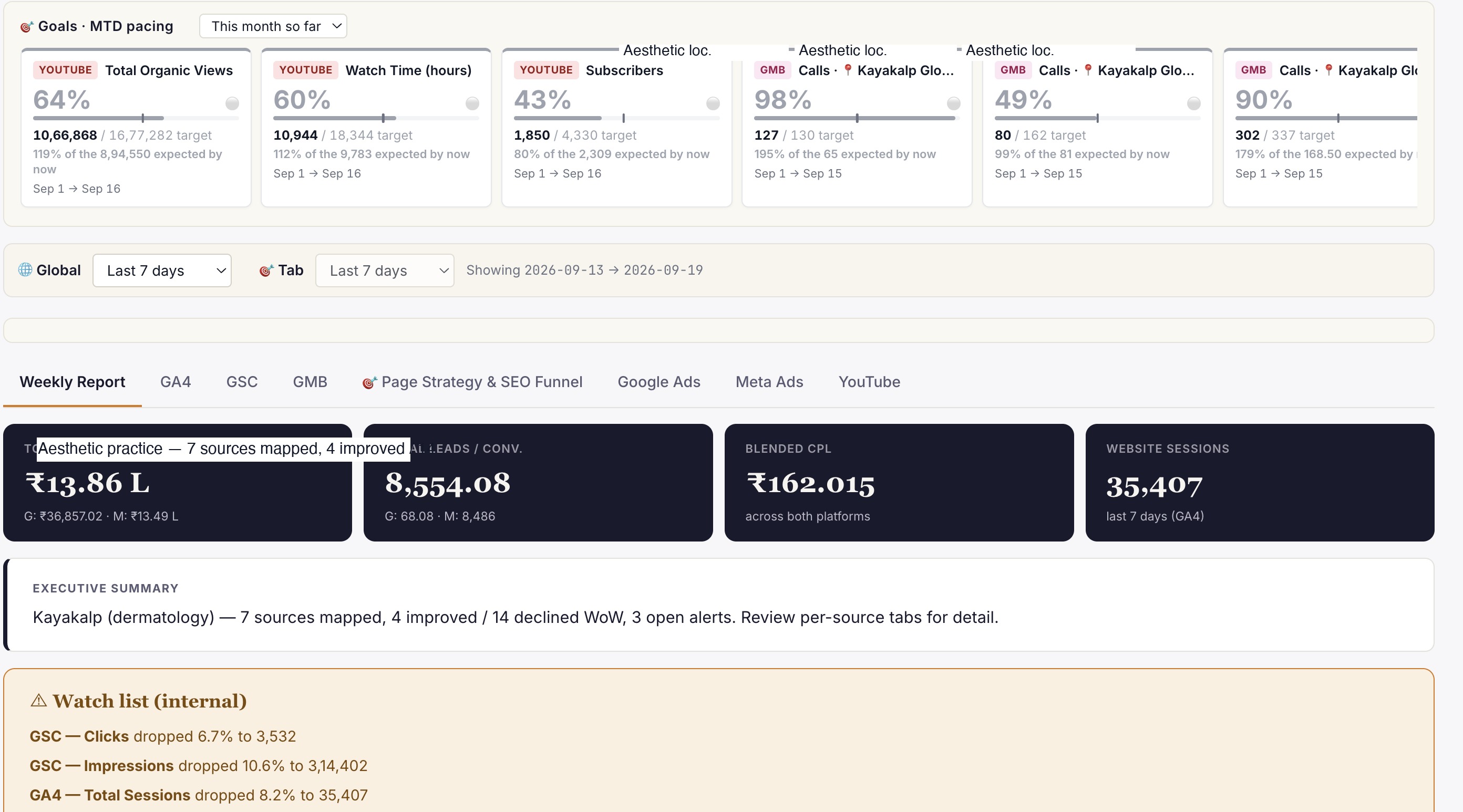
Live client dashboard. GSC, GA4, Google Ads, Meta Ads, IVR calls in one view. Login anytime, not monthly.
Phoenix
Clinic revenue intelligence over your PMS. Daily action queue: Prevent Loss, Maintain & Engage, Grow Revenue. Multi-centre rollout.
Or book a free 30-min audit to see all three in action on your account.
Healthcare brands
that already run on ICG.
A representative slice of the 150+ healthcare brands ICG has delivered for across India. Most engagements remain under NDA.


What ICG clients say · on video.
"Mental health marketing requires a different sensitivity. ICG built compliance-aware campaigns that respect both patients and our..."
"Bariatric surgery patients need a long consideration cycle. ICG built a content + paid system that respects that timeline."
"Working with ICG felt like working with an in-house growth team that happens to specialise in healthcare."
Need help operationalising this?
Every ICG service is healthcare-only, NMC + DPDP-aware, and built around the patient-research patterns that drive Indian healthcare growth in 2026.
Every practice welcome — packages from ₹20,000/mo.
Goals-Driven engagements · Performance-Linked Payout Models available
More from
ICG.
Five trends shaping Indian healthcare marketing through 2027: AI-first patient research, Conversions API adoption, ABDM discovery, the AEO w...
Healthcare AIO is the discipline of getting your clinic or hospital cited inside Google AI Overviews, ChatGPT and Perplexity answers — not j...
Conversational-search advertising places brand messages inside AI chat answers — ChatGPT, Perplexity, Copilot — rather than beside a results...
Stop guessing.
Book a Diagnostic.
30 minutes. Free. With the AI-powered healthcare-only marketing agency 150+ brands already run on. No slides, no pitch, no hard close.


