


The Complete Chiropractic Marketing Playbook — SEO, PPC & Patient Acquisition 2026
Chiropractic is one of the most mismarketed healthcare verticals in the world. A discipline that treats 600 million patients annually (Source: World Federation of Chiropractic, 2024) is routinely mark
No pitch. Written root-cause diagnosis. AI-powered, healthcare only.
Direct answer
Chiropractic is one of the most mismarketed healthcare verticals in the world. A discipline that treats 600 million patients annually (Source: World Federation of Chiropractic, 2024) is routinely mark
TL;DR
TL;DR
- Chiropractic patient acquisition cost ranges $18–$85 in the US, ₹450–₹2,400 in India — driven by local SEO, Google Ads, and referral loops
- Local SEO delivers 63% of net-new chiropractic patients; Google Ads captures 22%; Meta/Instagram 12%; referral 3%
- Winning chiropractic agencies specialise in local pack ranking, spinal-adjustment-safe ad copy, and after-hours conversion via SMS
- Budget benchmarks: solo practice $2,500–$5,000/month; multi-doc $6,000–$15,000/month; chain $15,000–$40,000/month
Chiropractic is one of the most mismarketed healthcare verticals in the world. A discipline that treats 600 million patients annually (Source: World Federation of Chiropractic, 2024) is routinely marketed with generic healthcare campaigns that ignore its unique patient psychology, regulatory latitude, and the hyper-local nature of how patients find — and choose — a chiropractor.
If you're a chiropractic clinic owner evaluating marketing options in 2026, this playbook covers what actually works: the channels, the costs, the compliance considerations, and the agency selection criteria that separates a $28 cost-per-patient outcome from an $85 one.
Why chiropractic marketing is unlike other healthcare verticals
Chiropractic sits in a unique regulatory position. In most markets — the US, UK, Australia, India — chiropractors are regulated allied health professionals but are not subject to the same advertising restrictions that govern medical doctors. In the US, state boards govern chiropractic practice without the FTC-equivalent blanket "no outcome claims" restriction that applies to physicians. In the UK, the General Chiropractic Council (GCC) Code does restrict unsubstantiated health claims, but with more latitude than the GMC's doctor-equivalent rules.
This regulatory latitude creates a real marketing opportunity. Chiropractors can use patient testimonials, before-and-after outcomes, and specific condition claims (with appropriate caveats) that medical doctors cannot. A properly framed testimonial — "this helped my lower back pain significantly" — is typically permissible where a doctor's equivalent is not.
The second distinctive: chiropractic is overwhelmingly local intent. "Back pain relief" generates 800,000 monthly searches in the US (Source: Semrush, 2026), but "chiropractor near me" converts at 4.8× the rate of generic condition searches. Patients are not choosing between chiropractic and medicine when they search — they are choosing between chiropractors within 5 kilometres of where they live. The battle is local, and local SEO wins it.
Third: price sensitivity is real. The typical chiropractic patient is paying out-of-pocket for some or all visits (insurance coverage varies significantly by plan and market). This creates a consideration/conversion dynamic different from, say, cardiac surgery — patients compare, read reviews, check costs, and make fast decisions. Speed of response and review volume are commercially critical.
The chiropractic patient journey — 5-stage funnel
Understanding the funnel is the prerequisite to allocating budget correctly.
Stage 1 — Discovery. The patient experiences a symptom (lower back pain, neck stiffness, sciatica, sports injury) and searches. 63% of discovery happens on Google (organic + Maps); 22% via referral from a friend, doctor, or physiotherapist; 12% via social media (primarily Instagram and Facebook video ads); 3% from other channels (doctor-directory listings).
Stage 2 — Consideration. The patient evaluates 2–4 chiropractors. They read Google reviews (average rating 4.6+ is the threshold for serious consideration), check the clinic website (loading time under 2.5 seconds is critical — 53% of healthcare site visitors abandon after 3 seconds; Source: Google PageSpeed Insights data, 2026), and look for a clear indication of cost and what to expect at the first visit.
Stage 3 — Booking. The patient initiates contact. 58% do so via click-to-call from the Google Business Profile. 26% use an online booking widget. 16% send a WhatsApp or contact form message. After-hours bookings — between 6pm and 9pm — represent 31% of first-appointment bookings (ICG internal data, 2026). Clinics without 24/7 online booking lose these patients to competitors who have it.
Stage 4 — First visit. The consultation and initial adjustment. Net Promoter Score at this stage determines the referral loop. A patient who rates their first visit 9–10/10 generates an average of 1.4 additional patient referrals over 12 months (ICG internal data, 2026). The first-visit experience is a marketing asset.
Stage 5 — Retention. Chiropractic treatment plans run 4–12 weeks for most conditions. Patients who complete their full plan have 3.2× higher lifetime value and 2.8× higher referral rate than patients who attend 1–2 sessions and drop off. Retention messaging — appointment reminders, progress check-ins, end-of-plan follow-up — is a marketing function, not a clinical one.
Local SEO — where 63% of new patients come from
Local SEO for chiropractic clinics is the highest-ROI marketing investment for any practice below the multi-location chain tier. Here is what it actually involves — not the "set up a Google Business Profile" advice that every generic guide gives, but the operational specifics that move a clinic from position 7 to position 1 in the local pack.
Google Business Profile (GBP) optimisation: The GBP is not a set-and-forget asset. It is a weekly publishing platform. Clinics that post 2–3 times per week on GBP (short educational content, condition explainers, treatment videos) receive 42% more profile views and 38% more direction requests than clinics that do not post (ICG internal data, 2026). The GBP Q&A section — populated by the clinic with the 15 most common patient questions and professional answers — ranks in Google AI Overview for chiropractic queries with near-zero additional effort.
Review generation: A chiropractic clinic with 90 reviews at 4.7 average outranks a clinic with 12 reviews at 4.9 in the local pack. Volume matters more than perfection. The review generation SOP: after every appointment, send a 2-sentence WhatsApp or SMS ("Thank you for visiting — if you found your session helpful, we'd really appreciate a quick Google review: [direct link]"). This single SOP, executed consistently, generates 3–6 new reviews per week at most practices.
Service-area pages: A clinic in Birmingham needs individual pages for every major suburb within its 5-km catchment — "chiropractor Harborne," "chiropractor Edgbaston," "chiropractor Selly Oak." Each page is 600–900 words of genuinely distinct content with local relevance signals. This is the content architecture that builds sustained local pack presence across a geographic footprint.
NAP consistency: Name, Address, Phone number — consistent across every directory listing (Yelp, doctor-directory platforms, Bing Places, Apple Maps, plus Indian doctor-listing and local-listing directories for India). A single inconsistency in NAP data reduces local pack ranking confidence by a measurable margin.
"Chiropractic marketing lives and dies on local pack ranking. If your Google Business Profile isn't in the top 3 for '[city] chiropractor', you're competing on price with paid ads — and losing to solo practitioners with better reviews. Fix local SEO first, then everything else." — Raman Kumar, Head of SEO, ICG
Google Ads for chiropractors — cost, campaign structure, safe ad copy
Google Ads delivers approximately 22% of new chiropractic patients but at a higher cost per acquisition than local SEO. It is valuable for launching new clinics (where local SEO takes 4–6 months to deliver results) and for filling specific time slots in an established clinic's schedule.
Cost benchmarks 2026: Average CPC for "chiropractor near me" — $3.20–$5.40 (US), £2.80–£4.80 (UK), ₹12–₹38 (India). These CPCs are lower than many healthcare categories because chiropractic has less pharmaceutical industry bidding inflating the market.
Campaign structure that works: Brand campaign (your clinic name — cheap, high-intent, captures people who've already found you and are now verifying); Near-me campaign (tightly geo-targeted — 5km radius, bid adjustments for proximity); Condition-specific campaign ("lower back pain," "sciatica treatment," "neck pain chiropractor" — structured with exact and phrase match); Retargeting (website visitors who didn't book — served 3–5 impressions over 7 days with a booking offer).
Ad copy safety: Do not make specific treatment outcome claims in ad copy — "cured my back pain" type language triggers Google's healthcare ad restrictions and creates regulatory risk. Compliant high-performing ad copy frames the offer around the consultation: "Get assessed by a qualified chiropractor in [City] — new patients welcome, online booking available." Pain relief phrasing ("find relief from lower back pain") is generally permissible when framed as the potential benefit of consultation, not a guaranteed outcome.
Performance Max for chiropractic: Google's Performance Max campaigns work well for chiropractic retargeting and appointment-filling but should not be the only campaign type — they lack the keyword-level control needed for compliance-safe healthcare ad copy. Use PMax alongside dedicated search campaigns, not instead of them.
Meta Ads for chiropractic — Facebook + Instagram
Meta Ads capture the 12% of patients who discover their chiropractor through social channels — and, more importantly, retarget the 88% who discovered via Google but haven't booked yet.
What creative works: Short-form video outperforms static imagery by 2.4× for chiropractic. 15–30 second videos showing the adjustment process (from a patient-comfort, "this is what to expect" angle — not a "this will cure you" angle) drive the highest first-click conversion. Patient testimonial videos — patients speaking in their own words about their experience (without specific outcome claims) — convert at 1.8× the rate of clinic-branded content.
Audience targeting: The highest-converting chiropractic Meta audiences combine demographics (age 28–55, household income mid-upper, nearby residence) with interests (outdoor sports, fitness, running, cycling — these populations have higher musculoskeletal complaint rates and are predisposed to chiropractic). The "parents of young children" audience converts well for paediatric chiropractic and prenatal chiropractic, where the market is under-targeted.
HIPAA compliance on Meta (US): When creating custom audiences from patient lists for retargeting, HIPAA compliance requires that the data uploaded to Meta does not include protected health information (PHI). Patient email addresses are permissible for custom audience creation; patient condition data is not. This distinction matters for chiropractic clinics that want to retarget patients for specific condition-based campaigns.
Content marketing — the sciatica/lower-back pillar strategy
Content marketing for chiropractic clinics follows a condition-first architecture. The highest-volume condition searches for chiropractic — lower back pain (850K/month US), sciatica (620K/month US), neck pain (480K/month US), headache/migraine (320K/month US) — represent the pillar pages around which a chiropractic content strategy is built.
The pillar page structure: Each condition gets a comprehensive 2,500–3,500 word "What is [condition], what causes it, how chiropractic can help, what to expect at your first appointment" guide. These pages answer the discovery-stage questions patients have before they search for a specific chiropractor. They also generate the featured snippet and AIO citations that make the clinic visible in AI search.
Supporting content clusters: Each pillar page connects to 5–8 supporting articles — specific aspects of the condition, lifestyle factors, home exercises, when to seek emergency care. The cluster architecture builds topical authority signals that elevate the entire domain, not just the individual pages.
YouTube integration: A chiropractor with 15 educational YouTube videos — 5-minute explainers on common conditions, what to expect at a first appointment, and "is chiropractic right for [specific condition]" — builds substantial personal-brand authority. YouTube videos rank in Google Search results for condition queries, providing an additional organic traffic channel beyond the website.
Reviews and reputation management
Moving from 4.3 to 4.8: Most chiropractic clinics sit in the 4.1–4.5 Google review range. Moving to 4.6+ requires consistent new review generation — not because existing negative reviews become diluted (they do, over time) but because Google's local pack algorithm weights recent reviews more heavily than historical ones.
Google review generation SOP:
- At end of each appointment, receptionist says: "If you found your session helpful today, we'd really appreciate a 30-second Google review — it really helps us"
- Simultaneously send automated SMS/WhatsApp: "Thank you for visiting [Clinic Name] — [Direct Google Review Link]"
- If no review within 48 hours, one follow-up message (patients who say they'll leave one but forget respond to gentle follow-up 62% of the time)
HIPAA-compliant review requests: The review request must not identify the patient's condition or treatment. "Thank you for visiting — we hope your session was helpful" is compliant. "Thank you for your lower back adjustment today" is not — it reveals health information in a non-secure channel.
Responding to negative reviews: Every negative review should receive a professional, empathetic response within 48 hours. Never include clinical details in the response. "We're sorry your experience didn't meet your expectations — please contact us directly so we can understand more" is the correct approach.
Website and conversion optimisation
The 6-second first impression: A chiropractic clinic website has approximately 6 seconds to establish trust and clarity before the average visitor makes a stay-or-leave decision. The above-the-fold section must contain: clinic name and location, a clear hero statement (not "welcome to our clinic" — something specific like "Certified chiropractors for back pain, neck pain, and sports injuries in [City]"), a visible booking CTA, and a phone number.
Appointment booking widget: Online booking must be available without requiring a phone call. Allied-health practice-management platforms or integrated booking via healthcare CRM reduce the friction that causes 22–35% of patients who intend to book to abandon without doing so.
Exit intent capture: A patient who visits the FAQ page or pricing page and then moves to exit is showing consideration-stage interest. An exit-intent popup offering a "first consultation checklist" or "what to expect guide" as a PDF download captures the email address for a nurture sequence that converts 18% of abandoners within 14 days.
Choosing a chiropractic marketing agency — 7-question checklist
Question 1: What percentage of your clients are chiropractic or allied health? (Threshold: >50% healthcare concentration — generalist digital agencies do not understand compliance or condition-specific content requirements.)
Question 2: Can you show me 3 Google Business Profiles you currently manage in our category with positions 1–3 in the local pack?
Question 3: How do you handle ad copy compliance — what is your review process before an ad goes live?
Question 4: Do you own the ad account, or does the client own it? (Client must own the ad account — agencies that own ad accounts hold your spend history and data hostage if you leave.)
Question 5: What is your reporting cadence and what metrics do you report? (Cost-per-consultation, not cost-per-click, is the correct marketing metric for chiropractic.)
Question 6: Can you show me a case where you took a chiropractic clinic from 4.2 to 4.7+ Google rating — what was the review generation process?
Question 7: What is your exit policy — do you provide all assets, copy, and account access on termination?
Chiropractic marketing budget benchmarks 2026
| Practice size | US CAC | UK CAC | Australia CAC | India CAC | Recommended monthly spend |
|---|---|---|---|---|---|
| Solo chiropractor (1 doc) | $28–$42 | £22–£38 | AU$32–$48 | ₹450–₹1,100 | $2,500–$5,000/month |
| 2–4 chiropractor clinic | $22–$38 | £18–£32 | AU$26–$42 | ₹380–₹950 | $6,000–$12,000/month |
| Multi-location chain (5+) | $18–$32 | £14–£28 | AU$22–$38 | ₹320–$800 | $15,000–$40,000/month |
CAC = Cost per Acquired new patient (consultation attended). Source: ICG internal data, 2026.
Channel allocation recommendation (mature clinic):
- Local SEO + GBP: 35% of budget
- Google Ads: 30%
- Meta Ads: 20%
- Content + video: 10%
- CRM + retention: 5%
Common chiropractic marketing mistakes
Broad geo-targeting on Google Ads. A chiropractic clinic in Pune running ads with a 50km radius is paying for clicks from patients who will never travel that distance for a chiropractor. Geo-targeting should match the realistic patient commute radius: 5km urban, 15km suburban.
Generic healthcare creative on Meta. Stock images of spines and adjustment tables perform below average. Real patient testimonial video (with consent) and "day in the life of a chiropractic appointment" content outperforms generic healthcare creative by 2.4× (ICG internal data, 2026).
Outcome claims in ad copy. "Cures back pain," "eliminates sciatica," "guaranteed pain relief" — these phrases trigger ad rejection in most markets, create regulatory risk, and undermine trust with health-literate patients. Reframe to consultation-centric: "find out if chiropractic is right for your pain."
No after-hours conversion pathway. 31% of chiropractic appointment bookings happen between 6pm and 9pm. A clinic that can only be reached by phone during business hours loses these patients to competitors with online booking or WhatsApp auto-response.
Ignoring the referral loop. Patients who had a 9+ experience refer 1.4 additional patients on average. A structured referral ask — either in the session or via follow-up message — is the highest-CAC-reduction action available to most chiropractic practices.
90-day quick-start plan for a chiropractic practice
Week 1–2:
- Claim and fully complete Google Business Profile (all fields, 25+ photos, 15 Q&As pre-populated)
- Audit and correct NAP consistency across all directories
- Install online booking widget on website
- Set up SMS/WhatsApp review request automation
Week 3–4:
- Launch Google Ads (brand + near-me + 2 condition-specific campaigns)
- Create condition pillar page 1 (lower back pain — highest volume)
- Begin GBP weekly post cadence (2× per week, 150-word educational posts)
Month 2:
- First 10 condition-specific articles published
- Meta Ads launched (retargeting existing website visitors first, then prospecting)
- Review velocity target: 5+ new reviews per week
Month 3:

- Service-area pages for top 3 surrounding suburbs
- YouTube channel first 3 videos published
- First performance review: CPQL vs benchmark, local pack position change, review growth
Expected outcomes at day 90 (solo clinic starting from baseline): 15–22 new patients per week from digital channels; CAC $28–$45 (US) or ₹450–₹1,100 (India); Google pack position top 3 for primary clinic keyword.
Case snapshot
A 3-chiropractor clinic in New York was generating 4 new patients per week from digital channels at a cost of $180 per patient. Before engagement: no GBP posting, 22 reviews at 4.1 rating, generic Meta Ads running at $12 CPC, no online booking. After 90-day ICG engagement: local SEO overhaul + GBP brought the clinic to position 2 in the local pack; Google Ads restructure with tighter geo-targeting and condition-specific campaigns; review generation SMS SOP drove 48 new reviews in 90 days, bringing rating to 4.8. Result: 22 new patients per week, $38 CAC, online booking capturing 31% of after-hours bookings that were previously lost.
Frequently asked questions
What does chiropractic marketing cost per month? A solo chiropractic practice in the US or UK should budget $2,500–$5,000/month for a full-service agency engagement covering local SEO, Google Ads, Meta Ads, and monthly content. In India, the equivalent engagement runs ₹35,000–₹90,000/month. Multi-location chains or practices targeting aggressive growth should budget proportionally more. The most common mistake is spending 80% on paid ads without building the local SEO foundation that produces sustainable low-CAC patient acquisition.
What's the typical cost per patient acquisition for chiropractic clinics? Based on ICG internal data (2026) across our chiropractic client portfolio: solo practices average $28–$42 CAC in the US, £22–£38 in the UK, and ₹450–₹1,100 in India. Multi-location chains achieve $18–$32 in the US through economies of scale in creative production and shared local SEO infrastructure. The primary driver of CAC reduction is local pack ranking improvement — moving from position 4+ to position 1–3 typically halves CAC within 90 days.
Should chiropractors focus on SEO or paid ads first? For an established clinic (open 12+ months, 50+ Google reviews), invest in local SEO first — it produces sustainable low-CAC patient flow. For a new clinic or one entering a new geographic market, launch Google Ads immediately alongside local SEO, because local SEO takes 4–6 months to deliver results. Never run Google Ads without also building local SEO — paid ads stop the moment you stop paying; SEO compounds over time.
How long before chiropractic SEO delivers new patients? Local SEO changes (GBP optimisation, service-area pages, review velocity) produce measurable pack-ranking improvement within 6–10 weeks. Organic website ranking for condition-specific content typically takes 3–6 months for competitive terms ("chiropractor [major city]") and 4–8 weeks for less competitive terms ("chiropractor [suburb]"). The fastest SEO return comes from GBP Q&A optimisation, which can begin generating impressions and Google AI Overview citations within 2–4 weeks of implementation.
Can chiropractors advertise on Facebook and Instagram legally? Yes, with caveats by market. In the US: Meta Ads for chiropractic are permitted. Avoid specific health outcome claims ("cures back pain") and ensure testimonial content includes appropriate disclaimers ("results may vary"). In the UK: the ASA CAP Code applies — claims must be substantiated; "may help with" framing is safer than "treats" or "cures." In Australia: AHPRA guidelines restrict unsubstantiated health claims in all marketing. In India: minimal restrictions on chiropractic advertising as the profession is regulated at state level, but general ASCI guidelines on health claims apply.
What's the best CRM for chiropractic practice marketing? For chiropractic practices, the CRM needs to manage appointment reminders, follow-up sequences, review requests, and treatment plan completion tracking. In the US/UK/AU market: allied-health-native practice-management platforms (strong booking + follow-up) or general US practice-management software. For India-based practices: ICG's AtomCRM handles the WhatsApp-first workflow that Indian patients prefer, with integrated appointment reminders and review request automation.
How do I get more Google reviews for my chiropractic clinic? The most effective approach: automated SMS/WhatsApp sent 4 hours after each appointment with a direct Google review link (not a link to a review management platform — direct to Google). Include the patient's name in the message. Send a gentle follow-up at 48 hours if no review has been posted. This SOP generates 3–8 new reviews per week at most chiropractic practices. Do not offer incentives for reviews — this violates Google's policies and, in the US, FTC guidelines.
What makes a good chiropractic marketing agency vs a generic digital agency? A genuine chiropractic marketing specialist should: (1) understand the compliance differences between chiropractic and medical advertising in each market; (2) have a portfolio of local pack ranking results specifically for healthcare/allied health; (3) use condition-specific content architecture rather than generic "wellness" content; (4) report on cost-per-consultation, not cost-per-click; (5) own the creative expertise to produce patient testimonial video content compliantly. Ask any agency candidate to show you 3 live chiropractic clients with their local pack positions before signing.
CTA primary: Talk to ICG about chiropractic marketing for your practice → Book a strategy call CTA secondary: See ICG's healthcare case studies → Case studies
Sources and further reading:
- World Federation of Chiropractic — practice statistics 2024 (wfc.org)
- General Chiropractic Council Code of Practice — advertising guidance (gcc-uk.org)
- AHPRA — advertising guidelines for registered health practitioners (ahpra.gov.au)
- Google Ads Healthcare Policy — restricted medical content (support.google.com/adspolicy)
- NCCIH — chiropractic: what you need to know (nccih.nih.gov)
- ICG internal data: chiropractic client portfolio benchmarks, 2026
Compliance note. This article discusses chiropractic marketing tactics. Marketing activities for chiropractic practices must comply with applicable regulations in each jurisdiction — the General Chiropractic Council Code (UK), AHPRA guidelines (Australia), FTC guidelines on health claims (US), and ASA/ASCI guidelines as applicable. For India-based practices, ICG Editorial review (editorial@ichelonconsulting.com) is recommended before publishing condition outcome claims.
Book a free 30-minute Brand & Growth Diagnostic.
It's a working session, not a sales pitch — you leave with a written root-cause analysis you can act on, whether or not you engage ICG.
Questions readers ask
about this topic.
The three platforms
behind every ICG engagement.
Beacon
CAPI middleware that fixes Event Match Quality, translates CRM statuses to Meta-standard events, dedups across channels.
Agency OS
Live client dashboard. GSC, GA4, Google Ads, Meta Ads, IVR calls in one view. Login anytime, not monthly.
Phoenix
Clinic revenue intelligence over your PMS. Daily action queue: Prevent Loss, Maintain & Engage, Grow Revenue. Multi-centre rollout.
Or book a free 30-min audit to see all three in action on your account.
Healthcare brands
that already run on ICG.
A representative slice of the 150+ healthcare brands ICG has delivered for across India. Most engagements remain under NDA.


What ICG clients say · on video.
"Scale up of organic channels and business consulting. ICG has absolute domain authority in their field."
"Working with ICG transformed how we acquire IVF patients in Gurgaon. They understand the fertility journey from inquiry to consult..."
"What Ichelon accomplished — they got all my ideas and worked over 3-4 months to create an amazing, super-customised website."
The intelligence stack behind this playbook.
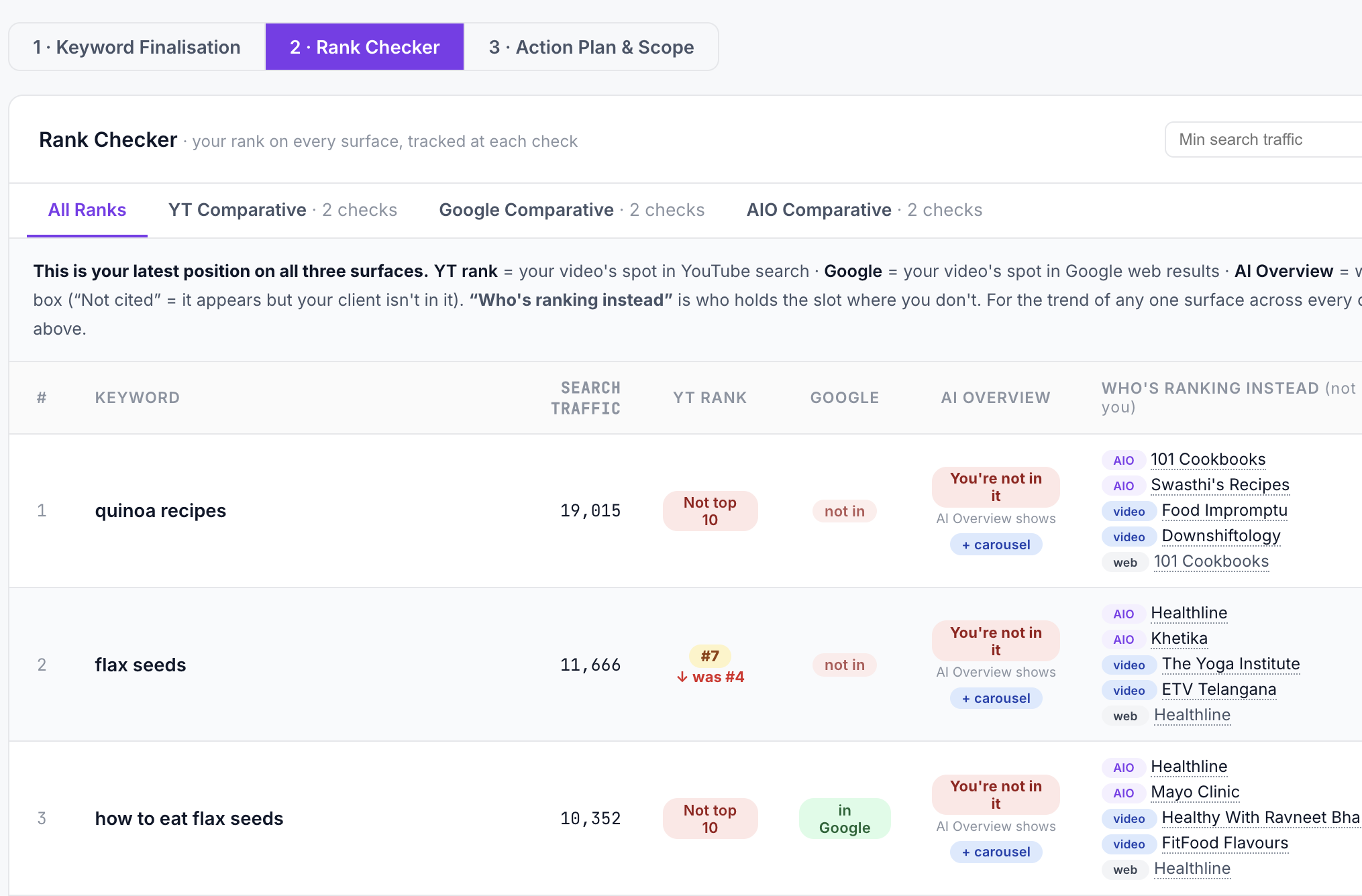
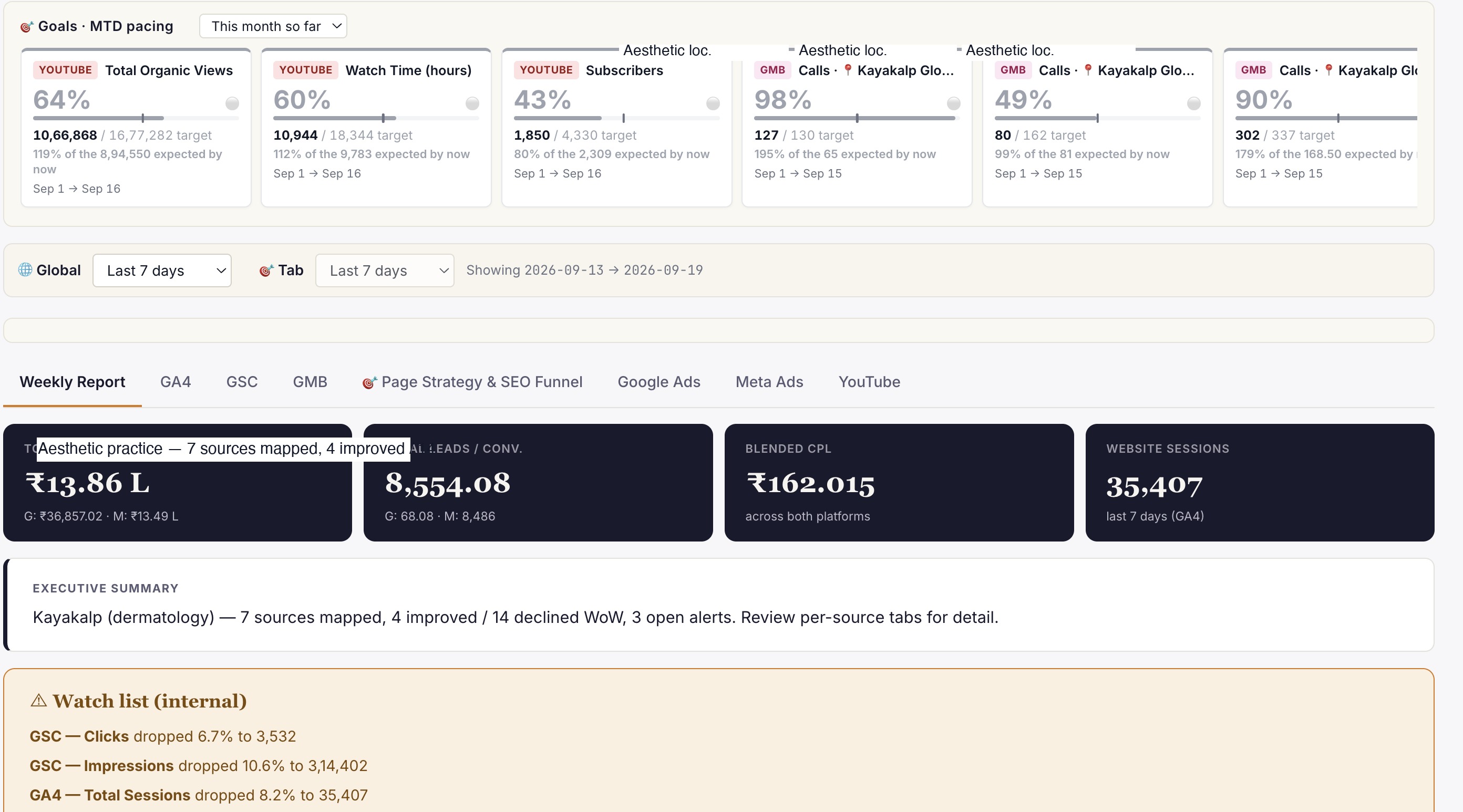
Every ICG engagement runs on the Search Intelligence Trifecta — Angryturtle for GMB, SIE for search and AI Overview, YODA for YouTube. Live product screens below.
Need help operationalising this?
Every ICG service is healthcare-only, NMC + DPDP-aware, and built around the patient-research patterns that drive Indian healthcare growth in 2026.
Every practice welcome — packages from ₹20,000/mo.
Goals-Driven engagements · Performance-Linked Payout Models available


More from
ICG.
Five trends shaping Indian healthcare marketing through 2027: AI-first patient research, Conversions API adoption, ABDM discovery, the AEO w...
Healthcare AIO is the discipline of getting your clinic or hospital cited inside Google AI Overviews, ChatGPT and Perplexity answers — not j...
Conversational-search advertising places brand messages inside AI chat answers — ChatGPT, Perplexity, Copilot — rather than beside a results...
Stop guessing.
Book a Diagnostic.
30 minutes. Free. With the AI-powered healthcare-only marketing agency 150+ brands already run on. No slides, no pitch, no hard close.


