


How to choose an IVF marketing agency in India — where the ART Act changes the brief
TL;DR: Fertility sits under more marketing regulation than almost any other specialty in Indian healthcare — the ART Regulation Act 2021, PC-PNDT, and NMC's 2026 advertising guidelines all constrain what an agency can say before a single ad runs. Compliance fluency, not creative polish,
No pitch. Written root-cause diagnosis. AI-powered, healthcare only.
Direct answer
TL;DR: Fertility sits under more marketing regulation than almost any other specialty in Indian healthcare — the ART Regulation Act 2021, PC-PNDT, and NMC's 2026 advertising guidelines all constrain what an agency can say before a single ad runs. Compliance fluency, not creative...
TL;DR

TL;DR: Fertility sits under more marketing regulation than almost any other specialty in Indian healthcare — the ART (Regulation) Act 2021, PC-PNDT, and NMC's 2026 advertising guidelines all constrain what an agency can say before a single ad runs. Compliance fluency, not creative polish, is the real filter. The framework below scores four archetypes, including ICG, honestly, including where ICG is not the right answer.
By Rohit Gupta, Co-Founder, Business & Growth (/about/rohit-gupta) · Reviewed by Abhash Kumar, Co-Founder, Strategy (/about/abhash-kumar)
Contents
- When fertility marketing needs a specialist: the regulatory threshold
- The scoring framework: what fertility changes about the brief
- The claim that should stop you: red flags in fertility marketing
- Cost expectations: where the budget concentrates
- Timeline: the cycle-length constraint
- The honest archetype recommendations
- Frequently asked questions
When fertility marketing needs a specialist: the regulatory threshold
Fertility is the most heavily regulated marketing surface in Indian private healthcare. Before an agency writes a single headline, its work sits under the ART (Regulation) Act 2021 (full text, India Code), which governs how assisted reproductive technology clinics and the banks that supply them may be advertised. State only what the Act's text supports when evaluating an agency's claims about it, no penalty figure, fee, or compliance timeline beyond what's actually written into the law.
A second layer sits on top of it: PC-PNDT, the law that prohibits any advertising adjacent to sex determination, with no carve-out for clinics that only intend to reference gender-neutral services. An agency working in fertility has to know both laws unprompted, not learn them from the clinic during onboarding.
This page is deliberately narrow. It doesn't repeat the generic criteria for choosing any healthcare marketing agency; that ground is covered in how to choose a healthcare marketing agency. What follows is what changes when the specialty is fertility: which claims are illegal to make, which are merely reckless, and what that does to cost and timeline.
The scoring framework: what fertility changes about the brief
A fertility brief isn't a smaller version of a generic healthcare brief. It has constraints a dermatology or dental brief never touches: a law that can void a campaign for one wrong word, patients making five- and six-figure decisions under real distress, and a sales cycle measured in months rather than days. Score any agency you're evaluating against your own current setup, 0 to 2 per point, and total it against the maximum below.
Regulatory and compliance fluency
- ART Act registration and reporting awareness. Does the agency know what the Act requires of a registered ART clinic, and avoid promising anything the Act doesn't cover? Score 2 if they raise it unprompted, 1 if they can discuss it when asked, 0 if they've never heard of it.
- PC-PNDT zero tolerance. Any hesitation, any "we can work around it" answer, is disqualifying on its own, but for scoring purposes: 2 for immediate and unprompted refusal to touch anything sex-determination-adjacent, 0 for anything less.
- NMC's 2026 advertising guidelines familiarity on outcome claims. Do they understand that clinical outcome claims are constrained regardless of what the clinic wants to publish? Score 2 for fluency, 1 for partial awareness, 0 if they've never mentioned it.
Ethical creative judgment
- No urgency or fear-based tactics aimed at patients in distress. Countdown timers, "last chance" framing, anything that exploits the emotional weight of infertility. Score 2 if this is a stated house rule, 0 if they've pitched it as a "conversion tactic."
- No success-rate-led campaign concepts offered unprompted. This is the one criterion where a "yes" answer is disqualifying rather than a bonus. If an agency proposes building a campaign around a success, pregnancy, or live-birth rate before you've raised it, that's a 0 regardless of how the rest of the pitch reads.
Patient-journey and reporting competence
- Attribution built for a multi-month consideration cycle, not a last-click model that judges a campaign at day 30. Score 2 for a stated multi-touch or offline-conversion approach, 0 for last-click only.
- Cross-border and medical-tourism enquiry handling, where relevant to your clinic. Score this only if it applies to your patient mix; skip it otherwise rather than penalising an agency for a capability you don't need.
- A named person who owns compliance sign-off before creative goes live, distinct from the account manager. Score 2 if that person exists and is named, 0 if compliance review is informal or absent.
Eight criteria, 0 to 2 each, 16 possible.
| Your total | What it suggests |
|---|---|
| 0–5 | Your current setup lacks fertility-specific compliance depth. A fertility-specialist agency or a managed service built for the specialty is worth evaluating before anything else changes. |
| 6–11 | Workable, with gaps. A general healthcare agency can function here if you add a compliance review layer it doesn't already have. |
| 12–16 | Your current agency or in-house hire is already doing most of this well. The gap, if any, is narrower than a full agency change would fix. |
The claim that should stop you: red flags in fertility marketing
An agency that offers, unprompted, to build a campaign around your clinic's success rate should end the conversation. Not because the number is wrong, but because any single success percentage is close to meaningless without controlling for patient age, cause of infertility, and cycle count, and presenting it as a marketing hook implies a certainty the underlying data doesn't support. The NMC's 2026 advertising guidelines constrains outcome claims regardless of how the number is framed. This page will not state a success rate, a pregnancy rate, or a live-birth rate anywhere, for the same reason: doing so would undercut the point being made.
The second red flag is any willingness to discuss marketing angles adjacent to sex determination, even hypothetically, even as a joke about "what other clinics do." This is criminal territory under PC-PNDT, not a grey area an agency can navigate carefully. There is no version of this that should read as guidance, and none is offered here.
The third is urgency creative aimed at people making a high-cost decision under emotional strain: countdown timers on landing pages, "book before it's too late" copy, anything designed to compress a decision a patient should be allowed to sit with.
Any agency working in this specialty should be able to name, without prompting, what it must comply with:
- ART Act registration and reporting obligations for the clinics it works with
- PC-PNDT's outright prohibition on sex-determination-adjacent advertising
- NMC's 2026 advertising guidelines constraints on what a clinic may claim about outcomes
An agency that can't produce this list on its own, in a first conversation, is not ready for the specialty yet.
Cost expectations: where the budget concentrates
IVF marketing agency cost in India is easier to judge once you know that the money concentrates in two places rather than spreading evenly across channels.
ICG's own fertility CPQL sits at ₹1,180 against a market average of ₹2,400, a 51% reduction (full CPQL benchmarks: 46 active healthcare client engagements, rolling 12-month window Jul 2025 → Jul 2026, Delhi NCR, Mumbai, Bangalore, Chennai, Hyderabad, Kolkata, last verified 2026-07-26). Fertility also carries an unusually high patient lifetime value, ₹6L–₹15L over 12 to 24 months, which is the number that actually determines an acceptable IVF clinic patient acquisition cost — a clinic recovering ₹6L over two years can rationally pay far more per enquiry than one selling a single low-ticket procedure. A clinic that can sustain a ₹6L+ LTV can absorb a materially higher acquisition cost than a dermatology or dental practice ever could, and any agency pricing conversation should start from that number, not from a generic media budget.
Where the money actually goes in fertility marketing is compliance review and creative vetting, not just ad spend. Every piece of creative needs a pass against ART Act, PC-PNDT, and NMC constraints before it runs, and that review has a real cost whether the agency itemises it separately or folds it into the retainer.
. Treat any retainer number you're quoted as the agency's own figure, not an industry standard, since none exists publicly.
Timeline: the cycle-length constraint
A patient who searches for an IVF clinic in January might not book a consult until March, and might not start a cycle until June. That gap is normal for fertility, and it's exactly what breaks a reporting model built for shorter-cycle specialties. A campaign judged on 30-day conversion will look like it's underperforming when it isn't; the leads are still moving through a decision that runs months, not days.
A defensible reporting structure for fertility has to account for that gap rather than ignore it: attribution windows long enough to catch a multi-month journey, and tracking that follows an enquiry through consult and into an actual cycle booking, not just through the first click. An agency reporting only last-click, 30-day conversion numbers on a fertility account is either misreading its own results or hasn't built the tracking to see the real picture.
The honest archetype recommendations
No single archetype is right for every fertility clinic, and an agency's pitch deck won't tell you that; you have to work it out from your own situation. Four models show up repeatedly in this specialty, and each has a real limitation, including ICG's.
Fertility-specialist agency
Right when a clinic runs multiple locations, handles high enquiry volume, or carries elevated compliance risk because of scale. When this fails: many specialist agencies have a minimum engagement size that prices out a single-location practice still building its enquiry volume.
General healthcare agency
Budget-constrained clinics with modest enquiry volume are the natural fit here, since specialty depth matters less than basic competence at that scale. When this fails: it usually lacks fertility-specific compliance fluency on ART Act and PC-PNDT, and may propose a success-rate-led campaign without recognising the risk in doing so.
Clinic's own marketing hire
A single hire can work well when enquiry volume is low enough to manage the whole funnel personally and the clinic wants direct, day-to-day control. When this fails: it's rare to find one person who has both platform-level marketing skill and real regulatory depth in ART Act and PC-PNDT at the same time.
Performance-only vendor
This model suits a clinic that already has compliant, vetted creative in hand and needs only the media buying executed well. When this fails: there's no compliance layer in this model, so the vendor runs whatever it's handed, including a success-rate claim, without flagging it.
Fertility clinic marketing agency selection ends here, with four archetypes and an honest note: ICG publishes this page and appears among them, which is a conflict worth stating plainly rather than hiding. ICG's fertility work is real (fertility marketing at ICG, the IVF/fertility industry hub), and it has a real limitation too: it's built for clinics with enough enquiry volume to justify a managed engagement, and it isn't the cheapest option available for a single-doctor practice just getting started.
When ICG is not the right answer: a single-doctor practice with no capacity to absorb more enquiry volume even if a campaign delivered it; a clinic unwilling to change its consultation-to-cycle conversion process, since better leads don't help if the funnel behind them stays broken; anyone who only wants media buying executed with no compliance review layer; and clinics whose real bottleneck is clinical capacity, not enquiry volume, where more marketing spend just produces more patients who have to wait longer.
Frequently asked questions
Does an IVF marketing agency need to be registered under the ART Act itself, or just know it? The clinic is the entity that registers under the ART Act, not the agency. What the agency needs is working knowledge of what that registration obliges the clinic to do, so its campaigns don't promise something the clinic isn't cleared to deliver.
Can an agency legally reference our clinic's success rates in any marketing material? Treat this as a risk question, not a legal green light to chase. The safer position is the one this page takes throughout: don't lead marketing with a success, pregnancy, or live-birth figure. See the compliance-obligation list above for what an agency should be able to name unprompted.
How long before an IVF marketing campaign shows results? There's no fixed day count here, but the honest answer is longer than most specialties. Fertility enquiries can take months to move from first search to consult to cycle booking, which is exactly the constraint covered above.
What should a compliance review process from an agency actually include? At minimum, a named person responsible for sign-off before creative runs, checked against ART Act, PC-PNDT, and NMC's 2026 advertising guidelines constraints. See the scoring criteria above for the fuller list.
Is a generalist healthcare marketing agency ever enough for a fertility clinic? Sometimes, at low enquiry volume and low regulatory exposure. It's a real fit for some clinics, not a fallback answer for all of them, the general-healthcare-agency block above sets out when it works and when it doesn't.
What does ICG charge for IVF/fertility marketing? ICG's fertility CPQL is ₹1,180 against a market average of ₹2,400. Retainer pricing for fertility-specialist agencies generally isn't published anywhere as an industry benchmark, ICG included, so ask directly for a quote scoped to your enquiry volume.
What's a reasonable minimum engagement size for a fertility-specialist agency? There's no published industry figure for this, and any number an agency quotes you is their own internal threshold, not a market standard. Ask directly rather than assuming a benchmark exists.
How do we evaluate an in-house marketing hire against an agency for our clinic? Start from enquiry volume. A single hire can often manage a lower-volume funnel end-to-end, but rarely combines deep platform skill with real ART Act and PC-PNDT fluency at the same time, which is the tradeoff described in the in-house block above.
Book a free IVF clinic growth diagnostic.
Raman Soni walks through your current channel mix, CPQL vs cost-per-cycle, and where the 90-day patient journey is leaking.
The three platforms
behind every ICG engagement.
Beacon
CAPI middleware that fixes Event Match Quality, translates CRM statuses to Meta-standard events, dedups across channels.
Agency OS
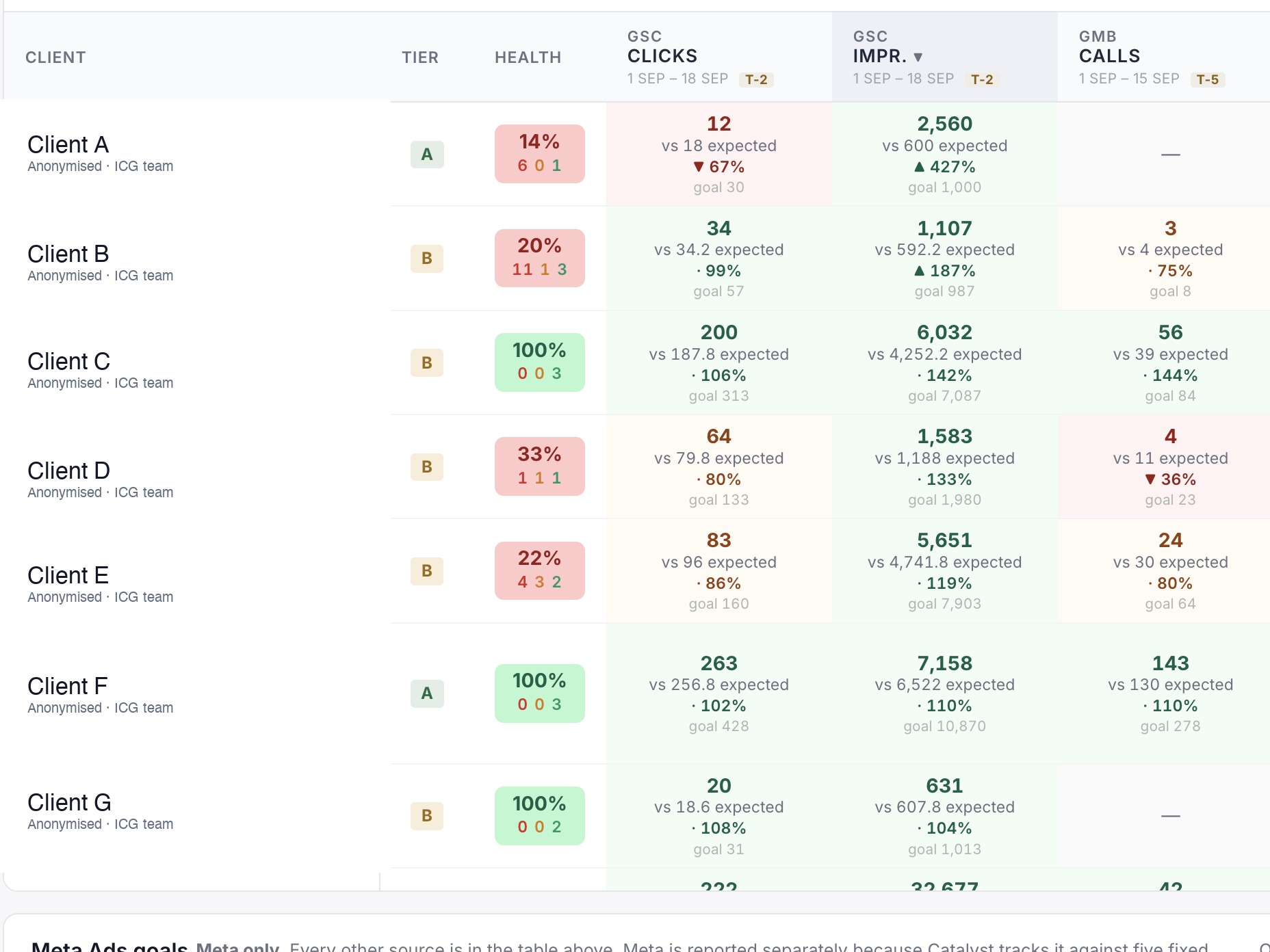
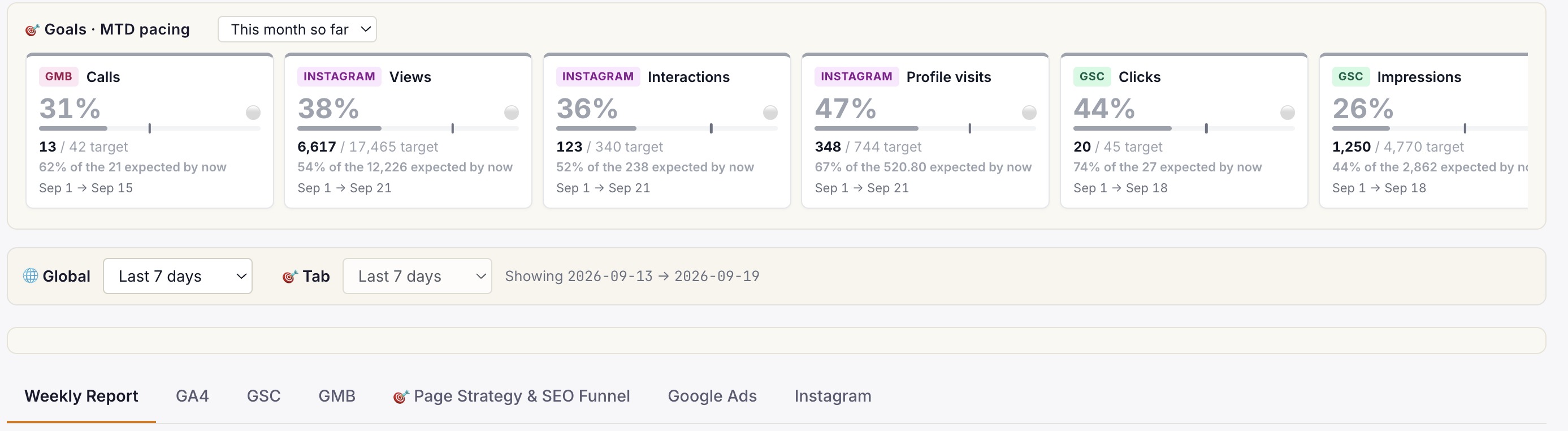
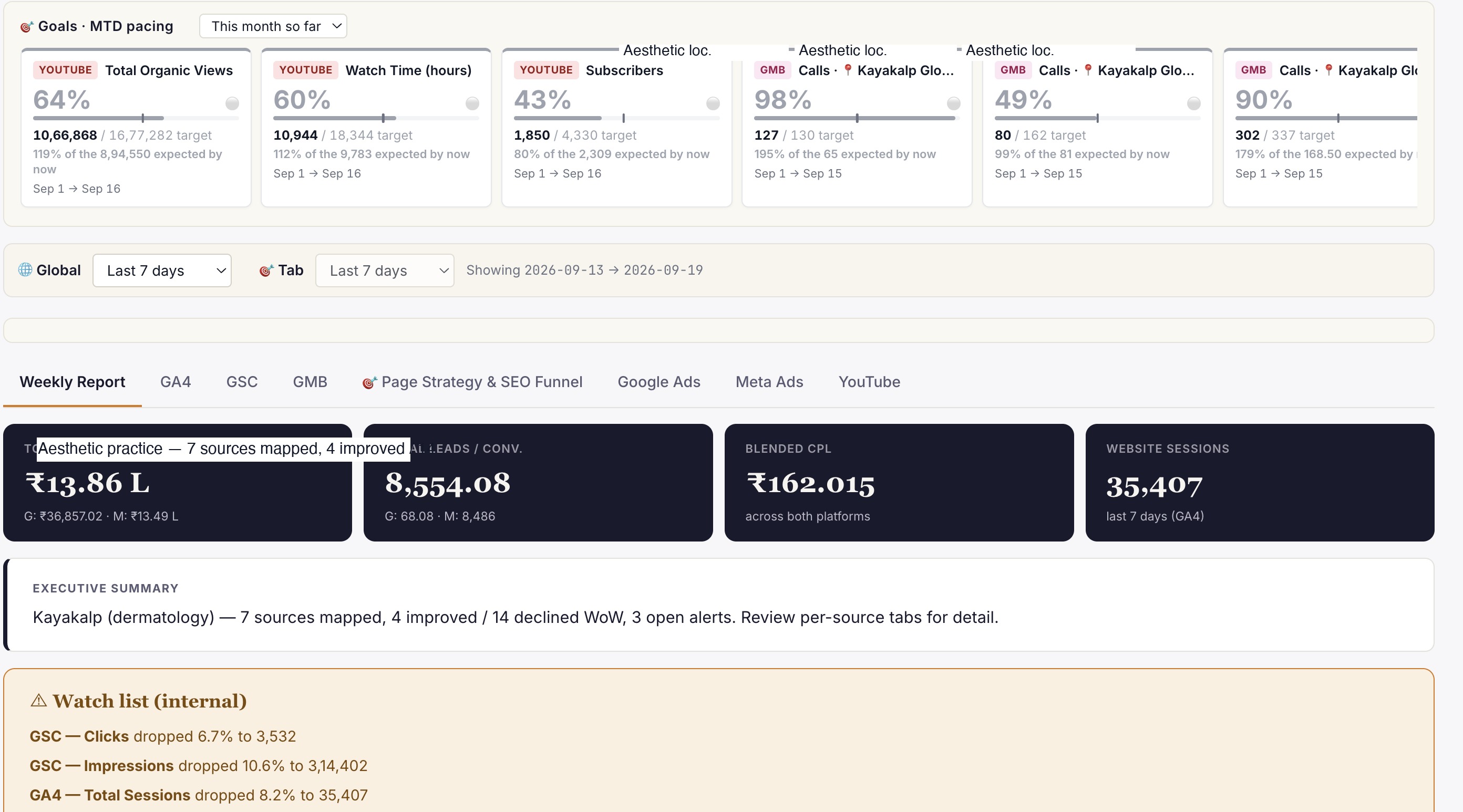
Live client dashboard. GSC, GA4, Google Ads, Meta Ads, IVR calls in one view. Login anytime, not monthly.
Phoenix
Clinic revenue intelligence over your PMS. Daily action queue: Prevent Loss, Maintain & Engage, Grow Revenue. Multi-centre rollout.
Or book a free 30-min audit to see all three in action on your account.
Healthcare brands
that already run on ICG.
A representative slice of the 150+ healthcare brands ICG has delivered for across India. Most engagements remain under NDA.


What ICG clients say · on video.
"Working with ICG transformed how we acquire IVF patients in Gurgaon. They understand the fertility journey from inquiry to consult..."
"ICG built our IVF marketing system from the ground up. The team understands healthcare specifics, not just generic digital marketi..."
Need help operationalising this?
Every ICG service is healthcare-only, NMC + DPDP-aware, and built around the patient-research patterns that drive Indian healthcare growth in 2026.
Every practice welcome — packages from ₹20,000/mo.
Goals-Driven engagements · Performance-Linked Payout Models available
More from
ICG.
Five trends shaping Indian healthcare marketing through 2027: AI-first patient research, Conversions API adoption, ABDM discovery, the AEO w...
Healthcare AIO is the discipline of getting your clinic or hospital cited inside Google AI Overviews, ChatGPT and Perplexity answers — not j...
Conversational-search advertising places brand messages inside AI chat answers — ChatGPT, Perplexity, Copilot — rather than beside a results...
Stop guessing.
Book a Diagnostic.
30 minutes. Free. With the AI-powered healthcare-only marketing agency 150+ brands already run on. No slides, no pitch, no hard close.


