


Competitor ad tracking for dermatology clinics in India (2026): medical vs cosmetic split, ASCI substantiation, DCGI, and the daily PrismSpy dermatology scan
Dermatology Meta ads are two markets — medical (₹520-780 CPL) and cosmetic (₹800-1,180 CPL). PrismSpy scans the derm cluster daily under ASCI + DCGI framing.
No pitch. Written root-cause diagnosis. AI-powered, healthcare only.
Direct answer
Dermatology Meta ads are two markets — medical (₹520-780 CPL) and cosmetic (₹800-1,180 CPL). PrismSpy scans the derm cluster daily under ASCI + DCGI framing.
TL;DR

Competitor ad tracking for dermatology clinics in India only makes sense once you accept that "dermatology" on Meta is really two markets stitched together — medical dermatology (acne, psoriasis, eczema, alopecia areata) and cosmetic dermatology (laser hair reduction, chemical peels, PRP, GFC, laser toning, hydrafacials) — and each has its own CPL band, its own hook language, its own compliance surface, and its own competitor set. A dermatology marketing team that reads competitor ads through a single lens misreads both markets. This piece walks through what PrismSpy's dermatology cluster actually tracks daily, why the medical vs cosmetic split matters more than the metro vs tier-2 split, how ASCI substantiation shapes what a derm ad can and cannot show, what DCGI means for laser and device-based cosmetic advertising, and where the CPL bands (₹520-₹780 for medical, ₹800-₹1,180 for cosmetic) come from in the tracked competitor set.
The dermatology Meta ad market is two markets, not one
The clinical reality — the same dermatology practice usually offers both medical and cosmetic services — masks a very different marketing reality on Meta. Medical dermatology is a search-adjacent, condition-driven category with a narrow set of active hooks and a compliance surface anchored on NMC's 2026 advertising guidelines and the Drugs and Cosmetics Act. Cosmetic dermatology is a discovery-driven, offer-heavy category with a much larger creative surface, a wider CPL band, and a compliance surface anchored on ASCI substantiation for before-after imagery and DCGI classification of the device delivering the treatment.
Reading a competitor's ad set through PrismSpy makes this split legible. The medical-derm ads look one way: educational hooks (what causes hormonal acne, when psoriasis needs a dermatologist), image assets that lean on clinical settings rather than models, offers that centre on a specialist consultation with no discount language. The cosmetic-derm ads from the same clinic look different: transformation-adjacent hooks, model-forward imagery, package prices, session bundles, festival-timed discount offers.
Treating these as one competitor set produces a muddled brief. Treating them as two produces two separate strategies — usually two separate Meta ad accounts or at minimum two clean campaign structures.
Medical dermatology — the CPL ₹520-₹780 quiet market
Medical dermatology on Meta runs quieter than most marketing directors expect. The active ads are fewer, the hook rotation is slower, and the competitor set is narrower — because the winning medical-derm ads are usually condition-anchored educational creatives that don't need to be refreshed every 14 days. A well-executed hormonal acne explainer or a chronic urticaria first-line-treatment ad can run 90-120 days without burn-out.
PrismSpy's medical-derm scan across the tracked cluster shows a CPL band of ₹520-₹780, with the tighter number coming from clinics that:
- Anchor on a specific condition per ad rather than a specialty umbrella (one ad for hormonal acne, another for chronic urticaria, another for scarring alopecia).
- Use the specialist's own on-camera voice for at least one video per campaign — E-E-A-T signal to Meta's ranker and a trust signal to the audience.
- Route the offer to a paid consultation (₹500-₹1,500) rather than a free consultation — filtering low-intent enquiries out at the top of the funnel.
The mistake most medical-derm ad accounts make is treating the offer as a generic "book a dermatology consultation" — which produces enquiries about everything from cosmetic laser to warts to nail fungus, at a CPL that looks fine but a per-qualified-lead cost that quietly triples. Reading PrismSpy's longest-running medical-derm ads shows that the survivors specify the condition in the hook, which is what disciplines the audience quality.
Cosmetic dermatology — the CPL ₹800-₹1,180 offer-heavy market
Cosmetic dermatology is a different animal. The active ad volume in the tracked cluster is 3-5x the medical-derm volume from the same clinics. The creative refresh cycle runs 10-14 days rather than 90-120. The offer intensity is high — free consultation with a specific procedure, package pricing for a course of 4-6 sessions, festival discounts, first-session-free trials, subscription models on services like hydrafacials and laser hair reduction.
The CPL band across the cosmetic-derm tracked set runs ₹800-₹1,180, with three levers determining where a specific clinic lands:
Procedure-specific ads vs procedure-agnostic ads. Ads that specify the procedure in the hook (laser hair reduction, laser toning, PRP for hair, GFC for hair, chemical peel for pigmentation) sit at the lower end of the band. Ads that lead with the clinic or the specialist umbrella-brand sit at the upper end. The specificity is what cuts the CPL.
ICG's Meta Catalyst IQ layer takes the PrismSpy procedure-mix intelligence from the cluster and rebuilds the client's campaign structure into procedure-specific ad sets — usually the single largest CPL reduction on a cosmetic-derm engagement.
Offer intensity calibrated to the cluster. Cosmetic-derm audiences read offers competitively. A 20 per cent-off launch package is not competitive if the tracked cluster is running 40 per cent-off packages in the same city that week. PrismSpy's offer intelligence for the derm cluster tracks discount intensity by brand and by procedure, and the Catalyst layer times the client's own offer waves against the cluster's offer cadence.

Season, festival and event timing. Cosmetic-derm demand is seasonal — pre-wedding, pre-Diwali, pre-summer — and the tracked cluster times ad flights accordingly. Reading the PrismSpy activity feed 6-8 weeks ahead of a season shows when competitor spend is about to lift, so the client's own creative refresh and offer launch can lead rather than follow.

Before-after imagery and ASCI substantiation
Before-and-after imagery is the single most contested creative surface in Indian cosmetic-derm Meta ads. It is the highest-converting creative format for procedures like laser toning, chemical peels, PRP for hair and pigmentation treatments — and it is the format most likely to attract an ASCI complaint if it is not substantiated to ASCI Guidelines 2022 standards.
The ASCI substantiation requirements are specific: the imagery must be of a real patient with documented consent, the treatment protocol must be disclosed if the outcome is presented as achievable in a specific number of sessions, the imagery must not be enhanced or filtered, and unusual or above-average outcomes must be clearly labelled as such rather than presented as typical.
Reading the tracked cosmetic-derm cluster through PrismSpy shows a clean divide. The mature brands use before-after imagery sparingly, with proper session-count disclosure, and often with a specialist voice-over anchoring the outcome as case-specific rather than universal. Newer or less-disciplined brands run raw before-after images without disclosure and risk both ASCI action and Meta's own healthcare ad rejection.
The PrismSpy watchlist flags ads that use before-after imagery without visible substantiation cues, which is the fastest way to spot which competitor is running compliance-clean creative worth studying and which is running exposure your team should not copy.
DCGI, laser device claims, and the ad copy that stays safe
Cosmetic-derm procedures depend on medical devices — Q-switched lasers, diode lasers, IPL, hydrafacial systems, RF microneedling devices. Under the Medical Devices Rules 2017 (administered by the Central Drugs Standard Control Organisation, CDSCO/DCGI), most of these are notified medical devices with specified indications and use restrictions.
What this means for ad copy: a claim that a specific laser platform delivers a specific outcome for a specific indication has to sit inside what the device is regulatorily approved to do. Off-label claims in advertising are a compliance exposure. The safer copywriting move — visible across the mature end of the PrismSpy derm cluster — is to anchor on the procedure (laser hair reduction) rather than the platform (a specific laser brand name with an outcome claim), and to keep outcome language conservative and case-adjacent rather than universal.
PrismSpy's derm scan tracks brand-name laser mentions in ad copy across the cluster, which is a useful lens on how aggressively competitors are willing to name platforms — and where the compliance edge sits.
The dermatology hook patterns PrismSpy sees dominate

The hook patterns that dominate the tracked derm cluster in 2026 split cleanly by sub-vertical.
Medical-derm hooks. Condition-in-question format (why does adult acne come back after treatment), specialist-perspective format (a dermatologist's three rules for chronic urticaria), and myth-busting format (what over-the-counter creams cannot do for melasma). These formats age slowly and outperform generic dermatology-consultation hooks by a wide margin.
Cosmetic-derm hooks. Procedure-explainer format (how laser hair reduction actually works, how many sessions PRP needs), outcome-adjacent testimonial format (a patient's own words about her chemical peel course), price-transparency format (what a full laser hair reduction course actually costs in Delhi), and comparison format (chemical peel vs microneedling vs laser for pigmentation).
PrismSpy's hook clustering across the derm watchlist ranks these formats by run-length, click-through proxies, and refresh cadence — so the client's next creative brief starts from formats the cluster has already proven, not from a blank sheet.
Offer intensity — GFC, laser packages, PRP, subscription models
The cosmetic-derm offer landscape in the tracked cluster is dense: package pricing for a course of 4-6 laser or peel sessions (typically ₹15,000-₹45,000 depending on procedure and city), first-session-free trials on newer services like GFC and hydrafacials, monthly subscription models on maintenance services (hydrafacial once a month for ₹2,499-₹3,999), festival waves (Diwali, wedding season, summer-ready), and bundled procedure sets (peel + microneedling + LED for pigmentation).
PrismSpy's offer intelligence catalogues these across the cluster — which offers are being scaled, which are being killed after 14-21 days, which are emerging as new formats. The subscription model on maintenance services is the fastest-growing offer format in the tracked set over the last 12 months.
Powered by PrismSpy — every competitor Meta ad, watched daily
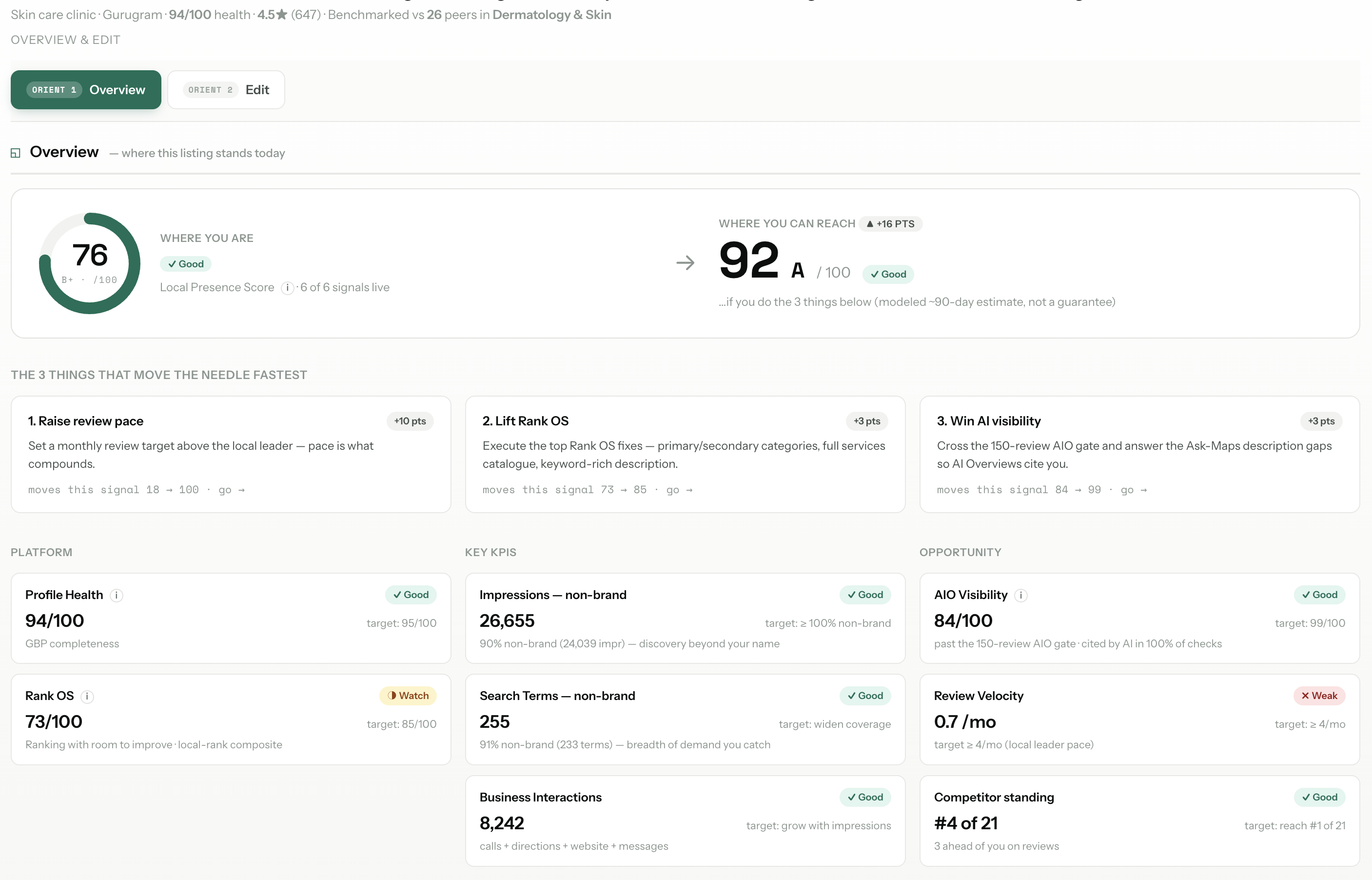
ICG built PrismSpy because Indian healthcare Meta ad competition is invisible without it — and dermatology is the specialty where the invisible cost is highest, because the two sub-verticals inside a single clinic's ad account can drift out of alignment quickly without daily competitor visibility on both. 75+ Indian healthcare brands tracked, 2,150+ active ads catalogued, ₹50Cr+ aggregate ad spend visibility per month. Every competitor ad — creative, offer, hook, run-length — refreshed daily. It runs underneath every Meta ads and performance marketing engagement at ICG.
- Watchlist Dashboard — 30-75 competitors per specialty cluster (IVF / dermatology / dental / hair transplant / aesthetic / hospital), daily refresh.
- Comparative Insights — highest-quality ads, longest-running creatives (proven converters), top hooks, emerging offers.
- Offers Intelligence — 1,197 offers tracked, discount intensity by brand, value tier distribution.
- Service Cluster + Inspirations — 419 services tracked, 4,697 searchable ad inspirations by hook / language / format.
Standalone from ₹4,999/- per specialty vertical, or bundled free inside HealthApex OS (₹14,999/- flat, 9 tools). Book a 30-min PrismSpy walkthrough on WhatsApp — Rohit + Hanuman walk you through your specialty's competitive landscape.


FAQ
Q. Should medical and cosmetic dermatology run on the same Meta ad account?
A. Usually not, or at minimum they should run in cleanly separated campaign structures with different creative libraries, different landing pages and different offer models. The audiences behave differently, the CPL bands are different, and Meta's own auction learning is confused when both live inside one account with mixed intent signals.
Q. What is the CPL range in Indian cosmetic dermatology Meta ads?
A. The tracked cluster shows a CPL band of ₹800-₹1,180 for cosmetic dermatology, moving to the lower end when campaign structure is procedure-specific rather than clinic-umbrella, and when offer intensity is calibrated to what competitors are running in the same city that week.
Q. Can we use before-and-after images in Indian dermatology Meta ads?
A. Yes, subject to ASCI Guidelines 2022 substantiation — real patient with documented consent, protocol and session count disclosed if outcome is presented as achievable in a specific number of sessions, no enhancement or filtering, and above-average outcomes labelled as such. Ads that skip disclosure carry both ASCI risk and Meta ad-review rejection risk.
Q. Does DCGI regulation affect what we can say in laser or device advertising?
A. Yes. Most cosmetic-derm devices are notified medical devices under the Medical Devices Rules 2017, with specified indications and use restrictions. Ad claims that go outside the device's approved indications are a compliance exposure. The safer copywriting move is to anchor on the procedure and keep outcome language case-adjacent rather than universal.
Q. How often does the cosmetic derm creative refresh cycle actually run?
A. In the tracked cluster, cosmetic-derm ads refresh every 10-14 days at the fatigue point. Medical-derm ads run 90-120 days on well-executed condition-anchored educational formats. Confusing the two cycles is a common budget leak.
Q. Does PrismSpy track before-after ads specifically?
A. Yes. PrismSpy flags ads that use before-after imagery without visible substantiation cues, so the team can quickly spot which competitor creative is compliance-clean and worth studying, and which is running an exposure your account should not copy.
Q. What does a dermatology PrismSpy briefing typically cover?
A. Watchlist snapshot across medical and cosmetic sub-verticals, top spenders and most active brands in the last 30 days, offer waves in the cluster (procedure packages, subscription models, festival discounts), hook clustering by sub-vertical, and a compliance-proximity flag on before-after or laser-brand ad copy that sits close to ASCI or DCGI edges.
Related reading
- Dermatology marketing agency in India — pillar guide
- Healthcare Meta Ads agency in India
- Healthcare performance marketing service page
- Healthcare Meta Ads service page
- HealthApex OS — 9-tool healthcare growth stack
- Book a free dermatology competitive audit
Authority references: Advertising Standards Council of India · Central Drugs Standard Control Organisation (CDSCO) · National Medical Commission
Book a free 30-minute Brand & Growth Diagnostic.
It's a working session, not a sales pitch — you leave with a written root-cause analysis you can act on, whether or not you engage ICG.
The three platforms
behind every ICG engagement.
Beacon
CAPI middleware that fixes Event Match Quality, translates CRM statuses to Meta-standard events, dedups across channels.
Agency OS
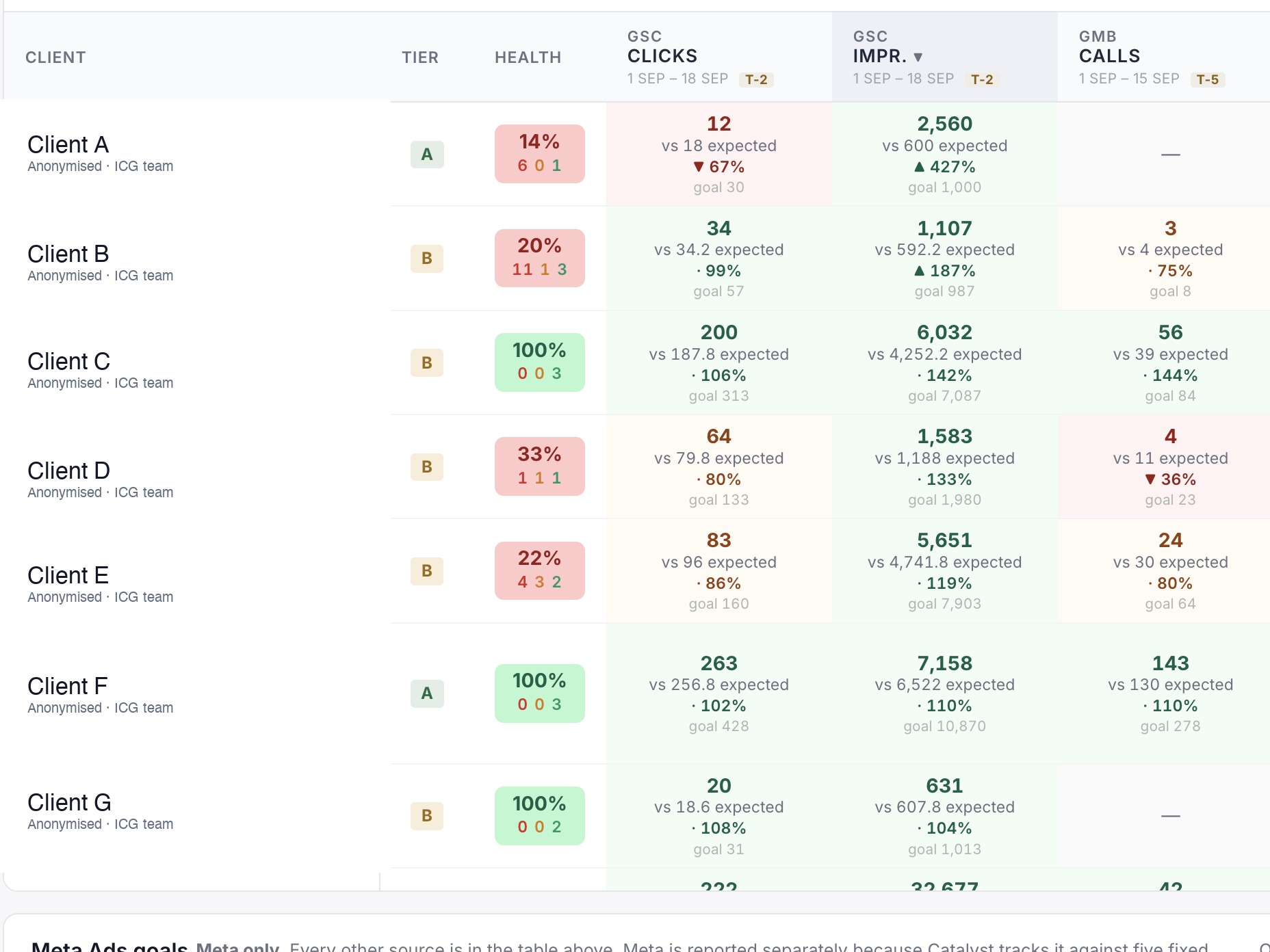
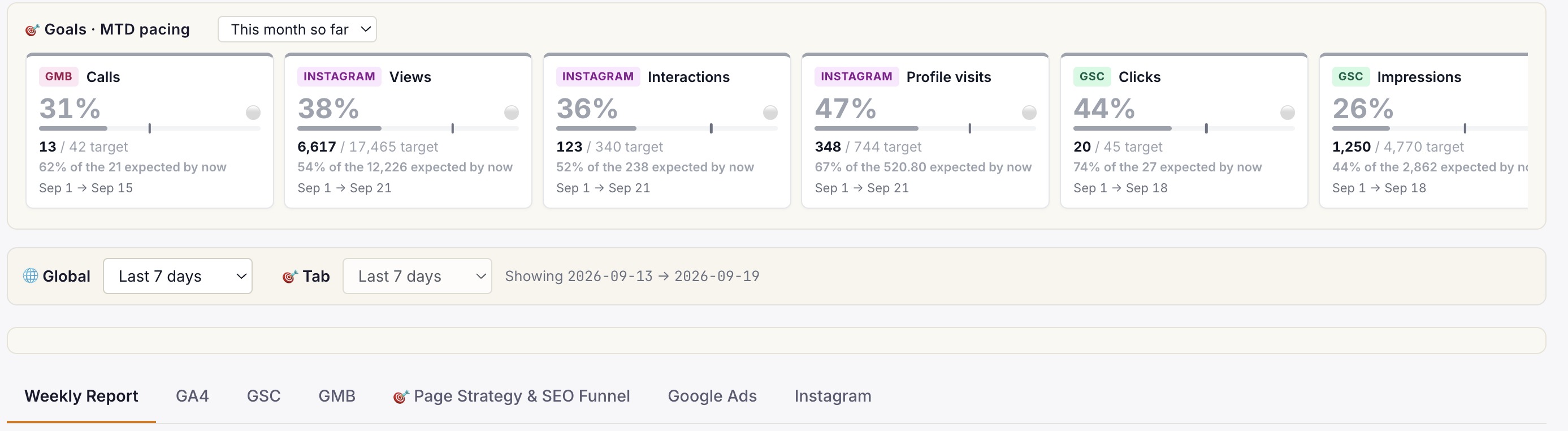
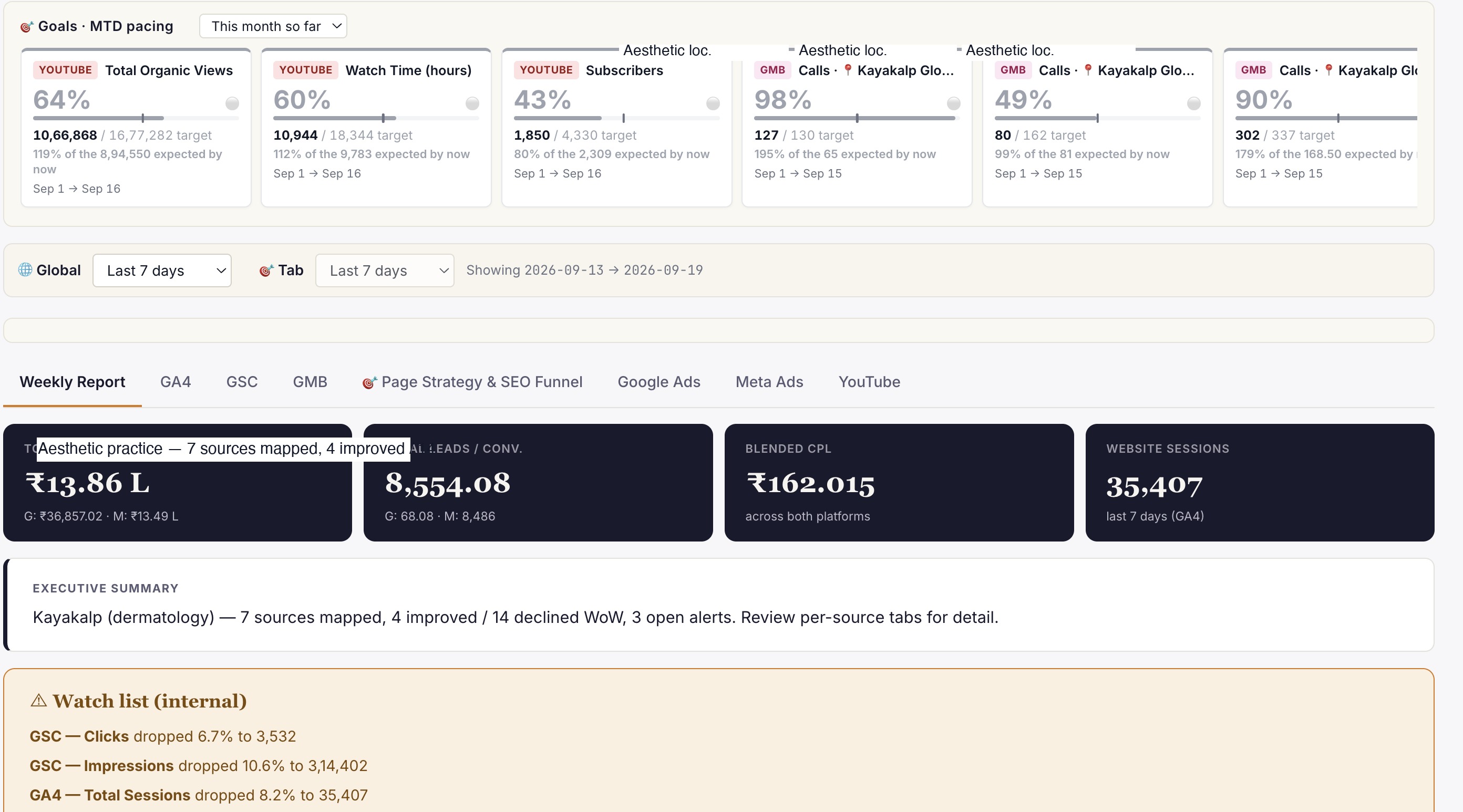
Live client dashboard. GSC, GA4, Google Ads, Meta Ads, IVR calls in one view. Login anytime, not monthly.
Phoenix
Clinic revenue intelligence over your PMS. Daily action queue: Prevent Loss, Maintain & Engage, Grow Revenue. Multi-centre rollout.
Or book a free 30-min audit to see all three in action on your account.
Healthcare brands
that already run on ICG.
A representative slice of the 150+ healthcare brands ICG has delivered for across India. Most engagements remain under NDA.


What ICG clients say · on video.
"Scale up of organic channels and business consulting. ICG has absolute domain authority in their field."
"What Ichelon accomplished — they got all my ideas and worked over 3-4 months to create an amazing, super-customised website."
"Working with ICG felt like working with an in-house growth team that happens to specialise in healthcare."
Need help operationalising this?
Every ICG service is healthcare-only, NMC + DPDP-aware, and built around the patient-research patterns that drive Indian healthcare growth in 2026.
Every practice welcome — packages from ₹20,000/mo.
Goals-Driven engagements · Performance-Linked Payout Models available
More from
ICG.
Hindi and regional-language SEO means publishing proper pages in the languages your patients search in, on their own URLs and linked with hr...
A new pharma brand in India should start digital work before launch, built around who it may legally address. This six-month plan covers pro...
Hospitals and clinics in India can still advertise after the NMC's 6 October 2026 guidelines, but only with factual, verifiable information....
Stop guessing.
Book a Diagnostic.
30 minutes. Free. With the AI-powered healthcare-only marketing agency 150+ brands already run on. No slides, no pitch, no hard close.


