


Clinic marketing audit: the checks a consultant runs before spending a rupee
Before spending on new campaigns, a healthcare marketing consultant audits eight areas: tracking, lead handling, Google Business Profile, website, SEO, paid ads, reviews and compliance. This checklist shows Indian clinic owners what to check in each, what good looks like, and how to turn the findings into a budget and 90-day plan.
No pitch. Written root-cause diagnosis. AI-powered, healthcare only.
Direct answer
Before spending on new campaigns, a healthcare marketing consultant audits eight areas: tracking, lead handling, Google Business Profile, website, SEO, paid ads, reviews and compliance. This checklist shows Indian clinic owners what to check in each, what good looks like, and how...
TL;DR
Before spending a rupee on new campaigns, a good healthcare marketing consultant audits eight areas: tracking and lead data, lead handling, Google Business Profile, website and landing pages, SEO, paid ad accounts, reviews and reputation, and compliance. The audit shows where enquiries are leaking today. Fixing those leaks is usually cheaper and faster than buying more traffic, so the audit decides what the budget should go on.
This checklist is for clinic and hospital owners who want to run the audit themselves, or check that a consultant has done one properly. Each section lists what to look at, what "good" looks like, and the warning signs. You can work through it in a few days with access to your ad accounts, analytics, Google Business Profile and front-desk records.
Why should a clinic audit its marketing before spending more?
A clinic should audit first because more budget pushed through a leaky system mostly buys more leaks. If calls go unanswered, ads point to the wrong page or tracking is broken, extra spend raises costs without raising appointments. An audit shows which fixes will lift results from the money you already spend, and gives a baseline to judge any new work against.
In our experience, the problems that hold clinics back are rarely exotic. They are missing call tracking, a Google Business Profile with the wrong categories, landing pages that do not match the ad, and enquiries that sit unanswered for hours. None of these show up in a monthly agency report that only lists clicks and impressions.
What you need before you start
- Admin or read access to Google Ads, Meta business assets, Google Analytics and Google Search Console.
- Owner or manager access to every Google Business Profile.
- Three months of enquiry records: calls, forms, WhatsApp and walk-ins, with outcomes if you have them.
- Any current agency contracts and reports.
How do you audit tracking and lead handling?
Start by checking that every enquiry source is tracked and that every enquiry reaches a person quickly. Confirm that calls, forms and WhatsApp messages are recorded with their source, then test response by calling and messaging the clinic yourself at different times. If tracking or response is broken, fix it before judging any channel's performance.
| Check | Good looks like | Warning sign |
|---|---|---|
| Call tracking | Calls from ads, website and Google Business Profile recorded by source | One phone number everywhere, no source data |
| Form and WhatsApp capture | All enquiries land in one CRM or sheet | Leads scattered across inboxes and personal phones |
| Conversion tracking in ad accounts | Only real enquiries counted as conversions | Page views or button clicks counted as leads |
| Response time | A human reply within minutes during clinic hours | Missed calls not returned; forms checked once a day |
| Outcome recording | Each lead marked booked, not booked or not suitable | No idea which leads became patients |
Lead data to pull for the audit
Export three months of enquiries into one sheet with the date, source, service asked about, branch, time to first reply and outcome. Gaps in this sheet are findings in themselves. If you cannot say where half your patients came from, that is the first thing to fix.
A "mystery shopper" test is often the most revealing part of the audit. Call as a new patient on a weekday morning, a Saturday afternoon and after hours. Note how long it takes to reach someone, whether they answer clearly, and whether anyone follows up.
What is an SEO audit, and what should a clinic's SEO audit cover?
An SEO audit is a structured review of how well a website can be found, crawled, understood and trusted by search engines for the searches that matter to the business. For a clinic it covers technical health, service and location pages, content quality, local signals, and how the site appears in Google's AI Overviews and AI assistants. Our explainer on SEO audits for healthcare websites goes further.
- Technical: can Google crawl and index the important pages? Are pages fast on mobile? Are there broken links or duplicate pages?
- Service pages: does each treatment or specialty you want patients for have its own clear page?
- Location pages: for multi-branch clinics, does each branch have a page with its own address and details?
- Content: is it accurate, written or reviewed by clinicians, and free of claims that breach advertising rules?
- Search Console data: which searches bring impressions and clicks, and which important searches show nothing?
- AI visibility: when you ask ChatGPT, Gemini or Perplexity about your specialty in your city, does your clinic appear?
Website checks beyond SEO
Search visibility is wasted if the website does not turn visitors into enquiries. Open your site on an ordinary mobile phone, on mobile data, and try to book as a patient would.
- Is the phone number tappable and visible without scrolling on every page?
- Is there a WhatsApp button, and does it reach a monitored number?
- Do forms ask only what is needed, and does a thank-you message confirm what happens next?
- Are doctors' names, qualifications and registration numbers shown where they appear?
- Are timings, branch addresses and directions correct and consistent with Google Business Profile?
- Does every page load quickly, or do heavy sliders and pop-ups slow it down?
Note every point where you hesitated or got stuck. Patients hesitate at the same points, and many of them leave.
Hospitals with large sites need a deeper technical review; see our technical SEO audit playbook for hospital websites.
How do you audit Google Business Profile and reviews?
Check that every location has one verified Google Business Profile with the correct name, address, phone number, primary category, hours and services. Then review photos, posts, questions and answers, and how reviews are requested and answered. For many clinics this is one of the cheapest, highest-impact fixes in the audit, because many local enquiries start on Google Maps.
| Item | What to check |
|---|---|
| Name and address | Matches signage and website exactly; no keyword stuffing |
| Categories | Primary category fits your main service; secondary categories cover the rest |
| Services and description | Every key service listed in plain language |
| Photos | Real photos of the clinic, team and facilities |
| Duplicates | No duplicate or unverified listings for the same location |
| Reviews | Requested from all patients, never incentivised; replies polite and free of patient details |
If you manage several branches, a dedicated Google Business Profile management service can keep listings accurate and consistent.
How do you audit paid ads and landing pages?
Review ad accounts for wasted spend and weak connections between search, ad and page. Look at the search terms that actually triggered ads, check negative keywords, location targeting and schedules, and confirm each ad leads to a page about the same service. Then check whether conversions in the account match real enquiries in your records.
Google Ads checks
- Search terms report: are you paying for job searches, patient-education queries or other cities?
- Location settings: targeting people in your catchment, not people merely interested in it.
- Ad schedule: ads running when nobody can answer the phone?
- Landing pages: one page per service, fast on mobile, with a visible phone number and WhatsApp button.
Meta ads checks
- Lead form questions: do they filter out people who are not genuine enquiries?
- Follow-up: are Meta leads called within minutes, or left for the next day?
- Creative: does it avoid testimonials, before-and-after images and "best" claims?
Finally, compare cost per qualified lead by channel. ICG's public dataset shows a median cost per qualified lead of ₹1,220 against a market median of ₹2,100. Use the CPQL benchmarks for India to see how your specialty compares.
How do you audit compliance and patient data?
Check every public-facing asset against the advertising rules that apply to you and check how patient enquiry data is collected and stored. As of October 2026, that means the NMC's 6 October 2026 Guidelines on Ethical Advertising and Public Communication, the ASCI code for healthcare ads, the Drugs and Magic Remedies Act 1954 for claims, and the DPDP Act 2023 for personal data.
- Remove patient testimonials and before-and-after images from promotional material.
- Remove "best", ranking and similar superlative claims, and any inducements such as freebies or offers used to attract patients.
- Check that individual doctors' content is genuinely educational and shows qualifications and registration number.
- Treat AI-generated promotional campaigns as restricted, and disclose any AI content you are permitted to use.
- Confirm no agency fee is linked to individual patients.
- Check consent wording on forms and WhatsApp, and who in your team can access enquiry data.
Read the official text on the National Medical Commission website and confirm your position with your counsel. ICG's free NMC compliance audit reviews your website, Google Business Profile and social pages against these points.
How much should a medical practice spend on marketing?
There is no single correct figure. A practice should set its marketing budget from the number of new patients it needs, the realistic cost of winning each one in its specialty and city, and its capacity to treat them. New clinics, competitive specialties and metro locations usually need more; established practices with strong referrals and reviews usually need less.
Work it out in this order:
- Decide how many new patients you need each month and can actually serve.
- Estimate how many qualified leads that requires, based on how many leads usually book.
- Multiply by a realistic cost per qualified lead for your specialty and city.
- Add fixed costs: agency or staff fees, tools and content.
- Check the total against the revenue those patients bring.
Two cautions. First, a budget set as a fixed share of revenue ignores how competitive your specialty is locally, so treat any rule of thumb as a starting point only. Second, do not split the budget evenly across every channel. Put most of it where the audit showed qualified leads at a sustainable cost, and keep a small portion for testing one new channel at a time.
The clinic marketing budget calculator walks you through these steps. The audit matters here too: once leaks are fixed, the same budget usually produces more appointments, which changes the answer.
How do you do marketing for a clinic after the audit?
After the audit, fix the basics first, then grow. Repair tracking and lead handling, correct Google Business Profile, align ads with landing pages and remove compliance risks in the first month. Then invest in the channels the audit showed are working, add service pages and educational content, and review qualified leads and cost every week.
| Period | Focus |
|---|---|
| First 30 days | Tracking, response process, Google Business Profile fixes, compliance clean-up, stop wasted ad spend |
| Days 30 to 60 | Landing pages, service pages, review requests, refined ad targeting |
| Days 60 to 90 | Scale channels with the best cost per qualified lead, start content plan, first quarterly review |
If you want an outside view, a healthcare marketing consultant can run the audit and the 90-day plan with your team. ICG has worked only in healthcare since 2018; retainers start from ₹20,000 per month and are custom-scoped.
Book a free 30-minute Brand & Growth Diagnostic.
It's a working session, not a sales pitch — you leave with a written root-cause analysis you can act on, whether or not you engage ICG.
Questions readers ask
about this topic.
The three platforms
behind every ICG engagement.
Beacon
CAPI middleware that fixes Event Match Quality, translates CRM statuses to Meta-standard events, dedups across channels.
Agency OS
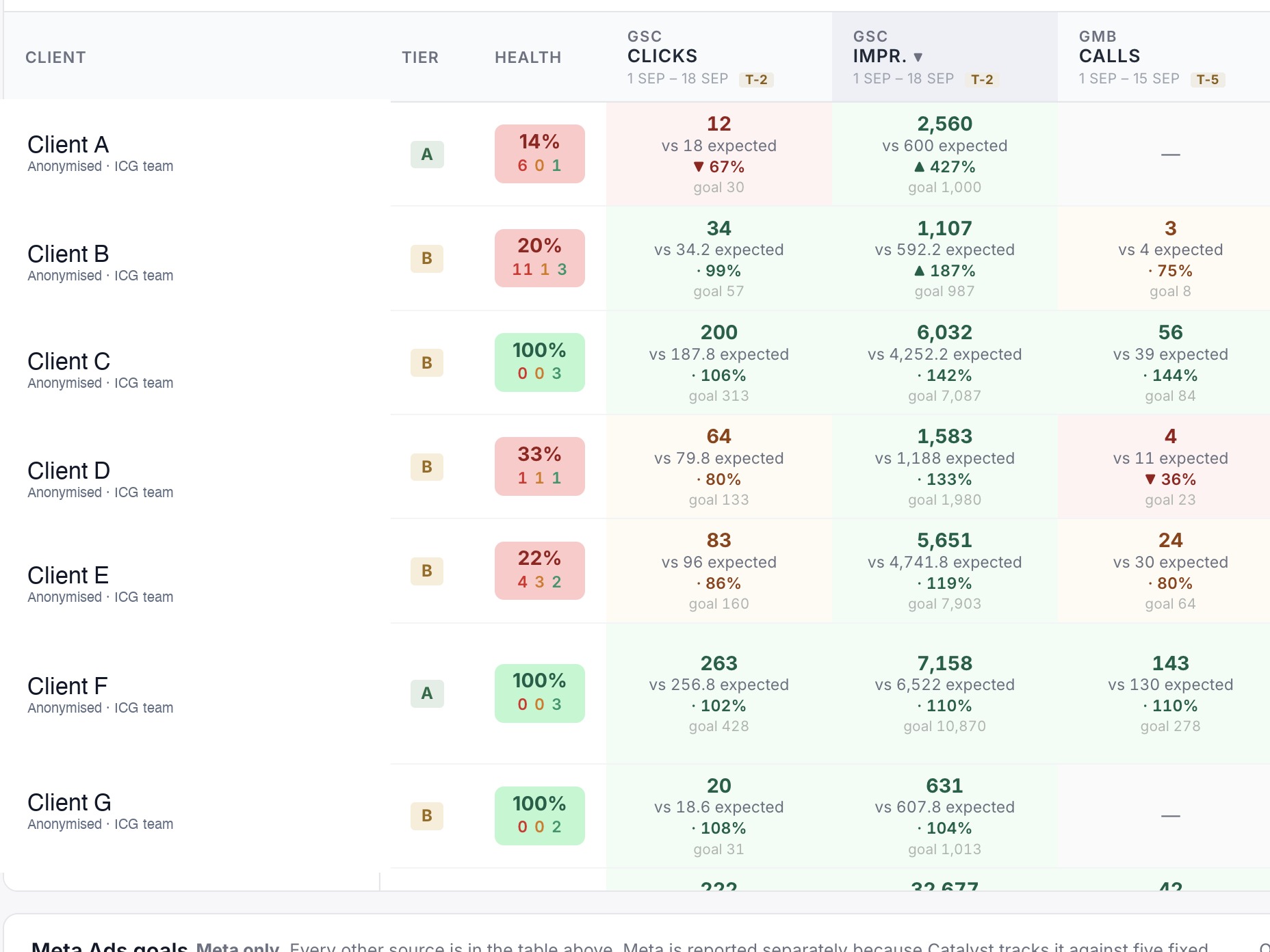
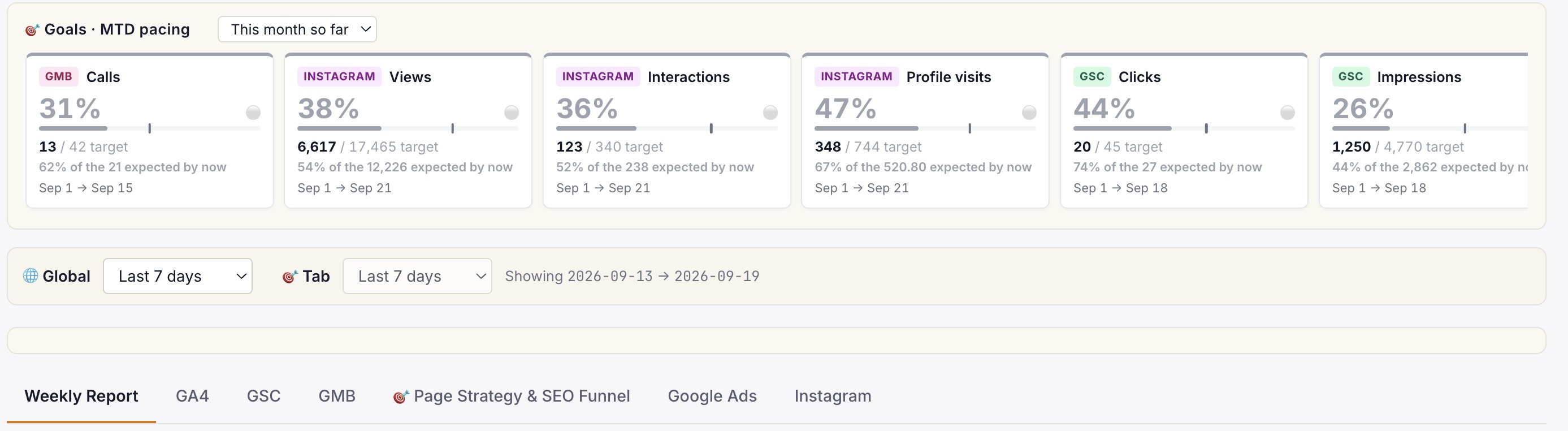
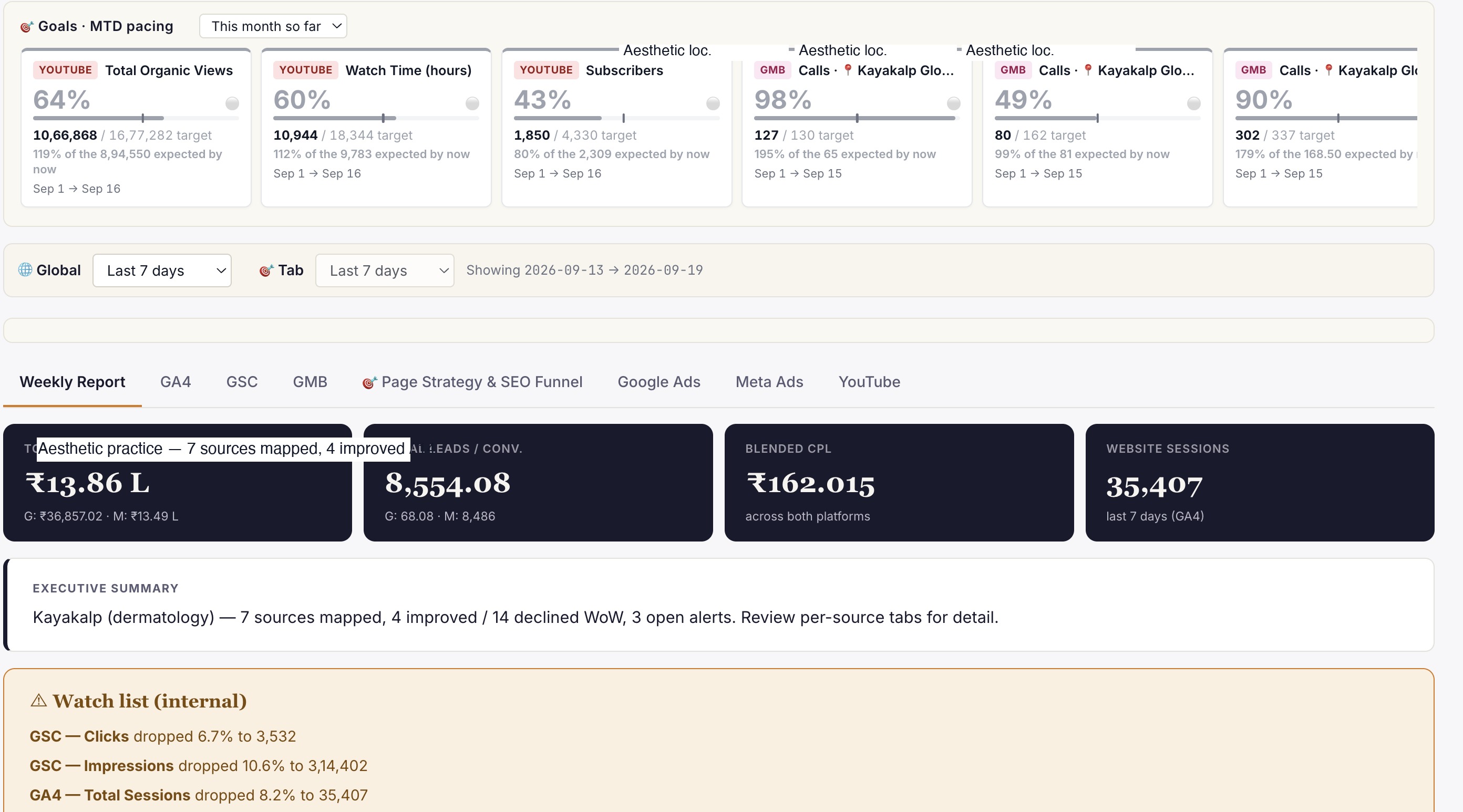
Live client dashboard. GSC, GA4, Google Ads, Meta Ads, IVR calls in one view. Login anytime, not monthly.
Phoenix
Clinic revenue intelligence over your PMS. Daily action queue: Prevent Loss, Maintain & Engage, Grow Revenue. Multi-centre rollout.
Or book a free 30-min audit to see all three in action on your account.
Healthcare brands
that already run on ICG.
A representative slice of the 150+ healthcare brands ICG has delivered for across India. Most engagements remain under NDA.


What ICG clients say · on video.
"Scale up of organic channels and business consulting. ICG has absolute domain authority in their field."
"Working with ICG transformed how we acquire IVF patients in Gurgaon. They understand the fertility journey from inquiry to consult..."
"What Ichelon accomplished — they got all my ideas and worked over 3-4 months to create an amazing, super-customised website."
Need help operationalising this?
Every ICG service is healthcare-only, NMC + DPDP-aware, and built around the patient-research patterns that drive Indian healthcare growth in 2026.
Every practice welcome — packages from ₹20,000/mo.
Goals-Driven engagements · Performance-Linked Payout Models available
More from
ICG.
Hindi and regional-language SEO means publishing proper pages in the languages your patients search in, on their own URLs and linked with hr...
A new pharma brand in India should start digital work before launch, built around who it may legally address. This six-month plan covers pro...
Hospitals and clinics in India can still advertise after the NMC's 6 October 2026 guidelines, but only with factual, verifiable information....
Stop guessing.
Book a Diagnostic.
30 minutes. Free. With the AI-powered healthcare-only marketing agency 150+ brands already run on. No slides, no pitch, no hard close.


