


Angryturtle Rank OS scoring methodology explained: the exact sub-signals, weights and score bands behind the 0-100 healthcare GBP score
Angryturtle Rank OS scoring methodology explained — a full breakdown of the five weighted dimensions (Relevance 25, Review Health 25, Freshness 20, Entity Authority 15, AIO Readiness 15), the sub-signals inside each one, the healthcare-specific weighting, and the four score bands operators actually use to plan weekly work on a clinic or hospital Google Business Profile.
No pitch. Written root-cause diagnosis. AI-powered, healthcare only.
Direct answer
Angryturtle Rank OS scoring methodology explained — a full breakdown of the five weighted dimensions (Relevance 25, Review Health 25, Freshness 20, Entity Authority 15, AIO Readiness 15), the sub-signals inside each one, the healthcare-specific weighting, and the four score bands...
TL;DR
Angryturtle sie" style="color:inherit;text-decoration:underline;text-decoration-color:rgba(42,126,200,.5);text-underline-offset:2px">Rank OS scoring methodology is the piece that turns a Google Business Profile from a black box into a weekly operations dashboard. Every healthcare buyer evaluating healthcare local SEO in India eventually asks the same question — how is the 0-100 score actually calculated, and what specifically moves it week to week. This piece is written for that buyer. It documents the exact sub-signals inside each of the five Rank OS dimensions, the healthcare-specific weighting logic, and the four score bands operators use to plan the next seven days of work on a clinic or hospital profile.
 angryturtle/02-rank-os.png" alt="Angryturtle Rank OS — 5-dimension health scoring (Completeness · Consistency · Authority · Activity · Sentiment) across the portfolio" loading="lazy" decoding="async" style="width:100%;height:auto;display:block;">
Why a scoring model, not just a checklist
Most GBP tools produce a checklist — categories filled, photos uploaded, description written, hours accurate. A checklist is a binary lens. It cannot tell an operator whether the profile is closer to elite or closer to broken, because a hospital with 4,000 reviews and a clinic with 40 reviews both check the same boxes.
Rank OS instead measures the profile against the signals Google actually uses to sort the local pack in the Indian healthcare context. Every sub-signal is scored, weighted, and rolled up into a dimension score. Every dimension is weighted and rolled up into a final 0-100 Rank OS score. A weekly delta shows exactly which sub-signal moved. That turns the profile into a controllable system rather than a mystery.
The model has been tuned against the profiles ICG operates for its 150+ healthcare brands and against public Google Business Profile guidance from the official GBP guidelines. It is not a black box; every operator using Angryturtle can see the sub-signals feeding their score.
The five dimensions and their weights
Rank OS uses five dimensions with the following weighting:
- Relevance — 25 percent. Does the profile clearly signal what the practice does, for whom, and in which categories?
- Review Health — 25 percent. Is the review corpus fresh, high-rated, well-distributed, and actively replied to?
- Freshness — 20 percent. Is the profile updated, posted to, and photographed on a defensible cadence?
- Entity Authority — 15 percent. Is the practice recognised as a real entity across citations, schema, and knowledge sources?
- AIO Readiness — 15 percent. Is the profile plus its linked assets ready to be cited by Google AI Overviews, Perplexity and ChatGPT?
The 25-25-20-15-15 split is deliberate. Relevance and Review Health together account for half of the score because they map to Google's own long-stated ranking factors of Relevance, Distance and Prominence, with review activity being the primary Prominence signal for a healthcare business. Freshness carries 20 percent because a stale profile decays even when the fundamentals are strong. Entity Authority and AIO Readiness sit at 15 percent each — meaningful, but not overwhelming — because they are directional signals that pay off over months rather than weeks.
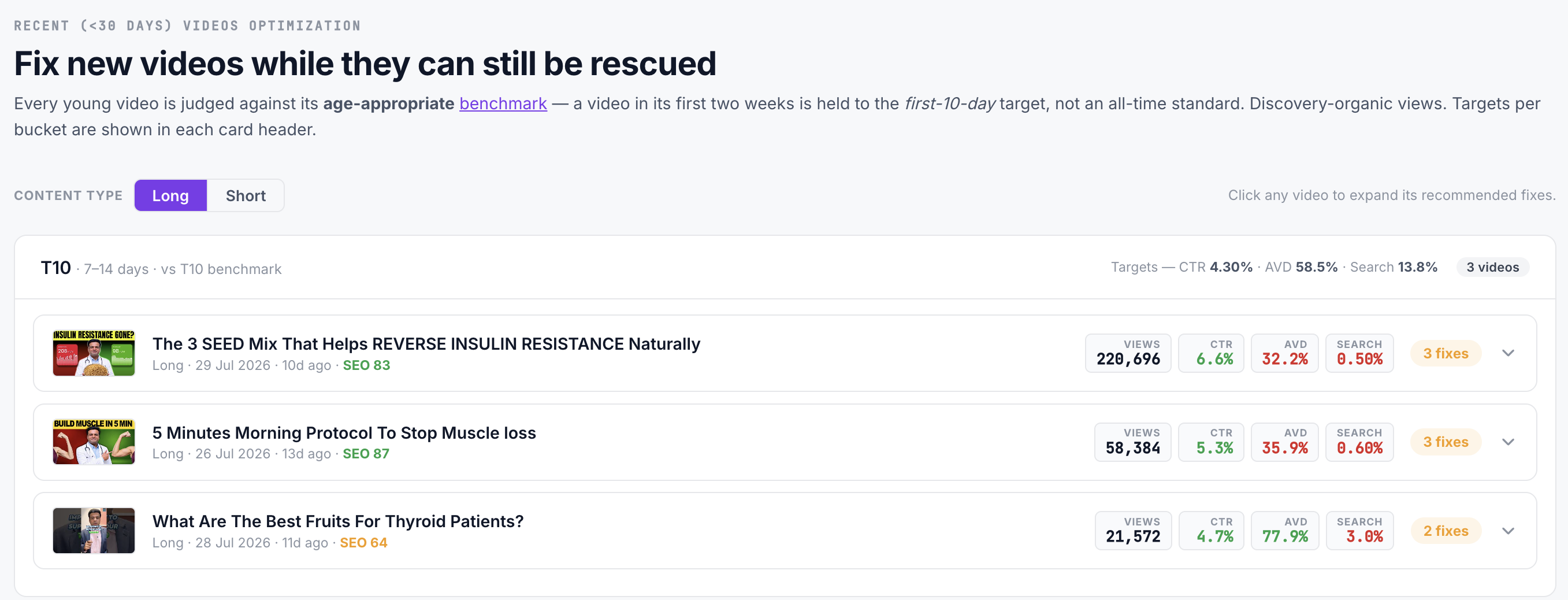
 AI Overview readiness scoring on every healthcare query for the listing's specialty × city" loading="lazy" decoding="async" style="width:100%;height:auto;display:block;">
Dimension one: Relevance (25 percent)
Sub-signals inside Relevance:
- Primary category correctness. Specialty-specific category chosen over generic "Hospital" or "Medical clinic" where a specialty option exists. A cardiology practice using "Cardiologist" scores higher than one using "Doctor".
- Secondary category coverage. All applicable secondary categories added, up to Google's 9-category ceiling, without adding irrelevant categories that dilute focus.
- Services list depth. Number of services, quality of service names, presence of Google-suggested services accepted, and free-text services added for procedure-level queries.
- Business description strength. Full 750 characters used, primary specialty and city mentioned in the first sentence, no NMC-restricted claims.
- Attributes accuracy. All applicable healthcare attributes (accessibility, appointments required, women-led, LGBTQ+ friendly, and specialty-specific attributes) selected honestly.
- Website landing page relevance. The linked website page matches the profile's specialty and city rather than dumping every visitor on a generic homepage.
Each sub-signal is scored 0-100 and averaged into the Relevance dimension score. In healthcare, Category Correctness carries the heaviest internal weight because a wrong primary category is the single most common reason a clinic loses specialty-query surface area.
Dimension two: Review Health (25 percent)
Review Health is not just an average rating. Sub-signals:
- Average star rating, floored at 4.2 for full credit. Above 4.6 earns a small bonus; below 4.0 penalises quickly.
- Total review count, benchmarked against the top-five competitors in the same catchment rather than against an absolute number. A dermatology clinic with 180 reviews in a market where competitors have 90 scores higher than a hospital with 800 reviews in a market where competitors have 4,000.
- Review velocity — reviews per month over the trailing 90 days. A dead corpus loses credit even if the historical count is high.
- Recency distribution. Are reviews spread across the last 12 months, or concentrated in a single burst two years ago?
- Reply coverage. Percentage of reviews that received a reply, with a heavier penalty for unreplied negative reviews than for unreplied positive reviews.
- Reply compliance. Whether replies avoid NMC-restricted framings, ASCI-flag phrases, and PC-PNDT sensitivities. See our NMC-safe review response templates for the guardrails.
- Sentiment balance. The share of reviews mentioning positive themes versus specific complaint themes, extracted from review text rather than only stars.
Review Health is the dimension that most rewards weekly operator discipline. A clinic that adds 8 fresh reviews and replies to all pending reviews in a week can move Review Health by 4-7 points in seven days.

Dimension three: Freshness (20 percent)
Freshness measures whether the profile behaves like a live business:
- Post cadence. Number of Google Posts in the trailing 30 days, benchmarked against a healthcare-tuned floor of 4 per month with bonus credit up to 12 per month.
- Photo cadence. New photos added in the trailing 30 days, weighted for photo type — interior, exterior, team, procedure, before-after (compliance-safe only), and identity photos.
- Q&A activity. Owner-answered questions in the trailing 60 days, with credit for proactively seeded owner Q&A that pre-answers common queries.
- Attribute and hours updates. Any owner-side edits in the trailing 90 days, including seasonal hours adjustments, holiday hours, and attribute refinements.
- Menu / services updates. Additions or refinements to the services list in the trailing 90 days.
Freshness decays. A profile that had a strong Q1 post cadence and then went quiet for eight weeks loses Freshness points every week the silence continues. The dimension is deliberately punishing for dormancy because Google's own local ranking behaviour rewards actively-managed profiles.
Dimension four: Entity Authority (15 percent)
Entity Authority measures whether the practice is a recognised entity across the web, not just a GBP listing:
- Citation footprint. Presence across the healthcare-relevant citation directories that matter in India, tracked against our top-30 healthcare citation sites list.
- NAP consistency. Name, address, phone consistency across every discoverable listing. Any variant beyond the canonical NAP costs points.
- Schema coverage on the linked website. Presence of MedicalOrganization or MedicalClinic schema, Physician schema for named practitioners, and Review / AggregateRating schema where compliance permits.
- Knowledge graph signals. Whether the practice has a Google Knowledge Panel, Wikipedia mention, or presence in structured directories that Google trusts.
- Doctor entity linkage. Whether individual physicians on the profile are cross-referenced with their own entity presence — NMC registration lookup, state medical council listing, professional society membership.
- Media mentions. Third-party media coverage in Indian healthcare publications, weighted for source authority.
Entity Authority is the slowest dimension to move. Points accumulate over months as citations get cleaned, schema gets deployed, and third-party signals arrive. Rank OS reflects this — Entity Authority is weighted lower than Relevance or Review Health precisely because operators cannot force it to move in a single week.
Dimension five: AIO Readiness (15 percent)
AIO Readiness measures whether the profile and its linked assets are ready to be cited by Google AI Overviews, Perplexity, and ChatGPT. Sub-signals include entity clarity, structured answer content, review authority, freshness signals, and schema markup — each covered in depth in our AIO Readiness deep dive. Because Google AI Overviews cite fewer sources per query than the classical local pack shows, this dimension is directional — a healthy AIO Readiness score does not guarantee citations, but a poor score effectively guarantees exclusion. See our healthcare AI Overviews optimisation guide for the operator playbook.
The four score bands
Rank OS scores fall into four bands with distinct operator responses:
- 0-40 — Poor. Fundamentals broken. Usually a category miss, an unclaimed or suspended profile, sub-3.5 rating, or zero recent activity. The playbook is triage, not optimisation. Fix the fundamentals before any campaign investment.
- 41-70 — Developing. The profile works but is losing to competitors on multiple dimensions. Usually two or three dimensions are dragging the average. The playbook is dimension-by-dimension focus — pick the lowest-scoring dimension and rebuild it over a 30-day sprint.
- 71-85 — Healthy. The profile is competitive in its catchment but not dominant. All dimensions clear their floors. The playbook is compounding — sustain Freshness, protect Review Health, and invest in Entity Authority and AIO Readiness to move into elite.
- 86-100 — Elite. The profile is dominant in its catchment. Every dimension is above 80. The playbook is defence and expansion — protect the score, defend against competitor moves, and consider multi-location or new-catchment expansion.
The bands are non-linear on purpose. Moving from 30 to 60 is fundamentally different work from moving from 75 to 85. The band a profile sits in determines what work belongs on this week's calendar.
How healthcare weighting differs from generic Local SEO
Generic Local SEO scoring models (general-purpose local SEO tools and listing-syndication tools) weight equally across verticals. Angryturtle Rank OS is healthcare-tuned, which changes the weights in specific ways:
- Category correctness carries a heavier internal weight inside Relevance because healthcare specialty categories are the single strongest signal for procedure-level queries.
- Review reply compliance carries an internal weight inside Review Health that generic tools do not model at all — the NMC Code of Ethics and ASCI Guidelines restrict specific reply phrasings, and violations are a scoring liability, not just a compliance liability.
- Attribute honesty is scored — selecting attributes the practice does not actually provide is penalised, because false attributes trigger patient complaints and eventually Google trust penalties.
- Doctor entity linkage is a healthcare-specific sub-signal absent from generic tools. Physicians are the entity that patients search for; the profile's connection to legitimate physician entities matters.
- PC-PNDT and ART Act compliance get zero-tolerance treatment on fertility and gynaecology profiles. A single non-compliant phrase in a description or reply can cost 10-15 points until fixed.
The result is a score that reflects competitive reality inside Indian healthcare rather than a generic local business benchmark.
How a clinic uses Rank OS weekly
The weekly operating rhythm most Angryturtle clinics settle into:
Monday morning. Rank OS dashboard review. Note the current score, the weekly delta, and which dimension moved most. The Angryturtle dashboard highlights the one sub-signal that changed most in the last seven days.
Monday afternoon. Plan the week around the lowest-scoring dimension. If Review Health is dragging, plan a review-collection push. If Freshness is dragging, queue the week's Posts and photo uploads. If Relevance is dragging, audit categories and services list.
Wednesday check-in. Mid-week Ask Maps refresh — see whether the AIO Readiness sub-signals moved as new content was published. Reply to any pending reviews.
Friday close-out. Push the week's content. Update Q&A. Log operator notes on what worked. Confirm the following week's scheduled Posts are queued.
The rhythm produces predictable Rank OS improvement — most clinics moving from Developing (41-70) to Healthy (71-85) inside 60-90 days of disciplined weekly execution.
How to get Angryturtle for your clinic
Angryturtle runs in two shapes. Self-serve for solo owners with 1-2 profiles at ₹999/- per month, giving direct access to Rank OS scoring, Geo-Grid, Ask Maps, and the full toolkit. ICG-managed from ₹25,000/- per month where our healthcare specialists execute inside the same platform on behalf of the practice. Both are anchored to the Healthcare Local SEO Agency India pillar page which documents full scope, methodology and pricing.
Book a demo on WhatsApp or start a free trial at angryturtle.ai.
Related reading
- Angryturtle Rank OS explained — the top-level product overview
- AI Overview Readiness scoring explained — the AIO dimension in depth
- Geo-Grid methodology for hospitals — the geographic dimension
- Local pack ranking factors for healthcare India 2026 — the Google-side view
- Healthcare Local SEO Agency India — pillar service page
FAQ
Is the Rank OS score updated in real time? No. The score recomputes daily for Freshness sub-signals and weekly for Relevance, Review Health, Entity Authority and AIO Readiness. Real-time scoring would be noisy and would not reflect the cadence Google actually re-crawls the profile at.
What score should a new profile aim for in the first 90 days? Most new profiles start at 30-45. A disciplined 90-day sprint targeting the lowest-scoring dimension each month reliably reaches 65-75 by day 90. Elite scores above 85 typically require 9-12 months of sustained execution and strong competitive positioning.
Can two clinics with the same Rank OS score have very different local pack performance? Yes. Rank OS measures the profile-side signals that clinics can control. Distance from the searcher and the specific competitive density in a catchment sit outside profile control and can produce different local pack outcomes at the same score. Rank OS predicts trajectory, not deterministic ranking.
Does Rank OS use any Google-only data that operators cannot see? No. Every sub-signal feeding the score is observable from public data or from the operator's own GBP data. The scoring model is proprietary; the underlying sub-signals are transparent.
How does the model handle multi-location practices? Each location has its own Rank OS score. Portfolio dashboards show the score distribution across locations, flag the weakest locations, and support portfolio-level planning. Portfolio-level Rank OS averages are shown but decisions are location-level.
What happens to the score when a profile gets suspended? Suspension flags the profile as Not Scored until the profile is reinstated. Suspension recovery playbooks are documented in our GBP suspension recovery guide.
Is the healthcare weighting configurable? Not at Solo tier. Agency and Enterprise tiers can apply sub-vertical weighting (fertility, dental, ortho, etc.) that adjusts sub-signal weights inside each dimension.
How is AIO Readiness measured if AI Overviews are not always visible? AIO Readiness measures the input signals that determine whether AI systems can cite the profile, not the observed citation itself. Structured answer content, entity clarity, and schema coverage are all observable regardless of whether the current query is triggering an AI Overview.
Can competitor benchmarking replace Rank OS? No. Competitor benchmarking shows relative position; Rank OS shows absolute health. Both matter. A Rank OS 75 might be dominant in a weak catchment or middling in a strong catchment, and the competitor overlay in Angryturtle shows both views side by side.
What is the fastest way to move Rank OS in the first week? Review Health. Adding 5-10 fresh compliant reviews and replying to every unreplied review typically produces the largest single-week score movement. Freshness is second — queueing four weekly Posts and 8-12 photos moves that dimension inside 7 days.
Book a free 30-minute Brand & Growth Diagnostic.
It's a working session, not a sales pitch — you leave with a written root-cause analysis you can act on, whether or not you engage ICG.
The three platforms
behind every ICG engagement.
Beacon
CAPI middleware that fixes Event Match Quality, translates CRM statuses to Meta-standard events, dedups across channels.
Agency OS
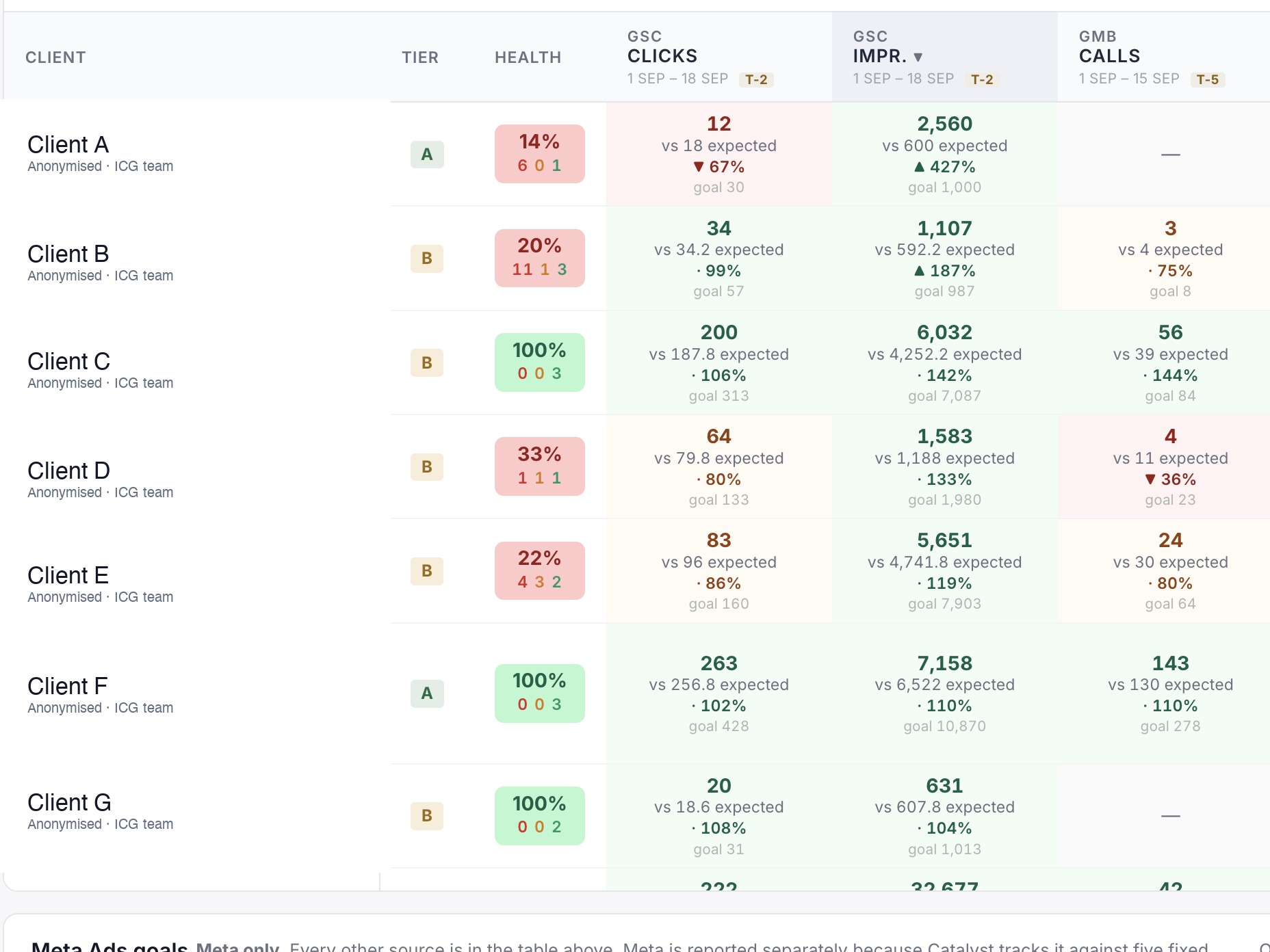
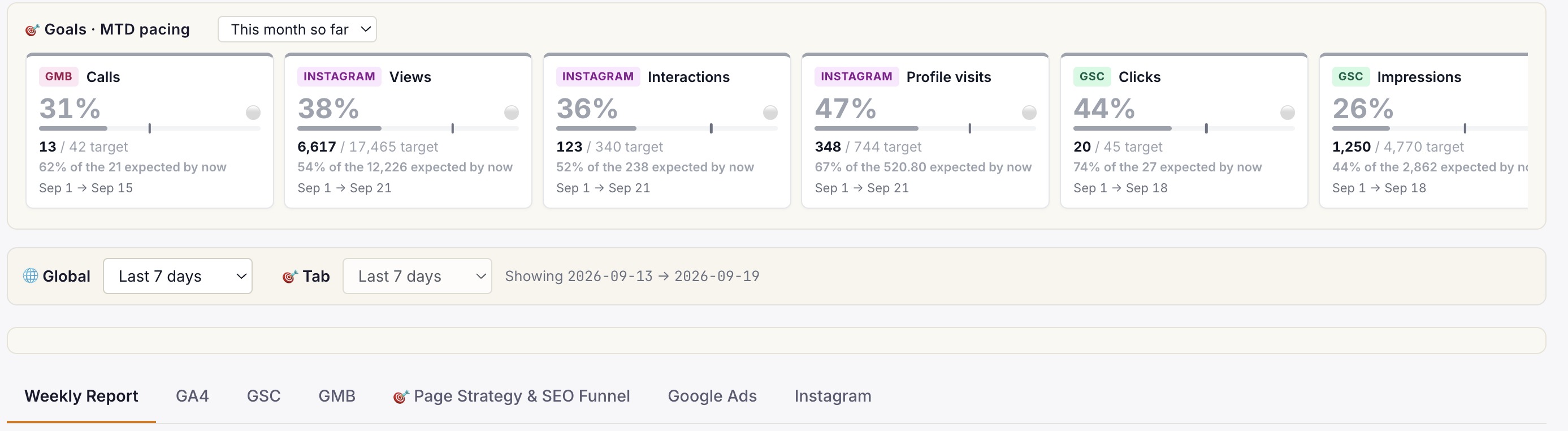
Live client dashboard. GSC, GA4, Google Ads, Meta Ads, IVR calls in one view. Login anytime, not monthly.
Phoenix
Clinic revenue intelligence over your PMS. Daily action queue: Prevent Loss, Maintain & Engage, Grow Revenue. Multi-centre rollout.
Or book a free 30-min audit to see all three in action on your account.
Healthcare brands
that already run on ICG.
A representative slice of the 150+ healthcare brands ICG has delivered for across India. Most engagements remain under NDA.


What ICG clients say · on video.
"Scale up of organic channels and business consulting. ICG has absolute domain authority in their field."
"Working with ICG transformed how we acquire IVF patients in Gurgaon. They understand the fertility journey from inquiry to consult..."
"What Ichelon accomplished — they got all my ideas and worked over 3-4 months to create an amazing, super-customised website."
The intelligence stack behind this playbook.
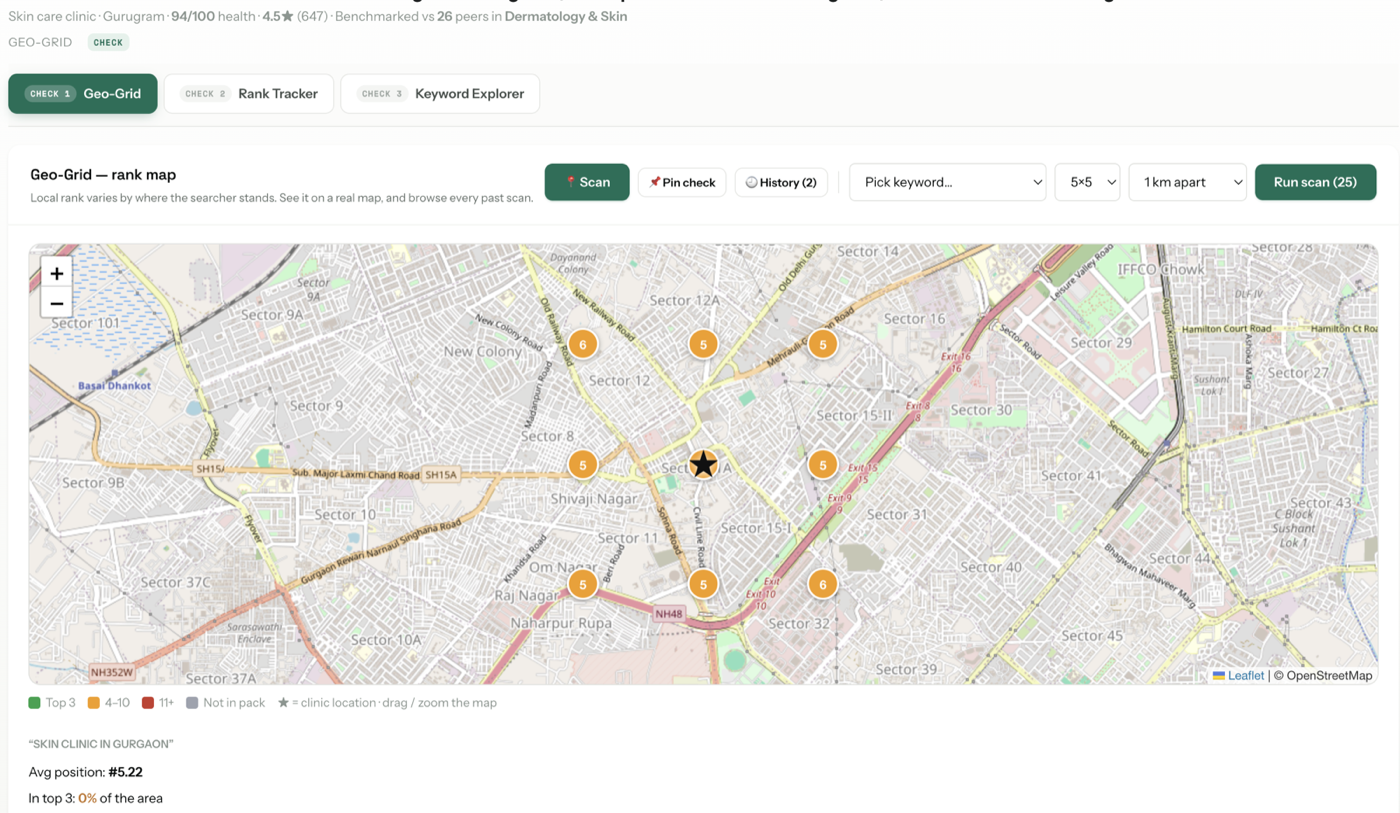
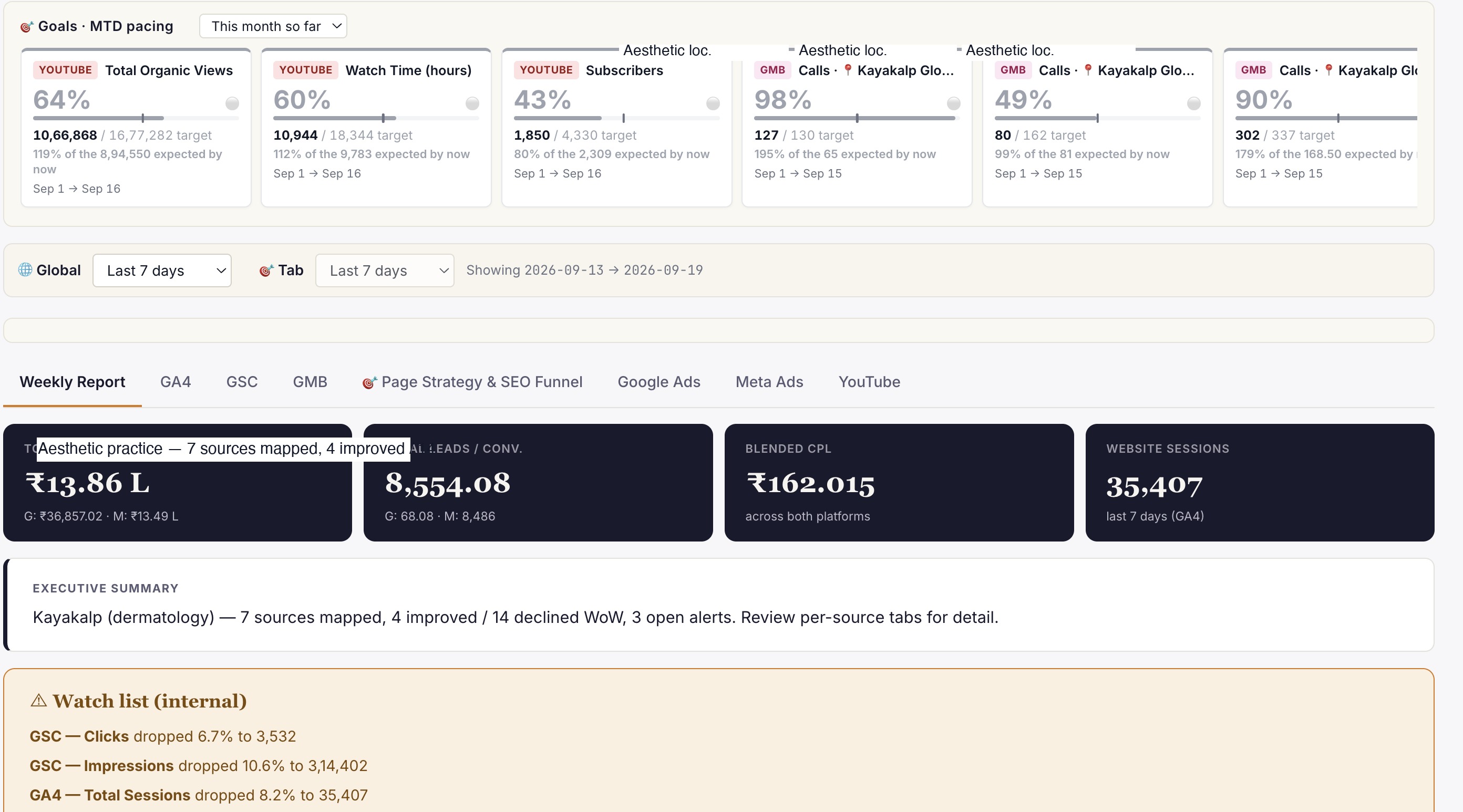
Every ICG engagement runs on the Search Intelligence Trifecta — Angryturtle for GMB, SIE for search and AI Overview, YODA for YouTube. Live product screens below.
Need help operationalising this?
Every ICG service is healthcare-only, NMC + DPDP-aware, and built around the patient-research patterns that drive Indian healthcare growth in 2026.
Every practice welcome — packages from ₹20,000/mo.
Goals-Driven engagements · Performance-Linked Payout Models available
More from
ICG.
Five trends shaping Indian healthcare marketing through 2027: AI-first patient research, Conversions API adoption, ABDM discovery, the AEO w...
Healthcare AIO is the discipline of getting your clinic or hospital cited inside Google AI Overviews, ChatGPT and Perplexity answers — not j...
Conversational-search advertising places brand messages inside AI chat answers — ChatGPT, Perplexity, Copilot — rather than beside a results...
Stop guessing.
Book a Diagnostic.
30 minutes. Free. With the AI-powered healthcare-only marketing agency 150+ brands already run on. No slides, no pitch, no hard close.


