


Angryturtle AI review reply engine and the operator quality-check: NMC + ASCI + PC-PNDT + ART Act safe reply workflow for Indian healthcare
Angryturtle AI review reply engine drafts compliant Google review replies for Indian healthcare — this piece is the operator's quality-check. How the engine drafts, where the guardrails sit, the human-in-the-loop approval workflow, the failure modes to watch, the clinic-side quality-check template, and when to override the AI.
No pitch. Written root-cause diagnosis. AI-powered, healthcare only.
Direct answer
Angryturtle AI review reply engine drafts compliant Google review replies for Indian healthcare — this piece is the operator's quality-check. How the engine drafts, where the guardrails sit, the human-in-the-loop approval workflow, the failure modes to watch, the clinic-side qual...
TL;DR

Angryturtle AI review reply engine drafts Google review replies that clear the four Indian compliance perimeters most clinic operators worry about — NMC advertising restrictions, ASCI substantiation rules, PC-PNDT sensitivity for fertility and gynaecology practices, and ART Act rules for fertility clinics specifically. But an AI drafting engine is only as safe as the quality-check the operator runs before publishing. This piece documents the reply engine in detail and gives clinic operators the exact quality-check to run before sending anything the engine drafts. It is written for the front-desk manager, patient-experience lead or marketing owner inside the healthcare business — not the agency. The pillar service is documented at healthcare local SEO agency India.
Why review replies are a compliance minefield in Indian healthcare
A review reply looks like a customer-service action. In Indian healthcare it is also an advertising surface, a data-protection surface, and in fertility practices a specific-statute compliance surface. Four bodies of rules land on top of what looks like a simple thank-you paragraph.
The National Medical Commission Code of Ethics restricts what a doctor can advertise in a public forum. Replies that name procedures with outcome claims, testimonials that praise a specific doctor by name in a way that reads as endorsement, or comparative superlatives all sit in restricted territory. The Advertising Standards Council of India requires every advertising claim to be substantiated. A reply that says "we cured your infertility" is an unsubstantiated healthcare claim under ASCI even if the reviewer said so first.
The PC-PNDT Act 1994 governs sex-determination advertising in fertility and gynaecology. Any reply that references sex selection, gender preference or pre-natal diagnostic testing outside compliant framing is a criminal-liability surface. The ART Act 2021 governs assisted reproductive technology advertising specifically — a fertility clinic replying to reviews has narrower framing latitude than a general OB-GYN practice.
The typical clinic drafts 10-40 review replies a month. If any single reply crosses any of these lines, the practice takes on compliance risk that dwarfs the marketing benefit of the reply. AI drafting only helps if the guardrails understand the whole compliance perimeter.
How Angryturtle drafts a reply
The reply engine runs a three-stage process:
Stage 1 — Context extraction. The engine reads the review text, the reviewer's star rating, any named doctors or procedures mentioned, and the review's tone signals. It also loads the practice's profile context — specialty, city, NMC compliance profile, whether ART or PC-PNDT statutes apply, and the practice's approved-language guidelines.
Stage 2 — Draft generation with healthcare guardrails. A large language model tuned specifically for Indian healthcare compliance drafts the reply. Guardrails include a blocklist of NMC-restricted phrasings, an ASCI-substantiation filter that flags unsubstantiable claims, PC-PNDT and ART Act keyword screens for fertility practices, and a patient-data-protection layer that strips or generalises any identifying details the reviewer might have shared.
Stage 3 — Compliance scoring. The draft gets scored against the compliance perimeter before it is shown to the operator. Any draft that hits a red flag is either rewritten automatically or held for human intervention. Every draft carries a confidence score and a list of any compliance triggers the operator should review.
The engine does not publish anything automatically. Every draft lands in a queue for human approval — the human-in-the-loop workflow is a design choice, not an oversight.
The human-in-the-loop approval workflow
Every Angryturtle-drafted reply moves through the following states:
- Drafted. Engine has produced a candidate reply and scored it for compliance.
- Queued for review. Reply is waiting in the operator's review queue. Standard SLA is same-day publication.
- Approved. Operator has read the draft, accepted it as written or with edits, and released it for publication.
- Rejected. Operator has rejected the draft. The engine learns from rejection patterns and adjusts its drafts for that practice over time.
- Published. Reply has been posted to Google. The engine confirms publication and closes the loop.
The queue view shows the review text, the drafted reply, the compliance score, any flagged phrases, and side-by-side comparison of the original draft and any operator edits. Batch approval is supported for practices with high review volume — the operator can approve 10-15 drafted replies in a single sitting rather than one at a time.
Every published reply is logged with the human approver's name for auditability. If a compliance question arises later, the audit log shows exactly who approved what and when.
Failure modes to watch for
Even with guardrails, AI drafting has failure modes an operator should recognise:
Doctor-name endorsement drift. A reviewer praises Dr Sharma by name. The engine drafts a reply that thanks Dr Sharma warmly for their care. In isolation this is fine. Across 40 reviews of the same doctor in a month, the pattern reads as engineered doctor promotion, which the NMC Code frowns on. The operator quality-check needs to see doctor-mention patterns across the reply corpus, not just the single reply in front of them.
Outcome-claim echo. A reviewer writes "my IVF succeeded because of you." A naïve reply thanks the reviewer for sharing their success story, which reads to ASCI as the practice endorsing an outcome claim. The engine typically catches this, but operators should specifically read outcome-related replies with extra care.
PII leakage. A reviewer mentions their specific condition, their child's name, or another identifying detail. The engine strips these by default but occasionally paraphrases them in a way that still identifies. The operator quality-check should confirm the reply says nothing that could identify the reviewer beyond what they voluntarily said.
Tone mismatch on negative reviews. AI drafts sometimes read as too breezy on genuinely negative reviews. The operator should override to a more measured, accountability-forward tone when the reviewer is legitimately upset.
Sensitive-specialty overreach. A fertility clinic reply that mentions "family completion" without meaning to reference sex composition. A cosmetic surgery reply that reads as promotional. Operators in sensitive specialties should read every drafted reply with an extra pass.
Quality-check template for clinic operators
The seven-line pre-publication check every operator should run on every drafted reply, in order:
- Line 1 — Does the reply thank the reviewer without adopting their claims? A safe reply acknowledges the review without endorsing outcome statements the reviewer made.
- Line 2 — Are named doctors handled proportionately? If a doctor is thanked, the framing should be a professional acknowledgement rather than a personal endorsement. Cross-check against the practice's standing rule on doctor naming.
- Line 3 — Are procedure names present, and if so, are they contextual rather than promotional? "We are glad your procedure went smoothly" is safe. "IVF success at our centre is high" is not.
- Line 4 — Is any patient-identifying detail present that the reviewer did not voluntarily share? If yes, remove or generalise.
- Line 5 — For fertility or gynaecology practices, does the reply avoid any PC-PNDT or ART Act sensitive framing? Zero tolerance.
- Line 6 — Does the tone match the star rating? 5-star: warm, brief, professional. 3-star: gracious, acknowledging, forward-looking. 1-star: measured, empathetic, offering a private channel to resolve. If tone mismatches star rating, override.
- Line 7 — Does the reply include a contact channel appropriate for the review? Negative reviews should offer a private resolution channel. Positive reviews should not push booking pressure. WhatsApp or clinic email are safer than phone numbers in reply text.
The template takes 45-60 seconds per reply for a practised operator. Batch approval on 15 drafts takes 15-20 minutes. This is the human check that keeps AI review reply drafting inside the compliance perimeter. Our NMC-safe review response templates deep-dive covers reply framings in more depth.
When to override the AI
Operators should override drafted replies in specific situations:
Clinical incident replies. Any review referencing a specific clinical incident, adverse outcome, or safety concern deserves a hand-crafted reply from the practice's clinical leadership. AI drafts are not the right tool for genuine safety or outcome conversations.
Legal-flag reviews. Reviews that reference litigation, ongoing complaints, or specific legal claims need to be handled by counsel or by senior leadership. AI drafts should not touch these.
Fake or mistaken-identity reviews. Reviews that appear to be from someone who was never a patient, or from a mistaken-identity reviewer, need the fake-review response playbook rather than a standard reply. See our fake review removal guide.
Reviews from prominent public figures. Reviews from public figures, media personalities, or well-known professionals in the city deserve careful hand-crafted responses even if the review is positive.
Reviews in unusual languages or mixed-code text. AI drafting quality varies by language. If the review is in a specific dialect or heavy mixed-code (Hinglish, Tanglish, etc.), operators should verify the drafted reply reads naturally to a native speaker before publishing.
Everything else — the ordinary 85 percent of reviews — is a good fit for AI drafting with the seven-line quality check. Operators who spend two to three hours a week on review replies typically compress that to 25-40 minutes with Angryturtle, and gain reply coverage that would otherwise not happen at all.
What the engine does not do
Not a substitute for a review-collection strategy. Replying to reviews well does not itself generate new reviews. Review-collection tactics run separately — see our review velocity playbook.
Not a substitute for operational fixes. If reviews consistently mention the same operational problem, replying to each review does not fix the underlying issue. The reply engine flags recurring themes so operations can address them, but the fix is operational.
Not a fake-review removal tool. Removing fake or defamatory reviews requires the Google Business Profile flag-and-remove process. The reply engine drafts replies to reviews that stand; the fake-review workflow is separate.
Not a sentiment-analysis dashboard. Reply drafting is per-review. Cross-review sentiment analysis — recurring themes, emerging patterns, brand-identity-image gap analysis — runs through the Brand Identity vs Image module.
How to get Angryturtle for your review workflow
Angryturtle self-serve at ₹999/- per month includes the AI reply engine, the compliance-scored queue, and the human approval workflow. Suitable for solo clinics and single-location practices with 10-40 reviews per month. ICG-managed from ₹25,000/- per month adds our healthcare specialists inside the queue — we do the operator quality-check on your behalf, escalate flagged replies, and handle clinical-incident and legal-flag reviews with escalation to your leadership. Both are anchored to the Healthcare Local SEO Agency India pillar page with full scope, methodology and pricing.
Book a demo on WhatsApp or start a free trial at angryturtle.ai.
Related reading
- NMC-safe review response templates — the compliant reply framings
- Google review strategy for healthcare India — the strategic layer
- Review velocity playbook — the collection tactics
- Fake review removal guide — the specific removal workflow
- Angryturtle Brand Identity vs Image explained — the review-theme analysis layer
- Healthcare Local SEO Agency India — pillar service page
FAQ
Does Angryturtle publish replies automatically? No. Every draft moves through a human approval step. Automatic publishing is not offered because the compliance perimeter for Indian healthcare is too tight to remove human review.
How long does the operator quality-check take per reply? 45-60 seconds for a practised operator using the seven-line template. Batch approval on 15 drafted replies takes 15-20 minutes.
What happens when a reply gets rejected? The rejection is logged and the engine learns from the pattern. Repeated rejections for the same reason inform the engine's subsequent drafts for that practice, and the ICG team investigates whether the guardrails need tuning.
How does the engine handle mixed-language reviews (Hinglish, Tanglish)? Drafts are produced in the reviewer's primary language with mixed-code recognised. Operators should verify the drafted reply reads naturally to a native speaker before publishing — this is one of the specific override situations.
Can replies be scheduled for later publication? Yes. Approved replies can be published immediately or queued for a specific time. Same-day publication remains the standard SLA for standard reviews.
Does the engine handle non-English scripts (Hindi, Tamil, Bengali, Marathi, etc.)? Yes. Non-English script reviews are drafted in the appropriate script by default, with English drafts available on operator request.
What compliance frameworks does the engine screen against? NMC Code of Ethics, ASCI Guidelines 2022, PC-PNDT Act 1994 (fertility and gynaecology), ART Act 2021 (fertility), and DPDP Act 2023 (data protection). Fertility and gynaecology practices get additional screening layers.
How does the audit log work? Every published reply is logged with the human approver's name, timestamp, original draft, any operator edits, and the final published text. Audit logs are exportable for compliance reviews.
Does the engine work for practices with very few reviews? Yes. Low-volume practices with 5-10 reviews per month still benefit because a single non-compliant reply can create disproportionate risk. The engine's value scales with volume but is not zero at low volumes.
Can leadership approve replies while travelling? Yes. The approval queue is mobile-friendly. Leadership can review, approve or reject drafts from a phone in a few minutes.
What happens with reviews that were left months or years ago and were never replied to? The engine drafts replies for the backlog on demand. Practices commonly onboard with a backlog sweep — drafts for every unreplied review from the past 12-24 months, batch-approved by leadership, published over a controlled 2-4 week period so the backlog resolution does not look artificial.
Book a free 30-minute Brand & Growth Diagnostic.
It's a working session, not a sales pitch — you leave with a written root-cause analysis you can act on, whether or not you engage ICG.
The three platforms
behind every ICG engagement.
Beacon
CAPI middleware that fixes Event Match Quality, translates CRM statuses to Meta-standard events, dedups across channels.
Agency OS
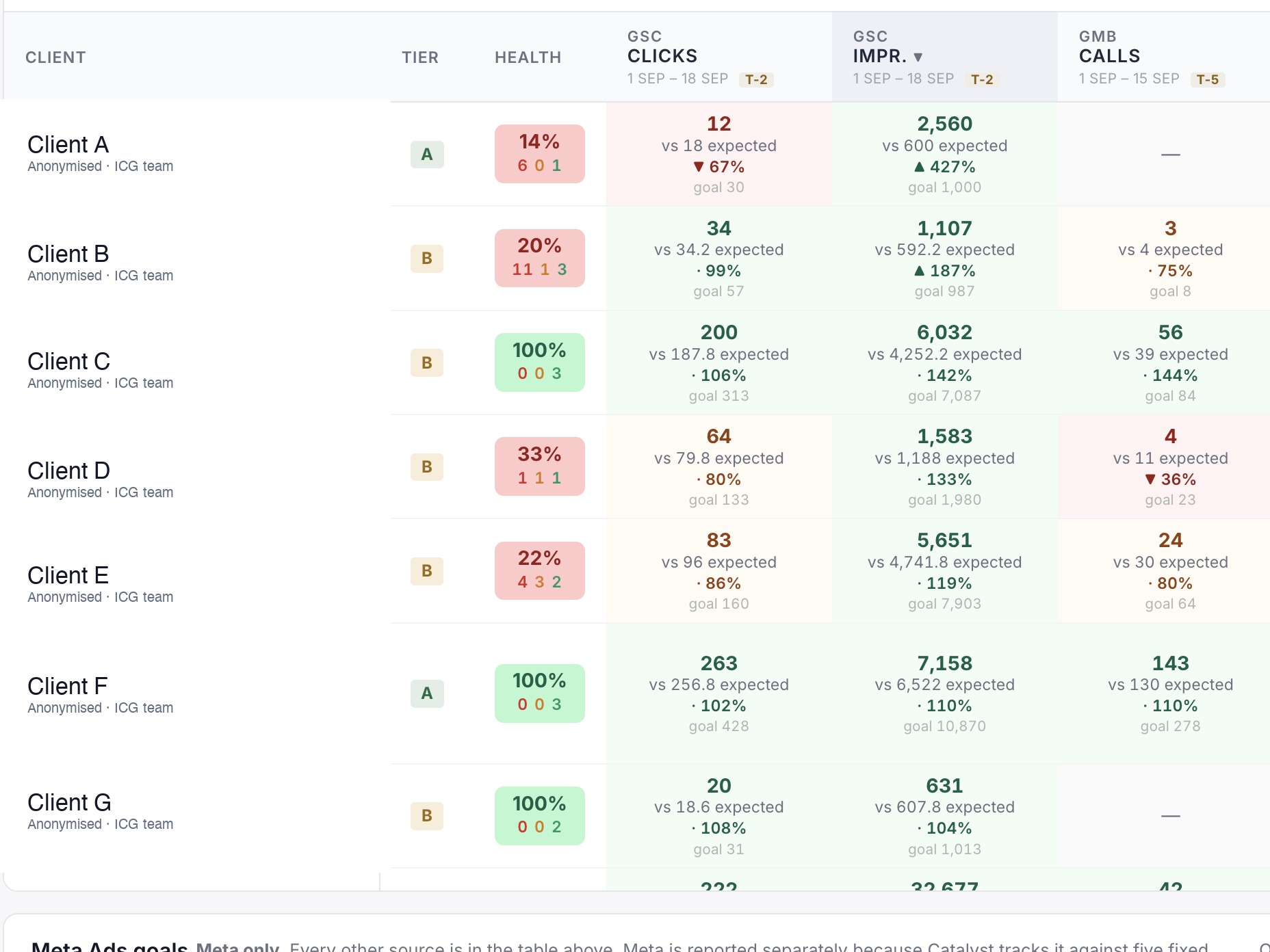
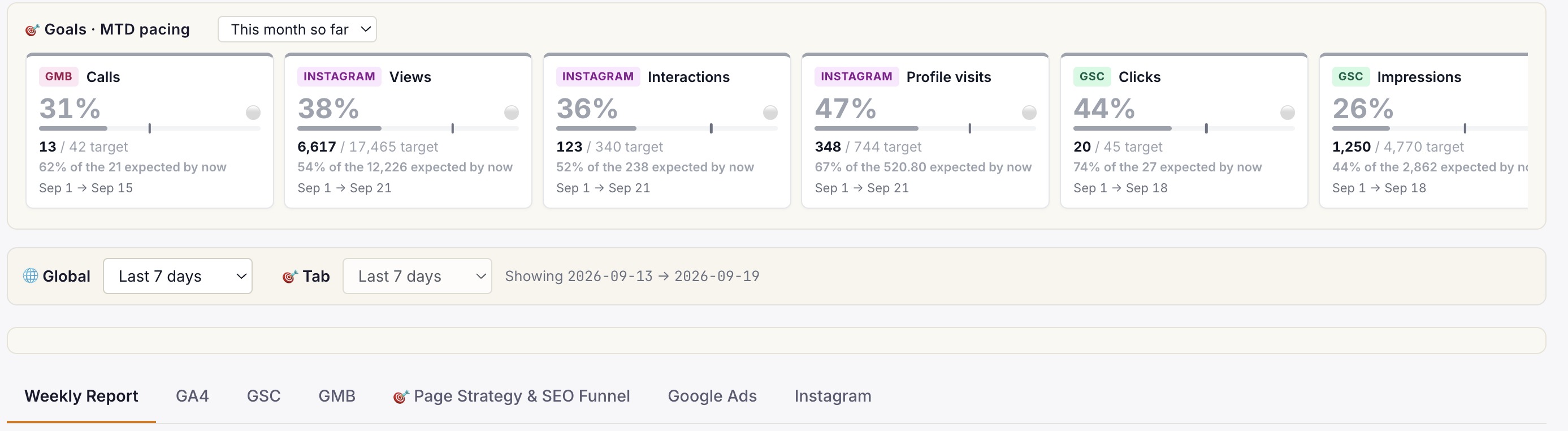
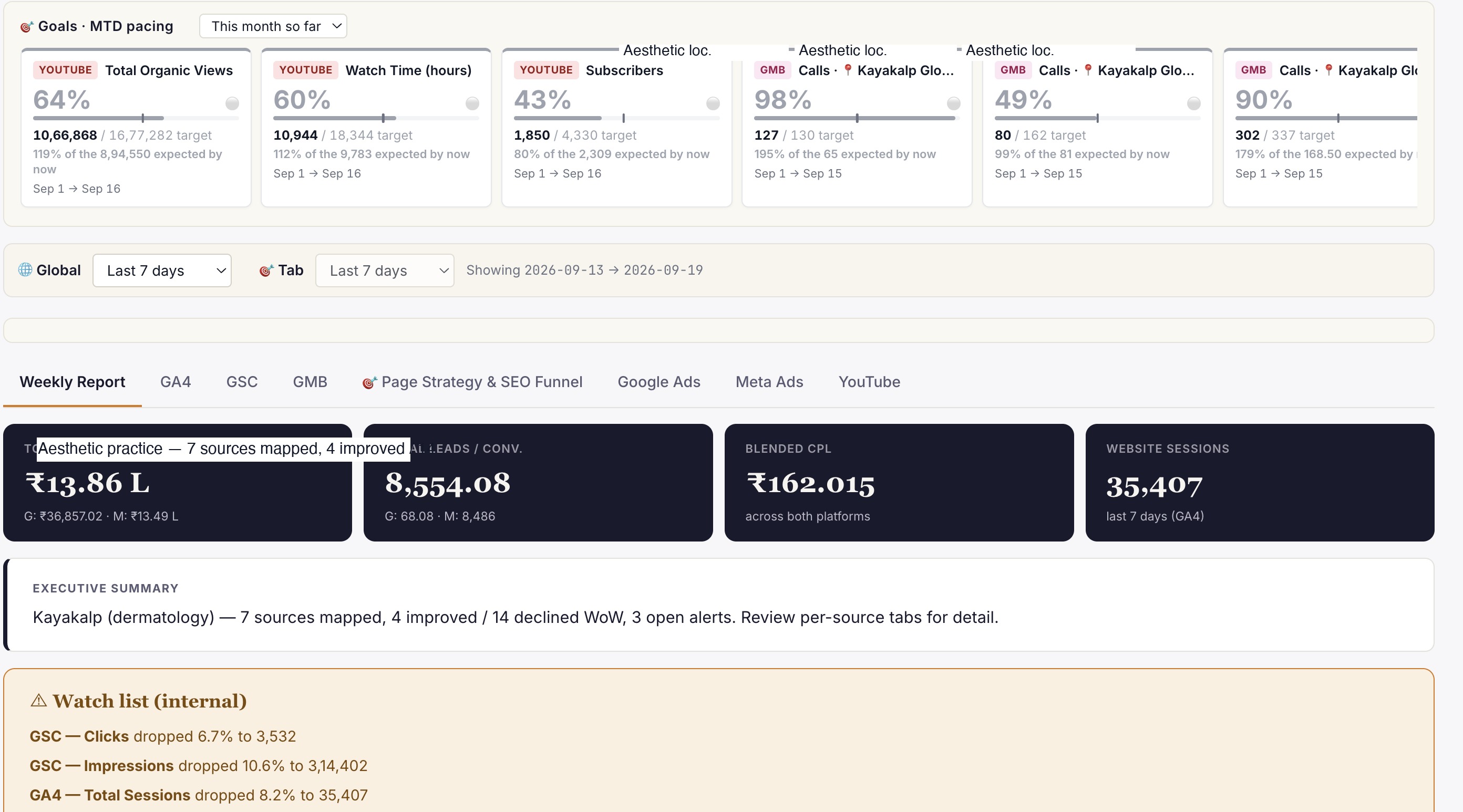
Live client dashboard. GSC, GA4, Google Ads, Meta Ads, IVR calls in one view. Login anytime, not monthly.
Phoenix
Clinic revenue intelligence over your PMS. Daily action queue: Prevent Loss, Maintain & Engage, Grow Revenue. Multi-centre rollout.
Or book a free 30-min audit to see all three in action on your account.
Healthcare brands
that already run on ICG.
A representative slice of the 150+ healthcare brands ICG has delivered for across India. Most engagements remain under NDA.


What ICG clients say · on video.
"Scale up of organic channels and business consulting. ICG has absolute domain authority in their field."
"Working with ICG transformed how we acquire IVF patients in Gurgaon. They understand the fertility journey from inquiry to consult..."
"What Ichelon accomplished — they got all my ideas and worked over 3-4 months to create an amazing, super-customised website."
Need help operationalising this?
Every ICG service is healthcare-only, NMC + DPDP-aware, and built around the patient-research patterns that drive Indian healthcare growth in 2026.
Every practice welcome — packages from ₹20,000/mo.
Goals-Driven engagements · Performance-Linked Payout Models available
More from
ICG.
Five trends shaping Indian healthcare marketing through 2027: AI-first patient research, Conversions API adoption, ABDM discovery, the AEO w...
Healthcare AIO is the discipline of getting your clinic or hospital cited inside Google AI Overviews, ChatGPT and Perplexity answers — not j...
Conversational-search advertising places brand messages inside AI chat answers — ChatGPT, Perplexity, Copilot — rather than beside a results...
Stop guessing.
Book a Diagnostic.
30 minutes. Free. With the AI-powered healthcare-only marketing agency 150+ brands already run on. No slides, no pitch, no hard close.


