


YouTube marketing for cardiologists in Mumbai 2026 · Parel/Bandra tertiary cardiac channel · Structural heart · Corporate check-ups · NMC + MMC compliant · ICG (Powered by YODA)
How cardiologists and cardiac hospitals in Mumbai should run YouTube — Parel, Bandra, and Andheri tertiary density, second-opinion volume, structural heart (TAVI/TAVR) archetypes, corporate executive preventive cardiology, Marathi + Gujarati + Hindi + English multilingual layering, LTV maths per Mumbai cardiac patient (₹1L/- to ₹25L/-), Maharashtra Medical Council plus NMC 2026 plus ASCI 2022 plus DPDP 2023 compliance perimeter with cardiac emergency-content responsibility, retainer bands, and the YODA 6-step workflow adapted for a Mumbai cardiology channel.
No pitch. Written root-cause diagnosis. AI-powered, healthcare only.
Direct answer
How cardiologists and cardiac hospitals in Mumbai should run YouTube — Parel, Bandra, and Andheri tertiary density, second-opinion volume, structural heart (TAVI/TAVR) archetypes, corporate executive preventive cardiology, Marathi + Gujarati + Hindi + English multilingual layerin...
TL;DR
Mumbai has arguably the highest tertiary cardiac care density of any Indian city — top-tier interventional cardiology programs concentrated across Parel, Bandra, and Andheri, structural heart programs (TAVI/TAVR, transcatheter valve interventions) that pull referrals from across western India, and a corporate executive check-up culture that lifts preventive cardiology search volume well above the national baseline. For a cardiologist or cardiac hospital running a YouTube channel out of Mumbai, that density is both an opportunity and a competitive perimeter — patient-family research cycles are shorter because trusted referrals move faster in a dense tertiary market, and the channel that shows up credibly across Marathi, Gujarati, Hindi, and English wins consult volume that a monolingual channel structurally cannot capture. This guide is ICG's playbook for how a Mumbai cardiac practice should run YouTube — the linguistic layering, the compliance perimeter under Maharashtra Medical Council plus NMC 2026 plus ASCI plus DPDP with cardiac-specific emergency-content responsibility, the structural heart and second-opinion archetypes that convert here, the LTV maths that make the retainer economics work, and how the YODA 6-step workflow adapts to the specific dynamics of a Mumbai tertiary cardiac channel.
Why Mumbai is a distinctive market for cardiology YouTube
Mumbai's cardiac care market carries three characteristics no other Indian city fully replicates. The first is tertiary density — the Parel corridor alone concentrates several of India's leading interventional and cardiothoracic surgery programs within a two-kilometre radius, and Bandra plus Andheri add another cluster of premium tertiary providers. A patient evaluating a cardiologist for a parent's angioplasty or bypass in Mumbai is realistically comparing four or five equally credentialed options within a manageable travel radius, and the evaluation cycle collapses onto YouTube channel depth and second-opinion clarity as the differentiators.
The second is linguistic layering. Marathi remains the primary conversational language across large Mumbai patient cohorts, Gujarati carries an over-indexed cardiac patient share because heart disease incidence in the Gujarati population runs materially above the national average, Hindi covers the North Indian working population, and English carries corporate executives and the international diaspora. A single-language channel systematically leaves consult volume unserved. Mumbai cardiac channels that treat language as a distribution layer — same cardiologist, same script, three or four audio tracks or subtitle variants — see meaningfully wider reach than single-language channels do.
The third is the corporate executive check-up culture. Mumbai's financial services, media, and consulting workforce drives an annual preventive cardiology check-up cadence that pushes search volume on queries like "executive cardiac screening," "stress test cost Mumbai," and "cardiac risk assessment before 45" well above the national average. A cardiac channel that speaks to this audience with disciplined preventive content earns pipeline no other city produces at the same volume.
Air pollution levels across the Mumbai Metropolitan Region and high occupational stress in the corporate cohort also shift the symptom-search mix — chest tightness on the local train commute, palpitations during high-pressure work weeks, breathlessness climbing to a Bandra flat's upper floor. A Mumbai cardiac channel that names those situational contexts explicitly earns retention that a generic symptom-explainer channel does not.
The 3-races math for cardiology in Mumbai
Race 1 — YouTube search. Mumbai cardiac queries on YouTube skew toward specific procedural intent — "angioplasty vs bypass," "TAVI recovery time," "cardiac stent brands India," "when is CABG better than PCI" — because the patient-family research cycle is comparative rather than exploratory. Title patterns that win are procedure-specific with a credential signal and a Mumbai-locality tag when appropriate. Generic top-of-funnel titles ("what is a heart attack") lose to the deeper procedural or second-opinion titles Mumbai families are actually typing during the 2-6 week consideration cycle.
Race 2 — Google web search. Mumbai's web search for cardiac content is disproportionately shaped by hospital-brand comparison intent — "cardiac hospital Parel comparison," "second opinion angioplasty Mumbai," "TAVI centre Bandra." Video carousels surface on many of these queries. The cardiac channel that has treatment-landing-page video embeds, structured chapter timestamps, and description density with substantiated Mumbai-specific context (procedure volumes with denominators, cardiologist credentials, referral network structure) shows up disproportionately in the video pack.
Race 3 — Google AI Overview citations. Mumbai carries one of the higher AI Overview citation rates on cardiac queries in the country because so much of the query volume is comparative-clinical ("angioplasty vs bypass which is safer," "when is TAVI recommended over open valve surgery," "how long does a stent last in India"). Overviews prefer to cite credentialed cardiologist videos on these queries. A Mumbai cardiac channel that produces structured-intro, factually dense, clearly chaptered videos on high-intent comparative queries earns Overview citations that compound over months. YODA tracks Overview citation share against a peer set of 6-10 Mumbai cardiac channels so the practice knows exactly which queries it is winning, losing, or entirely absent on.
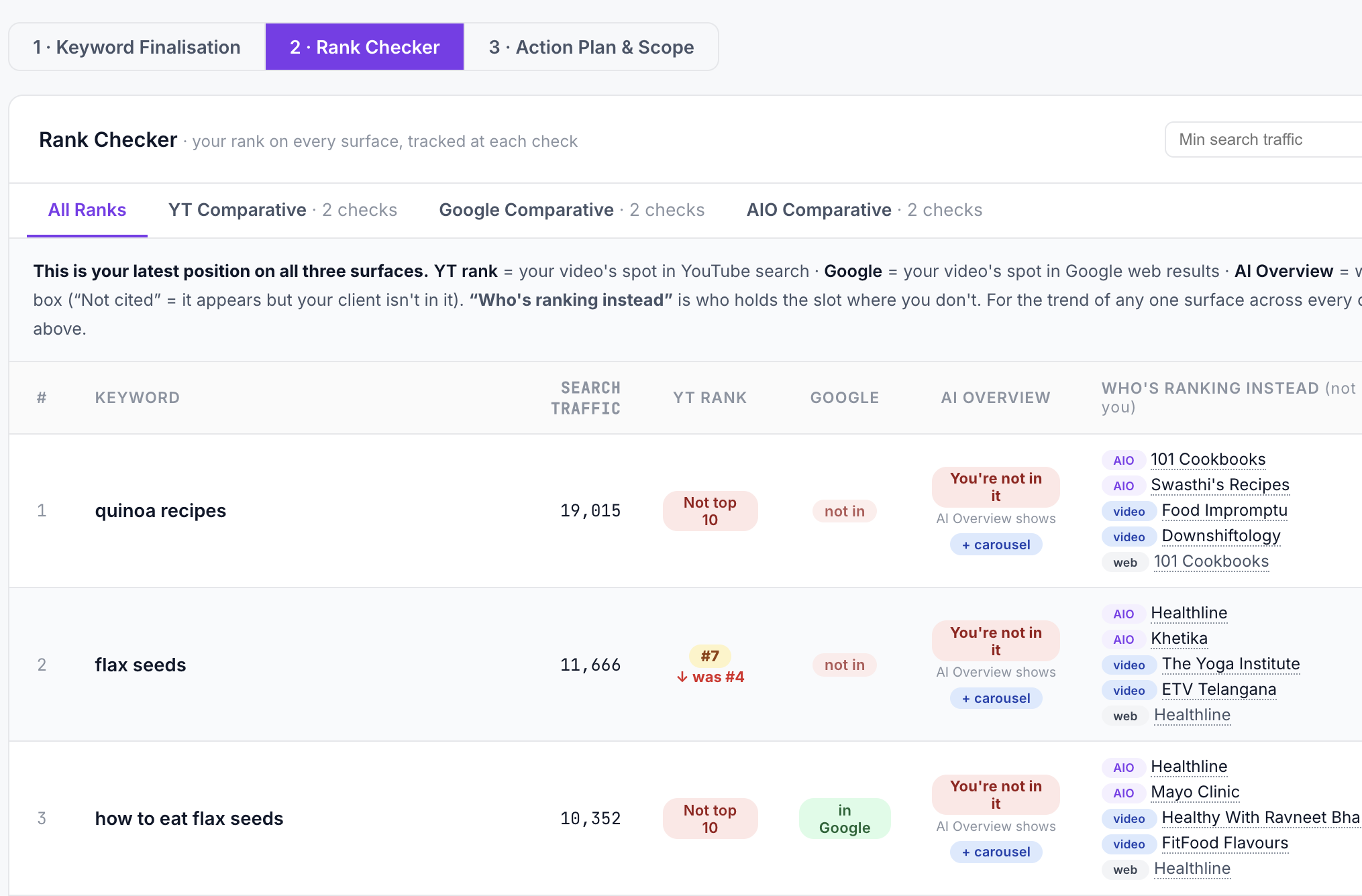
Second-opinion volume in Mumbai is uniquely large — patients who received a stent or bypass recommendation from a suburban or peripheral cardiac hospital routinely seek a Parel or Bandra tertiary second opinion inside a 2-4 week window before consenting to a procedure. A cardiac channel that produces explicit second-opinion framework content — how to prepare, what data to bring, when to seek one — captures a segment of consult demand no other archetype touches at the same intent depth.
Compliance perimeter for cardiology content in Mumbai
Cardiac content produced in Mumbai sits inside four overlapping compliance frameworks — the Maharashtra Medical Council registration and conduct code, the NMC Ethics Code 2026, ASCI Guidelines 2022, and the DPDP Act 2023 — with an additional cardiology-specific ethical duty around emergency-content responsibility.
Maharashtra Medical Council registration must be current and visibly cited in cardiologist bio panels for on-camera credibility. NMC Ethics Code 2026 restricts superlative claims ("best interventional cardiologist Mumbai," "highest angioplasty success rate in Parel") regardless of what internal audit data the hospital holds. Substantiated clinic-specific figures are permitted when accompanied by procedure type, patient population, and complication definition; comparative claims against other Mumbai cardiologists or hospitals are not.
ASCI Guidelines 2022 reinforce the superlative restriction and additionally require particular care around Mumbai's corporate executive check-up marketing — check-up package promotions cannot promise clinical outcomes, cannot present a specific cardiac test as diagnostic of a specific disease outside its actual sensitivity range, and cannot use fear-based framing that pressures asymptomatic executives into unnecessary testing. Gujarati-community-directed content carries the same restrictions; the higher baseline cardiac incidence in that population does not license comparative fear-based framing.
DPDP Act 2023 covers cath-lab imagery, ICU footage, and post-procedure recovery visuals — every patient appearance requires signed consent covering channel, retention period, and withdrawal mechanism, and any patient identifying feature (a Gujarati-community wedding ring, an office ID card, a family photograph in the background) is personal data subject to blur or removal.
The cardiology-specific ethical duty is emergency-content responsibility. Any Mumbai cardiac video covering chest pain, breathlessness, or acute symptom patterns must include an unambiguous ER-attendance trigger disclosure. Content that dissuades or delays ER attendance in a suspected cardiac event is NMC-flagged and materially unethical. Every symptom-explainer video on the Mumbai channel opens or closes with the ER-triggering symptom list and a clear "call your nearest emergency service now" instruction — non-negotiable.
Content archetypes that convert cardiology patients in Mumbai
The Mumbai cardiac content mix leans harder on second-opinion, structural heart, and corporate check-up archetypes than a national cardiac channel would.
Second-opinion frameworks. Mumbai receives a disproportionately large volume of patients seeking second opinions on stent, bypass, or valve recommendations from peripheral or suburban cardiac hospitals. Content that walks through the second-opinion process explicitly — what records to bring, what questions to ask, how to compare two cardiologists' recommendations without adversarial framing — converts at higher rates than any other Mumbai cardiac archetype. Should be 15-20 percent of the channel.
Structural heart and complex intervention explainers. Mumbai's TAVI/TAVR, transcatheter valve replacement, and complex structural heart programs draw referrals from across western India. Long-form procedure explainers on these interventions — what the procedure involves, who is eligible, recovery expectations, why it is chosen over open-heart alternatives — serve the small but very high-value patient-family research audience where a single case pays back a full month of retainer. Should be 15-20 percent of the channel.
Corporate executive preventive cardiology. Mumbai's financial and consulting workforce actively researches preventive cardiology in the 35-50 age band. Content on executive cardiac screening, lipid panel interpretation, stress test guidance, and cardiac risk assessment in asymptomatic professionals converts to preventive consult bookings that layer into the practice's long-term chronic-condition follow-up revenue. Should be 15-20 percent of the channel.
Symptom explainers with situational Mumbai framing. Chest tightness during the local train commute, breathlessness climbing to a Bandra flat's upper floor, palpitations on a high-pressure work week — situational framing lifts retention meaningfully. Every video carries the ER-attendance disclosure. Should be 20-25 percent of the channel.
Multilingual family-decision support. Content in Marathi, Gujarati, and Hindi that speaks to the adult child or spouse of a cardiac patient — how to evaluate a Parel or Bandra cardiac centre, what a second opinion should cover, how to interpret a cardiologist's procedural recommendation — converts strongly because the family member is often the primary economic decision-maker. Should be 15-20 percent of the channel.
Testimonials. Strictly 5-10 percent, framed as personal experience without comparative or endorsement language, with signed DPDP consent, and never with the treating cardiologist on-screen in the same frame. Cardiac testimonials are the highest legal-risk format on the channel; production cadence discipline matters more than volume.
Real budget expectations for cardiology YouTube in Mumbai
Mumbai cardiac YouTube retainers realistically sit in two bands.
Chain tier — ₹85,000/- to ₹1.75L/- per month. A single-location Mumbai cardiac practice or small cardiac clinic. Includes YODA platform access, monthly content plan for 6-8 videos, script review with NMC and MMC compliance, SEO writebacks, thumbnail A/B tests, comment moderation inside compliance, and monthly strategy. Mumbai production costs run modestly higher than tier-2 city equivalents because Parel and Bandra shoot logistics are more expensive; expect a 10-15 percent uplift on the base Chain tier for a Mumbai engagement.
Hospital tier — ₹1.75L/- to ₹4.5L/- per month. A multi-specialty Mumbai hospital with a prominent cardiac department, a standalone Mumbai cardiac centre of excellence, or a Mumbai cardiac chain across 3+ locations. Adds multilingual channel management (Marathi, Gujarati, Hindi audio tracks or subtitle variants), multi-cardiologist channel structure where interventional lead, CT-surgery lead, structural heart lead, and preventive lead each carry cluster ownership, deeper competitor intelligence across a 6-10 Mumbai cardiac peer set, and integrated paid-media planning through YODA's Ad-Spend Picks module.
LTV maths sustain both bands comfortably. A Mumbai cardiac patient acquired through YouTube produces ₹1L/- to ₹25L/- across the care cycle depending on procedural pathway — preventive check-up cohorts sit at the ₹1L/- to ₹3L/- end across five years of quarterly consultations and periodic imaging, coronary angiography plus interventional pathways sit at ₹1.5L/- to ₹8L/-, CABG pathways at ₹2.5L/- to ₹8L/-, and structural heart interventions (TAVI, complex valve, pacemaker, EP ablation) sit at ₹3L/- to ₹25L/- for a single procedure alone before multi-year follow-up layers on top. A channel producing 15-25 new consult bookings per month at the Chain tier pays back inside quarter one; Hospital tier typically pays back inside month one on structural heart pathways.
Below ₹85,000/- per month, a solo Mumbai cardiologist is better served investing in local GBP via Angryturtle self-serve at ₹999/- while building an initial YouTube library in-house, and adding ICG's managed service once the practice scale supports the Chain tier.
YODA 6-step workflow for a Mumbai cardiology channel
Step 1 — Overview. Connect the Mumbai cardiac channel, calibrate against Mumbai cardiac benchmark bands (Mumbai cardiac channels typically run 5-9 minute view duration on Procedure Explainers and 5-8 percent CTR on comparative queries — slightly above national averages because of research-intent depth), and subtract paid promotion history from all baseline organic reads.
Step 2 — Diagnostics. Cluster videos by Mumbai-specific verticals — Interventional (angioplasty, stent), Cardiothoracic Surgery (CABG), Structural Heart (TAVI, valve, pacemaker, EP), Preventive and Executive Screening, Symptom Education, Second-Opinion Frameworks, Family-Decision Support — and by language track (Marathi, Gujarati, Hindi, English). Retention and CTR read separately per language track. YODA surfaces which language is over- or under-serving addressable Mumbai audience.
Step 3 — Strategy. Build a 90-day content plan weighted toward the highest-margin procedural clusters the Mumbai hospital wants to grow. Structural heart clusters typically deserve outsized share because a single TAVI case at ₹15L-₹25L pays back a full month of retainer. Second-opinion cluster retained in every monthly plan. Corporate executive check-up cluster weighted higher in the October-January and February-May peak windows.
Step 4 — Optimisation. Rewrite titles for procedure-specific query match, credential signal, Mumbai-locality tagging where appropriate, and AI Overview citation readiness. Insert structured chapters. Update descriptions with substantiated context that satisfies MMC plus NMC plus ASCI review while remaining search-optimised. Queue thumbnail A/B tests with language-specific variants.
Step 5 — Reputation (ORM). Cluster Mumbai comment threads by patient-versus-family voice and by language. Reply inside NMC and DPDP constraints — never clinical advice, never comparative outcome claims, always route substantive enquiries to a WhatsApp consult booking. Multilingual comment moderation matters — Marathi and Gujarati threads that receive only English replies read as impersonal.
Step 6 — Competitor Intel. Track 6-10 Mumbai peer cardiac channels across Parel, Bandra, Andheri, and Navi Mumbai — a mix of standalone cardiologists, mid-sized cardiac hospitals, and 2-3 aspirational cardiac centres of excellence. Identify content gaps and format opportunities weekly. Rank OS reads segment by procedural vertical and by language, so the practice sees precisely where a Gujarati structural-heart explainer would move the needle versus a Marathi symptom explainer.
The platform ICG uses to run this at scale: YODA
ICG runs healthcare YouTube marketing for clinics, hospitals, and specialty groups using YODA — our AI-native healthcare YouTube marketing platform. YODA sits on top of a channel's data and does four things no dashboard does: it separates organic from paid views at every step (so a promoted video can never masquerade as organic growth), it gives decisions not dashboards (every video gets a state + next action), it writes back to YouTube directly (improved titles, tags, descriptions, chapters applied straight to the platform), and it tracks the three rank races — YouTube search, Google web, and Google AI Overview citations.
YODA runs the full 6-step workflow — Overview, Diagnostics, Strategy, Optimisation, Reputation (ORM), and Competitor Intel — with 40+ analysis modules organised under those steps. ICG's managed YouTube service uses YODA end-to-end. See the Healthcare YouTube Marketing pillar guide for the full scope, or the Healthcare YouTube Marketing Agency service page for engagement details.
Book a YODA demo on WhatsApp → or request a free healthcare YouTube channel audit →
Related reading
- YouTube marketing for cardiologists in India — parent playbook
- Local SEO for doctors and clinics in Mumbai 2026
- YODA 6-step workflow explained for healthcare marketing agencies
- Hospital video marketing in India 2026
- Healthcare YouTube marketing agency service page
FAQ
How long before a Mumbai cardiac YouTube channel produces its first tertiary consult booking? Symptom-evaluation bookings typically appear in weeks 4-6 for a Mumbai channel publishing weekly symptom-explainer content with situational Parel/Bandra/Andheri framing — shorter than the national baseline because Mumbai research cycles are compressed by tertiary density. Interventional and structural-heart procedural bookings arrive in weeks 8-12.
How do we structure content across Marathi, Gujarati, Hindi, and English for a Mumbai cardiac channel? Shoot in English once with the treating cardiologist, then produce Marathi and Gujarati audio tracks (or high-quality dubbed subtitle variants) for the same script. Hindi covers the North Indian working population. YODA reads retention and CTR per language track so the practice sees which language is under-serving addressable Mumbai audience and rebalances future production accordingly.
Can we mention specific Parel or Bandra tertiary cardiac programs by name in our videos? Mention your own hospital or clinic by name freely. Naming a competitor Mumbai cardiac program — even neutrally — creates ASCI and NMC exposure around comparative claims. Refer to the wider tertiary cluster generically ("Parel tertiary cardiac cluster," "Bandra private cardiac hospital pool") instead.
How should we handle emergency-content responsibility for a Mumbai cardiac symptom video? Every symptom-explainer video opens or closes with the ER-triggering symptom list and a clear "call your nearest emergency service now" instruction. Content that could delay ER attendance in a suspected cardiac event is NMC-flagged. YODA's compliance filter surfaces symptom videos missing the disclosure before publication.
Is corporate executive check-up content worth investing in for a Mumbai cardiac channel? Yes — meaningfully more so than in any other Indian city. Mumbai's financial services, media, and consulting workforce actively researches preventive cardiology in the 35-50 age band, and consult conversion from executive-check-up content layers into long-term chronic follow-up revenue. ASCI guardrails apply — no fear-based framing, no guaranteed outcomes on any preventive test.
How should our Mumbai cardiac channel handle second-opinion content given the volume of second-opinion patients Mumbai receives? Build a dedicated second-opinion cluster covering 6-10 videos across preparation, records to bring, questions to ask, and how to compare two cardiologist recommendations without adversarial framing. This is the highest-converting content archetype in Mumbai cardiac YouTube and materially under-served in the peer set.
What is the realistic LTV per Mumbai cardiac patient acquired through YouTube? ₹1L/- to ₹25L/- across the care cycle. Preventive cohort sits at ₹1-3L across five years, interventional pathway (angiography plus PCI plus follow-up) at ₹1.5-8L, CABG at ₹2.5-8L, structural heart (TAVI, pacemaker, EP ablation) at ₹3-25L for the single procedure alone. Multi-year follow-up and family-referral effects layer on top of every pathway.
Should structural heart (TAVI/TAVR) content be a major focus for a Mumbai cardiac channel? Yes, for any Mumbai practice that runs a structural heart program. A single TAVI case at ₹15-25L pays back a full month of Hospital-tier retainer. Structural heart search intent is comparative-clinical (open valve versus transcatheter, eligibility criteria, recovery expectations) and Mumbai carries one of the highest concentrations of structural heart programs in India — the audience exists, the content is legitimately educational, and the compliance perimeter is manageable inside YODA's NMC-aware review.
Book a free 30-minute Brand & Growth Diagnostic.
It's a working session, not a sales pitch — you leave with a written root-cause analysis you can act on, whether or not you engage ICG.
The three platforms
behind every ICG engagement.
Beacon
CAPI middleware that fixes Event Match Quality, translates CRM statuses to Meta-standard events, dedups across channels.
Agency OS
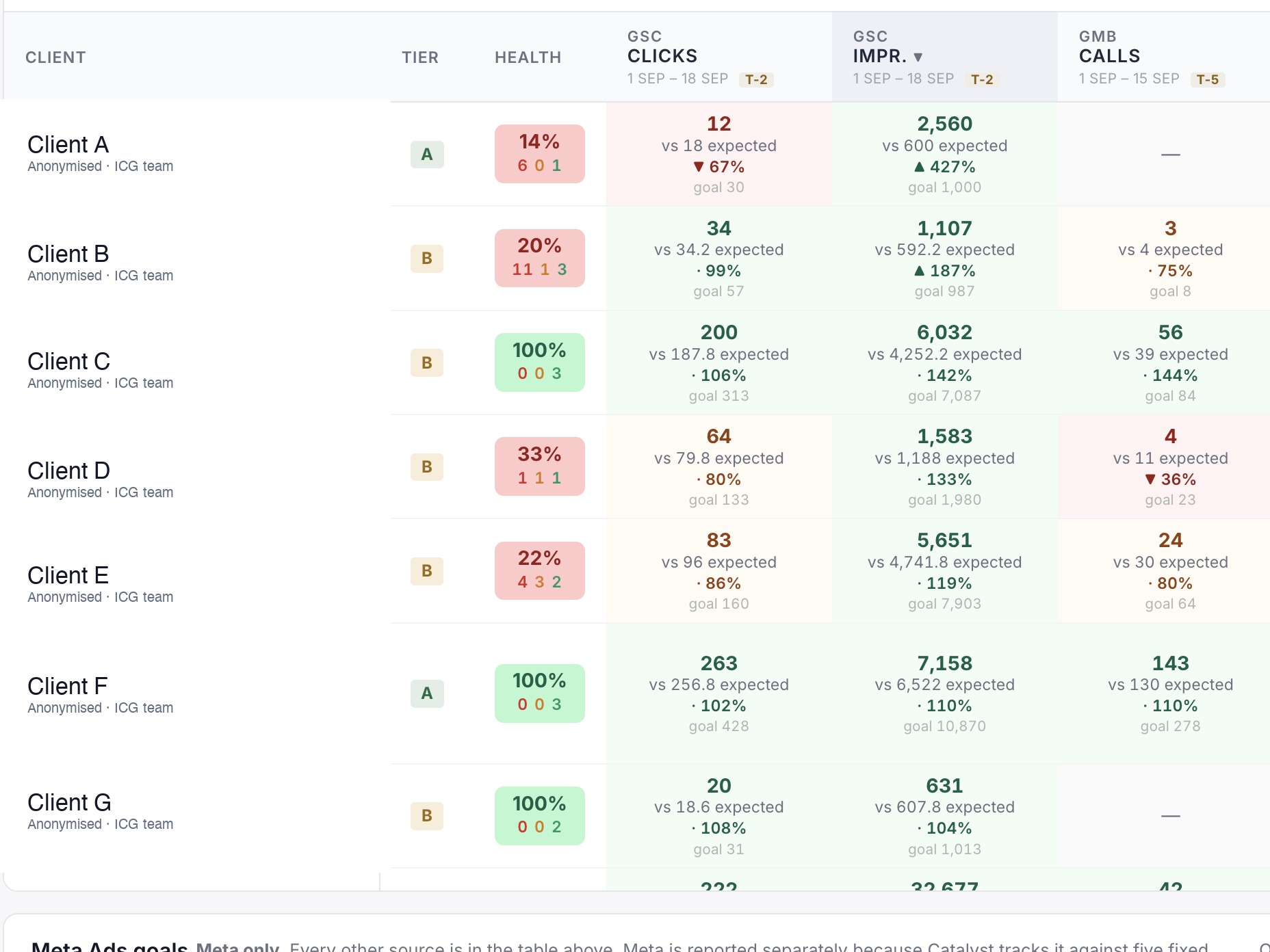
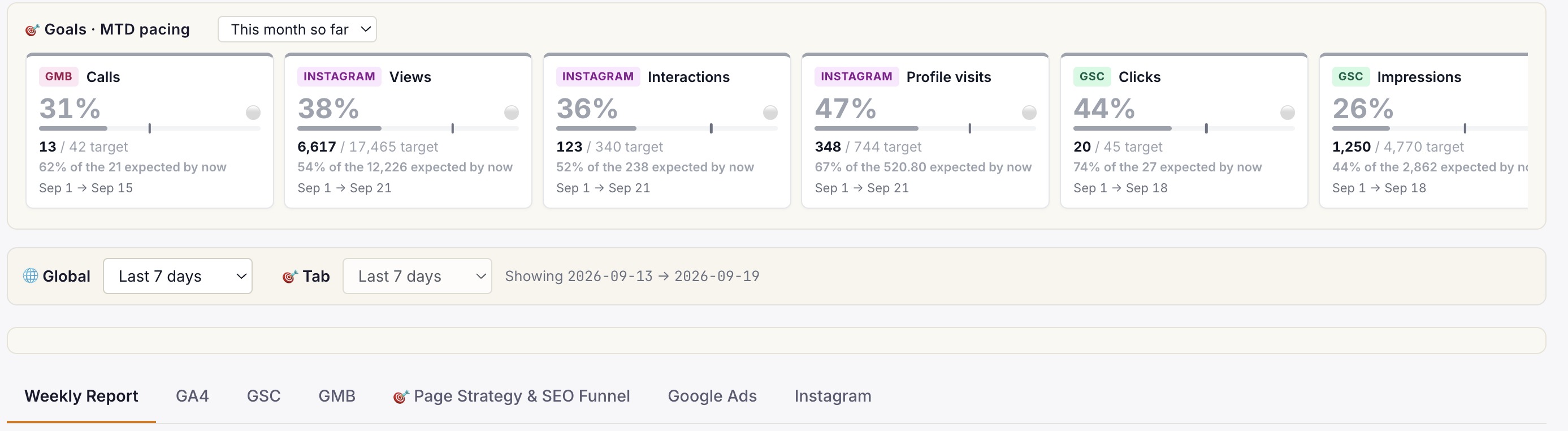
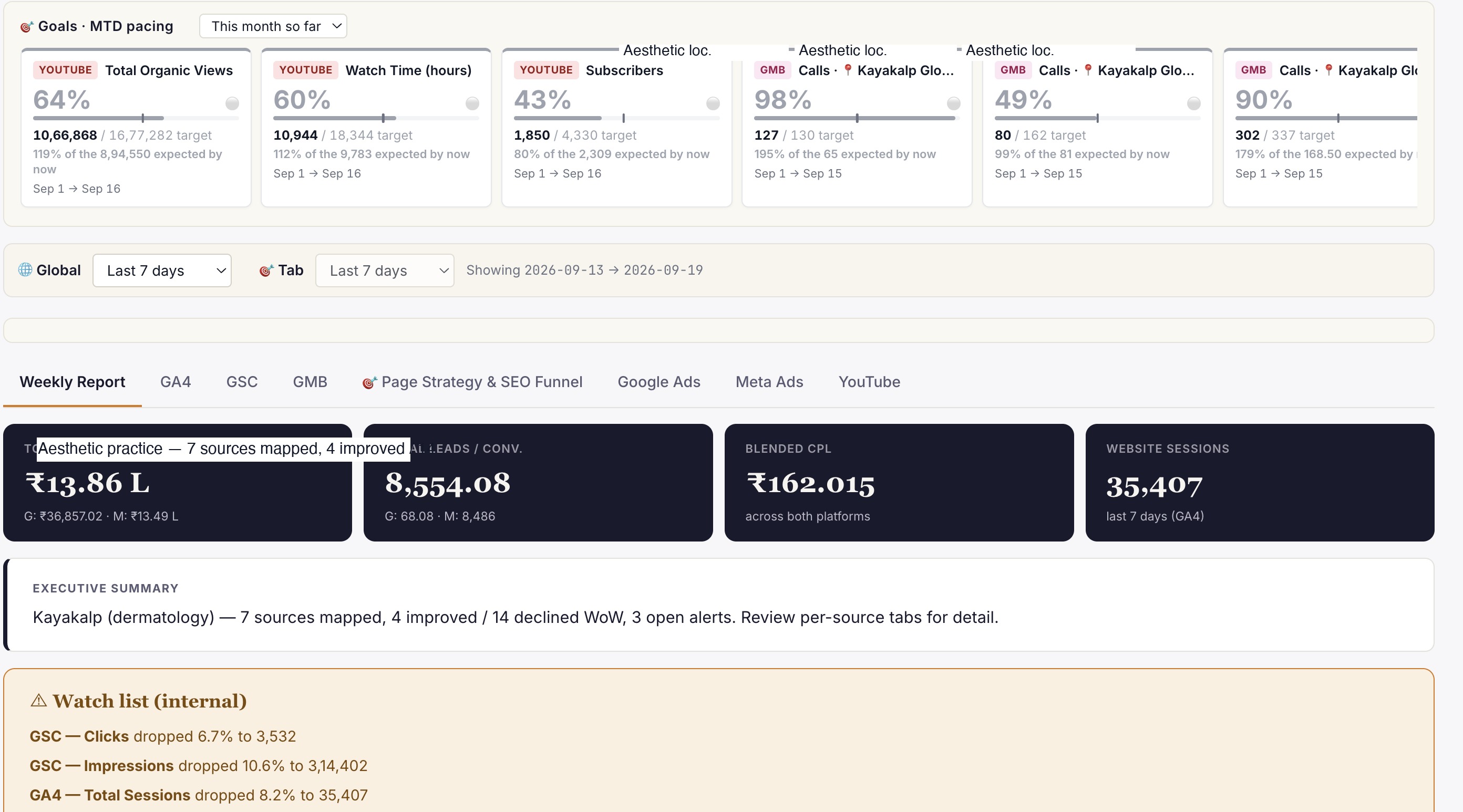
Live client dashboard. GSC, GA4, Google Ads, Meta Ads, IVR calls in one view. Login anytime, not monthly.
Phoenix
Clinic revenue intelligence over your PMS. Daily action queue: Prevent Loss, Maintain & Engage, Grow Revenue. 46-centre rollout.
Or book a free 30-min audit to see all three in action on your account.
Healthcare brands
that already run on ICG.
A representative slice of the 150+ healthcare brands ICG has delivered for across India. Most engagements remain under NDA.


What ICG clients say · on video.
"Scale up of organic channels and business consulting. ICG has absolute domain authority in their field."
"Working with ICG transformed how we acquire IVF patients in Gurgaon. They understand the fertility journey from inquiry to consult..."
"What Ichelon accomplished — they got all my ideas and worked over 3-4 months to create an amazing, super-customised website."
Need help operationalising this?
Every ICG service is healthcare-only, NMC + DPDP-aware, and built around the patient-research patterns that drive Indian healthcare growth in 2026.
Every practice welcome — packages from ₹20,000/mo.
Goal-linked packages · Fixed retainer + Goal-based Variable Pay · 19-month average client retention — industry-leading.
More from
ICG.
Healthcare AIO is the discipline of getting your clinic or hospital cited inside Google AI Overviews, ChatGPT and Perplexity answers — not j...
Conversational-search advertising places brand messages inside AI chat answers — ChatGPT, Perplexity, Copilot — rather than beside a results...
NABH digital compliance means every claim, image and testimonial your hospital publishes online matches what an accreditation surveyor can v...
Stop guessing.
Book a Diagnostic.
30 minutes. Free. With the AI-powered healthcare-only marketing agency 150+ brands already run on. No slides, no pitch, no hard close.


