


YODA vs YouTube Studio native for healthcare channels 2026: Google's free analytics dashboard versus the healthcare-YouTube intelligence and decisions layer
YouTube Studio is Google's free, deep-but-shallow native tool for creators — analytics, upload, comments, monetisation. YODA is ICG's AI-native healthcare YouTube marketing platform — separates organic from paid at every step, gives decisions not dashboards, writes back to YouTube directly, tracks the three rank races. Where each fits for an Indian clinic, hospital or specialty group.
No pitch. Written root-cause diagnosis. AI-powered, healthcare only.
Direct answer
YouTube Studio is Google's free, deep-but-shallow native tool for creators — analytics, upload, comments, monetisation. YODA is ICG's AI-native healthcare YouTube marketing platform — separates organic from paid at every step, gives decisions not dashboards, writes back to YouTub...
TL;DR
YouTube Studio is the native dashboard that ships free with every YouTube channel — the tool a hospital marketing director opens when they log into studio.youtube.com to check views on last week's explainer video, reply to a patient question in comments, or schedule the next upload. YODA is a different category of tool — an AI-native healthcare YouTube marketing platform that sits on top of YouTube Studio's raw data, separates organic from paid at every step, gives decisions not dashboards, writes improved titles/tags/descriptions back to YouTube directly, and tracks the three ranking races where a healthcare video can win: YouTube search, Google web, and Google AI Overview citations. The two tools are not really competitors — YouTube Studio is a hospital's upload, publish and native-analytics console, and YODA is the intelligence and decisions layer that turns that raw data into next actions. For any clinic evaluating whether the free native tool is enough, or whether an intelligence layer is warranted, the honest answer depends on how much a channel matters to patient inquiries. Buyers evaluating healthcare YouTube marketing engagement or the broader healthcare local SEO agency stack deserve a clear map of where each tool starts and stops.
What YouTube Studio does genuinely well
YouTube Studio is Google's own creator console, and being honest about its strengths matters. As the native tool, it has advantages no third-party layer can match on its own terms — direct access to every metric Google is willing to expose to creators, real-time view counters, immediate publish/schedule controls, comment moderation with keyword filters, community post publishing, monetisation setup (AdSense, memberships, Super Chat where eligible), copyright and content-ID handling, subtitle uploads, chapter markers, end-screens, and cards. All of that is free, all of it is directly wired to YouTube's backend, and none of it requires a second login or another vendor.
The Analytics tab inside Studio is deeper than most creators use. Overview gives channel-level views, watch time, subscribers and revenue. Content tab breaks down per-video performance with traffic source split (YouTube search, Suggested videos, Browse features, External, Direct, Channel pages, Playlists, End screens, Notifications). The Audience tab covers returning vs new viewers, watch time from subscribers, unique viewers, average views per viewer, subscriber bell status, top geographies, top languages, age and gender splits where the sample is large enough. The Research tab surfaces topics viewers are searching for. Advanced mode inside Analytics lets a competent operator slice by date, geo, device, subscription status and traffic source in a fairly flexible pivot.
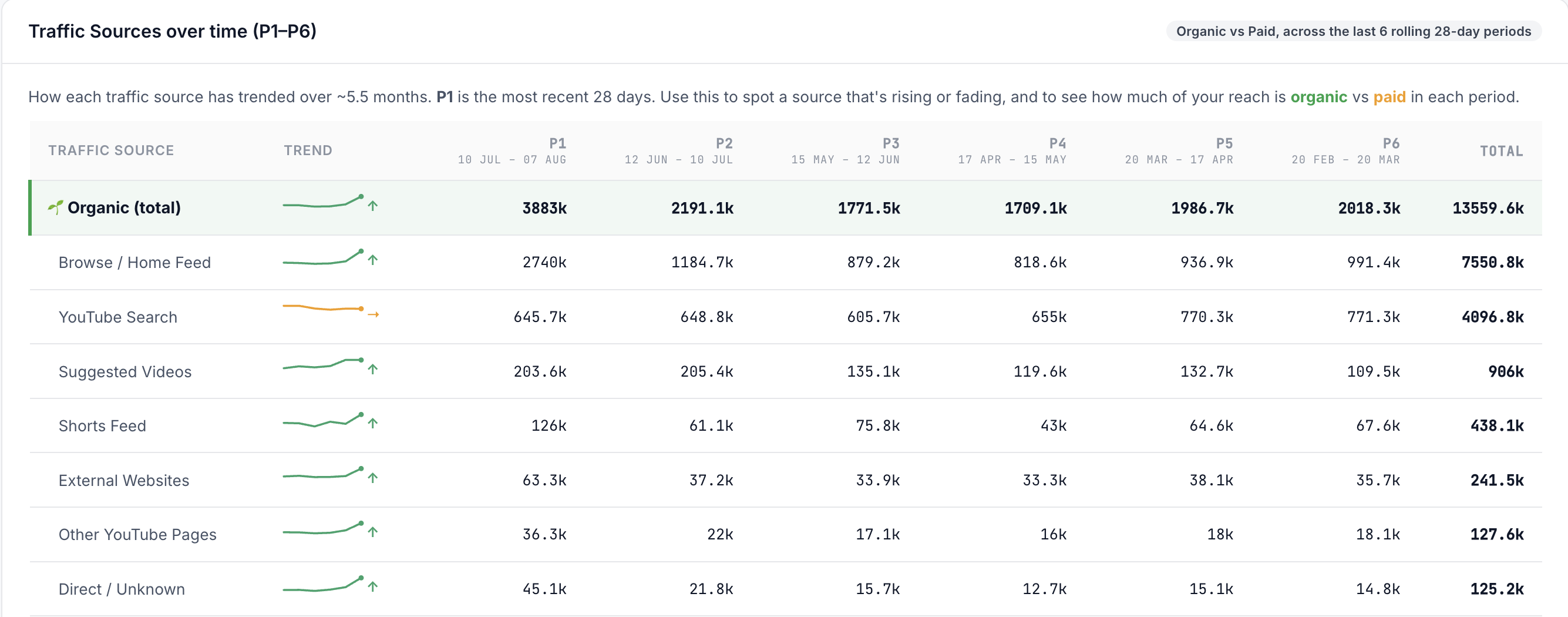
For a small clinic uploading a video a fortnight, that is often enough. Free, native, integrated, real-time.
Where YouTube Studio is deep-but-shallow for healthcare
The problem with Studio for a serious healthcare channel is not that it lacks data — it is that the data does not turn into decisions on its own, and it stops at the boundary of the platform. Six specific gaps hurt healthcare operators.
Paid views and organic views are not cleanly separated everywhere. YouTube Studio does surface an "advertising" traffic source in some views, but a promoted video's cumulative view count and subscriber lift still read as the channel's topline, and the interpretation burden falls on the operator. A hospital that ran an ad on last quarter's founder-doctor video can genuinely misread the numbers as organic momentum when the campaign was the real driver. YODA's architecture starts from the opposite assumption — paid views are subtracted before any judgement anywhere in the tool, and every module explicitly labels whether a signal is organic or paid.
Discovery-side reach — the impressions-to-views funnel across YouTube's three discovery surfaces — is under-emphasised. Studio shows impressions and CTR, but the workflow for pattern-hunting across Search, Suggested and Browse to decide which videos need retitling, which need new thumbnails, and which are simply in the wrong format is a manual pivot-table exercise. YODA's Diagnostics step surfaces these patterns as ranked decisions.
Ranking on Google web is invisible. A hospital video that ranks page one on YouTube might not rank anywhere on Google web search for the same query, or vice versa. Studio only sees YouTube search. Google web results (including video carousels, featured video snippets, and How-to results) are a separate race with separate signals, and Studio does not report on them.
Ranking in Google AI Overview is completely absent. Google AI Overview citations, ChatGPT sources, and Perplexity references are becoming a material fraction of top-funnel discovery for healthcare queries. Studio has no view into whether a hospital's videos or channel are cited in AI answers. YODA tracks this as one of the three rank races.
Competitor intelligence is not in Studio. Studio shows the operator's own channel. Whether the specialty's other channels are covering the same topic better, which of their videos are ranking, and where there is a topical gap to exploit — none of that is native.
Writeback is manual click-by-click. Studio lets an operator edit a title, tag or description one at a time. It does not batch, it does not suggest, and it does not evaluate the change against a scoring model.
What YODA adds on top of YouTube Studio
YODA does not replace YouTube Studio. Uploading, publishing, comment moderation, monetisation setup, copyright and content-ID handling, end-screens, cards and subtitles all continue to live in Studio, where they belong. YODA layers four capabilities on top that Studio does not attempt.
Organic-paid separation as a first principle. YODA pulls both organic analytics and paid campaign data, subtracts paid views everywhere, and every module — Diagnostics, Strategy, Optimisation, Reputation, Competitor Intel — reads only organic unless the operator specifically toggles into a paid view. A promoted video's ad-driven views can never masquerade as organic growth inside YODA.
Decisions not dashboards. Every video in YODA gets a state (winning, holding, losing, dead) and a next action (retitle, re-thumbnail, add chapters, republish, retire, ad-boost). Every keyword the channel targets gets a rank across the three races and a plan (protect, improve, chase, drop). Studio shows the numbers; YODA turns them into a ranked to-do list.
Direct writeback to YouTube. When YODA's SEO Lab drafts an improved title or restructured description with chapters, an operator can review and push the change back to YouTube via API in one click. The manual click-by-click edit in Studio becomes a review-and-apply workflow.

Three rank races tracked in one console. YouTube search, Google web (including video carousels), and Google AI Overview citations — all three tracked per-video, per-keyword, with historical movement charts and a separate action plan for each race.
The 6-step YODA workflow vs Studio's tabs
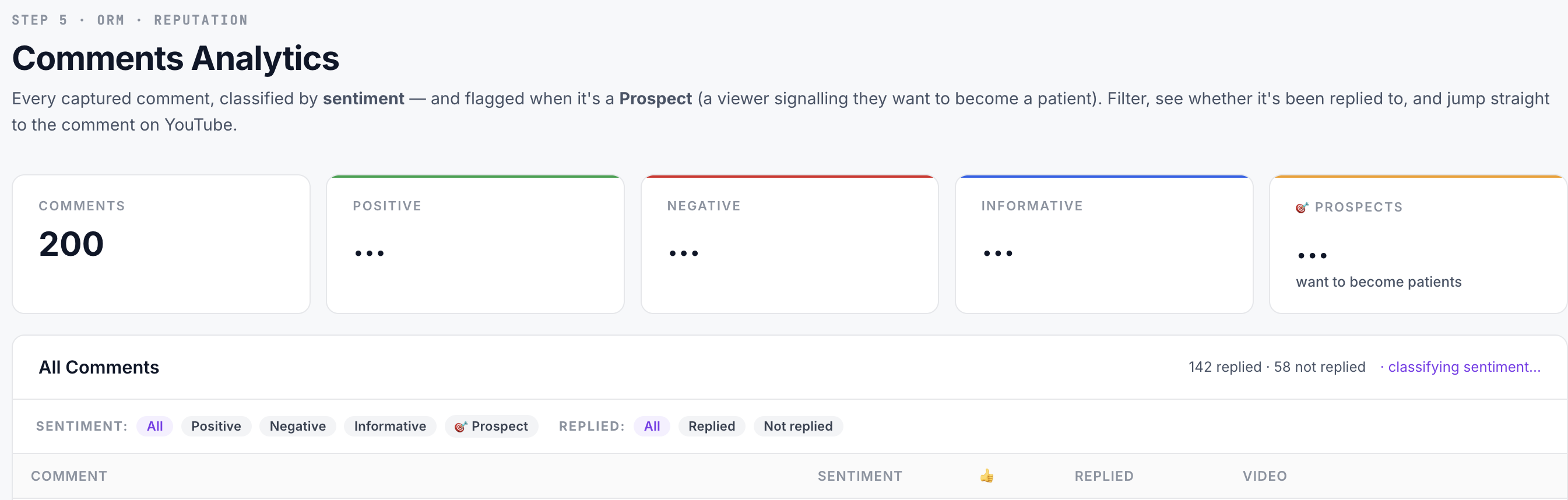
YouTube Studio is organised as tabs (Dashboard, Content, Analytics, Community, Subtitles, Copyright, Monetisation, Customisation, Audio Library, Settings). YODA is organised as a 6-step workflow that mirrors how a serious channel actually runs — Overview & Setup, Diagnostics, Strategy, Optimisation, Reputation (ORM), and Competitor Intel — with 40+ analysis modules distributed across those steps.
Overview & Setup connects the channel's data sources (YouTube analytics, ad accounts, Google Search Console for the paired website) and sets benchmarks. Diagnostics clusters videos by format, retention, traffic source, funnel stage, geography and cohort. Strategy surfaces trending topics for the specialty, a content planner, ad-spend picks and the action plan for the next 30 days. Optimisation runs the SEO Lab, AIO engine, distribution planner, thumbnail assistant and per-video impact tracker. Reputation (ORM) analyses the comment sentiment and audience voice, groups the audience by intent, and flags NMC-sensitive comments that need a considered reply. Competitor Intel benchmarks the channel against the specialty's other channels and feeds a decision engine that says what to do next.
The compliance perimeter a native tool cannot see
YouTube Studio does not know that NMC Ethics Code 2026 restricts doctor advertising claims, that patient testimonials on a doctor's channel need explicit consent and cannot be presented as clinical evidence, that DPDP Act 2023 treats identifiable patient footage as personal data requiring lawful basis, that PC-PNDT Act 1994 makes sex-determination content on a fertility channel a legal issue, that ART Act 2021 bars unsubstantiated success-rate claims on ART clinic content, or that ASCI Guidelines 2022 disallow unsubstantiated comparative claims in the video description or pinned comment. Studio is a general-purpose creator tool that treats a hospital channel and a gaming channel identically.
YODA is built for Indian healthcare specifically. The SEO Lab flags title and description language that would breach NMC or ASCI. The Reputation module surfaces comments that hint at patient-identifiable disclosure requiring moderation for DPDP compliance. The Content Studio inside Strategy proposes topics ranked by both search opportunity and compliance fit. That is a healthcare-specific layer a native tool never intends to be.
When YouTube Studio alone is enough
Being direct about this matters — YODA is not for every channel, and YouTube Studio alone is genuinely enough in several situations. If a clinic uploads one video a month for owned-audience communication (newsletter-style updates for existing patients), if the channel exists for brand presence rather than patient inquiry generation, if there is no paid promotion happening and no rank tracking needed, if the operator does not have a specific business goal tied to YouTube-driven consultations, and if there is no bandwidth to act on a decision layer even if one existed — Studio is sufficient. Adding an intelligence layer to a channel nobody is going to invest in is wasteful.
Small dental practices, single-doctor clinics that use YouTube only to post the occasional patient-education video, and hospital marketing teams that treat the channel as a compliance-driven brand asset (not a growth channel) can run YouTube Studio native and be perfectly served.
When YODA is warranted
YODA earns its place when the channel is a real business asset — when patient inquiries are attributable to YouTube, when the hospital or clinic is putting Google Ads or Meta Ads spend behind videos, when there are more than one or two videos a month being published, when the channel needs to rank in AI Overview to protect brand queries, when the specialty is competitive enough that competitor intelligence matters, and when the operator has the bandwidth to execute against a ranked action list. Multi-location hospital groups, IVF and fertility chains, cosmetic surgery groups, specialty hospital networks, and any clinic where a founder-doctor is building a personal brand on YouTube will typically hit that threshold.
The break-even is not video count — it is whether decisions are the bottleneck. A hospital that publishes twenty videos a quarter but does not know which to protect, which to boost with ads, and which to retire is decision-bottlenecked. A hospital publishing one a month with a clear intention behind each is not.
Cost and integration — honest picture
 Meta Catalyst IQ Creative Scoring Matrix ranking every Meta ad creative by hook strength, proof density, offer clarity and CTA — with money-wastage column in rupees" width="1200" height="675" loading="lazy" decoding="async" style="width:100%;height:auto;display:block;">
YouTube Studio is free. That is a real advantage. YODA is a paid layer inside ICG's managed healthcare YouTube marketing service, typically bundled with content production, thumbnail design, distribution and reporting — engagement pricing is on the healthcare YouTube marketing service page and starts where a managed retainer for a serious channel starts, not at self-serve tool pricing.
Integration between the two is smooth by design — YODA reads YouTube Studio's data via the official APIs, does not replace any of Studio's native functions, and writeback happens back into the same platform. A hospital does not lose or duplicate anything by adding YODA; the operator still opens Studio for upload, comment moderation, monetisation and copyright, and opens YODA for diagnostics, strategy, optimisation, reputation analysis and competitor intelligence.
Decision matrix — YODA or Studio alone
Pick YouTube Studio alone if: the channel publishes one video a month or less, there is no paid promotion, no rank tracking need, no business goal tied to YouTube-driven inquiries, and no bandwidth to act on a decision layer. Studio's native tabs cover the workflow.
Add YODA if: the channel publishes more than two videos a month, there is Google Ads or Meta Ads spend behind at least some videos (so the paid-organic separation matters), the specialty is competitive enough that competitor intelligence is useful, the operator wants to rank in Google AI Overview and ChatGPT for brand queries, and there is genuine execution bandwidth to work through a prioritised action list every week.
The platform ICG uses to run this at scale: YODA
ICG runs healthcare YouTube marketing for clinics, hospitals, and specialty groups using YODA — our AI-native healthcare YouTube marketing platform. YODA sits on top of a channel's data and does four things no dashboard does: it separates organic from paid views at every step (so a promoted video can never masquerade as organic growth), it gives decisions not dashboards (every video gets a state + next action), it writes back to YouTube directly (improved titles, tags, descriptions, chapters applied straight to the platform), and it tracks the three rank races — YouTube search, Google web, and Google AI Overview citations.
YODA runs the full 6-step workflow — Overview, Diagnostics, Strategy, Optimisation, Reputation (ORM), and Competitor Intel — with 40+ analysis modules organised under those steps. ICG's managed YouTube service uses YODA end-to-end. See the Healthcare YouTube Marketing pillar guide for the full scope, or the Healthcare YouTube Marketing Agency service page for engagement details.
Book a YODA demo on WhatsApp → or request a free healthcare YouTube channel audit →
Related reading
- Healthcare YouTube marketing pillar guide — full scope of YouTube for Indian healthcare
- Healthcare YouTube Marketing Agency service page — engagement details
- How a doctor YouTube channel generates consultations in India
- Hospital video marketing in India 2026
- YouTube vs Meta vs Google ROI for IVF clinics in India 2026
FAQ
Does YODA replace YouTube Studio? No. YouTube Studio remains the tool for upload, publish, schedule, comment moderation, monetisation setup, copyright, subtitles, end-screens and cards. YODA adds the intelligence and decisions layer on top and writes changes back into the same platform.
Is YouTube Studio enough for a small clinic? For a channel that publishes one video a month for owned-audience communication with no growth or paid intent, yes — Studio's native analytics and controls are sufficient. Adding an intelligence layer only pays back when the channel is being run as a growth asset.
What does YODA see that YouTube Studio does not? Google web ranking (including video carousels and featured video snippets), Google AI Overview and ChatGPT citations, competitor channel intelligence, cleanly-separated organic vs paid at every step, and healthcare-compliance flags on titles, descriptions and comments against NMC, ASCI, DPDP, PC-PNDT and ART Act rules.
Can YouTube Studio track Google AI Overview citations? No. Studio only reports on YouTube-native surfaces (Search, Suggested, Browse, External referrals) and does not surface Google AI Overview mentions or ChatGPT source citations. YODA tracks these as one of the three rank races.
Does YODA separate organic from paid views? Yes. Paid views are subtracted everywhere in YODA before any judgement is made. Every module reads only organic unless the operator explicitly toggles into a paid view. This prevents ad-driven view spikes from being misread as organic momentum.
Can YODA edit videos directly on YouTube? Yes. Improved titles, tags, descriptions and chapter markers drafted inside YODA can be pushed back to YouTube via API after operator review. Upload of the video itself continues to happen through YouTube Studio.
Is YODA free? No. YODA is a paid layer inside ICG's managed healthcare YouTube marketing service. YouTube Studio is free and continues to be the native creator console; YODA is the intelligence layer for channels being run as a serious growth asset.
Which healthcare channels get the most from YODA? Multi-location hospital groups, IVF and fertility chains, cosmetic surgery groups, specialty hospital networks, and clinics where a founder-doctor is building a personal brand and publishing regularly. Anywhere the decision layer is the bottleneck, not the data availability.
How does YODA handle NMC and ASCI compliance on titles and descriptions? The SEO Lab inside YODA flags language patterns that risk breaching NMC restrictions on doctor advertising or ASCI restrictions on unsubstantiated claims, and proposes compliant alternatives. Final review always sits with the operator.
Should a hospital run YODA alongside YouTube Studio or replace one with the other? Alongside. They do different jobs — Studio handles the native creator functions, YODA handles the intelligence, decisions, competitor intel, three-race rank tracking and healthcare compliance layer. Together they cover the full workflow.
Book a free 30-minute Brand & Growth Diagnostic.
It's a working session, not a sales pitch — you leave with a written root-cause analysis you can act on, whether or not you engage ICG.
The three platforms
behind every ICG engagement.
Beacon
CAPI middleware that fixes Event Match Quality, translates CRM statuses to Meta-standard events, dedups across channels.
Agency OS
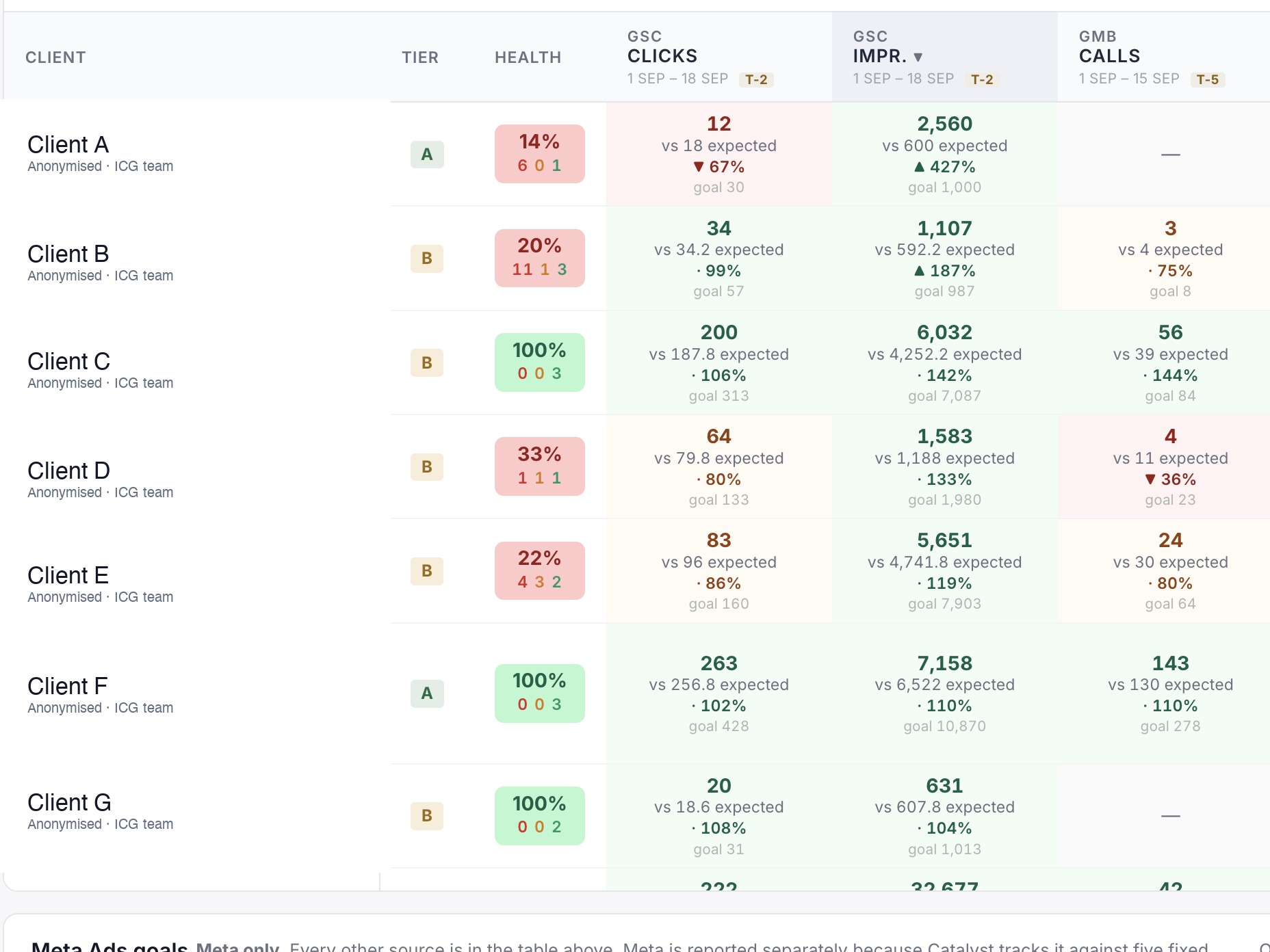
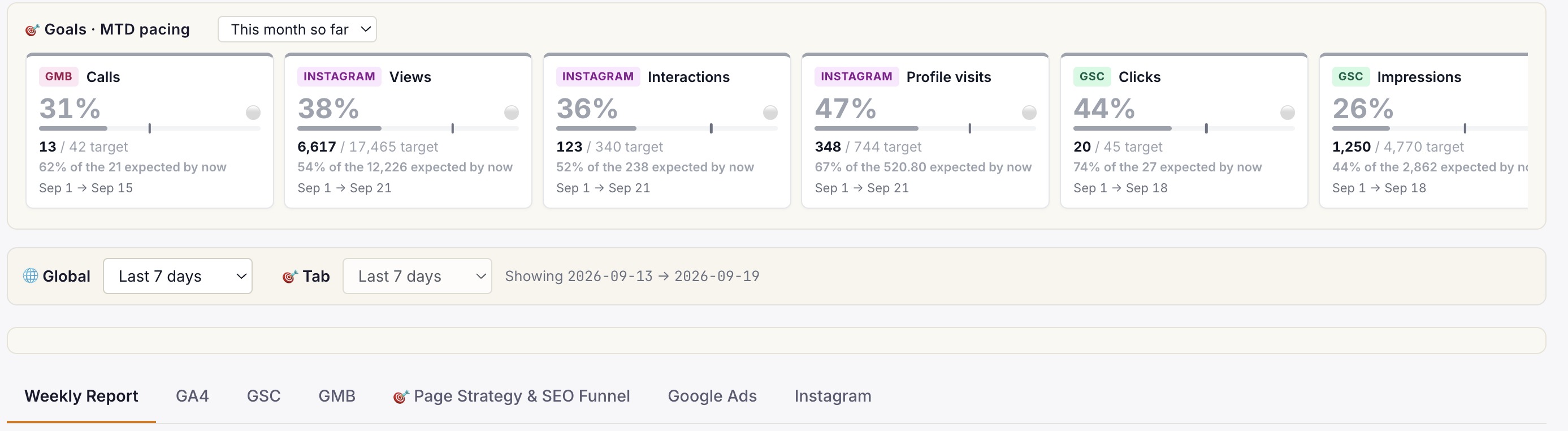
Live client dashboard. GSC, GA4, Google Ads, Meta Ads, IVR calls in one view. Login anytime, not monthly.
Phoenix
Clinic revenue intelligence over your PMS. Daily action queue: Prevent Loss, Maintain & Engage, Grow Revenue. Multi-centre rollout.
Or book a free 30-min audit to see all three in action on your account.
Healthcare brands
that already run on ICG.
A representative slice of the 150+ healthcare brands ICG has delivered for across India. Most engagements remain under NDA.


What ICG clients say · on video.
"Scale up of organic channels and business consulting. ICG has absolute domain authority in their field."
"Working with ICG transformed how we acquire IVF patients in Gurgaon. They understand the fertility journey from inquiry to consult..."
"What Ichelon accomplished — they got all my ideas and worked over 3-4 months to create an amazing, super-customised website."
Need help operationalising this?
Every ICG service is healthcare-only, NMC + DPDP-aware, and built around the patient-research patterns that drive Indian healthcare growth in 2026.
Every practice welcome — packages from ₹20,000/mo.
Goals-Driven engagements · Performance-Linked Payout Models available
More from
ICG.
Five trends shaping Indian healthcare marketing through 2027: AI-first patient research, Conversions API adoption, ABDM discovery, the AEO w...
Healthcare AIO is the discipline of getting your clinic or hospital cited inside Google AI Overviews, ChatGPT and Perplexity answers — not j...
Conversational-search advertising places brand messages inside AI chat answers — ChatGPT, Perplexity, Copilot — rather than beside a results...
Stop guessing.
Book a Diagnostic.
30 minutes. Free. With the AI-powered healthcare-only marketing agency 150+ brands already run on. No slides, no pitch, no hard close.


