


Review Velocity Systems for Dental Chains in India: The Playbook
Review velocity — not lifetime review count — decides which Indian dental chains win the Google local pack. Here is the systems view chain founders and healthcare marketing leads need: benchmarks, break points, DPDP-aware workflows, and the operating model ICG runs across 150+ clinics.
No pitch. Written root-cause diagnosis. AI-powered, healthcare only.
Direct answer
Review velocity — not lifetime review count — decides which Indian dental chains win the Google local pack. Here is the systems view chain founders and healthcare marketing leads need: benchmarks, break points, DPDP-aware workflows, and the operating model ICG runs across 150+ cl...
TL;DR

TL;DR
- Review velocity — the pace at which new Google reviews land per location per month — matters more than lifetime review count for Indian dental chains, because Google's local ranking model rewards freshness and consistency over legacy volume.
- A healthy multi-location dental chain in India should aim for 12-25 net-new Google reviews per clinic per month, with a reply rate above 90% within 24 hours and a rolling star average of 4.6 or higher.
- Most Indian dental chains break velocity at three points: front-desk request drop-off, WhatsApp deep-link failure on older Android devices, and no owner-side alerting when a location dips below its monthly target.
- A durable review velocity system is not a template — it is a loop of request trigger, channel routing, response SLA, and weekly variance review, wired to the GBP dashboard for every location.
Table of contents
- Why review velocity matters for Indian dental chains right now
- What is review velocity and why does it beat lifetime review count?
- How many Google reviews per month should a dental chain in India target?
- What breaks review velocity inside Indian multi-location dental chains?
- How do you build a review velocity system that survives at scale?
- Which metrics actually predict review velocity health?
- How does the DPDP Act change the way dental chains ask for reviews?
- How does ICG approach review velocity for dental chains?
- What does a 70-30 engagement look like for dental chain ORM?
- FAQ
Why review velocity matters for Indian dental chains right now
Indian dental chains are in a strange window. The category has scaled fast — chains in Bengaluru, Hyderabad, Pune, Gurugram, and Mumbai are running between 8 and 60 locations, most of them under a shared brand but with wildly different local Google presence per clinic. The next patient is almost always coming from a "dentist near me" or "root canal near Koramangala" query, and Google's ranking of the Map Pack is now weighted heavily toward recent reviews and reply cadence, not the historical count from 2022 or 2023.
The commercial stakes are real. A single flagship dental clinic in a Tier-1 metro can process 90-180 walk-ins a month at an average revenue per patient of Rs 3,800-6,200. If the clinic slips from position 1 to position 4 in the local pack because its review velocity flattened, monthly bookings can drop 30-45% inside a quarter. For a chain with 20 locations, that is not a marketing problem — it is a P&L event.
This piece is written for chain founders, hospital marketing directors, and healthcare agency owners who manage dental clients. It is not clinical guidance and it is not for patients. It is a systems view of how review velocity actually gets built and kept alive across an Indian multi-clinic footprint.
What is review velocity and why does it beat lifetime review count?
Review velocity is the number of net-new Google reviews a location earns per rolling 30-day window, tracked alongside reply latency and star-rating drift. It matters more than lifetime review count because Google's local algorithm treats a clinic with 240 reviews and 3 new reviews last month as weaker than a clinic with 90 reviews and 22 new reviews last month.
The reason is signal freshness. A dental chain that stopped generating reviews in 2024 is telling the algorithm — and every prospective patient reading the profile — that the business has slowed down. Prospects scroll to the review section, sort by "newest", and if the top result is nine months old, they close the tab. On the Indian mobile web, that decision takes under 6 seconds.
Velocity is also a leadership metric. A chain that runs a live velocity dashboard per clinic has an early warning system for operational drift — a front desk that has stopped asking, a doctor who has moved cities, a franchise that changed its receptionist twice in a quarter. Review count hides those breakdowns for months. Velocity surfaces them in weeks.
How many Google reviews per month should a dental chain in India target?
An Indian dental clinic in a Tier-1 metro should target 15-25 new Google reviews per month per location once the system is stable, with a floor of 12 for smaller Tier-2 formats. Newly opened clinics need a 90-day ramp of 30-40 per month to build competitive footing in a crowded local pack.
The numbers change by format. Here is a working benchmark table used across ICG's dental chain engagements:
| Clinic format | City tier | Monthly new review target | Reply SLA |
|---|---|---|---|
| Flagship multi-chair | Tier-1 (BLR, HYD, MUM, DEL-NCR) | 20-25 | Under 12 hours |
| Standard 2-3 chair clinic | Tier-1 | 15-20 | Under 24 hours |
| Standard clinic | Tier-2 (Indore, Jaipur, Kochi, Nagpur) | 12-18 | Under 24 hours |
| New launch (first 90 days) | Any | 30-40 | Under 6 hours |
| Specialty (implants, ortho) | Tier-1 | 10-14 | Under 12 hours |
Do not chase national averages. A dental chain in Gurugram Sector 56 is competing with 40+ clinics inside a 3 km radius. A chain in Vizag might have 8. The velocity target has to be set against the local competitive set, not the country.
What breaks review velocity inside Indian multi-location dental chains?
Review velocity breaks at four specific points in Indian dental chains: the front-desk request handoff, the WhatsApp deep-link generation, the response and escalation SLA, and the weekly variance review. Most chains diagnose only the first one and spend a year losing rank while fixing the wrong problem.
1. Front-desk drop-off
The most common failure is that the front-desk executive asks for a review verbally at billing, then forgets to send the link. Or sends it via SMS, which the patient dismisses. Verbal ask + no digital trigger = 4-7% conversion. A structured digital trigger tied to billing signature can push that to 28-35%.
2. WhatsApp deep-link failure
A large share of Indian dental patients are 45+ and on Android devices two to four generations old. The Google review deep-link — the g.page/r/... short URL — sometimes opens the Play Store instead of the Maps app on older devices. If your chain has not tested the flow on a Redmi Note 8 or a Samsung M-series, you have a silent 15-20% leak.
3. Response SLA breakdown
Chains that ask well but reply badly still lose. A negative review sitting un-replied for 72 hours is a bigger local ranking negative than the 1-star rating itself. Google reads unanswered negatives as an inactive business.
4. No weekly variance review
Most chains look at review counts monthly. By the time a location has slipped for 30 days, the fix takes 60. A weekly variance review — every clinic against its target — cuts the recovery loop to under two weeks.
How do you build a review velocity system that survives at scale?
A review velocity system for an Indian dental chain has four layers: the trigger, the channel, the response SLA, and the analytics loop. Each layer needs a named owner at the chain level, not just the clinic level, or the system will decay inside six months.
Layer 1: The trigger
The trigger is the moment the review request goes out. Best-in-class Indian dental chains send it 90-120 minutes after the appointment ends, timed to when the local anaesthesia has worn off but the experience is still fresh. The trigger fires from the practice management system, not from the receptionist's phone. Manual triggers do not survive Diwali week or a front-desk resignation.
Layer 2: The channel
WhatsApp Business API is the default for Indian dental patients — open rates run 82-91% versus 18-24% for SMS. The message should carry the patient's first name, the doctor's name, and a one-tap deep link to the specific clinic's Google profile. Chain-level generic links break location-level velocity.
Layer 3: The response SLA
Every review needs a reply, positive or negative, inside 24 hours. Positive replies should mention the specialty (implant, ortho, RCT) and the clinic name for local SEO relevance. Negative replies must never carry clinical detail — DPDP Act obligations on health data disclosure are strict, and a defensive reply that names a treatment is a compliance breach.
Layer 4: The analytics loop
A weekly dashboard, per clinic, tracking new reviews, reply latency, star drift, and share of voice against the local pack. This is where most chains fail — they build layers 1-3 and skip 4, then wonder why the system stopped working in month seven.
Which metrics actually predict review velocity health?
Five leading indicators predict whether a dental chain's review velocity will hold or collapse in the next 60 days: request-to-review conversion rate, WhatsApp deep-link open rate, reply-under-24-hours percentage, star drift over rolling 90 days, and share of new reviews inside the local 3 km pack. Lagging metrics like total review count are for board decks, not operations.
- Request-to-review conversion: healthy range is 22-35%. Below 15% means the trigger or the channel is broken.
- Deep-link open rate: below 60% signals a device-compatibility issue that needs an immediate mobile QA sweep.
- Reply-under-24-hours: keep above 90%. Every drop below 80% correlates with a 4-7% local-pack visibility loss the following month.
- Star drift (rolling 90 days): more than 0.2 stars downward is a red alert — not a marketing fix, an operations one.
- Share of new reviews in local pack: your clinic should hold at least 25% of new reviews generated inside its 3 km cluster to defend position 1-3.
How does the DPDP Act change the way dental chains ask for reviews?
The Digital Personal Data Protection Act (DPDP), enforceable across India, treats a patient's mobile number and treatment history as sensitive personal data. Review request systems must have documented consent for the specific purpose of post-visit communication, a clear opt-out inside every WhatsApp message, and a data-processing agreement with any third-party review tool the chain uses.
Practical implications for a dental chain marketing lead: the consent form at first visit needs an explicit line about post-visit feedback communication over WhatsApp and SMS. The review request template must include "Reply STOP to opt out." The vendor that runs the automation must sign a DPA and process data on Indian servers where possible. Under NMC's professional conduct framework, doctors also cannot solicit reviews in a way that implies a quid-pro-quo — no discounts for 5-star ratings, ever.
How does ICG approach review velocity for dental chains?
ICG treats review velocity as a Google Business Profile engineering problem, not a review management problem. The stack starts with Angryturtle — ICG's GBP operating system — which handles the weekly cadence of posts, Q&A moderation, photo refresh, and review reply orchestration across every clinic in the chain. Angryturtle plugs into a single dashboard so a chain with 30 locations does not need 30 separate logins or 30 separate spreadsheets.
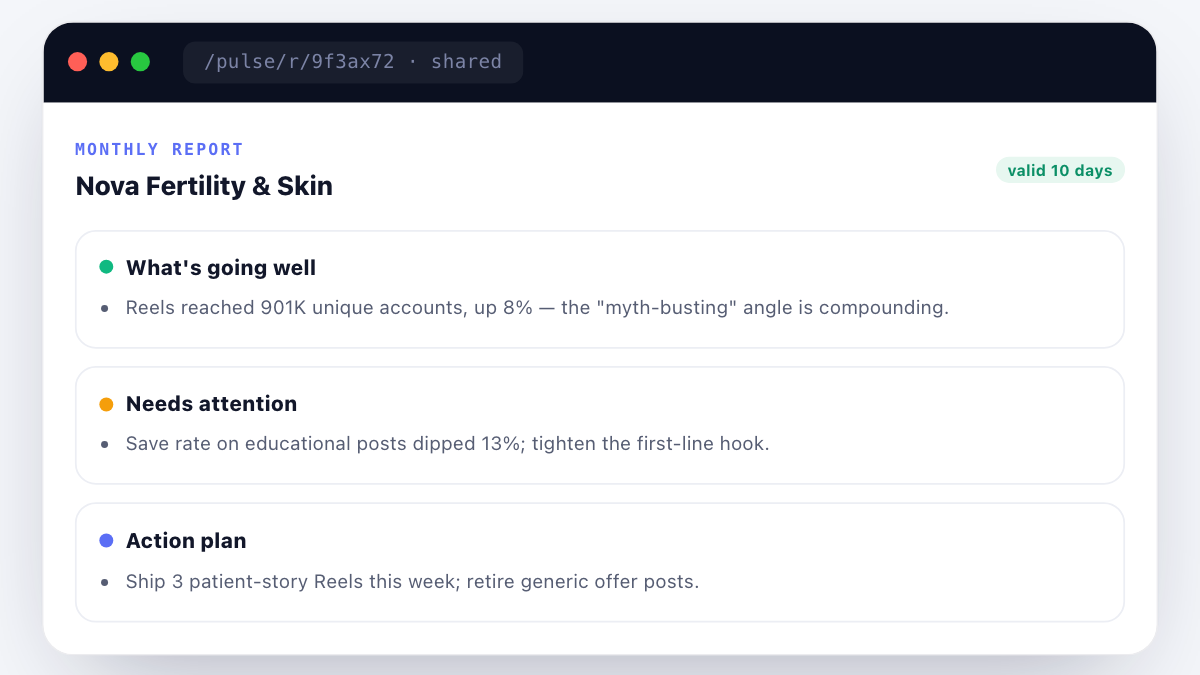
On top of that, ICG layers three things most chains skip: competitor intelligence via Prism Spy to see which local dental competitors are running Meta ads that drive review-worthy walk-ins; Instagram signal via Prism Pulse to catch the specialty stories (aligner cases, cosmetic before-afters) that trigger inbound; and video velocity via YODA, ICG's AI-native YouTube system, to publish patient-consented case content that supports the local pack presence.
Where a clinic runs a CRM already, ICG integrates. Where the chain wants a healthcare-native CRM, AtomCRM (Rs 50,000/- setup + Rs 799/- per telecaller) handles patient journey and review request automation in one workflow. Chains running full-scale RCM overlay work pair this with HealthPro 360 (Rs 14,999/mo). Meta Catalyst IQ handles the paid engine that generates the appointments that generate the reviews. The point is not the tool count — it is that review velocity does not survive in isolation. It sits inside a broader visibility and acquisition system.
What does a 70-30 engagement look like for dental chain ORM?



ICG runs dental chain ORM engagements on a 70-30 fixed-variable model. Seventy percent of the fee is fixed retainer — the systems, the platform, the analytics, the review velocity operations. Thirty percent is variable, tied to outcome metrics agreed with the chain: net-new reviews per clinic per month, reply-under-24-hours percentage, and local pack share-of-voice movement.
Retainers start from Rs 20,000 per month and are custom-scoped, Goals-Driven, with Performance-Linked Payout Models available. Three typical scopes work across most Indian dental chain footprints:
- Foundation: up to 6 locations, GBP operations via Angryturtle, review velocity system setup, weekly variance dashboard.
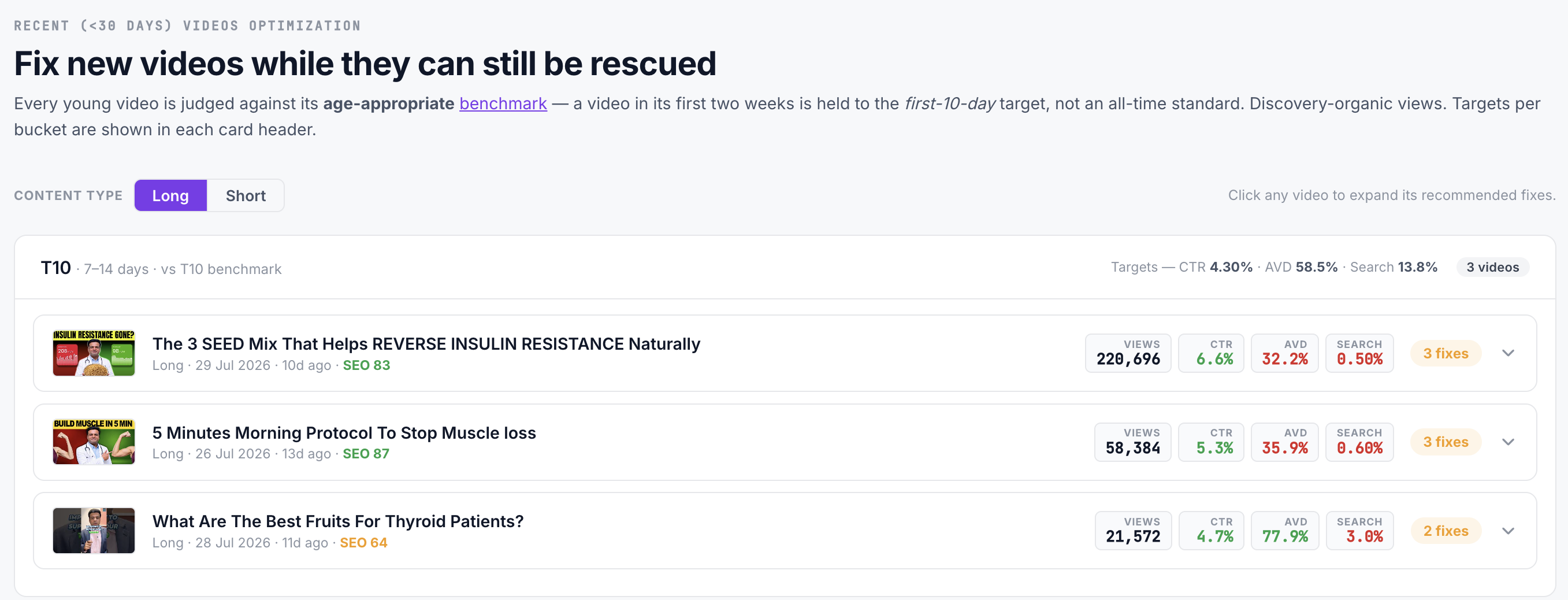
- Growth: up to 15 locations, adds Prism Spy competitor intel, Prism Pulse Instagram analytics, monthly video velocity via YODA.
- Scale: 15+ locations, full-stack ORM engineering, AtomCRM integration, chain-level reporting, board-ready monthly reviews.
Chains that layer paid acquisition on top pair this with Meta Catalyst IQ ad management and YouTube-native visibility programs. The 70-30 principle stays constant across services.
FAQ
(See structured FAQ block below for the eight most common questions dental chain operators ask about review velocity systems in India.)
Book a free 30-minute Brand & Growth Diagnostic.
It's a working session, not a sales pitch — you leave with a written root-cause analysis you can act on, whether or not you engage ICG.
Questions readers ask
about this topic.
The three platforms
behind every ICG engagement.
Beacon
CAPI middleware that fixes Event Match Quality, translates CRM statuses to Meta-standard events, dedups across channels.
Agency OS
Live client dashboard. GSC, GA4, Google Ads, Meta Ads, IVR calls in one view. Login anytime, not monthly.
Phoenix
Clinic revenue intelligence over your PMS. Daily action queue: Prevent Loss, Maintain & Engage, Grow Revenue. Multi-centre rollout.
Or book a free 30-min audit to see all three in action on your account.
Healthcare brands
that already run on ICG.
A representative slice of the 150+ healthcare brands ICG has delivered for across India. Most engagements remain under NDA.


What ICG clients say · on video.
"Dental marketing in Delhi is brutally competitive. ICG's local SEO + Google Ads stack moved the needle steadily."
"Scale up of organic channels and business consulting. ICG has absolute domain authority in their field."
Need help operationalising this?
Every ICG service is healthcare-only, NMC + DPDP-aware, and built around the patient-research patterns that drive Indian healthcare growth in 2026.
Every practice welcome — packages from ₹20,000/mo.
Goals-Driven engagements · Performance-Linked Payout Models available



More from
ICG.
Five trends shaping Indian healthcare marketing through 2027: AI-first patient research, Conversions API adoption, ABDM discovery, the AEO w...
Healthcare AIO is the discipline of getting your clinic or hospital cited inside Google AI Overviews, ChatGPT and Perplexity answers — not j...
Conversational-search advertising places brand messages inside AI chat answers — ChatGPT, Perplexity, Copilot — rather than beside a results...
Stop guessing.
Book a Diagnostic.
30 minutes. Free. With the AI-powered healthcare-only marketing agency 150+ brands already run on. No slides, no pitch, no hard close.


