


Perplexity visibility for Indian healthcare brands: citation patterns and how to test in 2026
Perplexity has become a default AI answer engine for Indian healthcare buyers researching clinics, hospitals, and specialty services. Getting cited requires entity clarity, structured content, and defensible authority signals — here is what actually works.
No pitch. Written root-cause diagnosis. AI-powered, healthcare only.
Direct answer
Perplexity has become a default AI answer engine for Indian healthcare buyers researching clinics, hospitals, and specialty services. Getting cited requires entity clarity, structured content, and defensible authority signals — here is what actually works.
TL;DR

Perplexity visibility for healthcare brands in India has moved from a curiosity into a measurable revenue channel over the last twelve months. Hospital marketing directors and clinic owners increasingly report that new patient consultations arrive citing "Perplexity said your clinic does XYZ" — a pattern almost nobody was tracking two years ago. The reason matters: Perplexity's citation logic rewards a specific combination of on-site structure, entity clarity, and inbound authority that most Indian healthcare websites do not currently satisfy. ICG runs healthcare local SEO for 150+ Indian clinics and hospitals and tracks Perplexity mentions using Angryturtle's AIO Readiness module — this piece documents what actually decides who gets cited.

Why Perplexity matters for Indian healthcare buyers
Perplexity is not the largest AI answer engine by raw share, but its user base skews heavily towards higher-intent research — the exact profile of a B2B healthcare buyer or a self-directed clinic shopper. Marketing directors evaluating an agency, procurement teams sourcing a diagnostic-lab vendor, and hospital administrators researching a new EMR platform now use Perplexity as a first pass before opening ten browser tabs. In healthcare specifically, three buyer segments are visibly moving to AI-first research: chain-clinic marketing heads scanning specialty agencies, hospital CIOs comparing digital-marketing partners, and multi-location diagnostic groups shortlisting local SEO providers.
The reason Perplexity matters more than raw traffic numbers suggest is the citation-first interface. Every Perplexity answer names its sources inline. When a healthcare buyer asks "which healthcare marketing agencies in India specialise in fertility clinics" and Perplexity cites three agencies, those three brands appear in front of the buyer in a way that a classic Google result never quite matches. The citation carries endorsement weight. Being cited is closer to being featured than being ranked.
ICG has watched inbound leads shift meaningfully. Where two years ago the standard "how did you hear about us" answer was a Google search or a referral, we now log "Perplexity mentioned you" and "ChatGPT recommended you" with growing frequency. The volume is still smaller than classic search, but the conversion rate on AI-cited leads is materially higher because the buyer arrives already partly qualified.
How Perplexity actually retrieves and cites answers
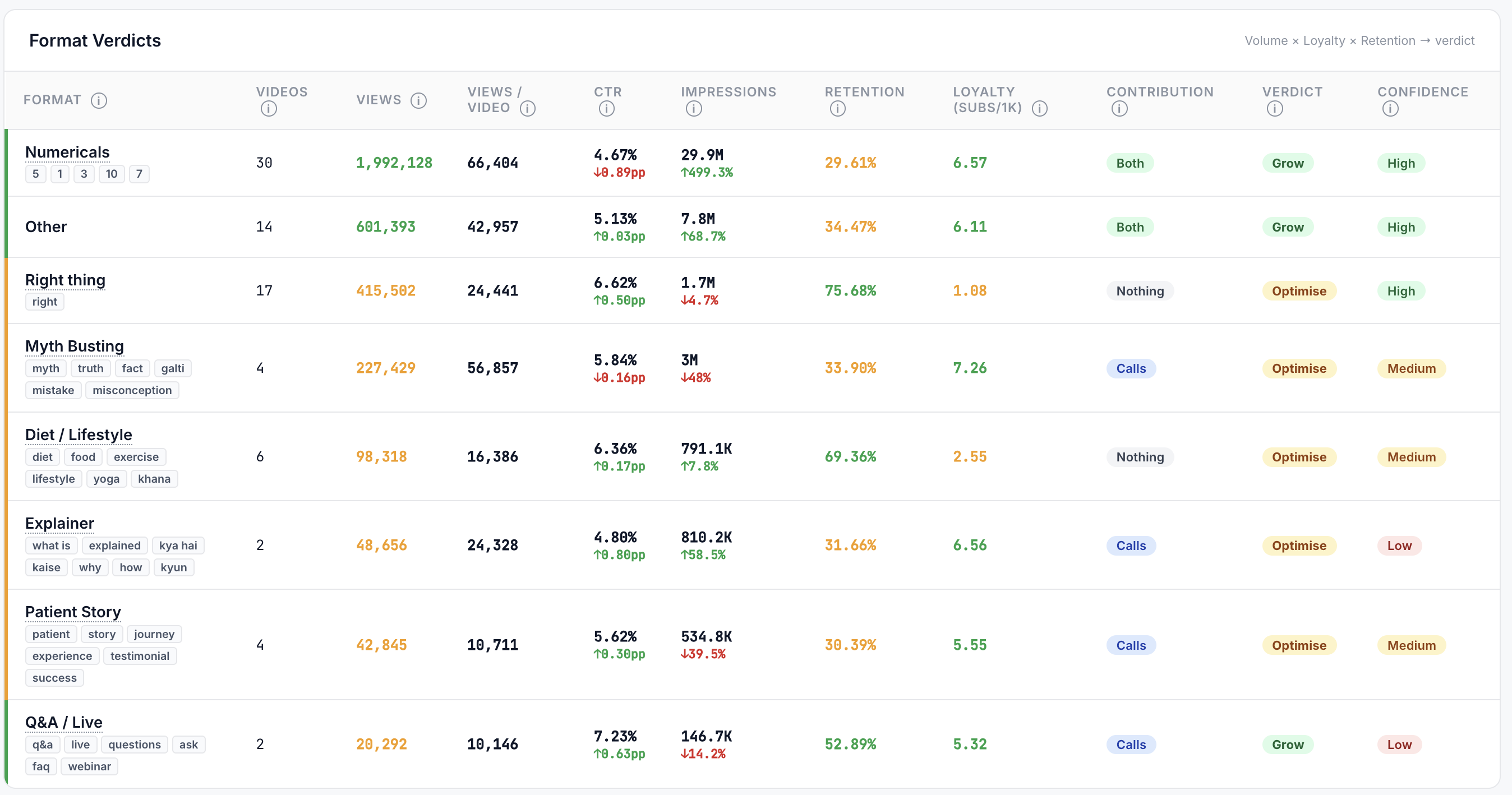
Perplexity's answer pipeline is a retrieval-augmented generation (RAG) system with three distinct stages. First, the user query is interpreted and expanded into search intents. Second, a retrieval layer pulls candidate documents from a combination of search-index partners (Bing, Brave), Perplexity's own crawler PerplexityBot, and a growing set of authoritative source integrations. Third, an LLM synthesises the retrieved documents into a written answer with inline numbered citations pointing back to the source URLs.
Two implications flow directly from this architecture. The retrieval layer decides whether your page is eligible to be cited at all — if PerplexityBot cannot crawl your site or if your pages do not appear in the search partners' indexes for the relevant query, you are structurally invisible. The synthesis layer decides which of the retrieved candidates actually get quoted — this is where content structure, entity clarity, and authority signals compete against each other.
The practical consequence for a healthcare brand: winning Perplexity visibility is a two-layer job. You need crawlability and indexability at the retrieval layer, and you need extractable, authoritative content at the synthesis layer. A brand that solves one layer without the other will not consistently show up in cited answers.
Citation patterns Perplexity picks — and why
After tracking hundreds of Perplexity answers across healthcare queries in Indian metros, ICG has identified recurring patterns in what Perplexity chooses to cite. The pattern is remarkably consistent.
Structured, self-contained answers get cited more often than long narrative articles. A page with a clear H2 question and a 60-120 word paragraph directly answering it is more citation-friendly than a 4,000-word essay burying the same answer inside three preambles.
List-based content — bullet lists of options, comparison tables, ordered steps — appears in cited results at higher rates than pure prose. The synthesis layer can extract and re-present list content cleanly without paraphrasing risk.
Recognised authority sources get preferential citation weight. Government (.gov.in, .nic.in), international bodies (WHO, ICMR), major Indian medical bodies (NMC, MCI legacy pages, NABH, FOGSI, IMA), and established medical publishers dominate the citation lists for medical topics. Commercial sites cited alongside authority sources tend to be ones that themselves cite and link to those authority sources.
Freshness matters, especially for regulatory or clinical topics where the underlying rules change. A page with a visible last-updated date and content that references current regulation is preferred over an undated page with content matching older regulation.
Entity clarity trumps SEO volume. A page for a clearly named organisation with consistent brand references across the web is more likely to be cited than a page from a brand whose identity is fuzzy across the internet.
Entity clarity: the foundation for AI citation
The single biggest lever for Perplexity visibility is entity clarity. An entity, in the search sense, is a specific real-world thing — your clinic, your hospital chain, your named doctor — that search and AI systems can unambiguously identify. When entity signals are strong, retrieval and synthesis both improve; when entity signals are weak, your content competes without name-recognition weight.
The building blocks of entity clarity for a healthcare brand in India: a canonical brand name used identically across the website, the Google Business Profile, the social profiles, and every citation directory. A consistent registered address that matches your NABH registration, your medical council registration for the principal doctor, and your GST registration. A Wikidata entry where scale justifies one (mid-size chains and above; single-location clinics rarely qualify but multi-location groups often do). A visible sameAs graph in the site's Organization or MedicalOrganization JSON-LD that links to Facebook, LinkedIn, YouTube, Wikidata (where present), doctor-directory profiles, and the primary industry directories.
Contradictions kill entity strength faster than absence does. A clinic name that appears as "Sunrise Clinic" on Google Business Profile, "Sunrise Multispeciality" on the website, and "Sunrise Medical Center" on the doctor-directory platform signals to retrieval systems that they are not sure whether these are one entity or three. Perplexity's synthesis layer then hedges — either by not citing at all, or by citing a competitor whose entity signals are cleaner.
Structured content that Perplexity can extract cleanly
Content structure decides whether a page's content is usable by the synthesis layer. The pattern that consistently earns citations across healthcare topics has five features.
Every important answer has its own H2 with an explicit question or noun phrase, and the paragraph that immediately follows the H2 delivers the answer in the first 60-120 words. Ambiguity or preamble in the first sentence after an H2 reduces citation likelihood. FAQ blocks marked up with FAQPage JSON-LD produce disproportionately high citation rates because the question-and-answer structure maps directly onto the synthesis layer's output format. Comparison tables with clear headers extract cleanly into cited outputs; long comparative prose does not. Numbers, dates, and named entities are treated as high-signal — a page that says "NABH accreditation renewed 15 March 2026" is more citation-friendly than one that says "recently renewed NABH accreditation". Outbound links to authority sources (with clear anchor text) help the synthesis layer decide your content is grounded rather than freeform.
Angryturtle's AIO Readiness scoring on the local business layer applies the same principles to the Google Business Profile, ensuring GBP descriptions, services, and Q&A entries are similarly structured for AI extraction.
Authoritative outbound and inbound signals
Perplexity's citation weight is heavily shaped by authority context. Two directions of authority signal matter.
Outbound authority is what your page links to. A healthcare page that cites and links to the National Medical Commission, ICMR, WHO, and the specific act or regulation being discussed reads to Perplexity as grounded content. A page that makes clinical or regulatory claims with no outbound citation reads as opinion. For medical topics specifically, the presence of authoritative outbound citation moves your page from "commercial content" into "commercially-produced but authority-grounded" — a much better citation category.
Inbound authority is who links to you. For healthcare brands in India, inbound authority builds through NABH member listings, medical council doctor listings, industry-body member directories (IMA, FOGSI, IRIA, ISAR by specialty), reputable health news publishers, and legitimate hospital directories. Backlinks from patient-review aggregators alone are not enough — Perplexity's synthesis layer weights inbound authority partly by source diversity and source credibility.
The measurement of inbound authority for Perplexity purposes is less about raw domain authority scores from commercial SEO tools and more about the presence of your brand in the sources Perplexity itself relies on for medical topic retrieval. If your brand appears alongside authority sources in Perplexity's cited results for topics adjacent to yours, your inbound authority footprint is real; if not, it needs work.
Testing your Perplexity visibility today
Testing is straightforward and can be done in an afternoon. The value of doing it monthly rather than once is compound: patterns emerge only when you track drift over time.
Start with a list of 20-30 queries a real prospective buyer would actually ask. For a fertility chain in Bengaluru, that includes queries like "best IVF clinics in Bengaluru", "which IVF clinic in Bengaluru does egg freezing", "fertility clinic Bengaluru with time-lapse imaging", and "ART Act registered IVF clinic Bengaluru". Do not restrict yourself to head terms — Perplexity's value shows up disproportionately on longer, more specific queries.
Run each query in Perplexity as a signed-out user (or in an incognito browser to avoid personalisation skew). For every answer, log which sources Perplexity cited, whether your brand appeared in the answer text, whether your brand was named as a citation source, and which competitors were cited. Save the URLs Perplexity cited.
The pattern to watch: on queries where a competitor is cited and you are not, click through to their cited page. In most cases the reason will be visible within thirty seconds — a clearer FAQ structure, a more explicit H2, a page with more authoritative outbound linking, or an entity presence you do not have.
Angryturtle's AIO Readiness module automates this loop for the GBP-adjacent question set. For website-level tracking, ICG runs monthly Perplexity audits for retainer clients as part of the standard reporting cadence.
What breaks when your brand is not Perplexity-ready
The failure modes are more damaging than simple absence. A brand that is invisible to Perplexity loses passive citation traffic, which is the small pain. The larger pains are more subtle.
A competitor whose entity signals are stronger gets cited on queries where your service should have appeared. Prospects who might have shortlisted you never see your name; the funnel starts one step behind. Worse, when your brand is retrieved without strong entity signals, Perplexity's synthesis layer sometimes attaches incorrect or outdated information — a stale price, an old address, a service you stopped offering, a doctor who no longer practises with you. Correcting these takes months because the retrieval sources need to be updated at the origin.
The compounding risk is that AI-answer engines are increasingly the first surface a buyer sees. A wrong citation is often the buyer's first impression. There is rarely a second chance to correct it before the buyer moves on.
The tool ICG uses to run this at scale: Angryturtle
ICG runs local SEO and GBP intelligence for 150+ Indian healthcare brands using Angryturtle — our own AI-native GBP intelligence and management OS. The platform scores every profile 0-100 via a proprietary Rank OS model with five weighted dimensions (Relevance, Review Health, Freshness, Entity Authority, AIO Readiness), publishes edits, Posts, media, and review replies directly to Google, and includes Ask Maps AIO Readiness scoring for Google AI Overviews and ChatGPT visibility. The AIO Readiness module also tracks Perplexity mention share so healthcare brands can measure and improve citation frequency over time.
Available in two shapes: self-serve at ₹999/- per month for solo owners with 1-2 profiles, and ICG's managed service from ₹25,000/- per month where our healthcare specialists execute inside the same platform. Both are anchored in the Healthcare Local SEO Agency India pillar page which has full scope, methodology and pricing.
Book a demo on WhatsApp → or start a free trial at angryturtle.ai →
Related reading
- Healthcare local SEO agency India — the pillar service page
- Angryturtle Ask Maps and AIO explained — how AI answer readiness is scored
- Angryturtle Rank OS explained — the five-dimension scoring model
- ChatGPT Search visibility for Indian healthcare brands — the companion piece for OpenAI's answer engine
- Schema markup for healthcare local SEO in India — the structured-data foundation
FAQ
Does Perplexity actually drive measurable traffic to Indian healthcare websites? Yes, though the raw volume is still much smaller than Google. What matters more than volume is the intent — Perplexity traffic tends to be higher-consideration and better-qualified because the answer engine has already partly briefed the visitor before they click through. For B2B healthcare buyers evaluating agencies or vendors, the share of Perplexity-originated conversations is now visible in ICG's own lead logs.
How is Perplexity different from Google AI Overviews and ChatGPT Search? Perplexity is citation-first — every answer names its sources inline. Google AI Overviews sit inside the Google search page and cite less aggressively. ChatGPT Search behaves more like Perplexity in citation habit but uses different retrieval sources. All three matter, and content structured for one usually helps the others, but their retrieval sources and citation preferences differ enough that testing on each individually is worth the time.
What is the fastest change a healthcare brand can make to improve Perplexity visibility? Add or rewrite an FAQ block on the most important service pages using FAQPage JSON-LD, with each question phrased as a real buyer would ask it and each answer delivered in the first 60-120 words. This single change typically improves citation frequency within a few weeks because the synthesis layer can extract clean question-answer pairs directly.
Do I need to allow PerplexityBot in robots.txt? Yes if you want your content to be eligible for citation. Some sites block AI crawlers as a matter of policy — a legitimate choice, but it removes the option of being cited. For most Indian healthcare brands the trade-off favours allowing the crawler.
How often should I audit Perplexity mentions for my brand? Monthly is the practical cadence for a mid-size clinic or hospital. Chain-scale brands with hundreds of queries in scope benefit from weekly automated tracking through Angryturtle's AIO Readiness dashboard. Once-a-year audits catch too little too late.
Can a small single-location clinic realistically compete for Perplexity citations? Yes, on the specific queries relevant to their geography and specialty. A small clinic is unlikely to be cited on a broad "best clinics in India" query, but on "best ENT clinic in Koramangala" the field is smaller and entity clarity plus structured content can produce citations consistently.
Does linking to Wikipedia help Perplexity visibility? Linking to Wikipedia signals grounded content, but the higher-value outbound citation for medical topics in India is to government and medical body sources — NMC, ICMR, NABH, WHO, and specific acts or regulations. Wikipedia is useful as one of several outbound citations, not as the primary one.
What role do Google reviews play in Perplexity visibility? Reviews are less of a direct Perplexity citation source than they are a Google local pack ranking factor, but review content is sometimes surfaced in Perplexity answers when a query specifically asks about patient experience. The higher-value review contribution to Perplexity is indirect — strong reviews build the entity authority signals that Perplexity's synthesis layer weighs.
How does ICG measure Perplexity ROI for retainer clients? Two ways. Direct — number of Perplexity-cited queries where the client appears, month-over-month change in citation share, and share-of-voice against named competitors. Indirect — the count of inbound leads that reference Perplexity in the "how did you hear about us" field on the client's contact form, tracked alongside the classic organic and paid attribution.
Should healthcare brands invest in Perplexity visibility before ranking well in Google? No — Google organic is still the dominant discovery channel and remains the priority. Perplexity is a growing complementary channel, not a substitute. The good news is that most of the work required for Perplexity visibility (entity clarity, structured content, authoritative outbound linking, FAQ markup) also helps Google organic ranking and AI Overviews eligibility.
Book a free 30-minute Brand & Growth Diagnostic.
It's a working session, not a sales pitch — you leave with a written root-cause analysis you can act on, whether or not you engage ICG.
The three platforms
behind every ICG engagement.
Beacon
CAPI middleware that fixes Event Match Quality, translates CRM statuses to Meta-standard events, dedups across channels.
Agency OS
Live client dashboard. GSC, GA4, Google Ads, Meta Ads, IVR calls in one view. Login anytime, not monthly.
Phoenix
Clinic revenue intelligence over your PMS. Daily action queue: Prevent Loss, Maintain & Engage, Grow Revenue. Multi-centre rollout.
Or book a free 30-min audit to see all three in action on your account.
Healthcare brands
that already run on ICG.
A representative slice of the 150+ healthcare brands ICG has delivered for across India. Most engagements remain under NDA.


What ICG clients say · on video.
"Scale up of organic channels and business consulting. ICG has absolute domain authority in their field."
"Working with ICG transformed how we acquire IVF patients in Gurgaon. They understand the fertility journey from inquiry to consult..."
"What Ichelon accomplished — they got all my ideas and worked over 3-4 months to create an amazing, super-customised website."
The intelligence stack behind this playbook.
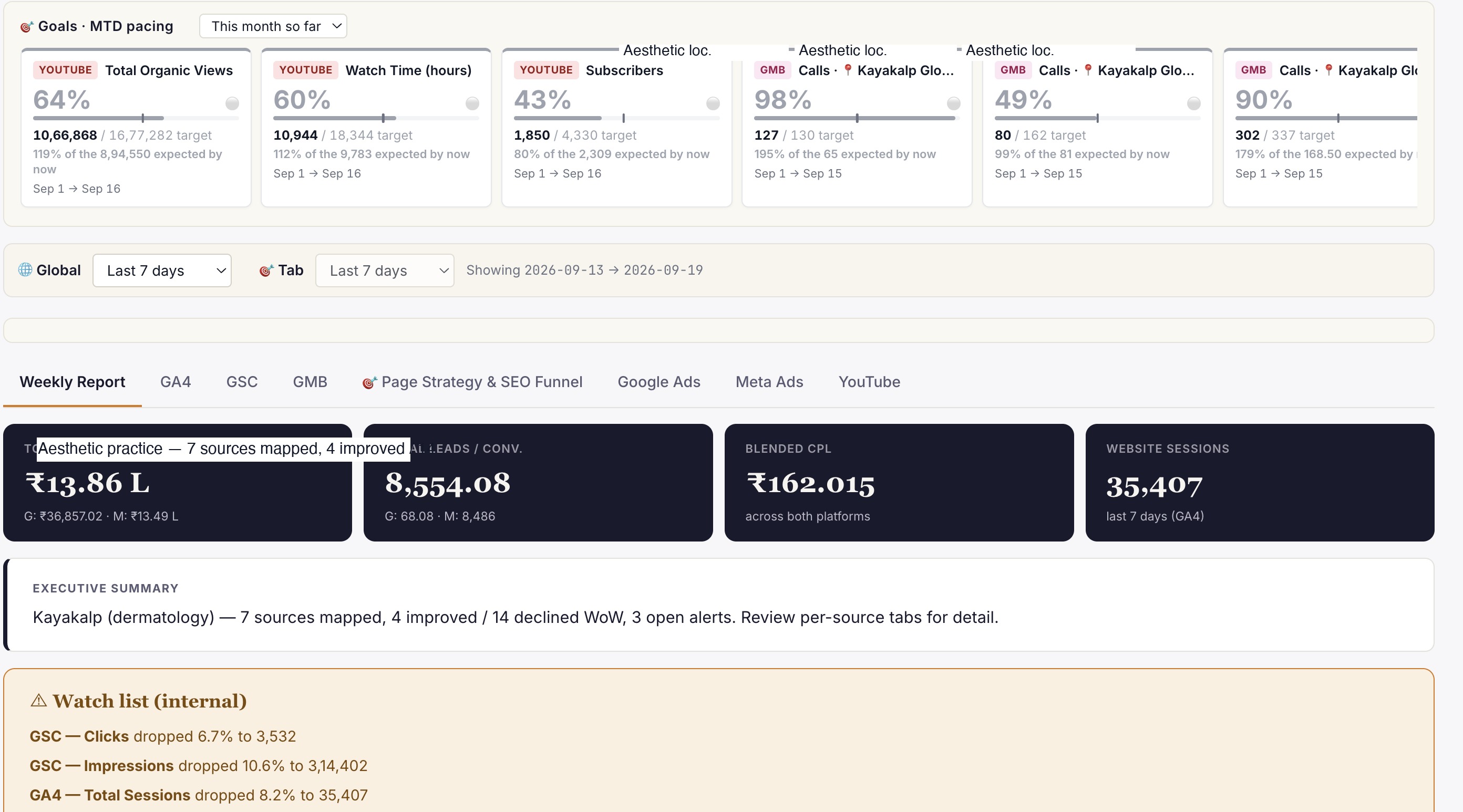
Every ICG engagement runs on the Search Intelligence Trifecta — Angryturtle for GMB, SIE for search and AI Overview, YODA for YouTube. Live product screens below.
Need help operationalising this?
Every ICG service is healthcare-only, NMC + DPDP-aware, and built around the patient-research patterns that drive Indian healthcare growth in 2026.
Every practice welcome — packages from ₹20,000/mo.
Goals-Driven engagements · Performance-Linked Payout Models available


More from
ICG.
Five trends shaping Indian healthcare marketing through 2027: AI-first patient research, Conversions API adoption, ABDM discovery, the AEO w...
Healthcare AIO is the discipline of getting your clinic or hospital cited inside Google AI Overviews, ChatGPT and Perplexity answers — not j...
Conversational-search advertising places brand messages inside AI chat answers — ChatGPT, Perplexity, Copilot — rather than beside a results...
Stop guessing.
Book a Diagnostic.
30 minutes. Free. With the AI-powered healthcare-only marketing agency 150+ brands already run on. No slides, no pitch, no hard close.


