


Orthopaedic Marketing India 2026: Joint, Robotic, Sports Playbook
Orthopaedic marketing playbook for India 2026 — budget benchmarks, robotic-joint positioning, sports-injury funnels and ASCI-safe pricing. Talk to ICG.
No pitch. Written root-cause diagnosis. AI-powered, healthcare only.
Direct answer
Orthopaedic marketing playbook for India 2026 — budget benchmarks, robotic-joint positioning, sports-injury funnels and ASCI-safe pricing. Talk to ICG.
TL;DR
TL;DR
- Orthopaedic marketing splits into 4 distinct sub-verticals: joint replacement (elective, insurance-driven), sports injury (young patients, cash pay), spine (overlaps neurosurgery), and paediatric orthopaedics
- Joint replacement is the highest-volume, highest-value surgical segment — and the most digitally-reachable, because patients self-research extensively before consultation
- Sports injury marketing is influencer + athlete testimonial driven (within NMC compliance bounds)
- Robotic joint replacement surgery commands a premium positioning that significantly improves marketing conversion rates
- CAC benchmarks: joint replacement ₹4,500–₹22,000; sports injury ₹1,800–₹8,500; spine ₹6,000–₹35,000
Orthopaedic surgery sits in an unusual position among surgical specialties: it is one of the few where patients actively research their condition, compare treatment options, and — increasingly — compare surgeons and hospitals before their first consultation. A patient with a 2-year knee pain history who has been told they need a knee replacement will typically spend 3–6 weeks researching online before booking a consultation.
This research-heavy patient journey creates a significant SEO and content marketing opportunity that orthopaedic marketing programmes must exploit.
The 4 orthopaedic sub-verticals — separate marketing for each
Sub-vertical 1: Joint replacement (knee, hip, shoulder) India performs approximately 600,000 joint replacement surgeries annually (Source: Indian Orthopaedic Association, IOA 2024). Knee replacement dominates at ~75% of volume. Patients are typically 55–75 years old; purchase decision is influenced by the patient and adult child; research is extensive. Insurance penetration is high — major TPAs cover knee and hip replacement.
Marketing strategy: condition education SEO ("knee replacement surgery when to consider," "total vs partial knee replacement"), Google Ads for high-intent queries, post-op testimonial content (within NMC bounds — experience-of-care testimonials rather than outcome promises), and insurance/TPA awareness content.
Sub-vertical 2: Sports injury (ACL, meniscus, rotator cuff, shoulder instability) Patients are typically 18–45 years old, frequently athletes or fitness-active individuals. They are digitally savvy and socially connected — sports injury decisions are significantly influenced by peer recommendations and athlete endorsement. Self-pay dominates (sports injuries are often not covered by standard insurance plans).
Marketing strategy: Instagram and YouTube sports content, athlete testimonial content (compliance-managed), sports physiotherapy + surgical continuum content, and Google Ads for condition-specific queries ("ACL tear surgery India," "knee arthroscopy recovery time").
Sub-vertical 3: Spine surgery (disc herniation, spinal stenosis, deformity) Spine surgery overlaps with neurosurgery marketing (see neurosurgery marketing guide). Key distinctive: conservative treatment (physio, injections) is frequently the first-line for spine — the surgical conversion requires clear indication and is patient-research-intensive. Second-opinion seeking is common.
Marketing strategy: conservative-to-surgical content continuum, second-opinion positioning, outcome transparency content, and cross-referral with physiotherapy.
Sub-vertical 4: Paediatric orthopaedics (clubfoot, DDH, scoliosis) Parent-targeted marketing, analogous to paediatric surgery marketing generally. Emotional resonance important; government scheme awareness (many paediatric orthopaedic procedures covered by PM-JAY) is an underutilised marketing lever.
Joint replacement marketing — the digital research opportunity
Why joint replacement patients are the most digitally-reachable surgical patients:
A knee replacement patient's research journey typically includes:
- Google search: "knee replacement when needed" → lands on condition education content
- Google search: "knee replacement surgery cost India" → CAC opportunity on cost content
- Google search: "knee replacement hospital [city]" → local pack click and hospital comparison
- YouTube: "knee replacement surgery video" → procedural trust-building content
- Doctor-directory reviews: surgeon profile research → review count and rating matter
- Google search: "knee replacement recovery time" → post-decision confirmation content
- Hospital booking
An orthopaedic practice that owns content at steps 1, 2, 4, and 6 — and has strong local pack and review presence at steps 3 and 5 — is positioned to capture the majority of this self-directed research journey.
Joint replacement content architecture:
| Content type | Target query | Conversion role |
|---|---|---|
| Condition guide | "when do you need knee replacement" | Top of funnel — research entry |
| Cost guide | "knee replacement cost India 2026" | Mid funnel — financial consideration |
| Procedure guide | "what happens during knee replacement surgery" | Trust building |
| Recovery guide | "knee replacement recovery time" | Decision confirmation |
| Surgeon guide | "how to choose a knee replacement surgeon" | Conversion content |
| Hospital comparison | "best knee replacement hospital [city]" | Local SEO + review |
Robotic joint replacement — the premium positioning advantage
Robotic-assisted joint replacement (Mako, ROSA, CORI) commands a 25–40% premium in patient fees and creates a distinct marketing positioning advantage. Patients who have researched robotic surgery often specifically request it — and are willing to travel to receive it.
How to market robotic joint replacement:
- Dedicated landing page: "Robotic knee replacement surgery — [Hospital Name]" with technical detail on the robotic system, accuracy claims (angle from clinical studies, not individual outcome promises), and recovery advantage explanation
- Google Ads: "robotic knee replacement [city]" queries have lower competition and higher conversion intent than generic "knee replacement" queries
- YouTube: walkthrough video of the robotic surgical system — the most-watched orthopaedic content category on YouTube India
Robotic surgery patient profile: typically 45–65 year old professional, higher income, digitally literate — responds well to technical content and precision-focused messaging.
Sports injury marketing — athlete testimonials and influencer compliance
Sports injury marketing is unique because athlete testimonials are the dominant trust signal. When Virat Kohli's trainer's physiotherapy clinic advertises, or when a local cricket captain recommends his orthopaedic surgeon, conversion rates are dramatically higher than any digital ad.
Within NMC compliance, athlete testimonials about clinical experience (not outcome promises) are permissible. ICG's framework:
- Athlete endorsement of the care experience: "The team got me back to training faster than I expected" (experience statement — permissible)
- Athlete endorsement of a specific outcome: "This surgery was guaranteed to fix my knee, and it did" (outcome promise — not permissible)
Social media for sports injury marketing: Instagram is the dominant channel. Content that works:
- Sports conditioning and injury prevention (educational — high engagement, no compliance risk)
- "Understanding ACL tears" explainer reels (educational)
- Recovery milestone content (with athlete consent, experience-focused)
- Live Q&A: "Ask the orthopaedic surgeon about sports injuries" (builds authority)
Package pricing marketing — the ASCI-safe path
Joint replacement package pricing is one of the most searched queries in orthopaedic marketing ("knee replacement surgery package cost," "hip replacement all-inclusive package"). Marketing package prices is permissible, with conditions:
- Package must clearly state what is included (surgery, implant grade, hospital stay, physiotherapy, follow-up visits)
- "Starting from" framing is safer than a single fixed price (patient-specific implant selection affects actual cost)
- No comparative pricing against competitors
- ASCI's guidelines on healthcare advertising require that pricing claims are accurate and not misleading
ICG builds package pricing landing pages for orthopaedic clients that convert at 2.8–4.2× the rate of generic "orthopaedic surgery" pages, because they answer the patient's primary decision-stage question directly.
Post-surgical rehabilitation marketing — the cross-sell that builds LTV
Joint replacement patients need 6–12 weeks of physiotherapy post-operatively. Orthopaedic hospitals with in-house physiotherapy — or formal referral arrangements with physio clinics — capture this post-surgical volume and build patient loyalty that generates word-of-mouth and review volume.
Marketing the rehabilitation continuum ("surgery to walking in 6 weeks — our complete joint replacement programme") is a distinctive brand proposition that resonates with research-stage patients.
Marketing budget benchmarks — orthopaedic surgery
| Practice type | Monthly marketing investment | Primary allocation |
|---|---|---|
| Solo orthopaedic consultant | ₹35,000–₹1.2L | Local SEO + GBP + content (4–6 pieces/month) |
| Orthopaedic speciality centre | ₹1.2L–₹3.5L | SEO + PPC + social + ORM |
| Orthopaedic department (multi-specialty hospital) | ₹1.5L–₹4L (ortho-specific) | Joint replacement content + sports injury social + robotic positioning |
| Standalone orthopaedic hospital | ₹4L–₹12L | Full-funnel + influencer + package pricing pages + analytics |
"Orthopaedic patients are among the most research-intensive buyers in Indian healthcare. A 62-year-old executive deciding on knee replacement will read 12–18 pieces of content across 3–4 websites before booking a consultation. The orthopaedic centre that produces the most credible, clinically specific, and emotionally resonant research trail — condition education, cost guide, recovery guide, surgeon credential page, patient testimonials — captures this patient. The hospital that only has a single 'Orthopaedics Department' page on its website loses them." — Rohit Gupta, Co-Founder — Business & Growth Lead, ICG
Case snapshot
An orthopaedic surgery centre in Pune — 3 orthopaedic surgeons, Mako robotic system — came to ICG with strong clinical reputation but poor digital presence (website from 2019, 43 Google reviews at 4.1 stars, no condition-specific content). ICG's 10-month programme: 38-piece orthopaedic content cluster (joint replacement, sports injury, spine sub-verticals), robotic surgery landing page, GBP optimisation, Google Ads for joint replacement and robotic surgery queries, review generation SOP. Month 10: 22,000 new monthly organic impressions, 4.8 stars, 280 Google reviews, robotic surgery enquiries up 180%, CPL ₹3,200 vs ₹8,900 pre-engagement (ICG internal data, 2026).
FAQ
Q1: What is the most effective channel for joint replacement patient acquisition? Content SEO drives 55–65% of joint replacement research traffic. Google Ads capture high-intent queries ("knee replacement hospital near me"). Local pack / Google Business Profile is the final conversion point. All three must work together.
Q2: What is the patient acquisition cost for elective joint replacement in India? ₹4,500–₹22,000 per elective joint replacement patient acquired through digital channels. With surgery revenue of ₹1.5L–₹4L per procedure, a ₹22,000 CAC is commercially sound.
Q3: Can orthopaedic surgeons use patient testimonials in marketing? Experience-of-care testimonials (quality of care, communication, recovery support) are in the permissible zone. Treatment outcome testimonials ("this surgery fixed my knee pain permanently") are prohibited under the NMC Ethics Code.
Q4: How should robotic joint replacement surgery be marketed? Dedicated landing page with technical explanation of the robotic system, clinical accuracy benefits (from published literature, not individual patient claims), and targeted Google Ads for "robotic knee replacement [city]" queries. Separate from general joint replacement campaigns.
Q5: Is sports injury marketing effective on Instagram? Yes — sports injury is one of orthopaedics' most Instagram-responsive segments. Educational reels about injury prevention, condition explanation (ACL, meniscus, rotator cuff), and athlete endorsement content (within NMC compliance) perform well with 18–40 year old sports-active audiences.
Q6: What content drives the highest orthopaedic consultation bookings? "When do I need knee replacement?" and "knee replacement cost India" content consistently drives the highest consultation conversion rates — these are decision-stage queries by patients already considering surgery.
Internal links
- Hospital marketing agency India
- Doctor marketing agency India
- Physiotherapy clinic marketing India 2026
- Neurosurgery marketing strategies 2026
- NMC ethics code 2026 marketing rules doctors
- Book a strategy call
External sources
- Indian Orthopaedic Association (IOA) — joint replacement volume statistics
- WHO — musculoskeletal disease burden India
- MoHFW — AB PM-JAY orthopaedic procedure coverage
- NMC — ethics code reference, nmc.org.in
- Mako (Stryker) — robotic joint replacement clinical outcome literature
Compliance note. Marketing content for orthopaedic surgery must comply with NMC's 2026 advertising guidelines. Package pricing must be accurate and include itemisation of included services. Athlete testimonials must be experience-focused, not outcome-focused. Robotic surgery claims must reference published clinical literature, not individual patient outcomes. This article is informational and does not constitute medical or legal advice.
Where orthopaedic marketing breaks in 2026 — the seven mistakes we see every month
Most orthopaedic surgery practices we audit have solid clinical outcomes and a well-shot facility video. What they don't have is a marketing engine that converts a knee-pain searcher into a booked OPD without triggering NMC or ASCI scrutiny. Below are the seven mistakes that show up in almost every diagnostic call — and the correction that unlocks pipeline.
- One landing page for all four sub-verticals. Joint replacement, arthroscopy, sports injury and spine each carry different intent, price bands and objections. One page dilutes all four. Split them, then interlink.
- Robotic surgery framed as a feature, not a decision. "Mako-assisted" means nothing to a 62-year-old with bone-on-bone knees. Reframe as recovery time, precision and revision risk — measurable, comparable, ASCI-safe.
- No doctor-authority video library. Ninety percent of pre-consult research now happens on YouTube and AI Overviews. Without a structured surgeon channel, you are invisible to the highest-intent segment. Our YODA engagement fixes this in 90 days.
- Meta Ads with no competitor intelligence. Orthopaedic CACs in Tier-1 metros have doubled since 2024 because six hospitals bid on the same joint-pain audience. Prism Spy shows exactly which creatives and offers your competitors are running — and where the whitespace is.
- Google Business Profile treated as a directory listing. A GBP that isn't posting weekly, harvesting reviews and answering Q&A loses 40-60% of "orthopaedic surgeon near me" clicks. Angryturtle automates the operating rhythm for ₹999/mo.
- Package pricing published without disclaimers. ASCI has flagged 200+ hospital ads in the last 18 months. Every price surface needs the "individual outcomes vary" clause and a signed patient consent trail before creative goes live.
- No referral-network layer. Physiotherapists, sports coaches and GPs still send 30-45% of high-value joint-replacement cases. If your marketing plan doesn't include a monthly referral CRM touch, you're leaving the most profitable channel on the table — see our Client Elevation Programme for the full referral operating cadence.
Fixing four of these seven typically moves an orthopaedic practice from cost-per-lead ₹1,800-2,400 down to ₹700-1,100 within two quarters — while keeping the compliance envelope clean.
Book a free 30-minute Brand & Growth Diagnostic.
It's a working session, not a sales pitch — you leave with a written root-cause analysis you can act on, whether or not you engage ICG.
The three platforms
behind every ICG engagement.
Beacon
CAPI middleware that fixes Event Match Quality, translates CRM statuses to Meta-standard events, dedups across channels.
Agency OS
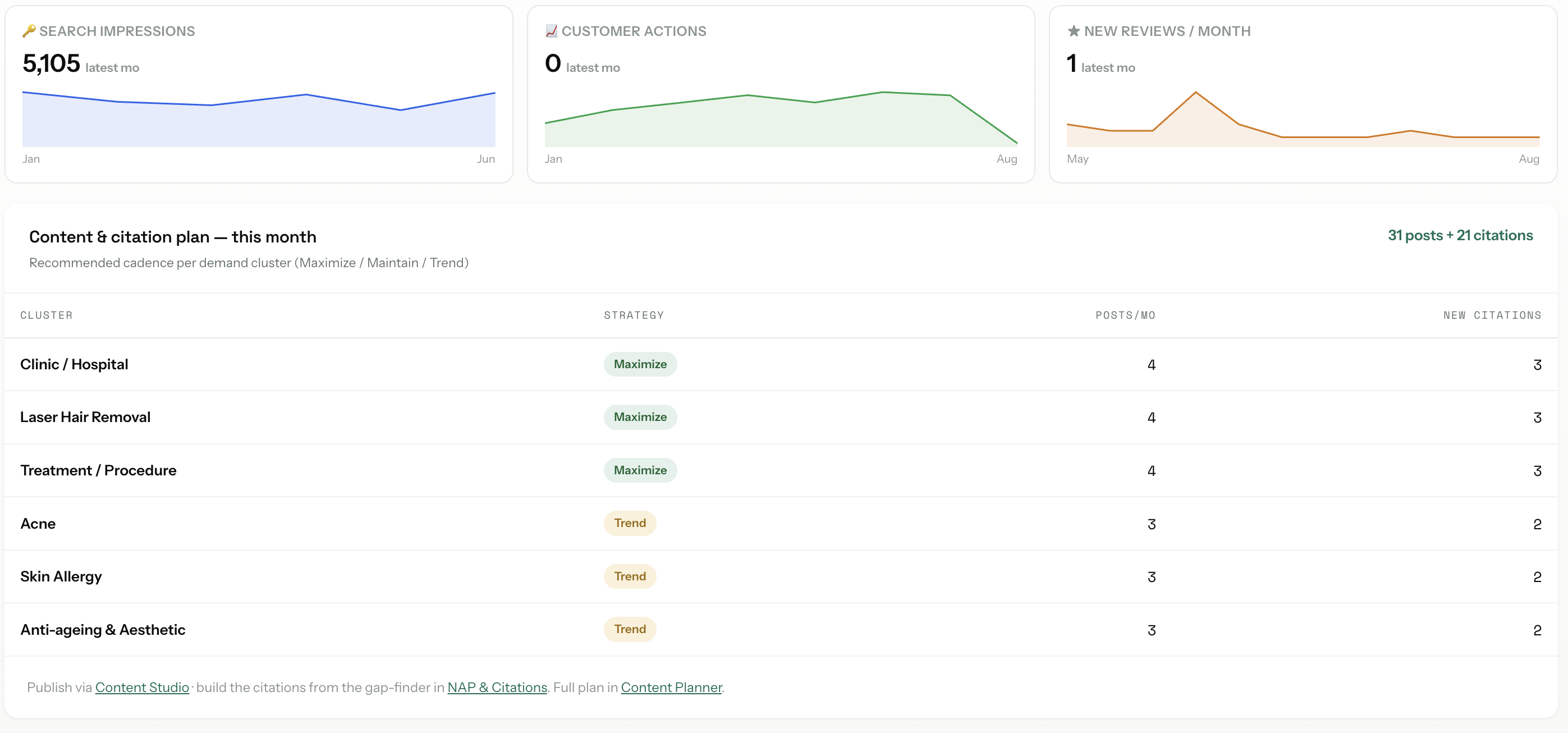
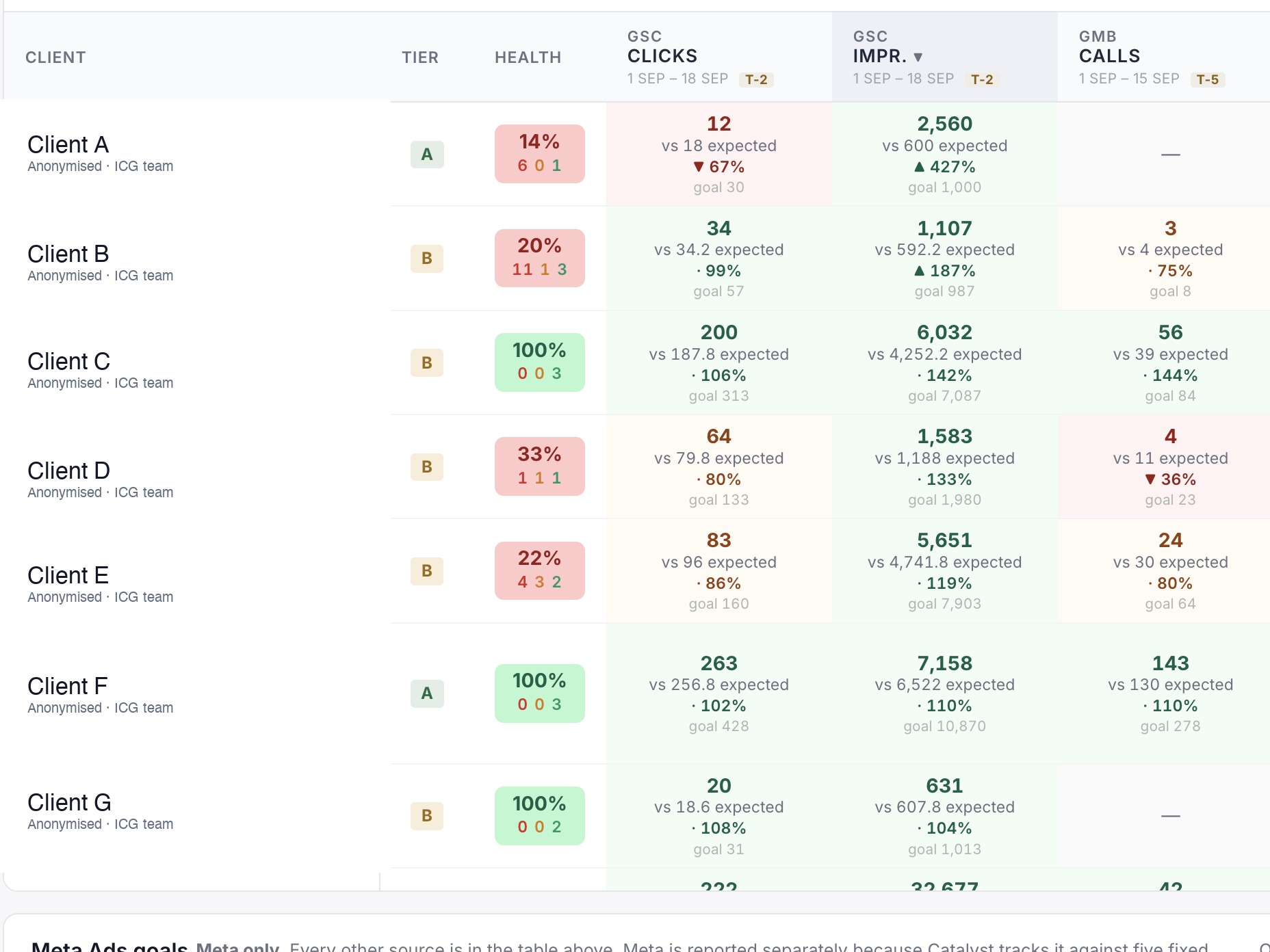
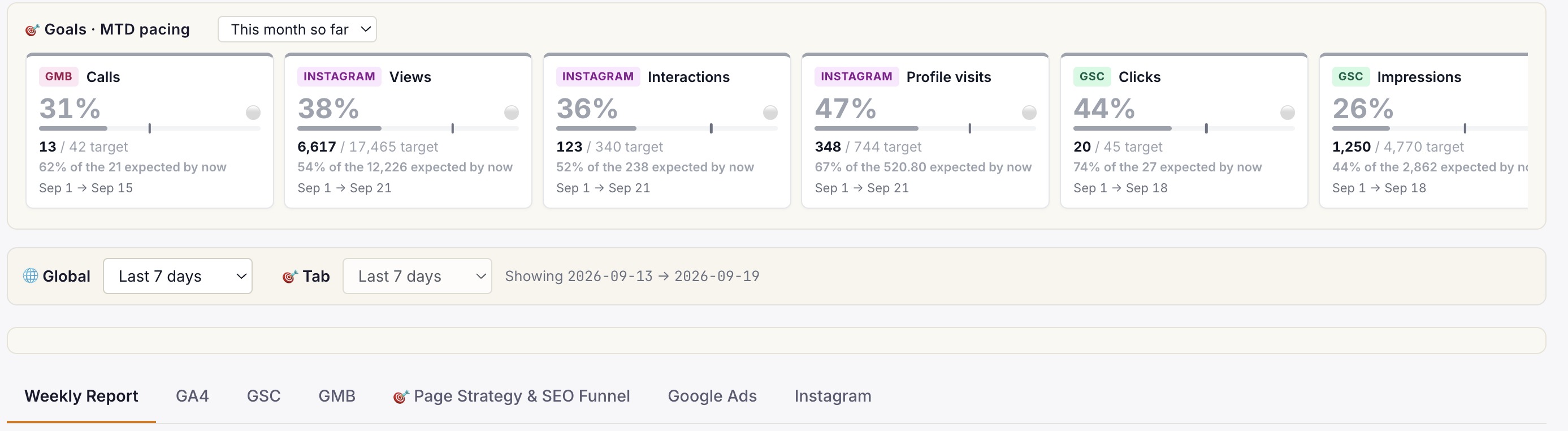
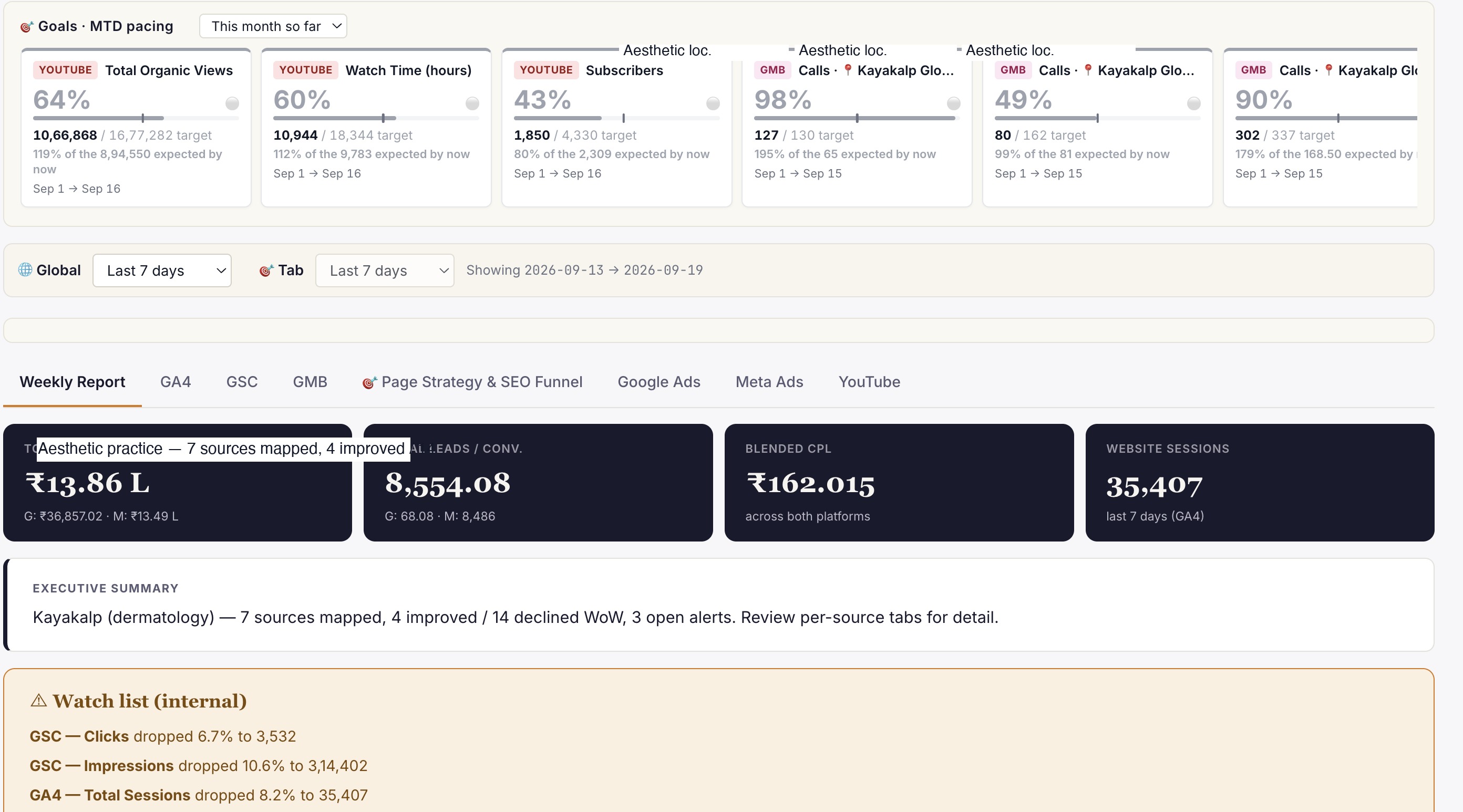
Live client dashboard. GSC, GA4, Google Ads, Meta Ads, IVR calls in one view. Login anytime, not monthly.
Phoenix
Clinic revenue intelligence over your PMS. Daily action queue: Prevent Loss, Maintain & Engage, Grow Revenue. Multi-centre rollout.
Or book a free 30-min audit to see all three in action on your account.
Healthcare brands
that already run on ICG.
A representative slice of the 150+ healthcare brands ICG has delivered for across India. Most engagements remain under NDA.


What ICG clients say · on video.
"ICG's healthcare-only focus made the difference. They speak our language and understand patient acquisition specifics."
"ICG's deep understanding of healthcare patient journeys makes their orthopedic campaigns markedly more effective."
Need help operationalising this?
Every ICG service is healthcare-only, NMC + DPDP-aware, and built around the patient-research patterns that drive Indian healthcare growth in 2026.
Every practice welcome — packages from ₹20,000/mo.
Goals-Driven engagements · Performance-Linked Payout Models available
More from
ICG.
Five trends shaping Indian healthcare marketing through 2027: AI-first patient research, Conversions API adoption, ABDM discovery, the AEO w...
Healthcare AIO is the discipline of getting your clinic or hospital cited inside Google AI Overviews, ChatGPT and Perplexity answers — not j...
Conversational-search advertising places brand messages inside AI chat answers — ChatGPT, Perplexity, Copilot — rather than beside a results...
Stop guessing.
Book a Diagnostic.
30 minutes. Free. With the AI-powered healthcare-only marketing agency 150+ brands already run on. No slides, no pitch, no hard close.


