


Local SEO for oncology centres and cancer hospitals in India: second-opinion pathway drives everything
Local SEO for oncology centres in India is defined by one dominant patient journey feature: 60-80% of oncology patients arrive at a specific centre for a second opinion after an initial diagnosis elsewhere, rather than through cold search. This changes what local SEO needs to do
No pitch. Written root-cause diagnosis. AI-powered, healthcare only.
Direct answer
Local SEO for oncology centres in India is defined by one dominant patient journey feature: 60-80% of oncology patients arrive at a specific centre for a second opinion after an initial diagnosis elsewhere, rather than through cold search. This changes what local SEO needs to do
TL;DR

Local SEO for oncology centres in India is defined by one dominant patient journey feature: 60-80% of oncology patients arrive at a specific centre for a second opinion after an initial diagnosis elsewhere, rather than through cold search. This changes what local SEO needs to do compared to other specialties. Google Business Profile optimisation matters, but so does the schema and website content that referring physicians and diagnostic labs read before directing patients. NMC compliance is stricter for oncology than any other specialty (survival, cure, success claims are absolutely prohibited). ICG runs healthcare local SEO for oncology centres using Angryturtle calibrated for the second-opinion patient pathway, referring-physician signal requirements, and the strictest compliance perimeter in Indian healthcare.
Why oncology local SEO is different from every other specialty
Second-opinion patient pathway. A cancer patient's journey typically starts elsewhere — a GP or specialist detects a suspicious symptom, refers for diagnostics, an initial diagnosis is made, and the patient (usually accompanied by family) then seeks a second opinion from a specialised cancer centre. That second-opinion visit is where the acquisition happens for major cancer centres. Local SEO needs to reach both the patient (who searches for second-opinion centres) and the referring physician (who directs patients toward specific centres they trust).
Referral-mediated flow is dominant. Beyond direct patient search, oncology centres rely heavily on referral relationships with GPs, specialists (cardiologists, gynaecologists, gastroenterologists), diagnostic labs (pathology labs sending biopsy results with cancer indications), and even other hospitals (community hospitals routing complex cases to tertiary cancer centres). Local SEO for oncology needs to build the reputation-signal strength that supports these referral flows.
Compliance perimeter is the strictest in Indian healthcare. NMC's 2026 advertising guidelines restrictions apply plus specific concerns for oncology. Absolutely prohibited in oncology marketing: survival rate claims, cure claims, success claims for specific treatments, comparative outcomes (this centre versus that centre), before-and-after imagery (for reconstruction after cancer surgery — heavily restricted), patient testimonials framed as evidence of specific treatment outcomes. What's permitted: descriptions of technology and capabilities, factual service listings, educational content about cancer types and treatment options, referring-physician-facing content, and multidisciplinary team credential displays.
Angryturtle's sie" style="color:inherit;text-decoration:underline;text-decoration-color:rgba(42,126,200,.5);text-underline-offset:2px">Rank OS for oncology profiles weights Entity Authority heavily (referring-physician trust depends on legitimacy signals — medical association memberships, published research, accreditation status), Relevance strongly (correct categorisation for sub-cancer-types matters), and Freshness moderately. Review Health matters but with compliance-safe framing that avoids specific-outcome claims.

GBP configuration for oncology centres
Primary category. "Oncologist" for solo oncologists; "Cancer Treatment Center" for dedicated cancer hospitals; sub-specialty categories for focused practices — "Radiation Oncologist," "Medical Oncologist," "Surgical Oncologist," "Pediatric Oncologist," "Hematologist Oncologist." Multi-specialty hospitals with cancer departments stay at hospital-level primary and use "Cancer Treatment Center" as secondary.
Secondary categories. Fill up to 9 slots with sub-specialties and related services: Radiation Oncologist, Medical Oncologist, Surgical Oncologist, Hematologist (for blood cancers), Radiation Therapy, Chemotherapy, Immunotherapy, Palliative Care, Cancer Screening Center, Diagnostic Imaging (if the centre has integrated PET-CT or MRI capability).
Services list. Oncology has 15-20 distinct services worth listing: Oncology Consultation, Second Opinion Consultation, Radiation Therapy (with modality: 3D-CRT, IMRT, IGRT, SRS, SBRT — separate services), Chemotherapy Administration, Immunotherapy, Targeted Therapy, Hormone Therapy, Bone Marrow Transplant (BMT — Autologous, Allogeneic — separate services if performed), Cancer Surgery (with type: Breast Cancer Surgery, Prostate Cancer Surgery, Colorectal Cancer Surgery, etc.), Palliative Care, Cancer Rehabilitation, Genetic Counselling for Cancer, Cancer Screening (with type: Mammography, Colonoscopy, etc.), Multidisciplinary Tumor Board Review, Clinical Trials Participation (if the centre conducts trials).
Business description. 750 characters covering: centre name and oncology focus, years of operation, sub-specialties (medical, surgical, radiation oncology depth), notable technology (specific radiation therapy systems — LINAC brand and model, CyberKnife if applicable), medical team credentials with emphasis on fellowship training, NABH accreditation or JCI accreditation status (accreditation matters more for oncology than most specialties), tumor board multidisciplinary review capability, clinical trials participation.
Attributes. Health-and-safety attributes (infection control critical for immunocompromised cancer patients), appointment scheduling with priority for suspected cancer diagnoses, insurance panels, financing arrangements (many cancer treatments require significant financial support), accessibility features, languages spoken.
The compliance perimeter — what oncology marketing cannot say
The NMC restrictions plus oncology-specific concerns produce a strict content perimeter:
Absolutely prohibited: - Survival rate claims ("our 5-year survival rate is 85%") - Cure claims ("we cure cancer," "our treatment approach cures 90% of early-stage breast cancer") - Success claims ("high success rate," "leading success rates") - Comparative outcome claims ("better outcomes than other centres") - Before-and-after imagery for reconstructive surgery post-cancer - Patient testimonials claiming they were "cured" or "saved" - Any claim implying a specific treatment protocol produces specific outcomes
Permitted: - Descriptions of technology and treatment modalities available - Factual service listings and consultation availability - Educational content about cancer types, symptoms, screening, treatment options (without outcome claims) - Referring-physician-facing content about clinical protocols and multidisciplinary approach - Team credential displays (fellowship training, publications, hospital affiliations) - Descriptions of clinical trial participation and research capability - Accreditation and quality certification information - Compliant patient testimonials focused on care experience (not treatment outcomes)
The compliance-safe framing pattern: focus on the centre's capabilities, technology, and multidisciplinary approach rather than specific outcomes. "Our multidisciplinary tumor board reviews every complex case with 8 oncology specialists" is factual and compliant. "Our cancer treatments have 85% success rates" is prohibited regardless of whether it's true.
Angryturtle's AI-drafted content for oncology profiles uses these compliance-safe framings by default. Every draft passes through medical-affairs compliance-reviewer confirmation before publishing.
The referring-physician signal layer
Oncology's referral-heavy flow means the profile needs to signal to referring GPs, specialists, and diagnostic labs, not just to patients. Referring-professional-relevant signals:
GP and specialist-facing: - Multidisciplinary team credentials (medical, surgical, radiation oncologists working together) - Sub-specialty depth by cancer type - Rapid second-opinion turnaround (referring physicians want to know their patient will be seen quickly) - Clinical protocol transparency (published protocols for common cancers) - Molecular tumor profiling capability - Clinical trial participation
Diagnostic lab-facing: - Direct pathology-to-oncology consultation routing - Molecular pathology capability - Second-opinion pathology review for challenging cases
These signals live on the centre's website (Physician schema on doctor pages, MedicalProcedure schema on treatment pages, published clinical protocols) linked from GBP. ICG's healthcare local SEO extends beyond GBP itself into the schema and website content that supports referring-professional confidence.
Ask Maps for oncology patient and family queries
Cancer patients and their families ask AI systems very specific queries. Angryturtle's Ask Maps question bank for oncology covers:
- "Best cancer hospital in [city] for breast cancer"
- "Which oncology centre does CyberKnife in [city]"
- "Does this hospital do bone marrow transplant"
- "What's the second-opinion process at this cancer centre"
- "Is there a tumor board at this hospital"
- "Which insurance panels does this cancer centre accept"
- "Are there paediatric oncologists at this hospital"
- "Does this centre participate in clinical trials"
- "What radiation therapy systems does this centre have"
- "How to get a second opinion for cancer at this hospital"
The question bank is designed to answer questions cancer patients and families ask AI systems without triggering compliance-restricted outcome or comparative language.
Palliative care as a specific consideration
Many cancer centres offer palliative care alongside curative treatment. Palliative care has its own compliance and communication considerations that most agencies mishandle. Marketing palliative care requires framings that focus on quality-of-life and symptom management rather than treatment success or cure. Family-facing content matters (palliative care decisions typically involve extended family).
Angryturtle's Content Studio for oncology profiles handles palliative care content with appropriate compassionate framing.
Pricing tiers for oncology centres
Oncology centres typically fit ICG's Chain or Hospital tier due to complexity:
Small oncology practice or specialty clinic: Chain tier at ₹75,000-₹1,50,000/month covers GBP optimisation, weekly Post cadence with compliance workflow, review operations, monthly Geo-Grid tracking, monthly citation building against oncology-specific directories.
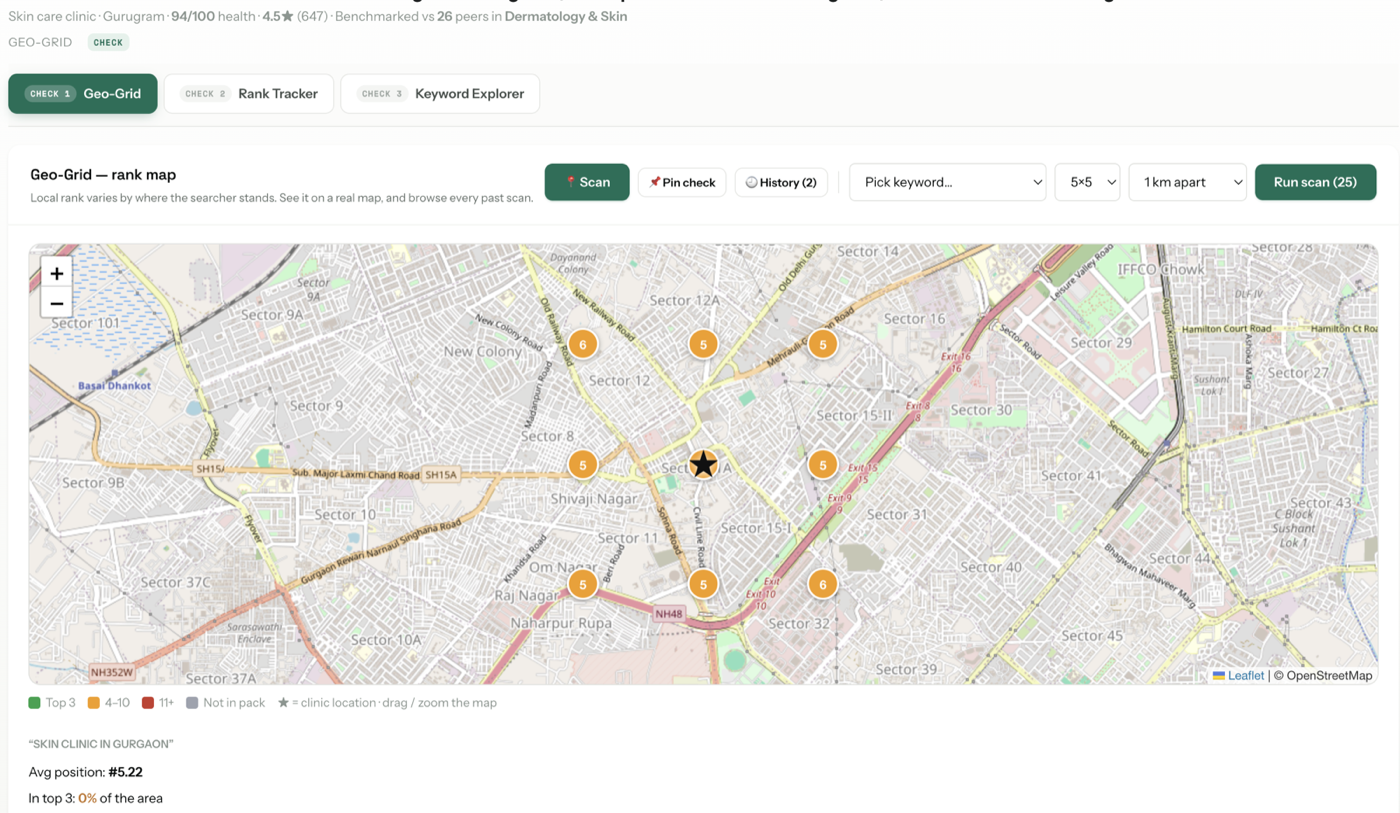
Cancer hospital or hospital oncology department: Hospital tier at ₹1,50,000-₹4,00,000/month covers department-level operations for full oncology stack (medical, surgical, radiation, paediatric), daily Post cadence, review operations across the full patient/family footprint, weekly Geo-Grid tracking per location, ongoing citation building, monthly AIO audit, referring-physician-facing content strategy, custom reporting.
Media spend for oncology paid marketing (limited by compliance) runs separately.
Related reading
- Healthcare local SEO agency India — pillar service page
- Local SEO for cardiology clinics India — similar referral-heavy comparison
- Local SEO for orthopedic practices India — sub-specialty depth comparison
- Oncology marketing cost India — budget context
FAQ
How is oncology local SEO different from other specialties? Second-opinion patient pathway dominates (60-80% of patients arrive via second opinion, not cold search), referral-mediated flow from GPs and diagnostic labs is critical, and compliance perimeter is the strictest in Indian healthcare (survival, cure, success claims absolutely prohibited).
Can oncology centres advertise survival rates? No. NMC restrictions plus oncology-specific concerns absolutely prohibit survival rate claims regardless of whether they're accurate. Compliant framing focuses on centre capabilities and multidisciplinary approach.
How many reviews does an oncology centre need for competitive positioning? Volume expectations lower than acute-care specialties (200-500 for cancer hospitals, less for solo oncology practices) but review quality and detail matter more. Reviews focus on care experience rather than treatment outcomes.
What compliance frameworks apply to oncology marketing? NMC's 2026 advertising guidelines (with strict oncology-specific interpretation on outcome claims), ASCI Guidelines 2022 (absolute prohibition on comparative outcome claims), DPDP Act 2023 (patient data protection with particular sensitivity for cancer diagnosis data), and platform-specific policies on cancer treatment advertising.
How does referral flow affect oncology local SEO? Referring physicians check the centre's Google presence and website before directing patients. Schema, credentials, publications, and multidisciplinary team signals matter more than in patient-facing-only specialties.
Can Angryturtle handle oncology compliance requirements? Yes. Ask Maps question bank, Content Studio drafting, and review reply drafting all use oncology-appropriate compliance-safe framings by default.
Should an oncology centre invest in local SEO if referrals dominate? Yes. Local SEO builds the reputation-signal strength that supports referral flows, and captures the direct-search patients who do arrive without referral. The two channels compound.
How long before an oncology centre sees local SEO improvement? Similar to other specialties: 4-8 weeks for first ranking movement, 3-6 months for substantive improvement. Second-opinion patient acquisition timelines are longer (families take weeks to decide on cancer centres) so booking impact shows up later than ranking impact.
Does ICG handle paediatric oncology specifically? Yes. Paediatric oncology gets appropriate sub-specialty categorisation, family-facing content strategy, and paediatric-appropriate compliance framings.
What about palliative care marketing? Handled with compassionate framing focused on quality-of-life and symptom management. Family-facing content strategy given palliative care decisions typically involve extended family.
How does ICG position oncology capabilities without making outcome claims? Focus on centre capabilities (technology, sub-specialty depth, multidisciplinary team), factual service listings, educational content on cancer types and treatments, accreditation status, clinical trial participation, and compassionate care experience descriptions.
Does the centre need to publish clinical trial information? For centres that conduct clinical trials, yes — signals research capability and treatment innovation to both patients and referring physicians. For centres that don't conduct trials, factual absence is fine; false claims of trial availability would violate compliance.
Book a free SEO diagnostic.
Hanuman Sihag's team runs a live crawl, checks technical health, cannibalisation, schema coverage and content gaps. 60 minutes, prioritised fix list.
The three platforms
behind every ICG engagement.
Beacon
CAPI middleware that fixes Event Match Quality, translates CRM statuses to Meta-standard events, dedups across channels.
Agency OS
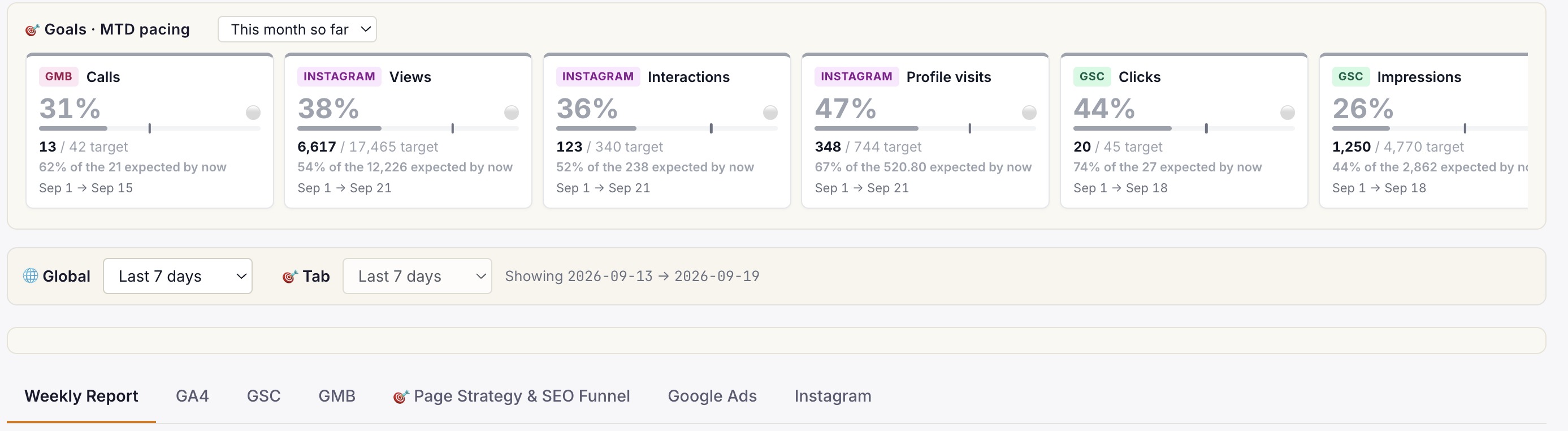
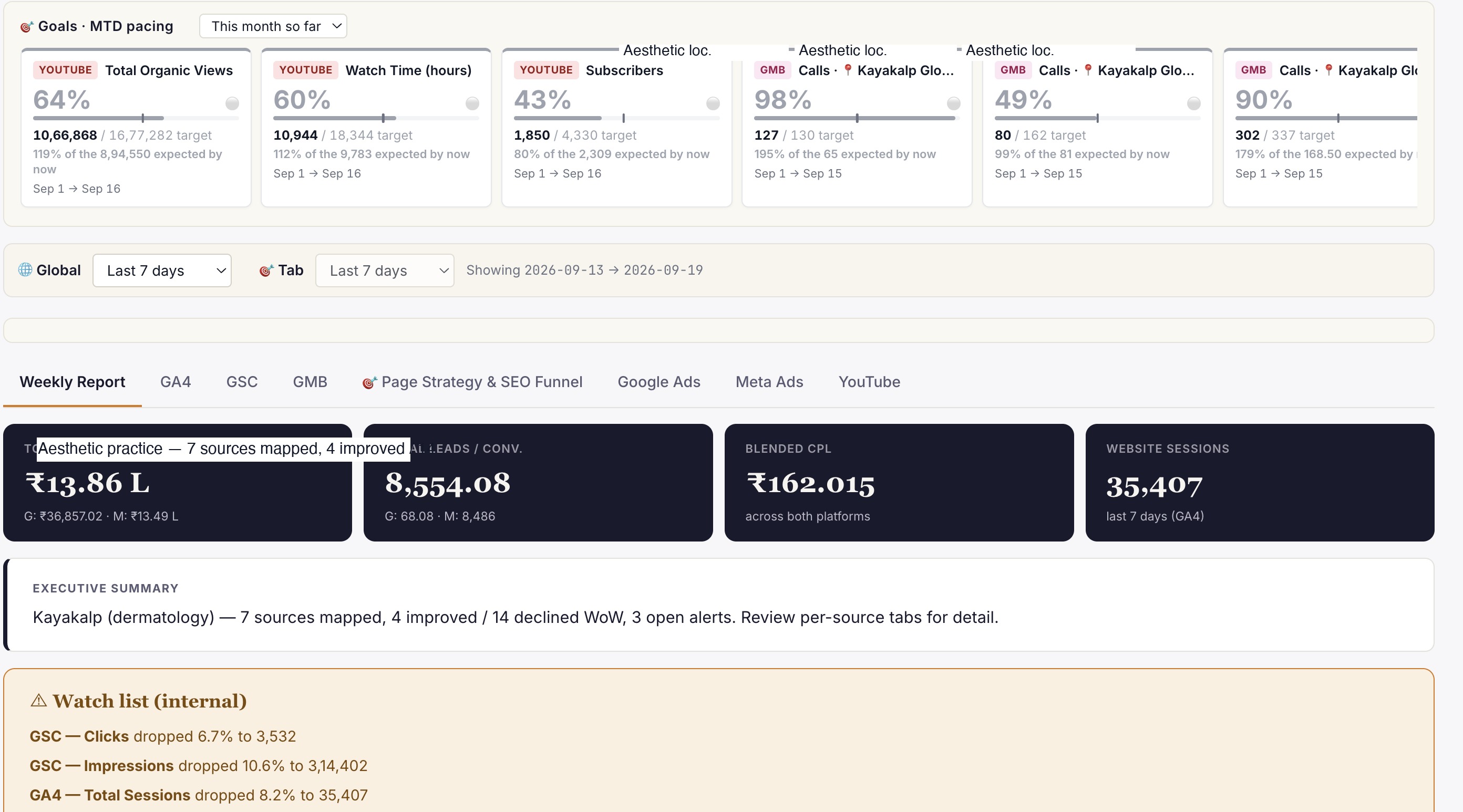
Live client dashboard. GSC, GA4, Google Ads, Meta Ads, IVR calls in one view. Login anytime, not monthly.
Phoenix
Clinic revenue intelligence over your PMS. Daily action queue: Prevent Loss, Maintain & Engage, Grow Revenue. Multi-centre rollout.
Or book a free 30-min audit to see all three in action on your account.
Healthcare brands
that already run on ICG.
A representative slice of the 150+ healthcare brands ICG has delivered for across India. Most engagements remain under NDA.


What ICG clients say · on video.
"Scale up of organic channels and business consulting. ICG has absolute domain authority in their field."
"Working with ICG transformed how we acquire IVF patients in Gurgaon. They understand the fertility journey from inquiry to consult..."
"What Ichelon accomplished — they got all my ideas and worked over 3-4 months to create an amazing, super-customised website."
The intelligence stack behind this playbook.
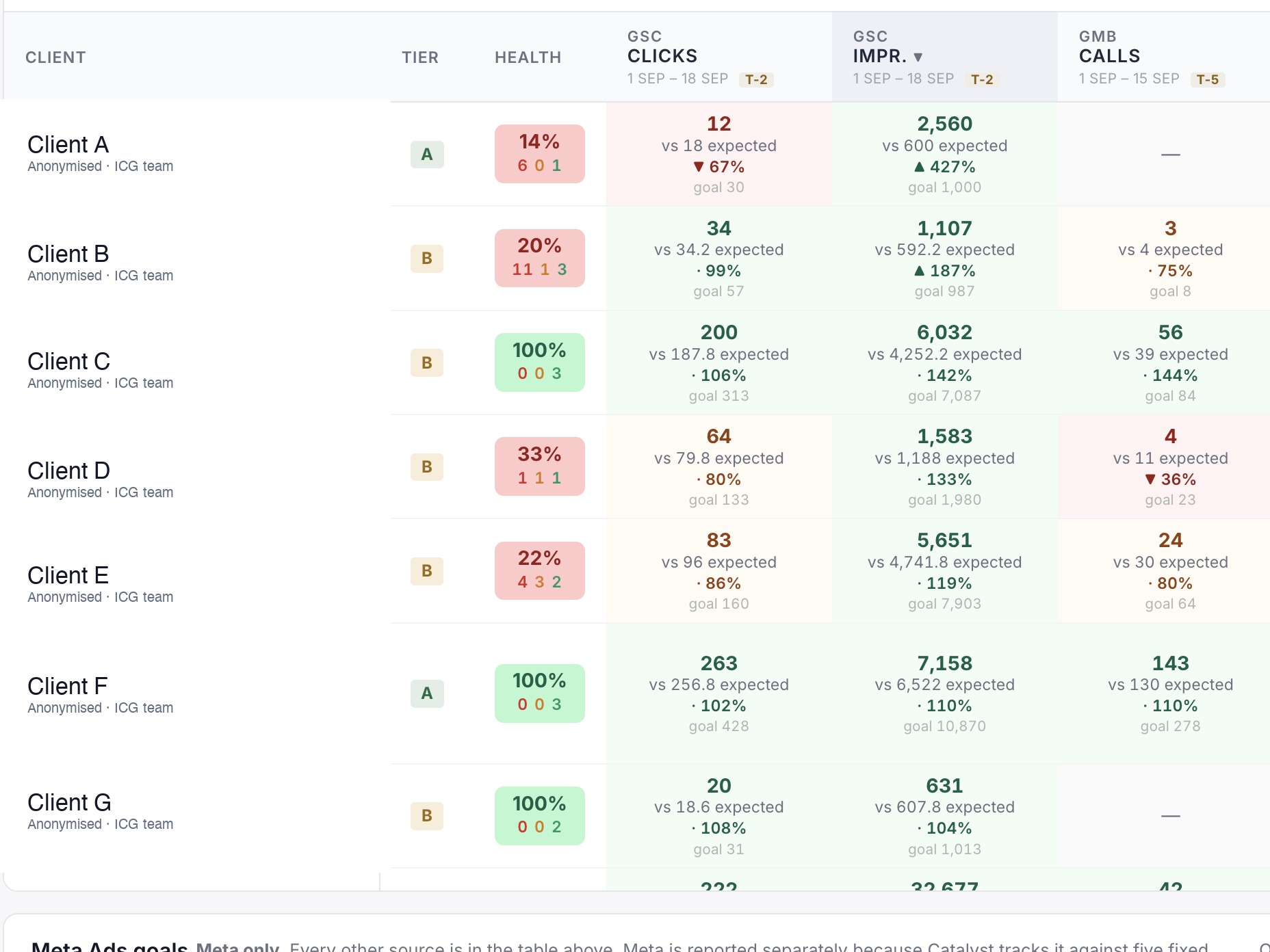
Every ICG engagement runs on the Search Intelligence Trifecta — Angryturtle for GMB, SIE for search and AI Overview, YODA for YouTube. Live product screens below.
Need help operationalising this?
Every ICG service is healthcare-only, NMC + DPDP-aware, and built around the patient-research patterns that drive Indian healthcare growth in 2026.
Every practice welcome — packages from ₹20,000/mo.
Goals-Driven engagements · Performance-Linked Payout Models available
More from
ICG.
Five trends shaping Indian healthcare marketing through 2027: AI-first patient research, Conversions API adoption, ABDM discovery, the AEO w...
Healthcare AIO is the discipline of getting your clinic or hospital cited inside Google AI Overviews, ChatGPT and Perplexity answers — not j...
Conversational-search advertising places brand messages inside AI chat answers — ChatGPT, Perplexity, Copilot — rather than beside a results...
Stop guessing.
Book a Diagnostic.
30 minutes. Free. With the AI-powered healthcare-only marketing agency 150+ brands already run on. No slides, no pitch, no hard close.


