


Local SEO for ENT and hearing clinics in India: two-audience specialty with distinct patient acquisition mechanics
Local SEO for ENT Otolaryngology practices in India serves two distinct audience segments that share one Google Business Profile — routine ENT patients ear infections, sore throats, sinus issues, allergic rhinitis who search for local ENT specialists on impulse, and elective-proc
No pitch. Written root-cause diagnosis. AI-powered, healthcare only.
Direct answer
Local SEO for ENT Otolaryngology practices in India serves two distinct audience segments that share one Google Business Profile — routine ENT patients ear infections, sore throats, sinus issues, allergic rhinitis who search for local ENT specialists on impulse, and elective-proc
TL;DR

Local SEO for ENT (Otolaryngology) practices in India serves two distinct audience segments that share one Google Business Profile — routine ENT patients (ear infections, sore throats, sinus issues, allergic rhinitis) who search for local ENT specialists on impulse, and elective-procedure patients (hearing aids, cochlear implants, sinus surgery, sleep apnoea evaluation) who research extensively before booking. The routine track produces the everyday review flow that keeps rankings healthy; the elective track produces the higher-value procedures that justify local SEO investment. Add hearing-aid dispensing as a distinct sub-vertical with its own search patterns and demographic behaviour, and ENT local SEO looks different from any other specialty. ICG runs healthcare local SEO for ENT practices using Angryturtle calibrated for the specialty's two-track model.
Why ENT local SEO looks different
Two economic tracks share one profile. ENT practices see routine consultations (₹500-1,500) alongside procedures ranging from minor (grommet insertion, tonsillectomy at ₹15,000-40,000) to major (cochlear implants at ₹5-15 lakh, complex sinus surgery at ₹75,000-3,00,000). Hearing aid dispensing adds another economic dimension with high recurring value per patient family (₹40,000-3,00,000+ per hearing aid, often replaced every 3-5 years).
Hearing aid dispensing as a distinct sub-vertical. Patients searching for hearing aids differ from patients searching for ENT specialists. Elderly patients (or their family members) research hearing aids for months, compare brands and technology, evaluate provider service commitments (fitting, follow-up, warranty). The search patterns, review-flow expectations, and content strategy for hearing aid dispensing differ meaningfully from clinical ENT.
Sleep medicine as an emerging sub-vertical. ENT practices increasingly do sleep apnoea evaluation and CPAP fitting, especially for adult male demographics where obstructive sleep apnoea is prevalent. This creates a third patient segment with distinct search patterns.
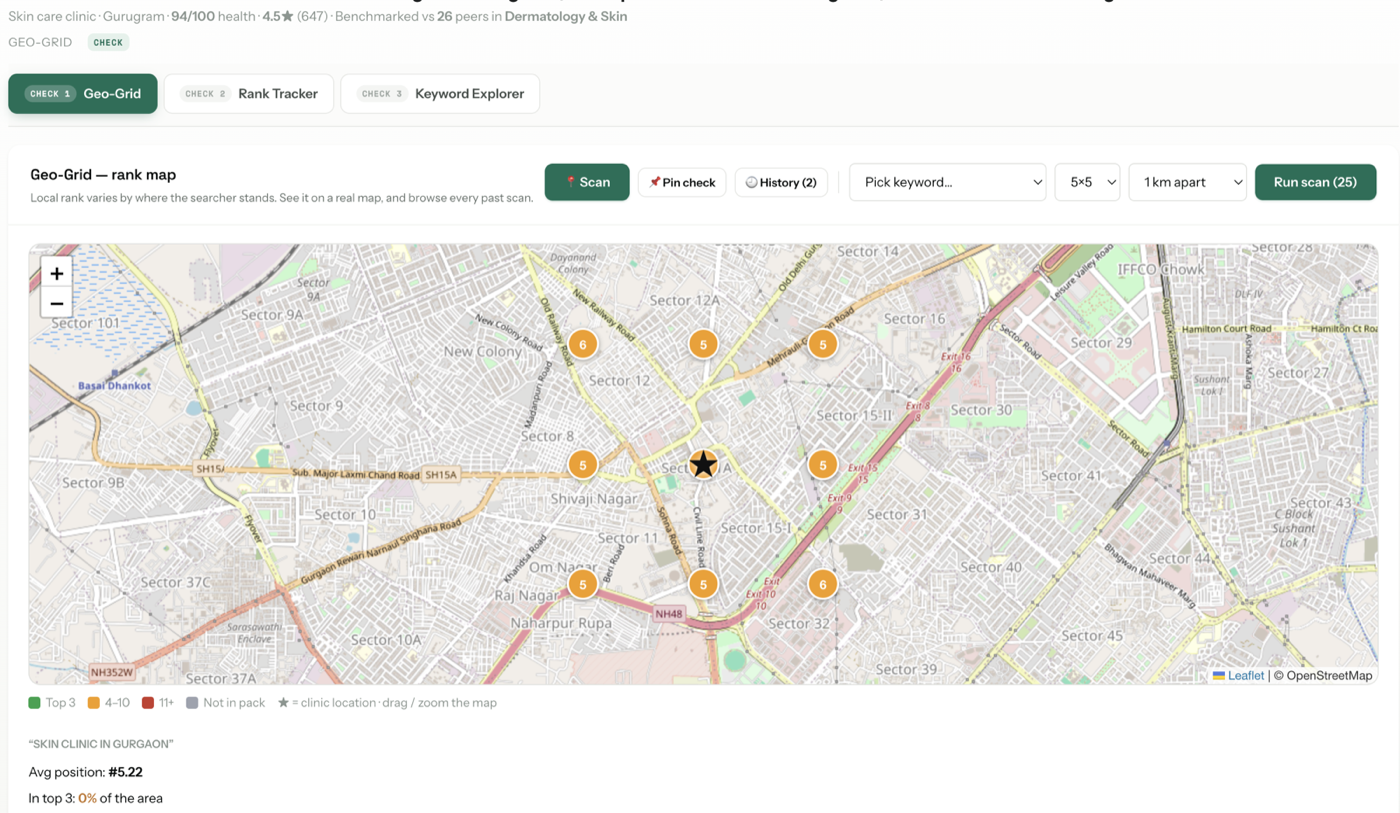
Angryturtle's sie" style="color:inherit;text-decoration:underline;text-decoration-color:rgba(42,126,200,.5);text-underline-offset:2px">Rank OS for ENT profiles balances Relevance (routine + elective + hearing aid coverage in categories and services), Review Health (routine track drives volume), and AIO Readiness (elective patients ask AI systems detailed questions).


GBP configuration for ENT practices
Primary category. "Otolaryngologist" for solo generalist ENT specialists; "ENT Clinic" or "Ear, Nose & Throat Doctor" as alternatives depending on Google's category tree in the specific market. Hearing-aid-focused practices should consider "Hearing Aid Store" or "Audiologist" as primary depending on whether the practice is clinical-first or dispensing-first.
Secondary categories. Fill up to 9 slots with sub-specialties and related services: Audiologist, Hearing Aid Store, Pediatric Otolaryngologist, Head and Neck Surgeon, Rhinologist, Otologist (ear-specialist ENT), Laryngologist, Sleep Medicine Physician, Speech Language Pathologist (if the practice has integrated speech therapy).
Services list. ENT has 15-20 distinct services worth listing: ENT Consultation, Ear Wax Removal, Ear Infection Treatment, Hearing Test (Audiometry, Tympanometry), Hearing Aid Consultation and Fitting, Sinus Consultation and Endoscopic Sinus Surgery (FESS), Nasal Surgery (Septoplasty, Turbinate Reduction), Snoring and Sleep Apnoea Evaluation, CPAP Fitting, Tonsillectomy and Adenoidectomy, Grommet Insertion for Paediatric Ear Infections, Cochlear Implant Consultation and Surgery, Vertigo and Balance Consultation, Voice Disorder Evaluation, Allergy Testing and Immunotherapy, Head and Neck Cancer Screening.
Business description. 750 characters covering: practice name and ENT focus, years of operation, sub-specialties (paediatric ENT, otology, rhinology, head-and-neck, sleep medicine), notable equipment (endoscopic surgery capability, audiometry booth, sleep study facilities, cochlear implant surgical capability), audiology and hearing aid brands dispensed (Phonak, Widex, Oticon, Signia — brands that patients search by name), insurance panels, appointment scheduling.
Attributes. Health-and-safety attributes, appointment scheduling, hearing loop or accessibility features (matters for hearing-impaired patient population), insurance panels, languages spoken.
The hearing aid sub-vertical
Hearing aid dispensing deserves specific consideration:
Search patterns. Patients (and family members researching for elderly relatives) search "hearing aid clinic near me," "best hearing aids in [city]," brand-specific queries ("Phonak hearing aid dealer in [city]," "Widex fitting centre"), and cost queries ("hearing aid cost in India," "how much are cochlear implants").
Long consideration cycle. Hearing aid buyers research for 2-4 months typically. They compare brands, evaluate technology (Bluetooth connectivity, rechargeability, remote adjustment capability), assess dispensing centres for follow-up service commitment, and often visit multiple centres before deciding.
Repeat business model. Once a patient family commits to a hearing aid dispenser, they typically return for replacement aids every 3-5 years, adjustments and repairs annually, and battery/accessory purchases regularly. Lifetime value per patient family is high.
Family decision dynamics. Elderly patients often defer purchase decisions to adult children. Marketing needs to reach both audiences — the patient who will use the hearing aid and the family member who often researches, evaluates, and finances the purchase.
Angryturtle's Content Studio for hearing-aid-focused profiles drafts content addressing both audiences — patient-facing (comfort, quality of life, hearing technology explanation) and family-caregiver-facing (research guidance, cost planning, service commitments).
Sleep medicine sub-vertical
For ENT practices offering sleep medicine services (sleep apnoea evaluation, CPAP fitting, sleep study coordination):
Search patterns. "Sleep apnoea specialist," "sleep clinic in [city]," "CPAP fitting centre," "snoring treatment," "sleep study centre near me."
Adult male demographic dominates. OSA (obstructive sleep apnoea) affects adult men disproportionately, often through spouse-initiated diagnosis pathways.
Cross-referral flow. Sleep medicine ENT often overlaps with cardiology (OSA affects cardiovascular health), pulmonology (respiratory implications), and psychiatry (sleep issues in mental health conditions). Local SEO for the sleep vertical benefits from cross-referral relationships with these specialties.
Review flow for ENT practices
Volume: 150-400 minimum for competitive metro ENT practices. Hearing aid centres accumulate reviews at different pace than clinical ENT.
Velocity: 5-15 new reviews per month for solo ENT practices; 20-40 per month for large ENT centres with hearing aid dispensing.
Compliance: Standard NMC restrictions apply. Reviews mentioning specific hearing aid brand experiences require compliant reply framing (thanking for feedback without endorsing specific brand outcomes).
Ask Maps for ENT patient queries
Angryturtle's Ask Maps question bank for ENT covers:
- "Best ENT specialist in [city]"
- "Which clinic does endoscopic sinus surgery"
- "Where to get hearing aids in [neighbourhood]"
- "Cost of cochlear implant at this hospital"
- "Does this ENT do paediatric grommet insertion"
- "Which insurance panels does this ENT clinic accept"
- "Is there a sleep apnoea clinic at this practice"
- "What hearing aid brands does this centre dispense"
- "Does this clinic do voice therapy"
- "How to prepare for tonsillectomy at this hospital"
Sub-vertical-specific question banks (hearing aid, sleep medicine) can be seeded per practice focus.
Pricing tiers for ENT practices
Solo ENT specialist / single-location practice: Starter tier at ₹25,000-₹50,000/month covers GBP optimisation, monthly Post cadence, review operations, monthly rank tracking.
Multi-specialist ENT centre or hearing aid dispensing chain: Chain tier at ₹75,000-₹1,50,000/month covers per-location GBP management, weekly Post cadence with multi-track content (clinical ENT + hearing aid), review operations, monthly Geo-Grid tracking, monthly citation building.
ENT hospital or cochlear implant centre: Hospital tier at ₹1,50,000-₹4,00,000/month covers full ENT sub-specialty operations, high-value elective procedure content strategy, custom reporting.
Related reading
- Healthcare local SEO agency India — pillar service page
- Local SEO for ophthalmology clinics India — comparable two-track economics
- Local SEO for orthopedic practices India — sub-specialty depth comparison
FAQ
How is ENT local SEO different from other specialties? Two economic tracks (routine + elective) share one GBP, hearing aid dispensing is a distinct sub-vertical with its own search patterns, and sleep medicine is an emerging sub-vertical with adult-male demographic focus.
Should hearing-aid-focused practices have separate GBP from clinical ENT? Depends on business structure. Pure hearing aid dispensing operations (no clinical ENT services) use "Hearing Aid Store" primary category. Mixed practices with both clinical ENT and hearing aid dispensing use "Otolaryngologist" primary with "Hearing Aid Store" or "Audiologist" secondary.
How many reviews does an ENT practice need? 150-400 for competitive metro positioning. Practices with hearing aid dispensing tend to accumulate reviews from both patient segments.
What's specific about hearing aid marketing? Long consideration cycle (2-4 months), family caregiver decision involvement, brand-specific search queries (Phonak, Widex, Oticon, Signia), and high lifetime value per patient family through repeat purchase and accessory sales.
How does sleep medicine fit in ENT local SEO? Sub-vertical with distinct search patterns and adult-male demographic focus. Cross-referral with cardiology, pulmonology, psychiatry benefits practices offering sleep services.
What Angryturtle features matter most for ENT? Rank OS with two-track weighting, Ask Maps with sub-vertical-specific question banks (hearing aid + sleep medicine), Content Studio for multi-audience content (patient + family caregiver), NMC-safe review reply drafting.
How long before an ENT practice sees local SEO improvement? Similar to other specialties: 4-8 weeks for first ranking movement, 3-4 months substantive, 6-12 months full compound effect.
Should ENT practices run Google Ads for hearing aids specifically? Usually yes. Hearing aid queries are commercially-driven with clear buying intent. Google Ads works well for brand-specific hearing aid queries and consideration-stage research queries.
Book a free SEO diagnostic.
Hanuman Sihag's team runs a live crawl, checks technical health, cannibalisation, schema coverage and content gaps. 60 minutes, prioritised fix list.
The three platforms
behind every ICG engagement.
Beacon
CAPI middleware that fixes Event Match Quality, translates CRM statuses to Meta-standard events, dedups across channels.
Agency OS
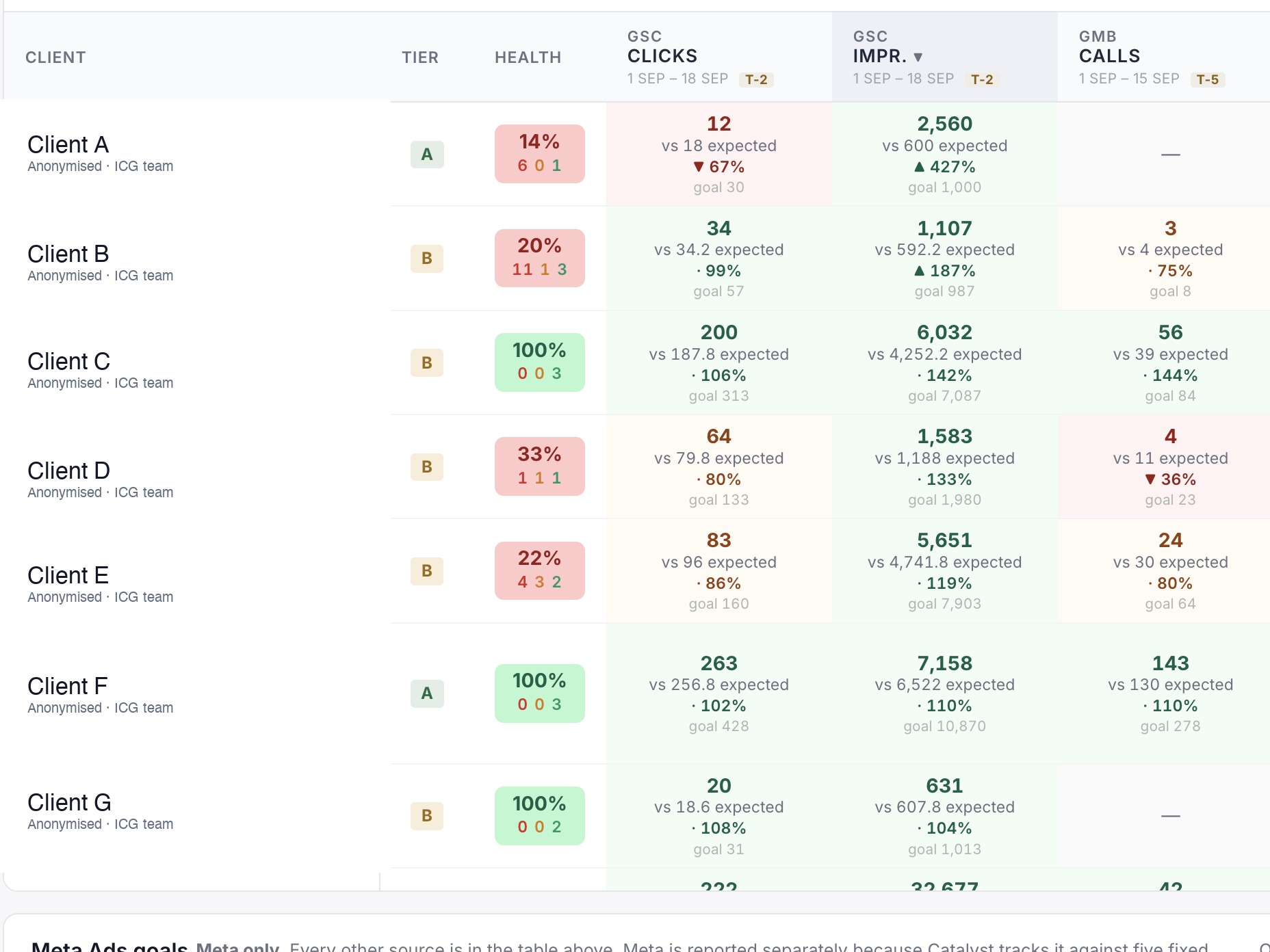
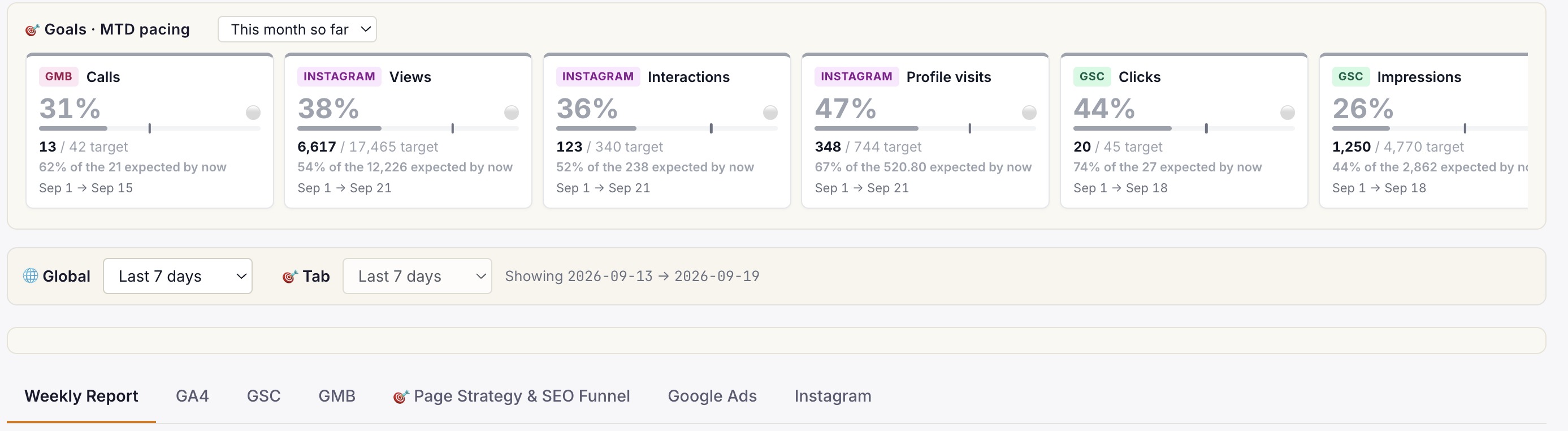
Live client dashboard. GSC, GA4, Google Ads, Meta Ads, IVR calls in one view. Login anytime, not monthly.
Phoenix
Clinic revenue intelligence over your PMS. Daily action queue: Prevent Loss, Maintain & Engage, Grow Revenue. Multi-centre rollout.
Or book a free 30-min audit to see all three in action on your account.
Healthcare brands
that already run on ICG.
A representative slice of the 150+ healthcare brands ICG has delivered for across India. Most engagements remain under NDA.


What ICG clients say · on video.
"Scale up of organic channels and business consulting. ICG has absolute domain authority in their field."
"Working with ICG transformed how we acquire IVF patients in Gurgaon. They understand the fertility journey from inquiry to consult..."
"What Ichelon accomplished — they got all my ideas and worked over 3-4 months to create an amazing, super-customised website."
The intelligence stack behind this playbook.
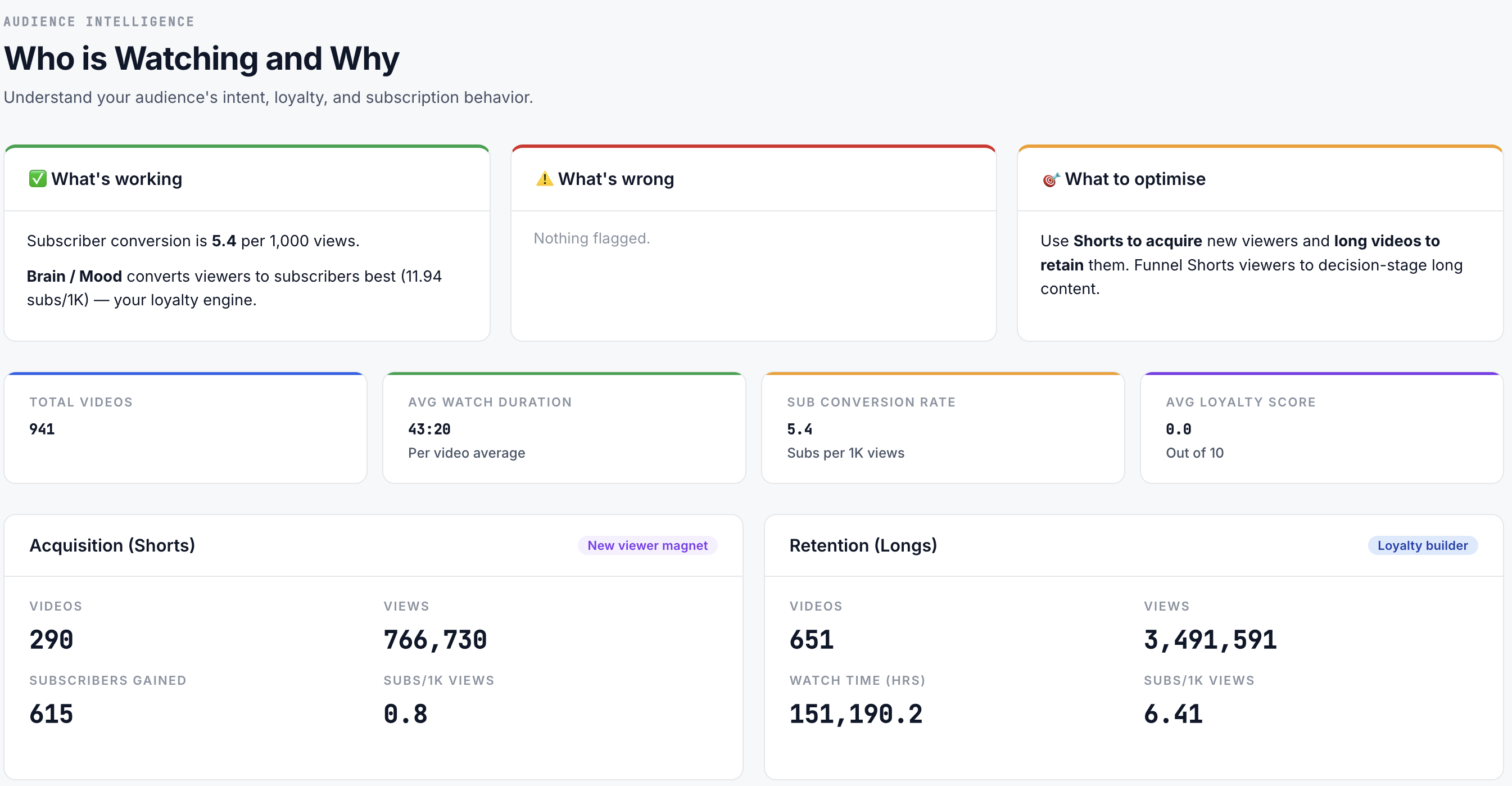
Every ICG engagement runs on the Search Intelligence Trifecta — Angryturtle for GMB, SIE for search and AI Overview, YODA for YouTube. Live product screens below.
Need help operationalising this?
Every ICG service is healthcare-only, NMC + DPDP-aware, and built around the patient-research patterns that drive Indian healthcare growth in 2026.
Every practice welcome — packages from ₹20,000/mo.
Goals-Driven engagements · Performance-Linked Payout Models available
More from
ICG.
Five trends shaping Indian healthcare marketing through 2027: AI-first patient research, Conversions API adoption, ABDM discovery, the AEO w...
Healthcare AIO is the discipline of getting your clinic or hospital cited inside Google AI Overviews, ChatGPT and Perplexity answers — not j...
Conversational-search advertising places brand messages inside AI chat answers — ChatGPT, Perplexity, Copilot — rather than beside a results...
Stop guessing.
Book a Diagnostic.
30 minutes. Free. With the AI-powered healthcare-only marketing agency 150+ brands already run on. No slides, no pitch, no hard close.


