


In-House vs Agency YouTube Production for Medical Brands (India Buyer Guide)
A 2026 buyer guide for Indian hospital marketing directors weighing in-house YouTube pods vs freelancer stitches vs general video agencies vs healthcare-specialist AI-native teams. Costs, NMC and DPDP compliance, cadence, AI workflow, and which model fits your bed count.
No pitch. Written root-cause diagnosis. AI-powered, healthcare only.
Direct answer
A 2026 buyer guide for Indian hospital marketing directors weighing in-house YouTube pods vs freelancer stitches vs general video agencies vs healthcare-specialist AI-native teams. Costs, NMC and DPDP compliance, cadence, AI workflow, and which model fits your bed count.
TL;DR

TL;DR — the short answer for busy admins
- A fully in-house YouTube pod pays off only above roughly 40 finished uploads a month or 10-plus specialty channels. Below that, blended per-video cost lands between ₹18,000 and ₹32,000 once you count salaries, gear amortisation, and internal review overhead.
- A freelancer stitch (editor plus camera plus scriptwriter on retainer) suits solo doctors and single-clinic dentists under a ₹60,000 per month content budget. It falls over the day someone asks for an NMC medical-advertising audit trail or a DPDP Act 2023 patient-consent log.
- A general-purpose video agency delivers polish but rarely knows YMYL YouTube signals, disclaimer conventions, or how to route a patient-story upload past the platform's medical-claims moderation without a strike.
- A healthcare-specialist AI-native agency sits between the two — you keep the doctor-SME workflow, gain compliance-hardened templates, and treat YouTube as a rank race, not a broadcast slot.
- Most Indian hospitals north of 30 beds end up on a blended model: internal doctor SMEs, external production pod, and an agency-run optimisation layer. That is the split we see across 300+ live healthcare clients.
Table of contents
- Why this decision matters for Indian medical brands in 2026
- The eight axes we score every YouTube setup on
- Side-by-side comparison table
- Axis-by-axis deep dive
- Which model fits which buyer (four archetypes)
- Where ICG fits as a neutral advisor
- The 70-30 model applied to YouTube spend
- Frequently asked questions
Why this decision matters for Indian medical brands in 2026
Three things changed the maths in the last eighteen months. First, the National Medical Commission tightened the advertising code — before-and-after photography, guarantee language, and disease-cure claims are now inspected far more actively by state councils. Second, the DPDP Act 2023 pushed patient consent from a form in a drawer to an auditable digital trail; the moment you upload a patient story, you need to show verifiable consent for identity, condition, and the platform of publication. Third, ABDM's slow rollout is quietly training patients to expect a digital-first hospital, and the fastest way to look digital-first without rebuilding your PMS is a YouTube channel that actually publishes.
Then the format itself shifted. YouTube stopped being a place you dumped TVCs. It became the largest medical-search engine in India after Google itself — and unlike Google, it rewards face, voice, and Hindi (or Kannada, or Bengali) narration. Shorts pushed the format shorter. AI dubbing turned every upload into a five-language asset. And YMYL moderation got stricter, so a badly worded oncology explainer now risks a channel-level penalty, not just a video-level demotion.
That is why the "should we hire someone or outsource" question is different from what it was in 2022. The right answer depends on your bed count, your cadence, your specialty mix, and how much of your revenue currently comes from search-driven patient acquisition versus referrals. This guide sets out the eight things we score every setup on before we recommend a model.
The eight axes we score every YouTube setup on
A production model is not just a headcount decision. It is a bundle of eight capabilities, each of which behaves differently as you scale. The tiers we compare are:
- Fully in-house pod — employed videographer, editor, scriptwriter, and channel manager, usually with a captive edit bay.
- Freelancer stitch — three or four independent freelancers coordinated by a marketing manager on your side.
- General video agency — production shop that also handles corporates, real estate, and D2C brands; healthcare is one of many verticals.
- Healthcare-specialist AI-native agency — category-focused team with compliance templates, AI workflow, and a rank-race operating rhythm.
The axes are: time to first upload, monthly true cost, medical-compliance depth, sustainable cadence, AI-native workflow, creative format range, rank-race optimisation, and continuity or bus-factor risk. Every one of these behaves differently once you cross the 30-bed threshold, the multi-specialty threshold, or the multi-city threshold. The table below is the compressed view; the deep dives that follow explain what to actually look for.
Side-by-side comparison table
| Axis | Fully in-house pod | Freelancer stitch | General video agency | Healthcare-specialist AI-native agency |
|---|---|---|---|---|
| Time to first upload | 90-150 days (hiring + gear + SOPs) | 15-30 days | 30-45 days | 10-21 days |
| Monthly true cost (blended) | ₹3.5L-₹9L | ₹40K-₹90K | ₹1.2L-₹3L | ₹50K-₹2.5L |
| NMC + DPDP compliance depth | Depends entirely on hires | Low — freelancers are not accountable | Medium — generic legal disclaimers | High — codified templates and consent trail |
| Sustainable weekly cadence | 3-8 videos once ramped | 1-2 videos, fragile schedule | 2-4 videos, dependent on agency slots | 3-6 videos with Shorts + dubs |
| AI-native workflow (dubbing, chapters, thumbnails, YMYL rewrites) | Only if you build it internally | Rare — each freelancer runs their own tools | Emerging — not domain-tuned | Core to the pod |
| Creative format range | Narrow at first; broad after year two | Broad but inconsistent | Broad and consistent | Broad, with healthcare-specific templates |
| Rank-race optimisation (YouTube SEO, AIO exposure) | Rarely a discipline in-house | Not offered | Sometimes, as an upsell | Core deliverable, weekly reporting |
| Continuity / bus factor | High risk if editor or shooter quits | Very high risk — single-person dependency | Low — agency bench | Low — agency bench plus documented SOPs |
Axis-by-axis deep dive
1. Setup speed and time to first upload
Hiring even a modest three-person pod in a Tier 1 Indian city takes about 90 to 150 days once you factor in job posts, notice periods, gear procurement, and a Standard Operating Procedure that survives the first sick day. Freelancer stitches move faster — two weeks if your marketing manager already knows the people. General video agencies onboard in a month. A healthcare-specialist team should be shipping the first video inside three weeks; if they cannot, they do not have a real onboarding playbook for medical brands. When you evaluate, ask for a Gantt of the first 30 days, not a proposal deck.
2. Cost structure and predictability
An in-house pod looks cheaper per video on paper until you add out-of-pocket costs: gear amortisation, edit-station licences, storage, backup, insurance, HR overhead, sick-day coverage, and the marketing manager's time managing the pod. Blended, a three-person pod in Bengaluru or Delhi runs ₹3.5L to ₹9L a month, so if you ship 20 videos that is ₹17,500 to ₹45,000 per video, plus the cost of the marketing manager's brain. A freelancer stitch is variable and unpredictable — it is genuinely cheap at 4-8 videos a month, but the moment you cross ten, coordination cost eats the savings. Agencies bill fixed or fixed-plus-variable; the healthcare-specialist tier tends to price like a subscription (see the 70-30 note further down), which makes month-on-month planning easier for hospital CFOs.
3. Medical compliance depth — NMC advertising code and DPDP Act 2023
This is the axis where "cheap" gets expensive. The NMC advertising code restricts guarantee language, before-and-after visuals for many specialties, and superlative claims. State medical councils have written to hospitals about YouTube content specifically. Then there is DPDP: every patient testimonial needs verifiable, purpose-specific consent with the ability to withdraw. If you ever get a legal notice, you need to produce the signed consent, a proof of identity match, and a log of platforms the video was published on.
Freelancers rarely maintain that trail — they are not paid to. In-house pods maintain it only if you build the SOP and enforce it. General video agencies default to generic disclaimers copied from a corporate template. Healthcare-specialist agencies should hand you the consent form, the classification tag on each upload, and the audit CSV without being asked. If they cannot, you are exposed.
4. Sustainable weekly cadence and volume
YouTube is a cadence machine. The algorithm rewards consistency and punishes gaps. A specialty channel that publishes weekly for six months will outperform one that publishes five videos in a burst and then nothing for two months, even if the burst had higher production value. A freelancer stitch tops out around one to two videos a week before somebody's wedding or a monsoon shoot cancellation breaks the schedule. In-house pods, once ramped, can sustain three to eight if the doctors are available. General agencies match your slot allocation. Healthcare specialists usually offer a Shorts-plus-long-form-plus-dub bundle that lets a single ninety-minute doctor shoot become nine to twelve published assets across the week — that is where the real cadence comes from.
5. AI-native workflow — dubbing, chapters, thumbnails, YMYL rewrites
By 2026 the AI-native production stack is table stakes, not a differentiator. That stack includes multi-language dubbing (Hindi, Marathi, Tamil, Kannada, Telugu, Bengali at minimum), auto-chapters, thumbnail A/B generation, script rewrites tuned for YMYL medical topics, and transcript-driven blog and short-form repurposing. In-house pods rarely build this discipline; every hire brings their own tools and none integrate. Freelancers pick tools by taste. General agencies are catching up. A healthcare-specialist AI-native agency will show you the exact pipeline, the guardrails on the medical-claims rewriter, and the QA loop that keeps hallucinated conditions out of your scripts. ICG's YODA product is one example of that stack — but the point is not the product name, it is whether the pipeline exists and whether the compliance filters are honest.
6. Creative format range
A medical YouTube channel needs at least seven format types working in rotation: doctor explainers, patient stories, procedure walk-throughs, myth-buster shorts, hospital-tour B-roll, Q&A live streams, and community event coverage. In-house pods start narrow and widen only after the second year. Freelancer stitches deliver whichever format that particular freelancer is good at. General agencies cover the range but usually default to a corporate look that does not travel well on YouTube's mobile-first feed. Healthcare specialists carry template libraries for each format and can slot a new specialty into an existing template inside a week — which matters when your urology department suddenly wants a series and you cannot wait three months for storyboards.
7. Rank-race optimisation — YouTube SEO and AIO exposure
Producing videos and ranking videos are two different jobs. Rank optimisation covers title patterns, description structuring, chapter timestamps, tag hygiene, playlist architecture, thumbnail CTR tuning, end-screen routing, and cross-linking with the money pages on your website. It also increasingly covers AI Overview and AI Mode surfacing on Google, where Google now cites YouTube videos in the medical rich results and AIO panels. Almost no in-house pod treats rank as a discipline because the videographer is not an SEO. Freelancers do not do this at all. General agencies sell it as an upsell and rarely deliver. A healthcare-specialist agency should report weekly on impressions, CTR, average view duration, and AIO citations by video — and adjust titles and thumbnails on Monday.
8. Continuity and bus-factor risk
Hospitals think about this axis last and regret it first. If your entire YouTube channel lives in one editor's head and one shooter's calendar, both of them going on notice at the same time freezes six weeks of cadence. In-house pods carry high bus-factor risk unless you have deputies for every role. Freelancer stitches are the worst on this axis — a single freelancer disappearing without handover can lose you the project files. Agencies of any kind carry lower risk because there is a bench and, in a healthcare-specialist case, there are documented SOPs, asset naming conventions, and a shared drive that survives any one person leaving.
Which model fits which buyer — four Indian archetypes
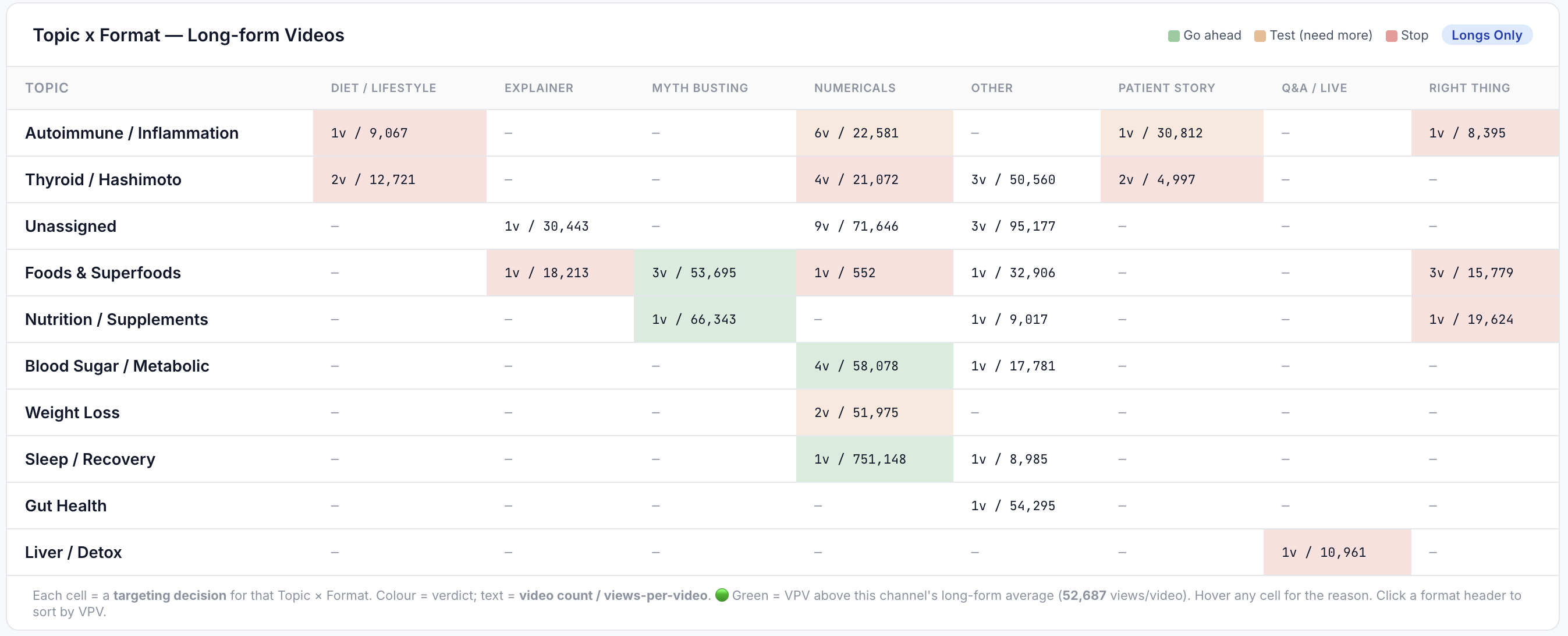
The 30-bed single-city dental chain (three or four branches)
Monthly YouTube budget realistically ₹40,000 to ₹90,000. Cadence needs to be two to three uploads a week to stay competitive in a category where every second dentist now runs Shorts. This buyer should not hire in-house — the fixed cost breaks the P&L. A freelancer stitch works only if the marketing manager is genuinely video-literate and can hold the schedule together. The better fit is a healthcare-specialist agency on an entry-tier retainer that treats the chain as one channel with three format lanes: teeth-whitening Shorts, aligner explainers, and patient stories. NMC compliance for aesthetic claims is the main risk to manage.
The 100-bed multispecialty hospital, cardiology-heavy
Budget band ₹2L to ₹4L a month. This buyer needs six to eight specialty micro-channels or one master channel with playlists per specialty. The cardiology department alone can carry weekly explainers, monthly patient stories, and quarterly interventional-procedure walk-throughs. A blended model wins here: one in-house content producer sitting inside the hospital to schedule doctor availability and manage internal approvals, plus a healthcare-specialist agency running production, dubbing, optimisation, and reporting. Pure in-house is too slow to ramp. Pure agency loses the doctor-availability lever. The 70-30 model (see next section) prices this cleanly.
The mid-tier IVF chain with five to eight centres
Budget band ₹1.5L to ₹3L a month. IVF has three unique constraints: extremely long consideration cycles, high sensitivity on patient-story consent, and multilingual demand across every centre. This buyer needs Shorts on the emotional side, long-form on the science side, and dubs in at least four languages. A healthcare-specialist AI-native agency is close to the only sensible answer — the AI dubbing and the compliance discipline both matter more than they do in most categories. General video agencies underestimate the consent burden and end up in trouble. Freelancer stitches cannot maintain the dub pipeline.
The solo super-specialist (endocrinologist, dermatologist, IVF consultant)
Budget ₹25,000 to ₹60,000 a month, sometimes lower. Cadence of one long-form plus three Shorts a week is the sweet spot. This buyer should never hire in-house. A freelancer stitch is workable for the first six months while you find your voice; after that, a healthcare-specialist agency on an entry retainer is more predictable and picks up the SEO, dubbing, and Shorts repurposing that a solo freelancer will not do at that price. If the doctor also runs a Google Business Profile, an integrated GBP-plus-YouTube plan (using something like ICG's Angryturtle for GBP and YODA for YouTube) removes the awkward hand-off between local search and video.
Where ICG fits — the neutral advisor lens

Ichelon Consulting Group runs YouTube for a slice of India's healthcare market — 150+ clinics and 300+ live healthcare clients across dental, IVF, dermatology, cardiology, oncology, and multi-specialty hospitals. We build in-house pods for hospitals that need them, we run pure-agency retainers for chains that do not, and we build the blended model for the majority in the middle. That vantage point is why the recommendation section above is not vendor-driven — we have watched every model succeed and fail in Indian conditions. Our AI-native YouTube stack is packaged as YODA, and our Meta Ads and competitor-Meta-intelligence stacks (Meta Catalyst IQ, Prism Spy) plus our Instagram analytics layer (Prism Pulse) round out the video-plus-paid loop for buyers who want everything on one dashboard. But the honest advice is often: keep your in-house shooter, let us run optimisation only, and revisit in six months. That is what a neutral advisor sounds like.
How the 70-30 model applies to YouTube spend

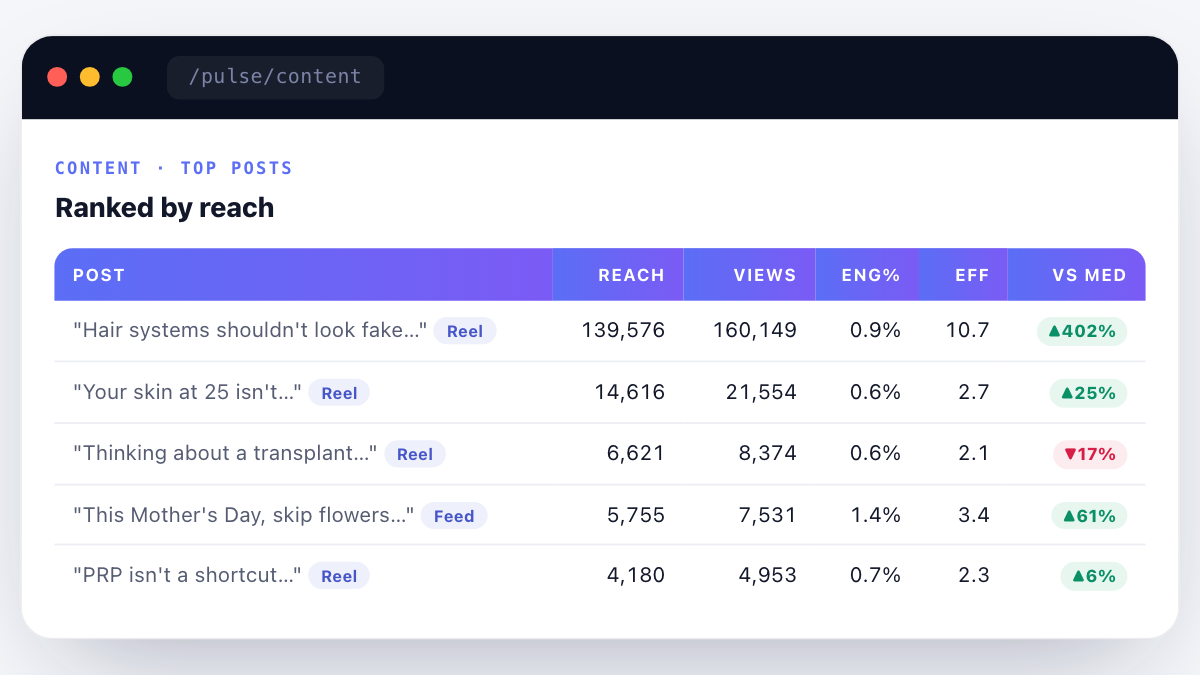

Our YouTube and AIO retainers start at ₹50,000 a month and are priced on a 70-30 model — seventy per cent of the fee is fixed monthly work (production, publishing, optimisation, compliance) and thirty per cent is tied to a twelve-month outcome target on a sliding-scale slab. The same structure runs across our SEO packages (Foundation ₹49,999, Growth ₹74,999, Scale ₹99,999 per month), Google Ads mandates above the ₹5,00,000 budget line, and Meta engagements. For YouTube specifically, the outcome slabs are watch-time, subscriber growth, and qualified-lead volume driven from video-attributed traffic. This gets us and the client aligned on what "working" means; it also means we walk away from mandates where the buyer wants us to guarantee TVC-style vanity metrics. If you are comparing agencies, ask how the fee is structured and whether the accountability clause is one-sided.
Frequently asked questions
Is an in-house YouTube team cheaper than an agency for a 100-bed Indian hospital?
Only on unit-cost paper. Once you count salaries, gear, edit-station licences, marketing manager time, sick-day gaps, and the compliance burden, an in-house pod at 20 uploads a month costs a 100-bed hospital roughly ₹3.5L to ₹9L blended. A healthcare-specialist agency delivering the same cadence, with dubbing and optimisation included, typically prices between ₹1.5L and ₹2.5L on a 70-30 retainer. In-house is cheaper only above 40 uploads a month or when you have very heavy internal-comms video needs that share the same team.
Do I need to redo patient consents under the DPDP Act 2023 for videos already on YouTube?
You should audit them. DPDP consent needs to be verifiable, purpose-specific, and withdrawable. Older consent forms often bundle "media use" too broadly and do not name YouTube specifically. Best practice in 2026 is to run a one-time audit of every patient-featuring video, re-consent where the paperwork is thin, and take down anything that cannot be documented. A healthcare-specialist agency should offer this audit as part of onboarding.
Can a general video agency handle NMC advertising code compliance?
Some can, most default to generic corporate disclaimers. Ask two specific questions: do they know which claim types are restricted for aesthetic, dental, dermatology, and IVF specialties, and can they show you their internal claim-review checklist. If the answer is a shrug, treat the compliance work as your risk to manage, not theirs.
How many videos a month do I need to see meaningful YouTube growth?
For a specialty channel in a Tier 1 city, the practical floor is eight to twelve long-form videos plus twenty to thirty Shorts a month, sustained for at least six months. Below that you are not really running a channel, you are running a portfolio piece. The algorithm rewards cadence more than production value at this stage.
Does AI dubbing hurt medical credibility?
Not if the dub is reviewed by a medically literate reviewer in the target language and the on-screen doctor's identity and credentials remain clear. Bad dubs (wrong terminology, off-lip, unnatural pauses) hurt credibility badly. The right pipeline runs medical terminology through a domain glossary before dubbing and always has a native-language QA pass. Do not use raw AI output on medical content.
How long before YouTube starts driving actual patient appointments?
Realistic timeline for an Indian medical brand is three to six months for meaningful branded search lift, four to eight months for direct video-attributed appointment enquiries, and nine to twelve months for the channel to become a top-three source of new patients. Anyone promising faster is either running paid overlays or making it up.
Should Shorts and long-form live on the same channel or separate ones?
Same channel, in almost every case. Splitting fragments authority and slows subscriber growth. The exception is when you have a genuinely different audience for Shorts (public awareness) versus long-form (referring doctors, health-tourism inbound), and even then a well-structured playlist system usually beats a second channel.
Who owns the raw footage and project files — me or the agency?
This is the single most important clause in the contract and the one most often skipped. Insist on ownership of raw footage, project files (Premiere or DaVinci), thumbnails as layered PSDs, and script docs, delivered to your drive monthly. Any agency that resists this is protecting a lock-in they should not have.
Can ICG take over an existing YouTube channel without starting fresh?
Yes, and in most cases you should not start fresh. Channel age and existing watch-time are ranking assets. We run a takeover playbook that keeps the existing URL, upgrades the thumbnails and metadata, rebuilds playlists, and cleans the tag structure — typically inside the first 30 days.
How does the 70-30 pricing model actually work for YouTube retainers?
Seventy per cent of the monthly fee is a fixed subscription covering production, publishing, optimisation, dubbing, and compliance. Thirty per cent is variable and is released at the end of a twelve-month period based on where you land against agreed outcome slabs (watch-time, subscribers, qualified enquiries). Neither party carries all the risk, and the accountability runs both ways.
Book a free 30-minute Brand & Growth Diagnostic.
It's a working session, not a sales pitch — you leave with a written root-cause analysis you can act on, whether or not you engage ICG.
Questions readers ask
about this topic.
The three platforms
behind every ICG engagement.
Beacon
CAPI middleware that fixes Event Match Quality, translates CRM statuses to Meta-standard events, dedups across channels.
Agency OS
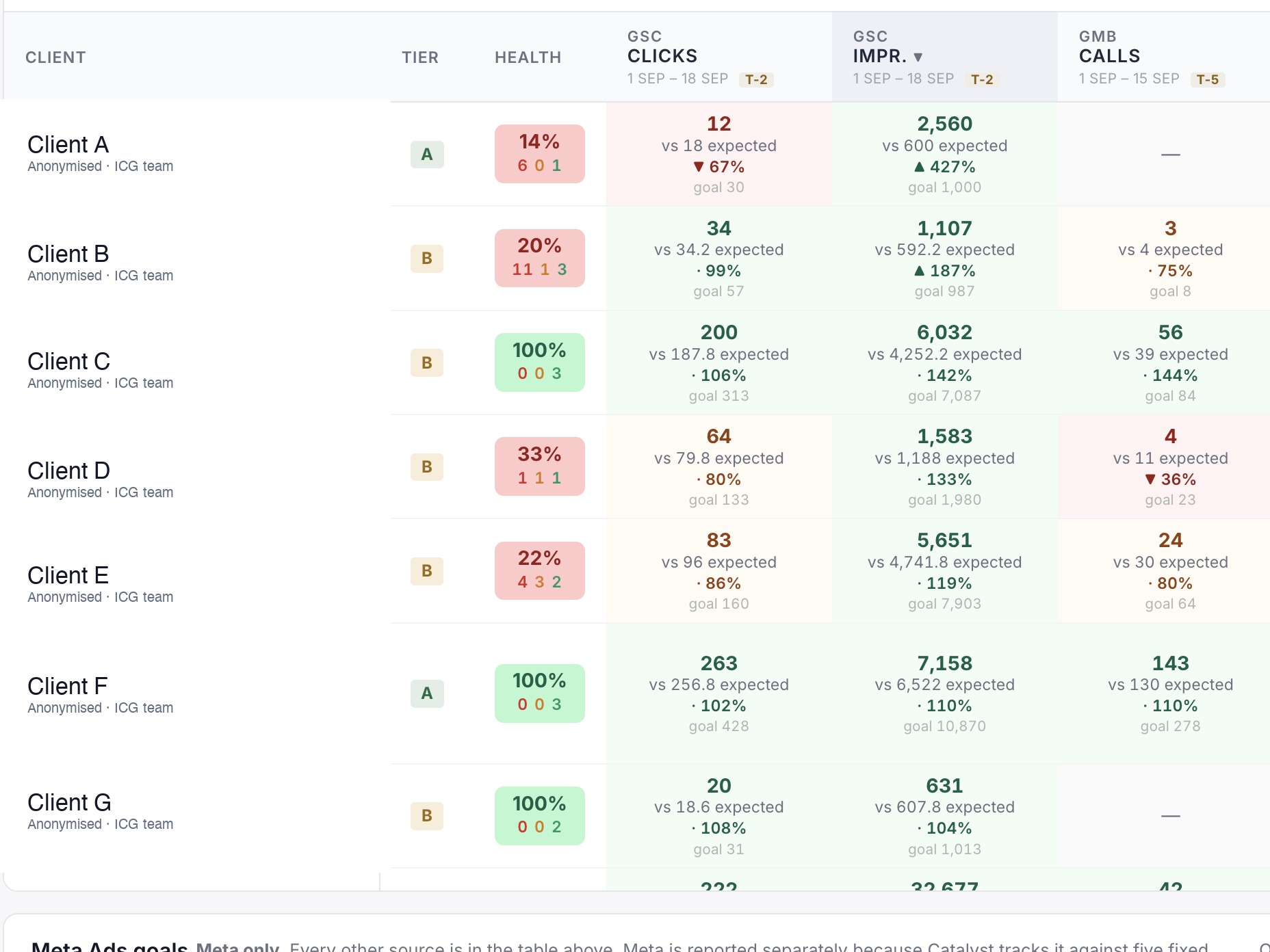
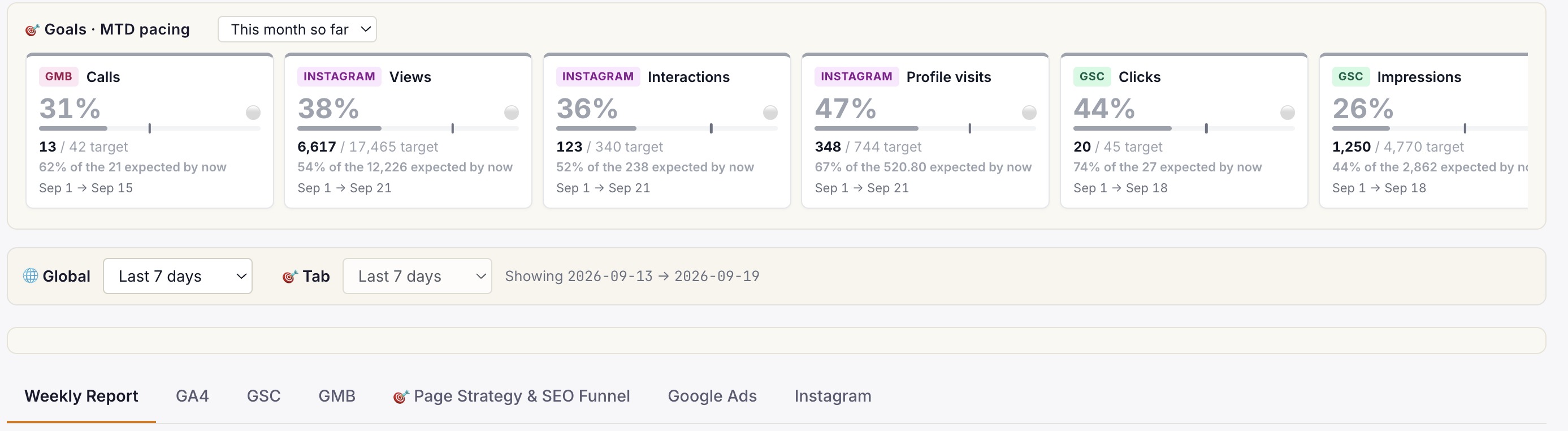
Live client dashboard. GSC, GA4, Google Ads, Meta Ads, IVR calls in one view. Login anytime, not monthly.
Phoenix
Clinic revenue intelligence over your PMS. Daily action queue: Prevent Loss, Maintain & Engage, Grow Revenue. Multi-centre rollout.
Or book a free 30-min audit to see all three in action on your account.
Healthcare brands
that already run on ICG.
A representative slice of the 150+ healthcare brands ICG has delivered for across India. Most engagements remain under NDA.


What ICG clients say · on video.
"Scale up of organic channels and business consulting. ICG has absolute domain authority in their field."
"Working with ICG transformed how we acquire IVF patients in Gurgaon. They understand the fertility journey from inquiry to consult..."
"What Ichelon accomplished — they got all my ideas and worked over 3-4 months to create an amazing, super-customised website."
Need help operationalising this?
Every ICG service is healthcare-only, NMC + DPDP-aware, and built around the patient-research patterns that drive Indian healthcare growth in 2026.
Every practice welcome — packages from ₹20,000/mo.
Goals-Driven engagements · Performance-Linked Payout Models available
More from
ICG.
Five trends shaping Indian healthcare marketing through 2027: AI-first patient research, Conversions API adoption, ABDM discovery, the AEO w...
Healthcare AIO is the discipline of getting your clinic or hospital cited inside Google AI Overviews, ChatGPT and Perplexity answers — not j...
Conversational-search advertising places brand messages inside AI chat answers — ChatGPT, Perplexity, Copilot — rather than beside a results...
Stop guessing.
Book a Diagnostic.
30 minutes. Free. With the AI-powered healthcare-only marketing agency 150+ brands already run on. No slides, no pitch, no hard close.


