


Hospital website migration: an SEO checklist to keep your rankings
To keep rankings through a hospital website migration, map every old URL to its closest new URL with 301 redirects, keep the content of pages that rank, test on staging and monitor Search Console closely after launch. This checklist covers the baseline, redirect map, technical checks, launch day and the weeks after.
No pitch. Written root-cause diagnosis. AI-powered, healthcare only.
Direct answer
To keep rankings through a hospital website migration, map every old URL to its closest new URL with 301 redirects, keep the content of pages that rank, test on staging and monitor Search Console closely after launch. This checklist covers the baseline, redirect map, technical ch...
TL;DR
To keep your rankings through a hospital website migration, map every old URL to its closest new URL with permanent (301) redirects, keep or improve the content on pages that already rank, carry over titles, structured data and Google Business Profile links, and test everything on a staging site before launch. Then watch Search Console daily for the first few weeks. Most ranking losses after a redesign come from skipping one of these steps, not from the new design itself.
This checklist is for hospital marketing heads, IT managers and the agencies or developers building the new site. It works for a full redesign, a move to a new CMS, a domain change, or merging several unit websites into one group site.
What is SEO in a hospital, and why does a migration put it at risk?
SEO in a hospital means making the website easy for search engines to crawl, understand and trust, so that department, doctor and location pages appear when people search for care in your area. A migration puts that at risk because URLs, content, internal links and technical signals all change at once. Google has to relearn the site.
Hospital sites are larger and more tangled than most. A typical site holds department pages, consultant profiles, procedure pages, health packages, location pages for each unit, blog articles and careers pages. Over the years, many of these have earned links from newspapers, medical associations, insurers and local directories. Each of those links points at an old URL. If that URL disappears without a redirect, the value the link carried is lost.
Common migration types and their risk
| Migration type | What changes | Risk to rankings |
|---|---|---|
| Design refresh, same CMS and URLs | Templates and layout | Low, if content and headings stay |
| New CMS or platform | URL patterns, templates, technical setup | Medium to high |
| URL restructure | Folder structure and slugs | High without a full redirect map |
| Domain change | Every URL | High; needs Search Console change of address |
| Merging unit or specialty sites into one | Domains, URLs and duplicate content | Highest; plan consolidation page by page |
What should you record before the migration starts?
Before anyone touches the new site, take a full snapshot of the old one: every URL, its title, meta description, headings, word count, structured data, internal links, inbound links and traffic. Export Search Console and analytics data for each page. This baseline lets you build the redirect map, protect what ranks, and prove later whether rankings held.
- Crawl the old site. Use a crawler to list every live URL, including PDFs and image URLs that rank in image search.
- Export Search Console data. Pages, queries, clicks and impressions for the last 12 months.
- Export analytics landing pages. Note which pages bring enquiries, not just visits.
- List pages with inbound links. Search Console's links report shows which pages other sites link to.
- Save XML sitemaps and robots.txt. You will compare them with the new versions.
- Record tracking. Analytics tags, call-tracking numbers, form events and ad conversion tags.
- Screenshot key pages. Top department and doctor pages, so you can compare content later.
Flag your "protect list": the pages that bring most organic enquiries or hold the strongest links. These pages should keep their URL if at all possible. If the URL must change, their content should move across nearly intact.
How do you build a redirect map that protects rankings?
A redirect map is a spreadsheet that pairs every old URL with the single most relevant new URL, using a permanent 301 redirect. Map page to page, not everything to the homepage. Where a page is genuinely retired, send it to the closest parent, such as the department page, or let it return a proper "not found" status if nothing relevant exists.
- Map department to department, doctor to doctor and package to package.
- When two old pages merge into one, redirect both to the new combined page and make sure its content covers both topics.
- Avoid redirect chains. Old URL should go straight to final URL, in one hop.
- Redirect old PDF URLs too, especially brochures and price lists that other sites link to.
- Handle both the www and non-www versions, and http to https, so no variant is left behind.
- For consultants who have left, redirect their profile to the department page rather than to the homepage.
Do not mass-redirect hundreds of old pages to the homepage. Google tends to treat those as soft errors, and the ranking value of those pages is lost anyway.
What should stay the same on pages that already rank?
Keep the substance of ranking pages: the main heading, the topic coverage, the questions answered, the structured data and the internal links pointing to them. Redesigns often cut long department pages into short, image-heavy sections. That looks cleaner, but it can strip out the very content that made the page rank and that AI answers quoted.
Check each protected page against its old version:
- The title tag and H1 still target the same search phrase.
- Key sections, FAQs and tables have moved across, not been dropped.
- Structured data such as hospital, physician, FAQ and breadcrumb markup is present and valid. Our guide to FAQ schema for healthcare explains why this matters for AI Overviews.
- Internal links from menus, department hubs and related articles still point at it.
- Doctor pages keep qualifications and registration numbers. As of October 2026, the NMC's advertising guidelines expect these on doctor information, so confirm current requirements with your counsel.
A migration is also a good moment to remove claims that no longer pass the October 2026 advertising guidelines, such as testimonials or "best hospital" lines. If you need a checklist for that, ICG's NMC compliance audit covers it.
Which technical checks matter on the staging site?
On staging, test the new site as Google would see it at launch: every redirect works in one hop, pages return the right status codes, canonical tags point to themselves, the XML sitemap lists only live URLs, and page speed is at least as good as before. Block staging from indexing, then remember to remove that block at launch.
| Check | What good looks like | Common failure |
|---|---|---|
| Redirects | Every old URL returns one 301 to the right new page | Chains, loops or homepage dumping |
| Status codes | Live pages return 200; removed pages return 404 or 410 | "Not found" pages that return 200 |
| Canonical tags | Self-referencing on each live page | All pages pointing to the homepage or to staging |
| Robots and noindex | Staging blocked; production open | Staging noindex left on after launch |
| XML sitemap | Only final, indexable URLs | Old URLs or redirected URLs listed |
| Core Web Vitals | Equal to or better than the old site on mobile | Heavy sliders and uncompressed images |
| Tracking | Analytics, call tracking and form events firing | Lost conversion data for weeks |
| Mobile rendering | Content and links identical to desktop | Sections hidden or missing on mobile |
Speed deserves extra care because hospital redesigns often add video banners and large galleries. See our notes on Core Web Vitals for medical websites. For a downloadable list of technical checks, use our clinic website technical SEO checklist.
Extra care when merging unit or specialty sites
Hospital groups often fold separate unit websites, or a standalone fertility or cancer-care site, into one group domain. Treat each old site as its own migration. Decide which pages survive as unit pages, which merge into group department pages, and which retire. Keep a unique location page for every unit, with its own address, timings, departments and doctors, so map listings still have a clear page to point to. Avoid publishing near-identical department pages for every unit with only the city name changed. Search engines tend to treat those as duplicates, and patients find them unhelpful. Write what genuinely differs at each unit instead: consultants, facilities, timings and the services available there.
Agree ownership before launch, too. Someone must sign off the redirect map, someone must own Search Console, and someone must update every Google Business Profile listing. On hospital projects, these jobs fall between IT, marketing and the developer unless they are named in writing.
What should you do on launch day and in the weeks after?
On launch day, switch redirects live, remove any staging noindex, submit the new XML sitemap in Search Console, and test the protect list by hand. Then monitor Search Console, analytics and enquiry volumes daily for the first two weeks and weekly for the next two months. Fix broken redirects and crawl errors as soon as they appear.
Launch-day list
- Run a crawl of the old URL list against production and confirm every redirect.
- Submit the new sitemap; for a domain change, use Search Console's change of address tool.
- Update Google Business Profile website links for every unit and department listing.
- Update URLs in Google Ads, Meta ads and any QR codes on printed material.
- Ask the most valuable linking sites, such as associations and insurers, to update their links.
- Check that call-tracking numbers and WhatsApp buttons work on every template.
The weeks after
Some movement in rankings is normal for a few weeks while Google recrawls. A steady fall on protected pages is not. Compare each protected page's clicks and positions with your baseline. If one has dropped, check its redirect, its content against the old screenshot, and its internal links. Most problems trace back to one of those three.
What is an SEO audit, and when should a hospital run one around a migration?
An SEO audit is a structured review of a website's technical health, content, on-page signals, links and local presence, ending with a prioritised fix list. Around a migration, run one before planning, to find what to protect and what to fix, and another a few weeks after launch, to confirm the move held and catch new issues.
The pre-migration audit shapes the new information architecture. It shows thin pages to merge, duplicate doctor or department pages to consolidate, and content gaps the new site should fill. The post-launch audit is narrower: redirects, indexing, speed, structured data and tracking. Read more on what an SEO audit covers for a healthcare website.
How is SEO used in healthcare beyond the migration itself?
In healthcare, SEO is used to help patients and families find the right department, doctor and location when they search, and to make a hospital's information clear enough that Google AI Overviews and assistants such as ChatGPT cite it. A migration is a reset point: done well, it gives the site a cleaner structure to grow from.
After the new site settles, use that structure. Build out department and procedure clusters, strengthen location pages for each unit, keep consultant profiles complete, and publish educational content reviewed by your doctors. Pair the website with the Google Business Profile work that drives map visibility.
ICG has worked only in healthcare since 2018, with 150+ healthcare and life-sciences brands. Our healthcare SEO agency team plans and supervises migrations alongside your developers, and our hospital website development team can build the new site itself. Retainers start from ₹20,000 a month, custom-scoped. If a redesign is coming up, book a call before the URL structure is final.
Book a free SEO diagnostic.
Hanuman Sihag's team runs a live crawl, checks technical health, cannibalisation, schema coverage and content gaps. 60 minutes, prioritised fix list.
Questions readers ask
about this topic.
The three platforms
behind every ICG engagement.
Beacon
CAPI middleware that fixes Event Match Quality, translates CRM statuses to Meta-standard events, dedups across channels.
Agency OS
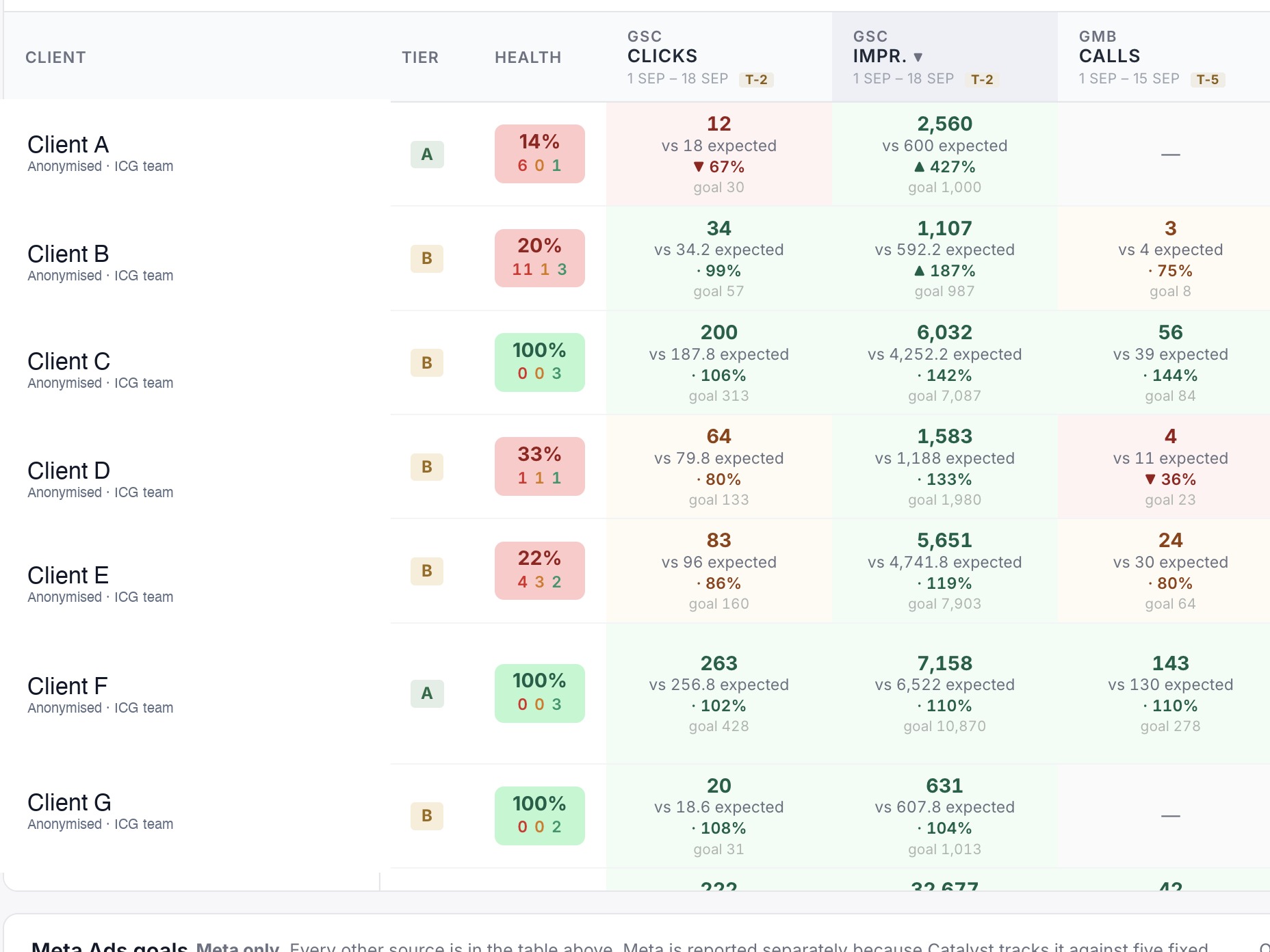
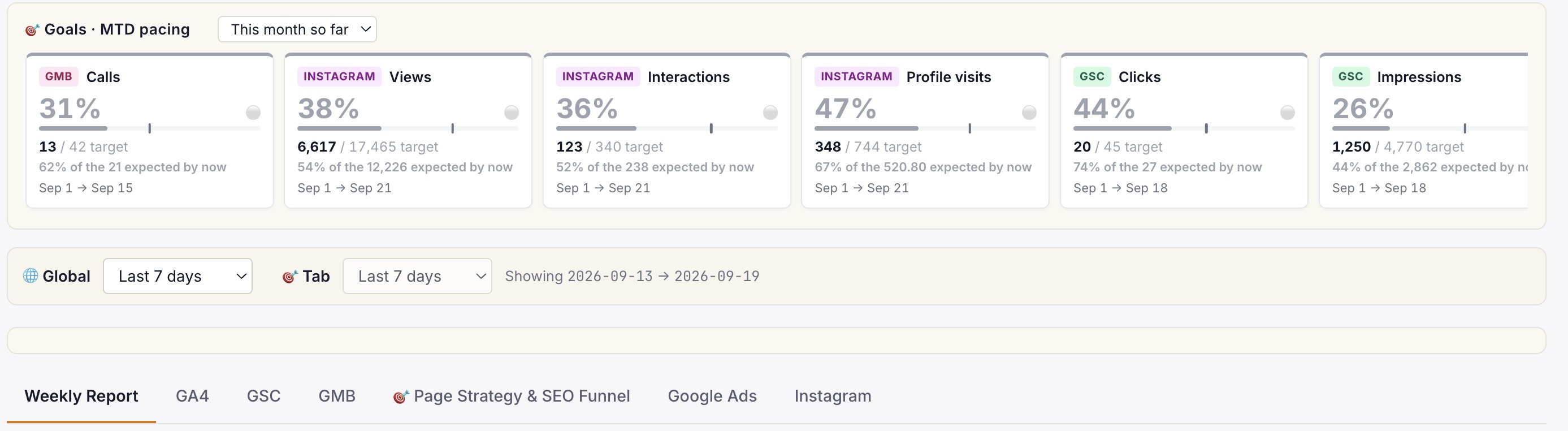
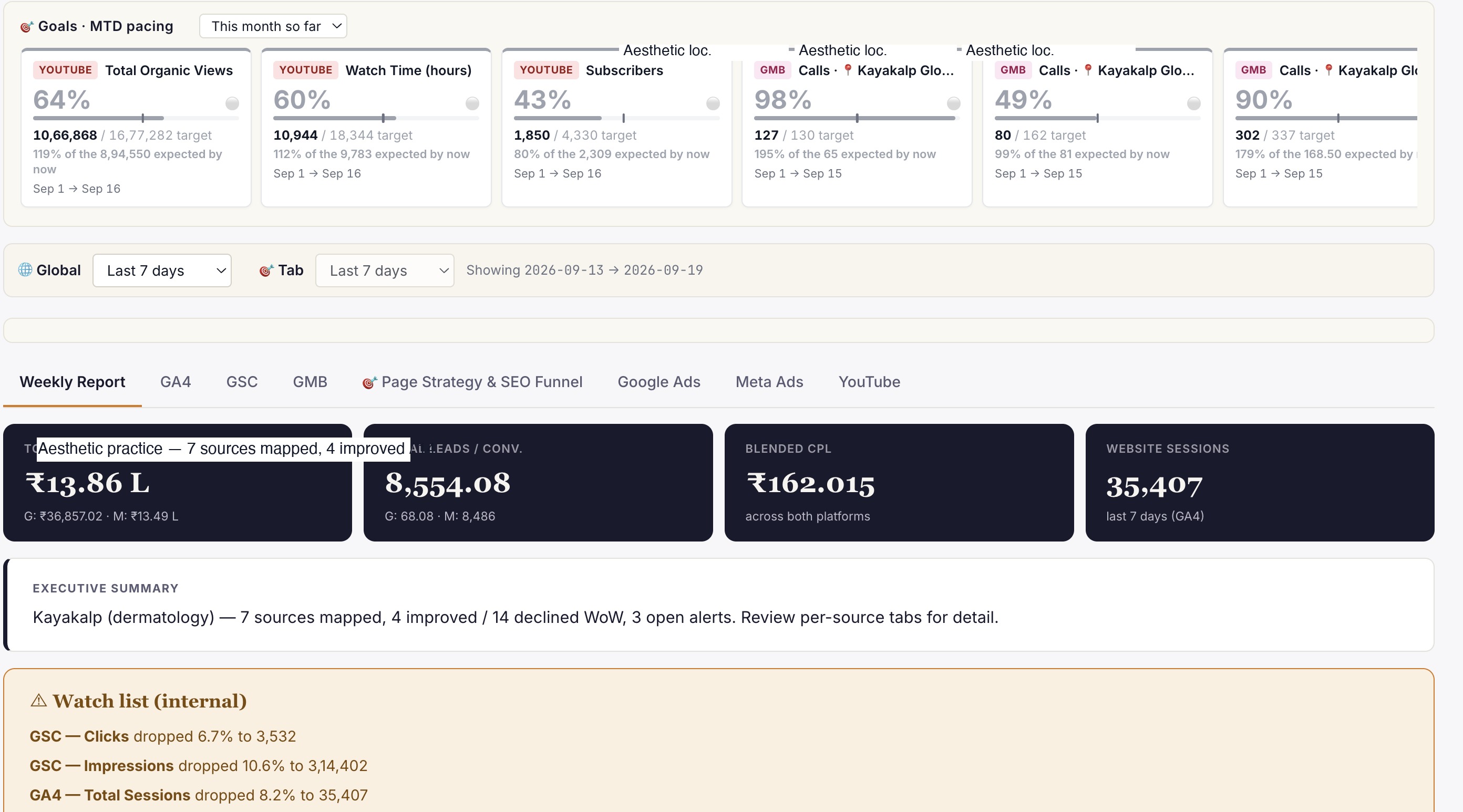
Live client dashboard. GSC, GA4, Google Ads, Meta Ads, IVR calls in one view. Login anytime, not monthly.
Phoenix
Clinic revenue intelligence over your PMS. Daily action queue: Prevent Loss, Maintain & Engage, Grow Revenue. Multi-centre rollout.
Or book a free 30-min audit to see all three in action on your account.
Healthcare brands
that already run on ICG.
A representative slice of the 150+ healthcare brands ICG has delivered for across India. Most engagements remain under NDA.


What ICG clients say · on video.
"Mental health marketing requires a different sensitivity. ICG built compliance-aware campaigns that respect both patients and our..."
"Bariatric surgery patients need a long consideration cycle. ICG built a content + paid system that respects that timeline."
"Working with ICG felt like working with an in-house growth team that happens to specialise in healthcare."
The intelligence stack behind this playbook.
Every ICG engagement runs on the Search Intelligence Trifecta — Angryturtle for GMB, SIE for search and AI Overview, YODA for YouTube. Live product screens below.
Need help operationalising this?
Every ICG service is healthcare-only, NMC + DPDP-aware, and built around the patient-research patterns that drive Indian healthcare growth in 2026.
Every practice welcome — packages from ₹20,000/mo.
Goals-Driven engagements · Performance-Linked Payout Models available
More from
ICG.
Hindi and regional-language SEO means publishing proper pages in the languages your patients search in, on their own URLs and linked with hr...
A new pharma brand in India should start digital work before launch, built around who it may legally address. This six-month plan covers pro...
Hospitals and clinics in India can still advertise after the NMC's 6 October 2026 guidelines, but only with factual, verifiable information....
Stop guessing.
Book a Diagnostic.
30 minutes. Free. With the AI-powered healthcare-only marketing agency 150+ brands already run on. No slides, no pitch, no hard close.


