


Service-line marketing for hospitals: how to choose which departments to push
Hospitals should push the departments where contribution per case, spare capacity, clinical depth and local search demand line up. Score each department on these factors, run focused campaigns for the top two or three lines each quarter, and keep everything else on baseline visibility. Here is the method, with tables and NMC guardrails.
No pitch. Written root-cause diagnosis. AI-powered, healthcare only.
Direct answer
Hospitals should push the departments where contribution per case, spare capacity, clinical depth and local search demand line up. Score each department on these factors, run focused campaigns for the top two or three lines each quarter, and keep everything else on baseline visib...
TL;DR
Push the departments where four things line up: each extra case earns a healthy contribution, the department has spare capacity, the clinical team is genuinely strong, and people in your catchment are already searching for that service. Market those lines hard. Every other department gets steady baseline visibility, not a campaign. That is service-line marketing in one paragraph.
Many Indian hospitals do the opposite. The budget follows whichever head of department pushes hardest, or the specialty that sounds most impressive on a hoarding. This guide is for hospital CEOs, COOs, unit heads and marketing managers. It gives you a way to rank departments using data you already hold, and a plan to market the winners without breaking the NMC's advertising rules.
What is service-line marketing for a hospital?
Service-line marketing means planning, budgeting and measuring marketing department by department, instead of for the hospital brand as one block. Each line, such as orthopaedics, cardiac sciences, maternity or oncology, gets its own audience, keywords, landing pages, referral plan and targets. The brand still matters, but most growth comes from a few chosen lines.
A multi-specialty hospital is really a bundle of small businesses that share a building and a name. Their patients behave very differently. A knee replacement decision can take weeks of research and family discussion. A child's fever visit happens tonight. A maternity booking starts months before delivery. One generic "best hospital in the city" campaign cannot serve all three, and it is not allowed under the current rules anyway.
What changes when you work by service line
- Each priority department gets its own landing page, written for the decision its patients are making.
- Search campaigns are grouped by service line, not lumped into one "hospital near me" campaign.
- Calls, forms and WhatsApp enquiries are tagged by department in the CRM, so you can see where demand really comes from.
- Reports show enquiries, consultations, admissions and revenue for each line, every month.
- A named clinical owner approves the content for that line, which keeps it accurate and compliant.
How do you choose which departments to push?
Score every department on five factors: contribution per case, spare capacity, clinical depth, local search demand and competitive intensity. Give each a score from 1 to 5, weight capacity and contribution most heavily, and rank the totals. The top two or three lines get focused campaigns for a quarter. Then re-score, because capacity and demand shift.
| Factor | Question to ask | Where the data comes from | Weight |
|---|---|---|---|
| Contribution per case | What does one more case earn after direct costs, consumables and consultant share? | Finance team, billing MIS | Highest |
| Spare capacity | Can the OPD, OT, cath lab or beds take more patients next month without long waits? | OT schedule, bed occupancy reports, consultant rosters | Highest |
| Clinical depth | Do we have experienced consultants, equipment and a service we can describe factually and in detail? | Medical superintendent, department heads | High |
| Search demand | Are people in our catchment searching for this service, in English and in local languages? | Google Keyword Planner, Search Console, Google Business Profile insights | High |
| Competitive intensity | How crowded are the search results, the maps pack and the ad slots for this service? | Manual searches from the catchment, Google Ads auction insights | Medium |
Keep the scoring meeting short and honest. Finance brings contribution figures. Operations brings capacity. The marketing team brings search demand and competition. The medical superintendent brings clinical depth. Nobody gets to score their own department alone.
A worked example, without the numbers
Picture a mid-sized multi-specialty hospital in a Tier-2 city. Orthopaedics scores well: good contribution per joint replacement, free OT time on two afternoons a week, an experienced arthroplasty surgeon who joined recently, and steady local searches. Cardiology earns more per case, but the cath lab is already full most days. Dermatology has low contribution per visit, and standalone skin clinics already crowd the maps pack. The answer is clear. Orthopaedics gets the focused campaign. Cardiology stays on baseline until a second cath lab slot opens. Dermatology gets only its Google Business Profile and a well-built service page.
Why does spare capacity matter more than prestige?
Marketing a department that is already full wastes money and hurts patient experience. If the senior consultant's OPD is booked for weeks, extra enquiries turn into long waits, cancellations and unhappy reviews. Before any campaign starts, confirm that the department can absorb more patients within days. Capacity is the gate every service line must pass first.
Ask operations three plain questions before you spend:
- How quickly can a new patient get a consultation with this department today?
- If enquiries rose sharply next month, where would the bottleneck appear: OPD slots, OT time, beds, diagnostics or the coordinator's phone?
- Who will call back new enquiries, and how fast?
There is one exception. Sometimes a hospital markets a full department on purpose, to prove demand before adding a consultant or a second OT shift. That is a business case, not a growth campaign. Budget it as an experiment, and tell the department head exactly what you are testing.
How do you do digital marketing for a hospital, one service line at a time?
Hospital digital marketing works best as a repeatable stack applied to each chosen department: a dedicated landing page, search ads on high-intent terms, SEO content that answers patients' real questions, a complete Google Business Profile, referral outreach and fast follow-up on every enquiry. Build the stack for one department, measure it, then copy the pattern to the next.
- A landing page per service line. Explain the conditions treated, procedures offered, the team with qualifications, facilities, insurance and cashless options, and how to book. Factual and specific beats glossy.
- Search ads by department. Separate campaigns for each line, with negative keywords that keep out job seekers and students. Our guide to Google Ads for hospitals covers campaign structure in detail.
- An SEO content cluster. A pillar page for the department, plus pages for each major procedure and the questions families ask before deciding. This is also what Google AI Overviews and ChatGPT draw on when they answer.
- Google Business Profile work. List the department's services, post updates about it, answer questions, and keep timings accurate.
- Referral outreach. Share clinical updates with local GPs and smaller nursing homes that do not offer the service.
- Enquiry handling. Tag each enquiry by department in your hospital OPD CRM, and make sure a coordinator calls back quickly.
- Reporting. Track the line from enquiry to admission, not just clicks.
When a hospital is launching a brand-new department rather than growing an existing one, the order changes slightly. See how to market a new hospital department launch.
What are the 7 Ps of service marketing in hospitals?
The 7 Ps are product, price, place, promotion, people, process and physical evidence. In a hospital they map to the clinical offering, package and insurance clarity, access and timings, the marketing itself, the consultants and staff, the patient journey, and everything patients see and receive. Scoring each P per department shows where marketing alone will not fix growth.
| P | What it means for a service line | Question to ask before you market it |
|---|---|---|
| Product | The conditions treated, procedures offered and clinical expertise | Is the offering clearly defined and better explained than nearby options? |
| Price | Packages, estimates, insurance and TPA tie-ups, cashless facility | Can the front desk give a clear estimate or package on the first call? |
| Place | Location, OPD timings, satellite OPDs, teleconsultation | Can patients from the target area reach the department easily? |
| Promotion | Ads, SEO, content, referrals, community programmes | Is every claim factual, verifiable and compliant? |
| People | Consultants, nurses, patient coordinators, front desk | Is there a named coordinator who owns enquiries for this line? |
| Process | The path from first enquiry to admission and discharge | How many hand-offs happen between the first call and the admission? |
| Physical evidence | Facilities, signage, website, discharge documents, reviews | Does what patients see match what we say? |
Marketing teams usually work only on promotion. Yet the weak P is often process or price. If callers cannot get a package estimate, or enquiries bounce between the call centre and the department, more ads simply leak more patients. Fix the weakest P first, then turn up the spend.
What does a hospital digital marketing strategy look like across a year?
A sound hospital digital marketing strategy runs on two tracks. A baseline track keeps every department visible in search, maps and AI answers all year. A focus track rotates intensive campaigns across two or three priority service lines each quarter, chosen with the scoring model. Budget moves between focus lines as capacity and results change.
The baseline track
- A complete service page for every department, kept current.
- Accurate Google Business Profile listings, with all departments named in services.
- Always-on brand search ads, so people who search your hospital's name reach you.
- A steady stream of educational content, approved by the relevant consultants.
The focus track, quarter by quarter
- First month: build or rebuild the landing page, set up call tracking and CRM tags, and brief the consultants and coordinators.
- Second month: run search ads and content at full pace, start referral outreach, and fix enquiry handling gaps weekly.
- Third month: review enquiries, consultations and admissions against the target, then decide whether the line stays in focus or returns to baseline.
Seasonality matters too. Some lines see predictable swings, such as respiratory and paediatric illness during monsoon and winter, or planned surgery around school holidays. Line up focus quarters with those patterns, not against them.
Which compliance rules shape service-line campaigns?
As of October 2026, hospitals in India may publish factual, verifiable information about their services. The National Medical Commission's guidelines on ethical advertising, issued on 6 October 2026, bar testimonials, before-and-after images, inducements and "best" or "No.1" claims in promotion. Individual doctors may share only genuinely educational content in their own name. Confirm the details with your counsel.
For service-line work, that has practical effects:
- Department pages should describe services, facilities and qualifications, not promise outcomes.
- Consultant profiles can show qualifications and registration numbers, but campaigns should not turn a doctor into an advertising face.
- AI-generated promotional campaigns are restricted, and any permitted AI content must be disclosed.
- Agency fees must not be linked to individual patients, so avoid per-admission payment models with your marketing partner.
- Enquiry data falls under the Digital Personal Data Protection Act, 2023, so collect consent and use it only for the purpose stated.
- Claims about cures or remedies can also fall foul of the Drugs and Magic Remedies (Objectionable Advertisements) Act, 1954.
If you are unsure whether your current department pages and ads pass, ICG's NMC compliance audit reviews them line by line.
How do you measure whether a service-line campaign worked?
Measure each service line along the full chain: enquiries, consultations booked, consultations attended, admissions or procedures, and revenue per case. Cost per enquiry alone misleads, because a cheap enquiry for a department you did not target, or a caller who never visits, is worth little. Review enquiries weekly and admissions monthly, always by department.
| Metric | Definition | How often to review |
|---|---|---|
| Qualified enquiries | Calls, forms and messages for the target department from people in the catchment | Weekly |
| Cost per qualified lead | Media and agency spend for the line divided by qualified enquiries | Weekly |
| Consultation show rate | Share of booked consultations that actually happen | Monthly |
| Conversion to admission or procedure | Share of consultations that lead to a planned admission or procedure | Monthly |
| Contribution generated | Contribution from cases traced back to the campaign | Quarterly |
For a benchmark, ICG's public dataset shows a median cost per qualified lead of ₹1,220 across our campaigns against a market median of ₹2,100. Your own figure will vary by specialty and city. For a fuller metric set, read our guide to healthcare marketing KPIs.
ICG has worked only in healthcare since 2018, with 150+ healthcare and life-sciences brands. As a hospital marketing agency, we start every engagement with this service-line scoring exercise. Retainers start from ₹20,000 a month and are custom-scoped. If you want a second view on which departments to push first, book a call with our team.
Book a free 30-minute Brand & Growth Diagnostic.
It's a working session, not a sales pitch — you leave with a written root-cause analysis you can act on, whether or not you engage ICG.
Questions readers ask
about this topic.
The three platforms
behind every ICG engagement.
Beacon
CAPI middleware that fixes Event Match Quality, translates CRM statuses to Meta-standard events, dedups across channels.
Agency OS
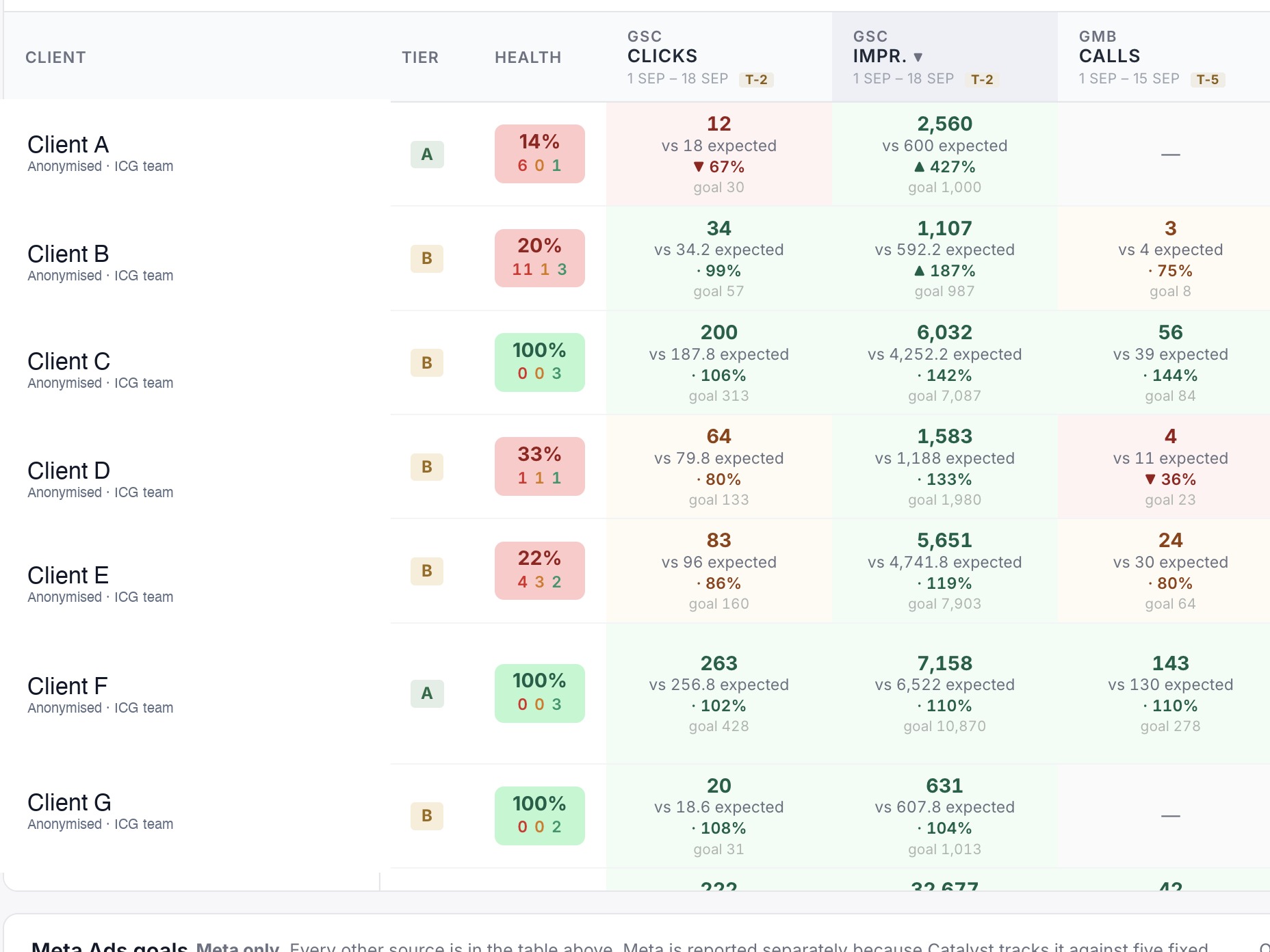
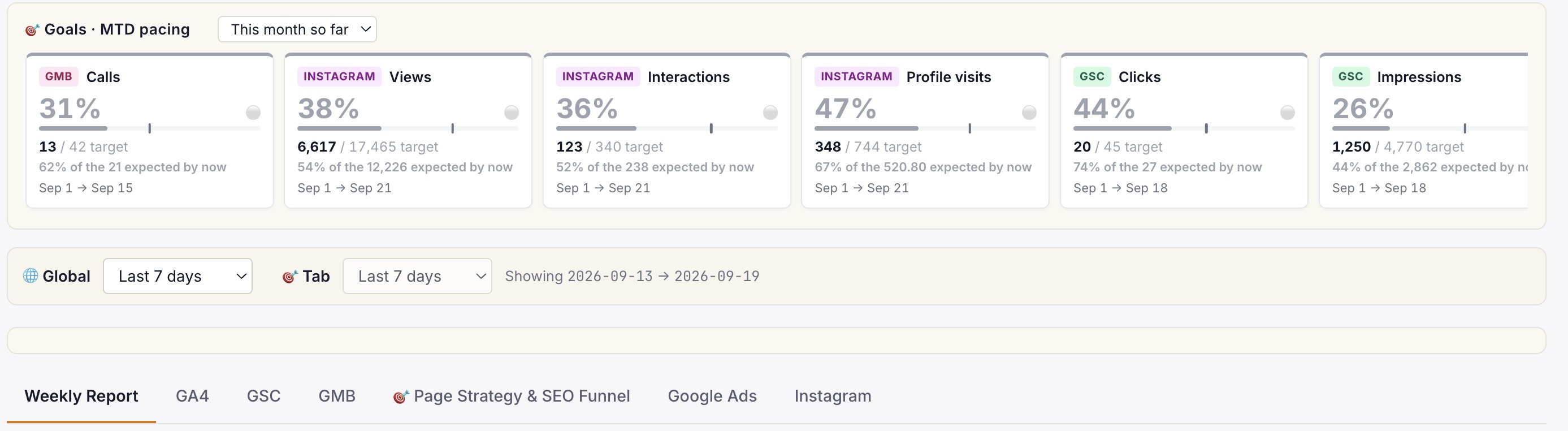
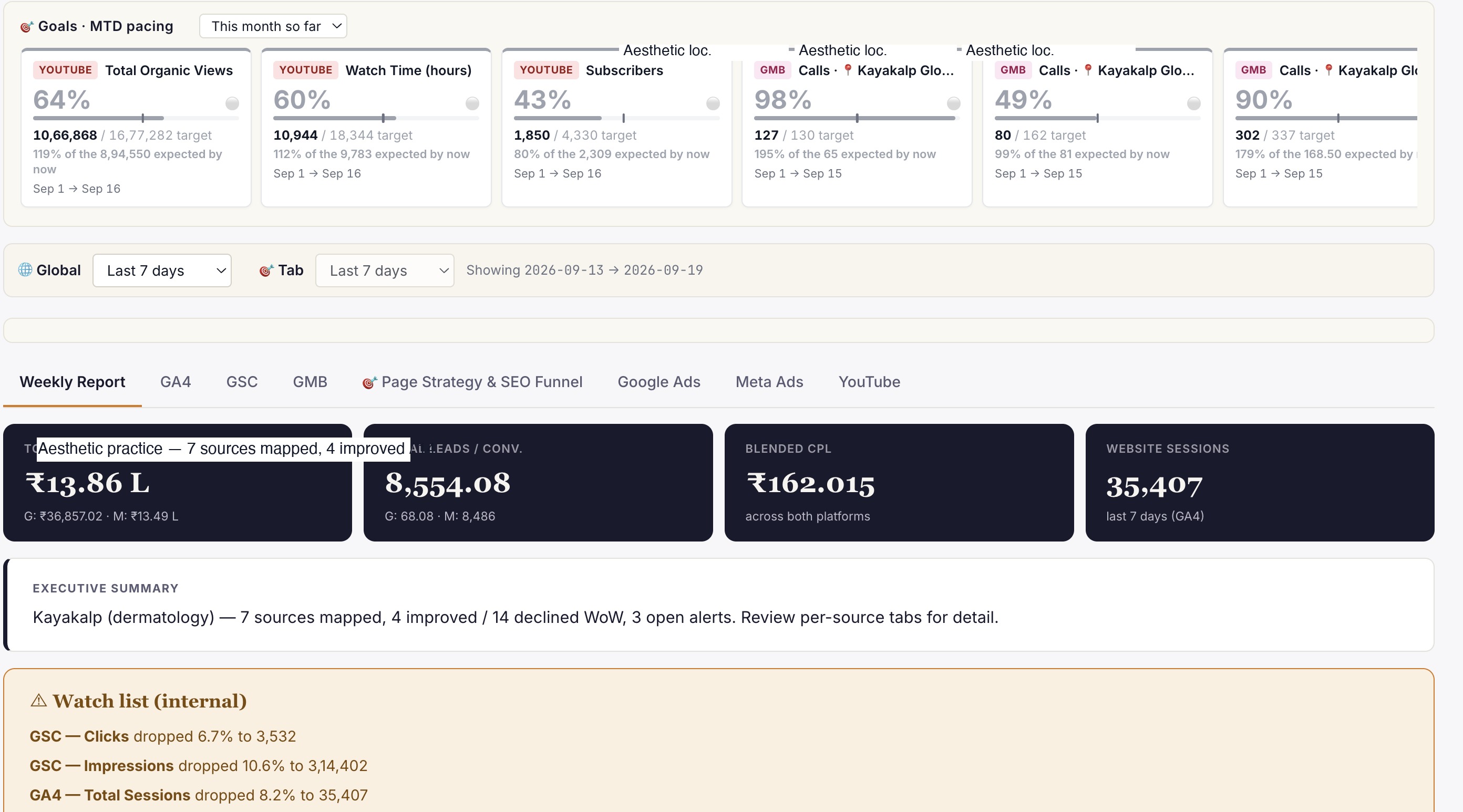
Live client dashboard. GSC, GA4, Google Ads, Meta Ads, IVR calls in one view. Login anytime, not monthly.
Phoenix
Clinic revenue intelligence over your PMS. Daily action queue: Prevent Loss, Maintain & Engage, Grow Revenue. Multi-centre rollout.
Or book a free 30-min audit to see all three in action on your account.
Healthcare brands
that already run on ICG.
A representative slice of the 150+ healthcare brands ICG has delivered for across India. Most engagements remain under NDA.


What ICG clients say · on video.
"Mental health marketing requires a different sensitivity. ICG built compliance-aware campaigns that respect both patients and our..."
"Bariatric surgery patients need a long consideration cycle. ICG built a content + paid system that respects that timeline."
"Working with ICG felt like working with an in-house growth team that happens to specialise in healthcare."
Need help operationalising this?
Every ICG service is healthcare-only, NMC + DPDP-aware, and built around the patient-research patterns that drive Indian healthcare growth in 2026.
Every practice welcome — packages from ₹20,000/mo.
Goals-Driven engagements · Performance-Linked Payout Models available
More from
ICG.
Hindi and regional-language SEO means publishing proper pages in the languages your patients search in, on their own URLs and linked with hr...
A new pharma brand in India should start digital work before launch, built around who it may legally address. This six-month plan covers pro...
Hospitals and clinics in India can still advertise after the NMC's 6 October 2026 guidelines, but only with factual, verifiable information....
Stop guessing.
Book a Diagnostic.
30 minutes. Free. With the AI-powered healthcare-only marketing agency 150+ brands already run on. No slides, no pitch, no hard close.


