


Hospital Digital Marketing in India: The Complete 2026 Playbook
Hospital digital marketing in India in 2026 is no longer a website plus Google Ads. AI Overviews rewrite search, WhatsApp is the front desk, DPDP has changed the rules. A pillar guide from 300+ live clients.
No pitch. Written root-cause diagnosis. AI-powered, healthcare only.
Quick answer
What does digital marketing for hospitals in India include?
Digital marketing for hospitals in India covers the online channels that bring patients to each department: Google Business Profiles for every location, local and specialty SEO, search and Meta ads, doctor-led YouTube and Instagram content, WhatsApp and CRM follow-up, and review management. It must follow NMC rules, ad-platform healthcare policies and the DPDP Act 2023 for patient data.
Direct answer
Hospital digital marketing in India in 2026 is no longer a website plus Google Ads. AI Overviews rewrite search, WhatsApp is the front desk, DPDP has changed the rules. A pillar guide from 300+ live clients.
TL;DR
TL;DR
- Hospital digital marketing in India in 2026 is a five-surface stack - Google search (with AI Overviews), Google Business Profile, YouTube, Meta (Instagram plus Facebook) and WhatsApp - stitched together by a healthcare-aware CRM.
- Discovery has quietly moved. In our audits of 150+ clinics and hospitals, 30-45% of first-touch patient enquiries now begin on maps, reels, YouTube shorts or AI answers, not on a classical website landing page.
- The DPDP Act 2023, the NMC advertising code, and ABDM's ABHA rails have made compliance a growth lever, not a legal footnote. Hospitals that get consent, storage and disclaimers right can market more aggressively, not less.
- The unit economics that matter are Cost Per Qualified Lead (CPQL), Cost Per Booked Consult (CPBC), and Show-Up Rate - not Cost Per Click or CTR. Most Indian hospitals we audit are measuring the wrong three numbers.
- A realistic monthly working budget for a mid-tier multispecialty hospital in a Tier-1 metro sits at Rs 4-12 lakh across media, tooling and agency retainer. Standalone clinics can run credible pipelines on Rs 60,000-1.5 lakh.
- Our 70-30 engagement model (70% fixed retainer, 30% tied to a 12-month qualified-lead target) is designed for hospital and clinic buyers who want skin in the game without paying per-lead premiums that distort creative.
- Twelve months is the minimum honest timeframe. AI Overviews stabilise in 60-90 days, PAA visibility in 90-180, top-5 organic rankings in 6-9 months for competitive specialties, and CRM ROI in month 4 onwards.
Table of Contents
- Why this pillar matters for Indian healthcare in 2026
- Foundations: what actually changed between 2020 and 2026
- The AI-first patient journey - discovery, evaluation, decision
- Building the local demand engine (GBP, hyperlocal, review velocity)
- YouTube and long-form video as the new hospital front page
- Meta and Instagram: creative velocity for doctors and hospitals
- WhatsApp, front-desk conversion, and healthcare CRM
- Compliance in 2026: NMC, DPDP Act, ABDM and ad-platform policies
- Numbers and benchmarks from ICG's portfolio
- Buyer archetypes: how four kinds of Indian hospitals should sequence spend
- Common mistakes hospitals make (and what to do instead)
- The 70-30 pricing model
- A 12-month execution roadmap
- Key takeaways
- FAQ
Why this pillar matters for Indian healthcare in 2026
Ten years ago, hospital marketing in India meant hoardings on the ring road, a Sunday newspaper insert, and a website that a nephew-in-law had built. Five years ago, it meant Google Ads on branded queries and an Instagram handle managed by a junior. Today, in 2026, it is something completely different, and most Indian hospitals have not caught up to that shift.
Three forces are colliding at once. First, AI Overviews and answer engines - ChatGPT, Perplexity, Gemini, Claude - are taking a growing share of the top-of-funnel "what is", "why does" and "which doctor treats" queries. Patients are getting summarised answers without a click. Second, Instagram reels and YouTube shorts have swallowed the middle-funnel research phase that used to live on blog articles and review sites. Third, WhatsApp has quietly replaced the phone call as the default way an Indian patient contacts a hospital, and no receptionist workflow was designed for it.
Meanwhile the underlying legal terrain has moved. The DPDP Act 2023 has changed how patient contact data can be collected, stored, and re-marketed to. The NMC's advertising code has become more specific about what a doctor or a hospital can and cannot claim in a piece of promotional content. ABDM's ABHA rails are quietly re-plumbing how patient records travel across facilities, and that has direct implications for retention marketing and cross-sell.
This pillar exists because the marketing directors, hospital administrators, and doctor-founders we work with keep asking a version of the same question. What does a real, defensible, India-first hospital marketing stack look like in 2026 - one that respects the law, uses AI where it earns its keep, is honest about what a mid-tier hospital in Nagpur or Kochi or Ludhiana can actually afford, and gets qualified enquiries into an OPD chair? This is our attempt to answer that in one place.
Section takeaway: Search, social, and the compliance floor have all shifted in the last 24 months. Any hospital marketing plan written before 2024 is very likely playing by rules that no longer apply.
Foundations: what actually changed between 2020 and 2026
Before we get into channels and tactics, let us name the five foundational shifts that a hospital marketing team has to internalise in 2026. Skip these, and no amount of ad spend fixes what is broken underneath.
1. Search is no longer just ten blue links
On a typical high-intent query like "best cardiologist in South Delhi" or "IVF cost in Hyderabad", the modern Google results page shows an AI Overview at the top, a maps pack in the middle, a People Also Ask carousel, sometimes a video pack, and only then the classical organic results. Getting on page one is not the goal any more. Getting into the AI Overview, the maps pack, the PAA, and the video carousel - simultaneously - is the goal. That requires a very different content and schema discipline than "write a 1500-word blog and stuff keywords".
2. The Indian patient journey is now non-linear
In our audits, we regularly see the same enquirer touch the brand seven to eleven times before they call. A reel on Instagram, a Google search a week later, a maps click, a YouTube consult explainer, a WhatsApp DM, a friend's recommendation, a review scroll, then finally a phone call. Attribution models that credit "last click" are lying to the CFO. The realistic model is multi-touch, with GBP and YouTube doing more heavy lifting than most hospital dashboards currently show.
3. WhatsApp is the front desk now
Every single hospital we have onboarded in the last 18 months has under-invested in WhatsApp. Not the Business App on a receptionist's phone - the actual API, with templated messages, a real routing tree, and integration into whichever CRM the hospital uses. In our client mix, WhatsApp routes are converting at 2.4-3.8x the rate of "please call us back" phone form submissions, because the enquirer stays in the conversation instead of getting bounced to a queue.
4. Reviews are the trust layer, not a vanity metric
Google Business Profile reviews are now the single largest driver of both local rank and click-through in the maps pack. In our GBP audits, a hospital moving from a 4.1 to a 4.6 average, at 200+ reviews, typically sees a 40-70% lift in profile actions inside a quarter. The problem is that most Indian hospitals have no defensible, DPDP-safe review-request workflow at all, which is why reviews stall.
5. Content has to serve two readers - a human and a model
Content in 2026 has to be legible to a nervous mother searching at 11 pm, and to an LLM trying to extract a clean answer for its user. That means clearer headings, tighter TL;DRs, honest disclosures, actual authorship, and structured data. It also means fewer, better pages instead of a hundred thin ones. Hospitals that publish 30 excellent, expert-reviewed pages a year now consistently outperform hospitals that publish 300 generic ones.
Section takeaway: Search shape, patient journey, front-desk medium, review economics and content standards have all changed. Get all five foundations right and channel tactics get much easier. Get them wrong and no channel budget can save the plan.
The AI-first patient journey - discovery, evaluation, decision
Almost every hospital marketing plan we have reviewed in the last 12 months assumes a three-stage funnel - awareness, consideration, decision - inherited from FMCG marketing decks. That model is not wrong, but it hides where the real leverage is in 2026. Let us walk through the actual path an Indian patient takes for, say, a knee replacement decision at a Tier-1 metro hospital.
Discovery - the top of the funnel is now AI-shaped
The enquiry usually starts as a symptom-led search, not a brand search. "Knee pain when climbing stairs", "difference between partial and total knee replacement", "recovery time after knee surgery in India". In 2026, roughly a third of those queries return an AI Overview at the top. If your hospital's content is not being cited inside that overview, you have simply lost that touch. The response is not to abandon SEO, it is to write content that is answerable - clear question-answer structure, real doctor authorship, cited sources, and clean schema. This is where our own YODA product for YouTube and Angryturtle for local surface come in - both are built to feed the answer surfaces, not just the ten blue links.
Evaluation - trust is built on faces, not banners
Once the patient has a shortlist, the evaluation phase happens on YouTube, Instagram reels, and Google reviews. Not on your hospital website. This is the single most under-invested part of the funnel in Indian healthcare. Patients want to see the surgeon, hear how they explain the procedure, watch a real recovery testimonial, and read what people who look like them have said. A hospital that has 30 doctor-led explainer videos on YouTube and 100+ recent Google reviews on the closest branch has already won this round before the enquiry form even loads.
Decision - the last mile is a conversation, not a click
The decision itself is almost never made on the website. It is made in a WhatsApp thread, a phone call, or an OPD visit. Which means the marketing team's job is not to close the sale on the landing page - it is to hand a warm, contextual conversation to a trained front-desk counsellor. Landing pages should ask for three things and get out of the way. AtomCRM, our healthcare CRM, is priced at Rs 50,000/- setup + Rs 799/- per telecaller precisely because a large Indian hospital should not need a Fortune-500 sales cloud to do this well.
Retention - the phase the CFO cares about most
Post-procedure retention is where 40-60% of a hospital's real lifetime value sits, and it is where almost no digital marketing effort is directed. Post-op WhatsApp check-ins, a real review-request flow, annual health check reminders, and a referral programme are not a "phase two" nice-to-have. They are how a hospital moves from paid-media-dependent to organically compounding.
Section takeaway: Map spend to where the patient actually is - AI answers for discovery, YouTube and reviews for evaluation, WhatsApp for decision, and CRM cadence for retention. A media plan that skips even one of these four stages leaks money.
Building the local demand engine (GBP, hyperlocal, review velocity)
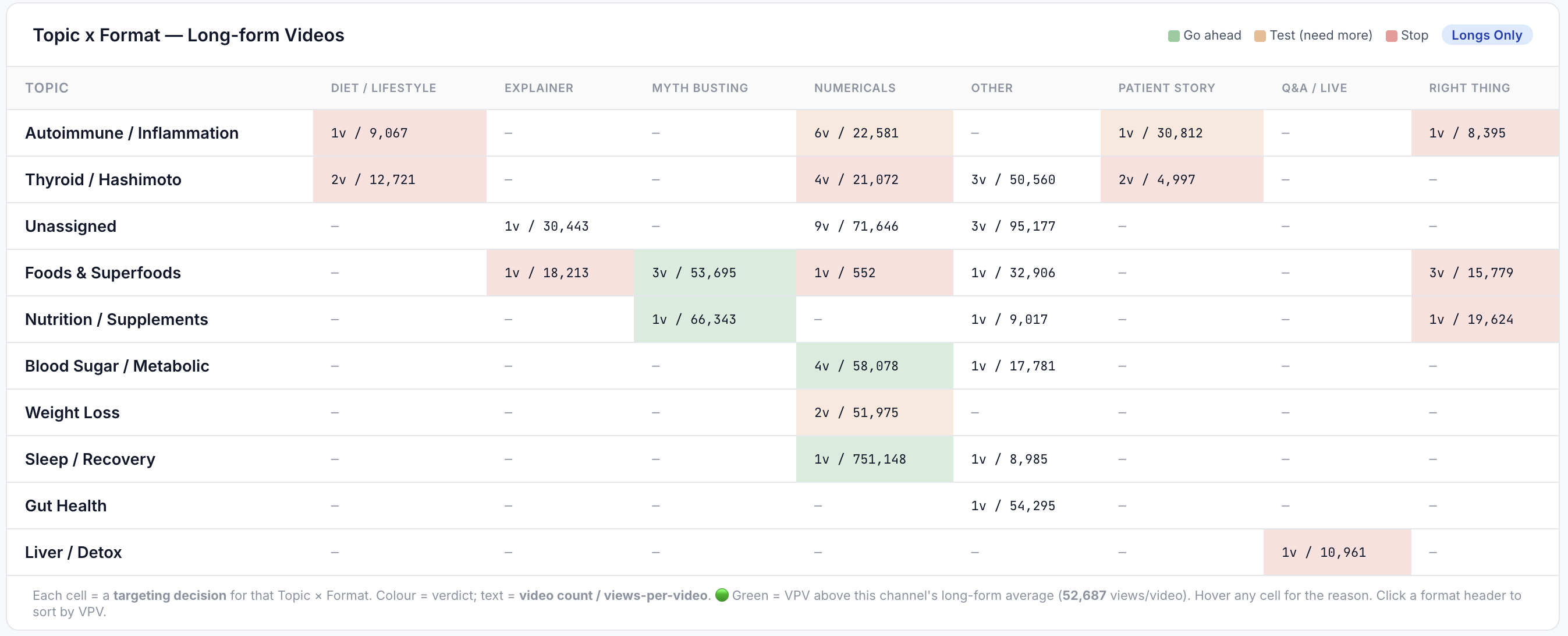
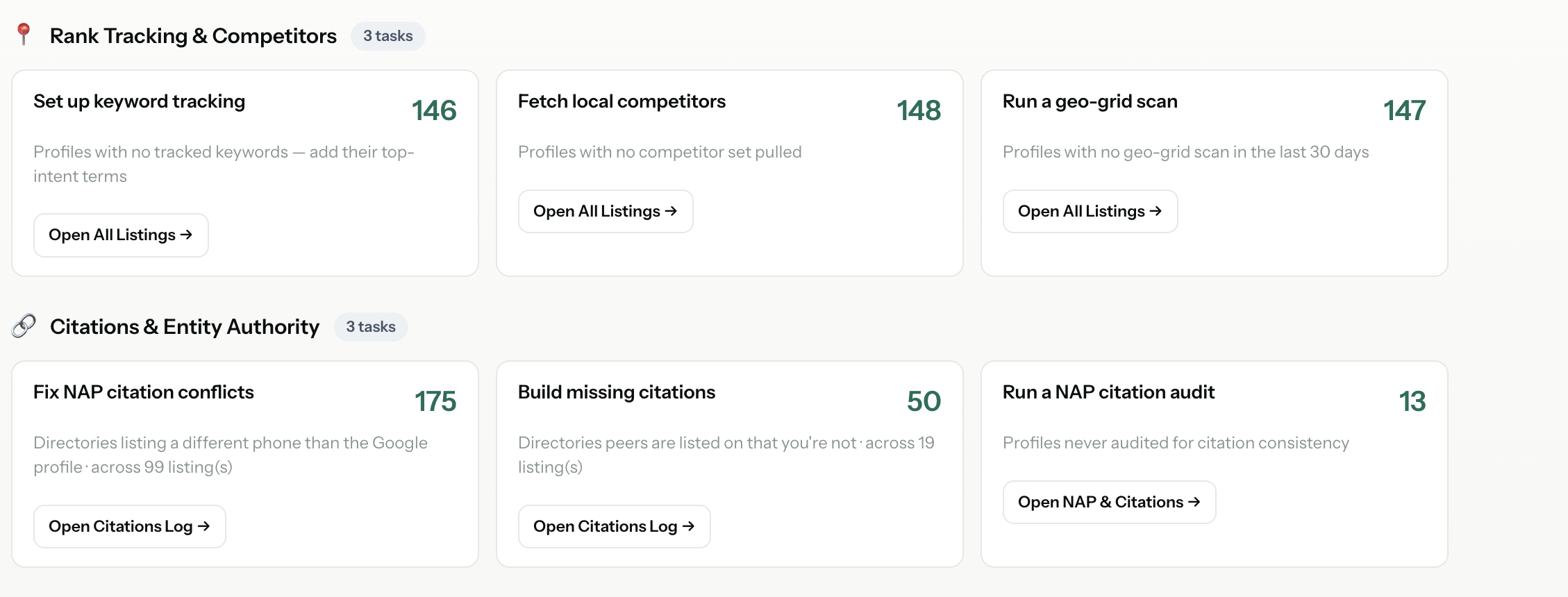
If a hospital or a clinic can only fix one channel in the first 90 days, we tell them to fix Google Business Profile. It is the highest-ROI, lowest-competition surface for Indian healthcare in 2026, and almost every hospital we audit has it configured wrong.
The GBP audit that most hospitals fail
A serious GBP audit for a hospital covers 80+ fields per location. Primary category, secondary categories, service list, department pages, doctor list with real photos, opening hours by department, appointment link, insurance panel list, accessibility attributes, photo freshness, video presence, Q&A monitoring, and post cadence. In our audits of 150+ clinics, the median hospital fills in about 40% of those fields correctly. That single gap is often the difference between showing up in the maps pack for "orthopaedic hospital near me" and being invisible below the fold.
The review flywheel
A defensible review flywheel is a specific piece of engineering. It requires four things - a moment of maximum patient satisfaction (usually 48-72 hours post-discharge or post-consult), a compliant, opt-in WhatsApp or SMS ask, a friction-free link to the correct GBP location, and an internal SLA to respond to every review inside 24 hours. Our Angryturtle GBP OS was built to run exactly this flywheel at scale - the DIY tier is Rs 999/- for solo doctors, and the Agency tier starts at Rs 3,499/- per location per month. Whether or not a hospital uses it, the underlying discipline is what matters.
Multi-location and hyperlocal SEO
For chains - a five-branch IVF network, a seven-city dental group, a two-state ophthalmology chain - hyperlocal SEO becomes the single largest source of qualified enquiries. Each branch needs its own city-and-specialty landing page, its own GBP with local doctor faces, its own review programme, and its own local content cadence. Most Indian hospital chains we audit are running one national website with a single "Locations" page and wondering why local competitors outrank them for city-level queries. The fix is not clever - it is 25 to 60 well-structured city pages, each maintained.
Q&A, posts, and the ranking signals nobody checks
Google Business Profile Q&A is a public Q&A - anyone can ask, anyone can answer, and the top answer sits inside your listing forever. The number of Indian hospitals we have onboarded with unanswered, sometimes actively wrong, Q&A entries sitting on their GBP is uncomfortable. GBP Posts, once a week, on procedures, packages, doctor introductions, or health-check camps, are a free ranking signal that costs 15 minutes to publish and are quietly ignored by almost every hospital marketing team.
Section takeaway: If you fix nothing else, fix Google Business Profile - full field completion, a real review flywheel, a per-branch strategy for chains, and weekly Q&A plus Posts hygiene. This one surface routinely delivers the fastest measurable CPQL improvement in our engagements.
YouTube and long-form video as the new hospital front page
YouTube is where the Indian healthcare consumer now researches their body. Not the hospital website. Not a blog. YouTube. And what shows up on YouTube for a query like "acidity home remedies", "PCOS treatment options", or "IVF success rate India" is now often being pulled into Google's AI Overviews as well. YouTube is a discovery surface, an evaluation surface, and an AI-training surface, all at once.
The three race tracks on YouTube
We think about YouTube as three separate races. First, the classical YouTube search race - a doctor-led explainer video ranking for "difference between angioplasty and bypass". Second, the YouTube Shorts race - 30-90 second clips that break out of the specialty audience and reach broader intent. Third, the AI Overview race - videos that get cited or transcribed into Google's AI answers. Each race has a different content spec, a different length, and a different thumbnail discipline. Our YODA product exists to run all three in parallel for a healthcare brand.
Who should actually appear on camera
The single biggest mistake Indian hospitals make on YouTube is putting the hospital brand front and centre. Nobody is searching for the hospital brand. They are searching for a symptom, a procedure, or a doctor. The doctors have to be on camera, in white coats or scrubs, in the actual hospital or clinic, speaking in Hindi, Tamil, Telugu, Kannada, Bengali, Marathi or English depending on the catchment. Regional-language YouTube for healthcare is dramatically under-supplied and is one of the highest-ROI content bets an Indian hospital can make in 2026.
Cadence and production standards
A serious YouTube presence for a hospital is not one video a month. It is 2-4 long-form doctor-led videos, plus 8-12 shorts, per month. That sounds intimidating until you realise the production model is one two-hour shoot per doctor per month, cut into all of the above. The production quality bar is not cinematic - it is honest lighting, clean audio, and clear captions. Ostentatious production actively hurts trust. What matters is that the doctor sounds like a real human who has done this procedure 400 times, not a script reader.
Measurement that actually matters
View count is a vanity number for hospitals. The metrics we track are watch-through rate above 45%, subscriber-to-view ratio, and - most importantly - assisted conversions via UTM'd description links and a hospital's WhatsApp CTA. In our portfolio, a hospital that hits 10K monthly YouTube views on genuine intent-shaped content typically sees 40-90 assisted enquiries a month, at a fully-loaded cost that is 30-50% lower than paid social.
Section takeaway: Treat YouTube as three parallel races - search, shorts, AI Overviews - built around doctors on camera in regional languages, with cadence and measurement discipline that respects assisted conversions, not vanity views.
Meta and Instagram: creative velocity for doctors and hospitals
Meta - Instagram plus Facebook - is where hospital brand and demand generation now meet. In 2026 it is very hard to run a modern hospital marketing programme in India without a serious presence here, and yet almost every Indian hospital we audit is running Meta as a legacy Facebook page from 2019 with a couple of doctor photos.
Instagram is now the doctor's own channel
The centre of gravity has shifted from the hospital handle to the doctor handle. A senior gynaecologist with 40,000 followers on Instagram is a bigger asset to an IVF hospital than the hospital's own 200,000-follower branded handle. This is uncomfortable for hospital marketing teams who like to control the message, but it is the reality. The healthy response is to build a doctor-personal-brand programme inside the hospital - editorial support, reels production, a content calendar, and a compliance sign-off - so the doctor's channel and the hospital brand compound each other. Our Prism Pulse product is built to analyse and report on exactly this doctor-Instagram surface.
Reels, carousels and the creative-velocity problem
Instagram in 2026 rewards volume, not polish. A hospital shipping 20 reels a month, of which four go moderately viral, will beat a hospital shipping four cinematic reels a month. That requires a production model that hospitals rarely have - a lightweight in-house shooter, a scripter who understands both medicine and hooks, and an editor who can turn a two-hour doctor shoot into 12 clips. This is one of the specific things a specialist agency retainer solves faster than an internal hire.
Paid Meta - creative is the campaign
On paid Meta, in 2026, the creative is the campaign. Audience targeting has been so simplified by Meta's algorithm that the leverage has moved entirely to the creative variant. In our portfolio, a hospital running 20+ creative variants per month against three or four core audiences will outperform a hospital running two creatives against 15 hand-crafted audiences by a factor of 2-4x on CPQL. Our Meta Catalyst IQ is built around this creative-variant reality - not clever audience carving.
The compliance floor on Meta
Meta and Instagram advertising has its own layer of healthcare compliance on top of Indian law. Before-and-after images are heavily restricted. Personal-attribute targeting is restricted. Certain claims trigger disapproval. A hospital marketing team that does not have a compliance-aware creative checklist will lose 30-50% of ad approvals and burn precious calendar time. The workaround is not to be less ambitious - it is to be more educated about what the platform allows.
Section takeaway: Meta wins are built on doctor-personal-brand plus creative volume plus compliance literacy. Any two out of three is not enough.
WhatsApp, front-desk conversion, and healthcare CRM

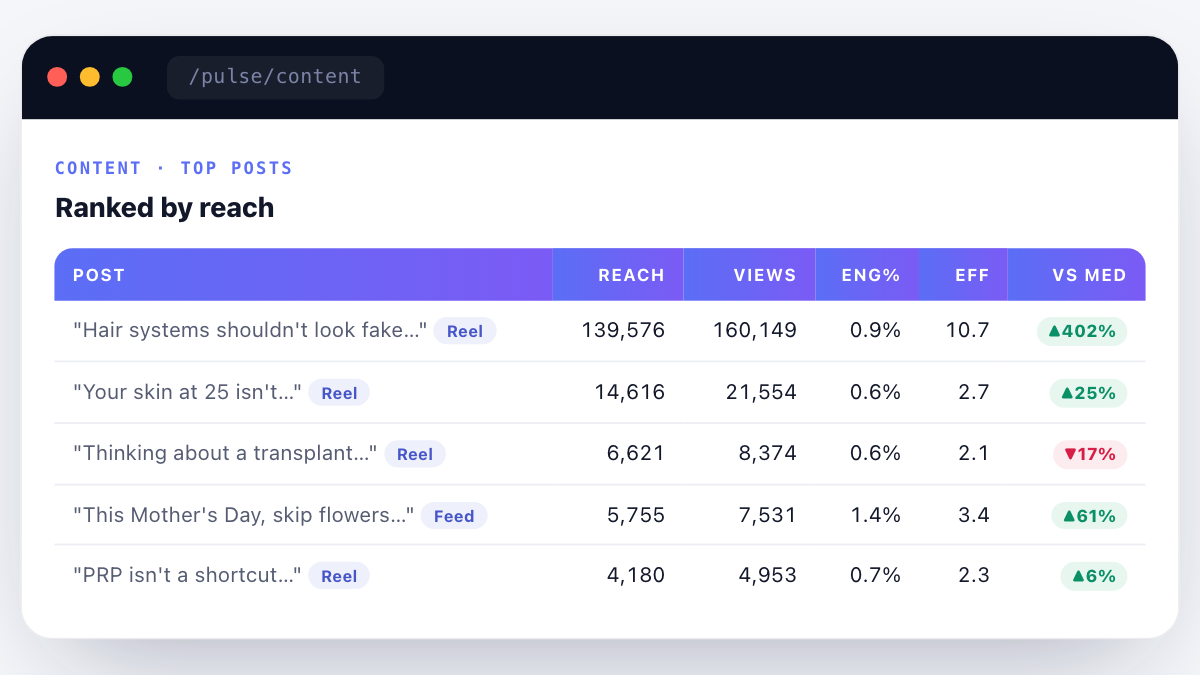
If GBP is where the fastest CPQL wins live, WhatsApp plus CRM is where the fastest revenue wins live. Every enquiry your paid media and organic surfaces generate lands here, and most Indian hospitals leak 40-60% of enquiries at exactly this stage. Not because the enquiries were bad, but because the intake was.
Why "please call us back" is a losing pattern
An Indian patient in 2026, having tapped an ad or a GBP call button, expects a response inside minutes, in their language, on WhatsApp. The classical "our team will call you within 24 hours" flow loses that patient to the next hospital that answers in six minutes. WhatsApp Business API, with a real templated conversation tree, plus a routing rule that hands off high-intent enquiries to a human, is the modern front desk. Not a nice-to-have. The front desk.
What a healthcare CRM actually has to do
A real healthcare CRM for an Indian hospital has to do things that a generic sales CRM cannot. It has to track the enquiry against a doctor, a specialty, a procedure package, an insurance panel, and a branch. It has to respect DPDP consent state per contact. It has to integrate with the HIS or EHR, or at least with the OPD scheduler. It has to talk to WhatsApp, to the outbound call system, and to the front-desk counsellor's screen. AtomCRM is our answer to this - built India-first, priced at Rs 50,000/- setup + Rs 799/- per telecaller, and designed for hospitals that do not want to run a six-month CRM implementation before the first enquiry is captured.
The RCM and EHR overlay problem
Beyond CRM, most Indian hospitals sit on a patchwork of clinical and revenue systems - a HIS from one vendor, a lab system from another, an OPD scheduler from a third. HealthPro 360, at Rs 14,999/mo, exists as a hospital RCM plus EHR overlay - a layer that sits on top of that patchwork so the marketing team, the front desk, and the finance team see the same patient and the same enquiry, not three different versions of them. That single fix is often what unlocks accurate marketing ROI reporting for the first time.
The counsellor is the last variable
All of this is undermined if the front-desk counsellor is not trained, not scripted, and not measured. Show-up rate is a training problem, not a technology problem. In our engagements, six weeks of counsellor coaching - on objection handling, package explanation, insurance orientation, and WhatsApp etiquette - routinely lifts show-up rate by 15-25 percentage points. No marketing channel investment beats that.
Section takeaway: A hospital that respects the enquiry - fast WhatsApp response, a real CRM, an EHR-aware overlay, and a trained counsellor - converts 2-3x what the same hospital converts today with the same media spend.
Compliance in 2026: NMC, DPDP Act, ABDM and ad-platform policies
Compliance in Indian healthcare marketing is not a legal footnote. It is a growth constraint - and, handled well, a growth lever. Hospitals that treat it as such can market more aggressively than their competitors, because they know exactly where the line is.
The NMC advertising code
The National Medical Commission's advertising guidelines set out what a registered medical practitioner and, by extension, a hospital that advertises using their name can and cannot say. Superlatives, guarantees of cure, comparisons with other doctors, and testimonials that make specific outcome claims all sit inside restricted territory. This is not new, but the enforcement climate has become sharper. A single complaint can now unwind a six-figure ad spend. The practical response is a creative sign-off protocol that flags high-risk phrases before they leave the marketing team.
The DPDP Act 2023 - what actually changed
The Digital Personal Data Protection Act 2023, together with the draft rules that have followed, has re-defined how patient contact data must be collected, consented, stored, and used. In practical marketing terms, this means the "give us your number and we will spam you forever" era is over. Consent must be specific, opt-out has to be honoured, and re-marketing to a patient beyond the original purpose needs a fresh basis. Hospitals that build DPDP-compliant intake flows now avoid the retrofit cost that is coming for everyone else.
ABDM and the ABHA rails
The Ayushman Bharat Digital Mission's ABHA identifier is quietly becoming the interoperability backbone of Indian healthcare. For marketing teams, this matters in two ways. It creates a legitimate, consent-based way to see a patient's history across facilities, which changes what a hospital can do for retention and follow-up. And it creates a new expectation among patients - that "digital-first" hospitals accept and issue ABHA, understand it, and use it. The absence of ABHA literacy on a hospital's website is now itself a trust deficit for a certain segment of educated patients.
Ad-platform healthcare policies
On top of Indian law, every major ad platform - Google, Meta, YouTube - has its own healthcare vertical policy. These are quietly stricter than most marketing teams realise. Certified pharmacy programmes, restricted keyword categories, before-and-after image rules on cosmetic procedures, and specific consent-language requirements for lead-form ads. A compliance-aware campaign structure loses 5-15% of theoretical addressable audience but gains 30-50% in delivered impressions, because ads do not get disapproved and accounts do not get suspended.
Section takeaway: Treat NMC, DPDP, ABDM and platform policy as one integrated compliance layer with a sign-off protocol, not as four separate legal risks handled reactively. Compliance literacy is the fastest quiet advantage a hospital marketing team can build in 2026.
Numbers and benchmarks from ICG's portfolio
The next question a marketing director always asks is "what are the numbers". Here are the ones we can share, with the honest qualifier that these are drawn from our current portfolio of 300+ live healthcare clients across 150+ clinics, dental groups, IVF chains, ophthalmology networks, multispecialty hospitals and pharma brands. Your numbers will vary by specialty, city tier, brand equity, and season. Use these as sanity checks, not as guarantees.
Cost per qualified lead (CPQL)
Across our portfolio, typical CPQL ranges in 2026 sit roughly like this. Dental single clinic in a Tier-1 metro: Rs 350-900 per qualified lead on paid Meta, Rs 200-500 on GBP-attributed enquiries. IVF chain in a Tier-1 metro: Rs 1,800-4,500 on paid Google, Rs 900-2,200 on YouTube-assisted enquiries. Multispecialty hospital, Tier-2 city: Rs 250-700 blended. Cosmetic surgery, Tier-1 metro: Rs 1,200-3,500 on paid Meta. These are qualified-lead numbers, meaning the enquiry passed a basic BANT-equivalent filter, not raw form-fill counts.
Show-up rate
Show-up rate - the percentage of booked consults that actually walk in - is the metric most Indian hospital marketing dashboards do not track and most CFOs care most about. In our portfolio, the median unassisted show-up rate is 42-55%. Hospitals that implement a WhatsApp confirmation flow plus a T-24h reminder plus a T-2h reminder consistently push that to 65-78%. That single number often determines whether a marketing programme is profitable or not.
Budget benchmarks by hospital size
| Hospital archetype | Monthly working budget (media + tools + agency) | Realistic qualified-lead range |
|---|---|---|
| Single-doctor clinic, Tier-1 | Rs 60,000 - 1,50,000 | 60 - 220 QLs/month |
| Dental / dermatology chain, 3-5 branches | Rs 2,00,000 - 5,00,000 | 250 - 900 QLs/month |
| IVF / oncology / cosmetic specialty chain | Rs 4,00,000 - 12,00,000 | 200 - 700 QLs/month |
| Multispecialty hospital, Tier-1 metro | Rs 6,00,000 - 15,00,000 | 500 - 1,600 QLs/month |
| Multi-city hospital group | Rs 15,00,000+ | Custom - typically 2,000+ QLs/month |
Time-to-results
Honest timelines matter. Paid media begins to stabilise inside 30-60 days. Google Business Profile improvements show up in 45-90 days. AI Overviews visibility follows content publishing by 60-90 days. People Also Ask visibility takes 90-180 days. Top-5 organic rankings for competitive Indian healthcare keywords take 6-9 months, sometimes 12. YouTube compounds slowly for the first 4-6 months and then, if the cadence held, accelerates in months 7-12. Any agency promising top-5 in 90 days for a specialty query in a Tier-1 metro is either lucky, lying, or already there.
Section takeaway: Benchmark, do not extrapolate. CPQL, show-up rate, and time-to-results are the three number families that a hospital marketing director should track weekly. Everything else is diagnostic.
Buyer archetypes: how four kinds of Indian hospitals should sequence spend
There is no single right playbook, because a solo IVF doctor in Kochi and a 400-bed multispecialty in Ahmedabad are entirely different businesses. Here are the four archetypes we most often work with, and the sequencing we recommend for each.
Archetype 1 - The single-doctor clinic (Rs 60K-1.5L/month)
The doctor-founder running one or two consulting rooms, usually in a Tier-1 or Tier-2 city, wants patient chairs filled and a personal brand that outlasts any hospital tie-up. The right sequence here is GBP first (weeks 1-6), then doctor-led YouTube plus Instagram (weeks 6-16), then a small paid Meta layer to accelerate what is already working (week 16 onward). CRM at this stage can be AtomCRM at Rs 50,000/- setup + Rs 799/- per telecaller or a WhatsApp-plus-spreadsheet setup done with discipline.
Archetype 2 - The specialty chain (dental, IVF, dermatology, ophthalmology)
A 3-8 branch chain with a national brand ambition. The sequence here is hyperlocal SEO plus per-branch GBP first (weeks 1-8), then a doctor-personal-brand programme for the two or three flagship doctors (weeks 4-20 in parallel), then paid Google and paid Meta once the organic surfaces can handle the click-through (week 12 onward), then a serious retention CRM programme with HealthPro 360 as the RCM overlay (month 4 onward). This is the archetype our 70-30 Growth retainer at Rs 74,999/mo was built for.
Archetype 3 - The multispecialty hospital (Tier-1 or Tier-2)
A 100-400 bed hospital with 12-25 specialties. Here the sequence is different. Specialty-by-specialty content, department-by-department GBP hygiene, senior-doctor YouTube programmes for the flagship specialties, a serious healthcare CRM implementation with proper HIS integration, and a WhatsApp Business API front desk. Paid media is a smaller share of budget here than the industry assumes - the biggest wins are structural, not media.
Archetype 4 - The pharma or medical-device brand
Pharma brand managers and medical-device marketing teams are a different animal. Direct-to-patient marketing is legally constrained. The real leverage is HCP marketing - LinkedIn, curated content programmes, KOL-led YouTube, closed-loop webinars, and rep enablement. WhatsApp is used as a rep-to-doctor channel, not a consumer channel. Compliance is stricter. Our pharma engagements route through the 918130226224 WhatsApp line and are structured very differently from clinic engagements.
Section takeaway: Do not copy someone else's plan. Identify which of the four archetypes you actually are, and sequence spend accordingly. The most expensive mistake in Indian hospital marketing is a mid-tier hospital running a large-chain plan or vice versa.
Common mistakes hospitals make (and what to do instead)
In four years of auditing Indian hospital marketing programmes, we see the same seven or eight mistakes repeat almost verbatim. Naming them saves quarters.
- Hiring by cost, not by fit. The Rs 25,000/month agency that promises the moon is almost always more expensive than the Rs 75,000/month agency that actually does the work, because the first one wastes the doctor's time and the media budget.
- Measuring the wrong three numbers. Impressions, clicks and CTR are diagnostic. CPQL, show-up rate and cost-per-booked-consult are the real numbers. If the marketing dashboard does not track those, the dashboard is not doing its job.
- Ignoring Google Business Profile because it "already exists". The single largest under-invested surface. Fill the fields. Answer the Q&A. Post weekly. Ask for reviews the right way.
- Building one website for a chain. Multi-branch hospitals need per-branch pages, per-branch GBP, and per-city content. The single-page-lists-all-branches pattern loses to focused local competitors every time.
- Treating WhatsApp as an afterthought. The enquiry lands in WhatsApp. If your intake is a phone-call callback promise, you are handing enquiries to whoever answers first.
- Publishing content the doctors have not read. AI-generated blog posts on medical topics without a real doctor byline and review are a compliance risk, a trust risk, and increasingly an SEO risk. Real bylines, real reviews, real signatures.
- Running paid before organic and CRM are in place. Paying to send traffic into a leaky funnel is how hospitals burn Rs 15-40 lakh in a quarter with nothing to show for it.
- Confusing brand marketing with performance marketing. Both are needed. But a hospital that runs only brand-awareness campaigns cannot show ROI, and a hospital that runs only performance campaigns cannot build long-term equity. The plan has to hold both.
Section takeaway: Most hospital marketing failures are not creative failures. They are structural - wrong agency, wrong metrics, wrong sequence, wrong front desk. Fix structure first, tactics second.
The 70-30 pricing model
A quick note on how ICG prices, because the model itself is designed to solve a specific problem in Indian hospital marketing procurement. Most hospitals we meet have been burned twice - once by a low-cost agency that under-delivered, and once by a pay-per-lead agency whose incentive was to generate unqualified enquiries. The 70-30 model is our answer to both.
The model has three tiers. Foundation at Rs 49,999/month is for single-doctor clinics and small practices. Growth at Rs 74,999/month is for multi-branch specialty chains and mid-tier hospitals. Scale at Rs 99,999/month is for multispecialty hospitals and multi-city groups. In each tier, 70% is the fixed retainer, and 30% is tied to a jointly-agreed 12-month qualified-lead target, released on a sliding-scale slab.
The same 70-30 discipline extends to media-heavy engagements - Google Ads and Meta Ads at monthly budgets of Rs 5 lakh and above, and YouTube SEO plus AIO programmes from Rs 50,000/month. This structure keeps everyone honest. The agency has skin in the outcome without a per-lead incentive that would distort creative and compliance. The hospital gets guaranteed activity levels and a compounding partner, not a vendor.
Section takeaway: The 70-30 model exists so hospitals can buy hospital marketing without choosing between "cheap and useless" and "unaligned per-lead". Fixed retainer for the work, variable for the outcome.
A 12-month execution roadmap
Here is how a serious first year of hospital digital marketing typically sequences, drawn from the shape of a hundred-plus engagements. Adjust for your archetype, city, and specialty mix.
Quarter 1 - Foundation and quick wins (months 1-3)
Audit every surface - website, GBP for every branch, YouTube, Instagram, review posture, CRM, WhatsApp. Fix GBP fully in month 1. Stand up the WhatsApp Business API and the CRM in month 2. Publish the first 8-12 pieces of expert-reviewed content in month 3. Launch a small, disciplined paid Google branded-plus-competitor campaign to protect existing demand. Baseline every metric.
Quarter 2 - Compounding channels (months 4-6)
Launch the doctor-led YouTube programme in earnest - 2-4 long-form videos plus 8-12 shorts per month per flagship doctor. Scale the content publishing cadence to 12-20 pieces per month with expert bylines. Roll out per-branch or per-city landing pages. Start the review flywheel from every discharge and OPD touchpoint. Begin paid Meta with a creative-variant programme, not audience-first.
Quarter 3 - Depth and retention (months 7-9)
Expect the first serious compounding here - AI Overviews visibility on 15-30 target queries, PAA appearances beginning, YouTube subscribers into four figures per flagship doctor, GBP maps-pack positions on the primary specialty in the primary catchment. Layer in retention CRM - post-op WhatsApp check-ins, annual health check reminders, referral programmes. Add HealthPro 360 as the RCM plus EHR overlay if not already in place, so marketing ROI reporting becomes clean.
Quarter 4 - Compound and defend (months 10-12)
By month 10-12, in a properly executed programme, the organic surfaces should carry 40-60% of qualified enquiries, paid should be optimised on a settled CPQL, YouTube should be a real assisted-conversion channel, WhatsApp should be handling the majority of first-touch conversations, and the CRM should be feeding the CFO's dashboard. Now the game shifts to defending share, expanding into adjacent specialties or cities, and doubling down on the two or three doctors who have become genuine local personal brands.
Section takeaway: Twelve months, sequenced honestly, is the minimum window to build a hospital marketing programme that compounds. Anyone selling faster is selling something else.
Key takeaways
- Hospital digital marketing in India in 2026 is a five-surface stack - Google search, GBP, YouTube, Meta, WhatsApp - stitched together by a healthcare CRM.
- Fix GBP first. It is the highest-ROI surface for almost every Indian hospital and is the most consistently under-invested.
- Put doctors on camera in regional languages on YouTube. That single decision, held for 12 months, changes discovery economics.
- Treat WhatsApp as the front desk, not a support channel. That is where enquiries convert.
- Build compliance literacy - NMC, DPDP Act, ABDM, and platform policies - as a growth lever, not a legal footnote.
- Track CPQL, show-up rate, and cost-per-booked-consult. Ignore clicks, CTR, and impressions except as diagnostics.
- Match your archetype - single clinic, specialty chain, multispecialty, or pharma - and sequence spend accordingly.
- Twelve months is the honest first-year window. Sequenced right, months 7-12 are when the plan begins to compound.
- The 70-30 model - fixed retainer plus outcome-tied variable - keeps agency and hospital incentives aligned without per-lead distortion.
Hospital digital marketing audit: what to check in the first 30 days
Check the hospital's listings before its ads, because broken listings quietly lose patients that campaigns paid for. Our national studies of a 328-profile healthcare portfolio show where problems usually sit.
| Audit item | National finding |
|---|---|
| Hospital directory citations matching name, address and phone | 56.3% |
| Healthcare profiles with an active Q&A hijack | 14.3% |
| Suggested edits to healthcare profiles that were spam | 27.6% |
| Hospital impressions that became calls (4 profiles, directional) | 1.8% |
Sources: NAP Consistency Benchmarks 2026; GBP Q&A Hijack Report 2026; GBP Spam Edit Attempts 2026; GBP CTR Benchmarks 2026.
A 30-day audit should list every location's profile, compare addresses and phone numbers across directories, clear wrong answers in the Q&A section, and switch on alerts for suggested edits. Then check that calls from ads and profiles reach a person, and that each enquiry is logged against a department. Finally, test the patient path yourself: search for two or three key specialties on a phone, call the number shown, and send a WhatsApp message after hours. Note how long each step takes and where the enquiry would have been lost. Most hospitals find their first fixes this way.
Which digital channels suit which hospital departments?
Match the channel to how quickly patients decide. Departments with urgent, local demand need search and maps; departments with planned procedures need content and nurture.
| Department type | Lead channels |
|---|---|
| Emergency, paediatrics, general medicine | Google profile, local search, call-ready search ads |
| Orthopaedics, cardiology, bariatric, oncology | Specialty SEO, doctor video, WhatsApp nurture, second-opinion content |
| Maternity, IVF | Instagram and YouTube education, counsellor follow-up |
| Health checks and diagnostics | Search ads, corporate landing pages, WhatsApp booking |
Digital channels are only part of the work. Corporate tie-ups, insurance panels, referral doctors and brand building sit outside this playbook and are covered in our complete guide to hospital marketing in India. If you want one team to plan and run both sides, see our hospital marketing agency.
Frequently Asked Questions
How much should a mid-tier Indian hospital budget for digital marketing per month?
For a 100-400 bed multispecialty hospital in a Tier-1 metro, a realistic monthly working budget across media, tools and agency retainer sits between Rs 6-15 lakh. A specialty chain will typically sit between Rs 2-8 lakh depending on branch count. Single-doctor clinics can run credibly at Rs 60,000-1.5 lakh. These are working budgets that assume the intent is real pipeline, not a token digital line-item.
How long before we see results from an SEO and content programme?
AI Overviews visibility usually follows content publishing by 60-90 days. People Also Ask appearances take 90-180 days. Top-5 organic rankings on competitive Indian healthcare queries take 6-9 months, sometimes 12. Paid channels stabilise faster - 30-60 days. Anyone promising top-5 organic in 90 days on a competitive specialty in a Tier-1 metro is either already there, lucky, or lying.
Is WhatsApp Business App enough or do we need the API?
For a single-doctor clinic with 5-20 enquiries a day, WhatsApp Business App on a receptionist's phone can work with discipline. For any multi-doctor practice, chain, or hospital handling more than 30-40 enquiries a day, the API is not optional. Templated messages, routing, integration with the CRM, and multi-agent access all require the API.
What does the DPDP Act 2023 mean for hospital marketing databases?
Practically, three things. Patient contact data collected for one purpose - say a consultation booking - cannot be re-used for unrelated marketing without a fresh, specific consent. Opt-out has to be honoured on every retention message. And breach notification obligations mean that the way patient data is stored - who has access, where it lives, how it is encrypted - is now a compliance question, not just a security question. Hospitals should get their intake forms, consent language, and data-processing agreements reviewed before scaling any retention programme.
Should we build an in-house team or hire an agency?
Most Indian hospitals we work with end up with a hybrid. An in-house marketing lead who owns strategy and brand, plus a specialist agency that runs channel execution, creative velocity, and technology. Trying to build an in-house team that covers SEO, paid, GBP, YouTube, Meta, content, compliance and CRM - all to a serious standard - typically costs 2-3x what a good agency retainer costs, and takes 12-18 months to reach output parity.
How does the 70-30 pricing model actually work?
Seventy percent of the monthly retainer is fixed - Rs 49,999, Rs 74,999 or Rs 99,999 depending on the tier - and is paid regardless of outcome, because it funds the underlying activity that a serious programme requires. Thirty percent is tied to a jointly-agreed qualified-lead target over 12 months and is released on a sliding-scale slab. That way the hospital has real cost predictability, and the agency carries genuine outcome accountability without a per-lead incentive that would distort creative and compliance.
Which specialties benefit most from YouTube marketing in India?
In our portfolio, the specialties that see the fastest YouTube compounding are IVF, cosmetic surgery, dental, dermatology, orthopaedics, cardiology, and gastroenterology. All of these have symptom-led search behaviour, a research-heavy decision phase, and patients who want to see and hear the doctor before booking. Regional-language YouTube is dramatically under-supplied across almost every specialty, and is one of the highest-ROI content bets a hospital can make in 2026.
How do we handle before-and-after images for cosmetic and dental procedures?
Carefully. Ad-platform policies restrict them, NMC guidelines constrain outcome-implying imagery, and patient consent for image use has to be explicit and documented. The workable approach is to use consented, tastefully-edited images on owned surfaces like the website and YouTube, and to build ad creative around education, doctor authority, and testimonials rather than raw before-and-after imagery.
Do we need a separate GBP for every branch or every doctor?
Every branch, yes. Every doctor - only if the doctor consults at a distinct physical address and meets Google's guidelines. Doctor-level GBP for practitioners embedded inside a hospital shares the hospital's address and can trigger duplicate-listing issues. When in doubt, one GBP per physical premises, with the doctors listed inside the hospital's profile.
What is the difference between Prism Spy and Prism Pulse?
They are different products. Prism Spy is a competitive intelligence tool for Meta Ads - what your competitors are running, how their creative is evolving, what is working. Prism Pulse is an Instagram analytics and reporting tool - built to measure and report on the doctor-personal-brand Instagram programmes we run for hospitals. Both feed into the same performance stack, but they answer different questions.
How do we measure marketing ROI when the buying cycle includes an insurance approval or a package decision?
This is where a proper healthcare CRM plus an RCM overlay like HealthPro 360 earns its keep. Marketing ROI has to be traced from the first-touch surface, through the enquiry, through the OPD consult, through the insurance approval, through the procedure billing. If any of those handoffs happens on paper or in a spreadsheet, the ROI number in the marketing dashboard is a guess. Once the pipeline is instrumented end-to-end, real payback windows for most Indian hospital marketing programmes settle between 6 and 14 months.
Where do we start if we can only do one thing this quarter?
Fix Google Business Profile - every field, every branch, every doctor listing, weekly Posts, weekly Q&A monitoring, and a real DPDP-safe review-request flow from every discharge and consult. In our portfolio, this single 90-day sprint is the most reliable way to get a measurable CPQL improvement into a hospital marketing programme before any bigger investment is made.
Book a free 30-minute Brand & Growth Diagnostic.
It's a working session, not a sales pitch — you leave with a written root-cause analysis you can act on, whether or not you engage ICG.
Questions readers ask
about this topic.
The three platforms
behind every ICG engagement.
Beacon
CAPI middleware that fixes Event Match Quality, translates CRM statuses to Meta-standard events, dedups across channels.
Agency OS
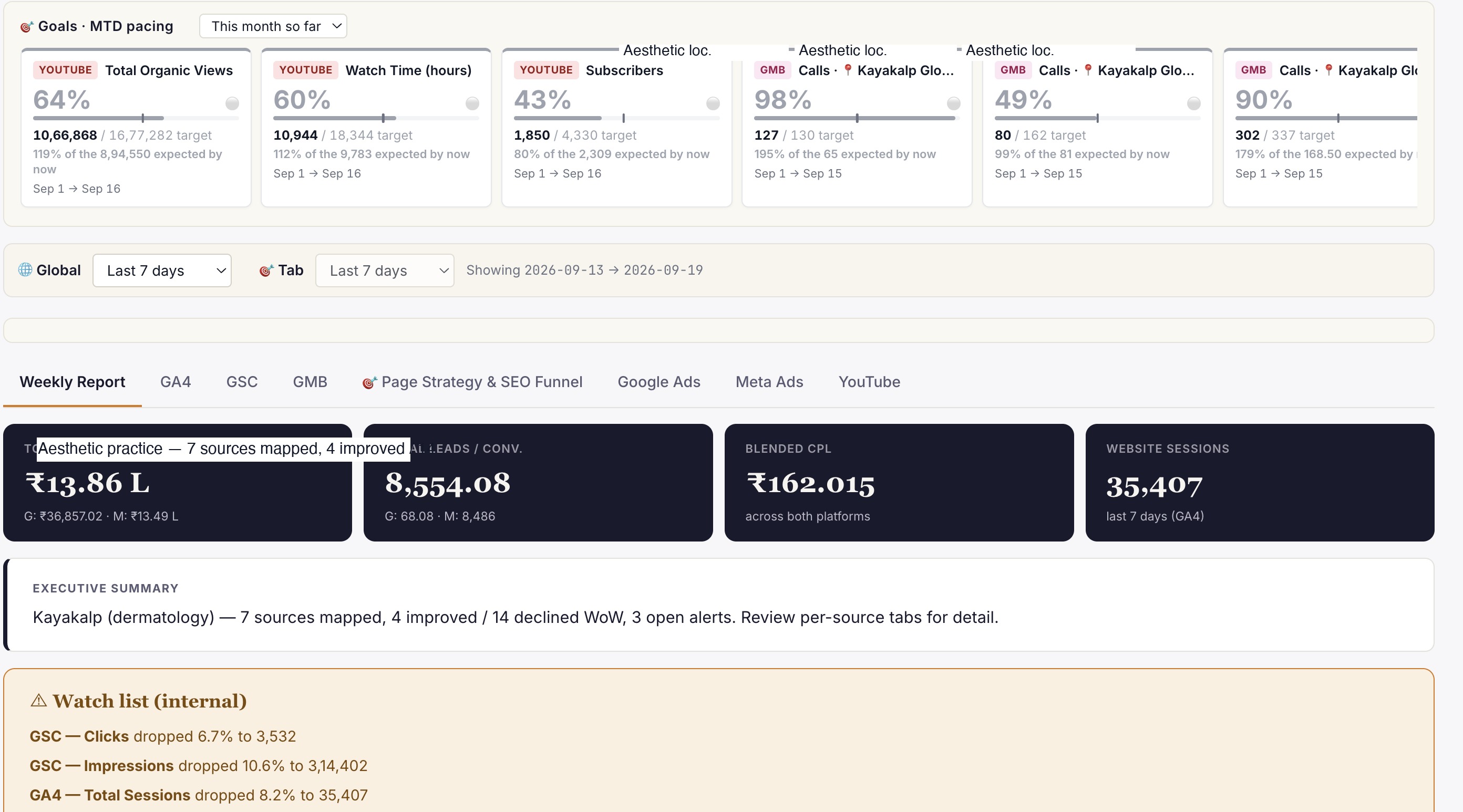
Live client dashboard. GSC, GA4, Google Ads, Meta Ads, IVR calls in one view. Login anytime, not monthly.
Phoenix
Clinic revenue intelligence over your PMS. Daily action queue: Prevent Loss, Maintain & Engage, Grow Revenue. Multi-centre rollout.
Or book a free 30-min audit to see all three in action on your account.
Healthcare brands
that already run on ICG.
A representative slice of the 150+ healthcare brands ICG has delivered for across India. Most engagements remain under NDA.


What ICG clients say · on video.
"Mental health marketing requires a different sensitivity. ICG built compliance-aware campaigns that respect both patients and our..."
"Bariatric surgery patients need a long consideration cycle. ICG built a content + paid system that respects that timeline."
"Working with ICG felt like working with an in-house growth team that happens to specialise in healthcare."
Need help operationalising this?
Every ICG service is healthcare-only, NMC + DPDP-aware, and built around the patient-research patterns that drive Indian healthcare growth in 2026.
Every practice welcome — packages from ₹20,000/mo.
Goals-Driven engagements · Performance-Linked Payout Models available
More from
ICG.
Five trends shaping Indian healthcare marketing through 2027: AI-first patient research, Conversions API adoption, ABDM discovery, the AEO w...
Healthcare AIO is the discipline of getting your clinic or hospital cited inside Google AI Overviews, ChatGPT and Perplexity answers — not j...
Conversational-search advertising places brand messages inside AI chat answers — ChatGPT, Perplexity, Copilot — rather than beside a results...
Stop guessing.
Book a Diagnostic.
30 minutes. Free. With the AI-powered healthcare-only marketing agency 150+ brands already run on. No slides, no pitch, no hard close.


