


Rebranding a clinic or hospital in India: process, risks and SEO
Rebrand a clinic or hospital only when the brand blocks a real goal, such as a merger or expansion. The process runs from diagnosis and strategy to identity, rollout and a protected SEO migration. This guide covers medical logos, redirects, Google Business Profiles, legal updates and launch ideas.
No pitch. Written root-cause diagnosis. AI-powered, healthcare only.
Direct answer
Rebrand a clinic or hospital only when the brand blocks a real goal, such as a merger or expansion. The process runs from diagnosis and strategy to identity, rollout and a protected SEO migration. This guide covers medical logos, redirects, Google Business Profiles, legal updates...
TL;DR
Rebranding a clinic or hospital in India is worth doing when the current name, identity or positioning is actively holding back growth, for example after a merger, an expansion into new specialties or cities, or a reputation problem. The process runs in five stages: diagnosis, strategy, identity design, a planned rollout across physical and digital touchpoints, and a protected SEO migration. The biggest risks are losing search rankings, confusing existing patients and referring doctors, and missing regulatory and legal steps.
This guide is for hospital promoters, clinic owners and marketing heads who are weighing a rebrand. It explains what branding actually means in healthcare, how to approach a medical logo, the rollout sequence, and how to keep years of Google visibility intact.
What is branding in healthcare?
Branding in healthcare is the sum of what patients, families and referring doctors believe about your clinic or hospital, and the signals that shape that belief. It includes your name, logo and design, but also how the phone is answered, how clean the waiting area is, what your Google reviews say and how clearly your doctors explain things.
A logo is the smallest part of it. A hospital with a polished identity and a chaotic billing desk has a weak brand. A neighbourhood clinic with a plain sign and a reliable, kind team often has a strong one. That is why a rebrand that only changes visuals rarely changes results.
The layers of a healthcare brand
| Layer | What it covers | Who controls it |
|---|---|---|
| Positioning | Which patients and specialties you serve, and why you over alternatives | Promoters and senior clinicians |
| Name and architecture | Master brand, specialty centres, branch names, doctor-led sub-brands | Promoters with brand strategist |
| Visual identity | Logo, colours, typography, signage, uniforms, report formats | Design team, governed by a brand book |
| Voice and content | How you write and speak: website, social, patient leaflets, WhatsApp replies | Marketing and communications |
| Experience | Front desk, wait times, discharge, billing, follow-up | Operations and every staff member |
| Reputation signals | Reviews, media mentions, referrals, search and AI answers about you | Earned over time; shaped by all the above |
For more on how these pieces fit together, see our short explainer on the pillars of branding in healthcare.
When should a clinic or hospital rebrand, and when should it not?
Rebrand when the brand is blocking a business goal: a merger or acquisition, a move from single specialty to multi-specialty, expansion to new cities, a name that is hard to search or easily confused, or lasting reputation damage. Do not rebrand because the logo feels dated or a new partner wants change for its own sake.
| Situation | Usually a full rebrand? | Often a better option |
|---|---|---|
| Merger of two hospitals or clinic groups | Often yes, or a clear master-brand decision | Endorsed brand ("X, a unit of Y") during transition |
| Single specialty becoming multi-specialty | Sometimes | Keep the name, change positioning and add specialty centres |
| Name confused with another local provider | Yes, if confusion is causing lost enquiries | Distinctive descriptor added to the name first |
| Dated logo, healthy reputation | No | Identity refresh: modernise without changing the name |
| Reputation damage from a past incident | Rarely solves it alone | Fix the underlying issue, then reputation work; rename only if the name itself is the problem |
| Founder doctor's name is the brand, practice is growing | Sometimes | Institutional name with the founder as a visible clinical lead |
The three risks to weigh before deciding
- Search and AI visibility. Years of reviews, links and brand searches are tied to the old name. Done badly, a rename resets some of that.
- Patient and doctor confusion. Regular patients and referring doctors may assume the hospital has been sold or that their doctor has left.
- Cost and distraction. Signage, stationery, uniforms, registrations and staff training take budget and management time away from operations.
A refresh is cheaper, faster and carries far less SEO risk. A full rename is a much bigger project and should be justified in writing before design work starts.
What is the rebranding process, step by step?
A sound rebrand moves through five stages: diagnose why the brand needs to change, set positioning and brand architecture, design the identity and write the brand book, plan the rollout across every touchpoint, and migrate digital assets without losing visibility. Skipping the diagnosis is the most common mistake and the most expensive one.
- Diagnosis. Interview patients, referring doctors and staff. Review search data for how people currently find you, including misspellings and doctor-name searches. Audit reviews and AI answers about your hospital.
- Strategy. Decide positioning, the specialties you lead with, and architecture: one master brand, or master brand plus specialty centres, or separate brands.
- Identity. Name (if changing), logo, colour system, typography, photography style, signage rules and tone of voice. Capture it all in a healthcare brand book so every vendor applies it the same way.
- Rollout plan. List every touchpoint, assign owners and dates, and decide on a launch date. Physical signage, statutory registrations and digital changes need to line up.
- Launch and protect. Switch over, monitor search and enquiries daily for the first weeks, and answer patient questions about the change openly.
A realistic timeline
| Stage | Typical duration | Main output |
|---|---|---|
| Diagnosis | Two to four weeks | Findings report and rebrand brief |
| Strategy and naming | Three to six weeks | Positioning statement, architecture, shortlisted names cleared for trademark |
| Identity design | Four to eight weeks | Logo system, brand book, templates |
| Rollout preparation | Four to twelve weeks | Signage, stationery, website build, redirect map, registration updates |
| Launch and stabilisation | Two to three months of close monitoring | Rankings and enquiries back to baseline, then growing |
These ranges are planning estimates for a single hospital or a small group. Multi-city chains take longer, mostly because of signage and approvals.
How can I create a medical logo that works?
A good medical logo is simple, legible at small sizes, distinctive from other local providers, and usable in one colour on signage, reports and a phone screen. Start from your positioning, not from clip-art symbols. Then test it on real applications, check that it does not imitate a protected emblem, and clear it for trademark before you print anything.
Practical rules for healthcare logos
- Avoid generic symbols. Hearts, crosses, stethoscopes and the caduceus appear on thousands of logos. They make you harder to remember.
- Be careful with the red cross. The Red Cross emblem is protected in India under the Geneva Conventions Act, 1960, as the Indian Red Cross Society explains, and should not be used as a commercial mark. Confirm with counsel before using any cross-like device.
- Design for the smallest use first. A favicon, a WhatsApp display picture and a lab report header all need to read clearly.
- Plan for bilingual signage. In many states your name will appear in English and Hindi or a regional script. Test both from day one.
- Check trademark availability early. Search the Indian trademark register for the name and mark in the relevant classes before you fall in love with a design.
If you want examples of how we approach this for larger institutions, see hospital logo design. For memorable lines that sit alongside the logo, our note on clinic slogans and taglines covers what to avoid under current advertising rules.
How do you protect SEO during a rebrand?
Protect SEO by keeping URLs where possible, mapping every old URL to its closest new equivalent with permanent 301 redirects, updating Google Business Profiles rather than creating new ones, and telling Google about a domain change through Search Console. Then monitor rankings and enquiries daily. Most lost traffic after rebrands comes from missing redirects and duplicate listings.
The SEO migration checklist
| Task | Why it matters | Common mistake |
|---|---|---|
| Crawl the old site and export every URL | You cannot redirect what you have not listed | Forgetting doctor profiles, PDFs and old blog posts |
| One-to-one 301 redirect map | Passes accumulated authority to new pages | Redirecting everything to the homepage |
| Change of Address in Google Search Console | Tells Google the domain has moved | Skipping it or doing it before redirects are live |
| Update, do not recreate, Google Business Profiles | Keeps reviews and ranking history | Creating new profiles and leaving old ones as duplicates |
| Update name, address and phone across listings | Consistent citations support local rankings | Leaving old names on directories and maps |
| Brand-name search ads during transition | Catches people still searching the old name | Letting another provider capture old-name searches |
| Keep the old domain renewed | Redirects stop if the domain lapses | Letting it expire a year later |
Our step-by-step hospital website migration SEO checklist goes into the technical detail. One more point is easy to miss: AI assistants such as ChatGPT and Gemini learn names from the wider web. Add "formerly known as" wording to your About page, press note and profiles for at least a year, so search engines and AI answers connect the old and new names.
What are the legal and regulatory steps in India?
A rename usually triggers updates to your company or firm records, Clinical Establishments Act registration where the Act applies in your state, local health licences, pharmacy and lab licences, insurer and TPA empanelment records, bank accounts and tax registrations. Your trademark should be filed before launch. Exact steps vary by state and structure, so plan them with counsel and a compliance adviser.
- Check which registrations carry the establishment name, and in what order they must change.
- Inform insurers and corporate tie-ups early. Claim processing can stall if names do not match.
- Review all marketing for advertising compliance as you rewrite it. The National Medical Commission's 6 October 2026 Guidelines on Ethical Advertising and Public Communication allow hospitals to publish factual, verifiable information but restrict testimonials, before/after images and "best" claims. A rebrand is a natural point for an NMC compliance audit.
- Patient records and consent forms should carry the correct legal entity. Under the Digital Personal Data Protection Act, 2023, people should know who is processing their data.
This is an overview as of October 2026, not legal advice.
What are good hospital branding ideas for a rebrand launch?
Good launch ideas explain the change in a way patients and doctors care about: what stays the same, what gets better, and why. Lead with continuity of doctors and care, show the new spaces or services honestly, and give referring doctors a personal briefing. Avoid launch offers that look like inducements.
- "Same doctors, new name" messaging on signage, the website banner, WhatsApp greetings and appointment confirmations for several months.
- Referring-doctor briefings in person or by small online sessions, with updated contact numbers and referral pathways.
- Doctor-led explainer videos on what the new specialty centres offer, kept educational and factual.
- Staff first. Brief every front-desk and call-centre team member before launch. They will field the questions.
- Wayfinding and printed material changed on the same day as the website, so nobody sees two brands at once.
Our healthcare branding agency team handles strategy, identity and rollout together with SEO, which keeps the visual and search sides of a rebrand in step. ICG has worked only in healthcare since 2018, with 150+ healthcare and life-sciences brands across its practices.
Book a free 30-minute Brand & Growth Diagnostic.
It's a working session, not a sales pitch — you leave with a written root-cause analysis you can act on, whether or not you engage ICG.
Questions readers ask
about this topic.
The three platforms
behind every ICG engagement.
Beacon
CAPI middleware that fixes Event Match Quality, translates CRM statuses to Meta-standard events, dedups across channels.
Agency OS
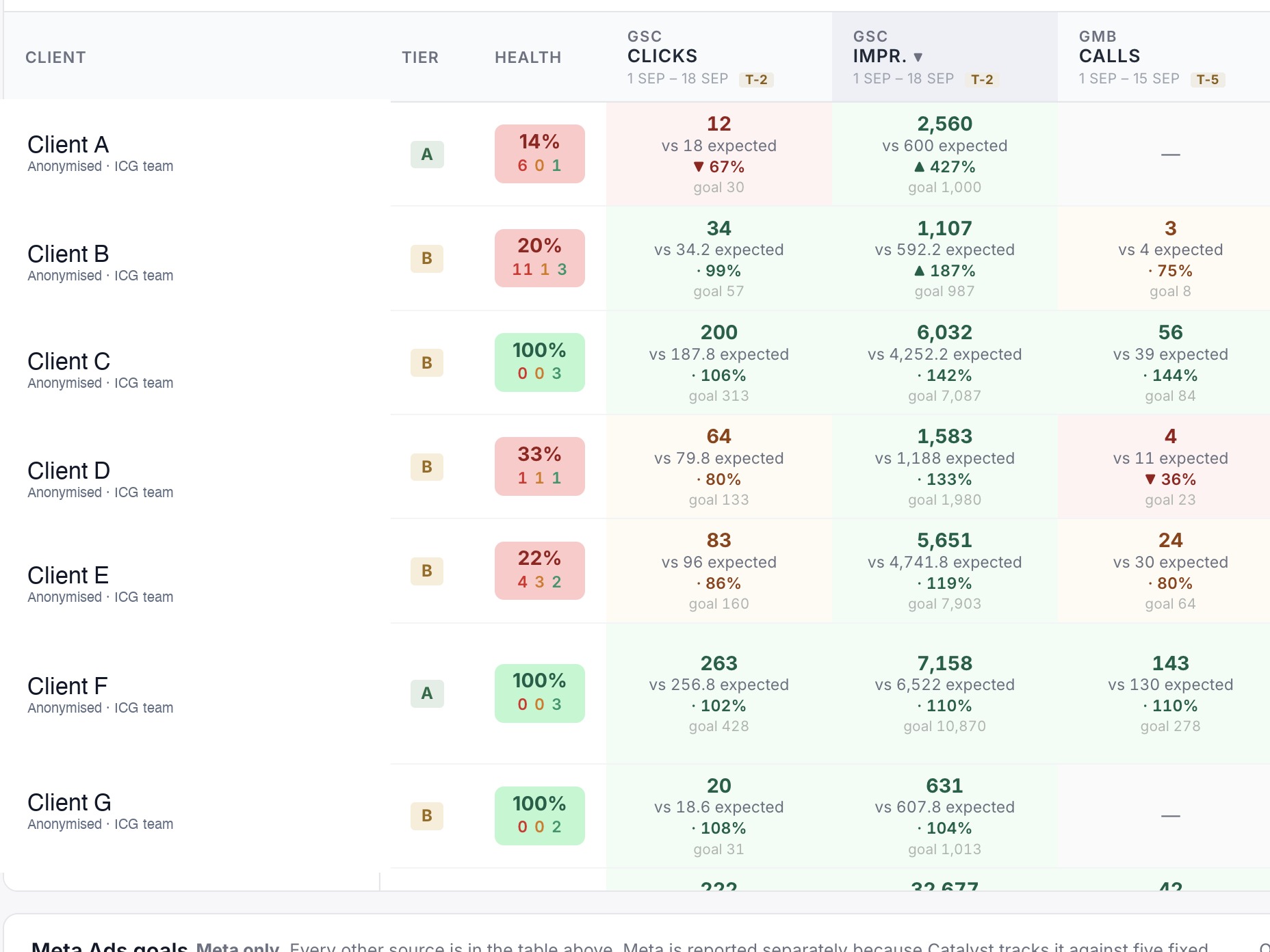
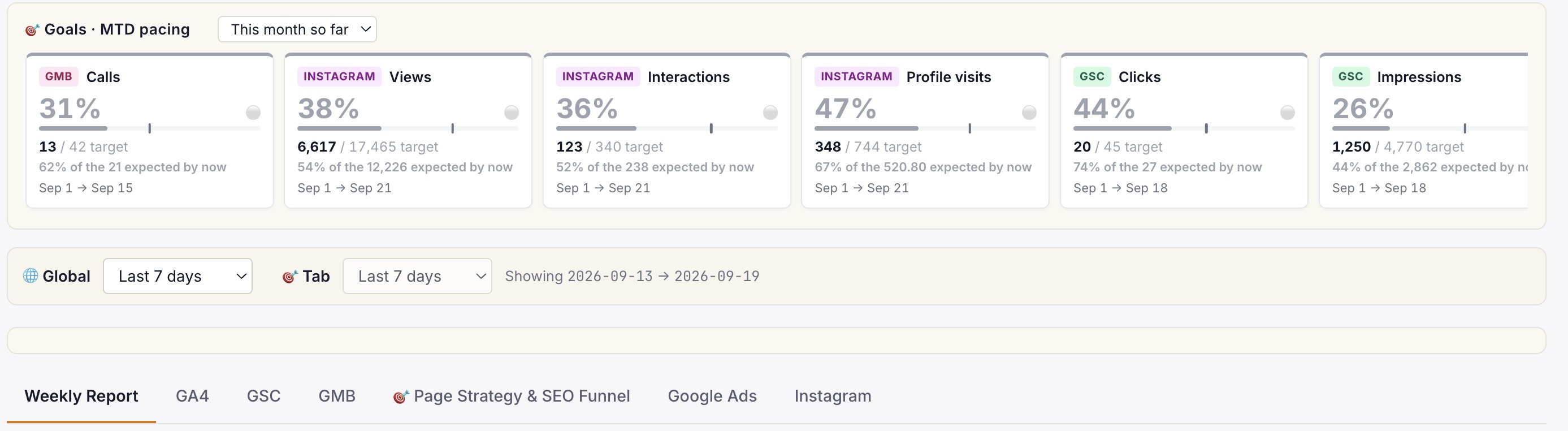
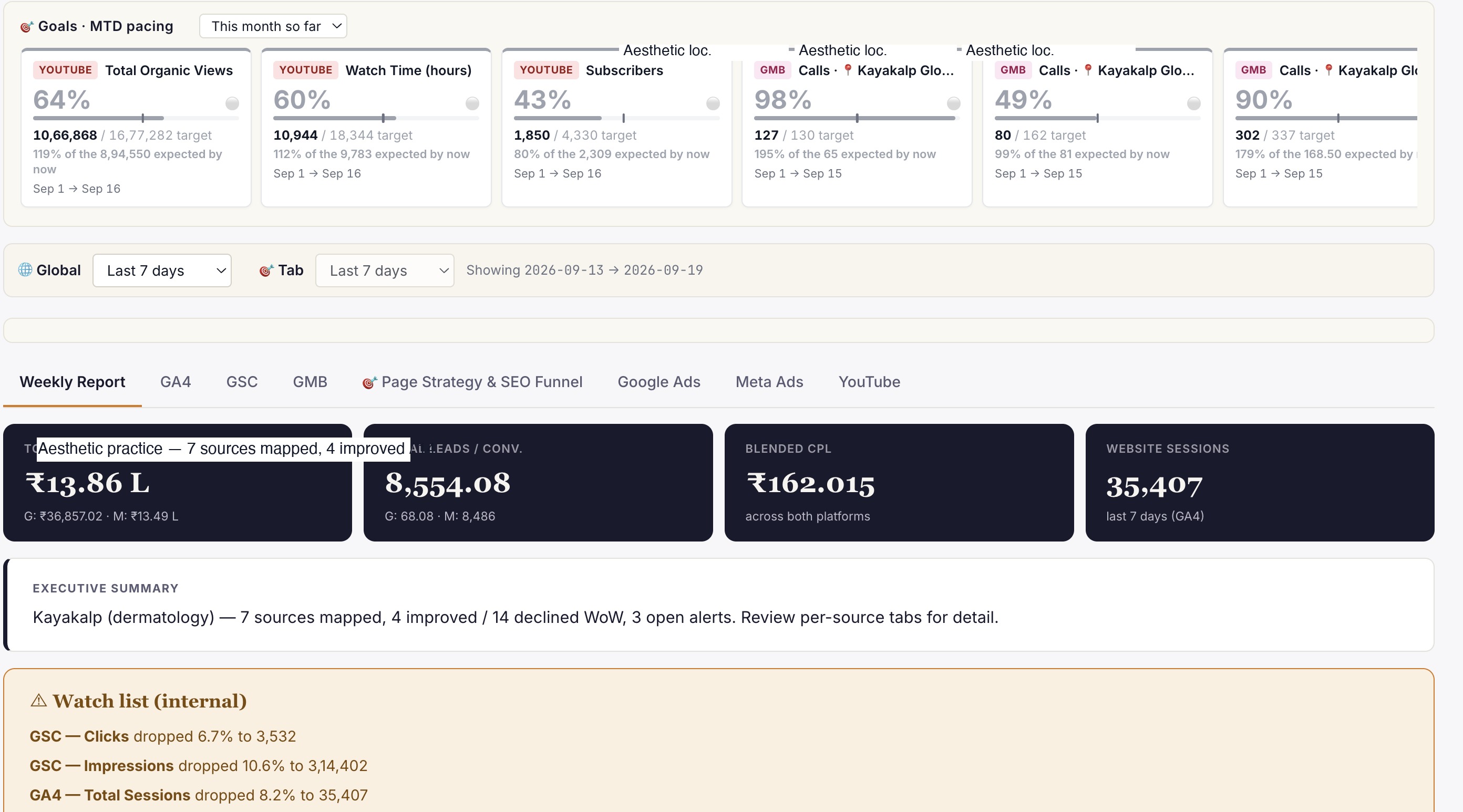
Live client dashboard. GSC, GA4, Google Ads, Meta Ads, IVR calls in one view. Login anytime, not monthly.
Phoenix
Clinic revenue intelligence over your PMS. Daily action queue: Prevent Loss, Maintain & Engage, Grow Revenue. Multi-centre rollout.
Or book a free 30-min audit to see all three in action on your account.
Healthcare brands
that already run on ICG.
A representative slice of the 150+ healthcare brands ICG has delivered for across India. Most engagements remain under NDA.


What ICG clients say · on video.
"Mental health marketing requires a different sensitivity. ICG built compliance-aware campaigns that respect both patients and our..."
"Bariatric surgery patients need a long consideration cycle. ICG built a content + paid system that respects that timeline."
"Working with ICG felt like working with an in-house growth team that happens to specialise in healthcare."
The intelligence stack behind this playbook.
Every ICG engagement runs on the Search Intelligence Trifecta — Angryturtle for GMB, SIE for search and AI Overview, YODA for YouTube. Live product screens below.
Need help operationalising this?
Every ICG service is healthcare-only, NMC + DPDP-aware, and built around the patient-research patterns that drive Indian healthcare growth in 2026.
Every practice welcome — packages from ₹20,000/mo.
Goals-Driven engagements · Performance-Linked Payout Models available
More from
ICG.
Hindi and regional-language SEO means publishing proper pages in the languages your patients search in, on their own URLs and linked with hr...
A new pharma brand in India should start digital work before launch, built around who it may legally address. This six-month plan covers pro...
Hospitals and clinics in India can still advertise after the NMC's 6 October 2026 guidelines, but only with factual, verifiable information....
Stop guessing.
Book a Diagnostic.
30 minutes. Free. With the AI-powered healthcare-only marketing agency 150+ brands already run on. No slides, no pitch, no hard close.


