


Healthtech startup marketing in India: the first-year plan
A healthtech startup's first marketing year in India should prove one repeatable acquisition channel. Spend Q1 on positioning, tracking and compliance, Q2 on one or two channels that fit your buyer, Q3 on careful scaling and Q4 on retention, referrals and investor-ready proof.
No pitch. Written root-cause diagnosis. AI-powered, healthcare only.
Direct answer
A healthtech startup's first marketing year in India should prove one repeatable acquisition channel. Spend Q1 on positioning, tracking and compliance, Q2 on one or two channels that fit your buyer, Q3 on careful scaling and Q4 on retention, referrals and investor-ready proof.
TL;DR
A healthtech startup's first marketing year in India should prove one repeatable way to acquire customers, not chase every channel. Spend the first quarter on positioning, tracking and compliance; the second on one or two channels matched to your buyer; the third on scaling what works; and the fourth on retention, referrals and the proof you will need for your next funding round.
This plan is for founders and first marketing hires at Indian healthtech companies: consumer health apps, diagnostics platforms, clinic and hospital software, remote-care services, health devices and B2B2C models that sell through providers. It assumes a small team, a limited budget and a board that wants to see customer acquisition cost fall over time.
What is a healthcare marketing agency, and does a healthtech startup need one in year one?
A healthcare marketing agency is a firm that plans and runs marketing only for healthcare businesses, so it already understands medical advertising rules, patient-data obligations and how doctors, hospitals and patients make decisions. A healthtech startup does not always need one in year one, but it does need that knowledge from day one.
General agencies can run ads. The difference shows up in the details. A healthcare specialist knows that a claim acceptable for a fitness app can be a problem for a diagnostics brand. It knows how a hospital procurement head evaluates software and why a doctor will not share a product that looks like a sales pitch.
In year one, there are three sensible set-ups:
- Founder-led with an advisor. Works before product-market fit, when messaging changes every few weeks.
- One in-house marketer plus a specialist agency. The in-house person owns positioning and product marketing. The agency runs search, paid media, SEO and content production.
- A full in-house team. Usually only makes sense after a funding round and once the main channel is proven.
We compare the trade-offs in more depth in in-house marketing team vs healthcare agency. If you want to see what a specialist partner does, our healthcare marketing agency in India page sets out the services and how engagements are scoped.
Who are you actually selling to?
Healthtech marketing starts with naming the buyer, because a consumer app, a hospital software product and a provider-led service need different channels, messages and sales cycles. Many Indian healthtech startups sell to two audiences at once, such as doctors who recommend and patients who pay. Decide which one you will win first.
| Model | Who decides | Channels that usually fit | Typical sales cycle |
|---|---|---|---|
| B2C health app or service | The patient or a family member | Search ads, app-store optimisation, Meta and Instagram, YouTube education, SEO | Minutes to days |
| B2B software for clinics | The doctor-owner or practice manager | Search ads on problem keywords, LinkedIn, WhatsApp follow-up, demos, webinars | Weeks |
| B2B software for hospitals | A committee: administration, IT, finance, clinical heads | Account-based outreach, LinkedIn, case-led content, events, direct sales | Months |
| B2B2C through providers | The provider adopts; the patient uses | Provider partnerships, co-branded education, in-clinic material, referral tools | Weeks for the provider, then ongoing for patients |
| Corporate health and insurers | HR or a benefits buyer | LinkedIn, account-based outreach, proposals, pilot programmes | Months |
If most of your revenue will come from hospitals and clinics, the playbook is closer to enterprise sales. Our healthcare B2B marketing team works on exactly that kind of cycle.
Which types of digital marketing are there, and which matter for healthtech?
The main types of digital marketing are search engine optimisation, paid search, paid social, content marketing, email and messaging, social media, influencer and partner marketing, video, and conversion-rate optimisation. For healthtech, search and content usually matter most, because health decisions start with a question and buyers research before they trust.
The channels, briefly
- SEO. Ranks your pages for the questions your buyers search. Slow to build, cheap to sustain. Increasingly feeds AI answers in Google AI Overviews and ChatGPT.
- Paid search. Google Ads captures people already looking. Health ads face stricter policy review, and some health categories need advertiser certification before ads can run.
- Paid social. Meta, Instagram and LinkedIn create demand and reach specific roles. Health-related targeting is restricted, so creative does more of the work.
- Content. Guides, explainers and research that answer buyer questions. It also arms your sales team.
- Email and WhatsApp. Onboarding, activation and re-engagement for users who have consented.
- Video. YouTube explainers and demos work for both patient education and B2B product walkthroughs.
- Partnerships. Providers, pharmacies, labs and employers who can introduce you to their audience.
- Conversion-rate optimisation. Fixing landing pages, sign-up flows and demo booking so every channel converts better.
Pick two, not eight
A first-year team cannot run every channel well. Pick the one channel that matches how your buyer searches, plus one supporting channel. A consumer diagnostics brand might pair paid search with SEO. A clinic software company might pair problem-keyword search ads with LinkedIn. Add a third channel only once the first two are measured and stable.
What does the first-year plan look like, quarter by quarter?
The first-year plan moves from foundations to one proven channel, then to scale, then to retention and proof. Each quarter has one main goal. Skipping the first quarter is the most common mistake we see, because without tracking and positioning, later spending cannot be judged.
| Quarter | Main goal | Key work | What "done" looks like |
|---|---|---|---|
| Q1: Foundations | Know who you serve and measure everything | Positioning, website rebuild or tidy-up, analytics and CRM set-up, compliance review, a small set of cornerstone pages | Every sign-up or demo is attributed to a source |
| Q2: Prove one channel | Find a channel with an acceptable cost per customer | Run one primary and one supporting channel, weekly tests on offers and landing pages | A cost per acquired customer you can explain to investors |
| Q3: Scale carefully | Grow volume without breaking unit economics | Raise budget in steps, expand keywords and audiences, add a content engine | Volume up while acquisition cost holds or falls |
| Q4: Retain and prove | Show that customers stay and spread the word | Onboarding and activation journeys, referral programme, case material, investor-ready reporting | Retention and payback data for the next round |
A note on positioning
Positioning is not a tagline. It is a short, specific answer to four questions: who is it for, what problem does it solve, why is it different from the alternative the buyer uses today, and what proof do you have. Write it down before you write any ad.
What rules does a healthtech startup need to follow in its marketing?
Indian healthtech marketing has to respect patient-data law, drug and remedy advertising law, advertising self-regulation and, where doctors are involved, the NMC's advertising guidelines. Build these into the plan in the first quarter, because fixing a non-compliant funnel after launch costs more than designing it correctly.
As of October 2026, the main frameworks to know are:
- Digital Personal Data Protection Act 2023. Governs consent, purpose limitation and security for personal data, including health data you collect through sign-ups, forms and apps. See the Ministry of Electronics and Information Technology for official material.
- Drugs and Magic Remedies (Objectionable Advertisements) Act 1954. Restricts advertisements claiming to treat or cure listed conditions. Relevant to wellness, nutraceutical and remote-care products.
- ASCI code. The Advertising Standards Council of India's code, including its healthcare provisions, covers misleading claims and influencer disclosures.
- NMC guidelines. If your platform features doctors, the NMC's 6 October 2026 "Guidelines on Ethical Advertising and Public Communication" shape what you can say about them. Testimonials, before/after images, inducements and superlative claims are not permitted in promotion. AI-generated promotional campaigns are restricted and permitted AI content must be disclosed. Agency payments must not be linked to individual patients.
- UCPMP 2024. Applies if you work with pharmaceutical companies on promotion.
This is a summary, not legal advice. Confirm details with your counsel before launch. If doctors appear in your marketing, an NMC compliance audit of your site and campaigns is a sensible Q1 task.
What should a healthtech startup measure in year one?
A healthtech startup should measure customer acquisition cost by channel, activation rate, retention and payback period, in that order of attention. Traffic, followers and impressions are inputs, not outcomes. Investors will ask how much it costs to win a customer, how long that customer stays and when the cost is recovered.
| Metric | Definition | Why it matters |
|---|---|---|
| Customer acquisition cost (CAC) | Total marketing and sales spend in a period divided by new paying customers in that period | The core unit-economics number |
| Activation rate | Share of sign-ups who complete the first meaningful action, such as a booked test or a first consult | Shows whether marketing brings the right users |
| Retention | Share of customers still active after a set period | Separates real demand from curiosity |
| Payback period | Months of gross margin needed to recover CAC | Decides how fast you can afford to grow |
| Pipeline velocity (B2B) | How quickly qualified leads move from demo to signed contract | Shows where enterprise deals stall |
Use the healthcare CAC calculator to model acquisition cost by channel before you commit budget.
What mistakes do healthtech startups make in their first marketing year?
The most common first-year mistakes are spreading a small budget across too many channels, scaling ads before tracking works, copying consumer-app tactics for a hospital sale, and writing claims that break health advertising rules. Each one burns money and time that a seed-stage company rarely has.
- Buying awareness too early. Brand campaigns before product-market fit rarely pay back. Spend on demand capture first.
- Ignoring the front line. Leads from forms and WhatsApp go cold if nobody calls back the same day.
- Measuring sign-ups, not customers. A cheap sign-up that never activates is not cheap.
- Treating doctors like consumers. Clinicians respond to evidence, peer credibility and time saved, not discounts.
- Leaving compliance to the end. Rewriting live ads, pages and app copy costs more than getting them right first.
How much does a marketing agency charge in India?
Marketing agencies in India charge through monthly retainers, project fees, a percentage of ad spend or a mix of these. The amount depends on scope, the number of channels, content volume, how much ad spend is managed and how senior the team is. Ask for a written scope and compare what each fee actually includes.
Common pricing models
- Monthly retainer. A fixed fee for an agreed scope. Predictable and the most common model.
- Project fee. For one-off work such as a website, a brand identity or a launch campaign.
- Percentage of ad spend. Common for paid media. Watch for incentives to raise spend rather than improve results.
- Hybrid. A base retainer plus a component tied to agreed business goals.
What drives the fee
- Number of channels and markets.
- Content volume and format, especially video and regional languages.
- Technical work such as tracking, CRM integration and website development.
- Reporting depth and how often you meet.
ICG's retainers start from ₹20,000/month and are custom-scoped. Across ICG's public dataset, the median cost per qualified lead is ₹1,220 against a ₹2,100 market median. For a funded startup with a product to scale, our health startup marketing work is built around fundraising-ready reporting. ICG has worked only in healthcare since 2018. You can book a call to scope your first year.
Book a free 30-minute Brand & Growth Diagnostic.
It's a working session, not a sales pitch — you leave with a written root-cause analysis you can act on, whether or not you engage ICG.
Questions readers ask
about this topic.
The three platforms
behind every ICG engagement.
Beacon
CAPI middleware that fixes Event Match Quality, translates CRM statuses to Meta-standard events, dedups across channels.
Agency OS
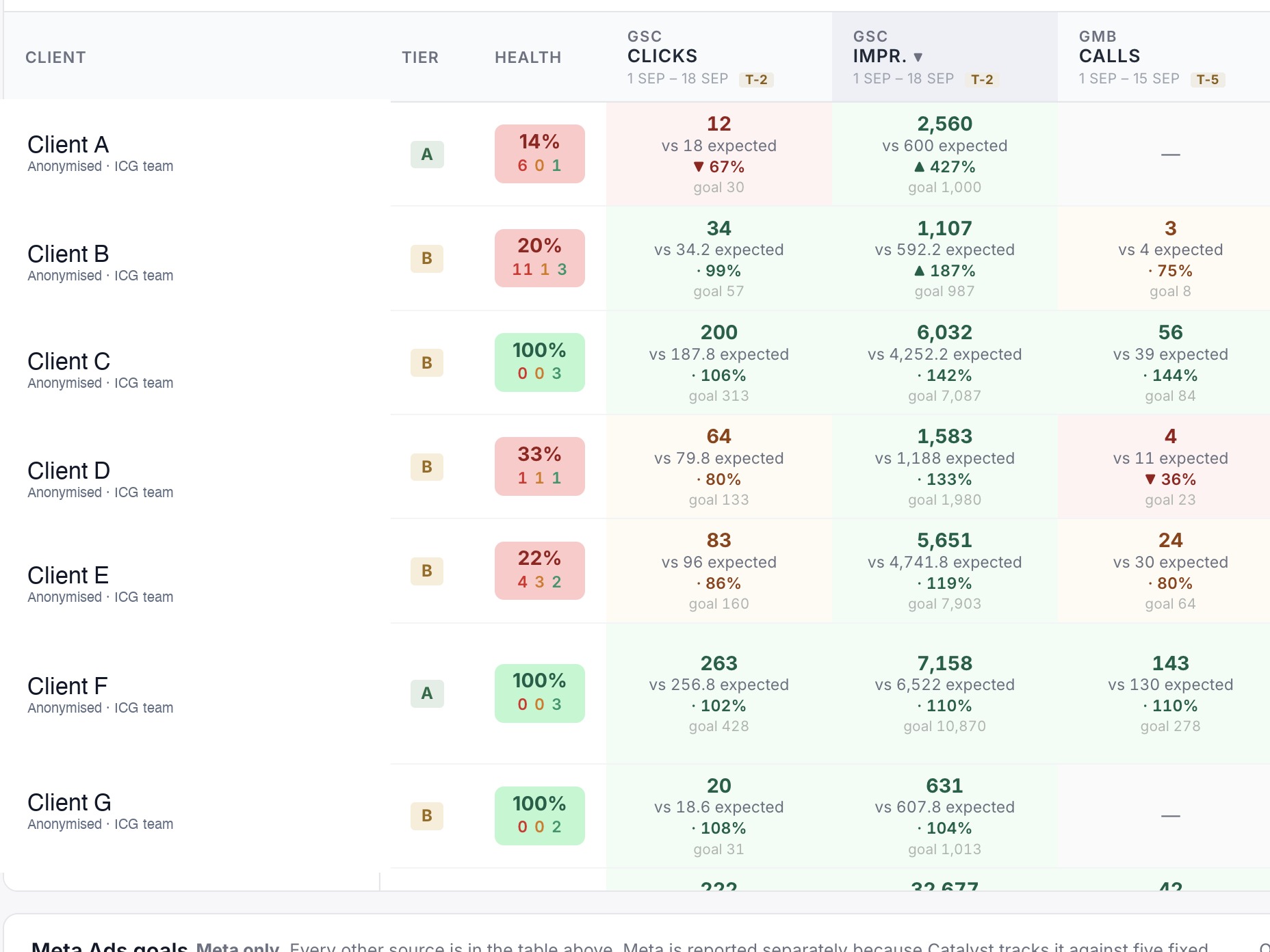
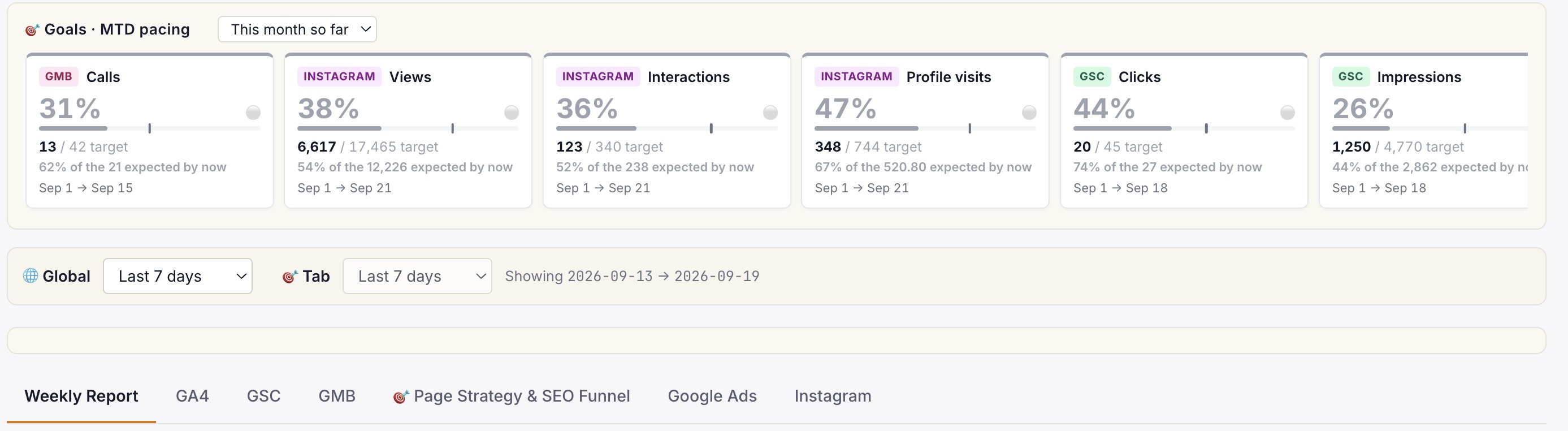
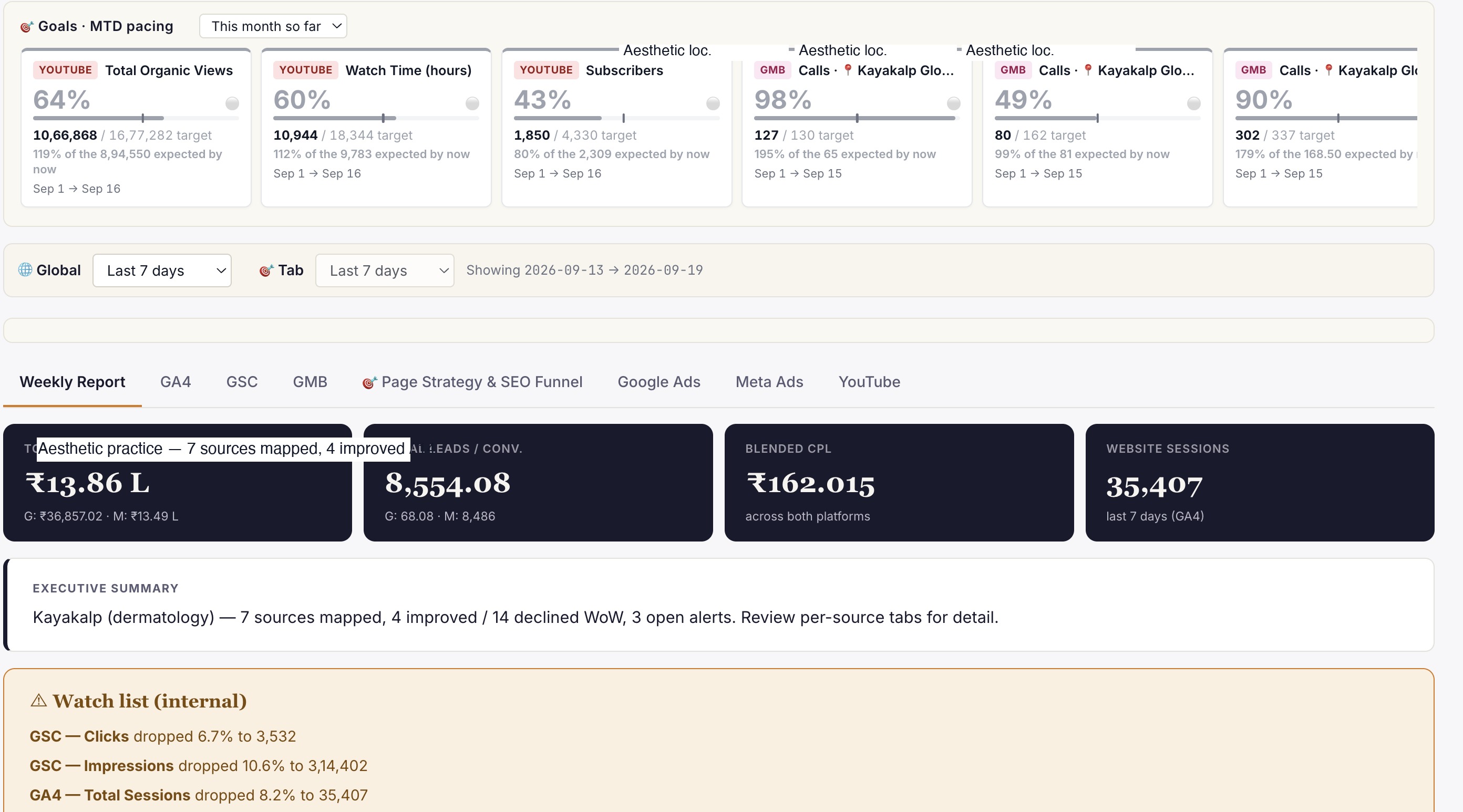
Live client dashboard. GSC, GA4, Google Ads, Meta Ads, IVR calls in one view. Login anytime, not monthly.
Phoenix
Clinic revenue intelligence over your PMS. Daily action queue: Prevent Loss, Maintain & Engage, Grow Revenue. Multi-centre rollout.
Or book a free 30-min audit to see all three in action on your account.
Healthcare brands
that already run on ICG.
A representative slice of the 150+ healthcare brands ICG has delivered for across India. Most engagements remain under NDA.


What ICG clients say · on video.
"Scale up of organic channels and business consulting. ICG has absolute domain authority in their field."
"Working with ICG transformed how we acquire IVF patients in Gurgaon. They understand the fertility journey from inquiry to consult..."
"What Ichelon accomplished — they got all my ideas and worked over 3-4 months to create an amazing, super-customised website."
Need help operationalising this?
Every ICG service is healthcare-only, NMC + DPDP-aware, and built around the patient-research patterns that drive Indian healthcare growth in 2026.
Every practice welcome — packages from ₹20,000/mo.
Goals-Driven engagements · Performance-Linked Payout Models available
More from
ICG.
Hindi and regional-language SEO means publishing proper pages in the languages your patients search in, on their own URLs and linked with hr...
A new pharma brand in India should start digital work before launch, built around who it may legally address. This six-month plan covers pro...
Hospitals and clinics in India can still advertise after the NMC's 6 October 2026 guidelines, but only with factual, verifiable information....
Stop guessing.
Book a Diagnostic.
30 minutes. Free. With the AI-powered healthcare-only marketing agency 150+ brands already run on. No slides, no pitch, no hard close.


