


In-House Marketing Team vs Healthcare Agency: Which Is Right for Your Clinic?
Most clinic owners frame this as a cost question: "Is it cheaper to hire in-house or use an agency?" This is the wrong frame. The correct frame is: "Which approach produces the lower CPQL and the higher ROI on my marketing investment — given my current st
No pitch. Written root-cause diagnosis. AI-powered, healthcare only.
Direct answer
Most clinic owners frame this as a cost question: "Is it cheaper to hire in-house or use an agency?" This is the wrong frame. The correct frame is: "Which approach produces the lower CPQL and the higher ROI on my marketing investment — given my current st
TL;DR
By Hanuman Sihag, Head of Innovation Chamber & SEO Lead at ICG.
The question most clinic owners ask wrong
Most clinic owners frame this as a cost question: "Is it cheaper to hire in-house or use an agency?" This is the wrong frame. The correct frame is: "Which approach produces the lower CPQL and the higher ROI on my marketing investment — given my current stage, my team's capabilities, and the complexity of my marketing architecture?"
At the same monthly budget, an in-house team that lacks healthcare marketing expertise and CPQL benchmarking data will consistently underperform a specialist healthcare agency with 150+ client benchmarks. But an in-house team with deep brand knowledge, fast execution speed, and a specialist agency providing strategy and intelligence will outperform either approach alone.
Cost comparison: in-house team vs agency at scale
Component
In-house team (4 people)
Healthcare agency (ICG)
Notes
Performance marketer
₹60,000-₹1L/month salary
Included in retainer
In-house lacks healthcare CPQL benchmarks.
SEO/content specialist
₹40,000-₹80,000/month
Included in retainer
In-house lacks AEO capability.
Analytics/data person
₹50,000-₹90,000/month
Included in retainer
In-house attribution requires tool investment.
Creative/brand
₹35,000-₹60,000/month
Included in retainer
In-house offers faster iteration.
Tool stack (Google, Meta, SEO, attribution)
₹30,000-₹80,000/month
Included in retainer
Agency already has tools; no separate cost.
Training and upskilling
₹15,000-₹30,000/month
Built into agency expertise
Agency has current healthcare knowledge.
Total
₹2.3L-₹4.4L/month + time to hire
₹1.5L-₹4L/month
Agency is often cost-competitive for equivalent scope.
Speed comparison: when does each approach reach ROI faster?
In-house wins on speed when: the practice has an existing commercial team with healthcare domain knowledge, campaigns are already set up and running, and the primary need is content production and brand management — not strategic rebuilding.
Agency wins on speed when: the practice is starting from scratch or has a significant CPQL problem, the team has no specialist healthcare marketing knowledge, or the challenge requires multi-channel capability (Google Ads + Meta + SEO + AEO) simultaneously. An agency has all of these in place from day one. Building them in-house takes 6-12 months.
Specialty depth comparison
This is where the comparison is most stark. A generalist in-house digital marketer, however talented, does not know: the average IVF CPQL in Delhi NCR, which Meta ad formats are compliant for dermatology under IMC guidelines, how to structure a hair transplant YouTube authority programme, or what a good consultation-to-treatment conversion rate is for ophthalmology vs. plastic surgery.
A specialist healthcare agency has this knowledge from managing 150+ healthcare accounts. The benchmark intelligence alone — knowing that your IVF CPQL of ₹2,400 is 115% above top-quartile — is worth a significant fraction of the retainer fee. You cannot buy this knowledge by hiring a generalist in-house.
The hybrid model that works for most practices
ICG's recommended structure for practices spending ₹3 lakh+/month on marketing: one in-house commercial lead (practice manager or dedicated marketing coordinator) who owns the relationship with the agency, reviews weekly CPQL reports, manages local content (events, doctor updates, patient stories), and ensures operational alignment between marketing and clinical operations. The agency manages campaigns, strategy, AEO, technology, and benchmarking.
This hybrid produces the best outcomes: the in-house lead provides speed and brand context that no agency can replicate (they are in the building); the agency provides benchmark intelligence and multi-channel capability that no single in-house hire can replicate. Together, they are more effective than either alone.
Decision matrix: when to pick which approach
Situation
Recommended approach
Reason
Starting from zero, first marketing investment
Agency
Infrastructure needs to be built. No in-house expertise to build it.
Existing campaigns not performing, CPQL above benchmark
Agency
Diagnostic and rebuild expertise not available in-house.
Strong existing team, need specialist channel expertise
Hybrid
Keep in-house team for execution speed; agency for healthcare channel expertise.
Large hospital group with dedicated marketing function
Hybrid
In-house manages brand and relationships; agency provides specialist intelligence.
Mature practice, stable CPQL, only needs content production
In-house + freelancers
Once the architecture is built and working, content production can be managed in-house.
Frequently asked questions

Is it cheaper to hire in-house or use an agency?
At equivalent scope and quality, the costs are comparable — ₹2.3L-₹4.4L/month for a competent 4-person in-house team vs ₹1.5L-₹4L/month for a full-service specialist agency. The difference is not cost; it is capability. An in-house team of 4 generalists will not have healthcare CPQL benchmarking data, AEO capability, or multi-channel healthcare expertise. A specialist agency will. Cost parity with a capability gap favours the agency.
What does a healthcare marketing team look like in-house?
A complete in-house healthcare marketing function needs: a performance marketer (Google Ads and Meta), an SEO/content specialist, a data analyst (for attribution and CPQL tracking), and a creative/brand manager. This is a minimum viable team for a clinic spending ₹5 lakh+/month on marketing. Below that spend level, in-house staffing costs exceed the value they produce relative to an agency.
Can I do both — agency and in-house?
Yes — the hybrid model is ICG's recommendation for most established healthcare practices. One in-house commercial coordinator manages the agency relationship, reviews weekly data, and handles local brand content. The agency manages campaigns, strategy, AEO, technology infrastructure, and benchmarking. This hybrid outperforms both pure approaches for practices at the ₹3 lakh+/month marketing investment level.
How long should an agency contract be?
Minimum 6 months for the first engagement. SEO and AEO compound over 6-12 months. CPQL architecture takes 30-60 days to establish and 60-90 days to optimise. Monthly rolling contracts create an incentive for agencies to show quick wins rather than build durable systems. ICG recommends a 6-month minimum with a review at month 3 against agreed CPQL benchmarks.
What should I own — not the agency — in any engagement?
Your non-negotiables: Google Ads account ownership (you are the account holder, not the agency), Meta Business Manager ownership, Google Analytics and GSC property ownership, all creative assets produced during the engagement, and written campaign briefs and diagnostic reports. Agencies that insist on account ownership are creating dependency risk. Exit without your accounts and you start from zero.
How do I know if my in-house team is performing?
Measure them on the same metric you measure an agency: CPQL by channel. If your in-house team cannot tell you the current CPQL for each active channel, they are managing activity, not performance. Implement CPQL tracking within 30 days of any marketing investment — in-house or agency — and review it weekly.
Book a free 30-minute Brand & Growth Diagnostic.
It's a working session, not a sales pitch — you leave with a written root-cause analysis you can act on, whether or not you engage ICG.
Questions readers ask
about this topic.
The three platforms
behind every ICG engagement.
Beacon
CAPI middleware that fixes Event Match Quality, translates CRM statuses to Meta-standard events, dedups across channels.
Agency OS
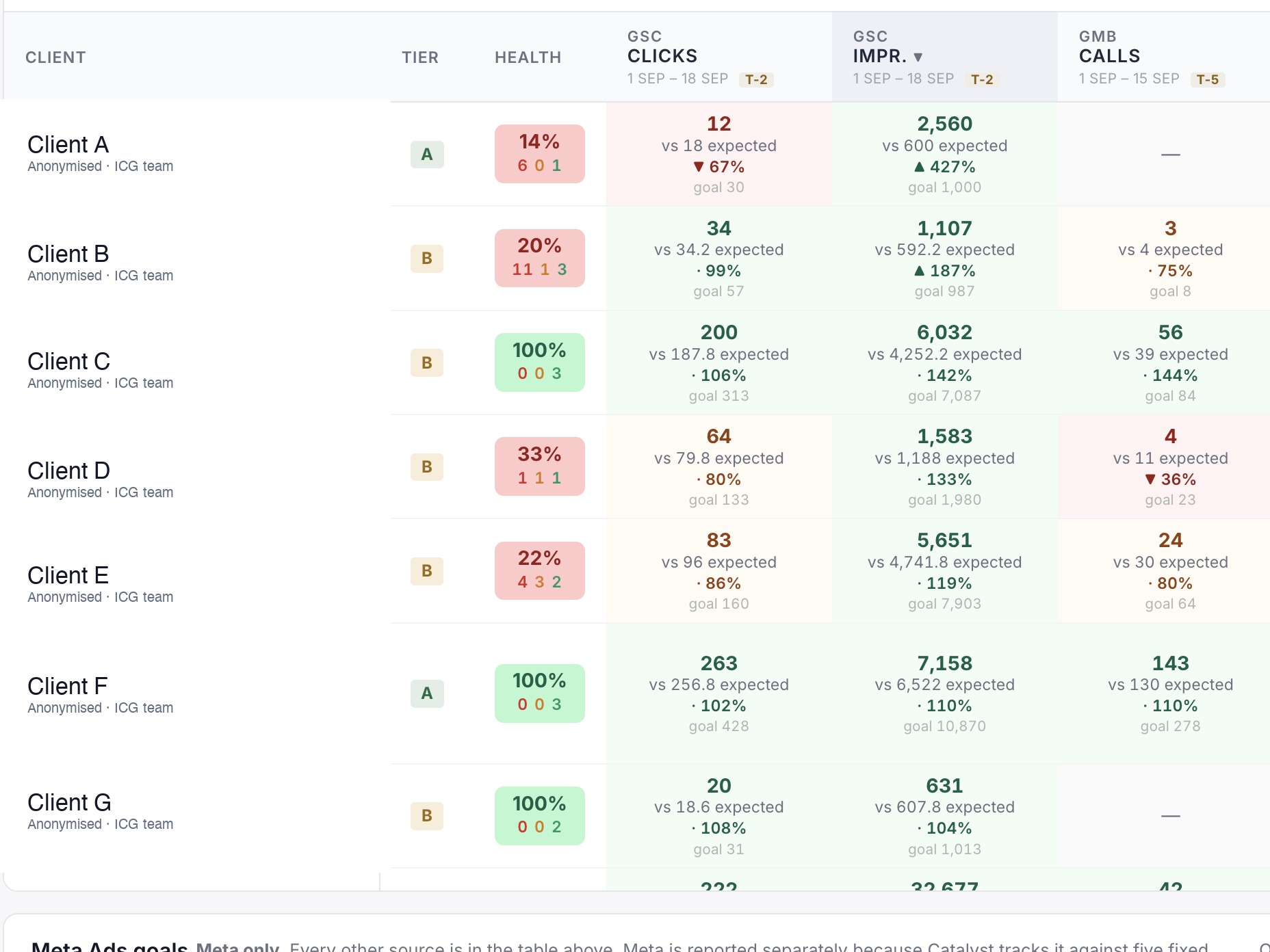
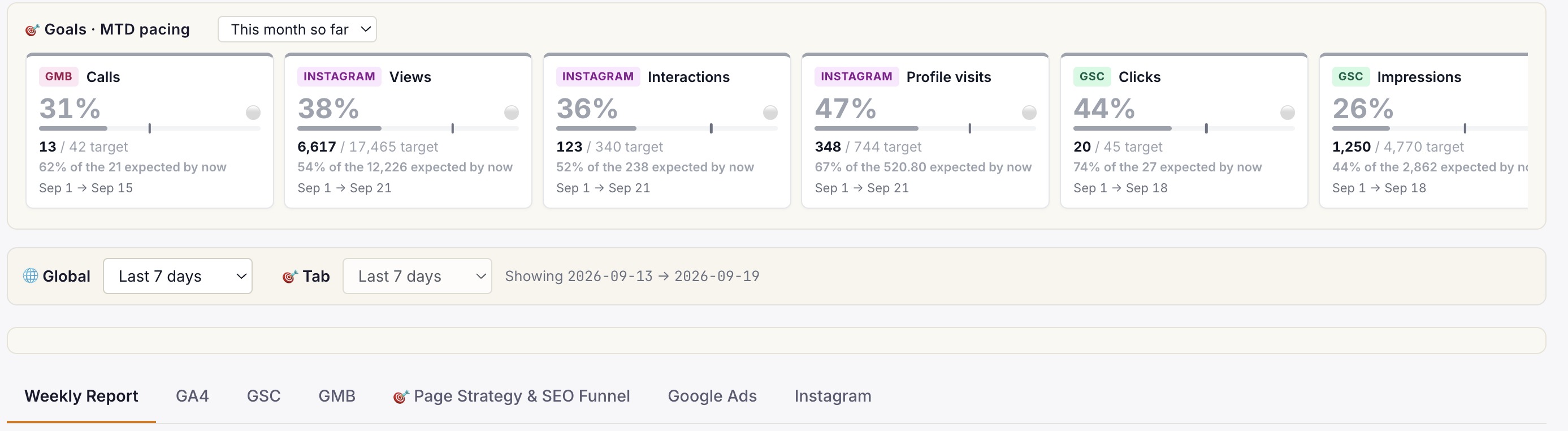
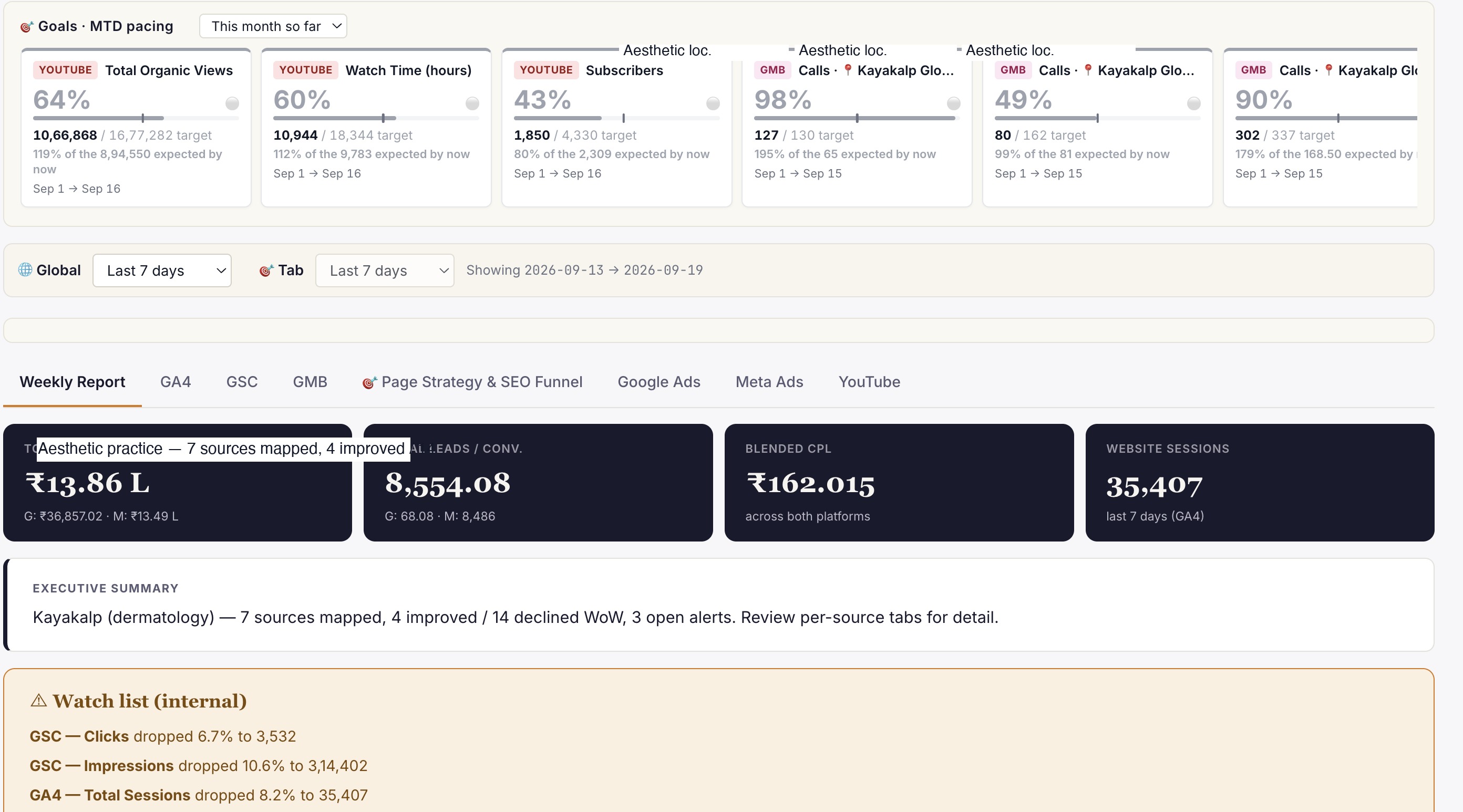
Live client dashboard. GSC, GA4, Google Ads, Meta Ads, IVR calls in one view. Login anytime, not monthly.
Phoenix
Clinic revenue intelligence over your PMS. Daily action queue: Prevent Loss, Maintain & Engage, Grow Revenue. Multi-centre rollout.
Or book a free 30-min audit to see all three in action on your account.
Healthcare brands
that already run on ICG.
A representative slice of the 150+ healthcare brands ICG has delivered for across India. Most engagements remain under NDA.


What ICG clients say · on video.
"Scale up of organic channels and business consulting. ICG has absolute domain authority in their field."
"Working with ICG transformed how we acquire IVF patients in Gurgaon. They understand the fertility journey from inquiry to consult..."
"What Ichelon accomplished — they got all my ideas and worked over 3-4 months to create an amazing, super-customised website."
Need help operationalising this?
Every ICG service is healthcare-only, NMC + DPDP-aware, and built around the patient-research patterns that drive Indian healthcare growth in 2026.
Every practice welcome — packages from ₹20,000/mo.
Goals-Driven engagements · Performance-Linked Payout Models available
More from
ICG.
Five trends shaping Indian healthcare marketing through 2027: AI-first patient research, Conversions API adoption, ABDM discovery, the AEO w...
Healthcare AIO is the discipline of getting your clinic or hospital cited inside Google AI Overviews, ChatGPT and Perplexity answers — not j...
Conversational-search advertising places brand messages inside AI chat answers — ChatGPT, Perplexity, Copilot — rather than beside a results...
Stop guessing.
Book a Diagnostic.
30 minutes. Free. With the AI-powered healthcare-only marketing agency 150+ brands already run on. No slides, no pitch, no hard close.


