


GBP Q&A strategy for Indian healthcare in 2026: seed your own answers before third parties do
GBP Q&A is the most under-used ranking and conversion surface on any Indian healthcare profile. This 2026 guide covers how to self-populate Q&A, the healthcare-specific FAQs to seed first, third-party monitoring, community upvoting mechanics, and how ICG uses Angryturtle to run Q&A operations across 150+ profiles.
No pitch. Written root-cause diagnosis. AI-powered, healthcare only.
Direct answer
GBP Q&A is the most under-used ranking and conversion surface on any Indian healthcare profile. This 2026 guide covers how to self-populate Q&A, the healthcare-specific FAQs to seed first, third-party monitoring, community upvoting mechanics, and how ICG uses Angryturtle to run Q...
TL;DR

GBP Q&A strategy for Indian healthcare profiles is one of the most under-used ranking and conversion surfaces in local SEO — the section is publicly editable by any Google user, appears prominently on mobile search results, and directly answers the patient research questions that determine which clinic gets called. And yet the average Indian hospital profile has 0 to 4 questions in Q&A, most of them posted by patients and answered either by another random Google user or not at all. ICG runs Q&A operations for 150+ Indian healthcare brands using Angryturtle's Q&A monitoring and drafting engine, and the pattern that separates winning profiles from losing profiles is discipline: self-populate the important questions with the practice's own compliant answers before patients ask them, then monitor daily for new third-party questions and respond within 24 to 48 hours. This guide covers seeding strategy, healthcare-specific question banks, community upvoting mechanics, and how ICG runs the workflow at scale as part of healthcare local SEO.
Why GBP Q&A matters more than most Indian marketers realise
The Q&A section appears in three high-visibility surfaces. On the mobile profile view it renders below the reviews and above the "About" section, in the top scroll-fold of the profile. On the desktop profile view it sits in the right-rail knowledge panel. And on Google Search for the branded query, it sometimes surfaces as a rich answer directly inside the search results.
The scoring implication is that Google reads Q&A content as authoritative information about the profile, similar to how it reads the description and services. Well-populated Q&A improves the profile's topical breadth signal — the algorithm sees the profile answering a wider range of questions and treats the profile as a more comprehensive information source.
The conversion implication is that patients researching before they call read Q&A alongside reviews. A profile that clearly answers "do you accept CGHS," "is teleconsult available," "do you have women-only diagnostic hours" removes friction from the decision to call. A profile that leaves those questions unanswered forces the patient to call for basic information — which many patients postpone or skip.
The competitive implication is that competitors and disgruntled former patients can post questions on a profile the owner does not monitor. An unanswered hostile question sitting at the top of Q&A for weeks does substantial damage to the profile's perceived quality.
Self-populate your own Q&A before anyone else does
The single highest-value Q&A operation is seeding. The profile owner posts questions and answers them from a signed-in Google account, using the questions that patients actually ask during phone or in-person enquiries. Google permits self-populated Q&A explicitly.
The seeding template. Post a question from a signed-in Google account (an account with a real name and photo, not a corporate account). Answer the question from a different signed-in Google account belonging to the practice team. The question and answer both belong to the profile owner's ecosystem.
The seeding volume. 8 to 15 seeded questions covers the majority of routine patient research questions for most healthcare profiles. Beyond 15 the section becomes noisy; below 8 the coverage gap invites patients or third parties to post questions the owner cannot control.
The seeding maintenance. Add 1 to 2 new seeded questions per quarter as the practice adds services, accepts new insurance panels, or expands hours. The Q&A section reflects the current state of the practice, so it needs periodic refresh.
The healthcare-specific question bank to seed first
Certain patient questions recur across nearly every Indian healthcare profile. Seeding these first covers the highest-conversion-impact Q&A gaps.
Insurance and payment questions. "Which insurance panels do you accept?" "Do you accept CGHS?" "Do you accept ECHS?" "Do you accept Ayushman Bharat / PM-JAY?" "Do you offer EMI or fertility loan financing?" "What are your consultation fees?" Each of these is a top-3 patient research question and the answer directly affects whether the patient books.
Appointment and access questions. "How do I book an appointment?" "Is walk-in consultation available?" "Do you offer teleconsultation?" "What are your operating hours on Sundays?" "Do you have women-only diagnostic hours?" "Is emergency care available 24 hours?" These answer the logistics questions that determine which clinic the patient actually reaches.
Service and specialty questions. "Which specialities are available at this clinic?" "Do you have a paediatric cardiologist on staff?" "Is IVF available at this clinic?" "Do you offer advanced imaging like MRI or CT scan?" "Do you offer minimally invasive surgery for [condition]?" These map directly to the patient search that surfaced the profile.
Facility and quality questions. "Is this hospital NABH accredited?" "Do you have an on-site pharmacy?" "Is parking available?" "Is the clinic wheelchair accessible?" "Do you have women-only wards?" These build the trust picture patients need before they commit.
Compliance-safe framing throughout. No promises of specific outcomes. No superlative claims. No comparative statements. Factual answers only, aligned to NMC's 2026 advertising guidelines and ASCI Guidelines 2022.
Monitoring third-party questions and responding fast
Anyone with a Google account can post a question to any GBP profile. The profile owner receives a notification (if notifications are enabled — a setting many practices leave off) and can post an official answer that renders with an "answered by owner" badge.
The response-time discipline matters. Questions that sit unanswered for 48 to 72 hours frequently attract answers from other Google users, sometimes former patients, sometimes competitors, sometimes randomly-passing Google users guessing at answers. Once a third-party answer exists, it stays, and the owner's eventual official answer appears beneath the third-party answer rather than as the primary.
The 24-hour response target for standard questions and same-day response for anything urgent or hostile is the operating standard ICG applies to managed profiles. Angryturtle's Q&A monitoring engine sends notifications for every new question posted to any managed profile in under 60 minutes of the question being posted.
The response quality matters as much as the speed. Answers should be factual, compliance-safe, and appropriately detailed. A one-word "yes" answer to "do you accept CGHS" is worse than "Yes, we accept CGHS for consultations, diagnostics, and empanelled procedures. Please carry your CGHS card and referral letter to the reception on your visit."
Community-driven upvoting and answer ordering mechanics
When multiple users answer the same question, Google orders the answers by upvote count. Answers with more upvotes render higher and are seen by more subsequent viewers. The owner's official answer does not automatically rank higher than third-party answers unless it accumulates upvotes.
The implication for owner-posted answers. After posting an official answer, encourage staff members (not patients) to upvote the answer from their signed-in Google accounts. A handful of upvotes typically moves the owner's answer to the top position and keeps it visible.
The implication for third-party answers. When a third-party answer to a seeded question is factually wrong or damaging, the owner cannot delete it directly. The owner can post a corrective official answer and encourage upvotes to push the correct answer above the wrong one. In extreme cases (defamation, factually false claims) the owner can flag the answer for Google policy review, though the response is inconsistent.
The implication for question ordering. Google also orders questions themselves by view count and engagement. Questions with more views and answers appear higher. Seeding a question and providing a strong answer establishes both the question's visibility and the correct answer at the top.
The common Q&A mistakes that damage Indian healthcare profiles
Mistake one — leaving Q&A empty. An empty Q&A section signals absence of patient engagement and forfeits the coverage-signal contribution to ranking. Empty Q&A also invites the first question posted (often from a random Google user) to occupy the prime top position.
Mistake two — answering with promotional language. "We are the best cardiology hospital in Bengaluru with world-class outcomes" fails ASCI substantiation and NMC restrictions. Q&A answers should be factual, informational, and free of superlatives.
Mistake three — ignoring hostile questions. A question like "why did my treatment fail here" left unanswered is a public wound. The compliant response is an acknowledgement of the patient's concern and an offline invitation to discuss the specific case — without confirming or denying specific clinical details in the public reply, per NMC restrictions on discussing individual patient cases publicly.
Mistake four — asking employees to seed reviews-style content in Q&A. Q&A is not a review substitute. Posting fake questions like "why is this the best hospital" and answering "because we care about patients" violates Google guidelines and rings hollow to patients reading it.
Mistake five — allowing Q&A to become outdated. A seeded question "do you accept CGHS" that was answered "yes" three years ago and is now "no" because the empanelment lapsed misleads patients. Q&A needs periodic maintenance to reflect current reality.
Using Q&A to answer AI Overview-relevant questions for future visibility
Google AI Overviews and other AI search surfaces increasingly cite specific factual information from GBP profiles when answering patient queries. The Q&A section is one of the surfaces the AI extractors read.
The implication for AIO-oriented Q&A seeding. Questions phrased the way patients would ask an AI assistant tend to trigger citation more reliably. "What time does this clinic open on Sunday" is a more citable question than "sunday hours." "Which insurance panels does this clinic accept" is more citable than "insurance."
The answer quality also matters for AIO citation. Answers with specific, verifiable facts (accreditations, panel names, hours, service names) are more likely to be quoted than answers with generic language.
Angryturtle's Ask Maps AIO Readiness scoring surfaces the specific Q&A gaps that would improve AIO citation probability. For clients targeting AIO visibility, closing these gaps produces measurable improvement in citation frequency over 60 to 90 days.

The Q&A audit and catch-up workflow for a neglected profile
The 30-day catch-up sequence for a healthcare profile with 0 to 3 questions in Q&A.
Week 1. Audit existing Q&A. Identify any third-party questions the owner has not answered and draft compliant responses. Identify any factually incorrect third-party answers and draft corrective official answers. Publish all catch-up responses.
Week 2. Seed the top 8 patient research questions using the healthcare question bank above. Post from signed-in Google accounts of practice team members. Answer each question with compliance-safe, factually detailed responses. Upvote the owner answers from staff accounts.
Week 3. Seed 4 to 5 additional questions specific to the practice's unique differentiators. Examples: sub-specialty services the practice offers that competitors do not, specific insurance panels the practice is empanelled with that patients frequently ask about, specific technology or equipment the practice has that supports differentiation.
Week 4. Set up daily monitoring for new third-party questions through Angryturtle or through GBP notification preferences. Establish the ongoing 24-hour response target for future incoming questions. Document the compliance-safe framings for common question types so the team can respond consistently.
Expected outcome for a well-executed 30-day catch-up: Q&A section moves from 0-3 questions to 12-15 questions with owner-authored answers. sie" style="color:inherit;text-decoration:underline;text-decoration-color:rgba(42,126,200,.5);text-underline-offset:2px">Rank OS coverage signal contribution improves. First measurable patient-behaviour change (more clicks-to-call, fewer basic-information phone calls) within 60 to 90 days.

The tool ICG uses to run this at scale: Angryturtle
ICG runs local SEO and GBP intelligence for 150+ Indian healthcare brands using Angryturtle — our own AI-native GBP intelligence and management OS. The platform scores every profile 0-100 via a proprietary Rank OS model with five weighted dimensions (Relevance, Review Health, Freshness, Entity Authority, AIO Readiness), publishes edits, Posts, media, and review replies directly to Google, and includes Ask Maps AIO Readiness scoring for Google AI Overviews and ChatGPT visibility.
Available in two shapes: self-serve at ₹999/- per month for solo owners with 1-2 profiles, and ICG's managed service from ₹25,000/- per month where our healthcare specialists execute inside the same platform. Both are anchored in the Healthcare Local SEO Agency India pillar page which has full scope, methodology and pricing.
Book a demo on WhatsApp → or start a free trial at angryturtle.ai →
Related reading
- Healthcare local SEO agency India — the pillar service page
- GBP post scheduling cadence for Indian healthcare
- GBP photo strategy for Indian healthcare 2026
- Duplicate GBP listings: how to find, merge and prevent them
- Angryturtle Ask Maps AIO Readiness explained
FAQ
Is self-populating my own Q&A allowed by Google? Yes. Google explicitly permits business owners to post questions and answers to their own Q&A section as long as the content is factual and useful to potential customers. The owner-posted answers appear with an "answered by owner" badge when they are answered from the verified owner account.
How many questions should I seed on a new profile? 8 to 15 covers the majority of routine patient research questions for most healthcare profiles. Fewer than 8 leaves coverage gaps that invite third-party questions the owner cannot control. More than 15 tends to make the section feel over-managed and dilutes the signal of the most important questions.
What happens if a hostile question appears on my profile? Respond within 24 hours with a compliance-safe acknowledgement. Do not confirm or deny specific patient case details in the public answer — NMC restricts public discussion of individual patient cases. Invite the person to a direct offline conversation. Encourage staff to upvote your official answer so it renders above the hostile question if it is the top.
Can I delete a question posted by a third party? No, not directly. You can flag the question for Google policy review if it violates guidelines (spam, hate, illegal content). For factually wrong questions, post a corrective official answer and encourage upvotes to push it to the top.
How fast should I respond to new questions? Within 24 hours for standard questions, same-day for hostile or urgent questions. Response time affects both patient perception and the probability that a third party posts an alternative answer before you do.
Should I use my personal Google account to answer or the business account? Use a Google account associated with the profile ownership — typically the practice's marketing team member's account or the account manager's account. Answers from the verified owner account render with the "answered by owner" badge which patients recognise as authoritative.
Can Angryturtle monitor Q&A across multiple profiles automatically? Yes. Angryturtle's Q&A monitoring runs across every managed profile and sends notifications for new questions within 60 minutes of posting. For managed clients, ICG's account team drafts compliant responses in the platform and publishes after client approval.
How does Q&A affect AI Overview visibility? Well-seeded Q&A with factual, specific answers becomes citable content for AI Overviews and other AI search surfaces. The Ask Maps AIO Readiness score in Angryturtle surfaces the specific Q&A gaps whose closure would most improve AIO citation probability.
Do I need to update Q&A when my services change? Yes. Q&A that reflects outdated services misleads patients and damages profile credibility. Quarterly review of the seeded Q&A against the current state of the practice keeps the section aligned to reality.
Can Q&A replace the need for detailed content on my website? No. Q&A supplements the profile's knowledge surface for patients researching quickly on Google. Detailed treatment explanations, doctor bios, and service depth belong on the website. Q&A answers the top 10 to 15 patient research questions concisely so patients who want fast answers get them without leaving Google.
Book a free Brand & Growth Diagnostic.
60 minutes with Sr. Leadership. You leave with a written root-cause analysis of where growth is stalling and what to fix first — whether or not you engage ICG.
The three platforms
behind every ICG engagement.
Beacon
CAPI middleware that fixes Event Match Quality, translates CRM statuses to Meta-standard events, dedups across channels.
Agency OS
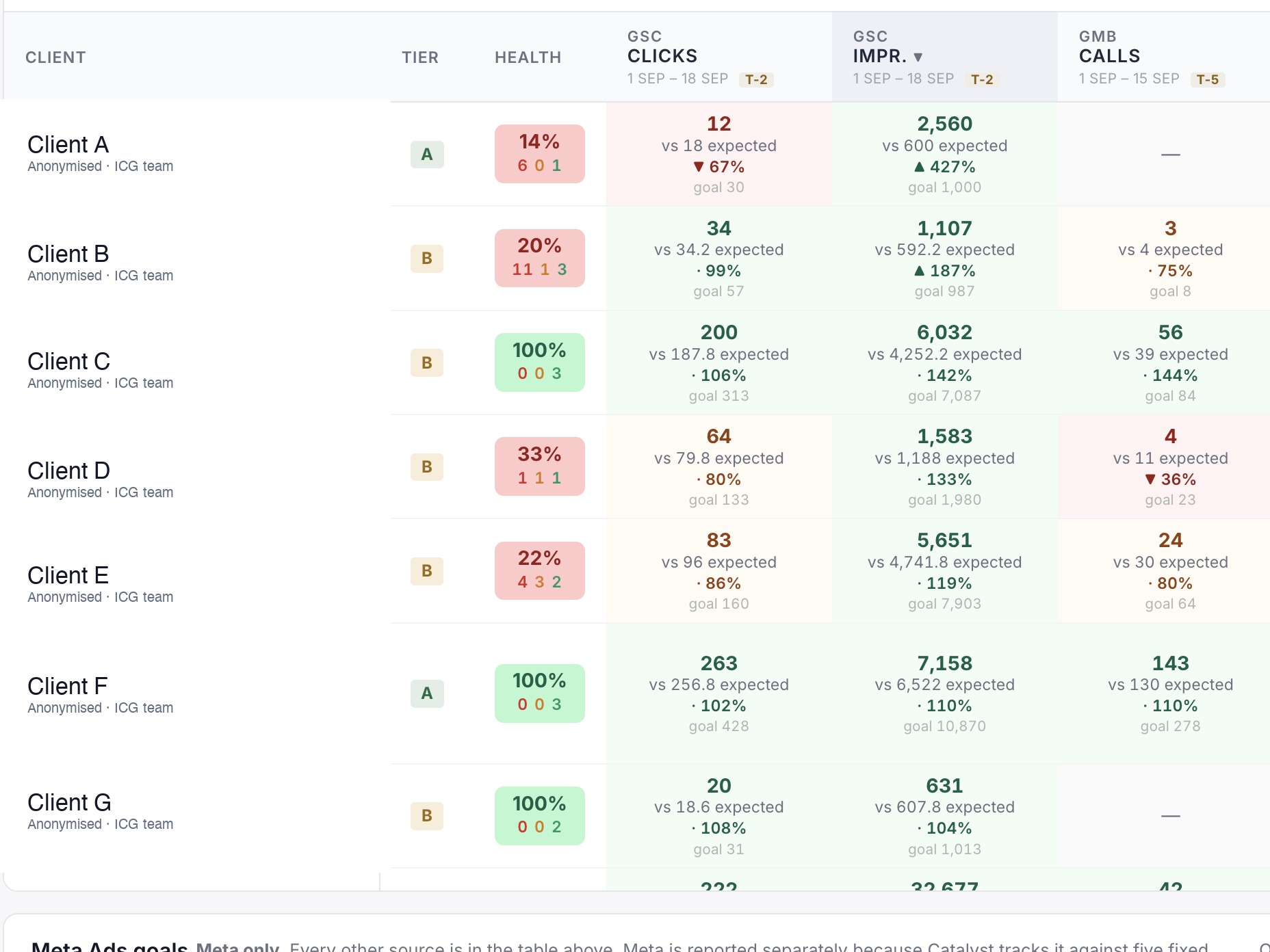
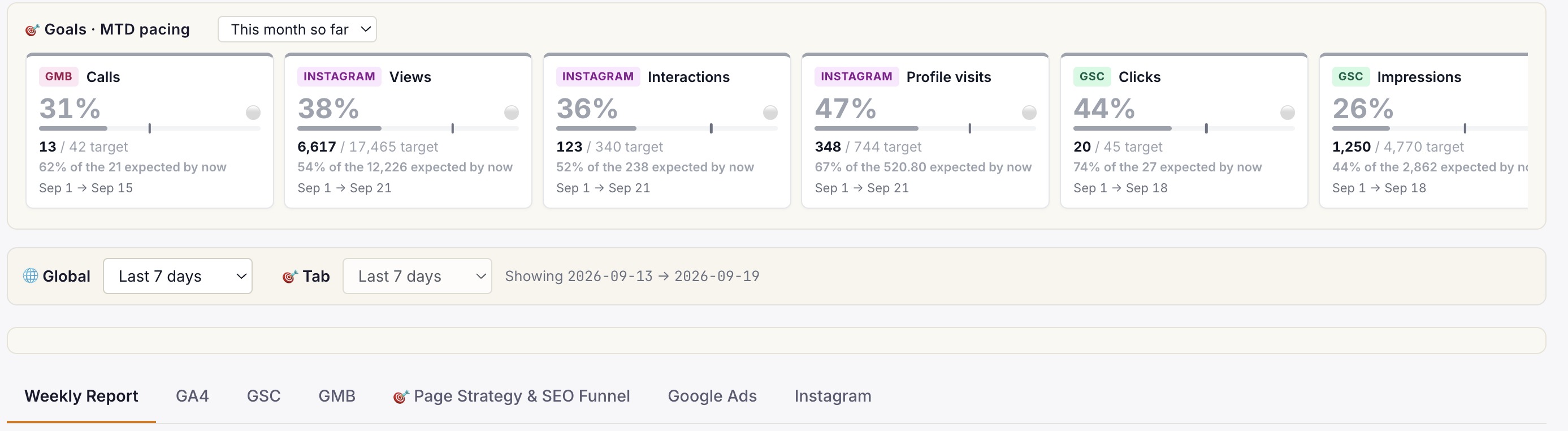
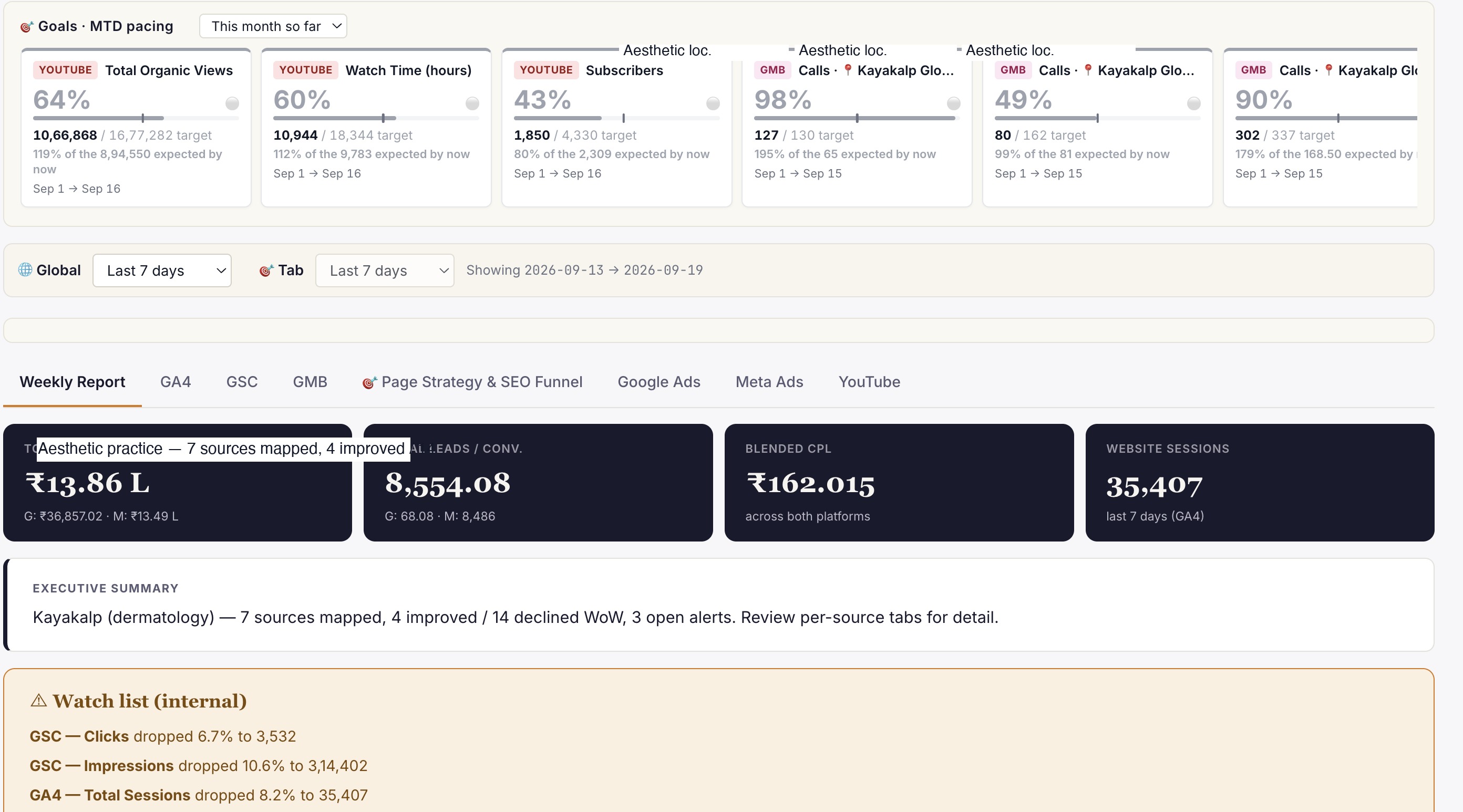
Live client dashboard. GSC, GA4, Google Ads, Meta Ads, IVR calls in one view. Login anytime, not monthly.
Phoenix
Clinic revenue intelligence over your PMS. Daily action queue: Prevent Loss, Maintain & Engage, Grow Revenue. Multi-centre rollout.
Or book a free 30-min audit to see all three in action on your account.
Healthcare brands
that already run on ICG.
A representative slice of the 150+ healthcare brands ICG has delivered for across India. Most engagements remain under NDA.


What ICG clients say · on video.
"Scale up of organic channels and business consulting. ICG has absolute domain authority in their field."
"Working with ICG transformed how we acquire IVF patients in Gurgaon. They understand the fertility journey from inquiry to consult..."
"What Ichelon accomplished — they got all my ideas and worked over 3-4 months to create an amazing, super-customised website."
Need help operationalising this?
Every ICG service is healthcare-only, NMC + DPDP-aware, and built around the patient-research patterns that drive Indian healthcare growth in 2026.
Every practice welcome — packages from ₹20,000/mo.
Goals-Driven engagements · Performance-Linked Payout Models available
More from
ICG.
Five trends shaping Indian healthcare marketing through 2027: AI-first patient research, Conversions API adoption, ABDM discovery, the AEO w...
Healthcare AIO is the discipline of getting your clinic or hospital cited inside Google AI Overviews, ChatGPT and Perplexity answers — not j...
Conversational-search advertising places brand messages inside AI chat answers — ChatGPT, Perplexity, Copilot — rather than beside a results...
Stop guessing.
Book a Diagnostic.
30 minutes. Free. With the AI-powered healthcare-only marketing agency 150+ brands already run on. No slides, no pitch, no hard close.


