


Duplicate GBP listings in Indian healthcare: how to find, merge, and prevent them (2026 playbook)
Duplicate Google Business Profile listings quietly wreck local ranking for Indian hospitals and clinics by splitting reviews, diluting NAP consistency, and triggering suspension flags. This 2026 playbook covers why healthcare duplicates form more than any other vertical, the exact merge process, and how ICG uses Angryturtle to detect and prevent them at scale.
No pitch. Written root-cause diagnosis. AI-powered, healthcare only.
Direct answer
Duplicate Google Business Profile listings quietly wreck local ranking for Indian hospitals and clinics by splitting reviews, diluting NAP consistency, and triggering suspension flags. This 2026 playbook covers why healthcare duplicates form more than any other vertical, the exac...
TL;DR

Duplicate GBP listings in Indian healthcare are one of the most damaging local SEO problems buyers routinely underestimate — reviews split across profiles, ranking signals dilute, and patients end up calling the wrong number or landing at a closed address. ICG has cleaned duplicate profile clusters for 150+ Indian hospitals, clinics and diagnostic chains using Angryturtle's duplicate-detection engine paired with a manual escalation workflow, and the pattern is consistent enough to codify. This 2026 playbook covers why healthcare duplicates form more often than any other vertical, how to audit systematically, the merge-versus-delete decision, and how ICG runs healthcare local SEO to keep them from returning.
Why duplicate GBP listings happen in healthcare more than in any other vertical
Restaurants, retail chains and law firms create duplicates too, but healthcare organisations produce them at a rate that stands out. Three structural reasons drive it. The first is the multi-doctor, multi-department nature of a modern hospital — a single 200-bed facility can have a hospital-level GBP, separate profiles for the fertility centre, the cardiology department, the paediatric wing, plus one profile per named consultant who has ever asked marketing for a listing.
The second is the accretion of legacy listings. Hospitals in India change ownership, rebrand, relocate wings, close units and merge with other groups on a cadence Google's algorithms do not always follow. A ten-year-old hospital may have four profiles from four ownership transitions, each with historical reviews Google still shows.
The third is agency turnover. When a healthcare brand cycles through three or four marketing agencies over five years, each agency tends to create fresh listings rather than claim the ones the prior agency created. The result is a cluster of near-duplicate profiles, most of them unclaimed or claimed under email addresses that no one at the hospital can recall.
Angryturtle's onboarding scan for a new healthcare client typically surfaces two to nine duplicate or near-duplicate listings across the brand cluster before the first optimisation task runs.
The four most common duplication patterns in Indian hospitals and clinics
Pattern one — hospital-plus-department overlap. A single physical hospital has a hospital-level GBP and one or more department-level profiles claiming the same address. Google increasingly treats department profiles as valid only when they have a distinct entrance, distinct phone line and distinct hours; anything less is treated as a duplicate.
Pattern two — practitioner profiles inside a clinic. A ten-doctor gynaecology clinic where every consultant has an individual practitioner profile at the clinic's address, plus the clinic's own profile. Individual practitioner profiles are legitimate when the doctor has direct patient-facing contact hours and reviews, but three or four inside the same address consistently trigger duplicate flags.
Pattern three — legacy ownership listings. A hospital that was previously "City Care Hospital" and is now "Apollo City" (fictional example) may have both profiles surviving in Google's index, sometimes with reviews on the old profile that never migrated. Patients searching the old name find the old profile; patients searching the new name find the new one.
Pattern four — agency-created shadow listings. An earlier agency created a profile with a slightly different name variant ("Dr Sharma Clinic" versus "Sharma Clinic and Diagnostic Centre"), never gained ownership access, and the shadow listing continues attracting reviews and calls that the current agency cannot control.
How to audit your brand for duplicates before requesting merges
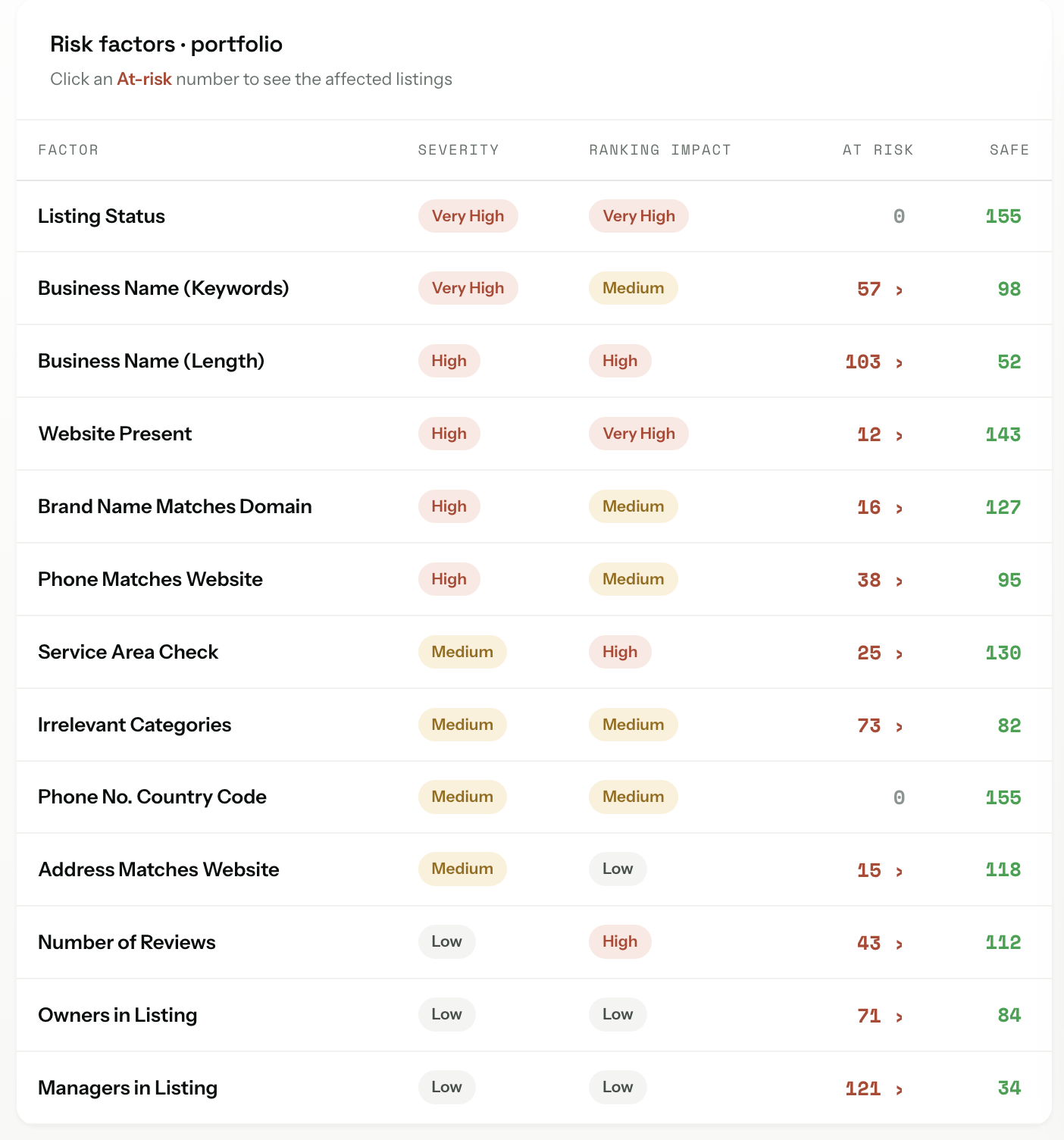
A duplicate audit is a systematic scan across four surfaces. Google Maps search for the brand name in every variant the brand has ever used, including old ownership names and common misspellings. Google Search for the brand name paired with each city and locality the brand operates in. Direct Google Business Profile Manager audit for every account the brand's current or former staff have credentials for. Reverse-lookup on the brand's primary phone numbers and website URL to see which profiles Google associates with those assets.
The audit produces a spreadsheet of every candidate profile with columns for profile name, address, phone, website, review count, star rating, claimed status, and category. Cluster analysis then groups profiles that share address, phone, or website and marks the cluster's primary versus duplicates.
Angryturtle automates the audit for onboarding clients — a single brand-name entry produces the full cluster map within minutes, including profiles the client had no idea existed.
What duplicates actually cost in local ranking and patient conversion
Split reviews are the most visible cost. A hospital with 340 reviews across a primary profile plus 180 reviews across an unclaimed duplicate presents to Google as a 340-review entity, not a 520-review entity. The duplicate's 180 reviews contribute nothing to the primary's ranking signal and nothing to patient perception of the primary.
Diluted NAP consistency signals across the citation graph is the second cost. Local ranking algorithms weigh consistency of Name, Address and Phone across every mention of the business on the web. Duplicate profiles produce inconsistent NAP signals — sometimes intentionally different because the profiles reference different phone extensions, sometimes accidentally different because the profiles were created at different times.
Patient confusion is the third cost, and the one hospital administrators actually feel. Patients who call the wrong number reach a defunct extension. Patients who navigate to the wrong address arrive at a closed wing. Patients who leave reviews on the wrong profile expect their feedback to reach current management and it does not.
Suspension risk is the fourth cost. Google's automated systems flag duplicate clusters as a violation of GBP guidelines, and once flagged a cluster can face partial or full suspension across profiles.
Merge versus delete: the decision framework
Every duplicate has one of three fates: merge into the primary, request removal from Google, or request removal via legal takedown if the duplicate misrepresents the brand. The right choice depends on three factors.
The first is whether the duplicate carries reviews worth preserving. A duplicate with 200 reviews accumulated over five years is worth merging into the primary because Google preserves the merged reviews inside the surviving profile. A duplicate with zero reviews is worth requesting for removal because there is no signal to preserve.
The second is whether the duplicate is claimed. A claimed duplicate under the brand's own control can be merged directly through GBP support. An unclaimed duplicate requires either the "Suggest an edit" removal request from the map, or a support-ticket escalation with proof of duplication.
The third is whether the duplicate misrepresents the brand — for example a shadow listing created by an unaffiliated third party using the brand's name. Misrepresentation cases sometimes require legal takedown notices rather than standard merge requests. ICG has processed both patterns; the standard merge path handles 90% of healthcare duplicates but the residual 10% needs the legal escalation route.
The Google merge request process, step by step
Step one — establish ownership of the primary profile through Google Business Profile Manager. Every merge request originates from the primary profile that will survive the merge.
Step two — document the duplicate with a Google Maps URL, a screenshot showing name, address and phone, and a written explanation of why the two profiles refer to the same real-world business. Documentation that fits on a single support ticket resolves faster than long-winded escalations.
Step three — raise the merge request through GBP Support (Help → Contact us → Chat or Email). The support agent will ask for the two profile URLs, ownership verification of the primary, and a brief explanation. Response typically arrives within 3 to 7 business days for standard cases.
Step four — Google evaluates the request. If the two profiles genuinely refer to the same business, Google merges reviews, photos, posts and Q&A into the surviving profile and removes the duplicate from the map. If Google finds meaningful differences — different address, different phone, different service offering — the merge is denied and the profiles remain separate.
Step five — post-merge verification. Confirm the surviving profile now shows the combined review count, combined photo library and combined Q&A. If any element failed to migrate, re-open the support ticket within the same conversation.
What Google's automated dedup catches and what it consistently misses
Google runs automated deduplication passes across the map. The system catches obvious cases — two identical profiles at the same address with the same phone and identical names. It also catches name-variant duplicates that differ only in punctuation or common abbreviations.
Automated dedup consistently misses three patterns. Duplicates with meaningfully different names ("Apollo City Hospital" versus "City Apollo Hospital and Research Centre") that a human would recognise as the same entity. Duplicates across ownership transitions where the address matches but the name has legitimately changed. Duplicates where the addresses look different because they use different pin-codes, different floor references, or different building-versus-street framings for the same location.
For everything the automated system misses, a manual merge request is the only remedy. Angryturtle's duplicate-detection engine catches all three patterns and surfaces them as merge-candidate actions in the sie" style="color:inherit;text-decoration:underline;text-decoration-color:rgba(42,126,200,.5);text-underline-offset:2px">Rank OS queue for the account manager to raise support tickets against.

How to prevent duplicates from recurring after cleanup
Cleanup without prevention is a repeat cycle. Three practices keep duplicates from re-forming.
First, centralise every GBP under a single Google Business Profile Manager organisation account owned by the brand, not by any individual employee or agency. When ownership sits with the brand's organisation account, agency turnover cannot orphan profiles.
Second, enforce a naming standard for every new location before it is added to GBP. The standard should specify the brand name variant, whether locality is included, and whether department qualifiers apply. Consistency at creation prevents the shadow-listing pattern where a new agency creates a fresh profile because they cannot locate the existing one.
Third, run a monthly duplicate scan across the brand cluster. New duplicates are easier to merge in the first weeks than after they accumulate reviews. Angryturtle runs the scan automatically and surfaces new candidates as they appear.
The Australian Competition and Consumer Commission and India's own ASCI both treat inconsistent business identity presentation as a consumer-protection concern; a clean single-profile presentation is not only better SEO but also better compliance posture.
The tool ICG uses to run this at scale: Angryturtle
ICG runs local SEO and GBP intelligence for 150+ Indian healthcare brands using Angryturtle — our own AI-native GBP intelligence and management OS. The platform scores every profile 0-100 via a proprietary Rank OS model with five weighted dimensions (Relevance, Review Health, Freshness, Entity Authority, AIO Readiness), publishes edits, Posts, media, and review replies directly to Google, and includes Ask Maps AIO Readiness scoring for Google AI Overviews and ChatGPT visibility.

Available in two shapes: self-serve at ₹999/- per month for solo owners with 1-2 profiles, and ICG's managed service from ₹25,000/- per month where our healthcare specialists execute inside the same platform. Both are anchored in the Healthcare Local SEO Agency India pillar page which has full scope, methodology and pricing.
Book a demo on WhatsApp → or start a free trial at angryturtle.ai →
Related reading
- Healthcare local SEO agency India — the pillar service page
- Angryturtle Rank OS explained — the scoring model
- GBP name optimisation guidelines for Indian healthcare
- GBP photo strategy for Indian healthcare 2026
- GBP Q&A strategy for Indian healthcare 2026
FAQ
How do I know if my hospital has duplicate GBP listings without running a full audit? Search your brand name in Google Maps and scroll through the results. If two or more listings surface at the same or nearby addresses, you have candidates. Also check every phone number the brand has ever published — reverse-search for the number in Google Maps to see which profiles are associated with it.
Will Google merge my duplicates automatically if I just wait? Sometimes. Google runs periodic automated dedup passes and will merge obvious duplicates without a request. But the automated system misses roughly one in three healthcare-specific duplicates because of name-variant, address-format and ownership-transition patterns. Manual merge requests are the only reliable path for the missed cases.
What happens to reviews on a merged duplicate profile? Google migrates reviews from the merged duplicate into the surviving primary profile. Star rating recalculates across the combined review base. Photos and Q&A also migrate in most merge cases.
Can I merge two profiles that have slightly different addresses? Yes if the addresses genuinely refer to the same physical location — for example one uses the building number and the other uses the floor reference. Provide clear documentation in the support ticket that both addresses reach the same entrance. No if the addresses refer to distinct clinics that share a brand name but operate independently.
How long does a GBP merge request take? Standard merges resolve in 3 to 7 business days once the support ticket is raised with complete documentation. Complex cases involving ownership disputes or misrepresentation can extend to several weeks and sometimes require legal-team escalation.
What is the risk of getting my primary profile suspended when I request merges? Low if the merge request is legitimate and well-documented. Higher if the documentation is incomplete or if the profiles being merged have inconsistent NAP data that Google interprets as a guideline violation. ICG's workflow includes a pre-merge NAP consistency pass to reduce this risk.
Can Angryturtle merge duplicates directly through the platform? Angryturtle detects and queues duplicate candidates and drafts the merge-request documentation. The final support ticket is raised through Google Business Profile Manager because Google requires the ticket to originate from the verified owner account. ICG's managed service handles the ticket workflow end to end within the retainer.
How often should I audit for new duplicates after cleanup? Monthly for a stable single-location brand. Weekly for a multi-location chain adding or restructuring locations. Angryturtle runs the scan automatically as part of its monthly Rank OS refresh so the audit becomes a passive process rather than an active workstream.
What if the duplicate is claimed by someone I do not recognise? Raise a Google Business Profile ownership-conflict request. Provide proof of business ownership (registration documents, ownership certificates, previous GBP verification). Google reviews the conflict and transfers ownership to the legitimate owner if the evidence is sufficient. This path is slower than a merge — expect 2 to 6 weeks.
Do duplicate profile fixes materially affect ranking? Yes. Post-merge, the surviving profile inherits the combined review count and photo library which usually produces a measurable Rank OS improvement within 4 to 8 weeks as Google recalibrates the profile's authority signal. The bigger effect is preventing further split — the surviving profile now accumulates all new signals rather than 60% of them.
Book a free 30-minute Brand & Growth Diagnostic.
It's a working session, not a sales pitch — you leave with a written root-cause analysis you can act on, whether or not you engage ICG.
The three platforms
behind every ICG engagement.
Beacon
CAPI middleware that fixes Event Match Quality, translates CRM statuses to Meta-standard events, dedups across channels.
Agency OS
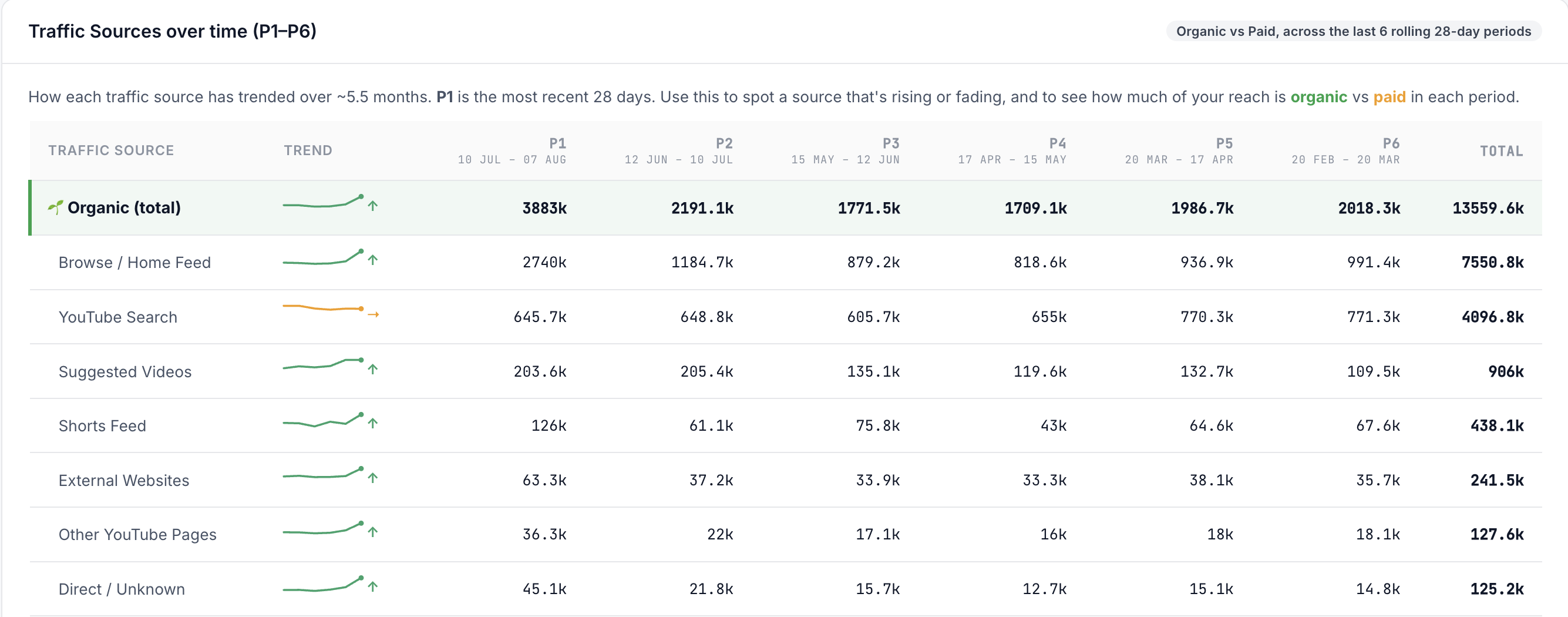
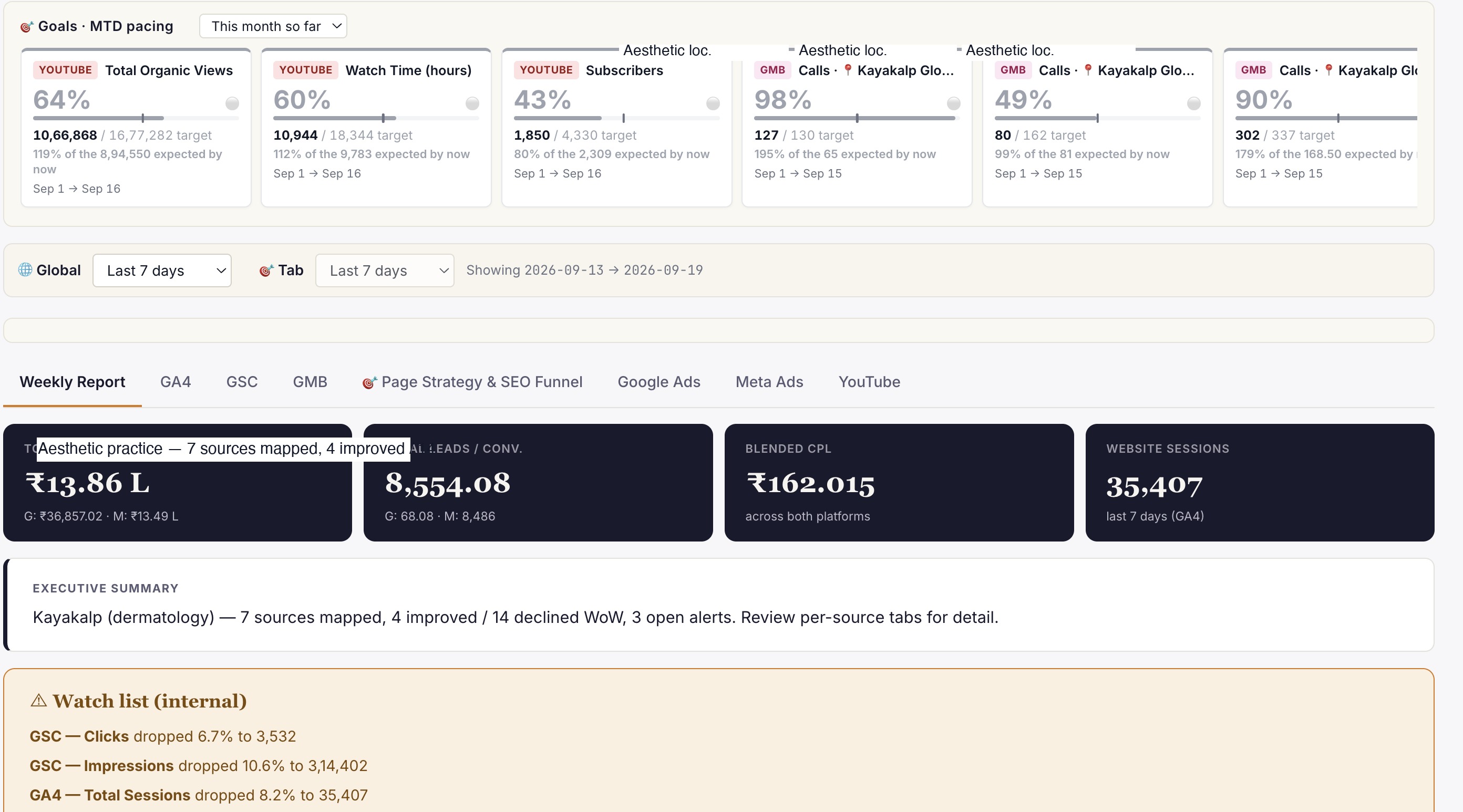
Live client dashboard. GSC, GA4, Google Ads, Meta Ads, IVR calls in one view. Login anytime, not monthly.
Phoenix
Clinic revenue intelligence over your PMS. Daily action queue: Prevent Loss, Maintain & Engage, Grow Revenue. Multi-centre rollout.
Or book a free 30-min audit to see all three in action on your account.
Healthcare brands
that already run on ICG.
A representative slice of the 150+ healthcare brands ICG has delivered for across India. Most engagements remain under NDA.


What ICG clients say · on video.
"Scale up of organic channels and business consulting. ICG has absolute domain authority in their field."
"Working with ICG transformed how we acquire IVF patients in Gurgaon. They understand the fertility journey from inquiry to consult..."
"What Ichelon accomplished — they got all my ideas and worked over 3-4 months to create an amazing, super-customised website."
Need help operationalising this?
Every ICG service is healthcare-only, NMC + DPDP-aware, and built around the patient-research patterns that drive Indian healthcare growth in 2026.
Every practice welcome — packages from ₹20,000/mo.
Goals-Driven engagements · Performance-Linked Payout Models available


More from
ICG.
Five trends shaping Indian healthcare marketing through 2027: AI-first patient research, Conversions API adoption, ABDM discovery, the AEO w...
Healthcare AIO is the discipline of getting your clinic or hospital cited inside Google AI Overviews, ChatGPT and Perplexity answers — not j...
Conversational-search advertising places brand messages inside AI chat answers — ChatGPT, Perplexity, Copilot — rather than beside a results...
Stop guessing.
Book a Diagnostic.
30 minutes. Free. With the AI-powered healthcare-only marketing agency 150+ brands already run on. No slides, no pitch, no hard close.


