


Healthcare Brand Book: What It Must Contain (12 Sections) | ICG
A healthcare brand book only drives consistency with 12 operational sections — voice, visuals, clinical tone, compliance. See ICG's full checklist.
No pitch. Written root-cause diagnosis. AI-powered, healthcare only.
Direct answer
A healthcare brand book only drives consistency with 12 operational sections — voice, visuals, clinical tone, compliance. See ICG's full checklist.
TL;DR
The term 'brand book' describes a wide range of documents. At one end, a five-page PDF with a logo, two colours, and a font. At the other, a comprehensive guide covering every channel the brand operates in, mapping every decision to a positioning rationale.
Most healthcare brands that have a brand book have the first kind. The brands that sustain consistent differentiation over time have the second.
Why most brand books do not produce consistency
Direct answer: Most healthcare brand books fail because they stop at the visual identity. The majority of patient touchpoints — WhatsApp messages, review responses, telecaller scripts, consultation confirmation emails — are not governed by a colour palette.
The visual identity is a small fraction of what patients experience. A brand book that addresses only logo and colour leaves the majority of patient touchpoints ungoverned — and ungoverned touchpoints produce inconsistency, which is the enemy of the trust healthcare brands need to build.
ICG's data shows this consistently: brands with Brand Book Section 09 (Digital Presence and Channel Implementation) in place show significantly lower variation in patient experience scores across touchpoints than those without it.
The twelve sections and what each one does
Direct answer: A complete healthcare brand book has twelve sections: Executive Summary, Brand Identity Prism, Brand Positioning, Brand Voice and Tone, Logo Guidelines, Colour Palette, Typography, Imagery Guidelines, Brand in Application, Digital Presence and Channel Implementation, Usage Rules, and Brand Manifesto.
Sections 00-08 — Executive Summary through Brand in Application — are present in most professional brand books. Section 09, Digital Presence and Channel Implementation, is where most agencies stop short. Sections 10-11 (Usage Rules and Brand Manifesto) complete the system.
Section 03, Brand Voice and Tone, is critically important and frequently omitted. It defines tone descriptors, platform-specific tone variations, vocabulary the brand uses, and vocabulary the brand never uses — with real examples. Without it, every piece of content is a tone judgment call.
Section 09 in depth — where the brand book becomes operational
Direct answer: Section 09 covers six channels: Ads (Meta, Google, YouTube), Website, Instagram, YouTube, WhatsApp Business, and Google My Business — each with brand standards, implementation direction, and specific dos and don'ts.
For Ads: brand standards for ad creative, tone per persona, messaging hierarchy, and calls-to-action aligned to positioning pillars. For Website: UX tone, content hierarchy, CTA language, and how the positioning statement should appear in homepage copy, service pages, and about sections.
For WhatsApp Business: greeting tone, response style, message templates, and escalation language. For Google My Business: profile standards, review response tone, and Q&A management voice. How a brand responds to a one-star review is a brand expression seen by every prospective patient who reads that review.
Every channel in Section 09 includes specific dos and don'ts — not general principles, but specific language examples.
Agency OS — 30+ real-time alert systems monitoring whether the brand promise standards documented in Section 09 are actually being met — across response times, review management, and content consistency [ ichelonconsulting.com/platform/agency-os ]
The brand book and the brand study export
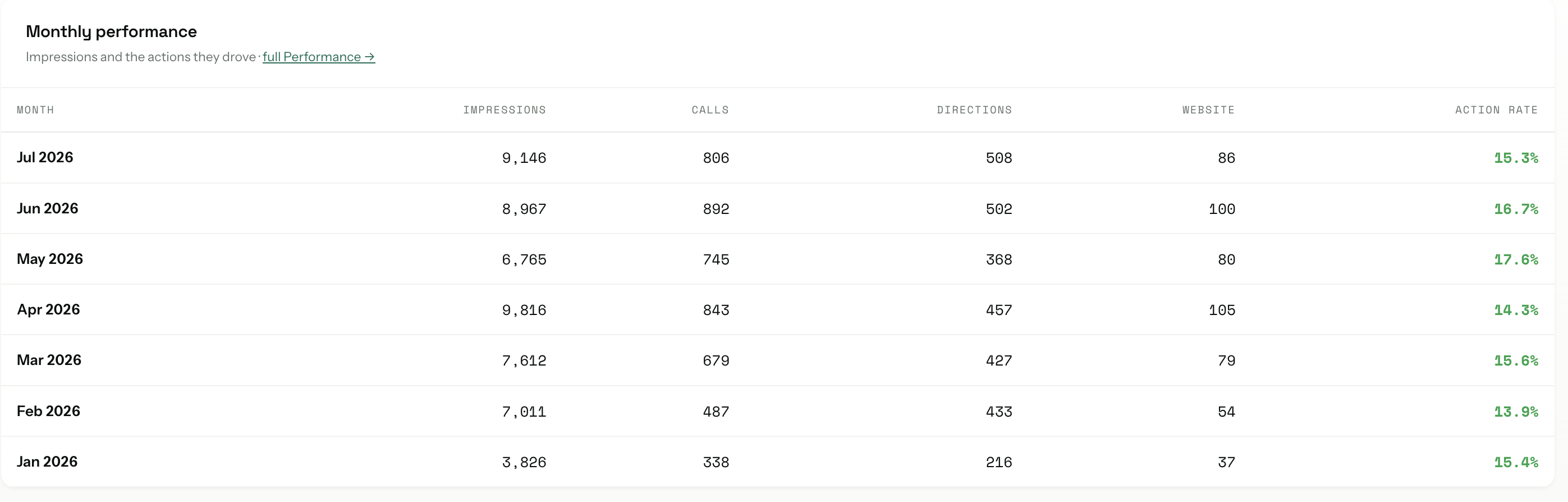
Direct answer: ICG delivers the full brand study as a structured Excel export — one sheet per phase — before any Brand Book content is produced. The client reviews, corrects, and confirms every finding before Brand Book production begins.
This changes the Brand Book from a document the client is presented with to one they have co-authored. Every positioning decision is traceable to a verified market gap. Every persona selection is confirmed by the client against their own knowledge of the business.
The result is a Brand Book that is used — not one that sits in a folder, because the client believes in what it says and understands why every element is there.
Frequently asked
What is a healthcare brand book?
A healthcare brand book is a comprehensive guide documenting what a brand is, how it communicates, and how it behaves — across every channel. It covers Brand Identity Prism, positioning, voice and tone, logo, colour, typography, imagery, digital channel implementation, usage rules, and brand manifesto.
Why do most healthcare brand books fail to produce consistency?
They stop at the visual identity. The majority of patient touchpoints — Instagram captions, WhatsApp messages, Google review responses, consultation confirmation emails, telecaller scripts — are not governed by a colour palette. A brand book without Section 09 leaves most touchpoints ungoverned.
What is Section 09 and why is it important?
Section 09, Digital Presence and Channel Implementation, covers Ads (Meta, Google, YouTube), Website, Instagram, YouTube, WhatsApp Business, and Google My Business — with specific brand standards, implementation direction, and channel-specific dos and don'ts for each.
Should the brand book be produced before or after the brand strategy?
After. The Brand Book should only be produced after the full brand study — industry analysis, competitor deep dive, gap matrix, personas, Brand Identity Prism, and positioning architecture — has been completed and confirmed by the client. ICG's Brand Study Export ensures this.
How long does it take ICG to produce a Brand Book?
2-3 weeks from brand study sign-off. Total engagement including all phases: 6-12 weeks. The brand study (Phases 0-5B) precedes the Brand Book, and client sign-off on the study is required before production begins.
Related reading
- Healthcare Brand Strategy in India
- Brand Identity Prism for Healthcare
- Healthcare Website Design and CRO
ICG services referenced in this article
- Brand & Growth Consulting
- Healthcare SEO & AEO / LLM
- HealthApex OS Platform
- Prism Spy — Competitor Intelligence
- AIO Intel — LLM Citation Tracking
Found this useful? Get yours.
30-minute free diagnostic. Written CPQL diagnosis for your specialty. We benchmark you against 150+ healthcare brands. Zero pitch.
Book free 30-min Diagnostic → ichelonconsulting.com/book
WhatsApp: wa.me/918130226224 (pre-fill: "Hi ICG, I just read 'What Is a Healthcare Brand Book — and What Should It Actuall...' and want a brand diagnostic")
Compliance guardrails a healthcare brand book must carry
Most brand books borrow from FMCG or SaaS templates and skip the guardrails that decide whether a healthcare brand can actually publish what it writes. In India, three regulatory layers touch almost every marketing asset a clinic, hospital, or pharma brand produces — and the brand book is the first place they should be codified, not the last.
- ASCI and DMR Act: No before/after imagery for procedures listed under the Drugs and Magic Remedies Act, no guaranteed outcomes, no comparative therapeutic claims. Section 09 should list the exact procedure categories in scope and the approved substitution language for common violating phrases.
- NABH and NABL communication rules: Accredited hospitals cannot use the accreditation mark on ads without prescribed lock-up ratios and disclaimers. The brand book should carry the mark's clear-space, minimum-size, and colour-mode rules alongside the standard logo lock-ups.
- Meta and Google ad-policy overlays: Health category ads on Meta and Google trigger extra scrutiny. Include a red-flag word list (miracle, permanent, side-effect free, cure) and the pre-approved alternatives your paid team can safely bid on. This is where Meta Catalyst IQ and Prism Spy plug in — the brand book defines the guardrails, the platforms enforce them at campaign level.
How the compliance layer connects to daily execution
Guardrails only survive contact with reality when someone owns them. In every Client Elevation Programme engagement, we pair the brand book with a two-page compliance appendix: the reviewer name, the escalation path, and the 48-hour SLA for approving edge-case creative. This appendix is what keeps the accreditation mark from ever appearing incorrectly on a Reel or a WhatsApp broadcast — a common source of silent violations.
For multi-location clinic groups, the same appendix scales through Angryturtle so that Google Business Profile posts at every location inherit the approved language automatically, rather than each location manager writing their own version.
Book a free 30-minute Brand & Growth Diagnostic.
It's a working session, not a sales pitch — you leave with a written root-cause analysis you can act on, whether or not you engage ICG.
Questions readers ask
about this topic.
The three platforms
behind every ICG engagement.
Beacon
CAPI middleware that fixes Event Match Quality, translates CRM statuses to Meta-standard events, dedups across channels.
Agency OS
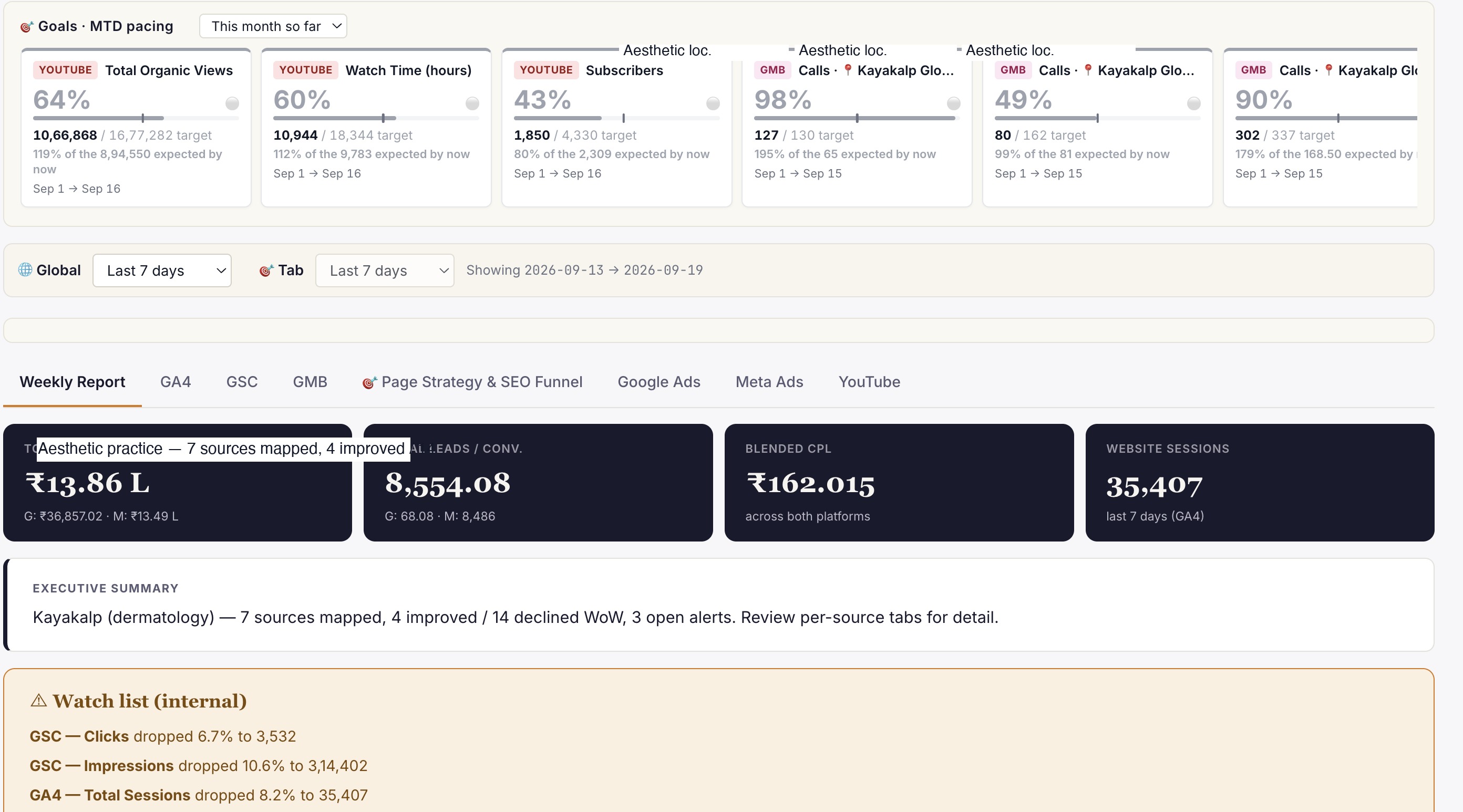
Live client dashboard. GSC, GA4, Google Ads, Meta Ads, IVR calls in one view. Login anytime, not monthly.
Phoenix
Clinic revenue intelligence over your PMS. Daily action queue: Prevent Loss, Maintain & Engage, Grow Revenue. Multi-centre rollout.
Or book a free 30-min audit to see all three in action on your account.
Healthcare brands
that already run on ICG.
A representative slice of the 150+ healthcare brands ICG has delivered for across India. Most engagements remain under NDA.


What ICG clients say · on video.
"Scale up of organic channels and business consulting. ICG has absolute domain authority in their field."
"Working with ICG transformed how we acquire IVF patients in Gurgaon. They understand the fertility journey from inquiry to consult..."
"What Ichelon accomplished — they got all my ideas and worked over 3-4 months to create an amazing, super-customised website."
Need help operationalising this?
Every ICG service is healthcare-only, NMC + DPDP-aware, and built around the patient-research patterns that drive Indian healthcare growth in 2026.
Every practice welcome — packages from ₹20,000/mo.
Goals-Driven engagements · Performance-Linked Payout Models available


More from
ICG.
Hindi and regional-language SEO means publishing proper pages in the languages your patients search in, on their own URLs and linked with hr...
A new pharma brand in India should start digital work before launch, built around who it may legally address. This six-month plan covers pro...
Hospitals and clinics in India can still advertise after the NMC's 6 October 2026 guidelines, but only with factual, verifiable information....
Stop guessing.
Book a Diagnostic.
30 minutes. Free. With the AI-powered healthcare-only marketing agency 150+ brands already run on. No slides, no pitch, no hard close.


