


Healthcare Website Design in India: Why Most Clinic Websites Lose Patients Before They Book
Most clinic and hospital websites in India were designed to look credible. They were not designed to convert. ICG's typical conversion rate on organic traffic for properly CRO-engineered healthcare sites: 4-6%. The Indian healthcare we...
No pitch. Written root-cause diagnosis. AI-powered, healthcare only.
Direct answer
Most clinic and hospital websites in India were designed to look credible. They were not designed to convert. ICG's typical conversion rate on organic traffic for properly CRO-engineered healthcare sites: 4-6%. The Indian healthcare we...
TL;DR
Most clinic and hospital websites in India were designed to look credible. They were not designed to convert. ICG's typical conversion rate on organic traffic for properly CRO-engineered healthcare sites: 4-6%. The Indian healthcare website industry average: 0.8-1.4%. The difference is not traffic quality — it is website architecture.
What patients are actually looking for when they arrive
Direct answer: Patients arriving at a healthcare website in 2026 are not primarily looking for information — they already have it. They are looking for reassurance: is this brand for someone like me? Will I be treated as an individual? Can I trust the people here?
Healthcare website visits in India: 70%+ from mobile devices as of Q1 2026 — Google India mobile search data, 2026
ICG CRO benchmark: properly engineered healthcare websites convert organic traffic at 4-6% vs industry average 0.8-1.4% — ICG internal benchmark, 2025-26
A website answering clinical questions but not psychological ones loses the patient at the decision point. The Elaboration Likelihood Model requires that both the evidence-driven central route processor and the cue-driven peripheral route processor are served simultaneously — not one or the other.
The 19 required sections — why sequence matters as much as content
Direct answer: Each of the 19 sections serves a specific function in the conversion sequence. The hero confirms identity. The press bar activates reference group theory. The three pillars build three distinct trust levels. The framework sections turn proprietary methodology into interactive patient self-identification.
Navigation and Hero set the emotional tone in the first three seconds. The hero headline activates Identity-Based Motivation — confirming who the brand is for, not just what it offers. The statistical trust row below serves the central-route processor who needs evidence before engaging further.
The three Framework sections are the brand's proprietary intellectual property made interactive. Framework 1 allows the patient to self-select into the most relevant pathway, activating self-identification. Framework 2 gives the patient vocabulary to explain the brand's difference. Framework 3 makes long-term value visible.
The three-step consultation form applies micro-commitment psychology. One question per step. No full-form abandonment. ICG A/B data across 15 healthcare sites (2024-26): three-step forms convert at 2.4x the rate of equivalent single-step forms.
Beacon — Attribution — CAPI middleware connecting website events to booked consultations — lifts Event Match Quality from 2.5 to 6+, making ROI of website investment measurable [ ichelonconsulting.com/platform/beacon ]
Mobile-first architecture — the specific failure modes
Direct answer: iOS Safari has specific scroll behaviour requirements that most website builds ignore. Applying overflow:hidden to the body element — a common approach — locks vertical scroll for every iPhone visitor. The correct approach uses overflow:clip on the html element.
True mobile-first design means the CSS architecture starts from the smallest screen and scales upward. Grid layouts begin as single columns. Navigation works with a thumb. Forms complete smoothly on a touch keyboard. The floating CTA is fully tappable from every scroll state.
These are not aesthetic preferences — they are the specific failure modes that produce the gap between a 4-6% conversion rate and a 0.8% one on the same traffic volume.
Production-ready vs designed
Direct answer: ICG's Digital and Technology Footprint delivers a production-ready single HTML file — all 19 sections present and functional, all three frameworks interactive, all readability and scroll requirements passing programmatic audit. It is a specification, not a brief.
Production-ready means the developer's job is to integrate the file with the CMS and populate it with the brand's specific content — not to interpret a design concept or solve structural problems. The file passes the QA gates before it leaves ICG.
Frequently asked
What is conversion rate optimisation (CRO) in healthcare website design?
CRO is designing every section to address the specific psychological barriers preventing patients from booking — not just communicating information. ICG's typical conversion rate on organic traffic for properly CRO-engineered healthcare sites: 4-6%, vs an industry average of 0.8-1.4% (ICG benchmark, 2025-26).
Why is mobile-first design critical for healthcare websites in India in 2026?
More than 70% of Indian healthcare website visits are from mobile devices as of Q1 2026. A website designed for desktop and adapted for mobile has structural scroll and layout failures on iOS Safari that lose every visitor encountering them. True mobile-first starts from the smallest screen and scales upward.
What is a three-step consultation form and why does it outperform a single form?
A three-step micro-commitment form uses one question per step. ICG A/B data (2024-26): three-step forms convert at 2.4x the rate of equivalent single-step forms with 6+ fields. Each completed step increases the patient's investment in completion through the sunk-cost effect.
What does 'behaviourally mapped' mean in healthcare website design?
Every section is designed to activate a specific consumer behaviour model — Identity-Based Motivation in the hero, Reference Group Theory in the press bar, Reactance Theory compliance in every CTA. ICG produces a Consumer Behaviour Correlation Document mapping each section to its model and CRO function.
How does Beacon attribute website visits to booked consultations?
Beacon is ICG's CAPI attribution middleware connecting website events (page visits, form fills, WhatsApp initiations) through the CRM to booked consultations and revenue. It lifts Event Match Quality from the industry average of 2.5 to 6+, closing the attribution gap between organic traffic and patient acquisition.
Related reading
- Consumer Behaviour in Healthcare Decision-Making
- Proprietary Frameworks in Healthcare Marketing
- Healthcare SEO — The 2026 Pillar Guide
- Beacon — Attribution Engine
ICG services referenced in this article
- Brand & Growth Consulting
- Healthcare SEO & AEO / LLM
- HealthApex OS Platform
- Prism Spy — Competitor Intelligence
- AIO Intel — LLM Citation Tracking
Found this useful? Get yours.
30-minute free diagnostic. Written CPQL diagnosis for your specialty. We benchmark you against 150+ healthcare brands. Zero pitch.
Book free 30-min Diagnostic → ichelonconsulting.com/book
WhatsApp: wa.me/918130226224 (pre-fill: "Hi ICG, I just read 'Healthcare Website Design in India: Why Most Clinic Websites...' and want a brand diagnostic")
Book a free 30-minute Brand & Growth Diagnostic.
It's a working session, not a sales pitch — you leave with a written root-cause analysis you can act on, whether or not you engage ICG.
Questions readers ask
about this topic.
The three platforms
behind every ICG engagement.
Beacon
CAPI middleware that fixes Event Match Quality, translates CRM statuses to Meta-standard events, dedups across channels.
Agency OS
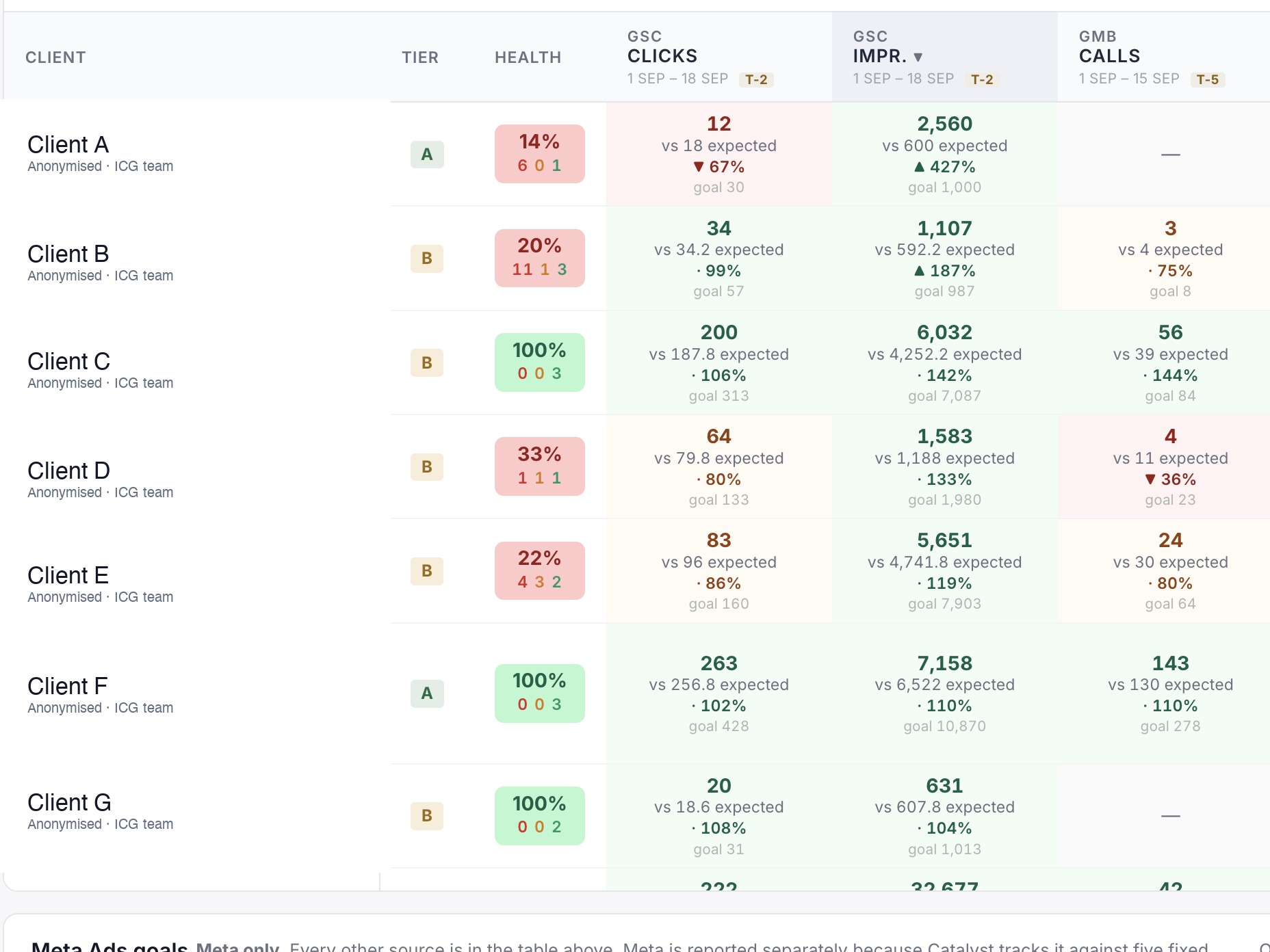
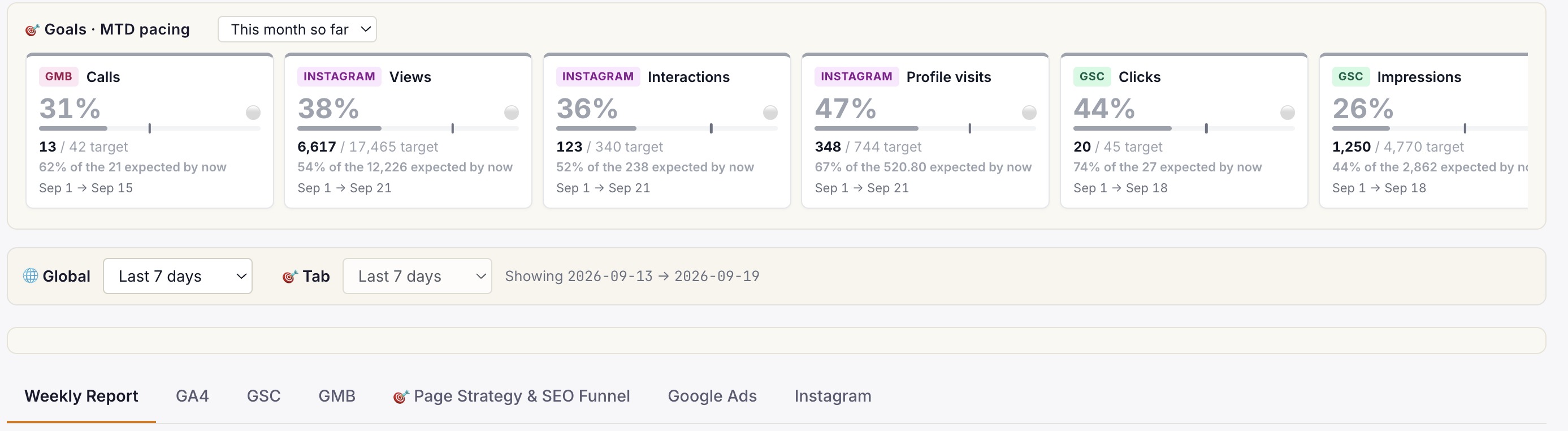
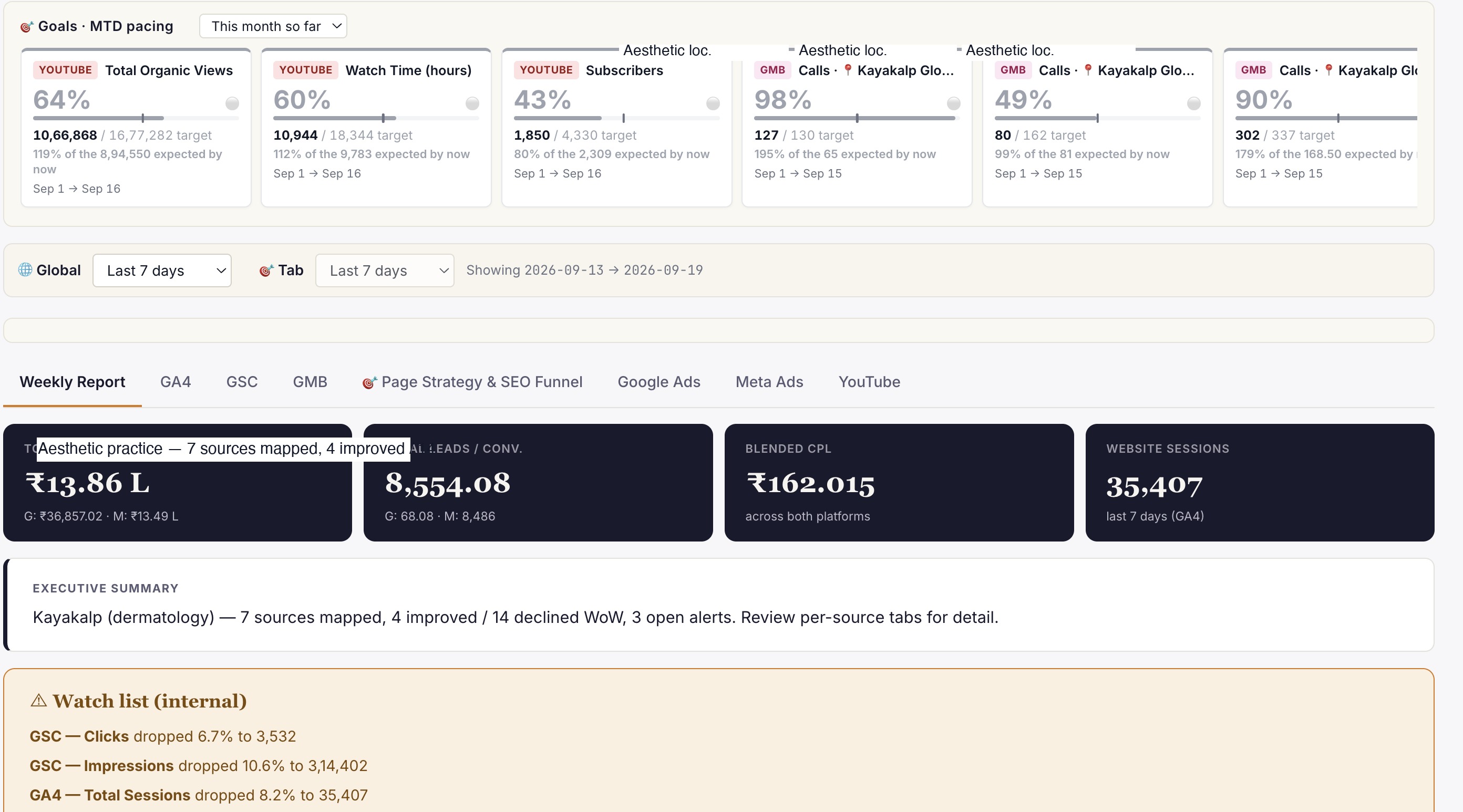
Live client dashboard. GSC, GA4, Google Ads, Meta Ads, IVR calls in one view. Login anytime, not monthly.
Phoenix
Clinic revenue intelligence over your PMS. Daily action queue: Prevent Loss, Maintain & Engage, Grow Revenue. Multi-centre rollout.
Or book a free 30-min audit to see all three in action on your account.
Healthcare brands
that already run on ICG.
A representative slice of the 150+ healthcare brands ICG has delivered for across India. Most engagements remain under NDA.


What ICG clients say · on video.
"Scale up of organic channels and business consulting. ICG has absolute domain authority in their field."
"Working with ICG transformed how we acquire IVF patients in Gurgaon. They understand the fertility journey from inquiry to consult..."
"What Ichelon accomplished — they got all my ideas and worked over 3-4 months to create an amazing, super-customised website."
Need help operationalising this?
Every ICG service is healthcare-only, NMC + DPDP-aware, and built around the patient-research patterns that drive Indian healthcare growth in 2026.
Every practice welcome — packages from ₹20,000/mo.
Goals-Driven engagements · Performance-Linked Payout Models available
More from
ICG.
Five trends shaping Indian healthcare marketing through 2027: AI-first patient research, Conversions API adoption, ABDM discovery, the AEO w...
Healthcare AIO is the discipline of getting your clinic or hospital cited inside Google AI Overviews, ChatGPT and Perplexity answers — not j...
Conversational-search advertising places brand messages inside AI chat answers — ChatGPT, Perplexity, Copilot — rather than beside a results...
Stop guessing.
Book a Diagnostic.
30 minutes. Free. With the AI-powered healthcare-only marketing agency 150+ brands already run on. No slides, no pitch, no hard close.


