


After-hours enquiries: how clinics and hospitals should handle night and weekend leads
Clinics and hospitals should run after-hours enquiries as their own shift: acknowledge every message instantly, route anything urgent to emergency care, promise a specific callback time, and have one person clear the list each morning. This guide covers WhatsApp setup, what to automate, the five KPIs to track and the compliance guardrails.
No pitch. Written root-cause diagnosis. AI-powered, healthcare only.
Direct answer
Clinics and hospitals should run after-hours enquiries as their own shift: acknowledge every message instantly, route anything urgent to emergency care, promise a specific callback time, and have one person clear the list each morning. This guide covers WhatsApp setup, what to au...
TL;DR
Clinics and hospitals should treat night and weekend enquiries as a separate shift with its own rules: an instant acknowledgement, a safe route for anything urgent, a clear promise of when a human will respond, and a first-thing-next-morning callback list that someone owns. Do those four things and after-hours leads stop disappearing. Skip them and the enquiry often goes to whoever replies first.
This guide is for clinic owners, hospital operations heads, practice managers and marketing teams. It covers why after-hours leads behave differently, how to set up WhatsApp and call handling for nights and Sundays, what to automate and what to leave to people, and which numbers to watch.
Why do after-hours enquiries need their own process?
After-hours enquiries arrive when the front desk has gone home, yet the patient or family is often at their most motivated. They have just finished work, put children to bed or spent the evening reading about a problem. If nobody acknowledges them, many contact the next clinic on the list. A separate process protects enquiries your ads and SEO already paid for.
Look at your own data before you change anything. Pull a month of calls, form fills and WhatsApp messages, and sort them by hour and weekday. Many clinics find a meaningful share lands after closing time, on Sunday, or during the lunch gap when the reception phone rings out. Missed-call logs from your phone system usually show the same pattern.
What makes night and weekend leads different
- Intent is mixed. Some people want to book a routine consultation. Others are anxious about something that may be urgent.
- Channel shifts. At night, more people message rather than call, especially on WhatsApp.
- Decision makers change. Weekend enquiries often come from a family member researching on behalf of a parent or spouse.
- Speed matters more. People enquiring late often contact several clinics at once and choose whoever responds sensibly first.
What should happen in the first five minutes after a night enquiry?
Within minutes, every after-hours enquiry should get an acknowledgement that confirms it was received, states clearly when a team member will respond, and gives an emergency route for anything urgent. That message does not book the appointment. Its job is to reassure the person, keep them from moving on, and route real emergencies away from a marketing inbox.
A good acknowledgement has four parts:
- Thanks and confirmation. "We have received your message."
- A time promise. "Our team will call you between 9 and 10 tomorrow morning." Be specific and keep the promise.
- An urgent-care line. For hospitals, the emergency department number. For clinics without emergency services, advice to contact the nearest emergency facility or the national ambulance number.
- A self-serve option. A link to book a slot online, or a short list of choices such as "book consultation", "reports", "timings".
Never let an automated reply give medical advice, triage symptoms or suggest medicines. A chatbot that tries to sound like a doctor creates clinical and legal risk. Our piece on when AI chatbots work for clinics and when they fail covers where to draw that line.
How can WhatsApp be used in the healthcare industry after hours?
After hours, WhatsApp works best as an organised front door: an instant automated acknowledgement, a short menu for common requests, online slot booking, and a queue the morning team clears first thing. It suits clinics and hospitals because Indian patients already message there. It should never replace emergency care or carry clinical advice.
Use the WhatsApp Business Platform rather than a personal phone. It lets several team members share one number, keeps a record of conversations, supports approved message templates and connects to your CRM. Our explainer on the WhatsApp Business API for healthcare sets out what it needs.
| After-hours task | Automate it? | Notes |
|---|---|---|
| Acknowledging a new enquiry | Yes | Instant reply with time promise and urgent-care route |
| Sharing timings, address, map link | Yes | Keep the information current; wrong timings cause angry visits |
| Booking a routine consultation slot | Yes, if slots are live | Only when the booking system shows real availability |
| Answering package or estimate questions | Partly | Share standard published packages; complex estimates need a person |
| Anything about symptoms or urgency | No | Route to emergency contacts; never triage by bot |
| Report queries and prescriptions | No | Patient data; verify identity and handle with a trained person |
| Follow-up for people who did not book | With consent only | Respect opt-in and frequency limits |
Consent is not optional. Under the Digital Personal Data Protection Act, 2023, you need a clear purpose and consent before sending follow-ups, and an easy way to opt out. Read how WhatsApp consent works under the DPDP Act before you start nurture messages.
Who should own the morning callback list?
One named person should own the after-hours callback list every morning, with a fixed deadline to clear it. Usually that is a senior front-desk executive or the telecalling lead. Without an owner, the night's enquiries sit in a shared inbox while staff handle walk-ins, and by the time someone calls, the patient has booked elsewhere.
Make the list easy to work through:
- The CRM should pull every overnight call, missed call, form and WhatsApp chat into one queue, tagged by source and department.
- Sort the queue by likely urgency and value, not by arrival time. A family enquiring about a planned surgery deserves an early call.
- Record every outcome: booked, call back later, not reachable, not relevant.
- Escalate anything still uncalled by mid-morning to the clinic manager.
A CRM such as AtomCRM can bring calls, forms and WhatsApp into one place and assign callbacks automatically. For team-level measures, see our guide to telecaller performance analytics.
Should you staff a night shift instead?
For most clinics, no. A good automated acknowledgement plus a disciplined morning callback covers the bulk of the value. Hospitals with emergency departments already have night staff, so the question there is whether the emergency desk should also take marketing enquiries. Usually it should not, because routine bookings distract from urgent care. A small shared night or weekend telecalling shift starts to make sense when volumes are high, or when your specialty sees many late-evening enquiries, as some fertility and cosmetic clinics do.
How should hospitals separate emergencies from marketing enquiries at night?
Hospitals should give emergencies and routine enquiries different doors. The emergency number goes to the casualty desk, which is staffed all night. Marketing numbers, website forms and WhatsApp go to a booking queue with an automated acknowledgement. Every message on the booking side should point clearly to the emergency number, so nobody urgent waits for a morning callback.
In practice, problems appear in three places:
- Tracking numbers on ads. If a call-tracking number diverts to the casualty desk after hours, emergency staff end up answering questions about OPD timings and packages. Route ad numbers to the booking queue instead, with a recorded message that gives the emergency line first.
- Google Business Profile. Many hospitals list one main number. Make sure the profile shows the emergency service clearly and that department listings, where you have them, show OPD timings rather than implying round-the-clock consultations.
- Department landing pages. A cardiac or maternity page should carry the emergency number near the top, separate from the "book a consultation" form.
Test the setup yourself on a Saturday night. Call each tracking number, send a WhatsApp message, fill each form, and note what happens. It is the cheapest audit a hospital marketing team can run.
How do you increase the number of patients in a clinic with after-hours handling?
You increase patient numbers by converting more of the enquiries you already get, before buying more traffic. After-hours handling is one of the fastest fixes: acknowledge every night enquiry, call it back early, offer bookable slots, and follow up the ones who did not book. The same spend on ads then produces more consultations.
Other conversion fixes usually sit alongside it:
- Extend real availability. Evening OPD slots or Sunday morning clinics often fill quickly once people know they exist.
- Show timings everywhere. Keep Google Business Profile hours, holiday hours and the website in sync.
- Make online booking real. A form that says "we will call you" is weaker than a slot the patient can choose.
- Nurture the undecided. Some enquiries are early research. A short, consented sequence of helpful messages keeps you in the conversation. Our WhatsApp nurture playbook shows how to do it without spamming.
- Fix the ad schedule. If nobody can respond at night, consider lower bids for calls after hours and steer people to message or book online instead.
What are the 5 key performance indicators in a hospital for enquiry handling?
For enquiry handling, five KPIs matter most: response time to first contact, enquiry-to-appointment conversion, appointment show rate, missed or abandoned call rate, and cost per qualified lead. Split each by business hours versus after hours. The gap between the two tells you exactly how much the night and weekend process is costing you.
| KPI | How to calculate it | What a gap between day and night suggests |
|---|---|---|
| Time to first human contact | Time from enquiry to the first real conversation with staff | The morning callback list is not being cleared fast enough |
| Enquiry-to-appointment conversion | Appointments booked divided by qualified enquiries | Night leads go cold or book elsewhere before you call |
| Show rate | Appointments attended divided by appointments booked | Reminders or confirmation calls are weak for bookings made late |
| Missed and abandoned calls | Unanswered calls divided by total inbound calls | Phone coverage ends before demand does |
| Cost per qualified lead | Marketing spend divided by qualified enquiries | Ads are buying night traffic you are not converting |
Hospitals track wider operational KPIs too, such as bed occupancy, average length of stay and OPD-to-IPD conversion. For marketing decisions, though, these five tell you whether paid and organic enquiries are turning into patients. ICG's public dataset shows a median cost per qualified lead of ₹1,220 across our campaigns against a market median of ₹2,100; poor after-hours handling is one common reason a clinic's real figure drifts upwards.
What compliance points apply to after-hours messaging?
As of October 2026, after-hours messages are still communications from a healthcare provider, so the same rules apply as by day. Do not promise outcomes, offer inducements or use testimonials. Get consent before marketing follow-ups, protect patient data, and never let an automated reply give clinical advice. Confirm specifics with your counsel.
- The National Medical Commission's guidelines on ethical advertising, issued on 6 October 2026, restrict testimonials, inducements and superlative claims, and require disclosure of permitted AI content. A bot reply should say it is automated.
- The DPDP Act, 2023 governs how you collect and use enquiry data, including consent and purpose limitation.
- Promotional SMS in India must follow TRAI's Telecom Commercial Communications Customer Preference Regulations, 2018, including registered sender IDs and templates.
ICG has worked only in healthcare since 2018, with 150+ healthcare and life-sciences brands. As a healthcare marketing agency, we set up after-hours flows, CRM routing and reporting as part of lead management. Retainers start from ₹20,000 a month, custom-scoped. To review how your clinic handles night and weekend leads, book a call.
Book a free 30-minute Brand & Growth Diagnostic.
It's a working session, not a sales pitch — you leave with a written root-cause analysis you can act on, whether or not you engage ICG.
Questions readers ask
about this topic.
The three platforms
behind every ICG engagement.
Beacon
CAPI middleware that fixes Event Match Quality, translates CRM statuses to Meta-standard events, dedups across channels.
Agency OS
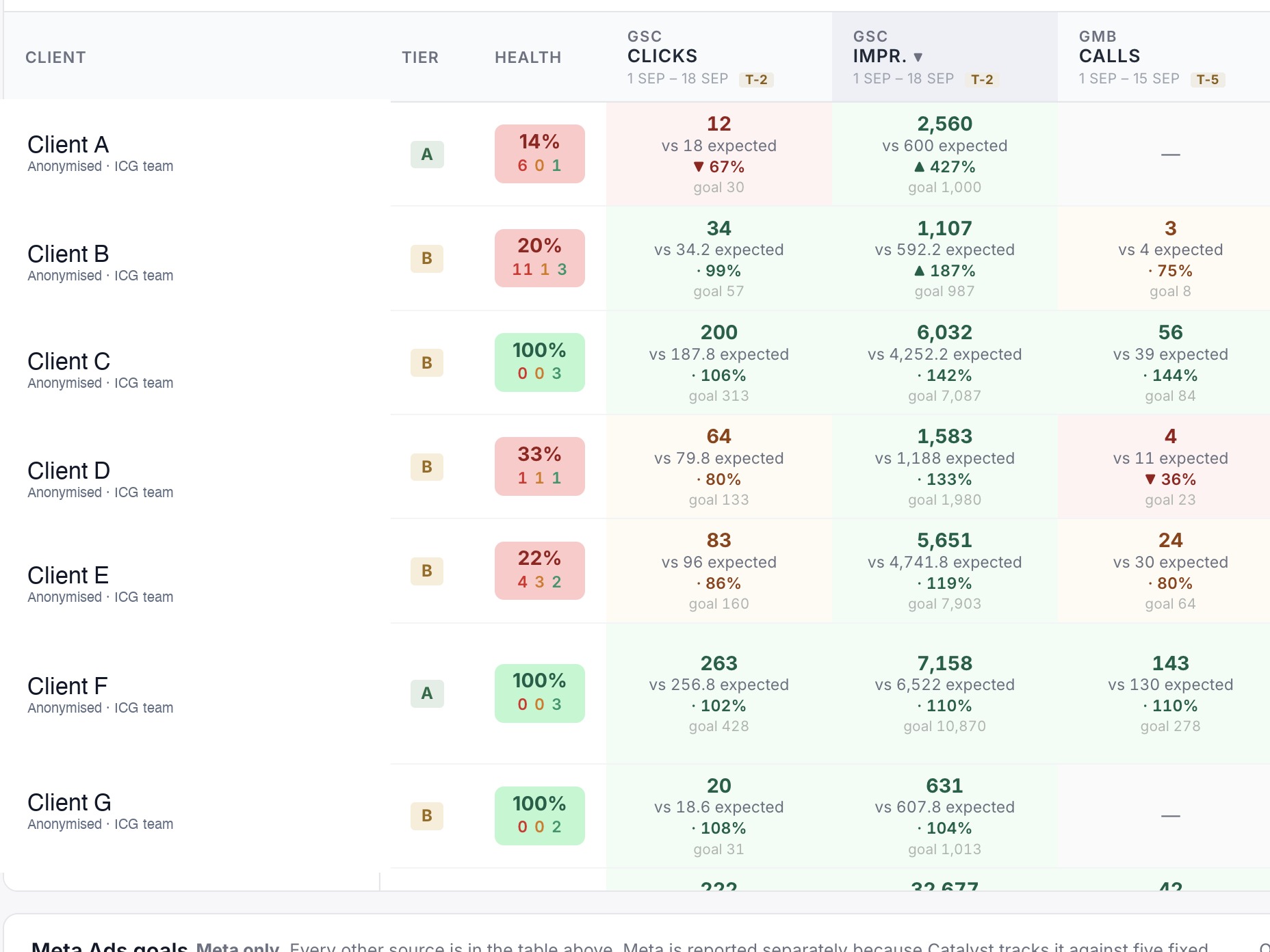
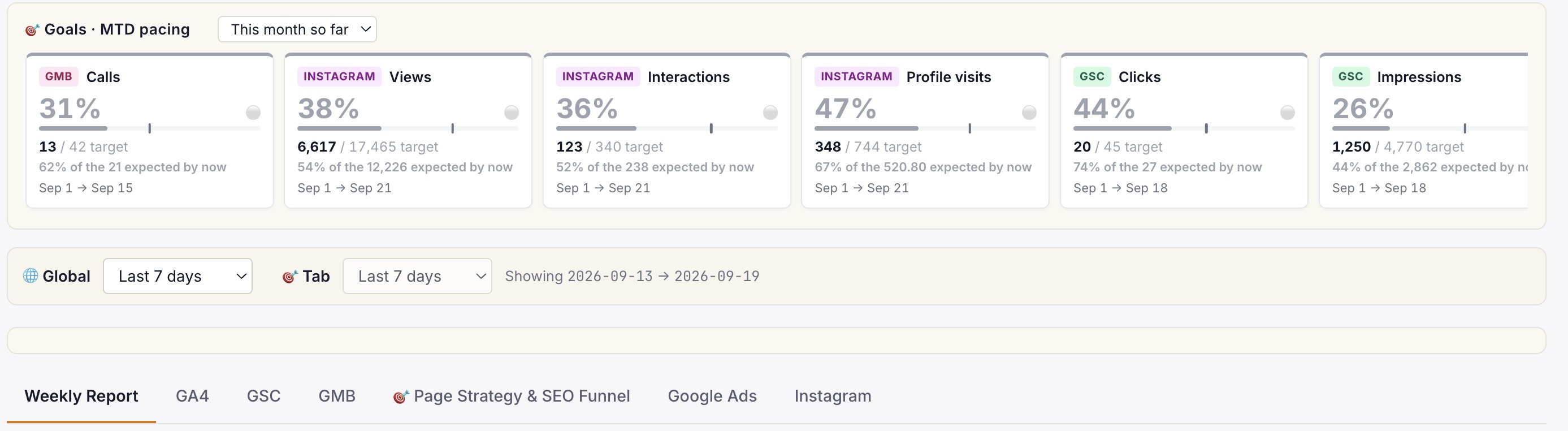
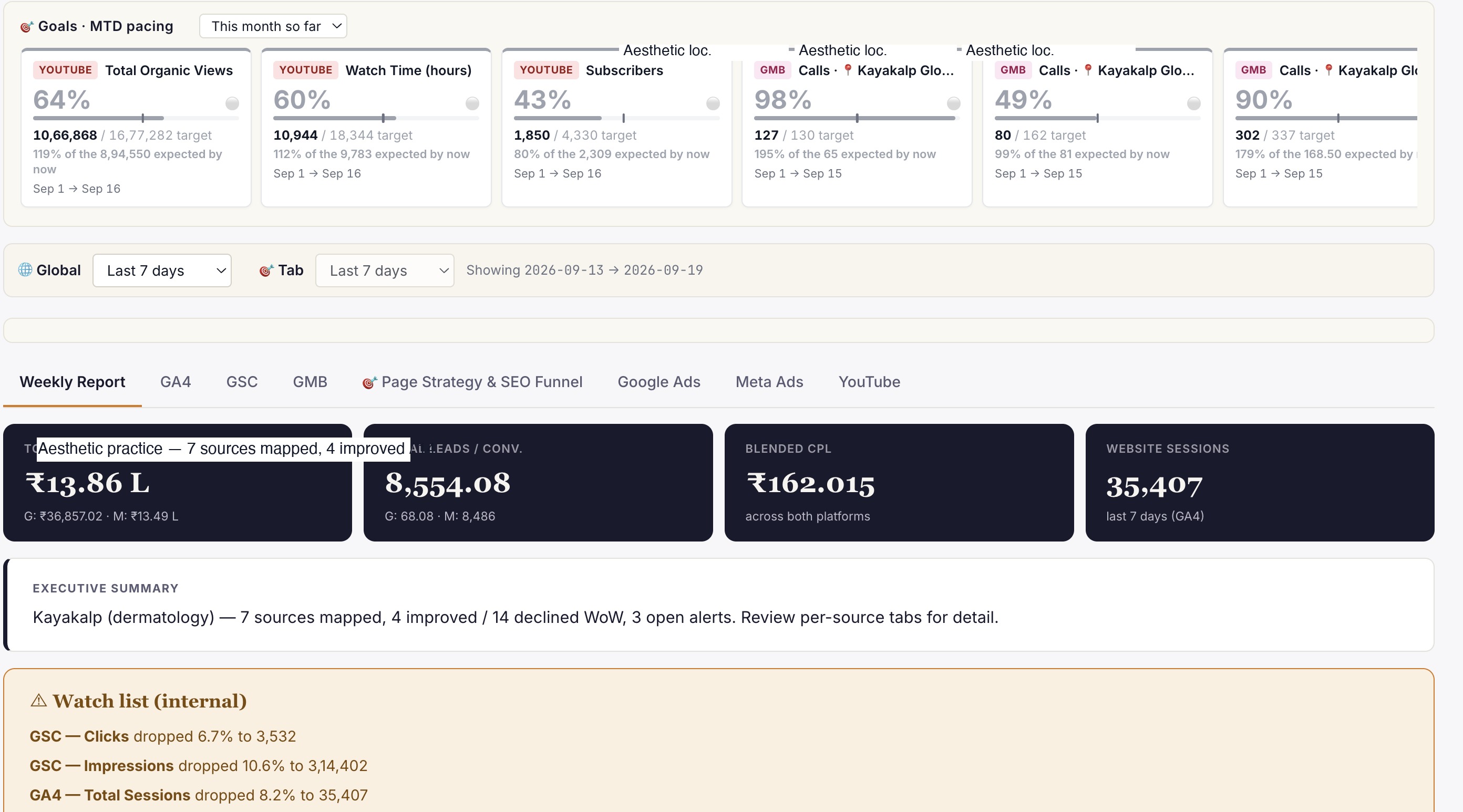
Live client dashboard. GSC, GA4, Google Ads, Meta Ads, IVR calls in one view. Login anytime, not monthly.
Phoenix
Clinic revenue intelligence over your PMS. Daily action queue: Prevent Loss, Maintain & Engage, Grow Revenue. Multi-centre rollout.
Or book a free 30-min audit to see all three in action on your account.
Healthcare brands
that already run on ICG.
A representative slice of the 150+ healthcare brands ICG has delivered for across India. Most engagements remain under NDA.


What ICG clients say · on video.
"Mental health marketing requires a different sensitivity. ICG built compliance-aware campaigns that respect both patients and our..."
"Bariatric surgery patients need a long consideration cycle. ICG built a content + paid system that respects that timeline."
"Working with ICG felt like working with an in-house growth team that happens to specialise in healthcare."
Need help operationalising this?
Every ICG service is healthcare-only, NMC + DPDP-aware, and built around the patient-research patterns that drive Indian healthcare growth in 2026.
Every practice welcome — packages from ₹20,000/mo.
Goals-Driven engagements · Performance-Linked Payout Models available
More from
ICG.
Hindi and regional-language SEO means publishing proper pages in the languages your patients search in, on their own URLs and linked with hr...
A new pharma brand in India should start digital work before launch, built around who it may legally address. This six-month plan covers pro...
Hospitals and clinics in India can still advertise after the NMC's 6 October 2026 guidelines, but only with factual, verifiable information....
Stop guessing.
Book a Diagnostic.
30 minutes. Free. With the AI-powered healthcare-only marketing agency 150+ brands already run on. No slides, no pitch, no hard close.


