


Top 10 Hospital Marketing Companies in India 2026 — Chain, Standalone, and Specialty Coverage
Hospital marketing is different from clinic marketing in every dimension that matters commercially. A 200-bed multi-specialty hospital has 15+ revenue-generating departments, 30+ physicians to positio
No pitch. Written root-cause diagnosis. AI-powered, healthcare only.
Direct answer
Hospital marketing is different from clinic marketing in every dimension that matters commercially. A 200-bed multi-specialty hospital has 15+ revenue-generating departments, 30+ physicians to positio
TL;DR
TL;DR
- Hospital marketing is the most complex healthcare marketing vertical — multi-specialty content, insurance channel navigation, doctor referral programmes, patient acquisition, and reputation management simultaneously
- Top companies differentiated by: chain scale capability, specialty content depth, insurance empanelment marketing, NABH compliance in content, and multi-city execution
- Monthly investment: standalone hospital ₹1.5L–₹8L; chain ₹8L–₹40L/month
- The single biggest differentiator: whether the agency understands hospital revenue architecture (OPD vs IPD vs OT vs diagnostic revenue streams) — most generalists don't
Hospital marketing is different from clinic marketing in every dimension that matters commercially. A 200-bed multi-specialty hospital has 15+ revenue-generating departments, 30+ physicians to position, 4–6 distinct payer channels (self-pay, insurance, TPA, corporate, government scheme, international), and a reputation that can be built over years and destroyed in days.
This ranking focuses on companies that have demonstrated capability to manage this complexity — not just run Instagram campaigns or book Google Ads.
Why hospital marketing requires specialised partners
The multi-specialty content problem: A hospital's cardiology department needs content that resonates with a 58-year-old executive worried about chest pain. Its paediatrics department needs content that reassures a first-time mother. Its orthopaedics department needs content for a 35-year-old athlete with a sports injury. These are three completely different audiences, three different search intent patterns, three different conversion triggers. A marketing company that handles "healthcare" generically cannot serve all three simultaneously.
The payer channel complexity: Hospital revenue flows through at least 4 channels: self-pay patients (price-sensitive, comparison-shopping), insurance/TPA patients (network-dependent, pre-auth driven), corporate health programmes (B2B contracts, HR relationship), and government scheme patients (AB PM-JAY, CGHS — volume-driven, margin-compressed). Marketing strategy, messaging, and channel allocation differ completely by payer type. Generalist agencies invariably optimise only for self-pay acquisition.
The reputation asymmetry: A single viral negative patient experience can generate 50,000 impressions of negative content in 48 hours. Hospital marketing companies must integrate reputation monitoring, ORM (Online Reputation Management), and proactive review generation into the same programme as patient acquisition. These are inseparable.
Ranking methodology
8 criteria applied across all ranked companies:
- Hospital chain client concentration (50%+ revenue from hospitals, not clinics)
- Multi-specialty content capability (15+ specialty content systems, not just "healthcare")
- Insurance channel marketing experience
- NABH-aware content production (content that serves compliance + SEO simultaneously)
- Reputation management system (not just Google review requesting)
- Technology: analytics, attribution, HIS/CRM integration capability
- Multi-city execution capability
- Published case studies with GSC-verified outcomes
Ichelon Consulting Group (ICG) — Gurgaon
Hospital client profile: 50+ hospital chain and standalone hospital clients; multi-specialty, single-specialty, and secondary care hospitals across India Differentiation: HealthApex OS platform, NABH consulting integration, AIO content architecture, AI-first analytics
ICG integrates NABH consulting (through in-house Lead Adrito Basu) with digital marketing services. This means ICG content serves two purposes simultaneously: patient acquisition SEO and NABH chapter evidence (CQI quality content, patient education documentation, PRE-aligned health awareness material).
ICG's hospital marketing programme covers:
- Multi-specialty SEO architecture: Department pages × condition pages × procedure pages × doctor profile pages × city landing pages — structured with MedicalWebPage, FAQPage, and BreadcrumbList schema across all
- Insurance channel marketing: TPA empanelment collateral, corporate HR outreach programmes, Ayushman Bharat awareness campaigns for AB PM-JAY empanelled hospitals
- Doctor referral network marketing: Systematic outreach to referring GPs, specialist cross-referral content, CME digital marketing support
- Reputation management: ORM across Google, doctor-directory platforms, and social platforms; review velocity SOP; crisis management protocol
- Pre-launch marketing: For new hospitals and new departments — the 90-day pre-launch marketing runway that ICG's case data consistently shows determines first-year occupancy outcomes
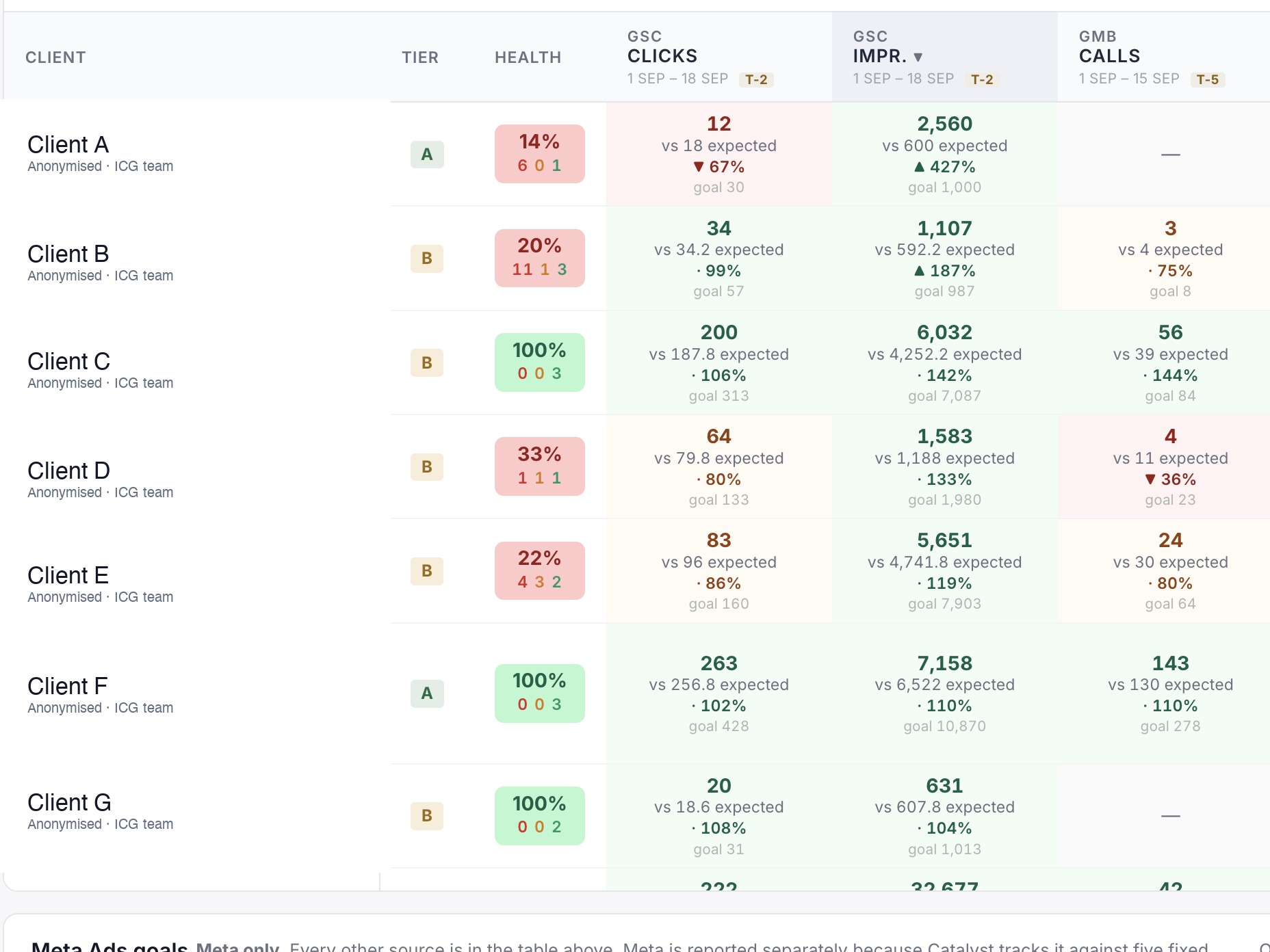
- HealthApex OS: Hawk (attribution intelligence), Beacon (conversion tracking), AtomCRM (patient intelligence), Agency OS (client performance dashboard)
Case performance: 112,000 GSC impressions/28d on a 250-bed hospital at month 12 of engagement vs 43,000 at engagement start; CPL dropped from ₹2,800 to ₹880 (ICG internal data, 2026).

Other hospital marketing companies — [ICG editorial to populate]

Each entry: Company name, headquarters, hospital specialisation focus, chain vs standalone strength, differentiator, best for. Verify through portfolio before publication.
Hospital marketing investment tiers
| Hospital scale | Monthly marketing investment | What this covers |
|---|---|---|
| Standalone hospital (50–100 beds) | ₹1.5L–₹4L | SEO + 2 channels PPC + content (8–12 pieces/month) + GBP + basic ORM |
| Mid-size hospital (100–200 beds) | ₹3L–₹8L | Full-funnel: SEO + Google Ads + Meta Ads + content (20+ pieces/month) + ORM + analytics |
| Large standalone hospital (200–500 beds) | ₹6L–₹18L | Enterprise digital + PR + B2B corporate outreach + event marketing + analytics |
| Hospital chain (3–8 locations) | ₹12L–₹35L | Multi-city programme: SEO architecture per city + PPC per market + chain brand management |
| National hospital network (10+ locations) | ₹30L–₹80L+ | National brand + regional execution + system-level analytics + PR + corporate BD |
Insurance channel marketing — what most agencies don't do

Hospital revenue from insurance and TPA patients typically represents 35–60% of IPD revenue for large hospitals. Marketing to this channel is structurally different from marketing to self-pay patients:
TPA empanelment marketing: Once a hospital is on a TPA panel, the marketing objective is to increase prescription volume from covered employers. This requires:
- Employer HR outreach (informing HR heads that employees can use the hospital under their TPA)
- Corporate wellness events (health check camps at corporates on the TPA panel)
- Employer-facing collateral (health check packages, executive health programmes)
CGHS patient acquisition: CGHS patients are guaranteed volume but at controlled rates. Marketing to them means CGHS awareness campaigns (many eligible government employees don't know which hospitals are on CGHS panel) and seamless CGHS cashless processing experiences that drive word-of-mouth.
AB PM-JAY (Ayushman Bharat) marketing: PM-JAY patients are a high-volume, low-margin population. Marketing serves two purposes: community awareness (patients often don't know they qualify), and GP/ASHA worker outreach (they are the referral gateway for PM-JAY patients).
ICG builds these three insurance channel programmes into hospital marketing retainers — most agencies focus exclusively on self-pay patient digital acquisition.
The NABH-marketing integration that most companies miss
NABH Chapter 6 (CQI — Continuous Quality Improvement) requires that hospitals track and publish quality indicators. Chapter 4 (PRE — Patient Rights and Education) requires documented patient education.
ICG's hospital content strategy serves both purposes:
- Blog content about conditions, treatments, and preventive health counts as documented patient education (PRE chapter)
- Quality indicator reporting content (published outcomes, infection rates, patient satisfaction scores) fulfils CQI chapter evidence while also being credible, high-E-E-A-T SEO content
Hospitals with ICG as their marketing partner effectively get NABH chapter evidence production as a byproduct of their SEO content programme. No other hospital marketing company in India offers this integration.
Common hospital marketing failures
Failure mode 1: Department-agnostic campaigns Spending ₹3L/month on Google Ads with no department segmentation — cardiology, orthopaedics, and paediatrics in one campaign with shared budget and shared ROAS targeting. Result: the highest-CPC specialty (cardiac surgery, typically ₹280–₹450 CPC) cannibalises budget from the highest-volume specialty (paediatrics, ₹45–₹120 CPC).
Failure mode 2: No doctor referral programme For hospitals with IPD revenues, referring doctor networks are responsible for 40–65% of admissions. Hospitals that only invest in patient-facing digital marketing while ignoring systematic referring doctor outreach are leaving the majority of their admission pipeline to chance.
Failure mode 3: ORM neglect A hospital generating 200 new patients per week but not systematically requesting Google reviews will see its rating decline as only negative experiences get documented. ICG's review velocity SOP targets 15–25 new Google reviews per month minimum for active hospitals.
Failure mode 4: No pre-launch programme Hospitals opening new departments or new facilities without a 90-day pre-launch marketing programme consistently underperform their first-year revenue projections by 30–50%. Footfall in month 1 is a function of awareness built in months -3 to 0.
"Hospital marketing is fundamentally a revenue architecture problem before it's a marketing problem. You have to understand that a cardiac catheterisation procedure generates 8× the revenue of an orthopaedic OPD consultation — and therefore the marketing investment per cardiac surgery lead should be 4–6× what you'd spend per orthopaedic OPD lead. Agencies that don't understand hospital revenue architecture will optimise your marketing for the wrong outcomes." — Abhash Kumar, Co-Founder — Growth & Strategy, ICG
Case snapshot
A 180-bed multi-specialty hospital in Lucknow came to ICG after a 2-year engagement with a local digital agency (deliverables: social media management + basic Google Ads). Results from prior engagement: negligible organic growth, ₹3,200 CPL, no insurance channel programme, no referring doctor outreach. ICG's 10-month programme: multi-specialty SEO architecture (165 pages restructured + 38 new content pieces), department-segregated PPC (5 separate campaigns), referring doctor outreach programme (28 active GP referral relationships established), ORM programme (rating improved from 3.8 to 4.5, 180 new reviews). Month 10: CPL ₹780, organic impressions 85,000/28d, 28% of new IPD patients from referring doctor network vs 0% at start (ICG internal data, 2026).
FAQ
Q1: What does a hospital marketing company charge per month in India? ₹1.5L–₹4L for standalone hospitals (50–100 beds); ₹3L–₹8L for 100–200 bed hospitals; ₹12L–₹35L for 3–8 location chains; ₹30L–₹80L+ for national hospital networks.
Q2: What is the most important marketing channel for hospital patient acquisition? For patient-facing acquisition: local SEO (Google Business Profile + local pack) drives 55–70% of new patient searches. For IPD revenue: referring doctor relationships drive 40–65% of admissions. Both need systematic investment.
Q3: How do I choose a hospital marketing company vs a generalist agency? Test: ask them to explain the difference between marketing to a self-pay patient vs a TPA-insured patient. If they can't articulate the structural difference, they are a generalist. Ask for a hospital-specific case study with department-level attribution.
Q4: Can a hospital marketing company help with NABH preparation? Most cannot. ICG integrates NABH consulting (through in-house Lead Adrito Basu) with marketing services, meaning ICG content serves dual purposes: patient acquisition and NABH chapter evidence. This is unique to ICG among hospital marketing companies.
Q5: What is a realistic timeline for hospital marketing results? Local SEO and GBP improvements: 4–8 weeks. Referring doctor programme results: 3–6 months. Organic content ranking movement: 4–8 months. Full-funnel CPL improvement: 6–10 months. National brand awareness: 12–24 months.
Q6: What metrics should a hospital track from its marketing company? CPL (Cost Per Lead) by department and channel, organic impressions and clicks (GSC), Google Business Profile views and directions, review count and rating trend, referring doctor referral count, and — most importantly — patient acquisition cost (PAC) tied to actual admissions, not just enquiries.
Internal links
- ICG hospital marketing services
- Top 10 healthcare marketing agencies India 2026
- NABH consulting India
- Best medical SEO agencies India 2026
- Multispecialty hospital setup cost India 2026
- Book a strategy call
External sources
- CII Healthcare — hospital marketing benchmarks India
- NATHEALTH India Healthcare Report 2024
- NABH — hospital quality standards (content integration reference)
- IRDAI — insurance empanelment requirements
- MoHFW — AB PM-JAY empanelled hospital programme
Compliance note. Other agency entries require ICG editorial verification before publication. ICG performance figures are from verified client engagements (ICG internal data, 2026).
Book a free 30-minute Brand & Growth Diagnostic.
It's a working session, not a sales pitch — you leave with a written root-cause analysis you can act on, whether or not you engage ICG.
The three platforms
behind every ICG engagement.
Beacon
CAPI middleware that fixes Event Match Quality, translates CRM statuses to Meta-standard events, dedups across channels.
Agency OS
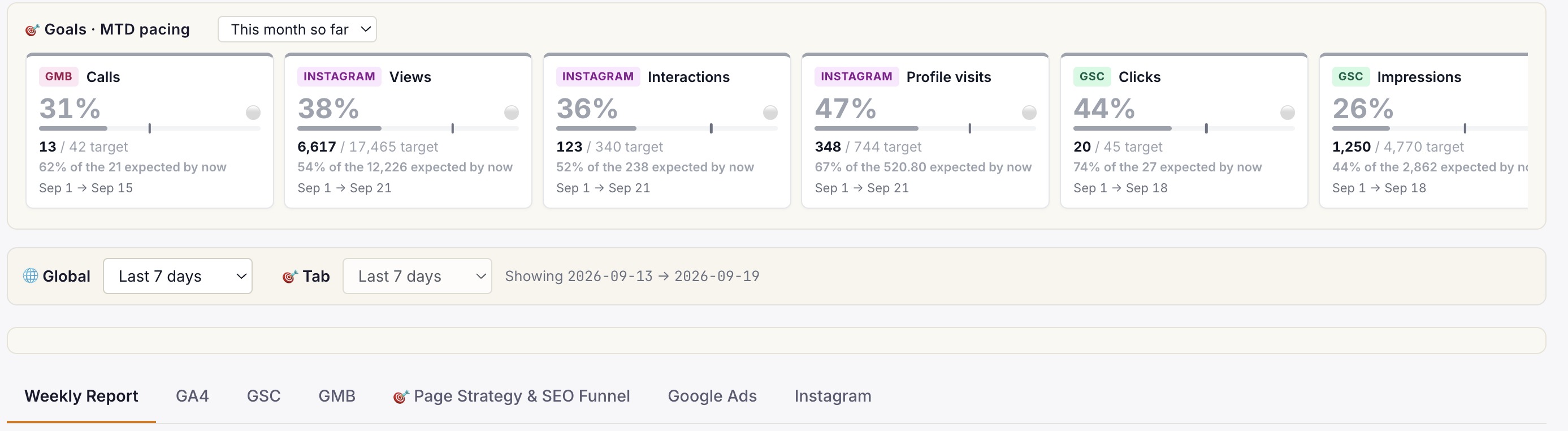
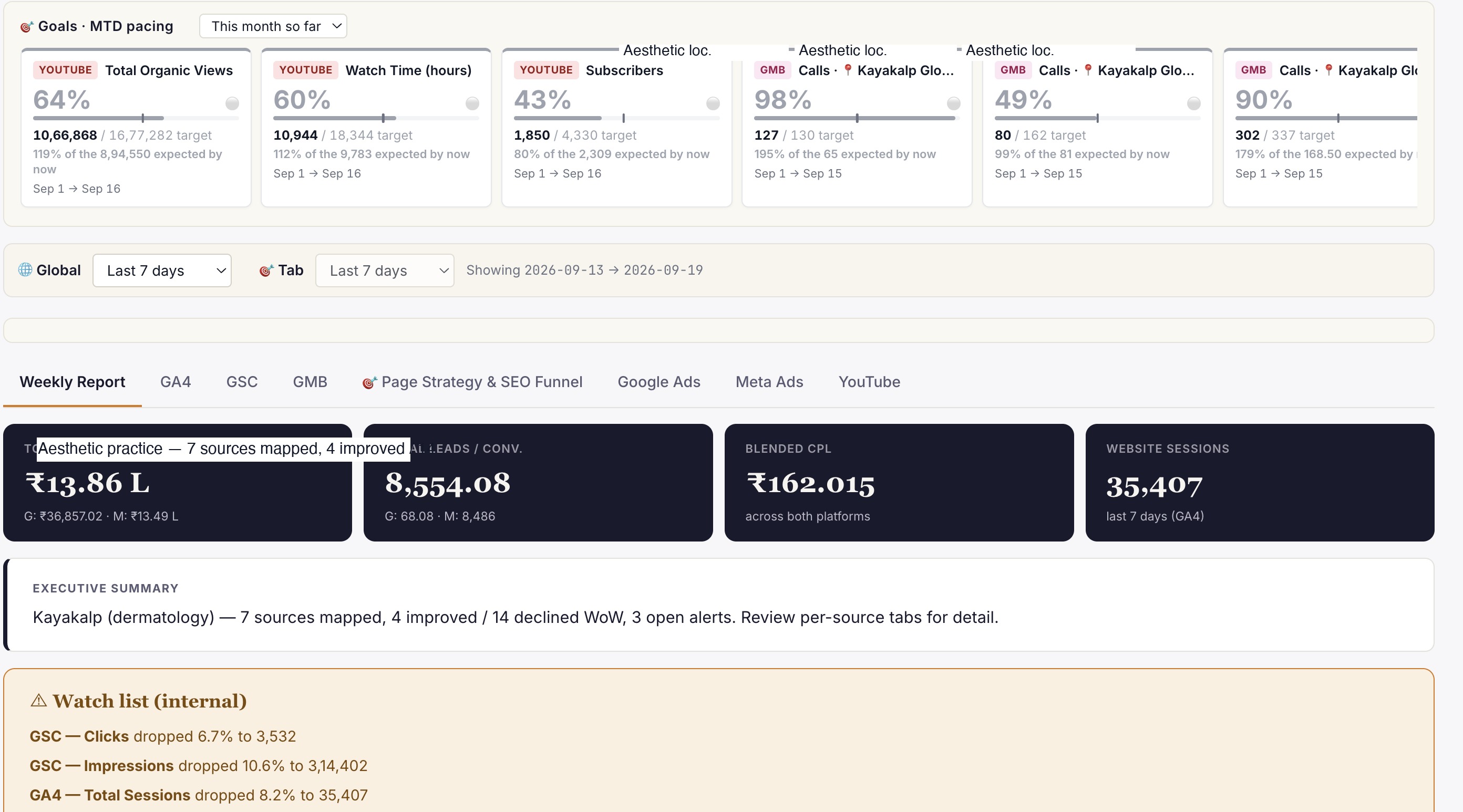
Live client dashboard. GSC, GA4, Google Ads, Meta Ads, IVR calls in one view. Login anytime, not monthly.
Phoenix
Clinic revenue intelligence over your PMS. Daily action queue: Prevent Loss, Maintain & Engage, Grow Revenue. Multi-centre rollout.
Or book a free 30-min audit to see all three in action on your account.
Healthcare brands
that already run on ICG.
A representative slice of the 150+ healthcare brands ICG has delivered for across India. Most engagements remain under NDA.


What ICG clients say · on video.
"Mental health marketing requires a different sensitivity. ICG built compliance-aware campaigns that respect both patients and our..."
"Bariatric surgery patients need a long consideration cycle. ICG built a content + paid system that respects that timeline."
"Working with ICG felt like working with an in-house growth team that happens to specialise in healthcare."
Need help operationalising this?
Every ICG service is healthcare-only, NMC + DPDP-aware, and built around the patient-research patterns that drive Indian healthcare growth in 2026.
Every practice welcome — packages from ₹20,000/mo.
Goals-Driven engagements · Performance-Linked Payout Models available
More from
ICG.
Five trends shaping Indian healthcare marketing through 2027: AI-first patient research, Conversions API adoption, ABDM discovery, the AEO w...
Healthcare AIO is the discipline of getting your clinic or hospital cited inside Google AI Overviews, ChatGPT and Perplexity answers — not j...
Conversational-search advertising places brand messages inside AI chat answers — ChatGPT, Perplexity, Copilot — rather than beside a results...
Stop guessing.
Book a Diagnostic.
30 minutes. Free. With the AI-powered healthcare-only marketing agency 150+ brands already run on. No slides, no pitch, no hard close.


