


Google Knowledge Panel for healthcare clinics in India: what triggers it, how to claim it, and how to keep it accurate
Google Knowledge Panel for a healthcare clinic in India is the branded right-rail card that appears when someone searches your clinic's name. This piece covers what triggers it, how Wikidata and structured data build entity strength, how to claim ownership, and how to keep the panel accurate.
No pitch. Written root-cause diagnosis. AI-powered, healthcare only.
Direct answer
Google Knowledge Panel for a healthcare clinic in India is the branded right-rail card that appears when someone searches your clinic's name. This piece covers what triggers it, how Wikidata and structured data build entity strength, how to claim ownership, and how to keep the pa...
TL;DR

Google Knowledge Panel for a healthcare clinic in India is the branded card that appears on the right side of the search result — or at the top of a mobile result — when a prospective patient searches your clinic's exact name. Owning that panel, and keeping its information accurate, has become one of the most under-managed reputation levers in Indian healthcare marketing. ICG runs healthcare local SEO for 150+ Indian clinics and hospitals and encounters the same recurring failure across mid-size chains: the Knowledge Panel exists but nobody claimed it, or it exists with wrong information nobody has corrected, or it never appeared at all because the entity signals were too weak to trigger it. This piece breaks down what actually triggers a Knowledge Panel, how Wikipedia and Wikidata factor in, how structured data builds entity strength, and how to claim and maintain the panel once it exists.
What a Knowledge Panel actually is
A Knowledge Panel is Google's summary card for a specific real-world entity — a person, an organisation, a place, a product — pulled from the Google Knowledge Graph. For a healthcare clinic in India, the panel typically includes the clinic name, a photo, the address, the phone number, the website link, opening hours, categories, and — depending on entity strength — a Wikipedia summary paragraph, founding date, list of key doctors, and social profile links.
The distinction that matters for clinic owners: a Knowledge Panel is not the same as a Google Business Profile, though the two are linked. The GBP is a business listing you claim and manage through Google Business Profile Manager. The Knowledge Panel is Google's consolidated entity view, populated from the GBP plus many other sources including Wikipedia, Wikidata, the clinic's website, structured data across the web, and authoritative directory citations. A strong GBP produces the local map pack listing; a strong entity produces the Knowledge Panel.
A single-location clinic might not have a distinct Knowledge Panel at all — the GBP-driven local pack card fills that role. A mid-size chain typically has both: individual GBP-driven cards for each location, plus a brand-level Knowledge Panel for the chain as an organisation. A hospital or well-known clinic group with sufficient entity strength usually has a full Knowledge Panel with a Wikipedia paragraph, key people listed, and social profile links surfaced.
What triggers a Knowledge Panel for a healthcare clinic
Google does not publish a checklist for Knowledge Panel eligibility, but observation of thousands of Indian healthcare entities produces a reliable pattern. A Knowledge Panel is triggered when Google is confident enough about the entity to consolidate its information into a summary card. That confidence is built from four kinds of signal, each of which raises the probability of a panel appearing.
Entity presence in authoritative sources is the strongest single trigger. A clinic listed in NABH's accredited facility directory, in the NMC or the state medical council registry, in FOGSI or IMA or another established medical body directory, and in reputable news publisher archives — that combination produces high entity confidence even without Wikipedia.
Consistent structured data across the clinic's own web properties is the second trigger. A website with a MedicalOrganization or Hospital JSON-LD block whose name, address, telephone, sameAs graph, and hasCredential fields are populated cleanly reads to Google as an entity that knows its own identity.
A Wikipedia article or a Wikidata entry is the third trigger. Wikipedia is not required — many Indian healthcare Knowledge Panels exist without one — but a Wikipedia article materially strengthens the entity, and a Wikidata entry (which has a much lower notability bar than Wikipedia itself) is a realistic option for most mid-size chains and hospitals.
Search volume and query pattern is the fourth trigger. Google tends to surface Knowledge Panels for entities that receive branded search volume — people specifically typing "Sunrise Fertility Bengaluru" rather than "IVF clinic near me". Sustained branded search volume signals that the entity is worth summarising.
The Wikipedia and Wikidata question
Every mid-size healthcare chain and hospital in India eventually asks whether to pursue a Wikipedia article. The honest answer requires distinguishing two things.
Wikipedia has a strict notability standard. A clinic must have received substantial coverage in independent, reliable, secondary sources (mainstream press coverage, medical journal coverage, non-promotional industry coverage) before an article about it is likely to survive Wikipedia's deletion process. Attempting to create an article for a clinic that does not meet the notability bar wastes time and can produce reputational damage — deletion discussions are public, and paid editing is prohibited and often exposed. For a single-location clinic or a small group, Wikipedia is almost always the wrong target.
Wikidata is a different story. Wikidata is a structured knowledge base with a much lower notability bar — an entity with a stable identifier and verifiable basic facts (name, location, founding year, category) can have a legitimate Wikidata entry without meeting Wikipedia's notability standard. A well-maintained Wikidata entry with links back to the clinic's website, GBP, and social profiles is a real entity-strength signal that Google draws on for Knowledge Panel construction.
For a mid-size chain, the sequenced approach is: build the Wikidata entry first, use consistent structured data on the website to reinforce it, pursue reputable earned press coverage that could later support a Wikipedia article, and only attempt a Wikipedia article once the notability threshold is credibly met. Attempting the article too early produces failure and damage; pursuing it after real notability produces a durable entity signal.
Structured data signals that build entity strength
Structured data is the direct lever a clinic controls to strengthen its entity in Google's Knowledge Graph. The schema types that materially help for a healthcare organisation in India are MedicalOrganization (or the more specific Hospital, MedicalClinic, Dentist), Physician for named doctors, and Person schema for key executives where applicable.
Every clinic website should have a MedicalOrganization or equivalent JSON-LD block on the homepage with the following populated: name (canonical brand name), legalName, url, logo, image, address (as a PostalAddress with streetAddress, addressLocality, addressRegion, postalCode, addressCountry), telephone, email, medicalSpecialty, hasCredential for NABH or other accreditations, member or memberOf for industry-body memberships, and a sameAs array explicitly listing Facebook, LinkedIn, YouTube, Wikidata, doctor-directory profiles, and any other primary directory presence.
The sameAs array is under-appreciated. It is the explicit statement to Google that the entity described on this page is the same entity as the one at each of those URLs. When Google can traverse a consistent sameAs graph, entity confidence rises substantially. When the sameAs graph is missing or inconsistent, Google has to guess whether your website and your Facebook page and your LinkedIn page describe the same entity.
The related piece Schema markup for healthcare local SEO in India covers each schema type with sample JSON-LD ready to adapt.
Brand authority and mentions across the web
Beyond schema on your own site, the Knowledge Panel draws heavily on what the rest of the web says about you. Two categories of signal matter most.
Citations in authoritative directories — the NABH accredited-facility list, the state medical council registry, industry-body member directories (IMA, FOGSI, IRIA, ISAR by specialty), reputable hospital directories, and legitimate insurance panel provider directories. These are name-address-phone consistent citations from sources Google recognises as authoritative for the healthcare sector.
Earned press coverage in reputable publishers — regional and national mainstream press, medical-trade publications, business publishers covering healthcare, and specialty publications relevant to the clinic's focus. Guest columns by the clinic's doctors in reputable publishers count strongly; press releases distributed through wire services do not count nearly as much because Google discounts wire-service repetition.
The authority signal quality matters more than quantity. Ten citations from directory scrapers and low-quality health blogs are worth less than one citation from a NABH member listing, one from a state medical council registry, and one from a reputable business publisher's hospital ranking.
Claiming your Knowledge Panel
Once a Knowledge Panel exists for your clinic, Google offers a claim process that allows the entity's legitimate representative to edit certain fields, suggest updates, and control the featured image. The claim process requires proof of association — typically via a Google account associated with the clinic's official website or its verified Google Business Profile.
The steps: search for your clinic's exact name to surface the Knowledge Panel; scroll to the bottom of the panel and click "Claim this knowledge panel"; sign in to a Google account that is either the owner of the verified Google Business Profile for the entity or associated with the clinic's official website through Search Console or a verified social profile; complete the verification steps Google prompts for. Once claimed, the panel shows a "verified by owner" indicator, and the claimed party can suggest edits to certain fields, upload a featured image, and manage the linked social profiles.
Claim does not equal full editorial control. Google retains editorial authority over most fields — the claimed party can suggest changes, but Google validates suggestions against its own sources before applying them. For fields Google draws from Wikipedia, Wikidata, or authoritative third-party sources, corrections have to happen at the source. Correcting a wrong founding year on a Knowledge Panel that draws from Wikidata requires fixing the Wikidata entry, not editing the panel directly.
Updating information after the panel exists
Most Knowledge Panel maintenance work is correction and refresh rather than initial claim. The failure modes ICG encounters most often on client audits: a wrong phone number that survived a switch from an old landline to a new virtual number, a wrong address that survived a clinic relocation, a founding year that reflects an older entity the current chain evolved from, key people listed who left the practice years ago, a featured image that is either badly cropped or of an old clinic frontage.
Each of these has a different fix depending on the underlying source. Address and phone corrections usually flow from cleaning the Google Business Profile, updating the website's MedicalOrganization schema, and correcting the top directory citations in parallel — Google reconciles the sources and updates the panel. Founding-year corrections often require Wikidata edits. Wrong-person or outdated-doctor corrections require both Wikipedia/Wikidata edits (where those sources are the origin) and updates to the clinic's Person schema and Physician profile pages on the website. Featured image control is available through the claim interface for verified owners.
The maintenance cadence for a chain with active Knowledge Panels: quarterly review of each panel's displayed fields, immediate correction workflow when material inaccuracies are found, and structured data audits twice a year to catch drift between the website's schema and the panel's displayed data.
Reputation impact and what breaks when information is wrong
An inaccurate Knowledge Panel is often the first impression a prospective patient or B2B buyer has of your brand. The reputation impact of a wrong phone number is direct — the call goes to the wrong destination and the prospect converts to a competitor. The impact of a wrong address is worse — a patient who drives to the old location and finds the clinic gone rarely tries again. The impact of an outdated key-people list is subtler but consequential — a hospital administrator evaluating your organisation sees a former CEO listed and questions the current leadership stability.
Positive impact of an accurate, complete Knowledge Panel: brand searches return a professional, well-populated card that signals legitimacy and scale; the featured image controls first impression; the sameAs graph directs prospective patients and buyers to the clinic's controlled properties rather than to third-party review aggregators or scraper sites; the panel's stability signals an established, actively-managed entity to both search users and to Google's ranking systems.
The tool ICG uses to run this at scale: Angryturtle
ICG runs local SEO and GBP intelligence for 150+ Indian healthcare brands using Angryturtle — our own AI-native GBP intelligence and management OS. The platform scores every profile 0-100 via a proprietary Rank OS model with five weighted dimensions (Relevance, Review Health, Freshness, Entity Authority, AIO Readiness), publishes edits, Posts, media, and review replies directly to Google, and includes Ask Maps AIO Readiness scoring for Google AI Overviews and ChatGPT visibility. The Entity Authority dimension specifically tracks the citation consistency and sameAs graph strength that feeds Knowledge Panel eligibility.

Available in two shapes: self-serve at ₹999/- per month for solo owners with 1-2 profiles, and ICG's managed service from ₹25,000/- per month where our healthcare specialists execute inside the same platform. Both are anchored in the Healthcare Local SEO Agency India pillar page which has full scope, methodology and pricing.
Book a demo on WhatsApp → or start a free trial at angryturtle.ai →
Related reading
- Healthcare local SEO agency India — the pillar service page
- Schema markup for healthcare local SEO in India — the structured-data foundation
- E-E-A-T signals for healthcare clinics in India — trust and authority foundations
- Perplexity visibility for Indian healthcare brands — the AI answer engine companion
- ChatGPT Search visibility for Indian healthcare brands — the ChatGPT companion
FAQ
What is the difference between a Google Knowledge Panel and a Google Business Profile card? The GBP card in the local pack is a business listing you claim and manage directly. The Knowledge Panel is Google's consolidated entity summary drawn from the GBP plus other sources including Wikipedia, Wikidata, structured data across the web, and authoritative directory citations. A strong GBP produces the local pack card; a strong entity produces the Knowledge Panel.
Can every healthcare clinic get a Knowledge Panel? No. Google produces a Knowledge Panel only when it has enough confidence in the entity to summarise it. Single-location clinics typically appear via a GBP-driven card rather than a distinct Knowledge Panel. Mid-size chains and hospitals with genuine entity strength — structured data, directory citations, industry-body listings, sometimes Wikidata or Wikipedia — usually can trigger one.
Do I need a Wikipedia article to get a Knowledge Panel? No. Many Indian healthcare Knowledge Panels exist without a Wikipedia article. Wikipedia is a strong contributing signal where it exists, but it is not a requirement. Wikidata (which has a lower notability bar) is a more accessible route for most mid-size chains.
How do I claim my Knowledge Panel? Search your clinic's exact name; scroll to the bottom of the panel; click "Claim this knowledge panel"; sign in with a Google account associated with your verified Google Business Profile or your website's Search Console; complete Google's verification steps. Once claimed, the panel shows a "verified by owner" indicator.
Can I edit any field on my Knowledge Panel once it is claimed? Only some fields. Google retains editorial authority over most content and validates all suggestions against its own sources. Fields drawn from Wikidata or Wikipedia need to be corrected at the source rather than through the panel's suggest-edit flow. Featured image, phone number, address, and hours are usually more directly editable through the claim.
How do I correct wrong information on a Knowledge Panel that draws from Wikidata? Edit the Wikidata entry directly. Wikidata is community-editable; corrections go through a review process but usually clear within days for uncontested factual updates. Once Wikidata is corrected, Google eventually reconciles and updates the panel.
Does the Knowledge Panel affect Google local pack ranking? Indirectly. The entity strength that produces a Knowledge Panel also strengthens the GBP that drives local pack ranking. The two systems draw on overlapping signals — structured data consistency, citation quality, authoritative source presence — so investments in Knowledge Panel eligibility usually improve local pack performance as well.
What structured data has the biggest impact on Knowledge Panel eligibility? A complete MedicalOrganization or Hospital JSON-LD block on the homepage with a full sameAs graph linking to Facebook, LinkedIn, YouTube, Wikidata, doctor-directory profiles, and other primary profiles. The sameAs graph is the explicit statement to Google that these properties represent the same entity, and its completeness materially raises entity confidence.
How often should we audit our Knowledge Panel for accuracy? Quarterly review of the displayed fields is the practical cadence for chains and hospitals with active Knowledge Panels. Immediate corrective action when material inaccuracies (address, phone, key people, featured image) are found. Structured data audits twice a year to catch drift between the website's schema and the panel's displayed data.
Can ICG help our clinic build the entity strength to trigger a Knowledge Panel? Yes — this is part of the standard scope for the healthcare local SEO retainer, and Angryturtle's Entity Authority dimension quantifies the signal strength across citations, sameAs graph completeness, and directory presence. For chain and hospital clients specifically, ICG runs the sequenced program from structured data cleanup to citation building to Wikidata setup to earned press coverage.
Book a free 30-minute Brand & Growth Diagnostic.
It's a working session, not a sales pitch — you leave with a written root-cause analysis you can act on, whether or not you engage ICG.
The three platforms
behind every ICG engagement.
Beacon
CAPI middleware that fixes Event Match Quality, translates CRM statuses to Meta-standard events, dedups across channels.
Agency OS
Live client dashboard. GSC, GA4, Google Ads, Meta Ads, IVR calls in one view. Login anytime, not monthly.
Phoenix
Clinic revenue intelligence over your PMS. Daily action queue: Prevent Loss, Maintain & Engage, Grow Revenue. Multi-centre rollout.
Or book a free 30-min audit to see all three in action on your account.
Healthcare brands
that already run on ICG.
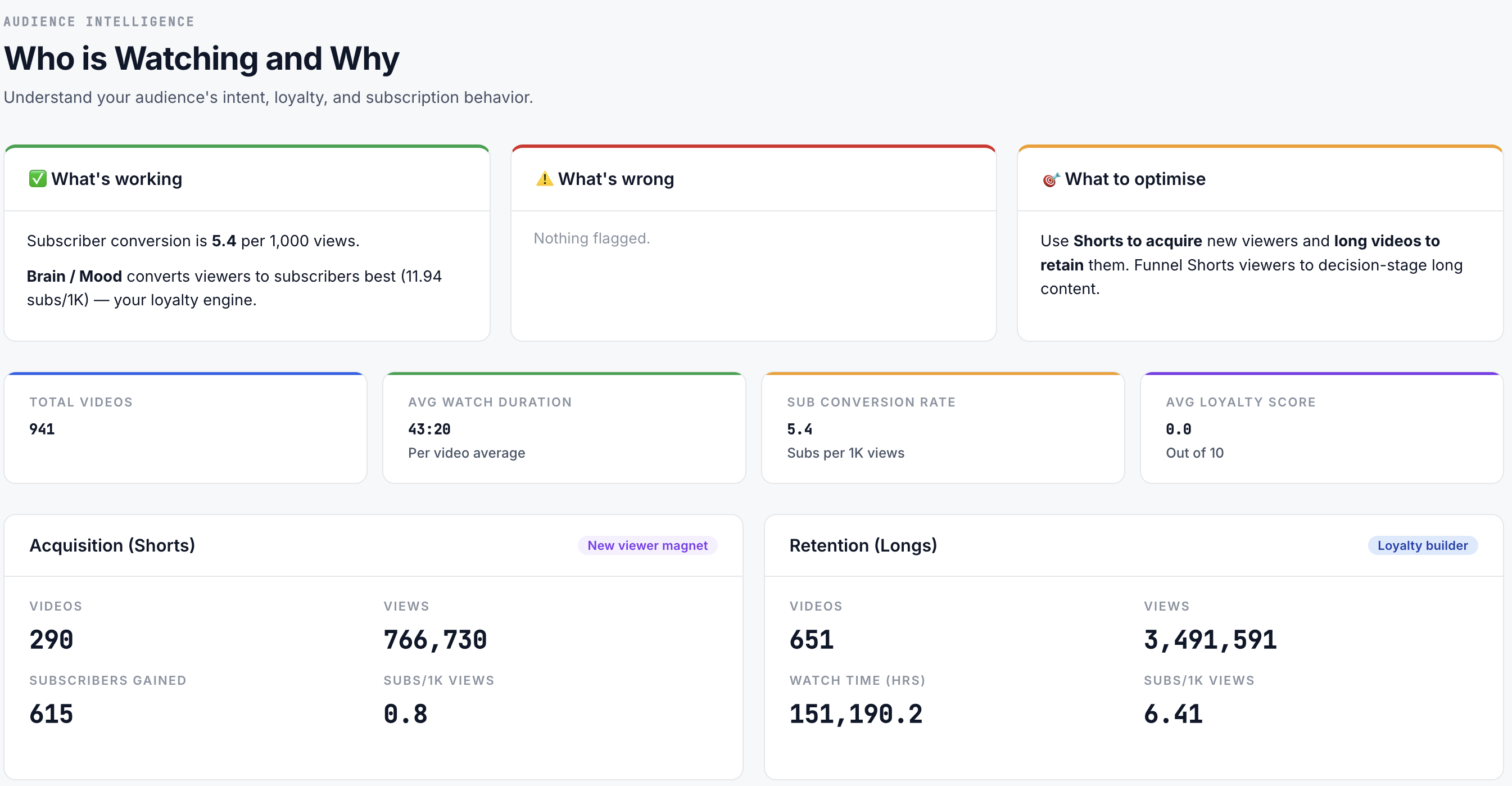
A representative slice of the 150+ healthcare brands ICG has delivered for across India. Most engagements remain under NDA.


What ICG clients say · on video.
"Scale up of organic channels and business consulting. ICG has absolute domain authority in their field."
"Working with ICG transformed how we acquire IVF patients in Gurgaon. They understand the fertility journey from inquiry to consult..."
"What Ichelon accomplished — they got all my ideas and worked over 3-4 months to create an amazing, super-customised website."
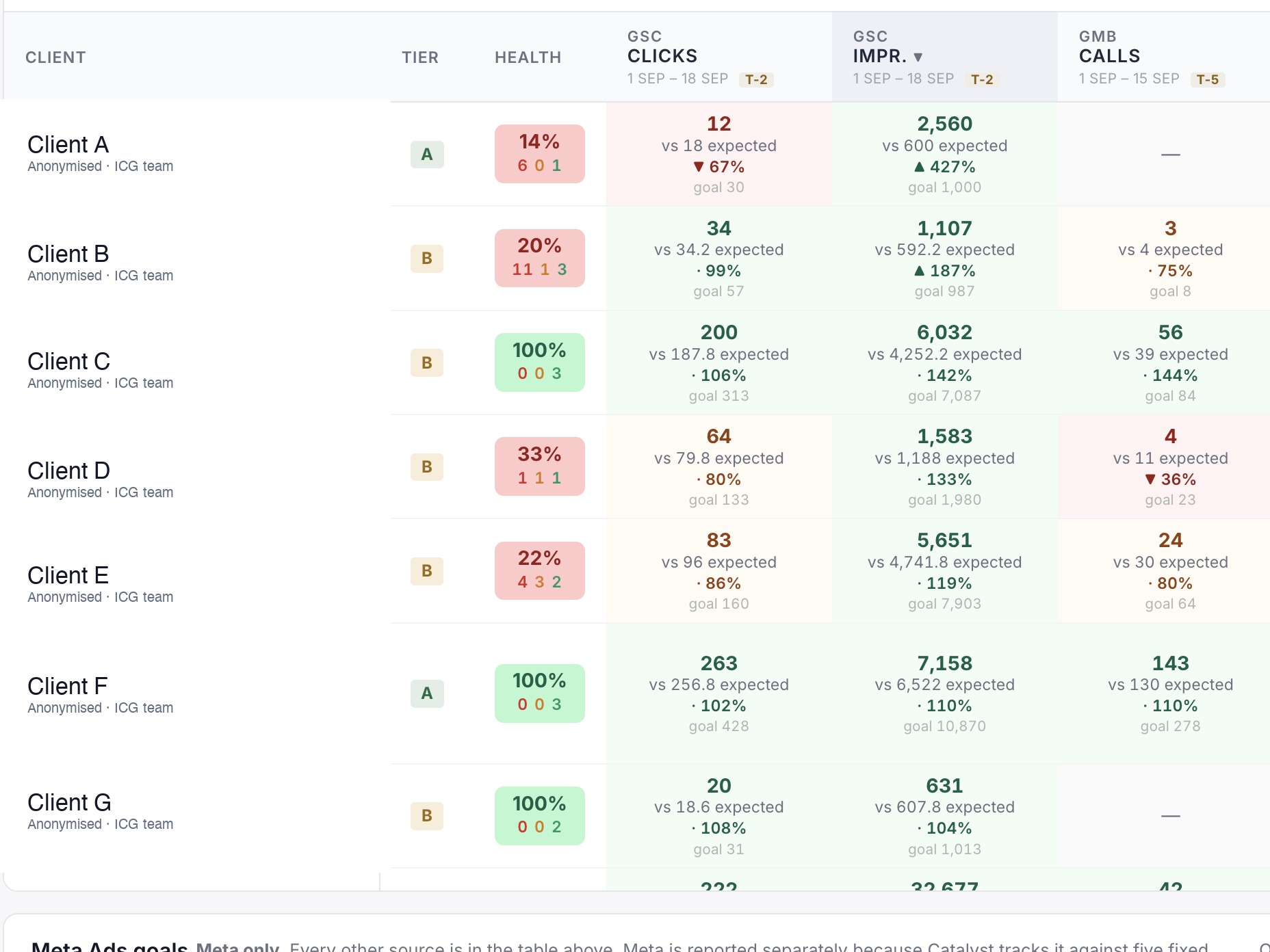
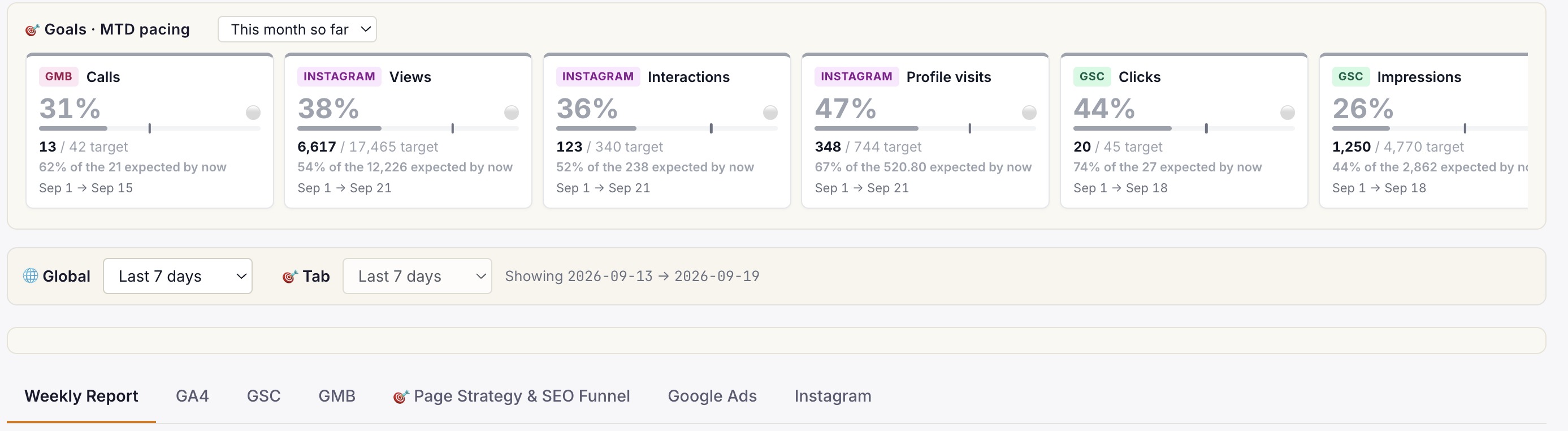
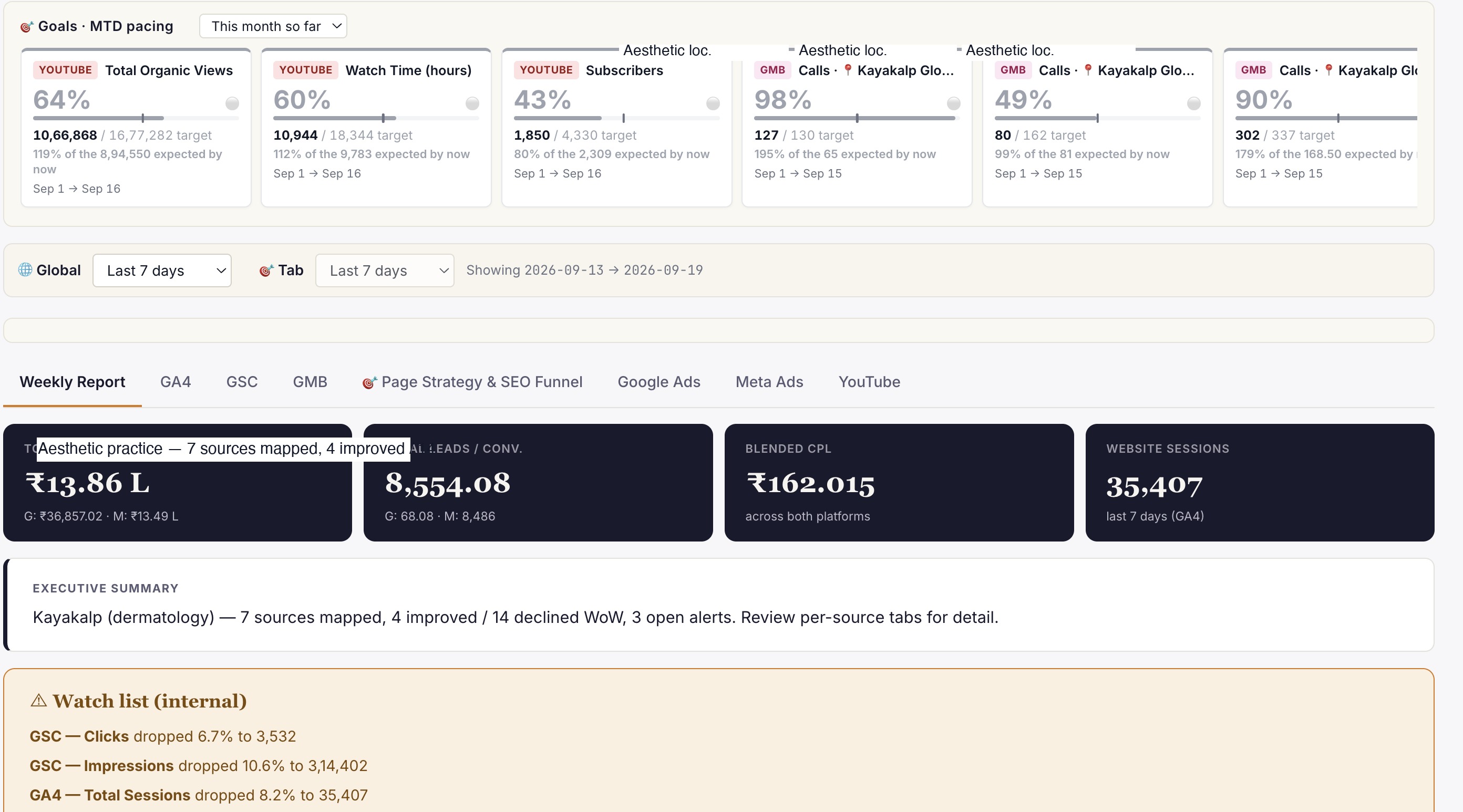
The intelligence stack behind this playbook.
Every ICG engagement runs on the Search Intelligence Trifecta — Angryturtle for GMB, SIE for search and AI Overview, YODA for YouTube. Live product screens below.
Need help operationalising this?
Every ICG service is healthcare-only, NMC + DPDP-aware, and built around the patient-research patterns that drive Indian healthcare growth in 2026.
Every practice welcome — packages from ₹20,000/mo.
Goals-Driven engagements · Performance-Linked Payout Models available
More from
ICG.
Five trends shaping Indian healthcare marketing through 2027: AI-first patient research, Conversions API adoption, ABDM discovery, the AEO w...
Healthcare AIO is the discipline of getting your clinic or hospital cited inside Google AI Overviews, ChatGPT and Perplexity answers — not j...
Conversational-search advertising places brand messages inside AI chat answers — ChatGPT, Perplexity, Copilot — rather than beside a results...
Stop guessing.
Book a Diagnostic.
30 minutes. Free. With the AI-powered healthcare-only marketing agency 150+ brands already run on. No slides, no pitch, no hard close.


