


Healthcare Meta Ads Creative Fatigue Detection (India, 2026): CPL Drift, Frequency, CTR Decay & Refresh Cadence
How ICG spots healthcare Meta ad creative fatigue in 48 hours — CPL drift, frequency, CTR decay, conversion drop — with refresh cadences per specialty.
No pitch. Written root-cause diagnosis. AI-powered, healthcare only.
Direct answer
How ICG spots healthcare Meta ad creative fatigue in 48 hours — CPL drift, frequency, CTR decay, conversion drop — with refresh cadences per specialty.
TL;DR

Creative fatigue is the single biggest reason healthcare Meta ad accounts in India quietly hemorrhage budget after a strong first month. The ad worked. Then the CPL crept up. Then the frequency climbed past 4. Then the CTR halved. By the time anyone noticed, the account had burnt through six weeks of what should have been the cheapest leads of the quarter. Across the 23+ accounts running on Meta Catalyst IQ, fatigue is the failure mode we catch the earliest and refresh the fastest — often inside a 48-hour window before it dents monthly CPL. This guide lays out the four signals that matter, the two Catalyst views that surface them (2-Day Comparative and the Creative Scoring Matrix), and the refresh cadence you should be running per specialty — from IVF at ₹632 CPL to hair transplant's brutal 3-week creative cycle.


What creative fatigue actually is (and isn't)
Creative fatigue is the point at which a specific ad — a single creative-copy-audience combination — stops earning its slot in the auction because the same people have seen it too many times. It is not the same as audience saturation, ad-set exhaustion, or seasonality. Those get blamed a lot. They are usually not the cause.

The clean definition we use inside Catalyst: creative fatigue is present when CPL rises by 20% or more over 7 days while frequency has moved up by at least 1.5 in the same window and CTR (link) has fallen by 15% or more. Two of the three, and you have a strong suspect. All three, and refresh is not optional — it is overdue.
Why this matters for Indian healthcare specifically: the target pools are smaller than most other verticals. An IVF campaign in Bangalore might be optimising against a matched audience of 180K–240K. A dental aligners campaign in South Delhi might be even narrower. Small pools burn creatives fast. What lasts 8 weeks for a D2C skincare brand might last 3 weeks for a hair transplant clinic.
Signal 1 — CPL drift (the money signal)
The first symptom that shows up on the P&L, and the one Rohit's team looks at first every Monday. Track CPL rolling 3-day vs the prior 3-day at the ad level, not just the campaign level. Campaign-level CPL hides what is happening under it.
Rule of thumb: a healthy healthcare ad-set holds its CPL inside a ±15% band week over week if creative is fresh, audience is stable and no landing page change has happened. Anything over 20% drift up, and creative fatigue is on the shortlist. Under 10% drift is noise; ignore it. Between 10 and 20 is a watch flag, not an action flag.
The trap here is looking at the wrong denominator. Blended account CPL can look stable while three fresh ads carry an ageing hero creative that is bleeding. Always drill to ad-level for fatigue diagnosis. Catalyst's Money Wastage column, denominated in ₹, ranks the ads that are pulling account CPL up the most — that is the fastest way to see which specific creatives are dragging.
Signal 2 — Frequency climb (the exposure signal)
Frequency is exposure per unique reached user in a given window. Meta's reporting defaults to lifetime frequency at the ad-set level, which is almost useless for fatigue calls. What you want is 7-day rolling frequency at ad level, and separately for retargeting audiences.
Thresholds we use across the portfolio: prospecting cold traffic — refresh consideration begins at frequency 3.5, refresh mandatory at 5.0. Mid-funnel warm traffic — refresh begins at 4.5, mandatory at 7.0. Retargeting — refresh begins at 6.0, mandatory at 9.0. Specialty adjustments follow below; hair transplant runs 30–40% tighter across all three bands.
Frequency alone is not proof of fatigue. It is only proof of exposure. A brand-recall campaign for a new hospital wing might run frequency 8 by design over four weeks. What makes frequency a fatigue signal is its combination with the other three signals in this list — never in isolation.
Signal 3 — CTR (link) decay
Click-through rate on the link — not on the ad, not the outbound CTR that Meta shows first — is the cleanest early warning that creative resonance is falling. Track it 3-day vs 7-day at ad level. A 15%+ drop between the two windows with frequency rising is a strong fatigue signal, even if CPL has not moved yet.
Reason CTR is the earliest indicator: click behaviour changes before purchase behaviour changes. A user who has seen the ad three times will scroll past on the fourth exposure. The lost click never becomes a lost lead in the CPL number until 24–72 hours later — sometimes longer for high-consideration specialties like IVF or bariatric surgery.
Signal 4 — Conversion quality drop (the CPQL signal)
The signal most agencies miss. CPL can stay flat while conversion quality quietly drops — meaning the leads still come in but a smaller share qualify. This is fatigue interacting with audience: the fresh users who would have qualified are already fatigued out, and the remaining clickers are lower-intent tails of the audience.
Catch it with cost per qualified lead (CPQL), not CPL. Try our interactive CPQL calculator if you are not tracking this yet. Rule of thumb: if CPQL rises 25%+ over 14 days with CPL flat or up under 10%, fatigue is likely the driver even without frequency or CTR moving into their action bands.
The 2-Day Comparative — how ICG catches fatigue in 48 hours
Inside Meta Catalyst IQ, the 2-Day Comparative view sits at the top of the Diagnose tab. It compares yesterday and the day before to the same two-day window from 7 days ago, at ad level, with delta columns for CPL, CTR, frequency, and CPQL side by side.
Why 2 days: single-day data is too noisy for Indian healthcare volumes — an ad that gets 40 clicks a day sees wild swings. Two days smooths it enough to catch a real fatigue signal without waiting for a full week to accumulate, which is what most in-house teams do and why they miss the window.
The eight comparison windows in Catalyst's Long-term Comparison view — 2D, 3D, 7D, 14D, 30D, 60D, 90D, 180D — let the team confirm a fatigue call before pulling budget. A 2D signal that also shows up at 7D and 14D is a decisive refresh call; a 2D signal that reverses at 7D is probably noise from a spend spike or a weekend distortion.


The Creative Scoring Matrix — 4 zones every ad falls into
Catalyst assigns every live ad to one of four zones based on volume, efficiency and trend — the Creative Scoring Matrix. This is what makes refresh decisions non-emotional. The zones are:
- Core Performer — high volume, efficient CPL, stable trend. Do not touch. Fund harder. Duplicate before killing.
- Scalable — efficient CPL, still-rising volume, room in frequency. Scale budget 20% every 3–5 days.
- Getting Started — new ads still gathering signal, insufficient conversions to score. Give 3–5 days or 50 conversions, whichever comes first.
- Review — CPL over threshold, or CTR decayed, or frequency past mandatory band, or CPQL up. Refresh, pause, or replace.
The mistake most teams make is treating every low-CPL ad as a Core Performer. It is not. A low-CPL ad with rising frequency and falling CTR is a Scalable that is about to become a Review. The Matrix forces you to look at trend, not just static efficiency.
Refresh cadence per specialty
This is the single most-asked question in ICG onboarding calls. The honest answer: it depends on audience size, CPL, and average frequency ramp. But the portfolio benchmarks across the 23+ Catalyst accounts give reliable starting cadences.
- Hair transplant — 3 weeks. The most brutal creative cycle in Indian healthcare. Small addressable audiences (men 28–52, tier-1 metros, income filter), tight matching, aggressive competition. Refresh hero creatives every 21 days without waiting for fatigue signals. Have two waves in production at all times.
- Dental aligners — 4 weeks. Aligners audience is broader than transplant but converts high-frequency scrollers, so fatigue arrives around week 3.5. Plan the refresh at day 21, ship at day 28.
- Dermatology (aesthetic) — 5 weeks. Broader base, more angles available (skin, hair, laser, injectables), so a single hero can run longer. Refresh at 35 days.
- IVF — 6–7 weeks. High consideration cycle means users tolerate more exposures before scrolling past. Fatigue looks slower here but is real — CPQL is the leading indicator, not CTR.
- Aesthetic (weight loss, body contouring) — 4 weeks. Behaves like dental aligners.
- Hospital cardiac / oncology / neuro — 8–10 weeks. Slow burn. High CPL (₹3,200 for cardiac) means volume is thin per ad. Refresh less often but with much sharper trust cues.
- Orthopaedic / joint replacement — 5–6 weeks. Sits between derm and IVF.
Two caveats on these cadences. First, they assume you have a working creative pipeline — if you cannot ship a refresh in the window, extend by two weeks and expect a CPL hit. Second, festival months (Diwali, wedding season for aesthetic verticals, Jan–Feb for IVF post-holiday returns) compress every cadence by roughly 25%.
What to refresh first — hook vs offer vs format
Refresh is not one thing. There are three levers, and picking wrong wastes the whole exercise. The lever depends on the signal.
If CTR decayed but conversion rate held steady, refresh the hook — the first 3 seconds of video or the top-line of the static. The audience stopped clicking, not stopped converting.
If CTR held but conversion rate dropped, refresh the offer — the value being promised is not landing with the users who are still clicking. A free consultation may need to become a free scan-and-report, or vice versa.
If both dropped and frequency is high, refresh the format — swap static for reel, reel for carousel, single-image for testimonial video. The audience is bored of the container itself.
PrismSpy is where the ICG team pulls competitor angles daily to seed the next hook or format iteration — 4,697 searchable ad inspirations by hook, language and format.

How many creatives to run at once
Under-testing is the second-biggest reason healthcare accounts fatigue faster than they should. Running one hero and one alternate is not testing — it is hoping. Meta's auction rewards ad-sets with 4–6 active variants because it can allocate impressions across creatives that fatigue on slightly different curves.
Portfolio rule: 4–6 active creatives per ad-set, refreshing 1–2 per week even during peak performance. Two are the hero pair, two are the challenger pair, one is a wildcard hook, one is a format experiment. This is the pipeline that keeps CPL inside its band for 60+ days without a step-change refresh.
Powered by Meta Catalyst IQ — the decision engine behind every Meta ad ICG runs
ICG built Meta Catalyst IQ because most Indian healthcare brands running Meta ads waste 30–50% of budget without knowing it. It's the diagnosis + decision layer above Ads Manager — Hygiene Factors 12-point checklist, Naming Intelligence (surfaces conflicts costing ₹50K–₹2L/account/month), Creative Scoring Matrix (Core Performer / Scalable / Getting Started / Review), 2-Day Comparative, SLC Framework, Money Wastage column in ₹.


- Master Dashboard — 23+ accounts, ₹9.1Cr+ spend/mo optimised, ₹1,581 blended CPL vs ~₹3,200 market benchmark.
- Diagnose → Optimise → Grow — daily hygiene checks, weekly creative scoring, monthly money wastage cleanup.
- CPQL Engine — cost per qualified lead (not just cost per lead) at ad-set level. Try the interactive CPQL calculator.
- Portfolio benchmarks — IVF ₹632, derm ₹520–1,180, dental ₹620–1,800, aesthetic ₹400–900, hospital cardiac ₹3,200.
Included free with every ICG Meta ads or Performance Marketing engagement (Starter ₹20,000/-/month tier and above). Not sold standalone. Book a free 48-hour Meta ad diagnostic or WhatsApp us.

Powered by PrismSpy — every competitor Meta ad, watched daily
ICG built PrismSpy because Indian healthcare Meta ad competition is invisible without it. 75+ Indian healthcare brands tracked, 2,150+ active ads catalogued, ₹50Cr+ aggregate ad spend visibility per month. Every competitor ad — creative, offer, hook, run-length — refreshed daily.
- Watchlist Dashboard — 30–75 competitors per specialty cluster (IVF / dermatology / dental / hair transplant / aesthetic / hospital), daily refresh.
- Comparative Insights — highest-quality ads, longest-running creatives, top hooks, emerging offers.
- Offers Intelligence — 1,197 offers tracked, discount intensity by brand, value tier distribution.
- Service Cluster + Inspirations — 419 services tracked, 4,697 searchable ad inspirations by hook / language / format.
Standalone from ₹4,999/- per specialty vertical, or bundled free inside HealthApex OS (₹14,999/- flat, 9 tools). Book a 30-min PrismSpy walkthrough on WhatsApp.


FAQs — creative fatigue detection for healthcare Meta ads
How fast should a healthcare Meta ad be refreshed once fatigue is confirmed?
Ship the refresh within 5–7 days of the confirmed signal. Longer than that, and the CPL damage compounds into the next month's numbers. For hair transplant, closer to 3 days.
Is frequency 3 always bad for healthcare Meta ads?
No. Frequency 3 on a brand-recall campaign is fine. Frequency 3 on a direct-response conversion ad-set with CTR falling and CPL creeping is the start of fatigue. Context is everything.
Should I kill a fatigued ad or pause it?
Pause first, do not delete. A fatigued ad often becomes usable again 30–45 days later after the audience refreshes with new users entering the pool. Delete only if the ad broke ASCI or medical claim compliance.
Does duplicating an ad reset fatigue?
No. Meta scores creative fatigue at the ad-content level, not the ad-object level. Duplicating and renaming the same creative does not reset frequency or fix decay. Only new visual or copy input does.
How many creatives should a starter healthcare account (₹1L/month) run?
Minimum 3 active per ad-set, refreshing 1 per week. Below ₹1L, the classic 4–6 rule breaks — you will not accumulate enough conversions per variant to learn. Start with 3 tight ones.
Can Advantage+ (ASC) auto-manage fatigue?
Advantage+ campaigns rotate creatives well, but they do not detect CPQL fatigue or hook-level decay. Use ASC as a distribution mechanism, not as a diagnosis mechanism. Diagnosis still has to happen manually or through Catalyst.
Where can I read Meta's own definition of ad fatigue?
Meta's creative best-practice guidance is on Meta Business Help Centre; the delivery-system deeper reading is on the Marketing API developer docs.
Related reading — the full Meta ads for healthcare cluster
- Healthcare Meta ads CPL benchmarks by specialty (India, 2026)
- CPQL vs CPL — why both matter for healthcare Meta ads
- Frequency caps for healthcare Meta ads — what to set
- Budget scaling rules — CBO vs ABO for healthcare accounts
- Healthcare Meta ads money wastage audit (India, 2026)
- Retargeting sequences for healthcare Meta ads
Book a free Meta ads account audit.
Raman Soni's team pulls your account, checks CAPI/EMQ, reviews creative for NMC compliance, and shows where CPQL is leaking. 45 minutes, actionable output.
The three platforms
behind every ICG engagement.
Beacon
CAPI middleware that fixes Event Match Quality, translates CRM statuses to Meta-standard events, dedups across channels.
Agency OS
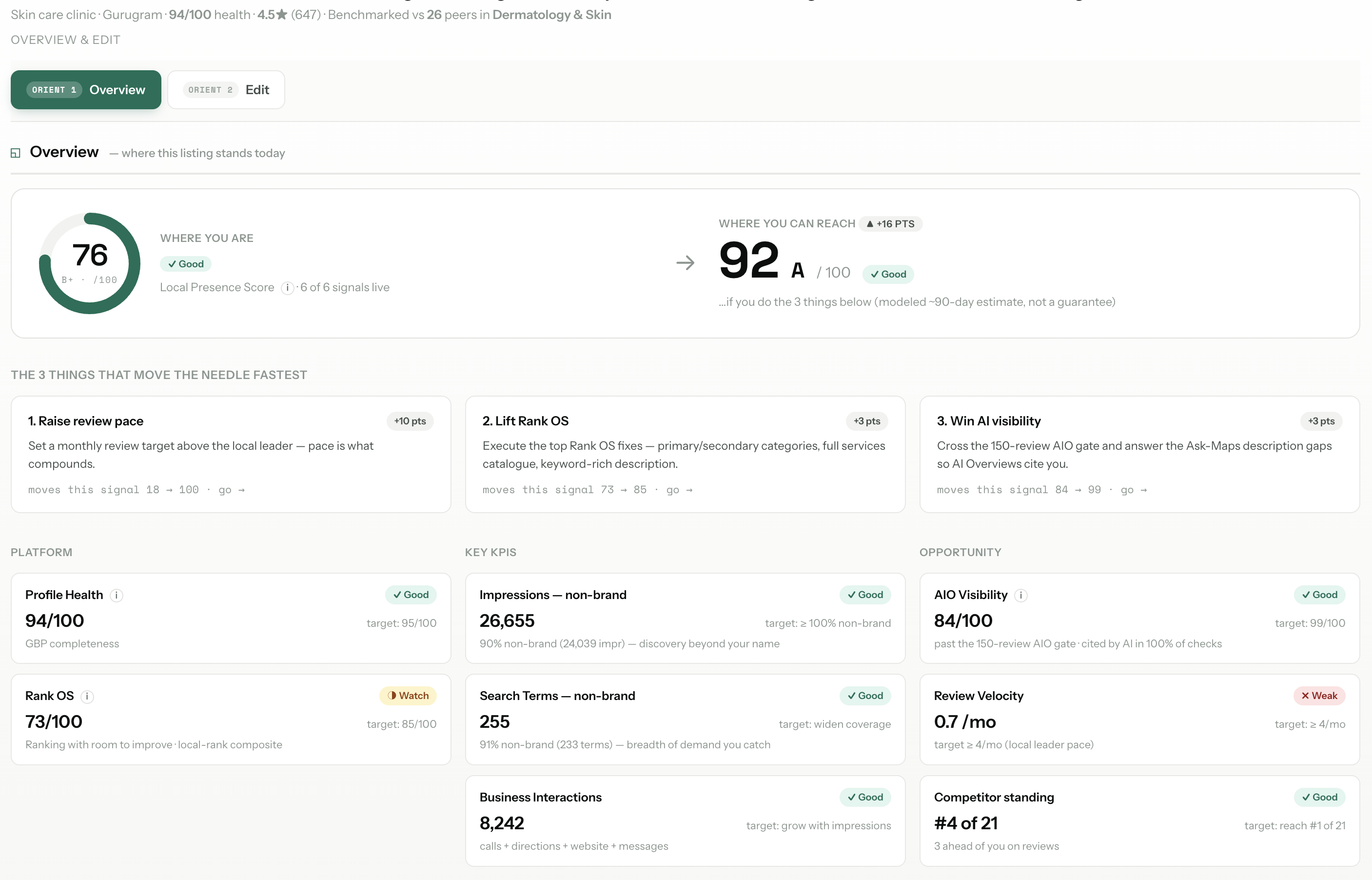
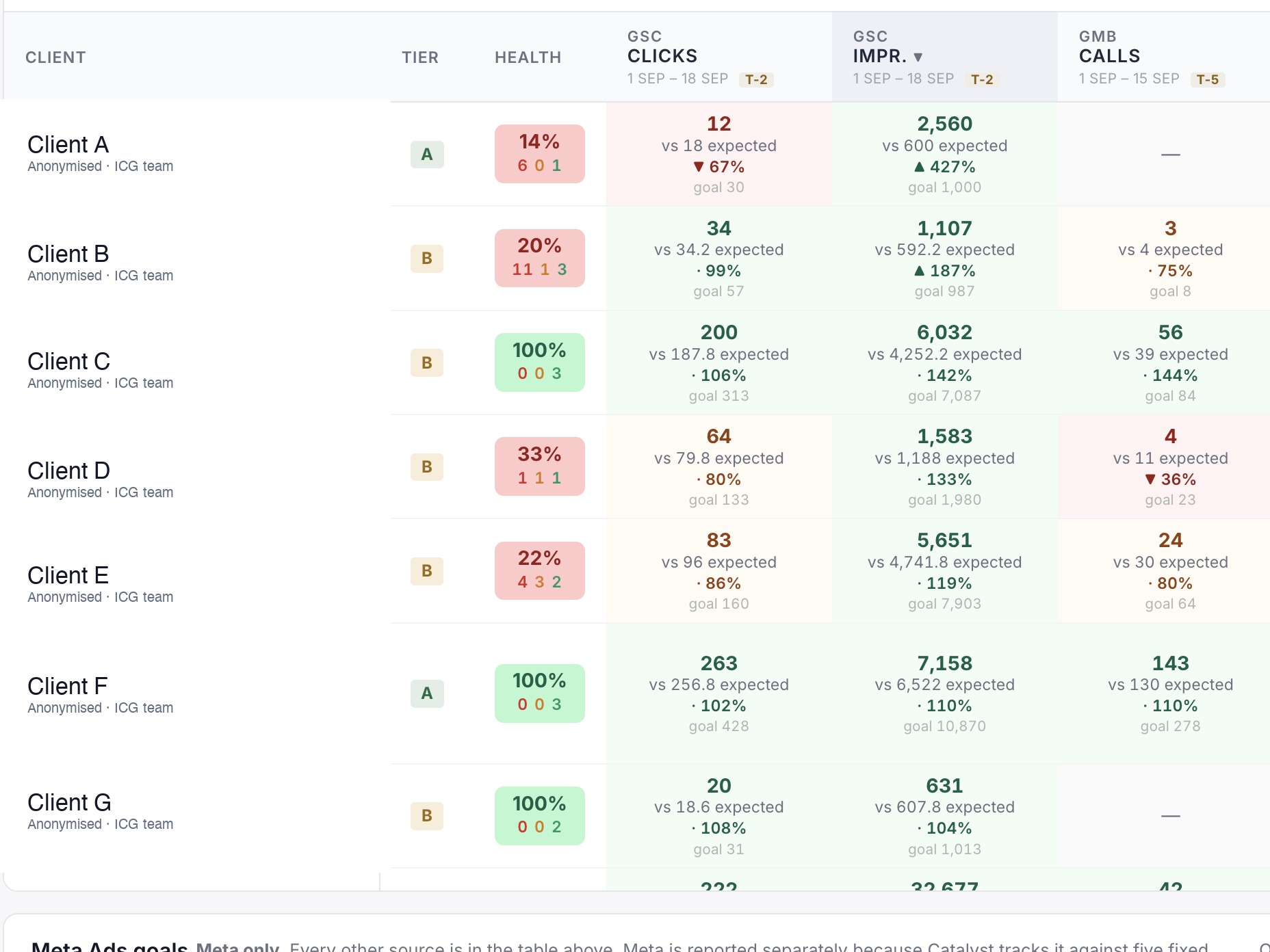
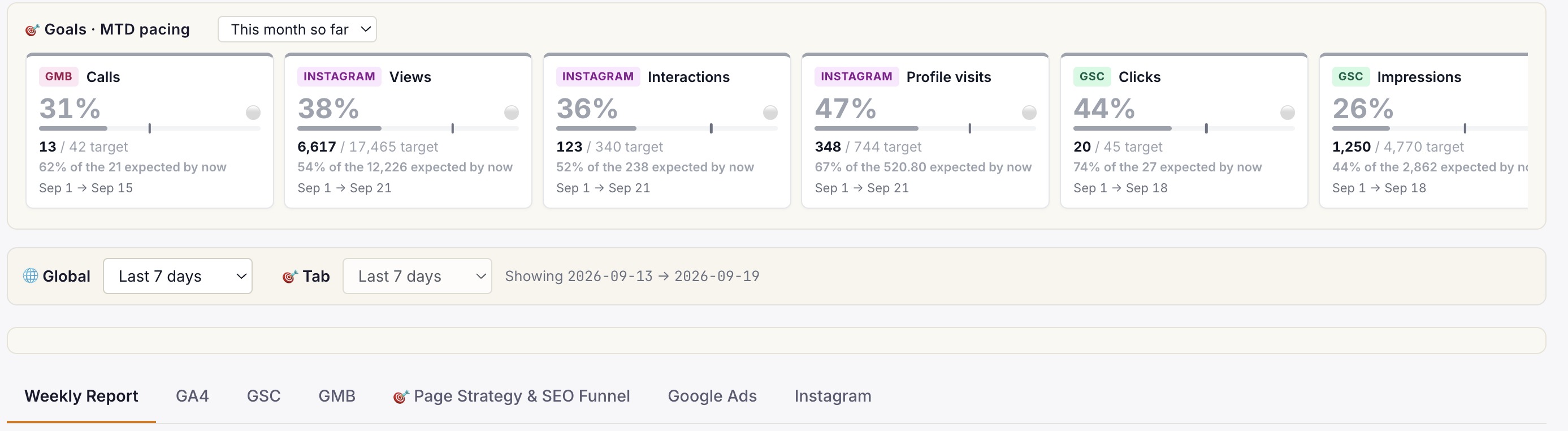
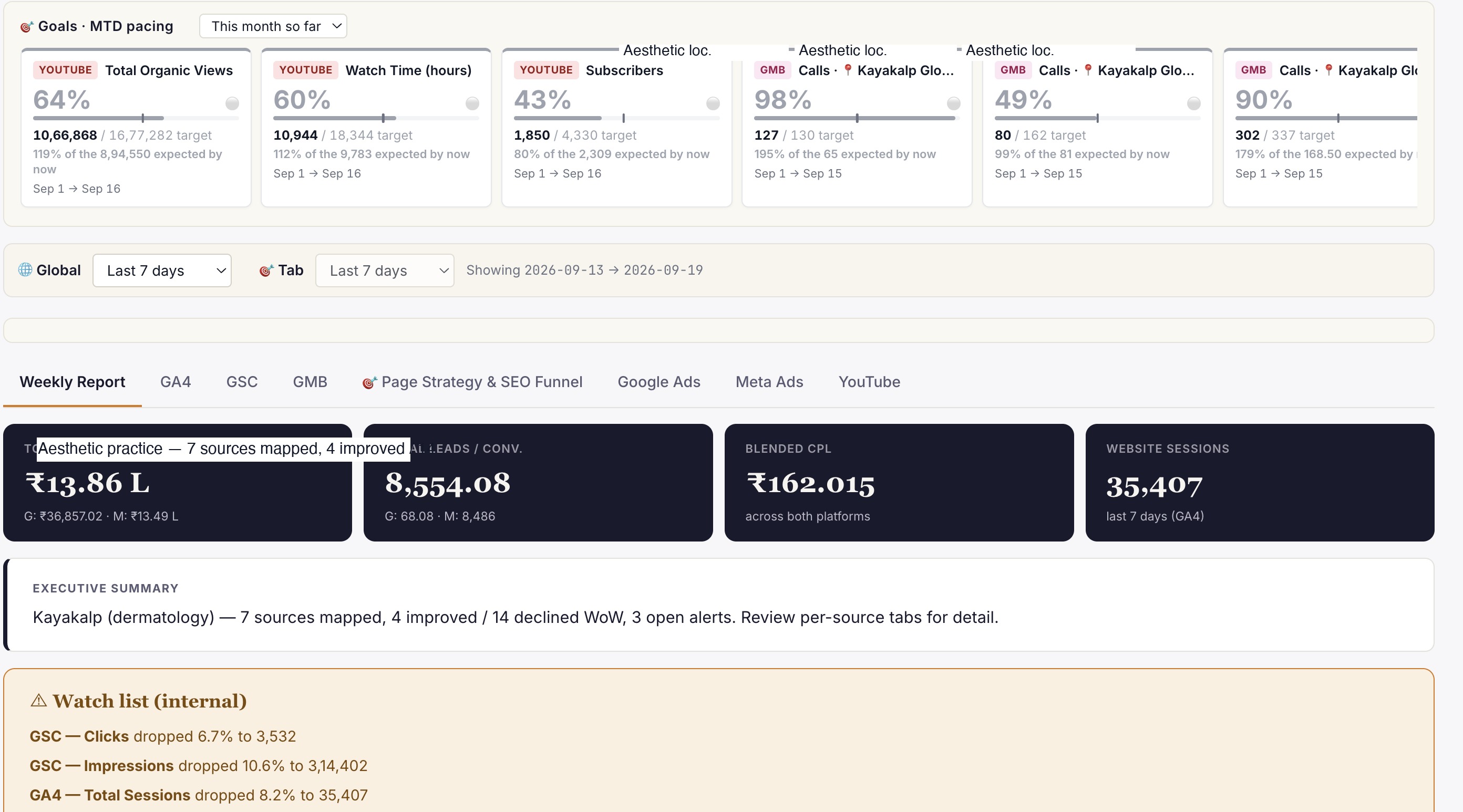
Live client dashboard. GSC, GA4, Google Ads, Meta Ads, IVR calls in one view. Login anytime, not monthly.
Phoenix
Clinic revenue intelligence over your PMS. Daily action queue: Prevent Loss, Maintain & Engage, Grow Revenue. Multi-centre rollout.
Or book a free 30-min audit to see all three in action on your account.
Healthcare brands
that already run on ICG.
A representative slice of the 150+ healthcare brands ICG has delivered for across India. Most engagements remain under NDA.


What ICG clients say · on video.
"Scale up of organic channels and business consulting. ICG has absolute domain authority in their field."
"Working with ICG transformed how we acquire IVF patients in Gurgaon. They understand the fertility journey from inquiry to consult..."
"What Ichelon accomplished — they got all my ideas and worked over 3-4 months to create an amazing, super-customised website."
Need help operationalising this?
Every ICG service is healthcare-only, NMC + DPDP-aware, and built around the patient-research patterns that drive Indian healthcare growth in 2026.
Every practice welcome — packages from ₹20,000/mo.
Goals-Driven engagements · Performance-Linked Payout Models available
More from
ICG.
Five trends shaping Indian healthcare marketing through 2027: AI-first patient research, Conversions API adoption, ABDM discovery, the AEO w...
Healthcare AIO is the discipline of getting your clinic or hospital cited inside Google AI Overviews, ChatGPT and Perplexity answers — not j...
Conversational-search advertising places brand messages inside AI chat answers — ChatGPT, Perplexity, Copilot — rather than beside a results...
Stop guessing.
Book a Diagnostic.
30 minutes. Free. With the AI-powered healthcare-only marketing agency 150+ brands already run on. No slides, no pitch, no hard close.


