


Healthcare Meta Ads Retargeting Sequences (India, 2026): The Four-Stage Playbook
The four-stage retargeting sequence for healthcare Meta ads in India — video-viewed to landing-visited to form-abandoned to upsell — plus WhatsApp bridge.
No pitch. Written root-cause diagnosis. AI-powered, healthcare only.
Direct answer
The four-stage retargeting sequence for healthcare Meta ads in India — video-viewed to landing-visited to form-abandoned to upsell — plus WhatsApp bridge.
TL;DR

Retargeting is where healthcare Meta accounts earn back the CPL that acquisition burns. Every rupee spent on top-of-funnel video and mid-funnel lead-gen creates a warm audience pool that either compounds into bookings or leaks out through creative fatigue and frequency abuse. The difference between the two is a sequence — a written, staged plan that moves a viewer from a 25% video-view to a landing-page visit to an open form to a booked consultation, without carpet-bombing them with the same offer for six weeks. This piece is the four-stage retargeting playbook the ICG portfolio uses across IVF, dental, dermatology, aesthetic, hair transplant and hospital accounts, including the WhatsApp bridge that closes 30–45% of retargeted qualified leads in most specialties.
Why retargeting is where healthcare Meta ads earn back their CPL
A cold Meta impression for an IVF or aligner audience costs ₹1.50 to ₹4 CPM depending on geo and stack. A retargeted impression costs 30–60% more per thousand but converts 4–8× better because the viewer already knows the brand. On unit economics, the retargeted rupee is always cheaper per qualified lead than the cold rupee. The 90-day CPL reduction we see across the ICG portfolio is largely a retargeting story — the acquisition layer stays roughly stable, and the retargeting layer compounds warm audiences into cheaper CPQL month after month.
What kills retargeting for most healthcare brands is not the sequence design; it is the absence of a sequence at all. A single retargeting ad set running against a "website-visitors last 30 days" audience is not a sequence. It is a spray. The audience gets the same creative six weeks in a row, frequency climbs past 20, and the pixel burns out. A real sequence has four distinct stages, each with its own audience definition, creative brief, and window.
The four-stage sequence — video-viewed, landing-visited, form-abandoned, converted upsell
The ICG portfolio default is four retargeting stages. Stage 1 targets 25%+ and 50%+ video-viewers from the ToFu layer. Stage 2 targets landing-page visitors from the MoFu layer. Stage 3 targets form-abandoners inside a 48-hour urgency window. Stage 4 targets converted patients for cross-sell or upsell 45+ days after treatment. Each stage has a different creative brief, a different offer intensity, and a different frequency cap. Together they compound into a system that produces the lowest CPQL in the account.
Stage 1 — video-viewed retargeting (25% / 50% / 75%)
The warmest ToFu audiences are people who watched 25% or more of a brand or educational video. Meta segments video-viewers automatically into 25%, 50%, 75% and 95% tiers, and each tier deserves its own ad set. 25%+ is broad — treat as MoFu-plus. 50%+ is a meaningful engagement signal. 75%+ is high intent. The creative shifts by tier: 25%+ sees a "learn more" bridge (an explainer or a doctor Q&A), 50%+ sees a comparison or price-transparency piece, 75%+ sees a soft consultation invitation.
Window — 90 days. Frequency cap — 3 to 4 per week. Budget — 20–30% of the total retargeting spend. Exclude everyone who has already visited the landing page in the last 30 days; they belong in Stage 2. Kill any creative in this stage that has a frequency above 8 and a completion rate below 30% — it is fatigued and it is training the pixel that this audience does not convert.
Stage 2 — landing-page-visited retargeting (7-day and 14-day windows)
Anyone who visited a landing page, blog article or service page in the last 7 or 14 days is a Stage 2 audience. Split by window because behaviour differs — 7-day visitors are actively considering, 14-day visitors are deferring, and each needs a different message. 7-day ad sets carry a specific offer or slot invitation (limited-slot consultation, priced package, WhatsApp bridge). 14-day ad sets carry a re-engagement hook — a new testimonial, a FAQ addressing a common objection, a comparison with alternatives.
Window — 7 or 14 days depending on ad set. Frequency cap — 4 to 5 per week. Budget — 30–40% of retargeting spend. Exclude Stage 3 (form-openers) so they see the more urgent creative. Exclude past-patient lists so they see the Stage 4 upsell. Most Indian healthcare accounts under-invest in Stage 2 because it is the invisible middle — it does not have the drama of ToFu or the urgency of Stage 3 — but Stage 2 is where most of the retargeted bookings actually originate.
Stage 3 — form-abandoned retargeting (48-hour urgency window)
Form-openers who did not submit are the highest-intent audience in the entire funnel. They started the process. They stopped. Something interrupted, something confused, something scared them off. Stage 3 is a 48-hour urgency window designed to close that gap. The creative is direct — "your consultation slot is held for 48 hours", "here is what happens after you fill the form", "our team called you at 3pm — reply on WhatsApp for a callback". No education, no comparison, no soft CTA.
Window — 48 hours, hard. Frequency cap — 2 to 3 impressions per day, then hard-drop from the audience. Budget — 15–20% of retargeting spend, but with high per-impression bid because the intent is highest in the account. Every Stage 3 ad set carries a WhatsApp bridge as the primary CTA, not a re-open of the form — the form is already what failed for them, and asking them to open it again is asking for a second failure. Move them to a channel that converts.
Stage 4 — converted upsell / cross-sell (45+ day window)
Past patients are the cheapest and highest-quality audience an account will ever run. Stage 4 targets them 45+ days after treatment for cross-sell (aligners after cleaning, follow-up cycle for IVF, hair maintenance packages after transplant, or annual health check for hospital patients). Creative is relationship-led — a thank-you frame, a specific offer tailored to the completed procedure, a doctor message about post-treatment care. Never treat past patients as cold; the pixel signal is completely different.
Window — no upper bound. Frequency cap — 2 per week. Budget — 10–15% of retargeting spend, higher for practices with 800+ past patients on the list. Exclude anyone who has booked a follow-up in the last 30 days. The Catalyst IQ Money Wastage column will flag if a Stage 4 ad set is spending on people who already have upcoming appointments — a common leak in multi-location groups.
The WhatsApp retargeting bridge
WhatsApp is the closer in Indian healthcare Meta accounts. Click-to-WhatsApp ads convert 30–45% of qualified leads to a booked slot when the WhatsApp inbox is staffed to reply within 15 minutes during working hours. The bridge works because it removes the two biggest form-fill barriers — the intimidation of a 5-field form and the delay of a phone callback that never lands.
Use WhatsApp click-to-chat as the primary CTA for Stage 3 (form-abandoners) and as the secondary CTA on Stage 2 (7-day landing visitors). Do not use it for Stage 1 (video-viewers) — the intent is too cold and the WhatsApp inbox gets flooded with tyre-kickers. Do use it for Stage 4 (past patients) with a pre-filled message that references the previous treatment. Frequency-cap the WhatsApp retargeting audience at three touches per lead inside seven days; beyond that, reply rate falls sharply and unsubscribe rate rises.
Frequency and window guidance across the sequence
A retargeting sequence lives or dies on frequency discipline. The ICG portfolio default caps are — Stage 1: 3–4/week, 90-day window. Stage 2: 4–5/week, 7 or 14-day window. Stage 3: 2–3/day, 48-hour window, hard exit. Stage 4: 2/week, indefinite window with a 45-day floor. Any audience where frequency crosses 15 in 30 days is showing warning signs; anything above 20 is actively hurting the account and the CPQL number will confirm it.
Window discipline matters equally. A 30-day window is default for most agencies because it is Meta's dropdown default. It is wrong for most healthcare accounts. IVF and hair transplant deserve 60–90 day windows because consideration is long. Dental primary and aesthetic trials deserve 7–14 day windows because urgency compresses the decision. Match the window to the specialty's real decision cycle, not the dropdown.
Sequence measurement — what to track by stage
Stage-level measurement is the only honest way to run a retargeting sequence. Six numbers matter, tracked weekly through the Catalyst IQ Master Dashboard. Stage 1 — impressions, view-through-rate, cost per landing-page click. Stage 2 — CPL, form-open rate, CPQL. Stage 3 — form-completion rate on retargeted opens, WhatsApp-reply rate, cost per booking. Stage 4 — cross-sell revenue per patient, list saturation rate. The 2-Day Comparative reads on each stage against its 14-day baseline; the Long-term Comparison spans eight windows.


Common measurement mistakes — reporting all retargeting as a single line on the CFO dashboard (hides which stage is broken), ignoring frequency-per-user (the account looks fine on averages, terrible on distributions), and failing to reconcile Stage 3 form-abandon count with Stage 3 impression count (which reveals whether the pixel is even firing the abandon event correctly).
Powered by Meta Catalyst IQ — the decision engine behind every Meta ad ICG runs
ICG built Meta Catalyst IQ because retargeting sequences fail silently in Ads Manager — frequency creeps up, windows drift out of alignment, and CPQL rises without any single ad set looking obviously broken. It's the diagnosis + decision layer above Ads Manager — Hygiene Factors 12-point checklist, Naming Intelligence (surfaces conflicts costing ₹50K–₹2L/account/month), Creative Scoring Matrix (Core Performer / Scalable / Getting Started / Review), 2-Day Comparative, SLC Framework, Money Wastage column in ₹.


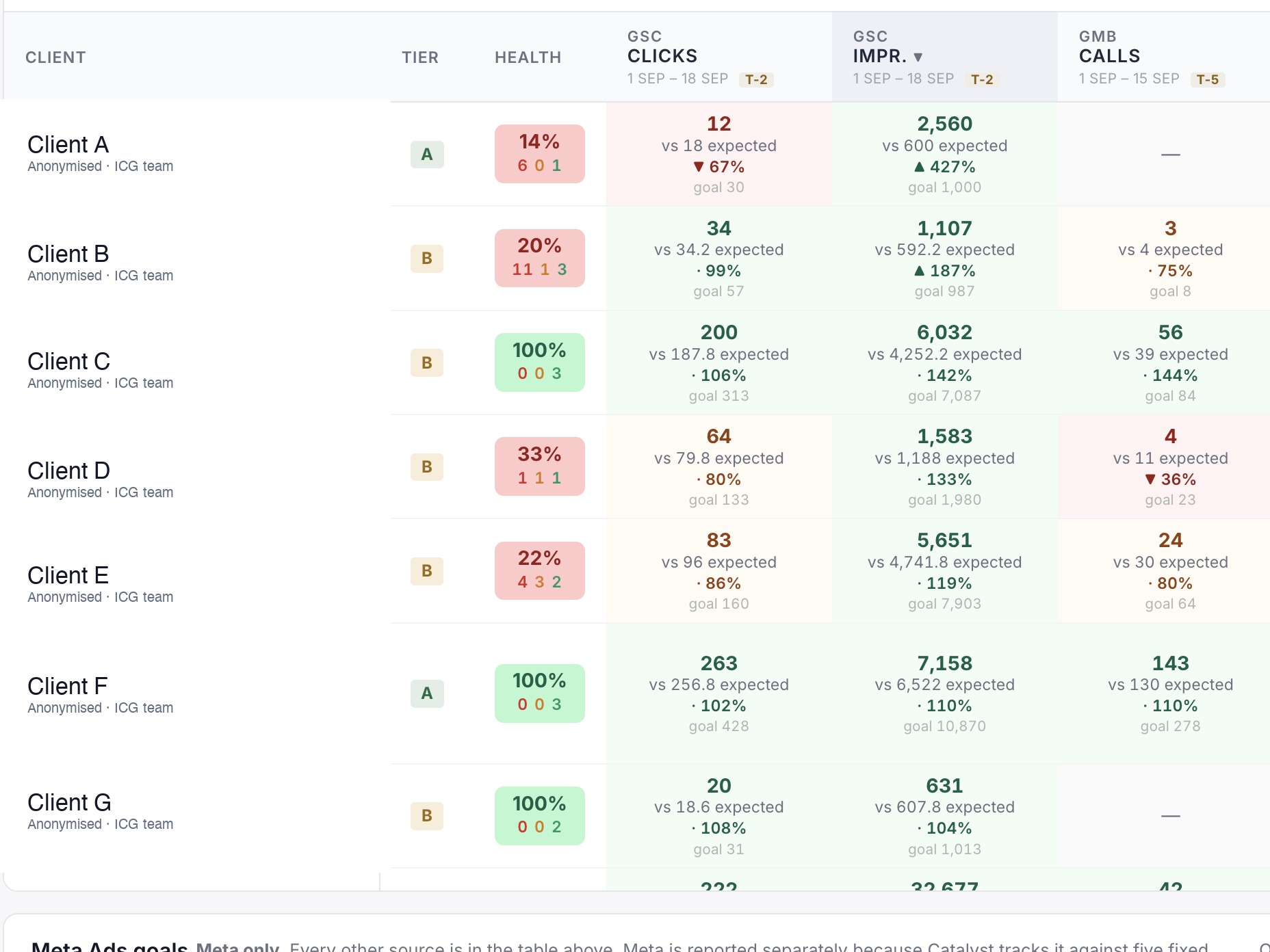
- Master Dashboard — 23+ accounts, ₹9.1Cr+ spend/mo optimised, ₹1,581 blended CPL vs ~₹3,200 market benchmark.
- Diagnose → Optimise → Grow — daily hygiene checks, weekly creative scoring, monthly money wastage cleanup.
- CPQL Engine — cost per qualified lead (not just cost per lead) at ad-set level. Try the interactive CPQL calculator.
- Portfolio benchmarks — IVF ₹632, derm ₹520–1,180, dental ₹620–1,800, aesthetic ₹400–900, hospital cardiac ₹3,200.
Included free with every ICG Meta ads or Performance Marketing engagement (Starter ₹20,000/-/month tier and above). Not sold standalone. Book a free 48-hour Meta ad diagnostic or WhatsApp us.
Powered by PrismSpy — every competitor Meta ad, watched daily
ICG built PrismSpy because Indian healthcare Meta ad competition is invisible without it, and retargeting sequences especially need to know what competitor offers your warm audience is also seeing. 75+ Indian healthcare brands tracked, 2,150+ active ads catalogued, ₹50Cr+ aggregate ad spend visibility per month. Every competitor ad — creative, offer, hook, run-length — refreshed daily.
- Watchlist Dashboard — 30–75 competitors per specialty cluster (IVF / dermatology / dental / hair transplant / aesthetic / hospital), daily refresh.
- Comparative Insights — highest-quality ads, longest-running creatives, top hooks, emerging offers.
- Offers Intelligence — 1,197 offers tracked, discount intensity by brand, value tier distribution.
- Service Cluster + Inspirations — 419 services tracked, 4,697 searchable ad inspirations by hook / language / format.
Standalone from ₹4,999/- per specialty vertical, or bundled free inside HealthApex OS (₹14,999/- flat, 9 tools). Book a 30-min PrismSpy walkthrough on WhatsApp.


Related reading
- Healthcare Meta ads full-funnel setup — ToFu, MoFu, BoFu (India, 2026)
- Healthcare Meta ads CPL benchmarks by specialty (India, 2026)
- Healthcare Meta ads: CPQL vs CPL and why both matter
- Healthcare Meta ads creative testing framework (India, 2026)
- Healthcare Meta ads: hook frameworks for the first 3 seconds
- Meta ads for dental clinics — primary vs aligners funnel split
External references — Meta for Business on retargeting best practice, and the Digital Personal Data Protection Act on consent for retargeting patient data.
Frequently asked questions
How much of my Meta budget should go to retargeting?
The ICG portfolio default is 30–40% of total Meta budget across all four retargeting stages combined. Below 20% and warm audiences are being wasted. Above 50% and the account cannot refill the pools because acquisition starves.
What frequency is too high for healthcare retargeting?
Above 15 impressions per user per 30 days is a warning sign. Above 20 is actively damaging — reply rate falls, unsubscribes rise, and CPQL climbs. Every ad set should have a documented frequency cap and it should be enforced weekly.
Should I run the same retargeting sequence across specialties?
No. Consideration windows differ. IVF and hair transplant use 60–90 day windows. Dental primary and aesthetic trials use 7–14 day windows. Hospital cardiac uses 30-day windows. Match the sequence to the specialty's real decision cycle, not a default template.
What is the WhatsApp reply rate on retargeted click-to-chat ads?
Across the ICG portfolio, 30–45% of qualified leads from Stage 3 (form-abandoners) reply on WhatsApp inside 24 hours if the inbox is staffed to reply within 15 minutes. Below a 15-minute reply SLA the number drops to 12–18%.
Can I retarget past patients with new-service offers?
Yes — that is Stage 4. Wait at least 45 days after treatment. Reference the previous procedure in the creative. Frequency-cap at 2 per week. Exclude anyone with an upcoming booking on the practice management system.
Do I need Meta Catalyst IQ to run a proper retargeting sequence?
No — the four-stage design works with Ads Manager alone if a media buyer maintains the discipline manually. Catalyst IQ adds automated frequency monitoring, Money Wastage detection per stage, and CPQL rollup — but the sequence design comes first.
How long before a retargeting sequence starts producing measurable results?
Stage 3 (form-abandoners) produces bookings inside a week if the audience is large enough. Stage 2 needs 3–4 weeks to compound. Stage 1 needs 6–8 weeks because it depends on ToFu spend to build audience size. Stage 4 needs 45+ days by definition. Judge each stage on its own timeline, never on account-level averages.
Book a free Meta ads account audit.
Raman Soni's team pulls your account, checks CAPI/EMQ, reviews creative for NMC compliance, and shows where CPQL is leaking. 45 minutes, actionable output.
The three platforms
behind every ICG engagement.
Beacon
CAPI middleware that fixes Event Match Quality, translates CRM statuses to Meta-standard events, dedups across channels.
Agency OS
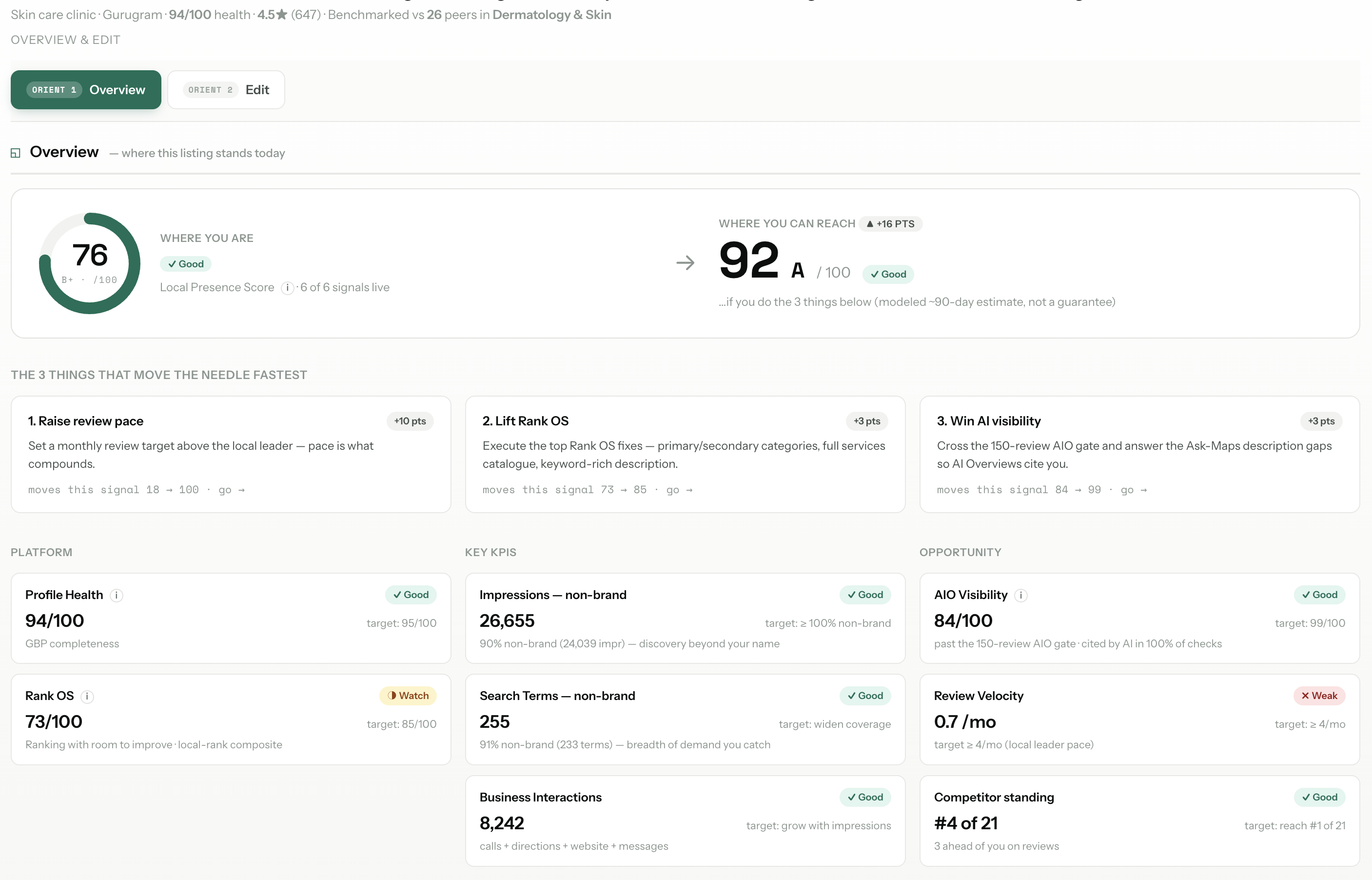
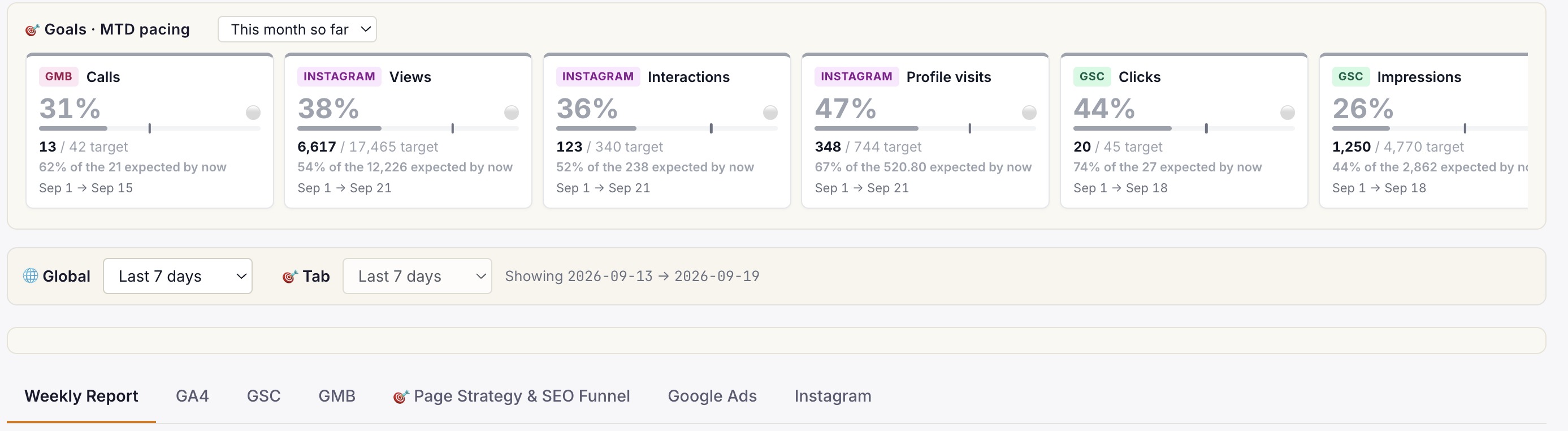
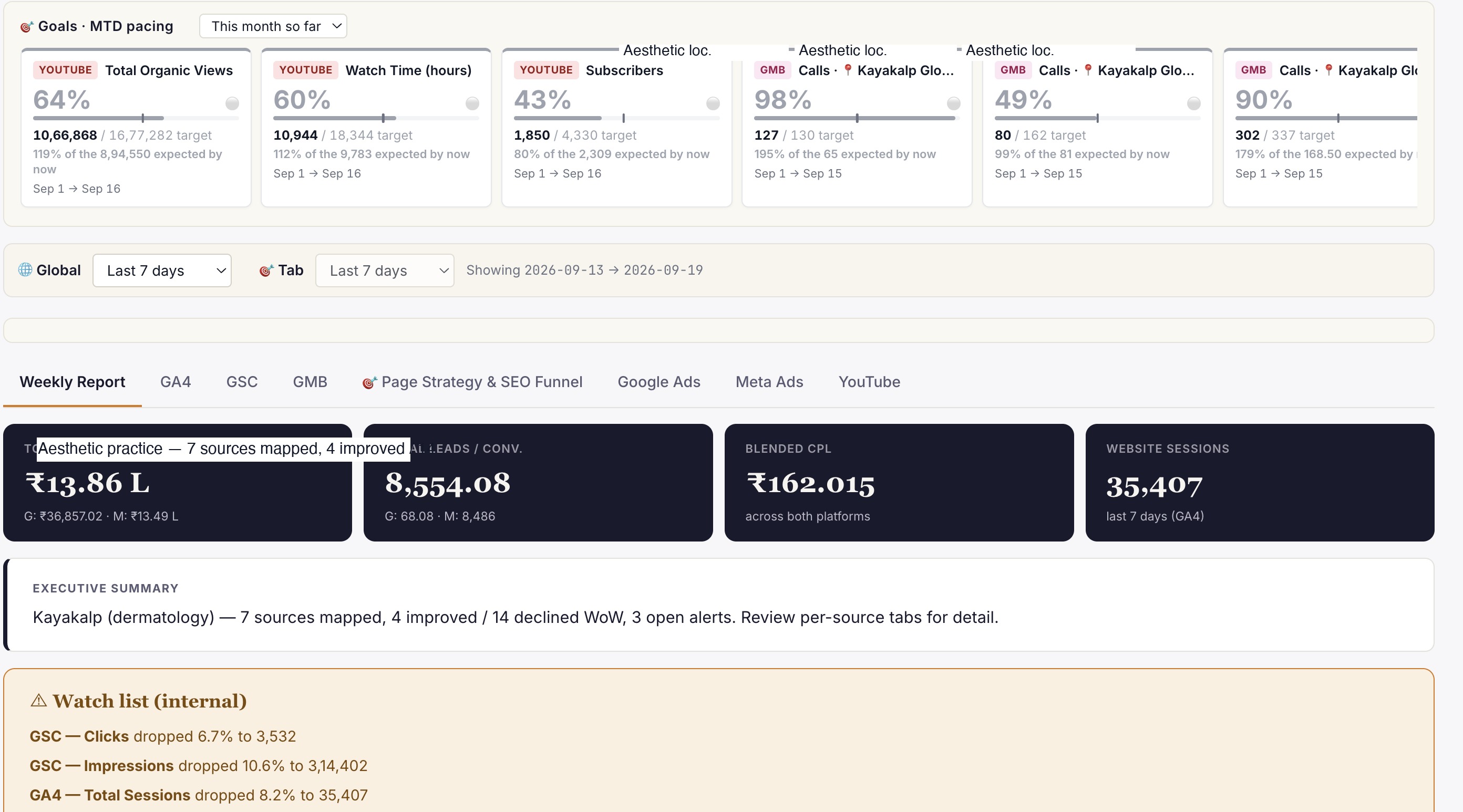
Live client dashboard. GSC, GA4, Google Ads, Meta Ads, IVR calls in one view. Login anytime, not monthly.
Phoenix
Clinic revenue intelligence over your PMS. Daily action queue: Prevent Loss, Maintain & Engage, Grow Revenue. Multi-centre rollout.
Or book a free 30-min audit to see all three in action on your account.
Healthcare brands
that already run on ICG.
A representative slice of the 150+ healthcare brands ICG has delivered for across India. Most engagements remain under NDA.


What ICG clients say · on video.
"Scale up of organic channels and business consulting. ICG has absolute domain authority in their field."
"Working with ICG transformed how we acquire IVF patients in Gurgaon. They understand the fertility journey from inquiry to consult..."
"What Ichelon accomplished — they got all my ideas and worked over 3-4 months to create an amazing, super-customised website."
Need help operationalising this?
Every ICG service is healthcare-only, NMC + DPDP-aware, and built around the patient-research patterns that drive Indian healthcare growth in 2026.
Every practice welcome — packages from ₹20,000/mo.
Goals-Driven engagements · Performance-Linked Payout Models available
More from
ICG.
Five trends shaping Indian healthcare marketing through 2027: AI-first patient research, Conversions API adoption, ABDM discovery, the AEO w...
Healthcare AIO is the discipline of getting your clinic or hospital cited inside Google AI Overviews, ChatGPT and Perplexity answers — not j...
Conversational-search advertising places brand messages inside AI chat answers — ChatGPT, Perplexity, Copilot — rather than beside a results...
Stop guessing.
Book a Diagnostic.
30 minutes. Free. With the AI-powered healthcare-only marketing agency 150+ brands already run on. No slides, no pitch, no hard close.


