


Healthcare Meta Ads Frequency Cap (India, 2026): What to Set for Awareness, Consideration & Conversion
Concrete frequency caps for healthcare Meta ads — 2/wk awareness, 3-4/wk consideration, 5-7/wk conversion, fatigue at 8+ — plus retargeting windows.
No pitch. Written root-cause diagnosis. AI-powered, healthcare only.
Direct answer
Concrete frequency caps for healthcare Meta ads — 2/wk awareness, 3-4/wk consideration, 5-7/wk conversion, fatigue at 8+ — plus retargeting windows.
TL;DR
Frequency cap is the setting most Indian healthcare Meta ad accounts leave on default and later blame for CPL bloat. It is also the setting that, when tuned right, quietly does two jobs at once — protects patient trust from over-exposure and protects budget from the auction penalty Meta applies to ads that fatigue users. Across the 23+ accounts running on Meta Catalyst IQ, we set frequency caps by objective, not by campaign. Awareness caps at 2 impressions per week per user. Consideration at 3–4. Conversion at 5–7, with a fatigue trigger fired at 8 or above. Retargeting has its own set of rules. And most of the time when frequency looks like the villain, it is a symptom of something else — narrow audience, exhausted creative, or a naming mess. This guide gives you the caps, the reasoning, and the diagnostic to tell symptom from cause.
What frequency cap actually controls in Meta
The frequency cap setting inside a Meta ad-set limits how many times a unique user can see any ad within the set over a defined time window. It is available on Reach, Brand Awareness, and Video Views objectives natively, and on Advantage+ campaigns through the frequency control add-on. On Sales, Leads, and Conversions objectives, the cap is applied indirectly — through audience sizing, budget pacing, and Advantage+ delivery, rather than an explicit setting field.
This is the first source of confusion. Most healthcare accounts run on Leads or Conversions and cannot set a hard weekly cap the way an Awareness campaign can. What they can do is manage the effective frequency by controlling audience size, creative rotation, budget per ad-set, and duration. That is the real playbook — a soft cap by design, not a hardware setting.
Caps by objective — the base numbers
These are the portfolio starting points across specialties, adjusted case by case for audience size and CPL. They assume a 7-day rolling window unless stated.
- Brand Awareness / Reach — 2 impressions per week per user. Anything more and awareness spend converts into fatigue spend. Set explicitly in the ad-set frequency control.
- Video Views (upper funnel) — 2–3 per week per user. Slightly higher because incomplete views are not real exposure.
- Traffic (mid funnel) — 3–4 per week per user, controlled through audience size rather than a hard cap.
- Lead Generation / Conversions (bottom funnel) — 5–7 per week per user. Direct-response ads can carry higher frequency because the intent-to-click curve is different from the intent-to-remember curve.
- Retargeting (warm audiences) — 6–9 per week per user, but capped hard at 12 lifetime over 30 days for any single ad.
- Retargeting (deep BOFU, 7-day site visitors) — 9–12 per week per user, but only for a maximum 14-day exposure window.
The fatigue trigger sits at 8 for conversion objectives on cold audiences. If any ad-set breaches an average weekly frequency of 8, Catalyst's Action Centre surfaces it as a Review-zone signal and the team refreshes creative before the CPL number moves.
Why 2 per week for awareness — the memory math
Awareness campaigns exist to plant a brand cue that gets recalled later when the healthcare need arises. The recall curve is well-studied: 2 exposures per week for 4 weeks lands the brand cue for roughly 60% of exposed users. A third and fourth weekly exposure add trivial recall lift while burning budget. A fifth or sixth actively degrades brand affinity — users start associating the brand with intrusion, especially in categories like fertility, hair loss, or dental cosmetics that already sit close to sensitivity.
For a Tier-1 hospital running awareness for a new cardiac wing at ₹8L/month awareness spend, the difference between a 2-cap and no cap is roughly ₹2.5L wasted on the 5th–8th weekly impression to users who already have the recall. That is a benchmark from three separate hospital accounts on Catalyst.
Why 5–7 per week for conversion
Conversion ads have to solve two problems at once — grab the click and warm the user enough to complete the form. On healthcare offers, the average user needs 3–4 exposures before clicking (higher for IVF, lower for aesthetic top-of-funnel offers). Capping conversion frequency below 5 starves the auction of the repeat impressions that actually drive the click.
Above 7, and you start seeing three things simultaneously: form abandonment rises, CTR link decays, and the qualified lead ratio inside CPQL slips. That is the ceiling. Between 5 and 7 is where the conversion volume compounds efficiently and the CPL sits inside its healthy band.
Retargeting windows and caps — the two-lever setup
Retargeting is where frequency management gets most complex, because the user has already shown intent — you owe them a different pace than a cold user. Two settings work together: audience window and frequency cap.
Standard portfolio setup across the 75+ brands in PrismSpy visibility and the 23+ Catalyst accounts:
- 7-day site visitors — 9–12 per week per user, 14-day exposure limit, then rest for 30 days.
- 14-day video viewers (75%+) — 6–9 per week per user, 21-day exposure limit.
- 30-day form-openers-not-completed — 6–9 per week, 21-day cap, then swap creative angle entirely.
- 90-day past leads (nurture retargeting) — 3–4 per week per user, 60-day exposure limit — much softer, closer to warm-lead nurture than direct response.
- 180-day CRM lookalike-seed re-engagement — 2–3 per week, no hard exposure limit but rotate creative every 21 days.
The rest period matters as much as the cap. Retargeting audiences that never rest turn into fatigue engines. A common mistake: leaving a 30-day retargeting ad-set running for 6 straight months on the same three creatives. The first 30 days work brilliantly. Months 4–6 destroy the CPL average while hiding under a stable overall account number.
When frequency is a symptom vs when it is a cause
The biggest analytical error we see in healthcare accounts is treating rising frequency as the cause of a CPL problem. Sometimes it is. Often it is not. Frequency rises for a reason, and that reason is usually one of four upstream issues:
- Audience too narrow — matched pool of under 200K on a conversion campaign will spike frequency because the delivery system runs out of fresh users to serve. Fix by broadening interests, dropping stacked filters, or moving to a lookalike.
- Creative pool too small — 1–2 ads per set will fatigue faster because Meta cannot rotate freshness. Fix by moving to 4–6 ads per set with weekly refresh — see our creative fatigue detection guide.
- Budget scaled too fast — 40%+ overnight budget jumps force the same audience harder within the same day. Fix by scaling 20% every 3–5 days — see our CBO vs ABO scaling guide.
- Ad-set overlap / naming mess — two ad-sets targeting the same audience under different names compete against each other and inflate the effective frequency the user sees. Catalyst's Naming Intelligence surfaces conflicts that typically cost ₹50K–₹2L per account per month.
Rule: before touching a frequency cap, run through those four upstream causes. Nine times out of ten, the actual problem is one of them, and adjusting the cap is treating the symptom.

Frequency in Advantage+ campaigns
Advantage+ Shopping and Advantage+ App do not expose the frequency cap field the same way legacy Reach campaigns do. Meta's own Business Help Centre confirms this. Delivery is managed by the auction with light human control. This is not a bug — it is Advantage+ working as designed, prioritising incremental conversions over user-level exposure control.
For healthcare accounts on Advantage+, control frequency indirectly: cap the daily budget so the algorithm cannot over-serve a small audience, exclude existing customer lists so paid impressions do not go to already-converted users, and hard-limit the campaign duration to 14–21 days before a reset. This produces the effect of a frequency cap without the setting itself.
Cap adjustments by specialty
Portfolio benchmarks inside Catalyst show that the base numbers above shift meaningfully by vertical:
- IVF — CPL ₹632 on average. Conversion caps sit at the top of the band (7 per week) because the consideration window is long. Retargeting caps tighter at 6/week — IVF audiences are emotionally sensitive to repetition.
- Hair transplant — 3-week creative refresh cycle. Conversion caps at 5/week rather than 7 because small addressable audiences fatigue faster.
- Dermatology — CPL ₹520–1,180. Runs the standard 5–7 conversion band comfortably. Retargeting can push to 9/week on aesthetic-focused audiences.
- Dental primary care — CPL ₹620. Runs 6–7 conversion. Aligners at ₹1,800 CPL runs tighter — 5 conversion, 6 retargeting.
- Aesthetic (weight loss, body contouring) — CPL ₹400–900. Handles the top of the band (7 conversion, 9 retargeting) because audiences are broader and less sensitive.
- Hospital cardiac — CPL ₹3,200. Awareness cap 2/week is strict; conversion band 5 max — hospital users are the least tolerant of ad repetition.
- Orthopaedic — CPL ₹1,400. Standard 5–7 band works, retargeting 6.
How to actually set the cap — the four control levers
Because Meta does not expose an explicit weekly cap on the objectives most healthcare accounts run, the practical setup uses four levers together:
- Audience size — keep matched pool at 500K minimum for cold conversion campaigns. Below that, frequency will inflate automatically.
- Creative rotation — 4–6 active ads per set, refresh 1–2 weekly. This spreads impressions across fresh creative slots without inflating any single ad's frequency.
- Budget pacing — scale 20% every 3–5 days rather than in jumps. Sudden budget doubles the auction pressure on the same audience.
- Campaign duration — cap any single ad-set at 30 days on the same audience without a fundamental refresh. After 30 days, either rotate audience, refresh creative wave, or pause and let the audience cool for two weeks.
Together these produce an effective frequency inside the intended band without needing the hard cap setting. That is how the 23+ Catalyst accounts run — soft frequency control by design.
Powered by Meta Catalyst IQ — the decision engine behind every Meta ad ICG runs
ICG built Meta Catalyst IQ because most Indian healthcare brands running Meta ads waste 30–50% of budget without knowing it. It's the diagnosis + decision layer above Ads Manager — Hygiene Factors 12-point checklist, Naming Intelligence (surfaces conflicts costing ₹50K–₹2L/account/month), Creative Scoring Matrix (Core Performer / Scalable / Getting Started / Review), 2-Day Comparative, SLC Framework, Money Wastage column in ₹.


- Master Dashboard — 23+ accounts, ₹9.1Cr+ spend/mo optimised, ₹1,581 blended CPL vs ~₹3,200 market benchmark.
- Diagnose → Optimise → Grow — daily hygiene checks, weekly creative scoring, monthly money wastage cleanup.
- CPQL Engine — cost per qualified lead (not just cost per lead) at ad-set level. Try the interactive CPQL calculator.
- Portfolio benchmarks — IVF ₹632, derm ₹520–1,180, dental ₹620–1,800, aesthetic ₹400–900, hospital cardiac ₹3,200.
Included free with every ICG Meta ads or Performance Marketing engagement (Starter ₹20,000/-/month tier and above). Not sold standalone. Book a free 48-hour Meta ad diagnostic or WhatsApp us.

Powered by PrismSpy — every competitor Meta ad, watched daily
ICG built PrismSpy because Indian healthcare Meta ad competition is invisible without it. 75+ Indian healthcare brands tracked, 2,150+ active ads catalogued, ₹50Cr+ aggregate ad spend visibility per month. Every competitor ad — creative, offer, hook, run-length — refreshed daily.
- Watchlist Dashboard — 30–75 competitors per specialty cluster (IVF / dermatology / dental / hair transplant / aesthetic / hospital), daily refresh.
- Comparative Insights — highest-quality ads, longest-running creatives, top hooks, emerging offers.
- Offers Intelligence — 1,197 offers tracked, discount intensity by brand, value tier distribution.
- Service Cluster + Inspirations — 419 services tracked, 4,697 searchable ad inspirations by hook / language / format.
Standalone from ₹4,999/- per specialty vertical, or bundled free inside HealthApex OS (₹14,999/- flat, 9 tools). Book a 30-min PrismSpy walkthrough on WhatsApp.


FAQs — frequency caps on healthcare Meta ads
Does a lower frequency cap always mean lower CPL?
No. Below 3 per week on a conversion campaign, CPL often rises because Meta cannot land enough repeat exposures to drive the click. Frequency and CPL are U-shaped, not linear.
Is there an official frequency cap Meta recommends?
Meta's own guidance on the Business Help Centre is that frequency capping is available on Reach and Brand Awareness objectives but not on Conversions or Leads. For those, use audience size and creative rotation to manage effective frequency.
How do I check current frequency in Ads Manager?
Add the Frequency column to the Ads Manager reporting view — it defaults to lifetime frequency of the ad-set. For fatigue diagnosis, change the attribution window to 7 days and view frequency at the ad level, not the ad-set level.
Should frequency cap be different for iOS vs Android in India?
Not usually — creative and audience differences swamp any platform-level frequency tolerance difference in the Indian market. Keep caps unified.
What happens if I do not set a cap on an awareness campaign?
Meta will pace to the auction, which for a small healthcare-city audience often lands 5–7 impressions per week per user. That is fine for the first week and expensive for weeks 2–4.
Does the frequency cap reset if I duplicate an ad-set?
The setting resets, but user-level exposure history does not — Meta's delivery system still knows those users have seen the underlying creatives. Duplicate is not a fatigue reset.
How does DPDP compliance affect retargeting frequency?
Retargeting audiences built from CRM data have to be consented per the DPDP Act. Consent status does not change the frequency math, but it does change which users are eligible for retargeting at all. Refresh consent flags every 90 days.
Related reading — the full Meta ads for healthcare cluster
- Healthcare Meta ads CPL benchmarks by specialty (India, 2026)
- Creative fatigue detection for healthcare Meta ads
- Budget scaling — CBO vs ABO for healthcare accounts
- Retargeting sequences for healthcare Meta ads
- Healthcare Meta ads funnel — TOFU, MOFU, BOFU (India, 2026)
- Attribution windows — 1-day vs 7-day for healthcare Meta ads
Book a free Meta ads account audit.
Raman Soni's team pulls your account, checks CAPI/EMQ, reviews creative for NMC compliance, and shows where CPQL is leaking. 45 minutes, actionable output.
The three platforms
behind every ICG engagement.
Beacon
CAPI middleware that fixes Event Match Quality, translates CRM statuses to Meta-standard events, dedups across channels.
Agency OS
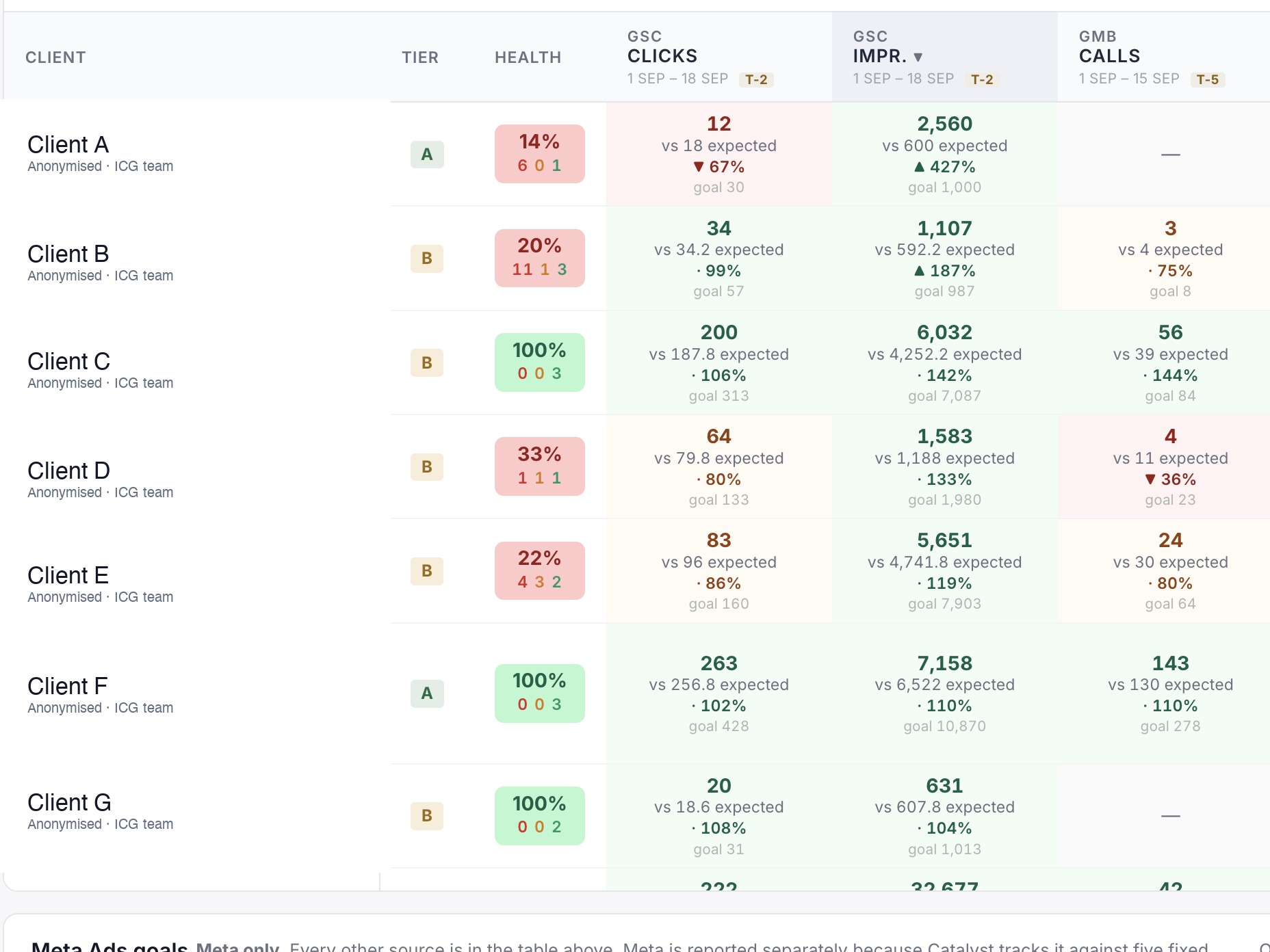
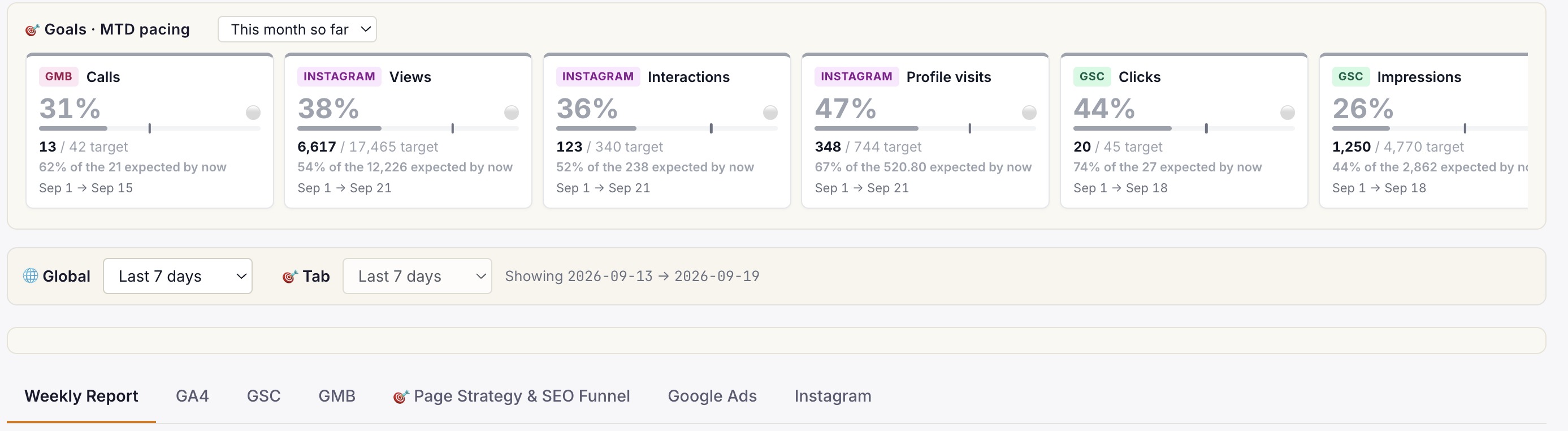
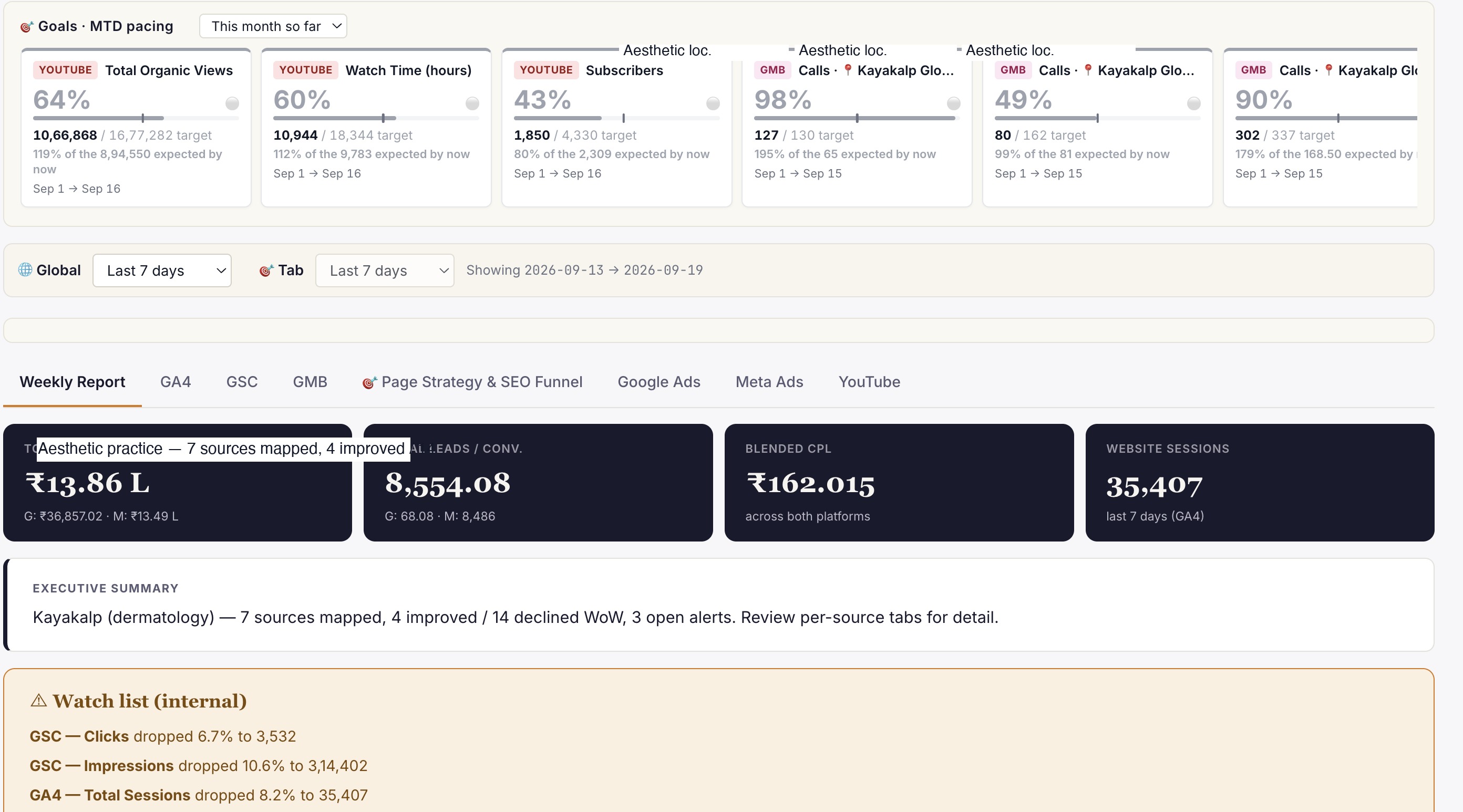
Live client dashboard. GSC, GA4, Google Ads, Meta Ads, IVR calls in one view. Login anytime, not monthly.
Phoenix
Clinic revenue intelligence over your PMS. Daily action queue: Prevent Loss, Maintain & Engage, Grow Revenue. Multi-centre rollout.
Or book a free 30-min audit to see all three in action on your account.
Healthcare brands
that already run on ICG.
A representative slice of the 150+ healthcare brands ICG has delivered for across India. Most engagements remain under NDA.


What ICG clients say · on video.
"Scale up of organic channels and business consulting. ICG has absolute domain authority in their field."
"Working with ICG transformed how we acquire IVF patients in Gurgaon. They understand the fertility journey from inquiry to consult..."
"What Ichelon accomplished — they got all my ideas and worked over 3-4 months to create an amazing, super-customised website."
Need help operationalising this?
Every ICG service is healthcare-only, NMC + DPDP-aware, and built around the patient-research patterns that drive Indian healthcare growth in 2026.
Every practice welcome — packages from ₹20,000/mo.
Goals-Driven engagements · Performance-Linked Payout Models available
More from
ICG.
Five trends shaping Indian healthcare marketing through 2027: AI-first patient research, Conversions API adoption, ABDM discovery, the AEO w...
Healthcare AIO is the discipline of getting your clinic or hospital cited inside Google AI Overviews, ChatGPT and Perplexity answers — not j...
Conversational-search advertising places brand messages inside AI chat answers — ChatGPT, Perplexity, Copilot — rather than beside a results...
Stop guessing.
Book a Diagnostic.
30 minutes. Free. With the AI-powered healthcare-only marketing agency 150+ brands already run on. No slides, no pitch, no hard close.


