


Healthcare Meta Ads: CPQL vs CPL — Why Both Matter (India, 2026)
CPL measures how cheaply Meta hands you a form-fill. CPQL measures how much a booking-ready lead actually costs. Both matter, for very different reasons.
No pitch. Written root-cause diagnosis. AI-powered, healthcare only.
Direct answer
CPL measures how cheaply Meta hands you a form-fill. CPQL measures how much a booking-ready lead actually costs. Both matter, for very different reasons.
TL;DR

A ₹300 CPL is only good news if the lead is real. Half the healthcare Meta accounts we audit have never separated cost per lead from cost per qualified lead, and the number they celebrate on Monday is not the number their CFO can bank on Friday. This is the single most expensive gap in Indian healthcare Meta advertising in 2026 — a portfolio can look brilliant at ₹450 CPL and disastrous at ₹4,200 CPQL, and if you only track the first number, you optimise your way further from the booking your business actually needs. The Meta Catalyst IQ QL Engine exists because ICG kept meeting founders in exactly that position. This piece explains what CPQL measures, how it diverges from CPL, when each matters, and how to build a CPQL system inside 30 days without gutting the media team's workflow.
The trap of the CPL-only dashboard
Most healthcare Meta dashboards in India report three numbers — spend, leads, cost per lead. That is a media dashboard, not a business dashboard. It answers "how cheaply did Meta hand me a form-fill?" and stops there. It cannot answer the two questions that actually run the practice: which ad set brought bookings, and how much did each booking-ready lead really cost? In an environment where 30–50% of Meta form-fills across the ICG portfolio are unqualified — wrong city, wrong service, wrong ticket band, wrong intent — the CPL number silently lies to you every day.
The trap gets worse under scale. When budgets grow, media teams optimise toward the cheapest CPL because it is the metric on the report. Meta's algorithm dutifully finds cheaper form-fills, which are almost always lower intent. CPL falls, CPQL rises, bookings stall, and by month three the CFO asks why spend is up and revenue is flat. Nobody lied. The dashboard did.
What CPQL actually measures
Cost per qualified lead is Meta spend divided by the count of leads that pass a written qualification standard. The standard has to be written down, applied consistently, and reviewed weekly — otherwise it is opinion, not measurement. In the Catalyst QL Engine, every lead is scored against four dimensions inside 24 hours: city match, service match, ticket-band fit, and reachability (phone picked up or WhatsApp replied inside the first two contact attempts). A lead has to pass all four to be marked qualified.
That gives a CPQL number that maps to something the CFO recognises — the cost of a person who could actually walk into a booking. Once you have CPQL at ad-set level, the optimisation conversation changes. Media stops chasing cheap CPL. It starts chasing cheap CPQL, which is the number that predicts revenue.
The definition problem — what counts as qualified?
Every practice defines "qualified" slightly differently, and that is fine as long as the definition is written and stable. What breaks accounts is a rolling definition — the front desk marks leads qualified one week and unqualified the next, and CPQL becomes noise. The Catalyst QL Engine forces a written qualification rubric per specialty at onboarding: for IVF it is age band, cycle count, prior treatment status, city match, and reachability; for aligners it is ticket-band awareness, timeline, city match, and reachability; for hospital cardiac it is age band, symptom category, insurance status, and reachability.
The rubric is not aspirational. It is descriptive of the practice's actual booking pattern, built from the last 90 days of converted patients. If 78% of your booked IVF patients were 28–38, cycle 1, in-city, phone-picked-up, that is your rubric. Anything outside is treated as unqualified until it converts, then the rubric updates. Reviewed quarterly, never mid-quarter.
The math — how CPL and CPQL diverge
An IVF campaign spends ₹3 lakh in a month and generates 500 leads. CPL is ₹600 — a good number by most benchmarks. Of the 500 leads, 380 have a city mismatch, wrong age band or no phone answer inside two attempts. 120 pass all four dimensions and are qualified. CPQL is ₹2,500 — four times the CPL. That number is honest. It also tells the media buyer that a huge chunk of spend is bringing people who will never book.
Now split the campaign into two ad sets — one for the demographic that produced most of the qualified leads, one for the demographic that produced most of the unqualified leads. Kill the second, redirect its budget to the first. Two weeks later, CPL rises to ₹850 (fewer cheap form-fills) but CPQL falls to ₹1,600 (more of the leads are real). The dashboard-watcher sees CPL rise and panics. The CFO sees revenue rise and calm returns. That is the entire argument for CPQL, made concrete.
The IVF portfolio — 11 clients, ₹2.6Cr spend, the CPL/CPQL story
Across the 11 IVF clients in the ICG portfolio, aggregating ₹2.6 crore in monthly Meta spend, blended CPL sits at ₹632 and blended CPQL sits between ₹1,900 and ₹2,400 depending on the month. The ratio is roughly 3× to 3.8×. That is the healthy band for IVF in India in 2026. Accounts we take over from other agencies typically arrive at a 5× to 8× ratio — the CPL looks fine, the CPQL is unmentioned, and the practice cannot connect Meta spend to bookings. The first 30 days on Catalyst IQ close that gap.
Where CPL still matters
CPL is not the enemy. It is the leading indicator of auction health — a CPL that jumps 40% in a week signals a creative fatigue problem or an audience saturation problem before CPQL has time to move. It is also the correct metric for pure awareness campaigns where the objective is video views or reach, not lead volume. And it is the metric Meta's own algorithm optimises toward, so it will always exist in the dashboard.

The rule is simple. CPL is the media metric — it belongs to the buyer and it is watched daily. CPQL is the business metric — it belongs to the founder and it is reviewed weekly. Both live on the same dashboard. Neither replaces the other.
Where CPQL wins the argument with the CFO
Most healthcare CFOs in India will not read a Meta Ads Manager report. They will read a one-line summary: last month we spent ₹X, produced Y qualified leads at ₹Z each, and Y × conversion rate produced N booked patients. That sentence requires CPQL. Without it, the CFO has to trust the media buyer's narrative around a CPL number, and trust erodes fast when revenue does not follow spend. With it, the conversation moves from "why is Meta so expensive" to "if we double CPQL-visible spend can the front desk handle the intake?" — which is the correct question.
How to build a CPQL system inside 30 days
Building a CPQL layer does not require new software for most practices. It requires four things in sequence. Week one, write the qualification rubric — one page per specialty, four dimensions each, built from the last 90 days of converted patients. Week two, wire the CRM or the WhatsApp inbox to capture rubric-pass/fail per lead — most practices already have the fields, they just do not use them. Week three, add a weekly reconciliation between Meta lead export and rubric-pass count — one hour, every Friday. Week four, publish CPQL at ad-set level on the same dashboard as CPL and start optimising against it.
Practices with a Catalyst IQ engagement skip weeks two, three and four — the QL Engine pipes the pass/fail scoring into ad-set level automatically and shows CPQL alongside CPL in the Master Dashboard. But the rubric in week one is manual, always, because it is a business decision, not a software decision.

The Catalyst QL Engine — what it does
The QL Engine is one module inside Meta Catalyst IQ. It takes the raw Meta lead export, applies the practice's written rubric per specialty, scores each lead pass/fail on the four dimensions, and pushes CPQL back into the ad-set view on the Master Dashboard. Media buyers then see cost per qualified lead alongside cost per lead, and they can filter, sort and pause on the CPQL column. The 2-Day Comparative reads on CPQL, not just CPL. The Money Wastage column in ₹ shows how much of last week's spend produced unqualified leads.

The engine does not replace human judgement — a lead the rubric marked unqualified sometimes books, and the rubric updates quarterly to reflect that. It replaces the gap where nobody was measuring the number that mattered. Try the interactive CPQL calculator to see what CPQL looks like for your own account before any engagement — plug in spend, lead count, and rough qualification rate, and it produces both numbers with a diagnosis.
Powered by Meta Catalyst IQ — the decision engine behind every Meta ad ICG runs
ICG built Meta Catalyst IQ because most Indian healthcare brands running Meta ads waste 30–50% of budget without knowing it. It's the diagnosis + decision layer above Ads Manager — Hygiene Factors 12-point checklist, Naming Intelligence (surfaces conflicts costing ₹50K–₹2L/account/month), Creative Scoring Matrix (Core Performer / Scalable / Getting Started / Review), 2-Day Comparative, SLC Framework, Money Wastage column in ₹.


- Master Dashboard — 23+ accounts, ₹9.1Cr+ spend/mo optimised, ₹1,581 blended CPL vs ~₹3,200 market benchmark.
- Diagnose → Optimise → Grow — daily hygiene checks, weekly creative scoring, monthly money wastage cleanup.
- CPQL Engine — cost per qualified lead (not just cost per lead) at ad-set level. Try the interactive CPQL calculator.
- Portfolio benchmarks — IVF ₹632, derm ₹520–1,180, dental ₹620–1,800, aesthetic ₹400–900, hospital cardiac ₹3,200.
Included free with every ICG Meta ads or Performance Marketing engagement (Starter ₹20,000/-/month tier and above). Not sold standalone. Book a free 48-hour Meta ad diagnostic or WhatsApp us.
Powered by PrismSpy — every competitor Meta ad, watched daily
ICG built PrismSpy because Indian healthcare Meta ad competition is invisible without it. 75+ Indian healthcare brands tracked, 2,150+ active ads catalogued, ₹50Cr+ aggregate ad spend visibility per month. Every competitor ad — creative, offer, hook, run-length — refreshed daily.
- Watchlist Dashboard — 30–75 competitors per specialty cluster (IVF / dermatology / dental / hair transplant / aesthetic / hospital), daily refresh.
- Comparative Insights — highest-quality ads, longest-running creatives, top hooks, emerging offers.
- Offers Intelligence — 1,197 offers tracked, discount intensity by brand, value tier distribution.
- Service Cluster + Inspirations — 419 services tracked, 4,697 searchable ad inspirations by hook / language / format.
Standalone from ₹4,999/- per specialty vertical, or bundled free inside HealthApex OS (₹14,999/- flat, 9 tools). Book a 30-min PrismSpy walkthrough on WhatsApp.


Related reading
- Healthcare Meta ads CPL benchmarks by specialty (India, 2026)
- Healthcare Meta ads full-funnel setup — ToFu, MoFu, BoFu (India, 2026)
- Healthcare Meta ads retargeting sequences (India, 2026)
- Healthcare Meta ads: hook frameworks for the first 3 seconds
- Healthcare Meta ads creative testing framework (India, 2026)
- Interactive CPQL calculator
External references — Meta for Business Help Centre on lead ad reporting, and the Digital Personal Data Protection Act on consent for storing patient data.
Frequently asked questions
Is CPQL the same as cost per booking or cost per patient?
No. CPQL is cost per lead that passes the written qualification rubric — a booking-ready contact. Cost per booking is one step further down the funnel and depends on the front-desk conversion rate, which is a separate metric. Both matter. CPQL is the media team's responsibility, cost per booking is the practice's.
What is a healthy CPL-to-CPQL ratio for healthcare in India?
Across the ICG portfolio, the healthy 2026 ratio is roughly 2.5× to 4×. IVF sits at 3× to 3.8×. Aesthetic sits at 2.5× to 3×. Hospital cardiac sits at 4× to 5× because the qualification rubric is stricter. Ratios above 6× signal a mismatch between audience and offer, and always require a diagnostic before a budget change.
Can I run a CPQL system without Meta Catalyst IQ?
Yes — the four-week manual build described above works for any practice with a CRM or a WhatsApp inbox. Catalyst IQ removes the manual reconciliation and pushes CPQL into ad-set view automatically, but the rubric and the discipline are what actually matter.
Does Meta's algorithm optimise for CPQL?
Meta's algorithm optimises for whatever conversion event you feed it. If you send only lead-form events, it optimises for cheap lead-forms — CPL. If you send qualified-lead events (via the Conversions API), it optimises for those — closer to CPQL. Most practices are not sending the qualified event, which is why the algorithm cannot help them.
How often should the qualification rubric change?
Quarterly, based on the last 90 days of actual bookings. Any faster and the CPQL number becomes noise. Any slower and the rubric drifts out of sync with the practice's real conversion pattern.
What if my CPQL is much better than my CPL suggests?
Then your audience and offer are unusually well matched — celebrate quietly, document what you are doing, and do not change it until CPQL moves. Also audit the front-desk conversion rate; sometimes an unusually low CPQL just means the rubric is too loose.
Should CPQL sit on the founder dashboard?
Yes. CPL belongs to the media buyer's daily view. CPQL belongs to the founder's weekly view. Any dashboard that shows one without the other is incomplete.
Book a free Meta ads account audit.
Raman Soni's team pulls your account, checks CAPI/EMQ, reviews creative for NMC compliance, and shows where CPQL is leaking. 45 minutes, actionable output.
The three platforms
behind every ICG engagement.
Beacon
CAPI middleware that fixes Event Match Quality, translates CRM statuses to Meta-standard events, dedups across channels.
Agency OS
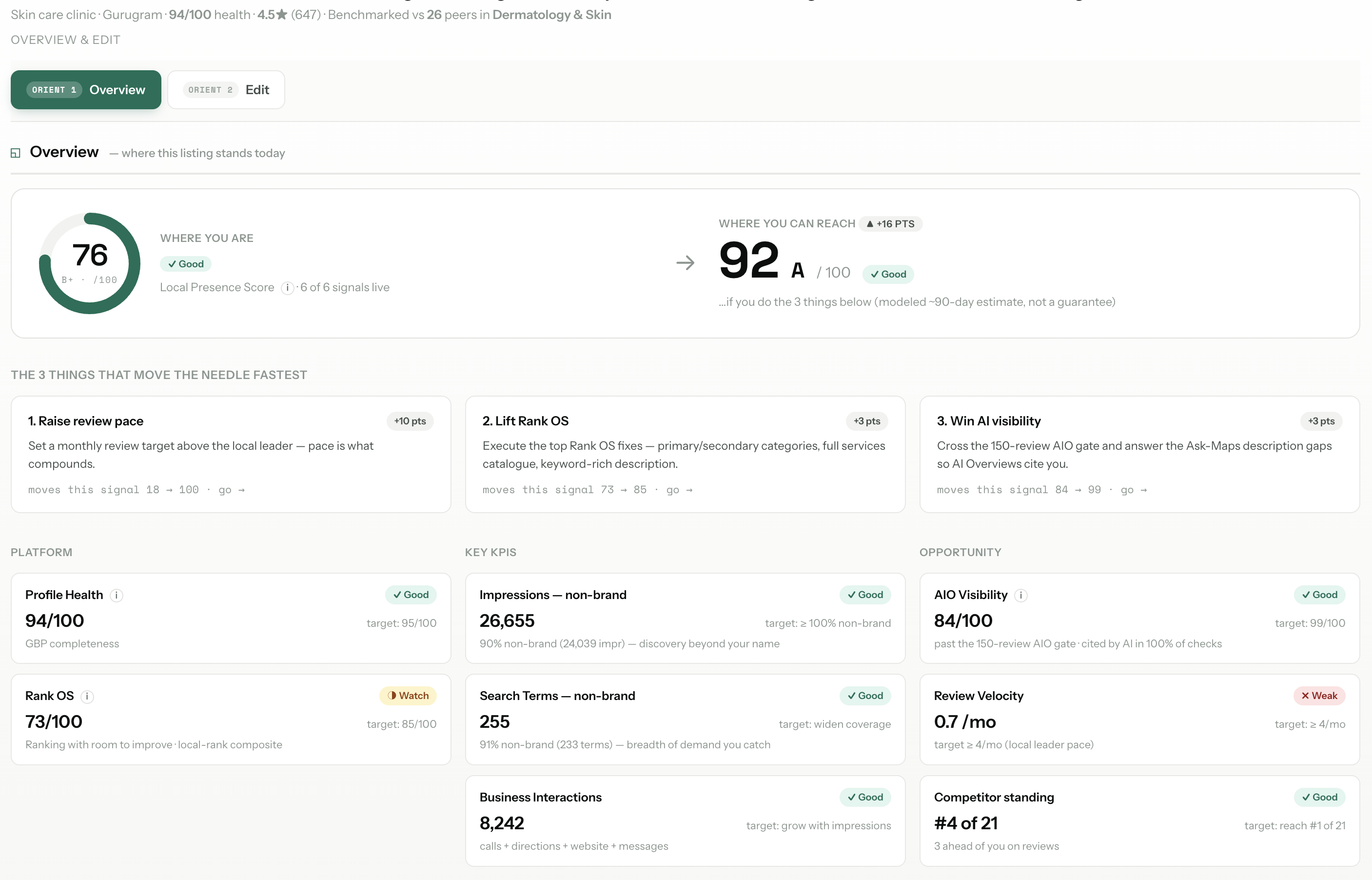
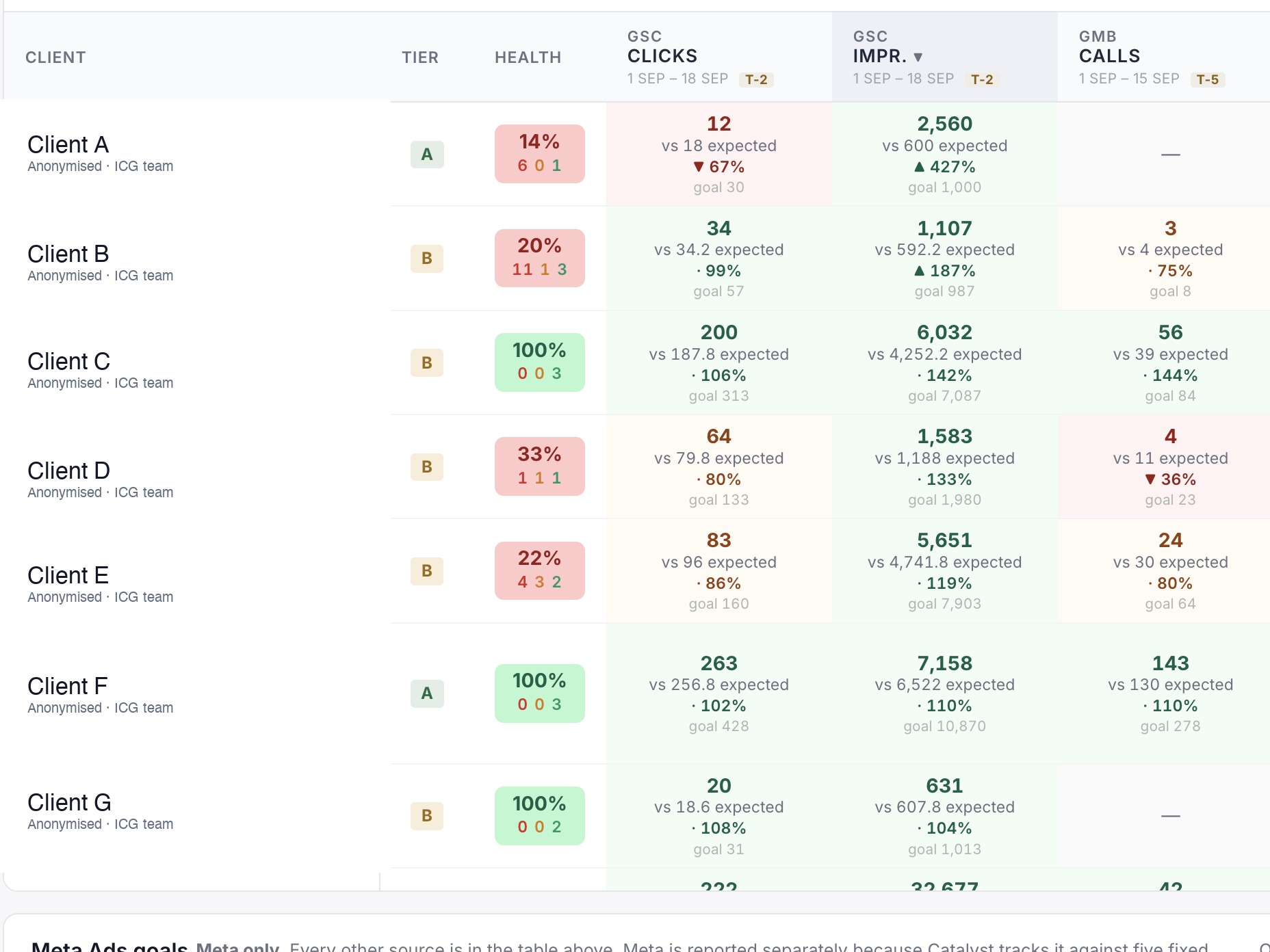
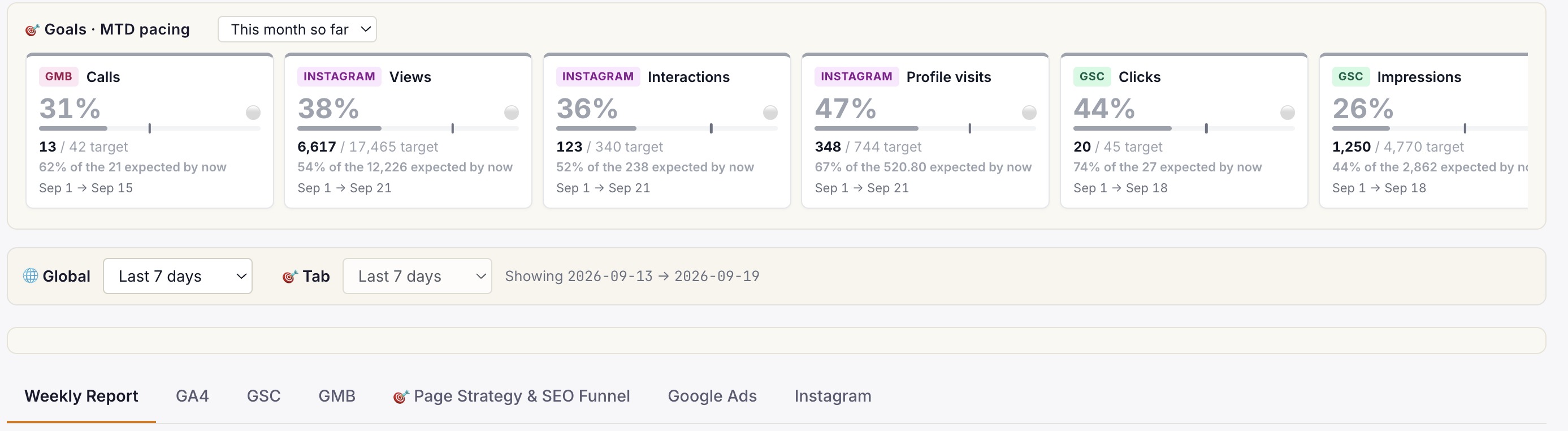
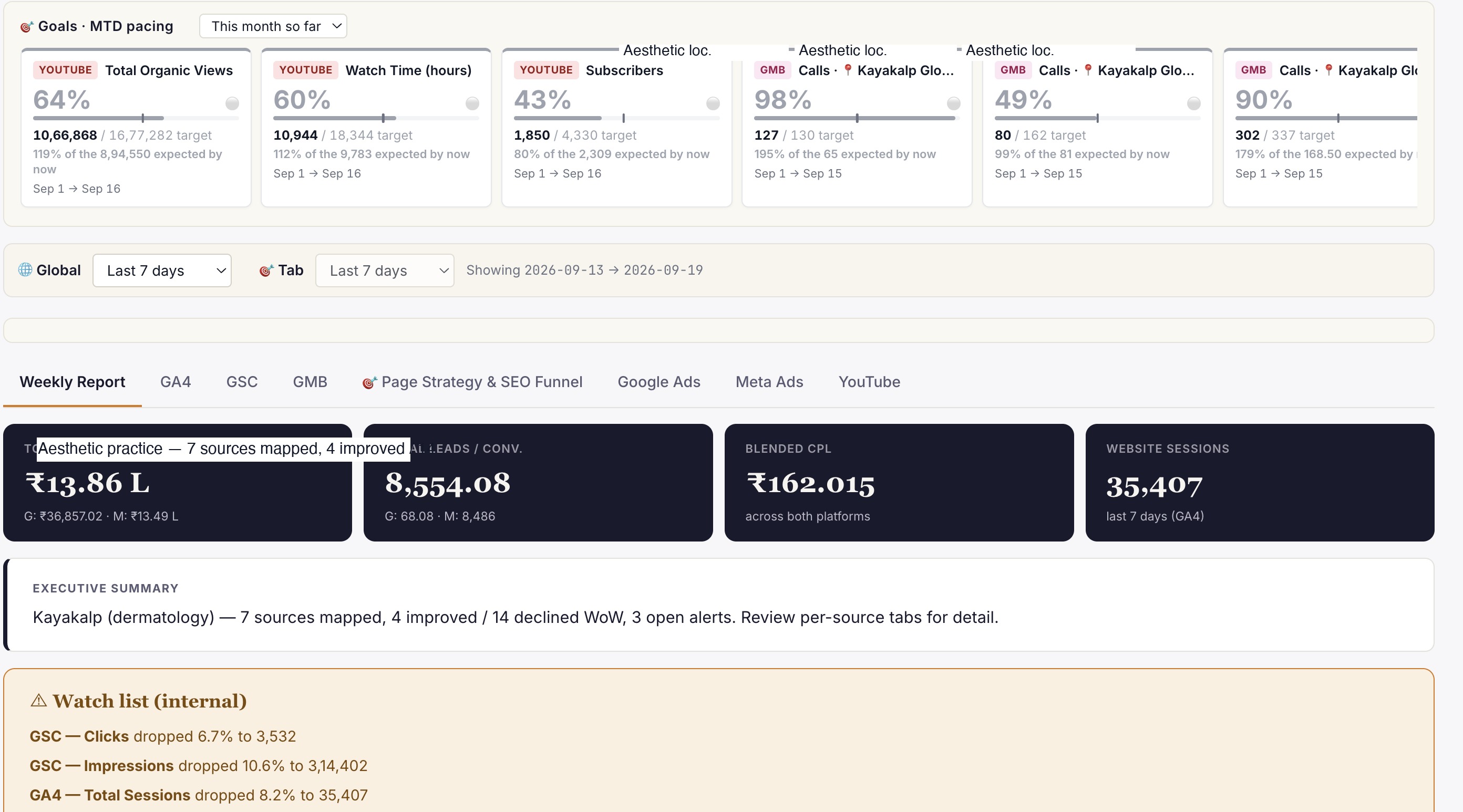
Live client dashboard. GSC, GA4, Google Ads, Meta Ads, IVR calls in one view. Login anytime, not monthly.
Phoenix
Clinic revenue intelligence over your PMS. Daily action queue: Prevent Loss, Maintain & Engage, Grow Revenue. Multi-centre rollout.
Or book a free 30-min audit to see all three in action on your account.
Healthcare brands
that already run on ICG.
A representative slice of the 150+ healthcare brands ICG has delivered for across India. Most engagements remain under NDA.


What ICG clients say · on video.
"Scale up of organic channels and business consulting. ICG has absolute domain authority in their field."
"Working with ICG transformed how we acquire IVF patients in Gurgaon. They understand the fertility journey from inquiry to consult..."
"What Ichelon accomplished — they got all my ideas and worked over 3-4 months to create an amazing, super-customised website."
Need help operationalising this?
Every ICG service is healthcare-only, NMC + DPDP-aware, and built around the patient-research patterns that drive Indian healthcare growth in 2026.
Every practice welcome — packages from ₹20,000/mo.
Goals-Driven engagements · Performance-Linked Payout Models available
More from
ICG.
Five trends shaping Indian healthcare marketing through 2027: AI-first patient research, Conversions API adoption, ABDM discovery, the AEO w...
Healthcare AIO is the discipline of getting your clinic or hospital cited inside Google AI Overviews, ChatGPT and Perplexity answers — not j...
Conversational-search advertising places brand messages inside AI chat answers — ChatGPT, Perplexity, Copilot — rather than beside a results...
Stop guessing.
Book a Diagnostic.
30 minutes. Free. With the AI-powered healthcare-only marketing agency 150+ brands already run on. No slides, no pitch, no hard close.


