


Call ads, lead forms or landing pages: which Google Ads format suits clinics
For most clinics, a fast landing page with click-to-call, WhatsApp and a short form, plus call assets, is the safest Google Ads default. Call ads suit urgent bookings during staffed hours. Lead forms bring cheaper volume but lower intent, so they pay only with instant callbacks.
No pitch. Written root-cause diagnosis. AI-powered, healthcare only.
Direct answer
For most clinics, a fast landing page with click-to-call, WhatsApp and a short form, plus call assets, is the safest Google Ads default. Call ads suit urgent bookings during staffed hours. Lead forms bring cheaper volume but lower intent, so they pay only with instant callbacks.
TL;DR
For most Indian clinics, a fast landing page with click-to-call, WhatsApp and a short form, backed by call assets on the ad, is the safest default Google Ads format. Call ads suit urgent or simple bookings during staffed hours. Lead form assets bring volume cheaply but lower intent, so they work only when someone calls every lead back within minutes.
The right choice depends on the service, the front desk and how you measure results. Below, we compare the three formats, show when each wins and explain how to test them fairly.
How can I advertise my clinic online?
Most clinics advertise through a mix of Google Ads for people already searching for a treatment, a Google Business Profile for map searches, Meta ads for awareness and retargeting, and a website that converts visitors. Google Ads is usually the first paid channel, because it captures demand that already exists. The ad format then decides how that demand reaches you.
Before choosing formats, confirm the basics are in place:
- A complete, accurate Google Business Profile, with the same phone number your ads use.
- Call tracking, so you know which calls came from ads.
- A front desk that answers during the hours your ads run.
- A simple way to record whether each enquiry became an appointment.
- Ad copy and pages that follow the NMC's 6 October 2026 advertising guidelines: factual information, no testimonials, no before/after images, no inducements and no "best" claims.
For a wider view of channels, see our answer on how to advertise a clinic in India. The rest of this guide focuses on the format decision inside Google Ads.
What are call ads, lead forms and landing pages in Google Ads?
They are three ways an ad click becomes an enquiry. A call ad makes the click a phone call. A lead form asset opens a short form inside Google, prefilled with the user's details. A landing page ad sends people to your website, where they can call, message on WhatsApp or fill a form.
| Format | What happens on click | Strengths | Weaknesses |
|---|---|---|---|
| Call ads (formerly call-only ads) | Phone dials the clinic directly | Fastest route to a conversation; high intent on mobile | No chance to inform the patient first; useless when nobody answers |
| Lead form assets | A form opens inside Google with name and phone prefilled | Low friction; often more enquiries per rupee | Lower intent; many people do not remember submitting; needs fast follow-up |
| Landing page | Patient visits a page on your website | Explains the service, doctors and location; supports calls, WhatsApp and forms | Needs a fast, focused page; more effort to build and test |
| Call assets on any ad | Adds a phone number or call button to a normal ad | Gives searchers the choice to call or visit the page | Calls must be tracked with a forwarding number to measure properly |
Lead form assets are not available to every account. Google restricts them for some sensitive categories and for accounts that do not meet its policy requirements, so check eligibility in your own account before planning around them.
When do call ads work best for clinics?
Call ads work best when the patient's need is clear and the next step is simply to book a time. Dental pain, emergency consultations, diagnostic home collection and physiotherapy appointments are good examples. They only work when calls are answered promptly, so schedule them strictly within your front desk's working hours.
- Schedule tightly. Run call ads only when the phone is staffed. A missed call from an ad is paid for and usually lost.
- Count real calls. Set a minimum call duration for a conversion, so wrong numbers and hang-ups are not counted.
- Prepare the script. The receptionist is now the landing page. They should know timings, doctors, consultation process and directions.
- Listen to recordings. If many calls ask about medicines or jobs, fix the keywords and negatives. Our guide to negative keywords for Indian clinics lists the common ones.
Call ads are a poor fit for high-consideration treatments such as IVF, cosmetic surgery or hair transplant. Those patients usually want to read about the doctor, the clinic and the process before speaking to anyone.
When do lead forms work, and what is the catch?
Lead form assets work when you need volume and have a team that calls every lead back within minutes. Because the form is prefilled, people submit easily, sometimes without strong intent. The leads are cheaper, but more of them do not answer or do not remember enquiring, so the true cost shows up only after qualification.
How to make lead forms pay:
- Add a qualifying question. Ask which service, which branch and when they would like to visit. A little friction improves quality.
- Connect the form to your CRM or a webhook. Downloading leads by hand once a day is too slow.
- Call within minutes. Interest fades fast. Send an instant WhatsApp or SMS acknowledgement if the team cannot call immediately, with the patient's consent captured on the form.
- Import outcomes. Send qualified and booked status back to Google Ads as offline conversions, so bidding learns which leads matter.
- Handle data properly. Lead details are personal data under the Digital Personal Data Protection Act, 2023. State the purpose clearly and store them securely.
Many clinics see the same pattern with Meta lead forms. Our answer on why lead form leads don't answer calls covers the fixes, and most apply to Google lead forms too.
When does a landing page beat both?
A landing page wins when patients need information before they commit: high-value treatments, new services, specialist doctors, and any clinic competing against bigger brands. A focused page can explain the procedure, introduce the doctor, show the location and offer several ways to get in touch, which tends to produce better-qualified enquiries.
A clinic landing page that converts usually has:
- One service per page, matched to the ad group's keywords and ad text.
- The doctor's name, qualifications and registration number where a doctor is named.
- Clear location, timings and a map.
- Click-to-call, a WhatsApp button and a short form, all visible on a phone without scrolling far.
- A load time that feels instant on a mobile network.
- Factual answers to common questions: consultation process, what to bring, how long the first visit takes.
Keep the page free of testimonials, before/after galleries and discount-led inducements. They are not permitted in promotion under the NMC guidelines, and some of this material can also run into Google's own healthcare ad policies. If you are unsure what your pages may show, an NMC compliance audit reviews them against the current rules. This reflects the rules as of October 2026; confirm specifics with your counsel.
How do I advertise my dental clinic on Google Ads?
Advertise a dental clinic with separate campaigns or ad groups per treatment, a tight radius around the clinic, call assets on every ad, and landing pages for high-value treatments such as implants and aligners. Use call ads for pain and emergency searches during clinic hours. Test lead forms only if your team can call back quickly.
| Dental search intent | Suggested format | Why |
|---|---|---|
| Toothache, broken tooth, emergency dentist | Call ads plus call assets, scheduled to clinic hours | Patients want to speak and book now |
| Root canal, fillings, cleaning | Landing page with call and WhatsApp buttons | Some patients call, some want timings and location first |
| Implants, aligners, full-mouth rehabilitation | Detailed landing page; lead form as a test | High consideration; patients research the dentist and process |
| Kids' dentistry | Landing page focused on the paediatric dentist and clinic environment | Parents want reassurance before booking |
For a channel comparison specific to dental clinics, see Google Ads vs Meta ads for dental clinics.
How should a clinic compare formats fairly?
Compare formats on cost per qualified lead and cost per booked appointment, not cost per enquiry. A cheap lead form that rarely books can cost more than an expensive call that books every time. Run formats side by side for long enough to collect meaningful numbers, and record every enquiry's outcome in one place.
- Use one definition of "qualified". For example: reachable, asking about a service you offer, within your area, and willing to visit.
- Track every route. Calls from ads, calls from the website, WhatsApp chats and forms all need a source.
- Feed results back. Import qualified and booked outcomes into Google Ads so bidding optimises for them.
- Compare against a benchmark. ICG's public dataset puts the median cost per qualified lead at ₹1,220 for ICG-managed accounts against a ₹2,100 market median. See the CPQL benchmarks page for how it is calculated.
A simple test plan
Do not switch everything at once. Pick one service with steady search volume and run the test there first.
- Set the baseline. Keep your current landing page campaign running and note its cost per qualified lead over the previous month.
- Add one new format. Either a call ad group scheduled to clinic hours, or a lead form asset on the existing ads. Change nothing else.
- Agree the follow-up rules. Who calls lead form leads, how fast, and how many attempts before a lead is marked unreachable.
- Record outcomes daily. Reachable, qualified, booked, visited. A shared sheet works if you have no CRM yet.
- Review after a full cycle. Give it at least four weeks, or longer for low-volume services, so a few unusual days do not decide the result.
- Keep the winner and test the next service. The best format for root canals may not be the best for aligners.
Watch the front desk as closely as the dashboard. A format that brings more calls than staff can answer will look worse than it is, and the fix may be staffing or scheduling, not the ad.
Are Google Ads still worth it for clinics in 2026?
Yes, for most clinics, when the format matches the service and the clinic measures qualified leads. AI Overviews now answer many general health questions, but searches for a treatment plus a place still show ads, and people choosing a clinic still click and call. What has changed is that a sloppy account wastes money faster.
Automated bidding and broad matching now decide much of who sees your ads. Those systems learn from the conversions you report. If you report every form fill and every short call as a success, they will find more of the same. If you report qualified leads and booked appointments, they will look for patients who book. The format choice and the measurement choice go together.
Treat ads, landing pages and the front desk as one system. If you want a team that builds that system and reports on booked appointments, our healthcare PPC agency service starts from ₹20,000 per month, custom-scoped. You can also book a call to review which format fits each of your services.
Book a free Google Ads account audit.
Raman Soni's team pulls your account, reviews campaign structure, keyword intent tiering, landing pages, and CPQL attribution. 45 minutes, actionable.
Questions readers ask
about this topic.
The three platforms
behind every ICG engagement.
Beacon
CAPI middleware that fixes Event Match Quality, translates CRM statuses to Meta-standard events, dedups across channels.
Agency OS
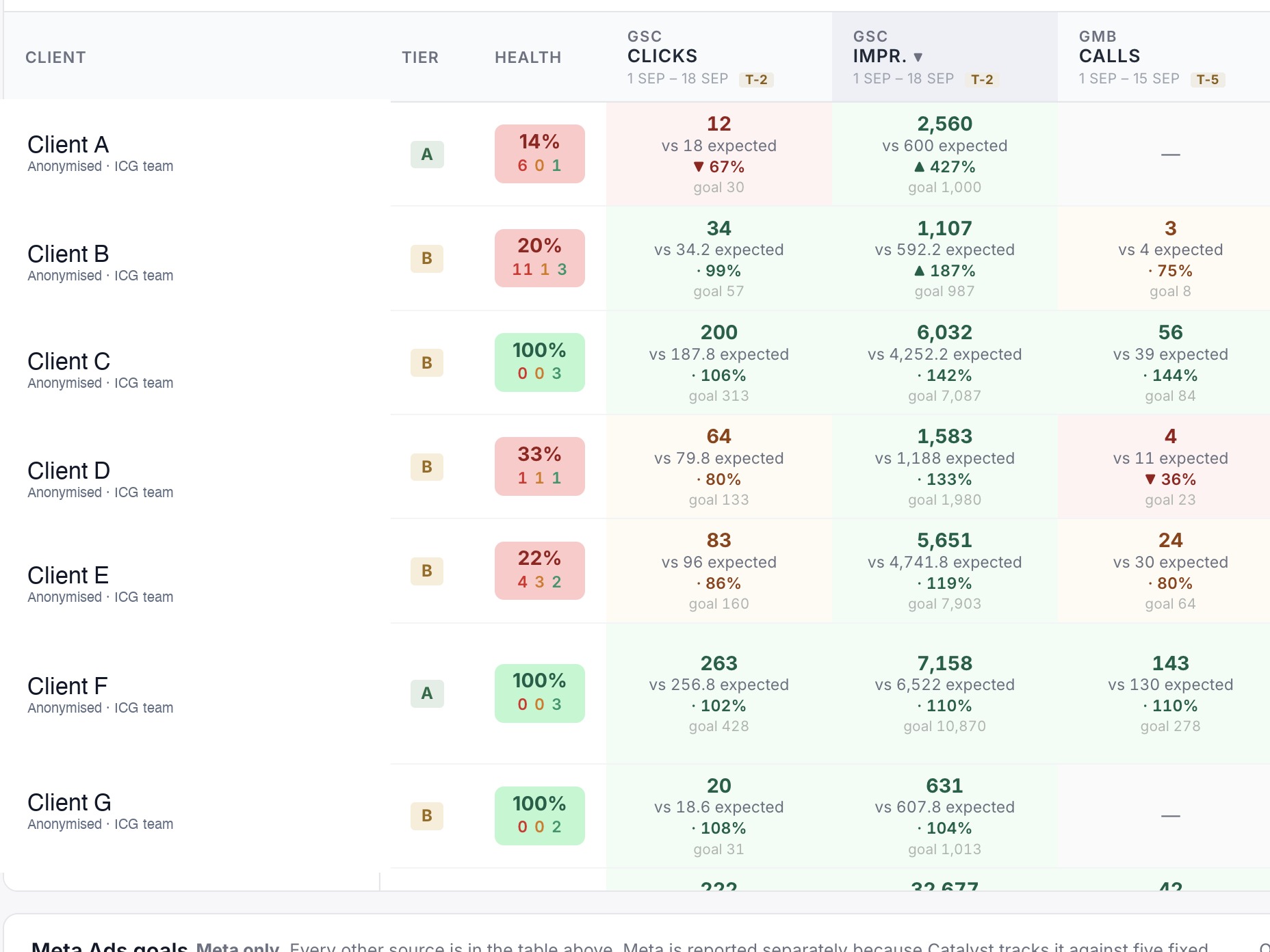
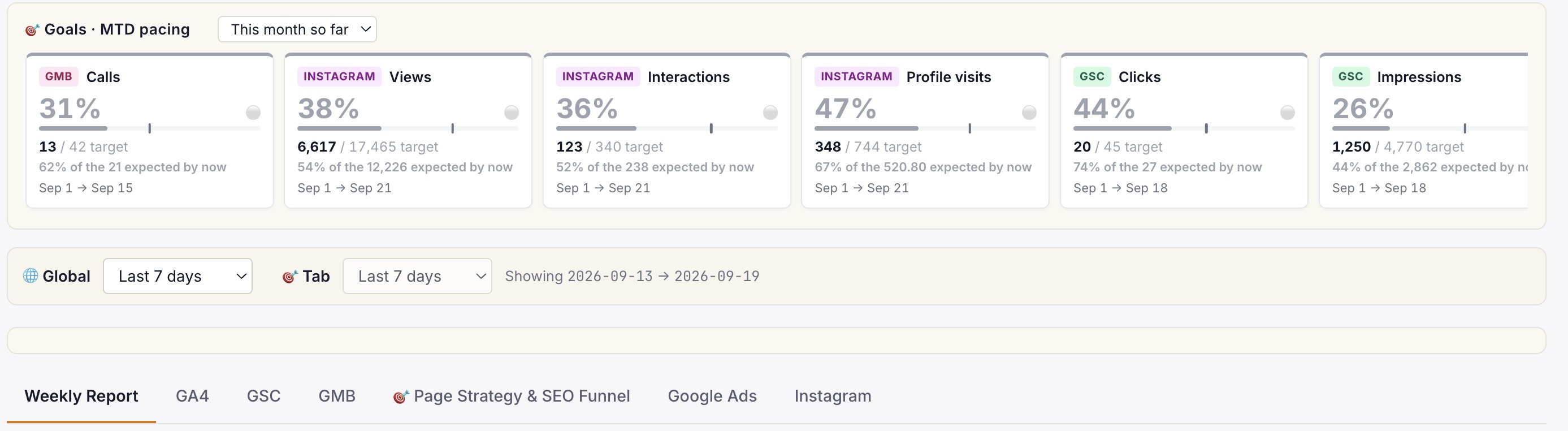
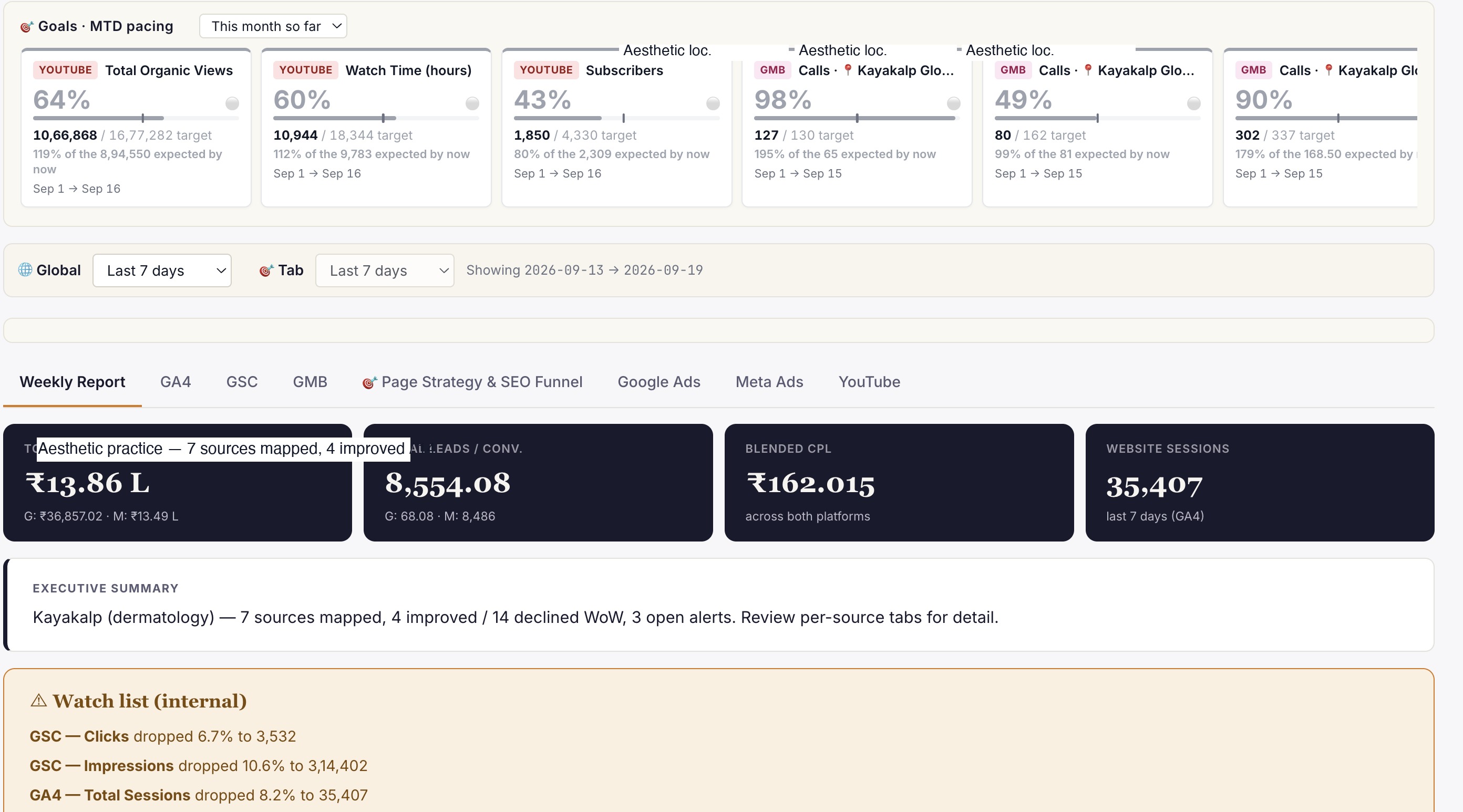
Live client dashboard. GSC, GA4, Google Ads, Meta Ads, IVR calls in one view. Login anytime, not monthly.
Phoenix
Clinic revenue intelligence over your PMS. Daily action queue: Prevent Loss, Maintain & Engage, Grow Revenue. Multi-centre rollout.
Or book a free 30-min audit to see all three in action on your account.
Healthcare brands
that already run on ICG.
A representative slice of the 150+ healthcare brands ICG has delivered for across India. Most engagements remain under NDA.


What ICG clients say · on video.
"Scale up of organic channels and business consulting. ICG has absolute domain authority in their field."
"Working with ICG transformed how we acquire IVF patients in Gurgaon. They understand the fertility journey from inquiry to consult..."
"What Ichelon accomplished — they got all my ideas and worked over 3-4 months to create an amazing, super-customised website."
Need help operationalising this?
Every ICG service is healthcare-only, NMC + DPDP-aware, and built around the patient-research patterns that drive Indian healthcare growth in 2026.
Every practice welcome — packages from ₹20,000/mo.
Goals-Driven engagements · Performance-Linked Payout Models available
More from
ICG.
Hindi and regional-language SEO means publishing proper pages in the languages your patients search in, on their own URLs and linked with hr...
A new pharma brand in India should start digital work before launch, built around who it may legally address. This six-month plan covers pro...
Hospitals and clinics in India can still advertise after the NMC's 6 October 2026 guidelines, but only with factual, verifiable information....
Stop guessing.
Book a Diagnostic.
30 minutes. Free. With the AI-powered healthcare-only marketing agency 150+ brands already run on. No slides, no pitch, no hard close.


