


ABDM Hospital Management System India: 2026 Integration Playbook
ABDM-integrated HMS now decides which Indian hospitals unlock ABHA-linked patients in 2026. Inside: the 4-week playbook, cost bands, and vendor checklist.
No pitch. Written root-cause diagnosis. AI-powered, healthcare only.
Direct answer
ABDM-integrated HMS now decides which Indian hospitals unlock ABHA-linked patients in 2026. Inside: the 4-week playbook, cost bands, and vendor checklist.
TL;DR
The Ayushman Bharat Digital Mission (ABDM) — launched by the National Health Authority — is rapidly becoming the de facto health-data interoperability standard for India. By 2026, ABDM integration is no longer optional for hospitals seeking government accreditation, insurance empanelment, or even simple PHI portability.
This article covers what ABDM integration actually means for your hospital management system (HMS), the Health Information Provider (HIP) registration process, and how HealthPro 360 handles all of it end-to-end.
What is ABDM?
ABDM is India's national digital health infrastructure. Its core building blocks:
- ABHA (Ayushman Bharat Health Account) — a unique 14-digit Health ID for every Indian citizen. Acts as the patient's portable identifier across all healthcare providers.
- HPR (Healthcare Professionals Registry) — registry of NMC-registered doctors, nurses, pharmacists, with verifiable credentials.
- HFR (Health Facility Registry) — registry of every hospital, clinic, lab, pharmacy in India with their services + capacity + location data.
- PHR (Personal Health Records) — the patient's health-data wallet. Patients control which providers can access which records.
- UHI (Unified Health Interface) — open protocol for interoperability between providers, similar to UPI for payments.
For an HMS, ABDM integration means becoming a Health Information Provider (HIP) — a hospital that can ingest ABHA IDs, push health records into PHR, and respond to PHR access requests from other providers (with patient consent).
What ABDM integration involves for an HMS
Phase 1: HFR Registration
The hospital registers in the Health Facility Registry with all its services (specialties, departments, accreditation status). Once registered, the hospital gets a unique HFR ID.
Phase 2: HPR Registration
Every doctor and clinical staff member registers in the Healthcare Professionals Registry with their NMC registration, credentials, and HPR ID. HMS records link patient interactions to HPR-registered providers.
Phase 3: HIP Registration
The hospital registers as a Health Information Provider (HIP) — meaning it can push health records into ABDM. Requires technical integration with ABDM APIs (authentication, encryption, consent management).
Phase 4: ABHA Capture
Every new patient registration captures the patient's ABHA ID (if they have one) or creates one (with patient consent). The HMS links patient internal-ID to ABHA-ID.
Phase 5: Record Push to PHR
With patient consent, the HMS pushes clinical records (consultation notes, prescriptions, lab results, discharge summaries) into the patient's PHR.
Phase 6: Record Fetch from PHR
With patient consent, the HMS fetches the patient's PHR history from other providers (e.g., previous consultations at another hospital, lab results from a diagnostic lab).
Phase 7: Consent Manager Integration
ABDM uses a federated consent manager architecture. Patients grant consent through the consent manager (e.g., NHA's official one, or third-party CMs). The HMS must respect consent rules in every PHI access.
How HealthPro 360 handles ABDM end-to-end
ICG's HealthPro 360 ships with ABDM integration as a first-class feature, not an add-on. Built-in capabilities:
- HFR + HPR registration support: ICG handles the paperwork as part of implementation
- HIP integration via FHIR R4 + ABDM APIs: native, no third-party connector
- ABHA capture at patient registration: automatic, with consent workflow
- PHR push automation: consultation notes + prescriptions + lab results + discharge summaries pushed automatically (consent-respecting)
- PHR fetch on demand: at consultation time, doctor can request patient's PHR history with one-click consent flow
- Consent manager integration: native integration with NHA's CM + ability to configure third-party CMs
- Audit trail for every PHI access: DPDP Act 2023 compliant, ABDM-attestable
Why this matters now
By 2026:
- ABDM compliance is increasingly part of NABH accreditation criteria
- State insurance schemes (Ayushman Bharat PM-JAY, state schemes) increasingly require ABDM integration for empanelment
- Patient PHR adoption is growing — by Q4 2026, ~40% of urban Indian patients will have ABHA IDs
- Insurance claim cycle times shorten significantly with ABDM-integrated claim documents (15-day cycles vs 30-45 day cycles)
- Cross-provider care continuity (patient moves between specialties, hospitals, labs) requires ABDM PHR
Hospitals without ABDM integration in 2026 will face:
- Accreditation risk
- Insurance empanelment friction
- Patient experience gap (patients increasingly expect to see their records in their PHR)
- Compliance audit findings
The 4-week ABDM integration timeline
If your hospital is already on HealthPro 360, ABDM integration adds 4 weeks to the implementation:
- Week 1: HFR registration + facility audit + service inventory
- Week 2: HPR registration for all clinical staff + NMC verification
- Week 3: HIP registration + technical integration + sandbox testing
- Week 4: Production cutover + ABHA capture workflow + PHR push/fetch automation
For hospitals NOT on HealthPro 360, the ABDM integration timeline depends on the existing HMS's API maturity. Some Indian HMS products are ABDM-ready (HealthPro 360, MediXcel newer versions). Others require significant custom integration.
Related reads
- Hospital Management System India — full HMS overview
- HealthPro 360 — the platform handling ABDM
- EMR Software India — EMR layer that pushes to PHR
- Clinic Management System India — for non-hospital clinics
ABDM compliance dimensions for hospital management systems
ABDM (Ayushman Bharat Digital Mission) integration in an HMS is not a single feature — it is four distinct technical capabilities that must all function correctly for the hospital to be considered genuinely ABDM-compliant.
Capability 1: ABHA ID capture and verification. At registration, the HMS must capture the patient's 14-digit ABHA (Ayushman Bharat Health Account) number and verify it against the ABDM central registry in real time. Storing the number without verification is insufficient — the ABHA must be confirmed as active and linked to the correct patient before health records can be attached. HMS platforms that claim ABDM integration but only store the ABHA number without live verification fail this first capability. Capability 2: FHIR R4-format health record generation. The HMS must generate structured health records in HL7 FHIR (Fast Healthcare Interoperability Resources) Release 4 format for sharing through the Health Information Exchange and Consent Manager (HIE-CM). The required FHIR document types under ABDM: Discharge Summary, Prescription, Lab Report, OPD Report, Immunisation Record, and Wellness Record. Each has a defined FHIR profile published by the National Health Authority. HMS vendors claiming "FHIR support" may support only 2–3 of the 6 required document types — verify the full list. Capability 3: Consent management. Before any health record is shared with another provider, the patient must provide explicit digital consent through the ABDM Consent Manager (the HIE-CM gateway). The HMS must initiate consent requests, receive consent status from the HIE-CM, and block record sharing for patients who have not consented. Hospitals that share records without routing through ABDM consent are non-compliant even if the underlying records are FHIR-formatted. Capability 4: HIP registry integration. The hospital must be registered as a Health Information Provider (HIP) in the ABDM ecosystem. The HMS must have the API integration to receive health information requests from other facilities (when a patient presents elsewhere and requests record access) and to deliver records securely to the HIE-CM gateway.Which HMS vendors have ABDM integration — the 2026 landscape
The National Health Authority maintains an ABDM integration sandbox and a published list of NHA-certified integrators. Verification against this list is more reliable than vendor claims.
Bahmni (open-source): The strongest open-source ABDM integration available. Bahmni's ABDM module covers all four capabilities — ABHA capture, FHIR generation for all required document types, consent management, and HIP integration. Maintained by the Bahmni community and Mycare India. Zero licensing cost; implementation and support costs are significant. KareXpert: Commercial HMS with declared ABDM integration. ABHA capture and FHIR generation are well-documented. Consent management and HIP integration are in active development as of mid-2026. Verify current module scope before contracting. eHospital Systems: Long-established HMS with ABDM integration in progress. ABHA capture is functional. Full FHIR compliance and HIP integration should be verified against the NHA certified integrator list. Insta HMS: Strong OPD scheduling and billing with ABDM integration announced. Full FHIR document support and HIP integration status should be confirmed with the vendor against specific go-live dates. Small and mid-tier vendors: A large number of smaller HMS and clinic software vendors claim ABDM compliance without having gone through NHA certification. The NHA sandbox certification is the most reliable verification point — ask any vendor for their NHA sandbox certification number.The ABDM implementation roadmap for a 50-bed hospital
A 50-bed hospital implementing ABDM for the first time should expect a 6–9 month implementation timeline from vendor selection to full go-live. The roadmap:
Month 1–2: ABHA ID registration for the facility as a Health Information Provider (HIP) via the NHA HIP onboarding portal. Vendor selection and contract with an NHA-certified HMS. Integration environment setup. Month 3–4: ABHA capture at registration desk — training front desk staff on the ABHA ID verification workflow. Initial FHIR document generation for Discharge Summaries and Prescriptions (the two highest-volume document types). Month 5–6: Full FHIR document suite — Lab Reports, OPD Reports, Immunisation Records. Consent management workflow activated — all new patients offered ABHA consent at registration. Month 7–9: Go-live with real patient data. HIP registry integration tested with live records. Staff training on consent workflow for patients who decline ABDM linkage (clinical care must not be conditional on ABDM consent). Ongoing: ABDM requirement updates — NHA publishes updated FHIR profiles and new document types on a rolling basis. Verify with the HMS vendor that the integration tracks NHA updates as part of the standard subscription.Cost benchmarks for ABDM-compliant HMS in India 2026
| HMS category | Licensing (monthly) | Implementation | ABDM-specific integration |
|---|---|---|---|
| Bahmni (open-source) | ₹0 | ₹5–25L one-time | Included in implementation |
| Mid-tier commercial HMS | ₹40,000–₹1,50,000 | ₹3–12L one-time | ₹1–3L additional or included |
| Enterprise commercial HMS | ₹1,50,000–₹5,00,000+ | ₹10–50L+ | Typically included in enterprise tier |
Note: ABDM integration maintenance — tracking NHA updates, testing new document types, re-certification after major NHA infrastructure changes — is an ongoing cost not captured in the licensing figure. Budget 15–20% of annual licensing cost for ABDM integration maintenance with a commercial vendor.
Frequently asked questions
Is ABDM integration mandatory for all Indian hospitals in 2026?
ABDM integration is not universally mandated by law for all hospitals. It is required for: PM-JAY (Ayushman Bharat) empanelled hospitals (ABDM integration is part of the empanelment criteria), government hospitals under NHA digital health programmes, and facilities applying for NHA's digital health incentives. For private hospitals not seeking PM-JAY empanelment, ABDM integration is voluntary but strategically important — interoperability with the national health record ecosystem is increasingly expected by large insurers and corporate health programmes.
What is the NHA's ABDM sandbox certification and why does it matter?
The NHA operates a technical sandbox environment where HMS vendors test their ABDM integration against NHA's specifications before deploying with real patient data. Vendors who have completed sandbox certification have demonstrated that their implementation meets NHA's technical requirements for ABHA verification, FHIR document generation, consent management, and HIP integration. Vendors without sandbox certification have not had their integration independently verified — their ABDM claim rests on their own testing only.
How does ABDM affect patient consent for record sharing?
Under ABDM, patients control their own health records through the ABDM Consent Manager. A patient can grant a hospital permission to share their records with another provider (for a referral) and revoke that permission at any time. Clinical care must not be made conditional on the patient providing ABDM consent — a patient who declines to link their ABHA to the hospital's system must still receive the same quality of care. HMS workflows must accommodate the non-consenting patient path without creating a clinical bottleneck.
Which hospitals should prioritise ABDM integration in 2026?
Three categories should prioritise: hospitals with PM-JAY empanelment (required), hospitals with significant government employee patient volume who use CGHS (ABDM integration increasingly referenced in CGHS empanelment criteria), and hospitals building for multi-speciality expansion (ABDM integration at the early stage is significantly cheaper than retrofitting at 300-bed scale).
Read: Healthcare software India → · Read: EMR vs PMS vs HMS → · Book a free diagnostic →Related reading on ICG
This piece sits inside ICG's broader work on healthcare growth, AI-first marketing systems, and healthcare operations. If this article was useful, these related pieces from ICG's editorial and platform work will help you build on it:
- EMR vs PMS vs HIS vs HMS — what you actually need
- Practice management software — India comparison 2026
- Best healthcare software — India
- AtomCRM for hospitals
- Free 30-min HMS diagnostic
Or explore the full editorial index at ICG Insights, our healthcare services, or book a free 30-minute diagnostic to discuss your specific context with a Co-Founder.
Common ABDM integration mistakes Indian hospitals repeat in 2026
Almost every hospital we audit for the Client Elevation Programme makes at least three of the mistakes below. Each one silently blocks ABHA-linked patient discovery, ABDM Health Facility Registry (HFR) verification, or the milestone-based incentives under PM-JAY empanelment. Fix these before you sign any HMS contract in 2026.
- Treating ABDM as an IT project, not a discovery channel. Once your facility ID goes live in HFR, ABHA app searches will list you against every empanelled hospital in your pincode. Hospitals that layer paid discovery on top of the free ABDM footprint outperform ABDM-only peers by 3-4x on qualified footfall.
- Buying an HMS that only handles OP tokens. ABDM Milestone 2+ needs IPD discharge summaries, lab reports, and prescriptions pushed as FHIR bundles. If the vendor demo skips IPD, you will re-buy inside 12 months.
- Skipping the HPR onboarding for consultants. Every treating doctor needs a Healthcare Professional Registry ID before ABHA-linked records can carry their digital signature. Hospitals that batch-onboard doctors in week one hit Milestone 3 four weeks faster.
- Ignoring consent artefacts. Under DPDP Act 2023, ABDM consent logs are the primary defensible audit trail. HMS without a queryable consent ledger fails NABH digital-health entry criteria on the first cycle.
- Publishing an ABDM badge without ABHA-linked bookings live on the website. The badge is worth nothing if the appointment page still asks for name + phone only. Wire ABHA scan-to-book on the top 3 landing pages first.
- Leaving the marketing team out of the ABDM rollout. ABHA-verified patient counts, HFR profile completeness, and ABDM search rank inside the app are all marketing KPIs now. Loop in the growth team from week one.
If any three of the above sound familiar, get a second opinion before you sign the vendor contract — WhatsApp Rohit for a 20-minute ABDM readiness review.
How do Indian hospitals govern ABDM operations after go-live in 2026?
Direct answer: Post-go-live governance rests on four pillars: a daily sync-error queue with a sub-24-hour resolution SLA, a DPDP-aligned consent audit log retained for seven years, monthly reconciliation of ABDM-linked PMJAY and private TPA claims, and a named Data Protection Officer accountable to the hospital MD. Most 50-100 bed hospitals in Delhi, Mumbai, and Bengaluru budget between ₹35,000 and ₹70,000 per month for this operational layer once the initial integration ships.
1. Sync monitoring and error queues
ABDM push and fetch operations fail for many reasons: expired HFR tokens, malformed FHIR R4 bundles, network drops in tier-3 cities, or PHR-side rate limits. A production hospital in Jaipur running around 180 discharges a day will typically see 3 to 5 per cent of record pushes fail on any given day. Without an alerting queue that surfaces failures to the IT desk inside four hours, backlogs of 400-plus un-synced encounters build within a fortnight, and that becomes a NABH audit finding. Set an internal SLA: any failure older than 24 hours triggers a Sev-2 ticket. HealthPro 360 clients on ICG's 70-30 managed model receive this monitoring layer bundled at no extra cost.
2. DPDP-aligned consent audit trails
The Digital Personal Data Protection Act, 2023 requires hospitals to retain proof of consent for the full data retention period. For ABDM consent artefacts, which authorise a doctor at Hospital A to fetch records from Hospital B, this means storing the signed consent JWT, timestamp, purpose code, and expiry for a minimum of seven years post-encounter. Audit logs must be immutable (WORM storage or ledger-hashed), and the DPO must be able to produce a specific patient's consent history within 72 hours of a Data Principal request. Failure to comply carries penalties of up to ₹250 crore under DPDP Section 33.
3. PMJAY and TPA claim reconciliation
ABHA-linked encounters increasingly feed into PMJAY empanelled hospital claim workflows and private TPA pre-authorisations. Mismatches between the HMS discharge summary, the pushed PHR record, and the TPA claim form trigger rejections averaging 8 to 12 per cent of monthly revenue at empanelled tier-2 hospitals. A monthly three-way reconciliation between HMS, ABDM ledger, and TPA portal is now standard practice for 200-plus bed private hospitals in Chennai and Hyderabad.
Mini-FAQ on ABDM operational governance
Who owns ABDM operational SLAs inside the hospital? The IT head signs the sync SLA, the DPO signs the consent audit SLA, and the CFO signs the claim reconciliation SLA. NMC's Registered Medical Practitioner Regulations, 2023 additionally place personal accountability on the treating doctor for record accuracy pushed under their HPR ID.
Can a hospital outsource ABDM operations to its HMS vendor? Yes, but the DPDP Act treats the hospital as Data Fiduciary regardless of who runs the technology stack. Any outsourcing agreement must include a written Data Processor contract, breach-notification clauses inside 72 hours, and audit-access rights. ICG's 70-30 managed model wraps this contractually so the hospital's compliance risk stays covered.
Book a free 30-minute Brand & Growth Diagnostic.
It's a working session, not a sales pitch — you leave with a written root-cause analysis you can act on, whether or not you engage ICG.
Questions readers ask
about this topic.
The three platforms
behind every ICG engagement.
Beacon
CAPI middleware that fixes Event Match Quality, translates CRM statuses to Meta-standard events, dedups across channels.
Agency OS
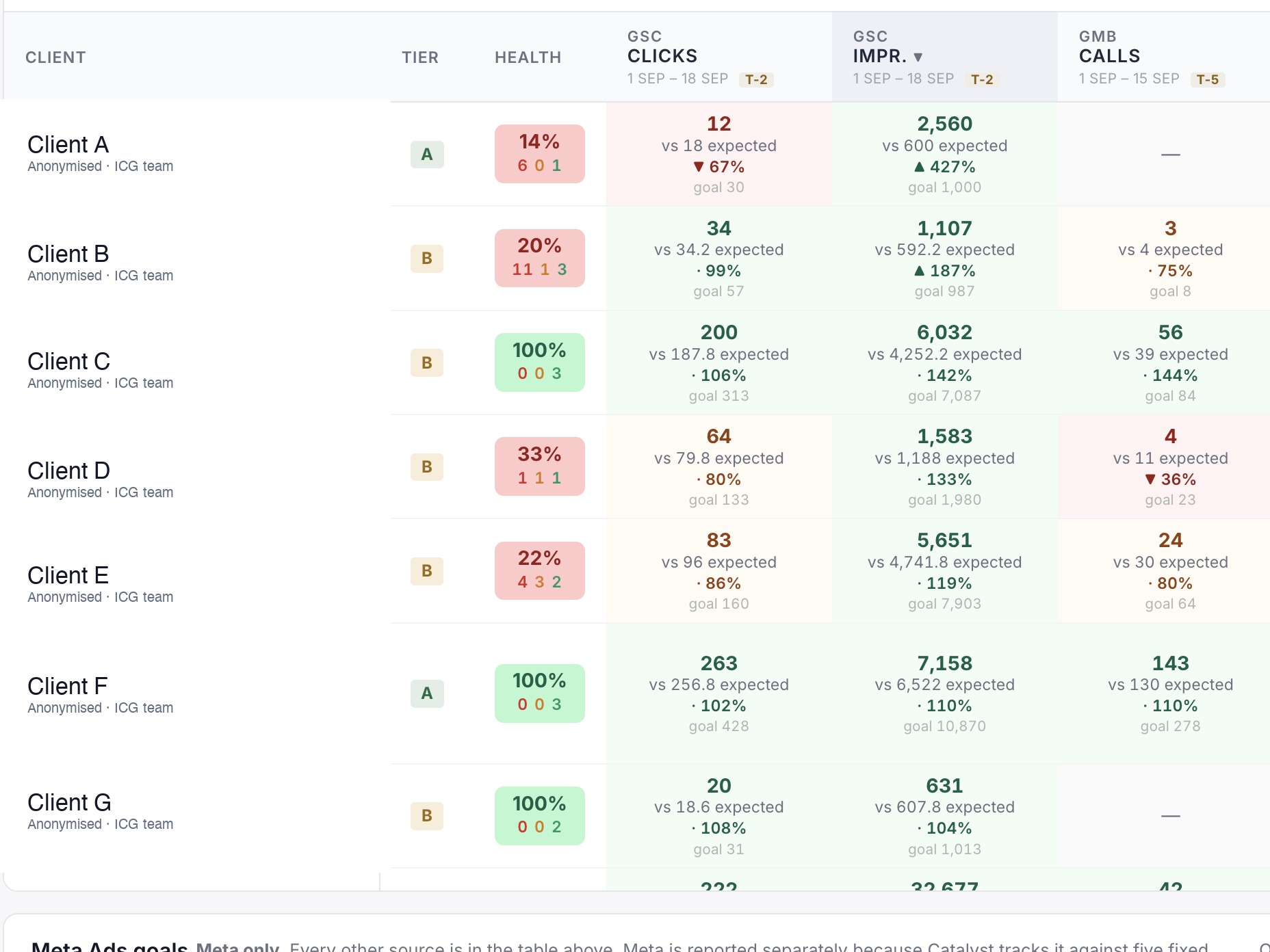
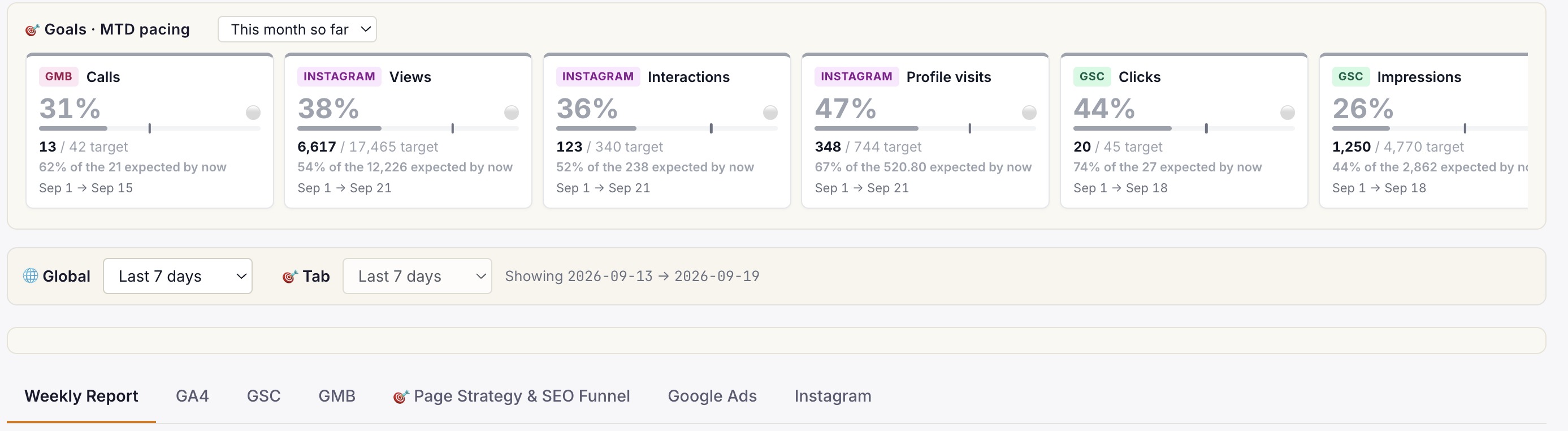
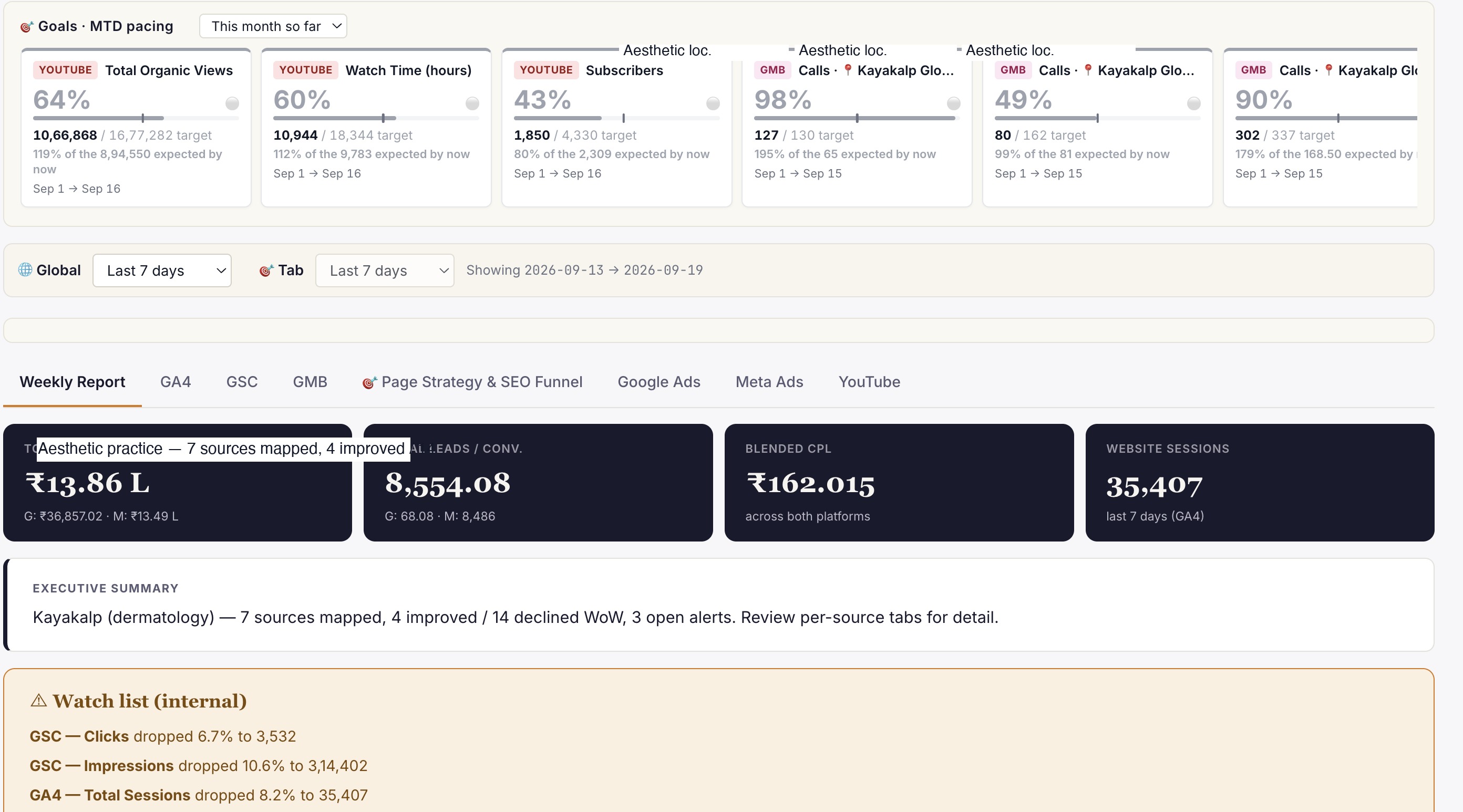
Live client dashboard. GSC, GA4, Google Ads, Meta Ads, IVR calls in one view. Login anytime, not monthly.
Phoenix
Clinic revenue intelligence over your PMS. Daily action queue: Prevent Loss, Maintain & Engage, Grow Revenue. Multi-centre rollout.
Or book a free 30-min audit to see all three in action on your account.
Healthcare brands
that already run on ICG.
A representative slice of the 150+ healthcare brands ICG has delivered for across India. Most engagements remain under NDA.


What ICG clients say · on video.
"Mental health marketing requires a different sensitivity. ICG built compliance-aware campaigns that respect both patients and our..."
"Bariatric surgery patients need a long consideration cycle. ICG built a content + paid system that respects that timeline."
"Working with ICG felt like working with an in-house growth team that happens to specialise in healthcare."
Need help operationalising this?
Every ICG service is healthcare-only, NMC + DPDP-aware, and built around the patient-research patterns that drive Indian healthcare growth in 2026.
Every practice welcome — packages from ₹20,000/mo.
Goals-Driven engagements · Performance-Linked Payout Models available
More from
ICG.
Five trends shaping Indian healthcare marketing through 2027: AI-first patient research, Conversions API adoption, ABDM discovery, the AEO w...
Healthcare AIO is the discipline of getting your clinic or hospital cited inside Google AI Overviews, ChatGPT and Perplexity answers — not j...
Conversational-search advertising places brand messages inside AI chat answers — ChatGPT, Perplexity, Copilot — rather than beside a results...
Stop guessing.
Book a Diagnostic.
30 minutes. Free. With the AI-powered healthcare-only marketing agency 150+ brands already run on. No slides, no pitch, no hard close.


