


Wellness Coach Marketing 2026: AYUSH, Instagram & WhatsApp Playbook
Wellness coach and holistic practice marketing playbook for 2026: AYUSH compliance, Instagram content that converts, WhatsApp funnels, budget benchmarks.
No pitch. Written root-cause diagnosis. AI-powered, healthcare only.
Direct answer
Wellness coach and holistic practice marketing playbook for 2026: AYUSH compliance, Instagram content that converts, WhatsApp funnels, budget benchmarks.
TL;DR
TL;DR
- Wellness coaching has the most Instagram-native marketing model of any health category — content IS the product demonstration
- AYUSH practitioners (Ayurveda, Yoga, Naturopathy) are regulated by Ministry of AYUSH — advertising guidelines differ from NMC
- Biggest marketing risk: wellness practitioners making disease treatment claims without AYUSH or NMC registration
- CAC benchmarks: ₹380–₹2,400 for individual consultations; ₹1,200–₹8,000 for programme enrolments
Wellness coaching and holistic health practice marketing occupies a unique position in the healthcare marketing landscape. It is simultaneously the most creative and the most regulatory-uncertain category in Indian health marketing.
The most creative, because wellness practices — yoga therapy, Ayurvedic consulting, holistic nutrition, functional medicine coaching — are demonstrably showing their value through content. The wellness coach whose Instagram Reels teach breathwork, explain Ayurvedic doshas, or demonstrate yoga therapy modifications is running a continuous product demonstration that builds trust at scale. The content is the proof.
The most regulatory-uncertain, because the wellness-to-medicine boundary is blurred in Indian regulation. An Ayurvedic physician (BAMS) is a regulated practitioner under the National Commission for Indian System of Medicine (NCISM). A self-styled "holistic health coach" with no formal qualification is an unregulated practitioner who cannot legally make disease treatment claims but frequently does. The marketing implications of which category a practitioner falls into are significant.
The wellness practice regulatory spectrum
Understanding where a practice sits in the regulatory spectrum determines what can be marketed and how.
Regulated AYUSH practitioners: BAMS (Ayurveda), BUMS (Unani), BSMS (Siddha), BHMS (Homeopathy), BNYS (Naturopathy and Yoga) — registered with their respective state councils and the NCISM. These practitioners can treat patients, prescribe within their scope, and market within the AYUSH advertising guidelines. The NCISM's ethics guidelines broadly parallel NMC Section 6 — no guaranteed outcome claims, no comparison with other practitioners, no testimonials that attribute specific disease outcomes to treatment.
Registered Yoga teachers and therapists: Yoga teachers are not regulated by NCISM unless they hold a BNYS degree. However, QCI (Quality Council of India) operates a National Yoga Certification Framework (NYCF) that provides credential recognition. Yoga therapists treating specific conditions (cardiac yoga therapy, cancer rehabilitation yoga) without a BNYS or equivalent clinical yoga training degree are operating in a regulatory grey zone.
Wellness coaches (unregulated): Health and wellness coaches without AYUSH or allied health professional registration can coach on lifestyle, behaviour change, and general wellbeing. They cannot legally claim to diagnose or treat disease. Marketing must clearly differentiate coaching (behaviour and lifestyle support) from treatment (diagnosis and prescription for disease).
Instagram-first content strategy for wellness practices
Instagram is the primary marketing platform for wellness practices — more than for any other health category. The visual, educational, and community-building nature of wellness content fits Instagram's algorithm and audience exactly.
Content pillars for wellness Instagram:
Pillar 1 — Education: The single most effective wellness Instagram content type is practical education. A yoga therapist who posts a "modified pose for knee pain" Reel, a nutritionist who posts "what to eat before yoga class," or an Ayurvedic practitioner who explains the three doshas in 60 seconds is providing immediate value. Value-first content builds followers who are pre-qualified leads. Conversion rate from education-first Instagram followers to consultation bookings: 12–18% over 6 months (ICG internal data, 2026).
Pillar 2 — Behind the practice: Process transparency — what a first Ayurvedic consultation looks like, what happens during a yoga therapy session, how a holistic nutrition plan is developed — reduces the anxiety barrier that prevents first-time wellness clients from booking. Demystification converts the curious into the committed.
Pillar 3 — Community participation: Reposting client journey posts (with consent), featuring Q&A sessions where the practitioner answers follower questions, and facilitating a community identity ("our moon yoga community" or "the Ayurveda circle") builds a belonging-based relationship that drives retention and referral.
Pillar 4 — Credential and evidence: BAMS qualification explanations, references to Ayurvedic texts or clinical yoga therapy research, and professional development updates (attending an NCISM training, a clinical yoga therapy conference) build the authority that justifies the consultation fee.
Instagram content calendar for wellness: 5 posts per week: 3 educational Reels (30–60 seconds), 1 behind-the-practice carousel or Story, 1 community/client journey post. Monthly: 1 long-form educational series (3–5 part carousel on a topic like "understanding your Ayurvedic constitution" or "yoga therapy for stress").
YouTube strategy for AYUSH practitioners

YouTube's long-form format suits the depth required for AYUSH and holistic health content. A BAMS Ayurvedic physician who publishes 8–12 minute condition-specific videos ("Ayurvedic approach to managing type 2 diabetes," "panchakarma — what it is, who benefits") builds topical authority that Instagram's short-form cannot fully establish.
NMC/NCISM compliance on YouTube: Video content must be clearly attributed to the practitioner's credentials (BAMS, BNYS, etc.), must not make disease cure claims without NCISM-compliant framing, and must include appropriate disclaimers ("this content is for educational purposes — please consult a qualified practitioner before making health decisions"). YouTube's own health misinformation policies additionally restrict unsubstantiated medical claims — practitioners whose content is flagged by YouTube's health misinformation reviewers can lose monetisation or account standing.
SEO value of YouTube for wellness: Yoga therapy, Ayurveda, and holistic wellness YouTube channels rank in Google Search for their target queries. An Ayurvedic physician with 20+ videos on digestive health will rank in Google for "Ayurvedic remedy for digestive problems" — a high-intent search where the competition from clinical medical content is lower than in pharmaceutical health categories.
WhatsApp communities as a retention and referral engine

WhatsApp communities (WhatsApp's group successor with up to 5,000 members) are the most underused marketing tool in the wellness sector. A wellness practice that hosts a WhatsApp community — weekly wellness tips from the practitioner, community Q&A, sharing of relevant health content — builds a relationship with 500–5,000 potential and existing clients simultaneously.
WhatsApp community structure for wellness:
- Broadcast list (one-way, from practitioner to subscribers): weekly content, class reminders, workshop announcements
- Community chat (two-way, moderated): client check-ins, sharing milestones, community support
- Practitioner-to-individual (private): consultation follow-up, personalised advice
DPDP Act 2023 compliance for wellness WhatsApp communities: Community members are providing personal data (phone number, health context shared in conversations). A clear privacy notice (what data is collected, how it is used, how to leave the community) must be shared with every new community member. Wellness practitioners handling sensitive health disclosures in WhatsApp communities must ensure their DPDP compliance is documented.
Local SEO for Ayurveda and AYUSH clinics
GBP category accuracy: Google Business Profile categories for AYUSH clinics — "Ayurvedic Practitioner," "Naturopath," "Yoga Instructor" — must match the practitioner's actual credentials. A BAMS-qualified Ayurvedic physician should be listed as "Ayurvedic Clinic" or "Ayurvedic Practitioner," not as "General Physician" or "Alternative Medicine Clinic."
Review generation for wellness practices: Wellness client reviews tend to be more emotionally expressive than medical reviews ("this practice changed my relationship with my body") — which makes them powerful trust signals. Review generation approach: WhatsApp message after each programme milestone ("you've completed 4 weeks of your Ayurvedic wellness programme — if you've found it valuable, a Google review would mean a great deal to our small practice").
Condition-specific landing pages for Ayurveda: "Ayurvedic treatment for PCOS," "Ayurveda for anxiety and stress India," "panchakarma therapy [city]" — each is a distinct local SEO target with its own landing page. Compliance note: AYUSH practitioners must frame these pages as managing conditions from an Ayurvedic perspective, not as curing conditions. "Ayurvedic approach to managing PCOS symptoms" is compliant; "Ayurvedic cure for PCOS" is not.
Pricing and online programme marketing

Wellness coaching increasingly monetises through online programmes — a practitioner's packaged knowledge delivered asynchronously (recorded video modules, PDF guides, community access) to multiple clients simultaneously. Marketing online wellness programmes has different economics from marketing 1:1 consultations.
Online programme launch marketing strategy:
- Build an audience first (Instagram + WhatsApp community) — 500+ engaged followers provides the launch base
- Waitlist campaign (2–3 weeks before launch): collect email/WhatsApp optins of interested buyers
- Launch sequence (WhatsApp + email + Instagram Stories): 5-day launch sequence with programme overview, testimonials from beta participants, Q&A live session, and closing date
- Evergreen funnel (post-launch): Instagram Ads driving to a webinar or programme tour, converting cold audiences to programme enrollees
Pricing transparency: Unlike medical consultations where price transparency is a complex decision, wellness programme pricing should be clearly displayed. Clients make wellness programme purchasing decisions similarly to other online education purchases — they want to see the price, the module list, and the outcome the programme delivers.
AYUSH Ministry compliance and advertising guidelines
The Ministry of AYUSH, in partnership with the Advertising Standards Council of India (ASCI), has issued specific guidelines for AYUSH advertising:
Prohibited in AYUSH marketing:
- Claims of curing cancer, AIDS, or other conditions on the Ministry of Health's list of prohibited disease claims (Schedule J of Drugs and Cosmetics Act)
- Claims of permanent cure for chronic conditions (arthritis, diabetes, hypertension)
- Testimonials claiming cure from serious conditions
Permitted in AYUSH marketing:
- Management and symptomatic improvement claims with appropriate disclaimers
- Traditional use claims with appropriate Ayurvedic textual citation
- Lifestyle and wellness outcome claims (better energy, improved digestion, stress reduction) without disease specificity
Registered AYUSH practitioner required: Any clinic or practitioner making AYUSH-specific treatment claims must be registered with the relevant state AYUSH council and the NCISM. Unregistered practitioners making treatment claims face regulatory action under the AYUSH regulations and the Drugs and Magic Remedies (Objectionable Advertisements) Act 1954.
Wellness coaching marketing budget benchmarks 2026
| Practice type | Monthly budget | Expected new clients | Primary channel |
|---|---|---|---|
| Solo wellness coach (unregulated) | ₹8,000–₹25,000 | 8–30 | Instagram + WhatsApp |
| BAMS/BNYS registered practitioner | ₹18,000–₹55,000 | 20–60 | SEO + Instagram + local |
| Wellness centre (yoga + Ayurveda + nutrition) | ₹55,000–₹1,80,000 | 80–250 | Full digital + community |
| Online wellness programme business | ₹30,000–₹1,50,000 | 50–400 (programme) | Launch marketing + Meta Ads |
CAC benchmarks:
| Service type | India CAC | Primary channel |
|---|---|---|
| 1:1 consultation booking | ₹380–₹2,400 | Instagram organic + Google |
| Online programme enrolment | ₹1,200–₹8,000 | Meta Ads + email |
| In-person programme/retreat | ₹2,400–₹12,000 | Instagram + email launch |
Frequently asked questions

Do wellness coaches need a medical degree to market their services? No — but they must be clear about what they are offering and what they are not. Wellness coaches (without AYUSH or medical registration) can market behaviour change coaching, lifestyle guidance, and general wellbeing support. They cannot make disease diagnosis or treatment claims. The clear framing: "I am a wellness coach, not a medical practitioner — I help clients build sustainable healthy habits" is compliant. "My programme treats chronic fatigue" is not compliant for an unregistered coach.
What's the best social media platform for Ayurveda clinic marketing? Instagram is the primary platform for most Ayurveda and wellness practices — visual content, Reel-based education, and community features all suit wellness content well. YouTube is strong for long-form condition-specific content that ranks in Google. Facebook remains relevant for the 40+ audience segment. WhatsApp communities are the highest-retention channel for existing and interested clients. Prioritise Instagram + WhatsApp as the core stack; add YouTube for practitioners willing to invest in video production.
Can Ayurvedic practitioners mention specific conditions in marketing? BAMS-registered Ayurvedic practitioners can reference managing specific conditions from an Ayurvedic perspective — with appropriate framing ("Ayurvedic management of digestive disorders," "classical Ayurvedic approach to skin conditions"). They cannot claim to cure Schedule J conditions (cancer, AIDS, epilepsy, etc.) or make specific clinical outcome claims. The Ministry of AYUSH and ASCI guidelines on Ayurvedic advertising (2022 joint guidance) is the authoritative reference.
How do I build a WhatsApp community for my wellness practice? Start with existing clients — invite them to join a WhatsApp community dedicated to [your practice name] wellness tips. Post 2–3 times per week: a tip, a recipe, a breathing exercise, a short educational message. Once the community reaches 50+ active members, it self-sustains through engagement. Promote the community on Instagram ("join our free wellness community — weekly Ayurveda tips, Q&As with me directly, exclusive content for members"). The community becomes a content distribution channel, a retention tool, and a new client conversion funnel.
What's the difference between marketing a wellness programme online vs a 1:1 consultation? Online programme marketing has a launch-and-evergreen model — concentrated marketing effort around a programme launch, followed by evergreen Meta Ads and content funnels for ongoing enrolment. 1:1 consultation marketing is ongoing — consistent Instagram content, local SEO, and Google Ads to maintain a steady flow of new consultation bookings. Online programmes scale revenue without scaling time; 1:1 consultations have a hard revenue ceiling at the practitioner's available hours.
Does the DPDP Act apply to wellness practitioners? Yes. A wellness coach who collects client names, contact details, and health information (even in a WhatsApp conversation) is collecting personal data under DPDP Act 2023. Consent must be obtained before collection (typically at the first interaction), data must be used only for the stated purpose (service delivery, not marketing to third parties without separate consent), and clients have the right to request deletion of their data. Wellness practitioners should add a privacy notice to their website and WhatsApp community intake process.
CTA: Book a wellness practice marketing strategy session → Strategy call
Sources: Ministry of AYUSH — NCISM guidelines (ncism.nic.in); ASCI + Ministry of AYUSH joint guidance on AYUSH advertising 2022 (ascionline.in); AYUSH portal practitioner registration data (ayush.gov.in); ICG internal data, 2026.
Compliance note. AYUSH practitioner marketing must comply with NCISM ethics guidelines, the Drugs and Magic Remedies (Objectionable Advertisements) Act 1954, Schedule J of the Drugs and Cosmetics Act, and ASCI/Ministry of AYUSH joint advertising guidelines. Unregistered wellness coaches must not make disease diagnosis or treatment claims in any marketing material.
Anonymised case study: how a Kerala Ayurveda group tripled qualified enquiries in 9 months
A mid-sized Ayurveda clinic group in Kochi came to ICG in mid-2025 with a familiar problem: strong footfall from walk-ins, near-zero digital pipeline, and an Instagram feed of stock quote graphics that nobody engaged with. The founders wanted to open two new centres, but couldn't forecast demand without a working acquisition engine.
The rebuild ran across three surfaces:
- Instagram content system — 4 posts per week from a fixed matrix (1 practitioner-led explainer reel, 1 patient outcome carousel, 1 seasonal Ayurveda tip, 1 behind-the-scenes clinic reel). Content calendar and comment triage moved onto Prism Pulse so the founders could see reach, saves and DM-driven enquiries in one dashboard.
- Local SEO stack — Google Business Profile taken off autopilot and onto Angryturtle for weekly posts, review responses and Q&A hygiene across all three existing locations. Panchakarma and pre-natal Ayurveda service pages rebuilt with location-intent copy.
- WhatsApp funnel — every ad, blog and IG bio pointed to a single WhatsApp number with a saved-reply tree that qualified enquiries in under 3 messages before booking a paid consult.
Over nine months, monthly qualified enquiries moved from ~18 to ~62, cost per qualified enquiry dropped roughly 41%, and the group had enough forecast confidence to open the fourth centre in Q1 2026. The full operating cadence lives inside our Client Elevation Programme, which is where most wellness and AYUSH brands we work with end up.
Book a free 30-minute Brand & Growth Diagnostic.
It's a working session, not a sales pitch — you leave with a written root-cause analysis you can act on, whether or not you engage ICG.
Questions readers ask
about this topic.
The three platforms
behind every ICG engagement.
Beacon
CAPI middleware that fixes Event Match Quality, translates CRM statuses to Meta-standard events, dedups across channels.
Agency OS
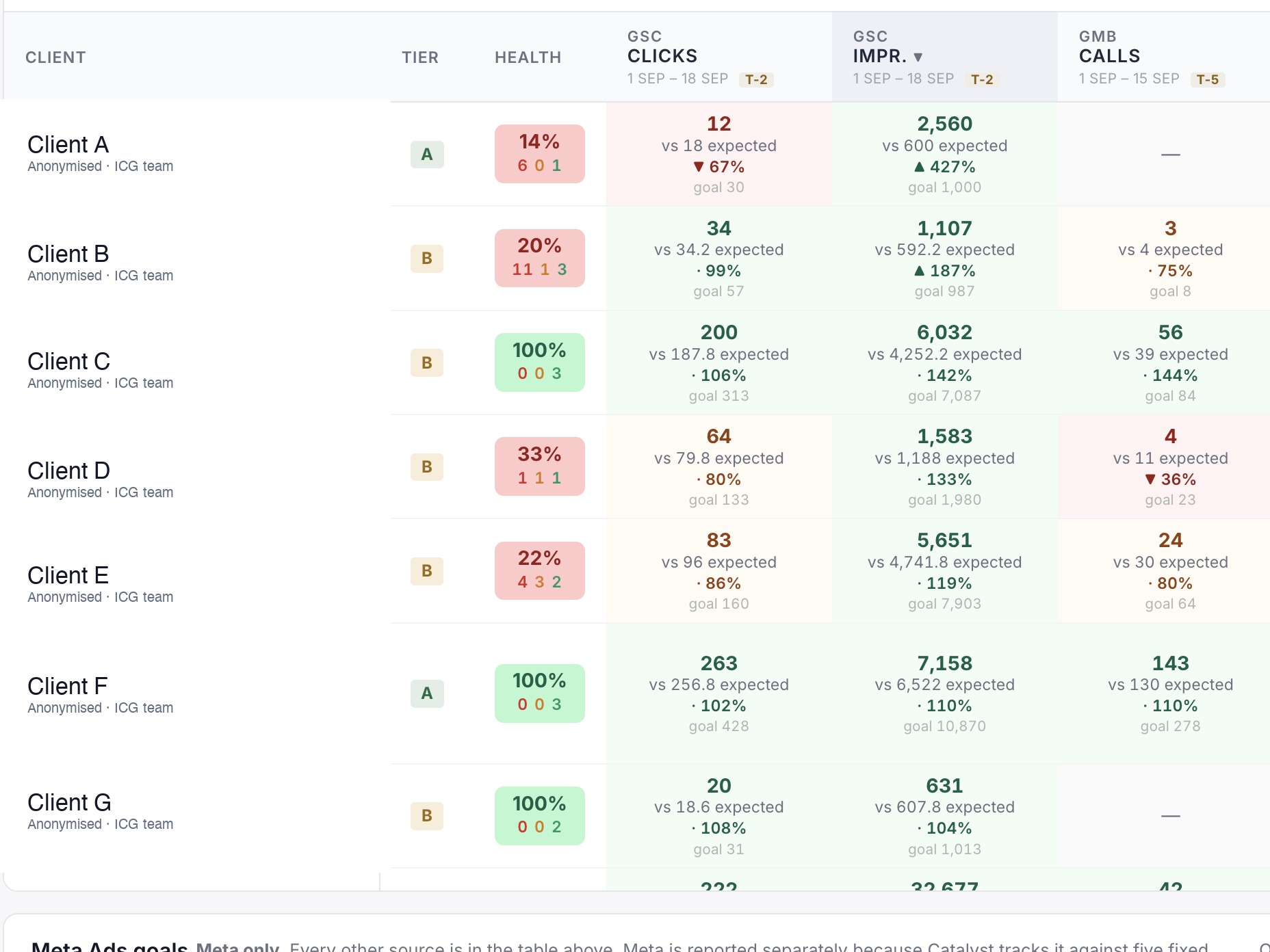
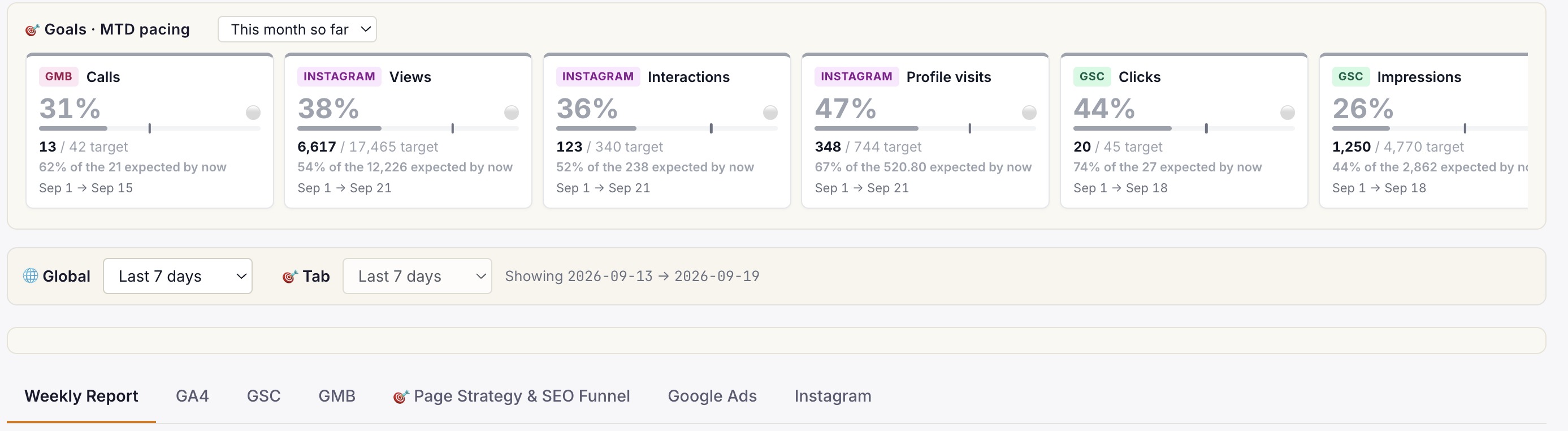
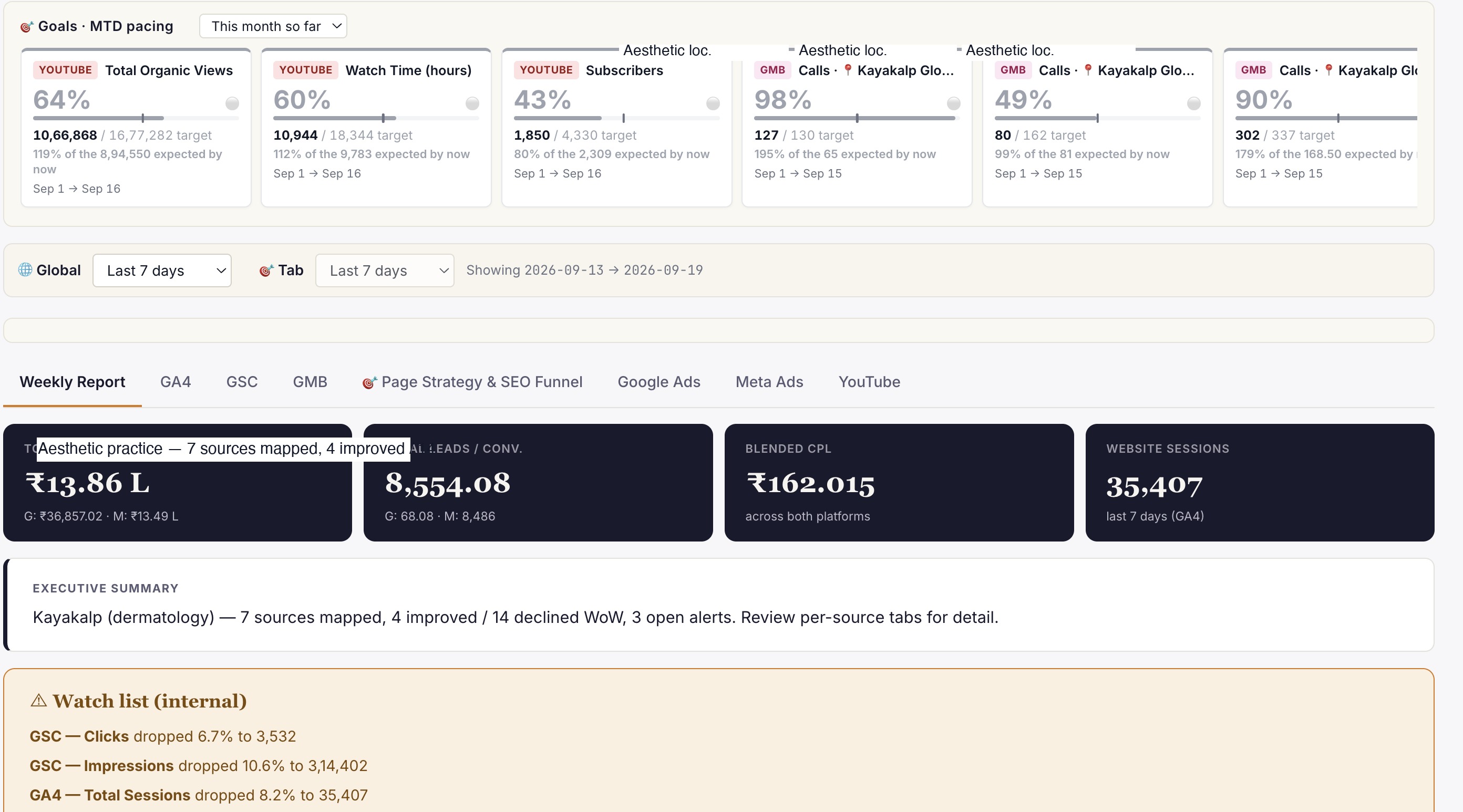
Live client dashboard. GSC, GA4, Google Ads, Meta Ads, IVR calls in one view. Login anytime, not monthly.
Phoenix
Clinic revenue intelligence over your PMS. Daily action queue: Prevent Loss, Maintain & Engage, Grow Revenue. Multi-centre rollout.
Or book a free 30-min audit to see all three in action on your account.
Healthcare brands
that already run on ICG.
A representative slice of the 150+ healthcare brands ICG has delivered for across India. Most engagements remain under NDA.


What ICG clients say · on video.
"Scale up of organic channels and business consulting. ICG has absolute domain authority in their field."
"Working with ICG transformed how we acquire IVF patients in Gurgaon. They understand the fertility journey from inquiry to consult..."
"What Ichelon accomplished — they got all my ideas and worked over 3-4 months to create an amazing, super-customised website."
Need help operationalising this?
Every ICG service is healthcare-only, NMC + DPDP-aware, and built around the patient-research patterns that drive Indian healthcare growth in 2026.
Every practice welcome — packages from ₹20,000/mo.
Goals-Driven engagements · Performance-Linked Payout Models available
More from
ICG.
Five trends shaping Indian healthcare marketing through 2027: AI-first patient research, Conversions API adoption, ABDM discovery, the AEO w...
Healthcare AIO is the discipline of getting your clinic or hospital cited inside Google AI Overviews, ChatGPT and Perplexity answers — not j...
Conversational-search advertising places brand messages inside AI chat answers — ChatGPT, Perplexity, Copilot — rather than beside a results...
Stop guessing.
Book a Diagnostic.
30 minutes. Free. With the AI-powered healthcare-only marketing agency 150+ brands already run on. No slides, no pitch, no hard close.


