


Multi-Specialty Hospital Marketing Guide India 2026 | ICG
Author: Rohit Gupta · Co-Founder, ICG · IIT BHU Pharmaceutical Engineering + IIM Rohtak · July 2026 A multi-specialty hospital is not one marketing problem. It is eight to twelve marketing problems running simultaneously — each specialty wi...
No pitch. Written root-cause diagnosis. AI-powered, healthcare only.
Direct answer
Author: Rohit Gupta · Co-Founder, ICG · IIT BHU Pharmaceutical Engineering + IIM Rohtak · July 2026 A multi-specialty hospital is not one marketing problem. It is eight to twelve marketing problems running simultaneously — each specialty wi...
TL;DR
Author: Rohit Gupta · Co-Founder, ICG · IIT BHU Pharmaceutical Engineering + IIM Rohtak · July 2026
A multi-specialty hospital is not one marketing problem. It is eight to twelve marketing problems running simultaneously — each specialty with its own patient demographic, its own consideration cycle length, its own channel mix, its own competitive landscape, and its own regulatory compliance requirements.
The hospital that treats its marketing as a single unified programme — one Google Ads account, one Instagram page, one monthly newsletter — is producing average results across all specialties while excelling at none.
ICG has built specialty-by-specialty hospital marketing programmes for multi-specialty hospitals from 80 to 500+ beds across India. This guide is the architecture.
Why hospital marketing requires specialty-by-specialty architecture
The patient searching for a cardiac surgeon and the patient searching for a LASIK procedure are not in the same demographic, using the same channels, or on the same consideration timeline. Here is the comparison:
| Factor | Cardiac patient | LASIK patient |
|---|---|---|
| Age | 45-70 | 22-38 |
| Primary channel | GP referral + Google Search | Google Search + Instagram |
| Consideration cycle | 14-45 days (often driven by GP advice) | 30-60 days (elective decision) |
| Content need | Clinical credentials, insurance empanelment | Procedure explanation, cost transparency, recovery timeline |
| Key compliance issue | Schedule J (heart disease) | NMC Section 6 (no outcome guarantees) |
| Conversion driver | Doctor trust + hospital quality | Cost transparency + convenience |
Running these two patient journeys through a single campaign architecture produces an account that is mediocre for both. ICG builds separate campaign architecture for each specialty — with a unified reporting layer (Agency OS) that shows the total hospital marketing picture.
The specialty-specific architecture: what each department needs

Cardiology
Primary channel: GP referral programme (B2B) + Google Search Ads (B2C for OPD and emergency adjacent) Content priority: Insurance empanelment SEO pages, cardiac health check package pages, symptom education content (chest pain, shortness of breath — NMC educational carve-out) Schedule J compliance: Heart disease, blood pressure, angina all on Schedule J. No drug-specific advertising in patient-facing content. Service framing throughout. CPQL: ₹1,650 ICG portfolio median for cardiology OPD
Orthopaedics
Primary channel: Google Search Ads (joint replacement, sports medicine) + Physiotherapist referral programme (B2B) Content priority: Procedure explainers (total knee replacement, ACL reconstruction — educational carve-out), insurance pre-authorisation information, rehabilitation pathway content CPQL: ₹1,420 ICG portfolio median
Gynaecology and Maternity
Primary channel: Google Maps Local SEO (proximity-driven for maternity) + Meta Ads (awareness for young families) Content priority: Antenatal care guide, delivery options content (normal vs C-section — educational, not prescriptive), postpartum care, paediatric crossover content CPQL: ₹1,150 ICG portfolio median for gynaecology OPD
Oncology
Primary channel: Google Search (second-opinion queries, specific cancer type queries) + GP referral programme Content priority: Second-opinion programme landing page, specific cancer type condition education (Schedule J — cancer on the list, so service framing throughout), treatment approach explainers Compliance: Highest compliance sensitivity across all specialties. ICG applies the most rigorous NMC + Schedule J review to all oncology content. CPQL: ₹2,100 ICG portfolio median for oncology OPD
Ophthalmology
Primary channel: Google Ads (LASIK — high commercial intent) + Optometrist referral programme (cataract) Q4 weighting: LASIK media budget weighted 35-40% to Q4 (Oct-Dec — peak demand season) CPQL: ₹1,080 ICG portfolio median
Neurology
Primary channel: GP and internist referral programme + Google Search for specialist queries Content priority: Condition education (migraine, Parkinson's, epilepsy management — educational carve-out) CPQL: ₹1,840 ICG portfolio median
Hospital SEO strategy: the multi-specialty topical authority graph
A hospital's website topical authority graph has more layers than a single-specialty clinic:
``` HOSPITAL HUB PAGE ↓ SPECIALTY DEPARTMENT PAGES (cardiology, ortho, oncology, etc.) ↓ PROCEDURE PAGES (angioplasty, knee replacement, chemotherapy types — service framing) ↓ DOCTOR PROFILE PAGES (named specialist pages — E-E-A-T anchor for each specialty) ↓ CONDITION EDUCATION PAGES (what is heart disease, what is cancer — educational carve-out) ↓ INSURANCE AND EMPANELMENT PAGES (CGHS empanelled hospital, cashless surgery) ↓ BLOG / INSIGHTS (seasonal health, corporate wellness, health check guidance) ```
Each layer links to layers above and below. This hierarchy communicates to Google that the hospital is the authoritative source for every specialty it covers — not just for the specialty it happens to rank for today.
B2B corporate health programme marketing

Corporate health programmes — where companies contract hospitals for employee health management — are the highest-LTV B2B channel in hospital marketing. A single corporate account generating 500+ annual OPD visits at zero-per-patient acquisition cost is worth more than any individual paid media campaign.
ICG builds corporate health programme landing pages targeting HR and benefits decision-makers at companies in the hospital's catchment area. LinkedIn campaigns targeting HR leads at companies with 100+ employees in the hospital's catchment geography. Corporate health check package pages optimised for "corporate health check [city]" queries.
The hospital group in Gurgaon ICG reference: corporate health programme B2B marketing generated 12 new corporate accounts in 6 months, representing 1,800+ employee annual OPD visits at zero incremental per-patient acquisition cost after the B2B programme investment.
International patient department marketing
For hospitals with established international patient departments, ICG builds the full international acquisition stack:
Source country targeting: Gulf states (UAE, Saudi, Kuwait, Oman, Qatar, Bahrain) for cardiac, oncology, and orthopaedic surgery. Bangladesh (Dhaka-Kolkata corridor) for cardiac, neurology, and oncology. UK and USA diaspora for IVF, aesthetic, and dental.
Multi-language content: Arabic for Gulf markets, Bengali for Bangladesh, English for UK/USA/Australia diaspora.
WhatsApp-first architecture: International patients universally prefer WhatsApp over email or forms. ICG's 4-Bot system handles Arabic-language and Bengali-language enquiry flows for international patient departments.
Attribution: Beacon 180-day window for international patients (logistics and planning typically add 60-120 days to the conversion cycle).
The unified reporting layer: Agency OS for hospitals
Running 8-10 specialty campaigns simultaneously without a unified attribution layer produces a reporting chaos — each channel, each specialty, each campaign in a separate dashboard with no unified CPQL view.
ICG's Agency OS dashboard for hospital clients:
- Total CPQL across all specialties (blended and by specialty)
- Channel contribution to consultations (Google vs Meta vs organic vs GP referral vs corporate)
- Specialty performance ranking (which departments are hitting CPQL targets, which need attention)
- International patient volume and source country attribution
- Real-time alert integration (30+ automated alerts across all channels)
- Monthly benchmark comparison (ICG portfolio median vs client performance)
CPQL benchmarks by specialty (hospital, India, Q2 2026)
| Specialty | ICG CPQL | Market CPQL | Notes |
|---|---|---|---|
| Cardiology OPD | ₹1,650 | ₹2,800 | Schedule J compliance essential |
| Orthopaedics OPD | ₹1,420 | ₹2,400 | Physiotherapy referral B2B important |
| Oncology OPD | ₹2,100 | ₹3,800 | Second-opinion programme drives volume |
| Ophthalmology (LASIK) | ₹1,080 | ₹1,800 | Q4 budget weighting critical |
| Gynaecology OPD | ₹1,150 | ₹1,900 | Maternity proximity drives Local SEO priority |
| Neurology OPD | ₹1,840 | ₹3,100 | GP referral primary |
| General surgery | ₹1,280 | ₹2,200 | GP referral + Google Search |
| Inpatient elective surgery | ₹6,000-15,000 | ₹15,000-35,000 | Insurance pre-auth content key |
FAQ
Q1: Should each hospital department have its own Google Ads campaign? Yes — ICG's standard for hospitals with 5+ departments is a separate Google Ads campaign per specialty with its own keyword set, landing page, and bid strategy. A shared campaign produces average Quality Scores across specialties and suboptimal bidding for any individual department's commercial intent keywords. The total account management complexity is higher, but the CPQL improvement justifies it consistently.
Q2: How does insurance empanelment affect hospital marketing strategy? Hospitals empanelled with CGHS, ECHS, and major private insurers (Star, HDFC Ergo, ICICI Lombard, Religare) attract a separate patient segment — the insured patient who is choosing among empanelled hospitals. ICG builds insurance-specific SEO pages for each empanelment: "CGHS empanelled hospital [City]", "cashless cardiac surgery [Hospital name]". These pages generate high-intent organic traffic from patients who have already decided to use their insurance and are choosing among empanelled options.
Q3: How does ICG handle NABH accreditation in hospital marketing? NABH accreditation signals clinical quality to patients, referring physicians, and insurers. ICG builds NABH accreditation into: hospital website header (schema-level signal), doctor profile pages (hospital's accreditation status as a trust signal), insurance empanelment pages (NABH required by some insurers), and international patient pages (international patients specifically search for NABH-accredited Indian hospitals).
Q4: What is the minimum size hospital for ICG's marketing programme to be cost-effective? ICG's hospital marketing programme is cost-effective from 50-bed hospitals upward. Below 50 beds, the patient volume required to generate statistically meaningful CPQL data across 5+ specialties is typically insufficient within the first 6 months. For hospitals below 50 beds, ICG recommends a focused 2-3 specialty programme rather than a full multi-specialty architecture.
Q5: How does ICG manage the compliance complexity of 8-10 different specialty regulations simultaneously? ICG's compliance review assigns a specialty-specific compliance protocol to each department's content. Cardiology gets the Schedule J (heart disease) check. IVF gets the ART Act 2021 check. Oncology gets the Schedule J (cancer) + NMC emotional-sensitivity review. Ophthalmology gets the standard NMC Section 6 check. The ICG compliance checklist is modular — each specialty's module is applied independently, then the NMC Section 6 baseline applies to all.
Compliance note: Reviewed against NMC Section 6, Schedule J (multiple conditions), ART Act 2021 (IVF), DPDP Act 2023, CGHS empanelment standards.
Book a free 30-minute Brand & Growth Diagnostic.
It's a working session, not a sales pitch — you leave with a written root-cause analysis you can act on, whether or not you engage ICG.
The three platforms
behind every ICG engagement.
Beacon
CAPI middleware that fixes Event Match Quality, translates CRM statuses to Meta-standard events, dedups across channels.
Agency OS
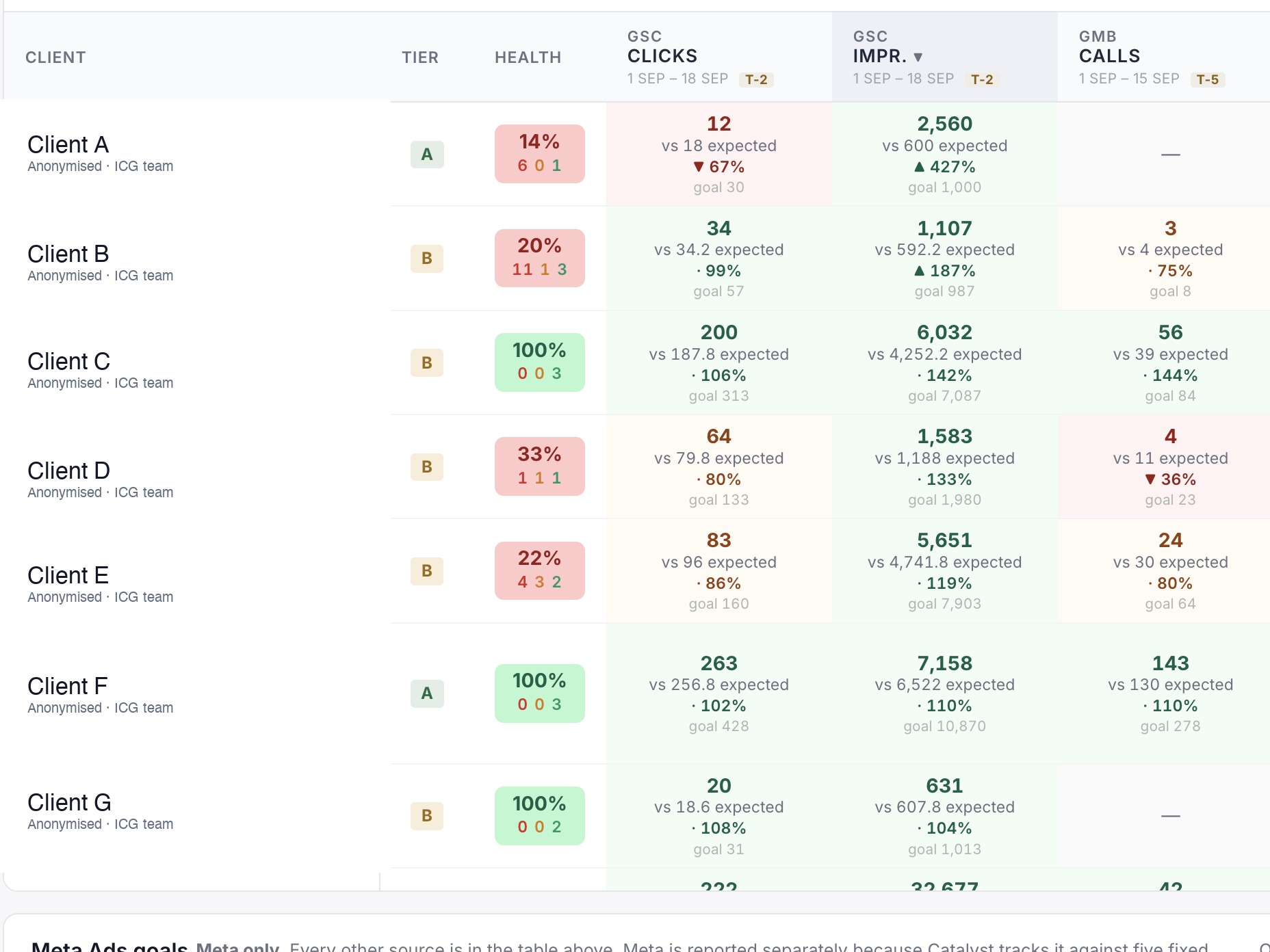
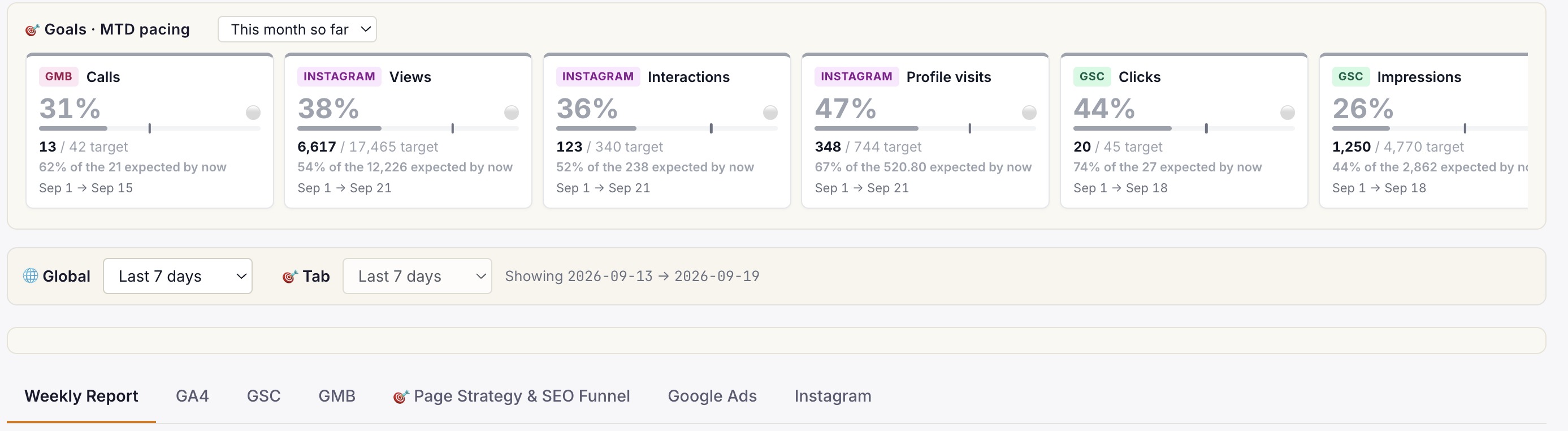
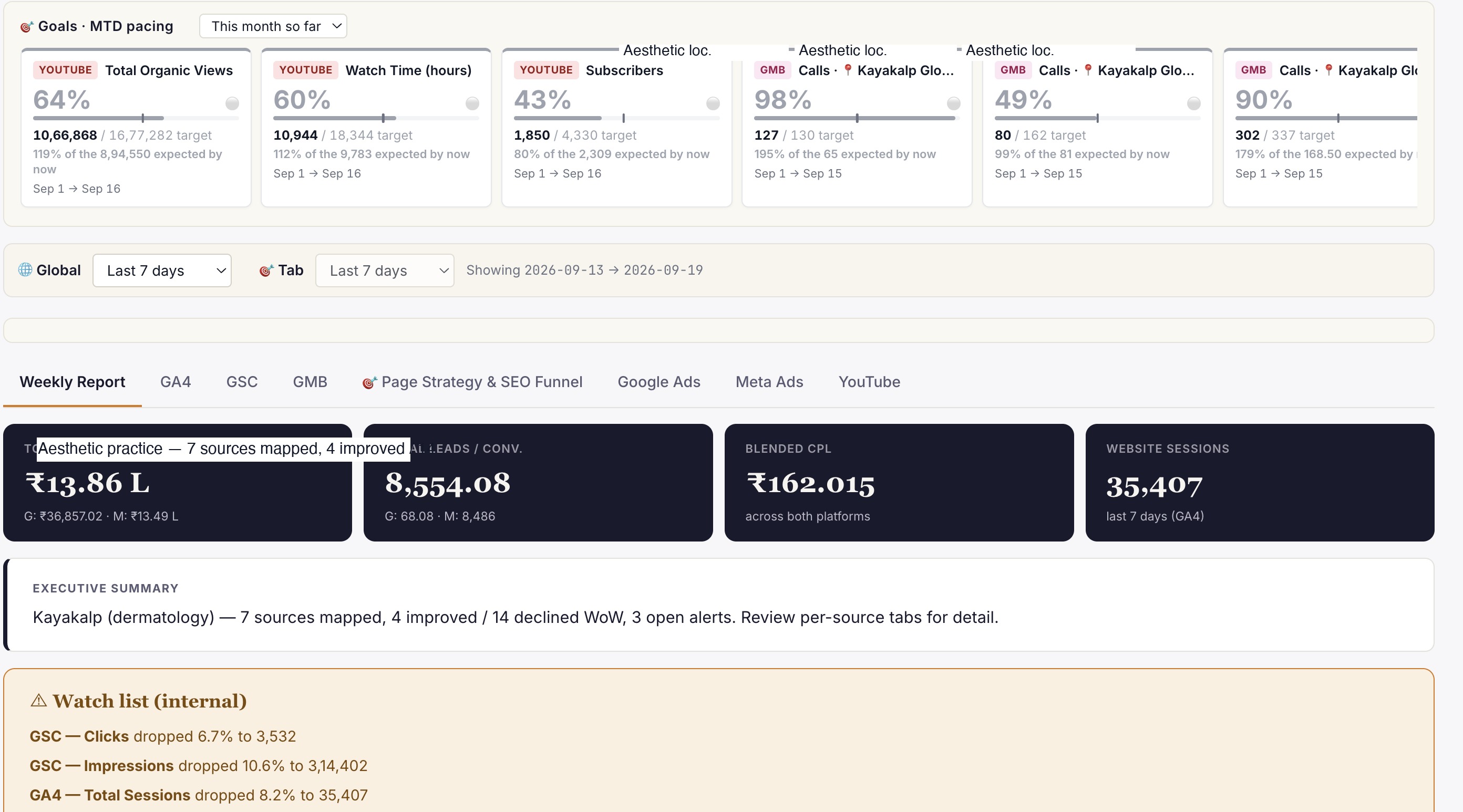
Live client dashboard. GSC, GA4, Google Ads, Meta Ads, IVR calls in one view. Login anytime, not monthly.
Phoenix
Clinic revenue intelligence over your PMS. Daily action queue: Prevent Loss, Maintain & Engage, Grow Revenue. Multi-centre rollout.
Or book a free 30-min audit to see all three in action on your account.
Healthcare brands
that already run on ICG.
A representative slice of the 150+ healthcare brands ICG has delivered for across India. Most engagements remain under NDA.


What ICG clients say · on video.
"Mental health marketing requires a different sensitivity. ICG built compliance-aware campaigns that respect both patients and our..."
"Bariatric surgery patients need a long consideration cycle. ICG built a content + paid system that respects that timeline."
"Working with ICG felt like working with an in-house growth team that happens to specialise in healthcare."
Need help operationalising this?
Every ICG service is healthcare-only, NMC + DPDP-aware, and built around the patient-research patterns that drive Indian healthcare growth in 2026.
Every practice welcome — packages from ₹20,000/mo.
Goals-Driven engagements · Performance-Linked Payout Models available
More from
ICG.
Five trends shaping Indian healthcare marketing through 2027: AI-first patient research, Conversions API adoption, ABDM discovery, the AEO w...
Healthcare AIO is the discipline of getting your clinic or hospital cited inside Google AI Overviews, ChatGPT and Perplexity answers — not j...
Conversational-search advertising places brand messages inside AI chat answers — ChatGPT, Perplexity, Copilot — rather than beside a results...
Stop guessing.
Book a Diagnostic.
30 minutes. Free. With the AI-powered healthcare-only marketing agency 150+ brands already run on. No slides, no pitch, no hard close.


