


Local SEO for Healthcare in India: 2026 Complete Guide
Rank in the local pack for healthcare searches across India — GBP setup, NMC-safe reviews, citations, geo-grid tracking and AI Overview readiness for 2026.
No pitch. Written root-cause diagnosis. AI-powered, healthcare only.
Direct answer
Rank in the local pack for healthcare searches across India — GBP setup, NMC-safe reviews, citations, geo-grid tracking and AI Overview readiness for 2026.
TL;DR
TL;DR
- Local SEO for healthcare is the discipline of making a clinic, hospital, or doctor discoverable when a patient searches for care in their city
- The three Google local ranking factors — relevance, distance, prominence — each have specific healthcare-optimisation tactics
- Healthcare local SEO has a unique compliance layer: NMC Ethics Code governs what can be said, DPDP Act governs patient data in marketing, ART Act applies to fertility clinics
- The single highest-impact action for most Indian healthcare providers: claim, complete, and continuously manage your Google Business Profile
- AI Overviews are changing local healthcare discovery — the same signals that build local pack visibility now also determine whether AI recommends your practice
When a patient in Mumbai types "cardiologist near me" or "best IVF clinic in Bangalore," they do not browse page 2. They look at the three results in the local pack — the map and listing group at the top of the page — and they call the one that looks most credible.
Everything behind local SEO for healthcare exists to make your practice one of those three results, for the right queries, in the right geography.
This guide covers the complete framework: the ranking factors, the optimisation tactics, the compliance constraints that healthcare adds, and the specific signals that are changing in 2026 as AI Overviews reshape how patients discover care.
Section 1 — How Google decides local healthcare rankings
Google's local ranking algorithm uses three factors to decide which businesses appear in the local pack and in what order:
Relevance: How well your profile matches the patient's search query. A gynaecology clinic with a complete services list (fertility, obstetrics, high-risk pregnancy, PCOS management) is more relevant to a search for "PCOS specialist near me" than one with a generic description that says "women's health clinic."
Distance: How close your business is to the patient's location (or the location they specify). You cannot move your clinic, but you can influence how Google interprets your service area and how your location data appears across the web.
Prominence: How well-known and trusted your business is, in Google's assessment. Prominence is built from reviews, citations, links, and the volume of information about your business across the web. This is the factor most directly shaped by sustained local SEO work.
Section 2 — Google Business Profile: the foundation
Your GBP is the most important local SEO asset for a healthcare provider. More than your website, more than your social media, more than any advertising. When a patient searches for care in your area, your GBP is typically what they see first — and what they use to decide whether to call.
2.1 Profile completeness
Every incomplete field is a missed relevance signal. The fields that matter most for healthcare:
Primary category: The single most important field. Choose the most specific category that describes your core practice — "Fertility Clinic" not "Medical Clinic" if IVF is your primary service. "Orthodontist" not "Dentist" if orthodontics is your specialty.
Secondary categories: Add every relevant secondary specialty — but only genuinely relevant ones. A cardiology clinic can legitimately add "Cardiac Surgeon" and "Cardiologist" as secondary categories. Adding "General Practitioner" to appear in broader searches is category misrepresentation and a suspension risk.
 angryturtle/09-risk-factors.png" alt="Angryturtle Risk Factors — suspension-risk audit flagging GBP policy triggers before Google acts" loading="lazy" decoding="async" style="width:100%;height:auto;display:block;">
Business description (750 characters): Use this to describe what you treat, who you serve, your clinical approach, and any relevant accreditations (NABH, specialty board certifications, international fellowships). Do not use the description for promotional claims or outcome promises — these violate NMC Ethics Code 2026.
Services: List every service with a name and description. These are indexed by Google and inform relevance matching. Write service descriptions in patient language (how a patient would search for the service, not how a clinician would describe it).
Attributes: Select every applicable attribute — appointment required, wheelchair accessible, accepts health insurance, accepts UPI, women-led, spoken languages. These appear in patient-facing filters and add relevance signals.
2.2 Visual content
Photos on a healthcare GBP serve two functions: they reduce patient anxiety (showing them what the clinic looks like before they arrive) and they signal an active, maintained business to Google.
What to photograph:
- Exterior (helps patients identify the building)
- Reception and waiting area
- Consultation rooms (empty — no patients)
- Equipment (diagnostic equipment, OT exterior, imaging equipment)
- Team photos (doctors and senior clinical staff with proper attribution)
What not to photograph:
- Patient areas showing identifiable patients (DPDP Act + patient dignity)
- Before/after clinical imagery in GBP photos (NMC restrictions apply)
- Stock photography that misrepresents the facility
2.3 Google Posts
Google Posts are free real estate on your profile — and free content that signals freshness to Google's systems. For healthcare:
What to post:
- Health awareness content (World Diabetes Day, Heart Health Month, Women's Health Week)
- New service or equipment announcements
- Doctor joining or achievement announcements
- Patient education content (what to expect at a first consultation, how to prepare for a procedure)
What not to post:
- Outcome claims ("our IVF success rate is the highest in the city")
- Promotional discounts or offers on clinical services (NMC compliance issue)
- Before/after imagery for clinical procedures (in paid promotion context — NMC + Meta policies both restrict this)
Post weekly. A profile that hasn't posted in 2 months looks dormant to both Google and patients.
Section 3 — NAP consistency and citations
Your Name, Address, and Phone number must be identical across every place your clinic appears online. This is not a minor detail — it is how Google verifies that multiple data sources are describing the same real-world entity.
3.1 The most common NAP consistency errors in Indian healthcare
Phone number format inconsistency: "+91 98XXX XXXXX" on a doctor-listing platform, "098XXXXXXXXX" on a local directory, "011-XXXXXXXX" on the website. Google's parsers may read these as three different phone numbers.
Address format variation: "Suite 4, 12 MG Road" vs "12 MG Road #4" vs "12, M.G. Road, 4th Floor". Pick one format and apply it everywhere.
Business name abbreviation: "AIIMS" on one platform, "All India Institute of Medical Sciences" on another. Use the exact same name everywhere.
Old practice name: A practice that rebranded but still has the old name on 15 directories it hasn't touched in 3 years.
3.2 The essential citation sources for Indian healthcare
See the full citation guide for the complete 25-source list. For healthcare, the non-negotiable sources are:
- Google Business Profile (canonical)
- The national doctor-listing platform (highest patient search volume for healthcare discovery in India)
- Apple Business Connect (iOS patients)
- Bing Places
- National local-business directories
- Doctor Q&A and discovery platforms
- ABDM Health Facility Registry (mandatory for ABDM compliance, growing in entity authority weight)
- State Medical Council registry (doctor entity authority)
- NABH directory (for accredited hospitals)
Section 4 — Reviews: the prominence engine
Reviews are the most direct signal of prominence in Google's local algorithm. For healthcare specifically, the review management task is more complex than for retail or hospitality — because the compliance layer applies to how you respond, not just how many you collect.
4.1 Review generation for healthcare
Ask every patient whose experience was positive to leave a Google review. The mechanism:
- Satisfaction check 24–48 hours post-appointment (WhatsApp 2-question survey)
- Route 4–5/5 responses to a direct Google review link
- One follow-up after 48 hours if no review posted
- Never incentivise reviews (Google policy violation)
Target: 10–20 new reviews per month for active practices. Consistency matters more than volume spikes.
4.2 NMC-compliant review responses
The most common compliance failure in healthcare review management: responding to patient reviews in ways that confirm the patient was treated at the facility or reference their clinical situation.
The compliant response pattern:
- Acknowledge the review warmly without confirming the patient relationship
- Thank the reviewer for sharing their experience
- Address general concerns without admitting specific details
- Provide a private contact channel for resolution
What never to include in a review response:
- The patient's name (even if they have already used it)
- Any reference to the clinical reason for their visit
- Any reference to their treatment, diagnosis, or outcome
- Any information that connects the reviewer to a specific appointment date
This is simultaneously a DPDP Act patient data protection obligation and an NMC patient confidentiality requirement.
Section 5 — Geo-grid rank tracking
Standard rank checking — running a Google Maps search from your own office or from a fixed point — gives a misleading view of your actual visibility. Proximity is a local ranking factor, and it changes with every searcher's location.
A cosmetic surgery clinic in South Delhi may rank #1 for "rhinoplasty in Delhi" within 1km of the clinic, and #5 for the same query in a neighbourhood 4km away where a competitor's clinic is physically closer.
A geo-grid scan measures rank from 25–81 points across your service area simultaneously and produces a heat map: where you're in the top 3, where you're slipping, and where you're invisible. This is the data that tells you whether to focus optimisation effort on profile changes (which improve rank near your location) or citation building and review velocity (which extend your visibility further out).

→ Full geo-grid rank tracking guide
Section 6 — Local SEO compliance for healthcare
Healthcare local SEO has a compliance layer that no other industry faces at the same level. Three regulatory frameworks interact simultaneously:
6.1 NMC Ethics Code 2026
The National Medical Commission's Ethics Code governs all marketing communications by registered medical practitioners — including GBP content, Google Posts, website copy, and review responses.
Prohibited in local SEO content:
- Outcome promises ("this treatment cures...")
- Superiority claims ("best in Delhi," "highest success rate")
- Comparative claims against other practitioners
- Patient testimonials about clinical outcomes (as paid or structured promotional content)
- Before/after imagery in paid promotion contexts
Permitted:
- Educational content about conditions and treatment approaches
- Factual credential and experience statements
- Service availability and appointment information
- Patient experience content (as distinct from clinical outcome claims)
6.2 DPDP Act 2023
The Digital Personal Data Protection Act 2023 applies to all patient data collected through digital channels — appointment booking forms, review request messages, contact forms.
For local SEO specifically:
- Review request via WhatsApp: requires consent for marketing communications (separate from clinical appointment)
- CRM list upload for remarketing: patient phone numbers collected for appointment reminders cannot be used for remarketing without separate marketing consent
- Review responses: cannot include patient-identifiable information (see Section 4.2)
6.3 ART Act 2021 (for fertility clinics)
The Assisted Reproductive Technology (Regulation) Act 2021 imposes specific marketing restrictions on ART clinics — including content restrictions on donor programme advertising, success rate claims, and certain comparative statements.
Fertility clinic GBP content, Google Posts, and service descriptions must be reviewed against the ART Act in addition to NMC Ethics Code requirements.
Section 7 — AI Overviews and local healthcare search
Google's AI Overviews are changing how patients discover healthcare providers. For local queries with healthcare intent ("best IVF clinic near me," "cardiologist South Delhi"), AI Overviews increasingly generate a short recommendation paragraph that names specific clinics or doctors — rather than showing a traditional local pack.
The businesses named in an AI Overview answer capture the click before the patient sees any traditional search results. Being outside the AI's answer typically means being invisible to that patient entirely.
What determines AI Overview citation for healthcare businesses:
The same signals that power local pack visibility — but with higher accuracy requirements:
- NAP consistency across all cited sources (AI systems cross-reference multiple sources; inconsistency creates doubt)
- Review volume and quality (AI uses review language to describe businesses — "known for their calm approach to IVF counselling" is drawn from review patterns)
- Complete, accurate GBP with current information
- NABH accreditation mention (signals institutional quality)
- Doctor credentials and NMC registration visible in structured data
There is no separate AI Overview optimisation strategy — there is local SEO done to a high standard. The businesses with the cleanest entity authority (consistent NAP, strong reviews, complete profile, verified accreditations) are the ones AI systems trust enough to name.
→ Full AI Overviews local SEO guide
Section 8 — Specialty-specific considerations
IVF and fertility clinics
- ART Act 2021 compliance in all GBP content
- Couple-oriented keyword strategy (both male and female intent queries)
- Separate GBP categories for clinic (Fertility Clinic) and doctor profiles (Reproductive Endocrinologist)
- ISAR membership listing as entity authority signal
Multi-specialty hospitals
- One GBP per physical location (not per department)
- Department-level landing pages on website, internally linked from GBP website URL
- Hospital-level GBP + individual doctor GBP profiles for senior consultants
- NABH accreditation prominently referenced in GBP description
Aesthetic and cosmetic clinics
- NMC before/after restrictions apply strictly to paid promotion — organic before/after in Google Posts sits in a grey area; erring on the side of caution is recommended
- CDSCO device compliance can be referenced for laser and device-based treatments
- Premium positioning keywords (focus on expertise and approach, not price or outcomes)
Dental chains
- Multi-location naming taxonomy critical (consistent chain name across all locations)
- IDA membership listing
- Specialty-specific categories (Orthodontist, Oral and Maxillofacial Surgeon, Periodontist) where applicable
Frequently asked questions
Q1: What is local SEO for healthcare? Local SEO for healthcare is the practice of optimising a clinic, hospital, or doctor's digital presence to appear in Google's local search results — the map pack and local listings — when patients search for care in their area. It covers Google Business Profile management, citation building, review management, and NAP consistency, within the compliance constraints of NMC Ethics Code, DPDP Act, and specialty-specific regulations.
Q2: How long does local SEO take to show results for a healthcare practice? Profile completeness and NAP corrections: 4–8 weeks to register with Google. Review velocity improvements: 60–90 days for measurable rating movement. Citation building: 60–90 days for ranking impact. Sustained local pack improvement: 6–12 months of consistent work. Local SEO compounds — the gains from month 6 are significantly larger than from month 1.
Q3: Does a hospital need local SEO if it's already well-known? Yes. Branded searches (patients who already know the hospital's name) are not the challenge — those convert without local SEO. The challenge is non-branded searches ("multi-specialty hospital south Delhi," "cardiac surgery hospital Mumbai") where patients are discovering options. Branded reputation does not automatically translate into local pack visibility for non-branded queries.
Q4: How is NMC compliance relevant to local SEO? NMC Ethics Code 2026 governs all marketing communications by registered medical practitioners — including GBP business descriptions, service listings, Google Posts, and review responses. Content that violates NMC guidelines (outcome promises, superiority claims, certain before/after content) creates regulatory risk regardless of the platform it appears on. ICG's local SEO service includes NMC compliance review on all GBP content.
Q5: What is the most important local SEO action for a new healthcare practice? Create, verify, and fully optimise your Google Business Profile before you spend on any other marketing. A complete, verified GBP with accurate NAP, the right categories, a compliant description, and photos generates patient enquiries within 30–60 days of verification at no ongoing cost. This should happen 45–60 days before a new practice opens.
Q6: How does ICG's Turtle platform help with healthcare local SEO? Turtle monitors health scores across 7 dimensions, tracks geo-grid rank for primary keywords, audits NAP consistency across Indian healthcare citation sources (doctor-listing platforms, national local directories, ABDM HFR), monitors 531 suspension risk factors continuously, and produces a prioritised action queue. ICG's team executes on that queue weekly. The combination of Turtle's intelligence and ICG's healthcare compliance expertise is what produces the outcomes in our managed portfolio.

Q7: What is the difference between local SEO and GBP management? GBP management is one component of local SEO. Local SEO for healthcare also covers: website optimisation for local keywords (service + city pages, structured data, doctor profile pages), link building from local and healthcare-specific sources, and the content strategy that builds topical authority. GBP management is typically the highest-return starting point — ICG addresses both.
Q8: What does ICG charge for healthcare local SEO? ICG's managed service covering GBP management and local SEO starts at ₹7,500/month for single high-value locations. Multi-location healthcare chains: ₹50,000–₹1L/month for 5–15 locations. Enterprise portfolios: ₹1L–₹2.5L+/month. All engagements begin with a free GBP audit — health score, citation audit, suspension risk assessment, and priority action list — at no cost.


Sources:
- Google Search Central — local SEO documentation
- NMC Ethics Code 2026 — nmc.org.in
- DPDP Act 2023 — meity.gov.in
- ART (Regulation) Act 2021
- ABDM — abdm.gov.in
- NABH — nabh.co
- ICG internal data: managed healthcare GBP portfolio 2024–2026
Compliance note. All healthcare local SEO content and GBP management activities must comply with NMC Ethics Code 2026. Patient data collected through local SEO-related digital channels (appointment forms, review request workflows, WhatsApp campaigns) is subject to DPDP Act 2023 requirements. Fertility clinic GBP content requires ART Act 2021 compliance review in addition to NMC Ethics Code.
2026 local-pack benchmarks and the mistakes that keep healthcare brands out of it
Most Indian clinics we audit are not losing local rankings because Google dislikes them. They are losing because the same five operational mistakes repeat across the account. The benchmarks below are drawn from what we observe on the healthcare GBP and geo-grid accounts we run inside Angryturtle, our GBP operating system, and inside larger engagements delivered through the Client Elevation Programme.
What a healthy 2026 local pack looks like for healthcare
| Signal | Weak account | Local-pack ready |
|---|---|---|
| GBP profile completeness | Under 70% | 95%+ with services, attributes, doctor Q&A |
| New reviews per month per location | 0–2 | 8–15, spread across weeks |
| Owner response time on reviews | 7+ days or none | Under 24 hours, NMC-safe language |
| Geo-grid coverage (5 km, primary keyword) | Ranks only at the pin | Top-3 across 60%+ of the grid |
| Citations across Indian directories | 10–15, mixed NAP | 40+, identical NAP everywhere |
| GBP Posts per month | 0 | 4–8, service-led, no claims |
The five mistakes we fix first
- One shared GBP for multiple branches. Each physical location needs its own verified listing with unique phone, hours and photos. Shared pins collapse geo-grid coverage almost immediately.
- Review requests sent in bulk on weekends. Google reads velocity spikes as manipulation. Space asks across the week, tied to actual visit completion.
- Owner responses that name conditions or promise outcomes. Rewrite templates so responses thank the patient by first name only, avoid the treatment, and keep language NMC-safe by default.
- Category chosen once, then forgotten. Primary category must match the highest-intent service, not the widest one. "Fertility clinic" outranks "Medical clinic" for IVF intent every time.
- No geo-grid tracking, so no evidence of movement. A single pin rank hides the fact that you are invisible 2 km away. Grid tracking is how we prove the fix to the founder.
Pair these fixes with a review-generation loop and a monthly GBP post cadence and most healthcare locations move from page-two invisibility into the local pack inside 90 to 120 days. If you want us to run this operating layer for you, WhatsApp Rohit for a diagnostic.
Book a free SEO diagnostic.
Hanuman Sihag's team runs a live crawl, checks technical health, cannibalisation, schema coverage and content gaps. 60 minutes, prioritised fix list.
Questions readers ask
about this topic.
The three platforms
behind every ICG engagement.
Beacon
CAPI middleware that fixes Event Match Quality, translates CRM statuses to Meta-standard events, dedups across channels.
Agency OS
Live client dashboard. GSC, GA4, Google Ads, Meta Ads, IVR calls in one view. Login anytime, not monthly.
Phoenix
Clinic revenue intelligence over your PMS. Daily action queue: Prevent Loss, Maintain & Engage, Grow Revenue. Multi-centre rollout.
Or book a free 30-min audit to see all three in action on your account.
Healthcare brands
that already run on ICG.
A representative slice of the 150+ healthcare brands ICG has delivered for across India. Most engagements remain under NDA.


What ICG clients say · on video.
"Scale up of organic channels and business consulting. ICG has absolute domain authority in their field."
"Working with ICG transformed how we acquire IVF patients in Gurgaon. They understand the fertility journey from inquiry to consult..."
"What Ichelon accomplished — they got all my ideas and worked over 3-4 months to create an amazing, super-customised website."
The intelligence stack behind this playbook.
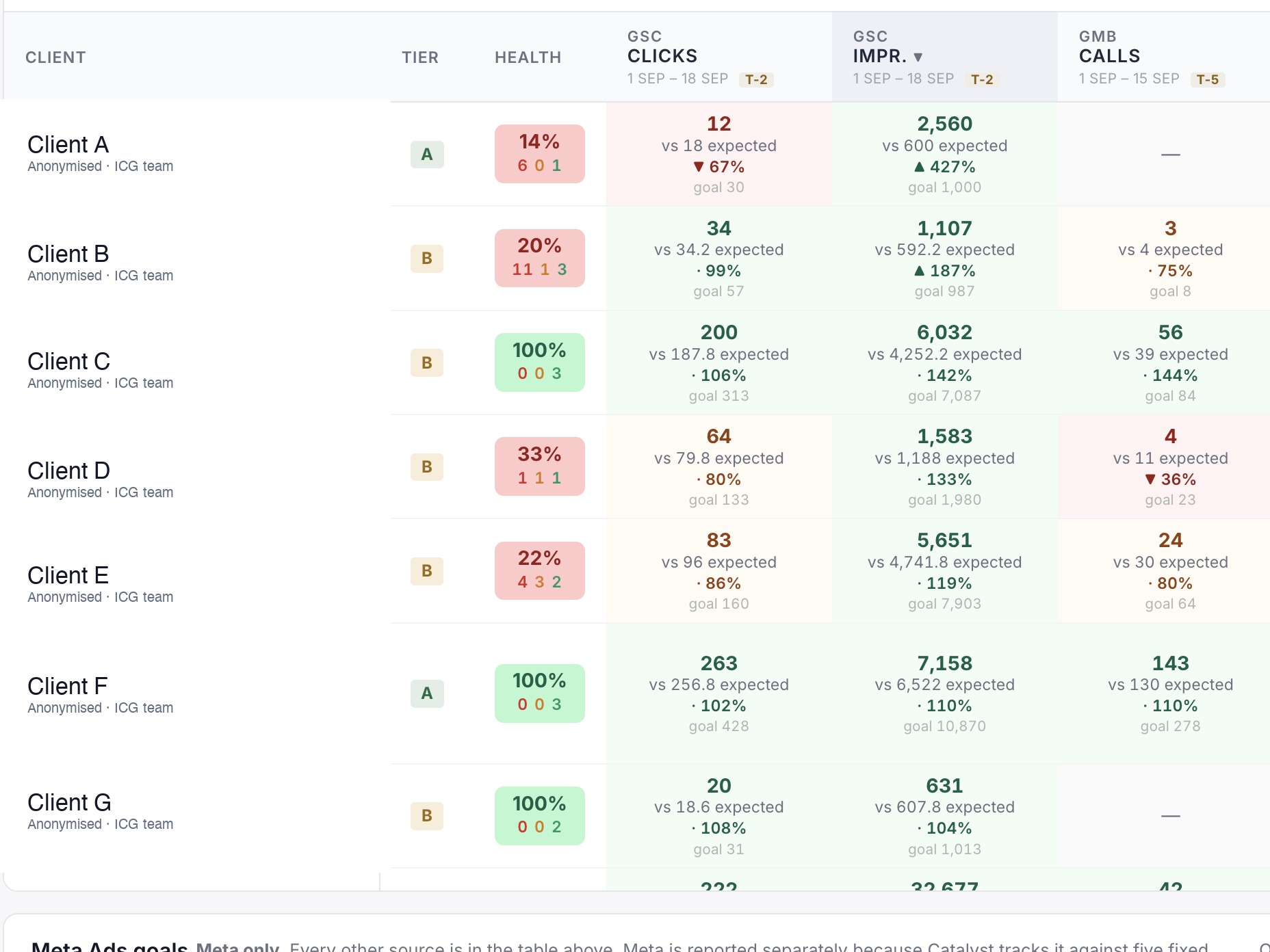
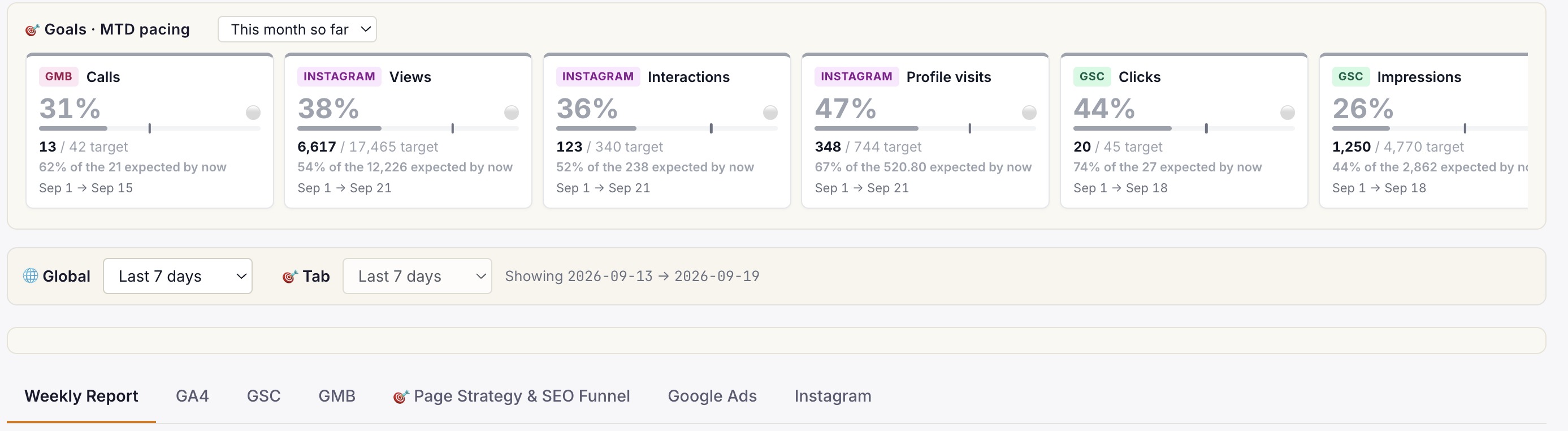
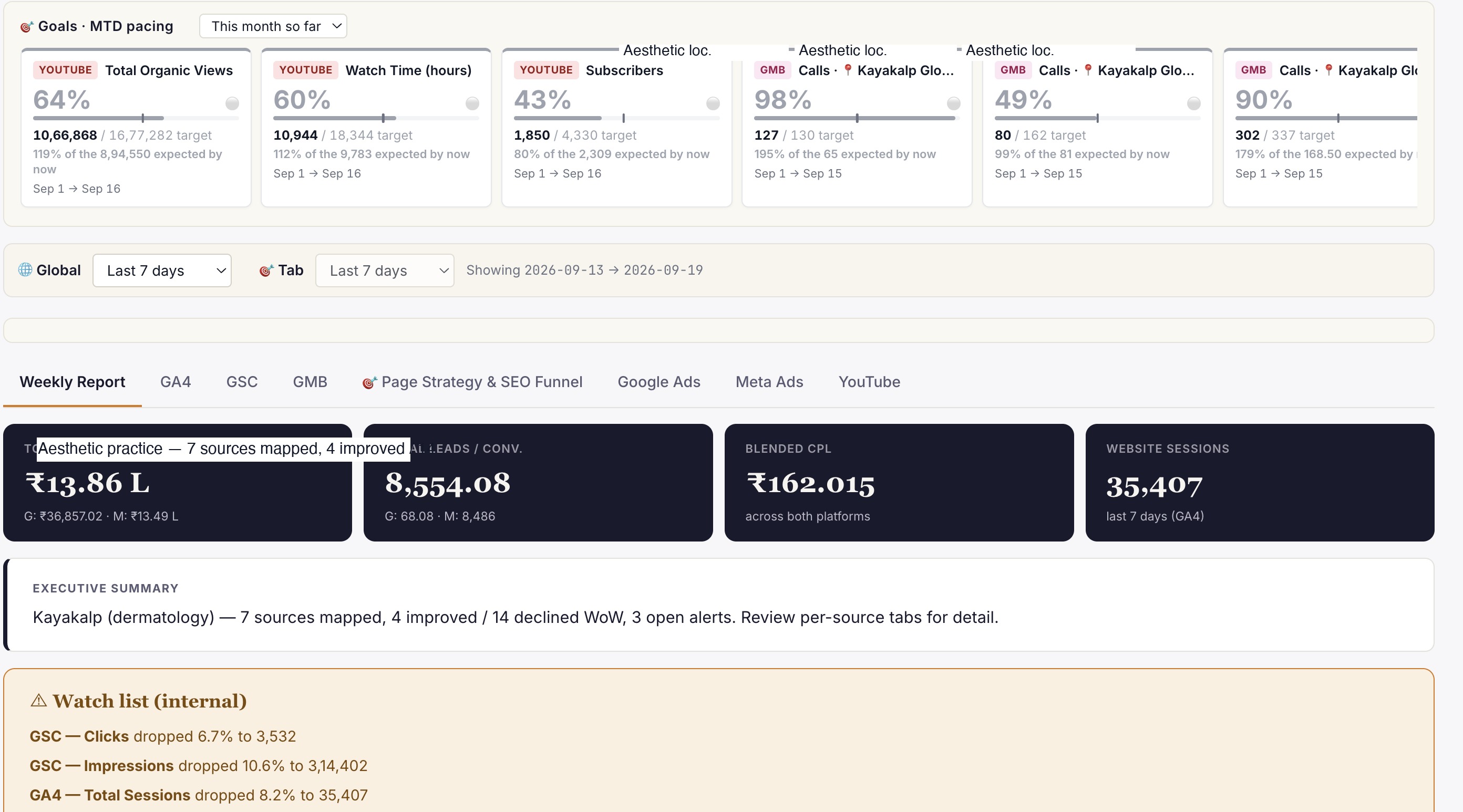
Every ICG engagement runs on the Search Intelligence Trifecta — Angryturtle for GMB, SIE for search and AI Overview, YODA for YouTube. Live product screens below.
Need help operationalising this?
Every ICG service is healthcare-only, NMC + DPDP-aware, and built around the patient-research patterns that drive Indian healthcare growth in 2026.
Every practice welcome — packages from ₹20,000/mo.
Goals-Driven engagements · Performance-Linked Payout Models available
More from
ICG.
Five trends shaping Indian healthcare marketing through 2027: AI-first patient research, Conversions API adoption, ABDM discovery, the AEO w...
Healthcare AIO is the discipline of getting your clinic or hospital cited inside Google AI Overviews, ChatGPT and Perplexity answers — not j...
Conversational-search advertising places brand messages inside AI chat answers — ChatGPT, Perplexity, Copilot — rather than beside a results...
Stop guessing.
Book a Diagnostic.
30 minutes. Free. With the AI-powered healthcare-only marketing agency 150+ brands already run on. No slides, no pitch, no hard close.


